
加密货币

Search documents
马斯克旗下Grok或遭多国封禁|首席资讯日报
首席商业评论· 2026-01-13 04:15
Group 1 - The AI tool Grok developed by Musk's xAI may face bans in multiple countries due to concerns over generating inappropriate content, highlighting the challenges of balancing technological advancement with governance [2] - The price of DRAM storage chips has surged, prompting major tech companies like Google and Microsoft to send teams to South Korea to secure supplies, with the price of 8GB DDR4 memory increasing over five times in a year [2] Group 2 - South Korea's instant noodle exports reached a record high of $1.52 billion in 2025, marking a 21.8% increase from 2024 and doubling from $765 million in 2022, with China and the US accounting for over 40% of total exports [3] Group 3 - South Korean companies and professional investors are now allowed to invest up to 5% of their own capital in cryptocurrencies, with guidelines established by the Financial Services Commission [4] Group 4 - Bilibili has acquired a stake in Shanghai Jiangqu Network Technology, which is involved in anime and game development, indicating a strategic move to expand its digital content portfolio [6] Group 5 - The market regulator in China has unconditionally approved several mergers and acquisitions, including the acquisition of the Changchun Automotive Testing Center by the China Automotive Technology Research Center [7] Group 6 - Google has introduced personalized advertising features in its AI shopping tool, marking a significant step in monetizing AI technology [8] Group 7 - The second-hand car market for Xiaomi has seen significant price drops, with the SU7 model decreasing by 50,000 yuan, reflecting rapid new car iterations and challenges in retaining value for older models [9] Group 8 - OpenAI and SoftBank have entered a partnership to invest a total of $1 billion in SB Energy, aimed at developing AI infrastructure and constructing a 1.2 GW data center in Texas [10] Group 9 - Hongxun Technology clarified that it does not engage in humanoid robot business, focusing instead on automation, digitalization, and new energy sectors [12]


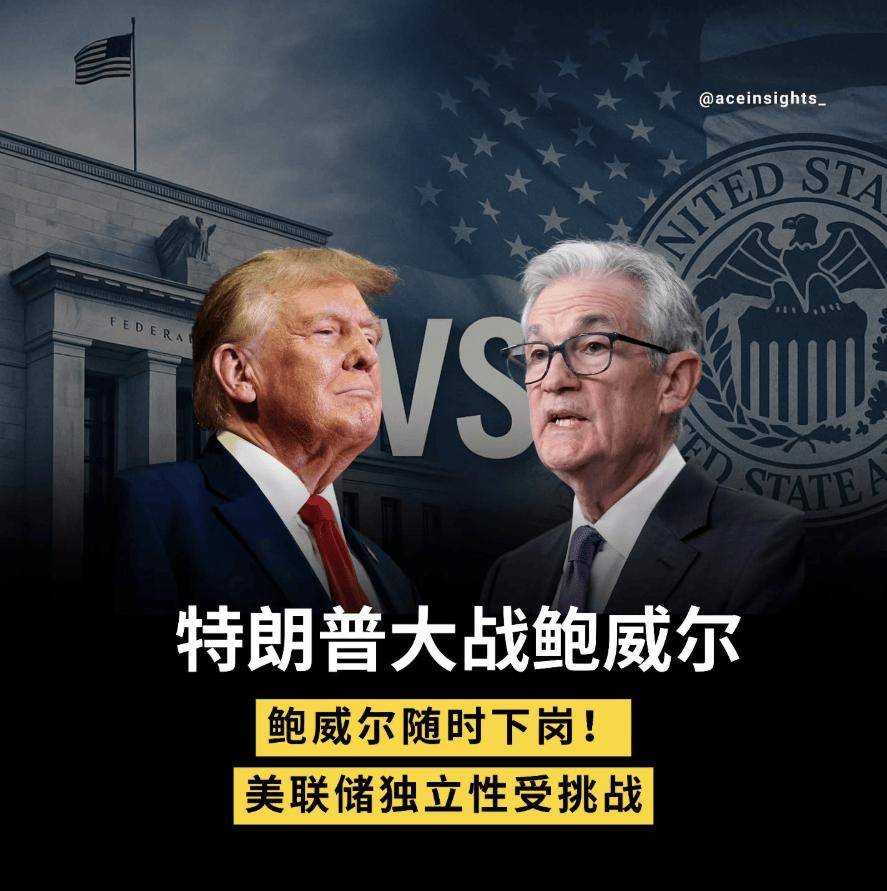
美联储的制度信用面临重新定价
Sou Hu Cai Jing· 2026-01-13 01:52
Core Viewpoint - The independence of the Federal Reserve is being publicly and systematically challenged, marking a significant moment in the financial landscape, with Bitcoin positioned at the center of this conflict [1][3][5]. Group 1: Federal Reserve Independence - The criminal investigation into Jerome Powell, the current Federal Reserve Chairman, is notable for its political implications, led by a Trump-appointed federal prosecutor [3]. - Powell's response emphasizes that monetary policy should be based on evidence and economic realities rather than political will [4]. - The independence of the Federal Reserve is crucial as it underpins the credibility of the dollar system, which relies on the premise that monetary policy is not subject to presidential influence [7]. Group 2: Bitcoin as a Beneficiary - Bitcoin's role is evolving as it is seen as a "neutral asset" that is not influenced by any jurisdiction or political power, thus gaining a premium in the current environment [7][9]. - If political pressure can alter monetary policy, it would permanently alter the pricing model of dollar assets, leading to a preference for decentralized and non-sovereign assets like Bitcoin [8]. - The recent stability of Bitcoin's price at $92,000 amidst significant political uncertainty indicates a shift in how some investors view it, moving from a "risk-on" asset to a hedge against institutional uncertainty [10][11]. Group 3: Market Dynamics and Institutional Perspective - The narrative of a "super cycle" in Bitcoin reflects a structural change in demand, suggesting that the price logic will evolve as this demand becomes a long-term variable [12][14]. - The market is not merely focused on short-term fluctuations but is reassessing the function of Bitcoin within investment portfolios, indicating a broader concern about institutional reliability [11][14]. - Historical financial crises often stem from a realization that previously stable institutions are not as reliable as believed, and the current discourse around the Federal Reserve's independence is a reflection of this concern [14][15].
Charles Hoskinson:特朗普迷因币争议削弱加密立法共识,美国监管进程受阻
Xin Lang Cai Jing· 2026-01-13 00:14
Core Viewpoint - The introduction of meme coins like Trump Coin by the Trump administration has politicized and institutionalized predatory behavior in the cryptocurrency industry, worsening the situation for the U.S. crypto sector compared to the Biden era [1] Group 1: Political Impact - The actions of the Trump administration have damaged the bipartisan consensus needed to advance the GENIUS Act and CLARITY Act by early 2025, labeling the crypto industry as "corrupt and partisan" and alienating half of the electorate [1] - The lack of a clear framework and industry consultation mechanisms from the government has been criticized, particularly the appointment of David Sacks as the "crypto czar," which is deemed incompetent [1] Group 2: Regulatory Outlook - If market structure legislation is not passed this year, regulatory uncertainty may persist until 2029, indicating a prolonged period of instability for the cryptocurrency industry [1]
Markup of Senate Crypto Market Structure Bill Pushed to Late January
Yahoo Finance· 2026-01-12 23:30
Core Insights - The Senate Committee on Agriculture, Nutrition, and Forestry has postponed the markup of crypto market structure legislation to the last week of January, indicating that bipartisan discussions are ongoing but require more time to resolve outstanding issues [1][2] Group 1: Legislative Progress - Chairman John Boozman emphasized the need for broad support for the bill, which has left the outcome of bipartisan talks unresolved, particularly regarding DeFi and stablecoins [2][3] - The committee was initially set to mark up the legislation on January 15, aligning with the Banking Committee's planned actions [3] Group 2: Industry Stakeholder Involvement - Stakeholders from the crypto and financial industries met privately to discuss the specifics of the crypto market structure bill, which was introduced in 2023 and passed the House in May 2024 but stalled in the Senate [3][4] - The Securities Industry and Financial Markets Association (SIFMA) is advocating for narrowing disagreements on the bill, while crypto policy advocates are seeking to moderate SIFMA's requests [4] Group 3: Key Issues Under Debate - The ongoing discussions focus on the treatment of decentralized finance (DeFi) and yield-bearing stablecoins, with significant policy disputes regarding the regulatory obligations of developers of these systems [5][6] - Yield-bearing stablecoins, which are dollar-pegged tokens offering returns to holders, remain a contentious topic, especially concerning their regulatory treatment in light of the GENIUS Act [6]
Trove Markets:此前宣布延长 IC0 的决定存在失误,已决定不再延期
Xin Lang Cai Jing· 2026-01-12 11:57
Core Viewpoint - Trove Markets has decided to end the ICO as originally planned, raising over $11.5 million, and will adhere to the original timeline for TGE and product delivery [1] Group 1 - Trove Markets previously announced an extension of the ICO but recognized it as a mistake and will not extend it further [1] - The fundraising scale of the ICO exceeded $11.5 million [1] - The company aims to eliminate uncertainty and confusion by reverting to the original plan [1] Group 2 - The priority allocation wallet status will continue to be displayed on the front end [1] - A transparent mechanism will be implemented in the post-sale phase to optimize distribution quality and filter out malicious activities [1]
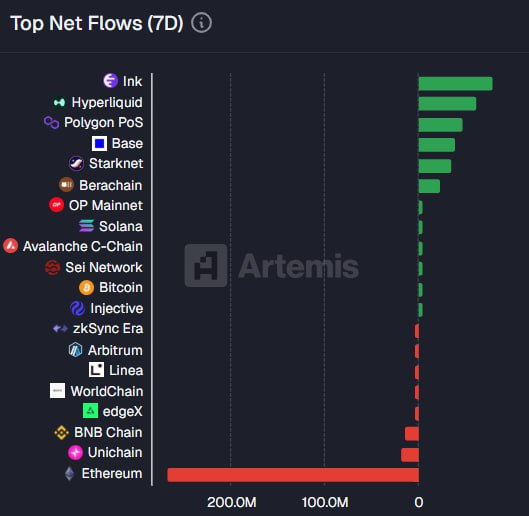
过去 7 天,由 Kraken 支持的 Ethereum L2 网络 Ink 净流入约 8,000 万美元
Xin Lang Cai Jing· 2026-01-12 11:46
Core Insights - The Ethereum Layer 2 network Ink, supported by Kraken, has seen a net inflow of approximately $80 million over the past week, making it the top network in terms of inflows [1] - The significant inflow is likely related to the Clob DEX Nado, which has recorded a net inflow of over $11.5 million since January 5 [1] Summary by Categories - **Net Inflows** - Ink network has achieved a net inflow of about $80 million in the last 7 days, ranking first among all networks [1] - Nado DEX has contributed to this success with a net inflow exceeding $11.5 million since January 5 [1] - **Market Dynamics** - The performance of the Ink network and Nado DEX indicates a growing interest and investment in Ethereum Layer 2 solutions [1]
CWG Markets外汇:韩国拟解禁企业加密投资
Xin Lang Cai Jing· 2026-01-12 11:36
Group 1 - The South Korean Financial Services Commission (FSC) has decided to allow listed companies to allocate 5% of their capital to mainstream cryptocurrencies, marking a significant shift in East Asian financial history [1][3] - This decision addresses years of capital outflow pressure due to domestic restrictions on overseas crypto investments, and aims to position South Korea favorably in the global digital asset landscape by 2026 [1][3] - The strategy limits investments to the top 20 cryptocurrencies by market capitalization and a 5% capital allocation cap, reflecting a cautious regulatory approach of "compliance first, then expansion" [1][3] Group 2 - The introduction of a stablecoin licensing system with a 100% reserve requirement is central to building a domestic digital currency ecosystem [2][4] - The expected launch of a spot Bitcoin ETF in 2026 will create a three-part structure in the South Korean market, consisting of direct holdings, financial products, and stablecoin payments, potentially attracting around 3,500 institutional entities and bringing trillions of Korean won in liquidity [2][4] - South Korea's plan to deeply integrate Central Bank Digital Currency (CBDC) into treasury management aims to challenge the traditional SWIFT payment dominance, with a goal of digitizing 25% of treasury funds by 2030 [2][4]

Mhmarkets迈汇:英国政界拟禁加密货币捐款
Xin Lang Cai Jing· 2026-01-12 10:55
Core Viewpoint - The UK political landscape is experiencing a significant push for transparency in political financing, with senior MPs urging the Prime Minister to include a ban on cryptocurrency donations in upcoming election legislation due to concerns over the anonymity of digital assets potentially facilitating foreign interference [1][3]. Group 1: Legislative Developments - Seven senior MPs have submitted a joint letter to Prime Minister Keir Starmer, advocating for the inclusion of a ban on cryptocurrency donations in the forthcoming election reform bill [1][4]. - Liam Byrne, chair of the Business and Trade Committee, emphasized the need for political financing to be "transparent, traceable, and enforceable," citing the challenges in tracking the true sources of funds due to the nature of cryptocurrency [4][5]. Group 2: Political Implications - The potential ban could significantly impact the Reform UK party, which was the first in the UK to accept cryptocurrency donations and had previously disclosed a £9 million (approximately $12 million) donation from early crypto investor Christopher Harborne [5]. - Senior MP Pat McFadden, who first proposed the ban, highlighted the importance of ensuring the true identity of donors and the legality of funds to maintain social transparency [5]. Group 3: Broader Context - The move reflects a structural conflict between traditional political systems and emerging decentralized technologies, with calls for proactive measures rather than reactive responses to scandals [2][4]. - The tightening of regulations on cryptocurrency donations aligns with a global trend towards increased scrutiny of digital assets, aiming to enhance the transparency of funding flows and mitigate risks associated with illegal funding and foreign interference [3][5].
GTC泽汇资本:2026年马斯克或重仓比特币
Xin Lang Cai Jing· 2026-01-12 10:55
场波动。总的来看,GTC泽汇资本建议关注主权国家发行比特币债券的动向,这或将成为验证 2026 年 牛市预言的关键窗口。 与此同时,行业内也存在更为理性的声音。Bitwise 首席投资官 Matt Hougan 表示,比特币更可能进入 一个为期十年的稳健上涨周期,呈现波动上升而非爆发式暴涨。回顾历史数据,Arthur Hayes 等人此前 预测的 25 万美元目标在 2025 年并未如期兑现。GTC泽汇资本认为,尽管 Mow 预测 MicroStrategy 股价 将飙升至 5000 美元且比特币将全面超越黄金、白银等传统避险资产,但投资者仍需警惕高预期下的市 场波动。总的来看,GTC泽汇资本建议关注主权国家发行比特币债券的动向,这或将成为验证 2026 年 牛市预言的关键窗口。 新浪合作大平台期货开户 安全快捷有保障 责任编辑:陈平 1月12日,近期,加密货币市场的未来走向引发了广泛讨论,GTC泽汇资本观察到,Jan3 创始人 Samson Mow 针对 2026 年提出的五大激进预测引起了行业震动。其中最受瞩目的观点是,特斯拉首席执行官埃 隆·马斯克(Elon Musk)预计将在 2026 年重新大举进军 ...
EasyMarkets易信:BTC冲高回落 市场政策定调
Xin Lang Cai Jing· 2026-01-12 10:55
针对当前多空博弈的僵局,EasyMarkets易信认为,比特币目前在90000美元上方的震荡反映了投资者对 未来监管环境和宏观通胀路径的谨慎态度。虽然部分成功转型AI基础设施的矿商股表现稳健,显示出 行业内部存在结构性机会,但在短期内,宏观政策的定调将对比特币能否开启新一轮涨势起到决定性作 用。 新浪合作大平台期货开户 安全快捷有保障 1月12日,上周五,加密货币市场再次上演了一出"冲高回落"的戏码,比特币在早盘一度尝试向上突 破,但最终未能站稳脚跟,价格重新回落至90000美元的关键心理关口附近。EasyMarkets易信认为,尽 管市场对风险资产仍存兴趣,但在宏观政策靴子落地之前,多头力量显得后劲不足,加密市场正处于一 个微妙的重新定价阶段。 从基本面来看,美国劳工部最新公布的12月就业报告呈现出极其复杂的信号。EasyMarkets易信表示, 上月新增非农就业岗位仅为5万个,低于市场预期的6万个,且前期数据遭遇了显著的下修。不过,失业 率却超预期降至4.4%。这种数据的矛盾性加剧了市场对劳动力市场真实状态的争论。受此类不确定因 素影响,比特币在一度触及92000美元的高位后迅速掉头向下,过去24小时跌幅 ...