
水泥

Search documents
红利国企ETF(510720)涨超0.5%,近20日净流入近10亿元,低利率环境凸显配置价值
Sou Hu Cai Jing· 2025-12-18 03:14
Group 1 - The core viewpoint of the report indicates that high dividend strategies remain sustainable, with institutional funds continuously increasing their positions in dividend assets, suggesting that dividend strategies will not be absent in the upcoming bull market [1] - The "anti-involution" policy is expected to alleviate the "increased revenue without increased profit" dilemma in certain industries, which will help align the profit growth rate of large-scale industrial enterprises with the growth rate of industrial added value [1] - High dividend assets are highlighted for their stable cash flow and dividend advantages, becoming more attractive in the context of a weak economic recovery, with sectors such as home appliances, banking, gas, publishing, cement, and telecommunications being noteworthy [1] Group 2 - The Dividend State-Owned Enterprise ETF (510720) tracks the State-Owned Dividend Index (000151), which selects high-dividend capable and stable dividend record enterprises from the market, covering industries like banking, coal, and transportation, focusing on traditional high dividend areas [1] - The index employs a strict examination of constituent stocks' dividend yields and sustainability, utilizing a cross-industry diversification strategy to effectively control investment risks and reflect the overall market performance of high dividend companies [1] - According to the fund announcement, the Dividend State-Owned Enterprise ETF has been able to assess dividends monthly, achieving continuous dividends for 20 months since its listing [1]
江西万年青水泥股份有限公司关于“万青转债”回售的第六次提示性公告
Zhong Guo Zheng Quan Bao - Zhong Zheng Wang· 2025-12-17 23:39
登录新浪财经APP 搜索【信披】查看更多考评等级 本公司及董事会全体成员保证信息披露内容的真实、准确和完整,没有虚假记载、误导性陈述或重大遗 漏。 特别提示: 1、回售价格:101.235元人民币/张(含息、税) 2、回售条件触发日:2025年12月9日 3、回售申报期:2025年12月16日至2025年12月22日 4、发行人资金到账日:2025年12月25日 5、回售款划拨日:2025年12月26日 6、投资者回售款到账日:2025年12月29日 7、回售期内停止转股 8、本次回售不具有强制性 9、风险提示:投资者选择回售等同于以101.235元/张(含当期利息)卖出持有的"万青转债"。截至目 前,"万青转债"的收盘价格高于本次回售价格,投资者选择回售可能会带来损失,敬请投资者注意风 险。 江西万年青水泥股份有限公司(以下简称"公司")的股票截至2025年12月9日已经连续三十个交易日的 收盘价格低于当期转股价8.53元/股的70%(即5.97元/股),且"万青转债"处于最后一个计息年度。根据 《江西万年青水泥股份有限公司公开发行可转换公司债券募集说明书》(以下简称"募集说明书")的约 定,"万青转债"的 ...

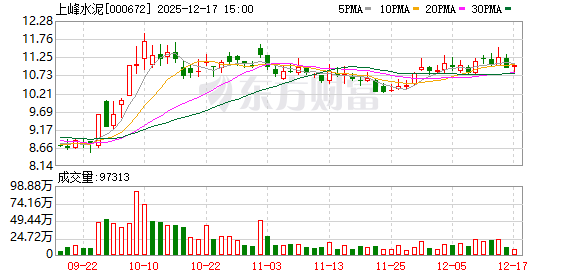
上峰水泥:2025年第五次临时股东会决议公告
Zheng Quan Ri Bao· 2025-12-17 13:44
证券日报网讯 12月17日,上峰水泥发布公告称,公司2025年第五次临时股东会审议通过《关于续聘公 司2025年度财务审计机构及内控审计机构的议案》。 (文章来源:证券日报) ...


天山股份:第九届董事会第十二次会议决议公告
Zheng Quan Ri Bao· 2025-12-17 13:43
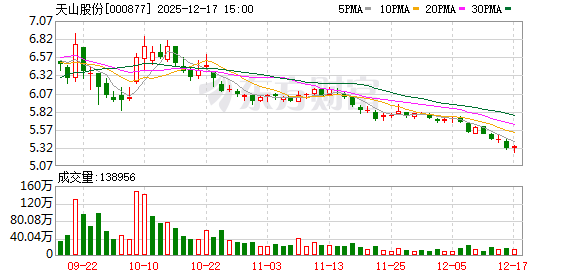
证券日报网讯 12月17日晚间,天山股份发布公告称,公司第九届董事会第十二次会议审议通过《关于 苏州市姑苏区人民政府对子公司房屋实施征收的议案》。 (文章来源:证券日报) ...

2026年全国碳市场年度行情展望:全国碳市场:此消彼长,余震仍存
Guo Tai Jun An Qi Huo· 2025-12-17 11:49
Report Title - "National Carbon Market: One Thing Gains While Another Loses, Aftershocks Still Linger — Outlook for the Annual Market of the National Carbon Market in 2026" [1] Report Industry Investment Rating - Not provided in the report Core Views of the Report - The macro - emission reduction target will provide an important reference for the downward adjustment path of the power generation industry's quota benchmark value. If 2025 is the peak - year, the average annual emission reduction rate of carbon dioxide from 2026 to 2035 needs to reach about 0.7% - 1.0%. In the neutral power generation growth scenario, the power generation emission intensity in 2026 needs to be reduced by at least about 1.1% - 1.4% compared with 2025. The estimated quota gap rate of the power generation industry in 2025 may expand to about 1.1% - 1.4%, corresponding to an annual gap of about 0.6 - 0.7 billion tons [2]. - The supply capacity of CCER will continue to expand in 2026, which will weaken the upward driving force of carbon prices. The total supply of "new supply + inventory" of CCER in 2026 is expected to reach about 25 - 32.5 million tons. If the CCER price returns to the normal range of "discount to CEA" in 2026, key emission units may use CCER on a large scale to replace quotas or fill compliance gaps [3]. - In 2026, the market will continue to digest the past quota surpluses, but the decline in surpluses is limited. Under the existing policies, the carbon price is expected to rise moderately, but it is difficult to return to the historical high. If new policies can give the market a clear expectation of the emission reduction path, the carbon price is expected to break through the historical high [3]. - The annual strategy is to go long on dips below 70 yuan/ton and take profit above 90 yuan/ton [3] Summary by Relevant Catalogs 2025 Review Carbon Price Breakdown and Limited Rebound - In 2025, the price of China's national carbon market carbon emission allowances (CEA) showed a downward trend, with the price center shifting down by about 35% year - on - year. As of December 5, 2025, the average transaction price of the whole market was about 61.48 yuan/ton, a year - on - year decline of about 35%. The price trend can be divided into three stages: sharp decline in the first three quarters, a sharp drop and then a rebound in October, and a rise and then a fall in mid - November [8]. - The older the year - label of the quota, the firmer the quota price. As of December 5, 2025, the average transaction price of CEA24 was the lowest at about 59.04 yuan/ton, while CEA19 - 20 had the highest average transaction price at 75.13 yuan/ton [13] Nearly 9% Annual Turnover Rate and Increased Share of Listing Transactions - Thanks to "advance allocation" and "quota carry - over", the market trading activity continued to improve. As of December 5, 2025, the cumulative trading volume was about 194.23 million tons, the cumulative turnover was about 11.9 billion yuan, and the annual turnover rate was nearly 9%. The cumulative trading volume increased by about 53% year - on - year, and the turnover rate increased by 5.3 percentage points [15]. - Bulk agreement transactions still dominated, but the share of listing agreement transactions increased significantly, rising by about 11 percentage points year - on - year. The one - way call auction trading introduced in July was relatively inactive due to the rule setting and the market decline [17][19]. - CEA24 was the main trading target in 2025, accounting for about 71% of the trading volume as of December 5, 2025 [19] Four Key Policy Nodes Affected Market Trading Rhythm - The "rectification and volume increase" expectation in February was falsified as the 2023 compliance completion rate was high. The release of the expansion plan in March led to the release of forced - circulation quotas. The pre - allocation of quotas in April and the stable recovery of carbon prices doubled the market trading scale. The final allocation of quotas in August led to the largest concentrated trading volume of the year. The release of the quota plan for newly - included industries in November increased the potential demand, but the actual procurement demand was limited [21][24][25] 2026 Supply - Demand Outlook Power Generation Industry: Disassembling Macro - Emission Reduction Targets to Anchor the Downward Adjustment Path of Benchmark Values - China's attitude towards achieving the 2030 intensity target is relatively prudent, leaving room for policy adjustment. When setting the 2035 emission target, China took a relatively cautious attitude, leaving necessary strategic space for the implementation of the 2030 intensity target [33]. - Assuming 2025 as the peak - year, the average annual emission reduction rate of carbon dioxide from 2026 to 2035 needs to reach about 0.7% - 1.0%. In the neutral power generation growth scenario, the power generation emission intensity in 2026 needs to be reduced by at least about 1.1% - 1.4% compared with 2025. The estimated quota gap rate of the power generation industry in 2025 may expand to about 1.1% - 1.4%, corresponding to an annual gap of about 0.6 - 0.7 billion tons [38][39][44] CCER: Expanding Supply Capacity and Weakening the Upward Driving Force of Carbon Prices - The CCER market restarted in January 2022, but the project development rhythm was slower than expected in the early stage due to factors such as methodological disputes and the slowdown of project review and verification by the regulatory authorities [45]. - The CCER supply in 2025 was about 15 million tons, and about 5 million tons were used for 2024 compliance. The estimated market surplus at the end of 2025 was about 10 million tons [47][49]. - It is estimated that the new supply of CCER in 2026 will be 15 - 22.5 million tons, and the total supply of "new supply + inventory" is expected to reach about 25 - 32.5 million tons. If the CCER price returns to the normal range of "discount to CEA", it may significantly weaken the annual supply - demand contradiction in the national carbon market [52][53] 2026 Market Outlook - In 2026, the quota gap in the power generation industry may expand, but it will be partially offset by the increase in CCER supply. The market will continue to digest the past quota surpluses, but the decline in surpluses is limited [55]. - In the first half of 2026, the market may be in a "near - stagnant" state. The carry - over rule will still have a residual impact on the market, and the market confidence needs to be restored before the introduction of new policies [55][56]. - Under the existing policies, the carbon price is expected to rise moderately, but it is difficult to return to the historical high. If new policies can give the market a clear expectation of the emission reduction path, the carbon price is expected to break through the historical high [58]
天山股份(000877.SZ):苏州市姑苏区人民政府对子公司房屋实施征收
Ge Long Hui A P P· 2025-12-17 10:38
Core Viewpoint - Tianshan Co., Ltd. announced the government’s decision to expropriate land and properties of its subsidiary, Suzhou Concrete Cement Products Research Institute, with a compensation amount of approximately 225 million yuan [1] Group 1: Expropriation Details - The expropriation involves properties located at 718 Sanxiang Road and 64 Laohejiatang Bank [1] - The compensation amount includes rental compensation and relocation costs, with the final amount to be determined by a signed agreement [1] - The board of directors approved the expropriation proposal during the meeting held on December 17, 2025 [1]
天山股份:12月17日召开董事会会议
Mei Ri Jing Ji Xin Wen· 2025-12-17 10:17
(记者 张明双) 截至发稿,天山股份市值为380亿元。 每经头条(nbdtoutiao)——"太空快递"来了?全国首个民营飞船成功"上天"!背后公司创始人:正积 极开发"中型货运飞船"低成本产品 每经AI快讯,天山股份(SZ 000877,收盘价:5.34元)12月17日晚间发布公告称,公司第九届第十二 次董事会会议于2025年12月17日以现场结合视频方式召开。会议审议了《关于苏州市姑苏区人民政府对 子公司房屋实施征收的议案》等文件。 2025年1至6月份,天山股份的营业收入构成为:水泥占比96.95%,其他业务占比3.05%。 ...
水泥板块12月17日跌0.01%,四川金顶领跌,主力资金净流出3.49亿元
Zheng Xing Xing Ye Ri Bao· 2025-12-17 09:07
以上内容为证券之星据公开信息整理,由AI算法生成(网信算备310104345710301240019号),不构成投资建议。 从资金流向上来看,当日水泥板块主力资金净流出3.49亿元,游资资金净流入848.2万元,散户资金净流 入3.41亿元。水泥板块个股资金流向见下表: 证券之星消息,12月17日水泥板块较上一交易日下跌0.01%,四川金顶领跌。当日上证指数报收于 3870.28,上涨1.19%。深证成指报收于13224.51,上涨2.4%。水泥板块个股涨跌见下表: ...


研报掘金丨华源证券:首予上峰水泥“买入”评级,半导体投资有望迎来收获期
Ge Long Hui A P P· 2025-12-17 06:54
Core Viewpoint - The cement industry is undergoing a transformation, with Shangfeng Cement emerging as a leading example of this shift, particularly through its investments in the semiconductor sector [1] Group 1: Company Performance - Shangfeng Cement ranks 3rd in comprehensive competitive strength among key cement enterprises [1] - The gross profit per ton of cement clinker for the company is 67 yuan in the first half of 2025, slightly lower than industry leader Conch Cement, excluding the higher overseas proportion of Huaxin Cement [1] Group 2: Investment Strategy - The company has increased its focus on equity investments in technology innovation projects, primarily in the semiconductor field, successfully creating a full industry chain investment covering "design-manufacturing-packaging-materials" [1] - This strategic shift positions the company to potentially reap benefits from its transformation in the near future [1] Group 3: Valuation Comparison - Comparable companies in the cement sector, including Conch Cement, Huaxin Building Materials, and Tapai Group, have an average PE ratio of 13X for 2026 [1] - Shangfeng Cement's PE ratio for 2026 is below the average of comparable companies, leading to a "buy" rating upon initial coverage [1]
传统建材仍在寻底,电子布正异军突起 | 投研报告
Zhong Guo Neng Yuan Wang· 2025-12-17 04:03
Core Viewpoint - The construction materials sector is experiencing pressure, but overall profitability is stabilizing, with a notable increase in net profit for the first three quarters of 2025 compared to the previous year [2] Group 1: Industry Overview - The construction materials sector's revenue for the first three quarters of 2025 decreased by 4.39% year-on-year, while gross margin increased by 1.61 percentage points [2] - The net profit attributable to shareholders rose by 20.56% year-on-year, with a non-recurring net profit increase of 28.95% [2] - In Q3 2025, revenue declined by 0.95% year-on-year, but net profit attributable to shareholders increased by 23.36% [2] Group 2: Segment Analysis - The fiberglass segment benefited from increased demand for electronic fabrics, showing significant revenue and profit growth in Q3 2025 [2] - The cement and consumer building materials sectors continue to face pressure, but some companies may have already confirmed operational turning points [2][3] Group 3: Cement Sector - The national cement market saw a decline in both volume and price, with a total production of 1.259 billion tons in the first three quarters of 2025, down 5.2% year-on-year [4] - Cement prices experienced a slight recovery earlier in the year but have weakened since April due to significant demand decline [4] Group 4: Glass Sector - Float glass demand has significantly decreased due to declining real estate completions, with production down 5.2% year-on-year [5] - The photovoltaic glass sector saw a slight increase in profitability earlier in the year, but prices have since softened due to insufficient terminal demand [5] Group 5: Carbon Fiber Sector - The carbon fiber market remains well-supplied, with total production reaching 62,500 tons in the first three quarters of 2025, an increase of 47.24% year-on-year [6] - Emerging demand in low-altitude economy and military sectors is growing, but overall demand remains limited [6] Group 6: Investment Strategy - The company maintains that 2025 will be a turning point for listed companies, with 2026 marking an industry turning point [7] - Recommended investment focuses include consumer building materials companies such as Sanke Tree and Rabbit Baby, as well as cement companies like Conch Cement and Huaxin Cement [7]