
债券

Search documents
中国固定收益研究:中资美元债券2025年市场回顾
Bank of China Securities· 2026-01-09 07:18
Report Industry Investment Rating No relevant content provided. Core Viewpoints - In 2025, Chinese USD corporate bonds delivered high - single - digit returns (6.87%), showing overall resilience but slightly underperforming the broader Asia ex - Japan USD corporate bond universe (7.47%) due to the Vanke onshore debt maturity extension talks at year - end [4][5][6]. - Chinese IG bonds performed marginally stronger than HY bonds. The decline in sub - 10 - year US Treasury yields supported Chinese IG bonds, and their spread tightening outpaced that of HY bonds [4][15][24]. - The issuance volume in the Chinese USD bond primary market rebounded in 2025, but the net issuance was still deeply negative due to large - scale maturities, redemptions, and buybacks [4][39][40]. Summaries by Related Catalogs Performance Analysis - Chinese corporate bonds had a total return of 6.87% in 2025, lower than the 7.47% of the Asia ex - Japan corporate bond index and 7.75% of the iBoxx Global USD Corporate Bond Index [5][6]. - The iBoxx USD China IG Index posted a 6.87% total return, outperforming Chinese HY bonds but trailing the 7.51% return of the Asia ex - Japan IG index. Chinese HY bonds had a 6.70% return, significantly below the 9.38% of the Asia ex - Japan USD HY index [7][10][14]. Market Analysis - In 2025, the decline in sub - 10 - year US Treasury yields supported Chinese IG bonds. The Fed cut rates in September, October, and December and restarted balance - sheet expansion in December [15][19]. - By year - end, 2 - year, 5 - year, and 10 - year Treasury yields declined by 77bps, 66bps, and 40bps respectively, while the 30 - year yield edged up 6bps, steepening the yield curve [16][19]. - In 2026, the actual number of Fed rate cuts may exceed expectations due to a potentially more dovish voting committee [17][19]. Spread Analysis - Chinese IG bond spreads tightened by 24bps to 47bps in 2025, driven by negative net issuance and strong investor demand. Chinese HY bond spreads tightened by 16bps [24][25][28]. High - Yield Financing Environment - Some HY industrial and property developers returned to the primary market in 2025 with over - subscriptions, but Vanke's onshore bond extension affected other HY property developers' offshore refinancing [30][33]. - The government focused on stabilizing the property market. Developers' operations continued to diverge, and the sector was in a bottoming - out phase. Quality SOE and central SOE property bonds are preferred [31][33]. - Chinese developers' default resolution and restructuring deepened, and creditors shifted focus to more sophisticated claims protection [32][33]. Sector Performance - In IG, tech, property, and AMC bonds had returns over 8% as spreads narrowed. Central SOE perpetual and bank senior bonds had lower returns. In non - defaulting HY, HY industrial bonds had 15.9% returns, and HY property bonds had 8.8% returns despite the Vanke incident. Bank AT1 bonds underperformed with 5.5% returns [37][41]. - In the broader Asia ex - Japan credit market, bank, basic materials, and consumer services sectors had total returns above 8% [38][41]. Issuance Review - In 2025, the Chinese USD bond primary market issuance volume rebounded to US$101.7bn (+23% YoY). Excluding restructuring issuances, new issuance rose 6% YoY to US$81.1bn. Net issuance was deeply negative due to US$155.5bn of maturities, redemptions, and buybacks [4][39][42]. - Chinese issuers' activity in the Asia ex - Japan USD bond market increased slightly, accounting for 47% of total issuance volume compared to 43% in 2024. Non - Chinese Asia ex - Japan issuers' issuance volume grew 7.6% to US$116.4bn [40][42]. - Monthly issuance peaks were in February, May, September, and November, supported by financial and sovereign issuers. IG non - financial corporates' issuance was sensitive to USD interest rates. Rated HY bond volume increased, with non - property issuers dominant. Unrated bonds mainly came from LGFVs, small - scale leasing companies, and property restructuring [44][46]. - In 2025, issuance was mainly under 4 years (76.3%), but demand for longer - term funding emerged. The industrial sector became the largest issuer group (41%), overtaking the financial sector (32.7%). Property sector issuance was 22.4%, mainly for debt restructuring. LGFV issuance decreased to 29.8%. SOEs dominated new issuance (72%), and non - SOE issuers' proportion rose to 28% [45][47].

债市情绪雷达上新国利货币“同业存单买卖力量对比指数”
Xin Hua Cai Jing· 2026-01-09 03:13
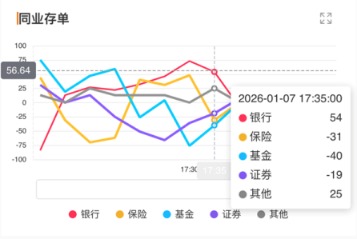
Core Viewpoint - The introduction of the "Interbank Certificate of Deposit (NCD) Buy/Sell Power Comparison Index" by Xinhua Finance enhances the monitoring of short-term liquidity in the bond market, providing a comprehensive tool for understanding market sentiment and institutional trading dynamics [1][4]. Group 1: Index Overview - The NCD Buy/Sell Power Comparison Index focuses on highly liquid and actively traded money market instruments, filling a gap in short-end trading sentiment monitoring [1]. - The index is based on real-time trading data, tracking the buy/sell behavior of different types of institutions during specific time periods, resulting in a quantifiable sentiment indicator [1]. - The index value ranges from -100 to 100, where absolute values indicate the strength of buy/sell power comparison, with positive values indicating stronger buying power and negative values indicating stronger selling power [1]. Group 2: Institutional Classification and Trends - The index supports five types of institutions: banks, securities firms, broad-based funds, insurance companies, and other types [2]. - Recent data shows significant institutional differentiation in the NCD market, with banks showing a strong net buying position, while insurance and fund institutions are reducing their holdings, indicating a potential shift in market sentiment [4]. Group 3: Functionality and User Access - The "Bond Market Sentiment Radar" aggregates various real-time information, including the NCD Buy/Sell Power Comparison Index and market trends, allowing investors to gain insights into market depth and efficiency [4]. - Users can access the "Bond Market Sentiment Radar" through the Xinhua Finance professional terminal or integrate the index's real-time data into their internal systems for tailored business applications [6].

债市早报:资金面平稳偏松;债市有所修复
Jin Rong Jie· 2026-01-09 02:31
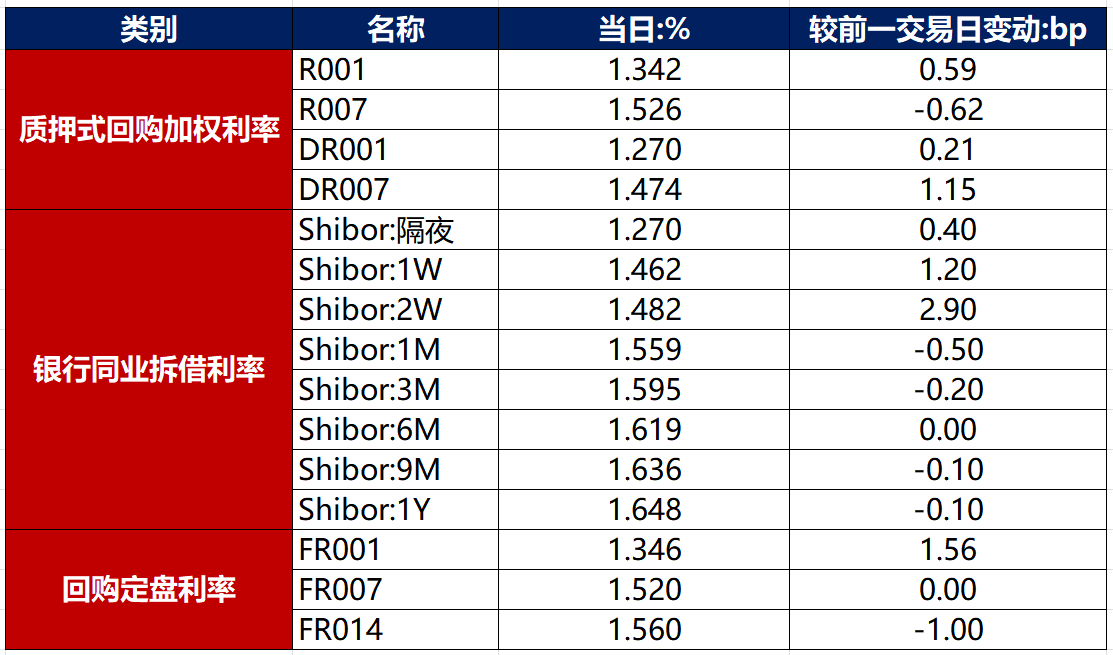
Market Overview - The funding environment is stable and slightly loose, with the DR001 rising by 0.21 basis points to 1.270% and DR007 increasing by 1.15 basis points to 1.474% [7] - The bond market has shown signs of recovery, with major indices in the convertible bond market collectively rising, and most individual convertible bonds also increasing in value [4][14] Domestic News - The Central Political Bureau of the Communist Party of China held a meeting on January 8, emphasizing the importance of maintaining and improving the party's leadership system to ensure governance across various sectors [2] - The Ministry of Commerce reiterated China's commitment to deepening economic and trade relations with Venezuela, regardless of changes in the Venezuelan political landscape, emphasizing mutual respect and non-interference [3] International News - In the U.S., initial jobless claims rose slightly to 208,000, remaining at historically low levels, indicating that large-scale layoffs have not occurred despite some fluctuations in the data [4] - The international oil futures market saw WTI crude oil prices rise by approximately 3.2% to $57.76 per barrel, while natural gas prices fell by 4.48% to $3.406 per million British thermal units [5] Bond Market - On January 8, the People's Bank of China conducted a 7-day reverse repurchase operation of 99 billion yuan at a fixed rate of 1.40%, resulting in a net injection of funds of 99 billion yuan for the day [6] - The yield on the 10-year government bond decreased by 1.05 basis points to 1.8880%, while the 10-year policy bank bond yield fell by 1.90 basis points to 1.9750% [9] Credit Bonds - In the secondary market, two industrial bonds experienced significant price deviations, with "20 Baolong MTN001" dropping over 28% and "24 Chanrong 02" declining over 7% [10] - Several companies, including Country Garden and R&F Properties, reported overdue debt amounts, with Country Garden announcing the resumption of trading for certain bonds after completing cash repayments [11][13] Convertible Bonds - The convertible bond market maintained an upward trend, with major indices rising by approximately 0.39% on January 8, and trading volume increasing by 51.61 billion yuan compared to the previous trading day [14] - Notable individual convertible bonds included Jingzhuang Convertible Bond, which rose over 18%, and Aori Convertible Bond, which increased over 12% [15] Overseas Bond Market - U.S. Treasury yields rose across all maturities, with the 2-year yield increasing by 2 basis points to 3.49% and the 10-year yield rising by 4 basis points to 4.19% [18] - In the European bond market, the 10-year government bond yields showed mixed movements, with Germany's yield rising by 2 basis points to 2.83% while the UK's yield fell by 2 basis points [21]
10年期日本国债收益率上升0.5个基点至2.08%
Mei Ri Jing Ji Xin Wen· 2026-01-09 00:10
Group 1 - The 10-year Japanese government bond yield increased by 0.5 basis points to 2.08% [1]
伯恩斯坦拉响警报:流动性泛滥催生“全面泡沫“,AI仅是冰山一角
智通财经网· 2026-01-08 23:40
Core Viewpoint - Richard Bernstein Advisors (RBA) warns that excess liquidity is driving asset prices to levels far beyond fundamental support, indicating a "broad-based bubble" in the market [1] Group 1: Market Conditions - The current market bubble extends beyond artificial intelligence (AI) to include cryptocurrencies, meme stocks, SPACs, investment-grade bonds, and high-yield bonds [1] - The RBA's Deputy Chief Investment Officer, Mike Kantoropoulos, attributes this valuation frenzy to loose monetary and fiscal policies [1] Group 2: Concerns Regarding AI - Kantoropoulos expresses particular concern for credit investors regarding the AI boom, noting that if AI succeeds, bondholders cannot share in the excess returns, and if it fails, investors will incur losses [1] - The market is increasingly focused on the hundreds of billions of dollars that tech giants are committing to AI infrastructure, much of which will be raised through the U.S. debt market [1] - Major tech companies like Microsoft, Alphabet, Amazon, and Meta are expected to increase capital expenditures by 34% to approximately $440 billion over the next year [1] Group 3: Investment Strategy - RBA has completely exited the corporate bond market, having previously been overweight in this area a year ago [1] - Kantoropoulos questions the rationale behind investors' willingness to finance potentially outdated technology for up to 40 years [1] Group 4: Credit Market Insights - As of Wednesday, the U.S. high-grade credit risk premium rose to 78 basis points, remaining below 90 basis points since May of the previous year [2] - Kantoropoulos warns that if the Federal Reserve's rate cuts do not meet market expectations, credit spreads may widen further this year [2] - Given the thin levels of corporate bond spreads, RBA is shifting its focus to collateralized loan obligations (CLOs), mortgage-backed securities (MBS), high-quality floating-rate debt, and European equities [2] - Kantoropoulos highlights the attractiveness of high-quality European stocks due to fiscal stimulus, supportive monetary policy, and accelerating earnings growth [2]
【财经分析】2026年一季度信用债投资——宽松底色下的结构深耕与风险规避
Xin Hua Cai Jing· 2026-01-08 15:05
Group 1 - The core viewpoint of the article indicates that the credit bond market is entering an investment window characterized by both opportunities and challenges, driven by a weak macroeconomic recovery and a continued loose monetary policy [1] - Experts believe that the credit bond investment environment in the first quarter of 2026 will be favorable, but it is essential to focus on structural opportunities while being cautious of liquidity and regulatory changes [1][2] - The core support for credit bond investment in the first quarter is attributed to a loose liquidity environment and a moderate pace of fundamental recovery, with expectations of a downward trend in bond yields [2][3] Group 2 - The scale of open-ended bond funds is expected to exceed 260 billion yuan in the first quarter of 2026, which will alleviate market supply and demand pressure [3] - The investment opportunities in the credit bond market are concentrated in short- to medium-term interest rate strategies and high-quality long-term varieties, with a consensus among brokers on specific targets and strategies [4] - The focus for short-term credit bond strategies is on leveraging the yield spread between bond coupon income and financing costs, particularly for bonds maturing within three years [4][6] Group 3 - Despite a relatively favorable investment environment, risks related to liquidity, regulatory changes, and credit spread repricing remain critical concerns [7][8] - The liquidity changes are highlighted as a direct short-term risk, with potential outflows of funds following the year-end surge, necessitating caution regarding market volatility [7] - The article emphasizes the need for a balanced investment strategy that prioritizes coupon income, structural opportunities, and controlled leverage while closely monitoring liquidity fluctuations and regulatory developments [8]
债市日报:1月8日
Xin Hua Cai Jing· 2026-01-08 07:38
Market Overview - The bond market showed significant recovery on January 8, with futures and cash bonds strengthening in the afternoon, leading to a rise in government bond futures across the board [1] - The interbank cash bond yield decreased by approximately 2 basis points, while the central bank conducted a net injection of 9.9 billion yuan in the open market [1] Bond Futures Performance - Government bond futures closed higher, with the 30-year main contract rising by 0.37% to 111.00, the 10-year main contract up by 0.15% to 107.79, and the 5-year main contract increasing by 0.09% to 105.60 [2] - The China Convertible Bond Index rose by 0.39% to 509.26 points, with notable gains in several convertible bonds [2] International Bond Market - In North America, U.S. Treasury yields showed mixed results, with the 2-year yield increasing by 1.45 basis points to 3.470% and the 10-year yield decreasing by 2.16 basis points to 4.147% [3] - In Asia, Japanese bond yields fell significantly, with the 10-year yield down by 5.1 basis points to 2.07% [3] - In the Eurozone, yields on various government bonds also decreased, with the 10-year French bond yield down by 3.1 basis points to 3.520% [3] Primary Market Activity - The Export-Import Bank issued financial bonds with yields below market estimates, with the 1.2521-year and 5.5041-year bonds yielding 1.4444% and 1.7827%, respectively [4] - The China Development Bank's 3-year and 7-year financial bonds had yields of 1.6783% and 1.94%, respectively, indicating strong demand [4] Liquidity Conditions - The central bank announced a 99 billion yuan reverse repo operation at a fixed rate of 1.40%, with no reverse repos maturing on that day [5] - Short-term funding rates in the Shibor market mostly increased, with the overnight rate rising by 0.4 basis points to 1.27% [5] Institutional Insights - Guotai Junan Fund emphasized the importance of pure bond funds focusing on stable long-term returns and the transformation of "fixed income +" funds to attract more aggressive capital [6] - CITIC Securities projected that China would remain in a low-interest-rate environment through 2026, with potential downward pressure on long-term bond yields as economic recovery progresses [6] - Shenwan Hongyuan suggested that monetary policy would likely remain generous in 2026, with expectations of 1-2 reserve requirement ratio cuts and one interest rate cut during the year [6]
【申万固收|信用】中短端套息无虞,博弈3-5年机会可期——2026年一季度信用债市场展望
申万宏源证券上海北京西路营业部· 2026-01-08 02:49
Core Viewpoint - The article presents an optimistic outlook for the credit bond market in the first quarter of 2026, highlighting opportunities in the 3-5 year segment while indicating that short to medium-term interest rate arbitrage remains viable [2] Group 1: Market Outlook - The credit bond market is expected to experience stability, with a focus on the 3-5 year maturity segment offering potential investment opportunities [2] - The analysis suggests that the current economic environment supports a favorable backdrop for credit bonds, particularly in the mid-term [2] Group 2: Investment Strategy - Investors are encouraged to engage in interest rate arbitrage strategies, particularly in the short to medium-term, as the market conditions are conducive to such approaches [2] - The article emphasizes the importance of monitoring economic indicators that could influence credit spreads and overall market performance [2]
全球债市开年即狂飙!2450亿美元融资创历史新高
智通财经网· 2026-01-07 23:48
智通财经APP获悉,全球债券市场以史上最火爆的行情拉开2026年序幕,各类借款主体正抓紧利用投资 者对风险资产难以餍足的需求。数据显示,截至1月7日,美国、欧洲和亚洲的企业与政府已通过多种货 币筹集了约2450亿美元资金,创下同期历史最高纪录。 此前在12月推迟借款计划的发行方,眼下正蜂拥入市,以期在下周开始的财报静默期前锁定资金。而急 切的买家似乎并未受到东西半球地缘政治紧张局势升级的影响。借款方也试图抢跑,赶在与人工智能项 目相关的一波预期债券发行潮之前。 "今年市场开局火爆,"摩根大通投资管理公司投资组合经理普里亚·米斯拉表示,"需求始终与供给同 步,新发行债券几乎无需提供发行溢价让步。" 欧洲市场同样迎来开门红。根据数据,周三一级市场单日新债发行规模创纪录,包括企业、金融机构和 国家在内的发行主体筹资超过570亿欧元(约合666亿美元)。市场交易涵盖各类发行人,企业纷纷发售不 同期限的多批次债券,以利用积极的市场情绪,在风险溢价处于历史低位的时期提前完成年度借款计 划。 欧洲的发债节奏周四很可能持续,意大利和葡萄牙已委托的交易预计将进入市场。 尽管新债供应如潮水般涌来,但公司债券利差(即投资者持有这些 ...
法国10年期国债收益率跌3.4个基点,报3.520%
Mei Ri Jing Ji Xin Wen· 2026-01-07 22:25
Group 1 - The core viewpoint of the article highlights the decline in the yields of 10-year government bonds across several European countries, indicating a trend of decreasing borrowing costs [1] Group 2 - France's 10-year government bond yield fell by 3.4 basis points to 3.520% [1] - Italy's 10-year government bond yield decreased by 2.4 basis points to 3.511% [1] - Spain's 10-year government bond yield dropped by 2.3 basis points to 3.249% [1] - Greece's 10-year government bond yield declined by 3.8 basis points to 3.378% [1]