
工业机器人

Search documents
埃斯顿工业机器人出货量持续增长 宁企连续三季霸榜国内“一哥”
Nan Jing Ri Bao· 2025-11-14 00:25
11月13日,在江宁开发区埃斯顿智能制造示范车间内,工业机器人正在做各种场景应用展示。宁企埃斯 顿今年前三季度机器人总销量约25000台,市场份额达到10.5%,连续3个季度位列中国机器人市场第 一。 通讯员 陈欣苇 南京日报/紫金山新闻记者 冯芃 摄 ...



看安徽制造的破局之道(连线评论员)
Ren Min Ri Bao· 2025-11-13 22:10
Core Insights - Anhui's manufacturing sector has shown remarkable performance in 2023, with significant growth in various industries and a strong focus on innovation and collaboration [1][2][3] Group 1: Manufacturing Performance - In the first three quarters of 2023, Anhui ranked first in the country for automobile production, and the export value of "new three items" increased by 71.9% [1] - The number of large-scale industrial enterprises in Anhui grew by nearly 40% during the 14th Five-Year Plan period, with national high-tech enterprises and provincial specialized enterprises both increasing by about 200% [1] - The number of enterprises with over 10 billion yuan in revenue rose from 36 to 61 [1] Group 2: Strategic Initiatives - The government has implemented a "systematic methodology" to support manufacturing, focusing on deepening the integration of government, industry, academia, research, finance, and services [1] - Anhui's strategic emerging industries contribute over 60% to the province's industrial economic growth [2] - The province has established a service network for enterprises, fostering an ecosystem that supports innovation and development [1][2] Group 3: Regional Collaboration - Anhui's collaboration with the Yangtze River Delta region has led to significant advancements, such as the development of high-temperature alloy blades for aircraft, breaking foreign monopolies [2] - The region has created a "4-hour industrial circle" for electric vehicles and established 12 innovation consortia, emphasizing complementary advantages rather than zero-sum competition [2] Group 4: International Influence - The World Manufacturing Conference has permanently settled in Hefei, with participation from 53 countries and regions in 2025, showcasing Anhui's transformation and enhancing its international influence [3] - Recent diplomatic efforts included a visit to Morocco, where Anhui's automotive industry was highlighted as a key link in international cooperation [3] Group 5: Future Outlook - The emphasis on high-quality development in manufacturing aligns with the need to adapt to new technologies, particularly artificial intelligence, which is reshaping the industry [3][4] - Anhui's experience in leveraging national strategies and regional collaboration serves as a model for other regions to transform comparative advantages into developmental strengths [4]
产业强市:“新”潮涌浏阳
Zhong Guo Jin Rong Xin Xi Wang· 2025-11-13 12:09
Core Viewpoint - The 2025 Central Display and Audiovisual Industry Ecosystem Summit held in Liuyang highlights the city's emerging industries and its dual focus on traditional and new sectors, aiming for high-quality economic development through a modern industrial system [1][4]. Group 1: Electronic Information Industry - Liuyang signed 115 new projects from January to October this year, with a total investment of 387.34 billion yuan, of which over half (201 billion yuan) is from the electronic information industry [4]. - Leading companies like Lens Technology and Huike Optoelectronics are pivotal in the electronic information sector, driving the industry cluster towards a "trillion-level" scale [4][6]. - Lens Technology has expanded into the automotive sector, supplying major clients like Porsche and Tesla, while also maintaining its leadership in the consumer electronics market [5][6]. - Huike Optoelectronics has invested 320 billion yuan in a new production line for ultra-high-definition displays, significantly enhancing the competitiveness of the local industry [6][7]. Group 2: Biopharmaceutical Industry - Liuyang has become a national-level biopharmaceutical base, with over 280 companies in the sector, including four listed firms and more than 850 approved drug varieties [12][13]. - The recent national drug procurement results show that four local companies secured eight products, reflecting their competitive edge in the market [9][10]. - Companies like Warner Pharmaceutical and Jiutian Pharmaceutical have made significant strides in innovation, with Warner's R&D investment reaching 1.58 billion yuan in 2024, a 53.45% increase year-on-year [13][14]. - The biopharmaceutical sector is transitioning from generic drugs to innovative products, supported by a robust policy framework from the local government [15]. Group 3: Intelligent Equipment Industry - The intelligent equipment sector in Liuyang is also a key industry, with companies focusing on niche markets to achieve competitive advantages [17][18]. - Huayou Vision Technology has become a unique supplier for large automotive components, while other firms like Hunan Fangheng New Materials are leading in specialized materials [16][18]. - The industry has seen significant innovation, with companies like Huaheng Robotics developing advanced automation solutions that enhance production efficiency [19]. - Liuyang's strategy emphasizes the importance of specialization and innovation in driving the growth of its intelligent equipment sector [19].
数说“十四五”我国工业机器人产业发展“质量跃升”
Yang Shi Wang· 2025-11-13 02:36
Core Insights - The industrial robot industry in China has achieved significant progress during the "14th Five-Year Plan" period, with increasing production and localization rates of products [1][3]. Group 1: Production and Market Share - The production of industrial robots in China is expected to reach 177,000 units in 2024, with an average annual growth rate of 33.1% during the "14th Five-Year Plan" period [3]. - The market share of domestic brands in China is projected to exceed 50% for the first time, reaching 58.5% in 2024 [3]. Group 2: Technological Advancements - There has been a significant acceleration in technological innovation and iteration of industrial robot products, particularly in key components such as displays, servo systems, and controllers [3]. Group 3: Global Impact and Application - Since the beginning of the "14th Five-Year Plan," the new installation of industrial robots in China has accounted for over 50% of the global total, with applications across 71 major categories and 241 subcategories of the national economy [6]. Group 4: Future Directions - The "15th Five-Year Plan" will focus on deep integration of the robot industry with new technologies such as artificial intelligence, while accelerating product innovation and iteration based on specific application scenarios [8].

中国银河证券:机械设备业前三季业绩增长稳健 下半年重点关注人形机器人等新一轮设备
智通财经网· 2025-11-13 02:30
Core Insights - The macroeconomic environment in China is stable, with the mechanical industry showing good growth in performance for the first three quarters of 2025, achieving a total revenue of 1,892.4 billion yuan, up 8.43% year-on-year, and a net profit of 139.9 billion yuan, up 12.82% year-on-year [1] Group 1: Revenue and Profitability - The mechanical industry maintained steady revenue and profit growth, with Q3 2025 revenue reaching 673.9 billion yuan, a year-on-year increase of 10.63%, and net profit of 41.2 billion yuan, also up 12.82% year-on-year [1] - The overall gross margin for the mechanical industry in the first three quarters of 2025 was 22.21%, a decrease of 0.24 percentage points year-on-year, while the net profit margin was 7.39%, an increase of 0.43 percentage points year-on-year [2] - In Q3 2025, the gross margin was 21.93%, down 0.58 percentage points year-on-year and 0.59 percentage points quarter-on-quarter, while the net profit margin was 6.12%, up 0.12 percentage points year-on-year but down 1.18 percentage points quarter-on-quarter [2] Group 2: Sub-industry Performance - Key sub-industries showing recovery include lithium battery equipment and machine tools, while photovoltaic equipment is still bottoming out; semiconductor equipment, marine engineering, construction machinery, and injection molding machines continue to show positive trends [3] - The top five industries by revenue growth in the first three quarters of 2025 were semiconductor equipment (+32%), rail transit equipment (+15%), injection molding machines (+14%), lasers (+14%), and machine tools (+11%) [3] - The top five industries by net profit growth were marine engineering (+30%), industrial robots (+24%), semiconductor equipment (+23%), rail transit equipment (+23%), and construction machinery (+21%) [3] - In Q3 2025, the fastest-growing sub-industries by revenue were semiconductor equipment (+36%), marine engineering (+26%), construction machinery (+16%), injection molding machines (+16%), and machine tools (+14%) [3] - The top five sub-industries by net profit growth in Q3 2025 were lithium battery equipment (+111%), 3C and panel equipment (+66%), semiconductor equipment (+33%), machine tools (+32%), and industrial robots (+32%) [3]

数说“十四五”我国工业机器人产业发展实现“质量跃升”
Yang Shi Wang· 2025-11-13 01:30
同时,"十四五"以来我国工业机器人新增装机量占全球比重超50%,已在国民经济71个行业大类、241个行业中类实现应用。 央视网消息:记者从工业和信息化部获悉,"十四五"时期,我国工业机器人产品产量及国产化率不断突破,产业发展取得显著成效。 "十四五"时期,我国工业机器人产品技术加速创新迭代,显示器、伺服系统、控制器等关键零部件配套能力显著增强。2024年,中国 自主品牌工业机器人销量为17.7万台,"十四五"期间年均增速达到33.1%;2024年,自主品牌中国市场占比首次突破50%,达到 58.5%。 "十五五"时期,我国将推动机器人产业与人工智能等新技术深度融合。同时,围绕机器人的细分场景需求,加速产品创新和迭代。 ...
“十四五”时期我国工业机器人产业发展成效显著
Yang Shi Wang· 2025-11-12 22:44
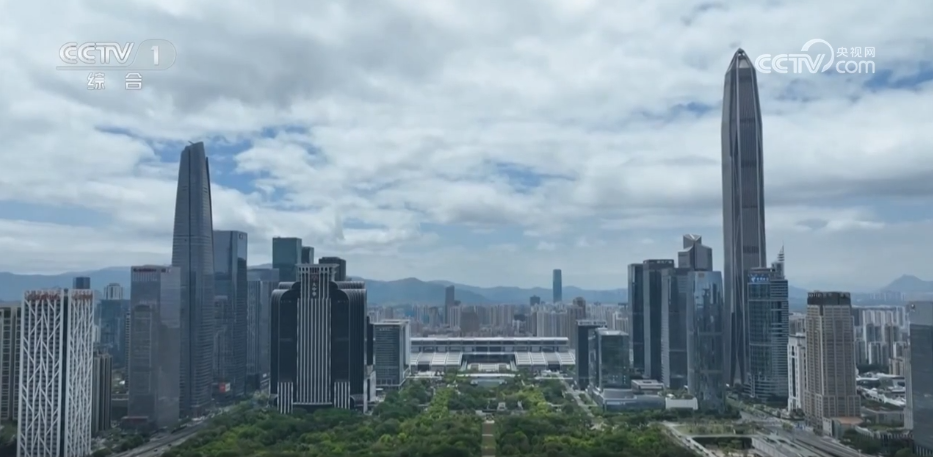
Core Insights - During the "14th Five-Year Plan" period, China's industrial robot production and localization rate have significantly improved, showcasing notable achievements in the industry [1] Group 1: Production and Market Share - In 2024, the sales volume of domestic brand industrial robots in China is projected to reach 177,000 units, with an average annual growth rate of 33.1% during the "14th Five-Year Plan" period [1] - The market share of domestic brands in China is expected to exceed 50% for the first time in 2024, reaching 58.5% [1] Group 2: Global Impact and Application - Since the beginning of the "14th Five-Year Plan," the newly installed capacity of industrial robots in China has accounted for over 50% of the global total, with applications across 71 major categories and 241 subcategories of the national economy [1] Group 3: Future Directions - In the "15th Five-Year Plan" period, China aims to promote deep integration of the robotics industry with new technologies such as artificial intelligence, while accelerating product innovation and iteration based on the specific demands of various robotic application scenarios [1]
研报掘金丨中邮证券:维持安徽合力“买入”评级,费用影响短期业绩,布局机器人产业
Ge Long Hui· 2025-11-12 07:33
Core Viewpoint - The report from Zhongyou Securities indicates that Anhui Heli achieved a net profit attributable to shareholders of 1.121 billion yuan in Q1-Q3 2025, representing a year-on-year decrease of 4.88% [1] - In Q3 alone, the net profit attributable to shareholders was 303 million yuan, reflecting a year-on-year decline of 11.84% [1] - The short-term performance is impacted by expenses, while the company is strategically positioning itself in the robotics industry [1] Financial Performance - For Q1-Q3 2025, the net profit attributable to shareholders was 1.121 billion yuan, down 4.88% year-on-year [1] - In Q3 2025, the net profit attributable to shareholders was 303 million yuan, down 11.84% year-on-year [1] Strategic Developments - The company is focusing on the robotics industry as part of its strategic layout [1] - The acquisition of Jianghuai Heavy Industry is part of the company's growth strategy [1]

感受进博会上的青春动能
Ren Min Ri Bao· 2025-11-11 22:40
Core Insights - The event showcased the active participation of young entrepreneurs as exhibitors, buyers, and partners, highlighting a vibrant entrepreneurial spirit at the expo [1] - The innovation incubation area exceeded 5,000 square meters for the first time, providing more opportunities for young entrepreneurs to showcase their products [2] - The expo serves as a platform for young entrepreneurs to gain industry insights and find collaboration opportunities through procurement meetings, investment negotiations, and industry forums [1][3] Group 1 - Danish entrepreneur Beike shared his experience of starting a high-speed 3D printing company that can produce a cochlear implant in 30 seconds, aiming to sell products to hearing aid stores and dental clinics [1] - Sun Meng, founder of Amac Technology, introduced a new generation of industrial robots, indicating that the team quickly upgraded their model based on specific production requests from companies after last year's expo [1] - Indian entrepreneur Tajire expressed his admiration for the innovative energy of the Chinese market and aims to explore more import-export opportunities [1] Group 2 - Young entrepreneur Xiao Sirui presented a cosmetic product ready for market launch, representing a startup incubator that brought multiple new products to the expo, attracting attention from several buyers [3] - Singaporean entrepreneur Yang Zuyi, a frequent attendee, established a pet rehabilitation hospital after learning about international medical device developments at the expo three years ago, emphasizing the value of the open and shared atmosphere [3] - The founder of Yufeng Future, Xie Ling, showcased a new generation of manned flying vehicles, receiving investment opportunities and global collaboration intentions at the expo [3] Group 3 - Suggestions were made to host international innovation competitions at the expo to provide better development opportunities for young entrepreneurs [4] - The Danish Consulate in Shanghai highlighted the acceleration of innovation in China, with new technologies and ideas converging in Shanghai, creating growth space for global entrepreneurial youth [4]
智同科技部分股权正通过北京产权交易所转让
Zhong Zheng Wang· 2025-11-11 07:57
公司专注于工业机器人用高精密摆线减速机的自主正向研发,产品广泛应用于各类工业机器人及高端工 程装备等领域。凭借强大的定制开发能力,智同科技不断拓展产品应用边界,逐步实现从工业到多行业 的精密传动全场景覆盖,致力于为全球机器人及高端制造企业提供标准化减速机产品,以及高精度减速 机的研发、定制与升级服务。目前,公司已取得中国机器人CR认证、人工智能应用标杆TOP100、国家 级专精特新"小巨人"企业、北京市专精特新中小企业等多项权威认证与荣誉。 在市场表现方面,智同科技已基本覆盖中国工业机器人领域的一线客户,与埃夫特、埃斯顿 (002747)、汇川技术(300124)、珞石机器人等国内主流企业达成稳定合作。数据显示,2024年公司 全年销量实现同比翻番,过去三年产销量复合增长率高达247%,市场份额提升至11.83%,位居行业第 三。未来,智同科技将持续加大海外市场投入,重点深耕欧洲、日韩等区域,力争在未来三年内将海外 市场销售占比提升至公司总营收的15%。 中证报中证网讯(记者刘丽靓)据北京产权交易所11月11日消息,北京智同精密传动科技有限责任公司(以 下简称"智同科技")3.0977%股权挂牌北京产权交易所 ...