数字货币

Search documents
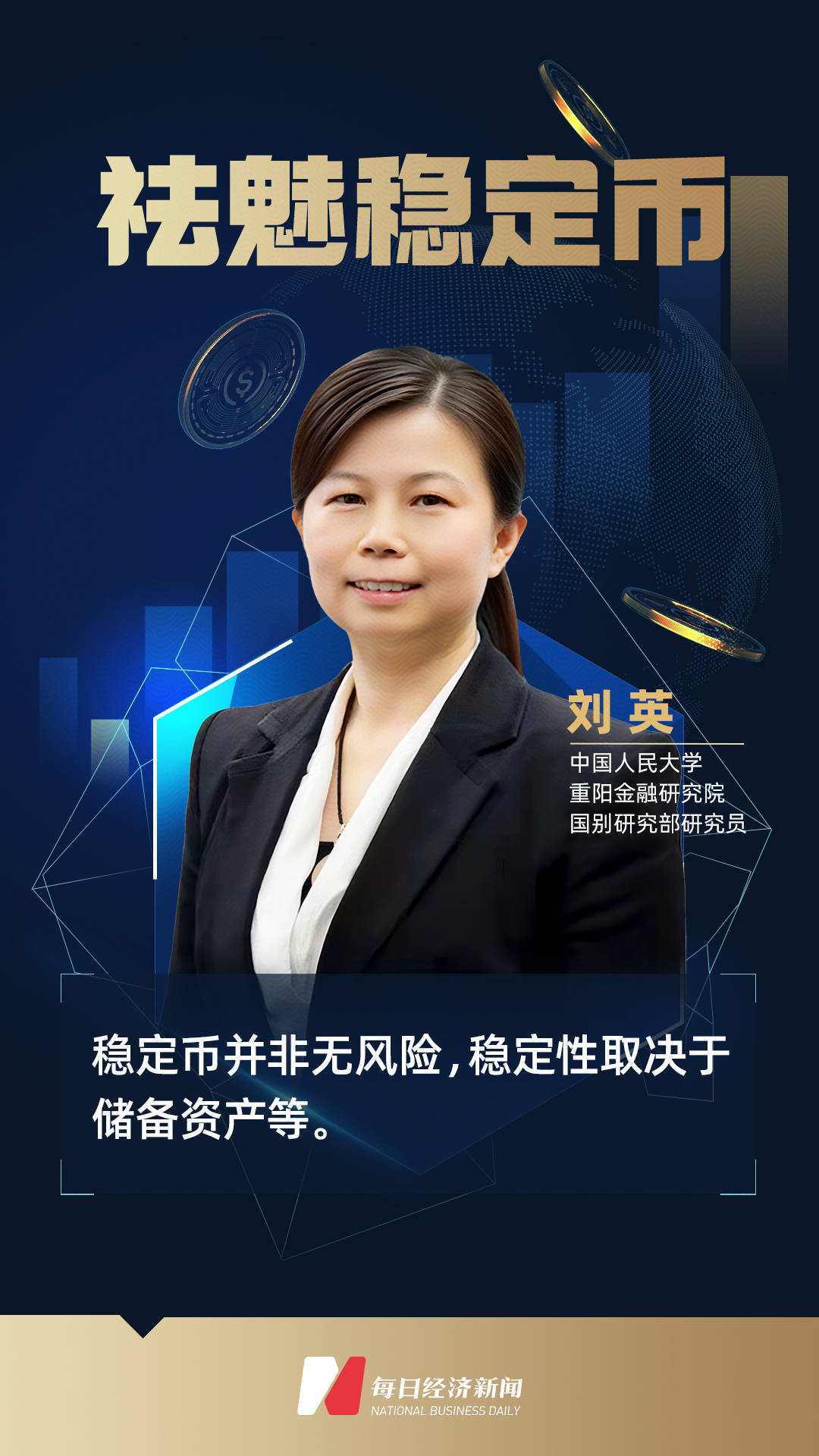
专访人大重阳金融研究院刘英:稳定币并非无风险,稳定性取决于储备资产等 | 祛魅稳定币
Sou Hu Cai Jing· 2025-07-22 12:42
Core Insights - The signing of the "Genius Act" and the upcoming implementation of the "Stablecoin Regulation" in Hong Kong signify a global "window period" for stablecoins, as the U.S. pushes for legislation to solidify the dollar's dominance in the global monetary system [1][6]. Group 1: U.S. Stablecoin Legislation - The U.S. has rapidly pushed through stablecoin legislation aimed at consolidating and enhancing the dollar's position in the global monetary system, extending its digital hegemony [6][7]. - Stablecoins tied to the dollar or U.S. Treasury bonds account for 99% of the market, highlighting their significant role in the financial landscape [6][7]. - The legislation will provide a regulatory framework for dollar stablecoins, attracting more institutional and technological innovation, thereby reinforcing U.S. leadership in the global crypto market [6][7]. Group 2: Structural Deficiencies of Stablecoins - Stablecoins face three major structural deficiencies that hinder their ability to serve as a pillar of the monetary system: lack of sovereign credit backing, trust barriers among different issuers, and inflexible asset-liability management [2][10][11]. - The reliance on reserve assets for stability raises concerns about their robustness, liquidity, and transparency, as well as the issuer's ability to maintain a 1:1 redemption promise under various market conditions [2][12][13]. Group 3: Risks and Market Dynamics - The expansion of dollar stablecoins has raised alarms among major central banks, with concerns about potential threats to monetary sovereignty and risks of capital flight in emerging markets [10][17]. - The model of stablecoin issuance linked to U.S. Treasury investments creates a closed loop that ensures the dollar's dominance in digital asset trading while providing a global funding pool for U.S. debt [7][8]. - The collapse of algorithmic stablecoins like UST serves as a stark reminder of the inherent risks associated with stablecoins, which are not equivalent to risk-free traditional currencies [14][16]. Group 4: Hong Kong's Regulatory Approach - Hong Kong is proactively establishing itself in the stablecoin regulatory landscape, aiming to leverage its position as a major offshore RMB trading center and enhance its financial infrastructure [17][19]. - The introduction of a stablecoin issuance sandbox and the passage of the "Stablecoin Regulation" provide a clear legal framework, reducing uncertainty for market participants and attracting major banks and enterprises [19][20].

年化率超过3678%? 警惕以“稳定币”为名的高收益陷阱
Sou Hu Cai Jing· 2025-07-22 09:40
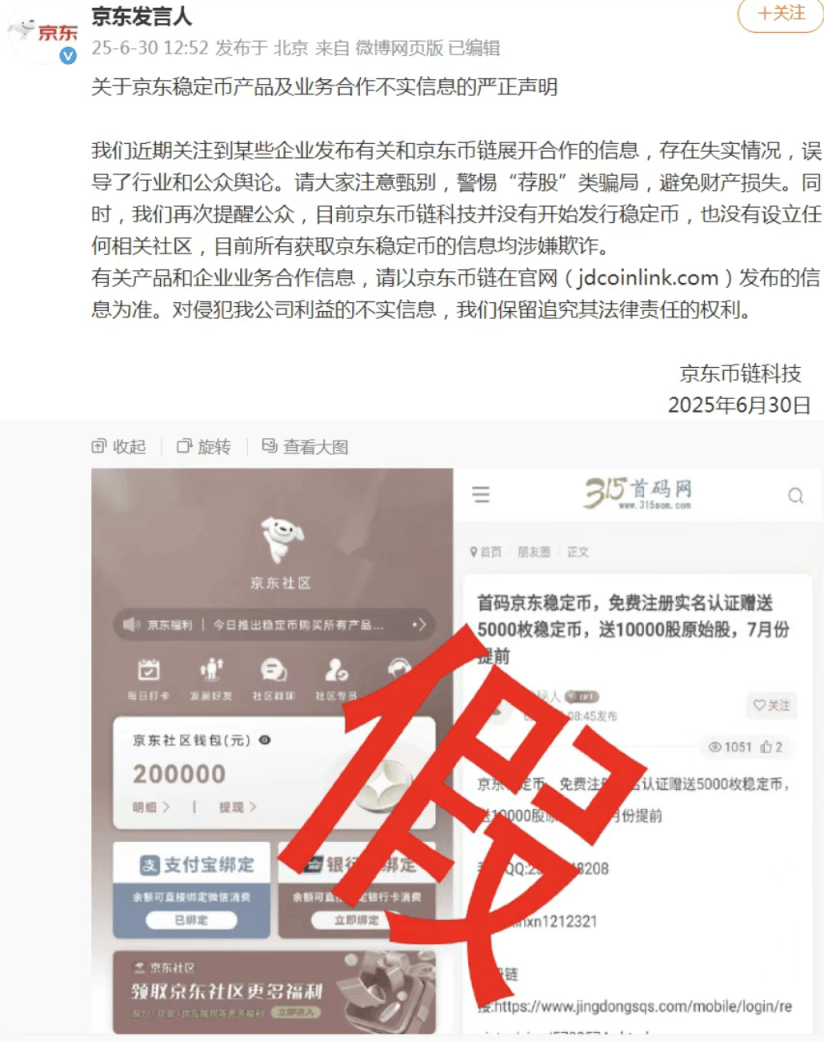
记者调查发现,市面上多个打着"稳赚不赔""固定高息"旗号的所谓"稳定币"投资项目在网上活跃,吸引公众参与。多地监管部门已就此发出风险警示。业内 专家特别提醒,公众应自觉远离未经批准的"数字理财"项目,切实守护好个人"钱袋子"。 近期,以虚拟货币"稳定币"为代表的相关概念被热炒,甚至沦为不法分子实施非法集资、诈骗的工具。日前,京东币链科技、蚂蚁数科等科技公司接连发布 公告,澄清市场流传的"稳定币"合作传闻。 稳定币是一种锚定真实资产的加密货币,其价值通常与某种法定货币、商品或其他资产挂钩。6月6日,香港特区政府公告称,《稳定币条例》将于8月1日生 效。届时香港金管局将接受牌照申请。受利好消息面影响,稳定币一跃成为全球最受瞩目、热度最高的资产之一,并引来相关概念被热炒。 此次公告中,京东币链科技表示,在取得香港稳定币发行人牌照前,所有以京东稳定币、JD-HKD、JD-USD等字样发币、吸引用户购买以及假借京东或京 东合作方名义发币的,均为骗局。 这是不到一个月的时间里,京东方面第二次就稳定币发布提示性声明。6月30日,京东发布《关于京东稳定币产品及业务合作不实信息的严正声明》,强调 目前所有声称"可获取京东稳定币 ...
稳定币元年:从加密交易到跨境支付革命|2025中国经济半年报
Hua Xia Shi Bao· 2025-07-22 06:20
Core Insights - The year 2025 is projected to be a turning point for stablecoins, transitioning from the periphery to mainstream adoption, with a global market cap exceeding $250 billion and annual transaction volume surpassing $35 trillion, outpacing Visa and Mastercard combined [1][3][4] Regulatory Framework - A global regulatory framework for stablecoins is taking shape, with major financial centers establishing clear compliance paths, marking 2025 as a watershed year for stablecoin regulation [3][4] - Hong Kong's Stablecoin Ordinance, effective August 1, 2025, introduces a licensing system for fiat-backed stablecoin issuers, balancing financial stability and innovation [3] - The U.S. GENIUS Act aims to create a comprehensive legal and regulatory framework for payment stablecoins, emphasizing the maintenance of the dollar's dominance and implementing tiered regulation [4] - The EU's MiCA regulation, effective from 2025, focuses on unified regulation to protect consumers and market integrity, requiring stablecoin issuers to register within the EU [4][5] Market Dynamics - Traditional financial institutions and tech giants are rapidly entering the stablecoin space, expanding its use from crypto trading to real-world payment solutions [8][9] - Major banks in the U.S. are exploring the launch of stablecoins, with institutions like JPMorgan and Bank of America in preliminary discussions [8] - Payment giants like Visa and Mastercard are accelerating their stablecoin initiatives, with Visa collaborating with crypto exchanges for cross-border transactions and Mastercard launching comprehensive stablecoin payment solutions [9] Cross-Border Payment Revolution - Stablecoins are positioned to revolutionize cross-border payments, addressing inefficiencies in traditional financial systems and offering a more flexible regulatory environment [10] - The ability of stablecoins to facilitate peer-to-peer transactions without relying on local banking systems makes them particularly suitable for emerging markets [10] Real World Assets (RWA) - The rise of stablecoins is facilitating the tokenization of real-world assets (RWA), enhancing liquidity and reducing transaction costs [11][14] - Major financial institutions are actively exploring RWA tokenization, with significant projects underway in the U.S., Dubai, and Hong Kong [13][14] - The global RWA market is projected to reach $16 trillion by 2030, with stablecoins expected to penetrate 30%-50% of this market [14]
7月21日芝加哥商业交易所(CME)比特币商品成交量报告已在中心更新!欢迎点击查看
news flash· 2025-07-22 05:33
Group 1 - The Chicago Mercantile Exchange (CME) has updated its Bitcoin commodity trading volume report as of July 21 [1] - The report is available for viewing on the Jin10 data center [1] - The update is part of the ongoing subscription service for digital currency news [1]
稳定币专家:全球稳定币产业探讨
2025-07-21 14:26
Summary of Stablecoin Industry Discussion Industry Overview - The stablecoin industry is gaining regulatory approval globally, with varying degrees of strictness across regions such as Hong Kong and the EU [1][4][16] - Stablecoins are primarily pegged to fiat currencies or various assets to maintain value stability, with USD-pegged stablecoins being particularly popular due to the dollar's dominance in the digital currency market [1][5][29] Core Insights and Arguments - **Core Applications of Stablecoins**: - Stablecoins facilitate easy conversion to local currencies, even in regions with strict regulations [2] - They maintain a stable value, supported by 1:1 backing with fiat assets and regular audits, enhancing user trust [2][5] - They are compatible with various blockchain networks, allowing for efficient transactions and liquidity [2][6] - **Regulatory Landscape**: - Different regions have begun issuing licenses for stablecoin operations, with Hong Kong planning to start its licensing program in August 2025 [2][4][16] - The regulatory environment varies, with the US and EU taking different approaches to stablecoin issuance and oversight [18][23] - **Market Dynamics**: - The popularity of USD-pegged stablecoins is attributed to their stability and the transparency of major issuers like Circle and Tether [5] - Stablecoins are increasingly used in e-commerce, providing lower transaction costs compared to traditional payment methods [7][11] - **Cross-Border Payments**: - Stablecoins offer significant advantages in cross-border transactions, enabling faster transfers compared to traditional systems like SWIFT [12] - They are particularly valuable in countries with high inflation, where residents convert local currency to stablecoins for value preservation [12] - **Investment Potential**: - Stablecoins are seen as both a reliable store of value and a potential investment tool, facilitating exchanges between different digital assets [13][26] - The ability to anchor stablecoins to multiple assets could enhance their value and expand their use cases [26][27] Additional Important Insights - **Technological and Compliance Roles**: - Technology providers play a crucial role in the stablecoin ecosystem, ensuring compliance with KYC and anti-money laundering regulations [19] - The integration of stablecoins into decentralized platforms can yield benefits such as interest earnings for users [14] - **Global Trends**: - Financial institutions and payment companies are becoming the primary issuers of stablecoins, with a growing demand for regulatory frameworks to ensure safety and liquidity [18][20] - The competitive landscape is evolving, with regions like Dubai and Singapore adopting different strategies to attract stablecoin development [22] - **Future of Stablecoins**: - There is potential for stablecoins to evolve beyond strict 1:1 fiat backing, allowing for more innovative financial products [26][28] - The rise of stablecoins is reinforcing the dollar's status as the world's primary currency, particularly in international trade [29] - **Internationalization of the Renminbi**: - To promote the internationalization of the Renminbi, strategies could include creating a Hong Kong dollar stablecoin and leveraging existing global networks [30]
楚天龙20250721
2025-07-21 14:26
Summary of the Conference Call Company Overview - **Company**: Chutianlong - **Industry**: Technology, Digital Currency, Telecommunications Key Points and Arguments Industry Performance and Outlook - The technology sector has shown better performance, sentiment, and order conditions compared to other industries, with a prediction that the large technology style will dominate the A-share market over the next three years [2][4] - Communication, computer, and media sectors are currently undervalued, with companies like ZTE, Xunxin, and Luxshare Precision having low price-to-earnings ratios around ten times [3][4] - AI technology is driving significant changes in the industry, with major figures like Bill Gates, Zuckerberg, and Musk recognizing its importance [3] Digital Currency Trends - The development of digital currencies is positive, with a global rise in stablecoins, including new legislation in the US and extensive promotion in Hong Kong [2][6] - Chutianlong is a leading company in the domestic digital currency sector, ranking first in traditional card business and participating in the formulation of national core standards [2][6] Financial Performance - Chutianlong expects a net loss of 35 to 40 million yuan in the first half of 2025, attributed to weak market demand, declining product bidding prices, slow payment from government clients, and increased R&D investment [2][7] - The company aims to improve internal efficiency and accelerate accounts receivable collection to achieve a turnaround by year-end [7] Business Segments - The most promising segments for profitability in the second half of 2025 are social security and telecommunications, with a leading market share in social security and expectations for growth in super SIM cards and IoT cards [8][9] - The company is increasing R&D investment in digital currency applications and AI certification [8][16] Stablecoin and RMB Internationalization - Chutianlong views the promotion of the digital RMB as crucial for the internationalization of the RMB, with stablecoin strategies centered around the RMB [10][15] - The company is actively involved in the development of digital currency operational institutions and systems, with ongoing projects in cross-border trade and settlement systems [12][14] Market Challenges and Strategies - The company faces challenges from slow account receivable recovery and increased competition in overseas markets, leading to a strategic focus on established products for international expansion [17][19] - Chutianlong is exploring partnerships with major companies for stablecoin development and cross-border applications, indicating a proactive approach to market opportunities [18][23] Future Outlook - Despite short-term performance pressures, the company expresses confidence in long-term growth, supported by increased business activities and strategic partnerships [24] - The company is optimistic about the future of stablecoins and their integration with digital RMB, highlighting the potential for innovative financial transactions [11][18] Additional Important Content - AI applications are beginning to show significant value, with developments in smart governance and potential for future growth in various sectors [21] - The company is exploring BIM (Building Information Modeling) and its integration with SIM cards and blockchain technology, indicating a focus on innovative solutions [22]
美国和香港稳定币法案的要点&落地后的投资路径
2025-07-21 00:32
Summary of Key Points from the Conference Call Industry Overview - The conference discusses the implications of the new stablecoin regulations in the United States and Hong Kong, focusing on compliance, liquidity, and market participation by traditional financial institutions [1][2][4]. Core Points and Arguments - **U.S. Stablecoin Legislation (Genius Act)**: - Requires issuers to meet bank-level compliance and maintain 100% high-quality liquid asset reserves [1][2]. - Prohibits re-hypothecation of reserves and mandates monthly reserve disclosures signed by the CEO and CFO [2]. - Large issuers (over $10 billion) must accept federal oversight, while smaller issuers can opt for state-level regulation [2]. - **Hong Kong Stablecoin Regulations**: - Effective from August, requiring a minimum paid-up capital of HKD 25 million and sufficient high-liquid reserves to ensure 1:1 redemption capability [1][3]. - Customer assets must be managed separately to enhance financial stability [1][3]. - **Traditional Financial Institutions' Involvement**: - Major banks like JPMorgan and Bank of America are actively engaging in the stablecoin market, indicating a shift towards integration and diversification in financial markets [4][9]. - The participation aims to share profits from stablecoin operations and prevent deposit outflows to digital platforms [9][10]. - **Foreign Stablecoin Issuers**: - Must register with the U.S. Office of the Comptroller of the Currency (OCC) to operate in the U.S. [5]. - Tether plans to ensure compliance with the Genius Act and is considering launching a new USD-pegged stablecoin [5]. - **Unique Aspects of Hong Kong's Licensing System**: - Requires all stablecoins pegged to HKD or USD to apply for a license through the Hong Kong Monetary Authority, ensuring strict regulatory oversight [6][7]. Additional Important Insights - **Impact on Ethereum Ecosystem**: - The stablecoin regulations are expected to increase demand for Ethereum as traditional financial companies explore its infrastructure for asset allocation [14]. - Ethereum's price has risen approximately 3.9%, reflecting market confidence in its potential [14]. - **Market Dynamics and Investment Opportunities**: - The introduction of stablecoin regulations is likely to create significant infrastructure development opportunities for traditional financial institutions [15]. - Companies involved in the transition of traditional crypto assets to compliant frameworks may present lucrative investment opportunities, particularly in the Hong Kong market [18][19]. - **Considerations for Licensing Applications**: - Companies should focus on their operational scenarios and capabilities, especially in virtual asset trading and payment solutions, to enhance their chances of obtaining stablecoin licenses [17]. - **Future Participation of Global Companies**: - Non-U.S. companies, including major internet firms, are expected to explore opportunities in the North American stablecoin market, indicating a broader global interest [12][13].
下注未来 当前时点如何看待科技股
2025-07-21 00:32
Summary of Key Points from Conference Call Industry Overview - The conference call primarily discusses the **PCB (Printed Circuit Board)** industry and its growth driven by the surge in **AI computing power demand**. The expansion of **HDI (High-Density Interconnect)** technology in GPU OM cards and UBB is highlighted, with an innovative orthogonal backplane solution expected to launch in the second half of 2027, further expanding the PCB market size [1][2]. Core Insights and Arguments - **AI Demand Impact**: The rapid increase in AI model iterations and applications is significantly boosting the demand for computing power, which in turn is driving the growth of the server market. Major companies like NVIDIA are heavily investing in GPU servers and customized ASIC chips, creating substantial demand for PCBs [2][6]. - **Market Leaders**: Companies such as **胜宏 (Shenghong)**, **生益电子 (Sengyi Electronics)**, and **鹏鼎东山 (Pengding Dongshan)** are expected to see their market capitalization exceed 100 billion due to the increased demand for PCBs [6]. - **Material Trends**: The PCB industry is transitioning towards high-frequency and high-speed applications, benefiting upstream materials like **copper-clad laminates**, **glass fiber cloth**, and **resin materials**. Key players in these areas include **台光 (Taiguang)**, **联茂 (Lianmao)**, and **台耀 (Taiyao)** [3][4]. - **High-End Copper Foil**: The demand for high-end copper foil is expected to rise due to requirements for high frequency, high thermal conductivity, and high density. Products like HVLP3 and HVLP4 will be widely used in advanced copper-clad laminates, with companies like **德福科技 (Defu Technology)** and **同冠同博 (Tongguan Tongbo)** making significant investments in this area [5][6]. Additional Important Insights - **AI Application Monetization**: The domestic and international AI landscape is entering a phase of significant upgrades, with large models being released, which is accelerating the monetization of AI applications. This is expected to alleviate concerns about an AI bubble and support the growth of the computer industry [7]. - **Government Support**: Both the US and China are increasing their strategic focus and policy support for AI, particularly in sectors like agriculture, industry, education, healthcare, and justice. Companies such as **会云通 (Huiyuntong)** in AI agriculture and **鼎捷数智 (Dingjie Zhizhi)** in industrial AI are highlighted as potential beneficiaries [8][9]. - **Digital Currency Trends**: The implementation of new regulations in Hong Kong is expected to boost digital currency license applications and user growth, with companies like **恒生电子 (Hang Seng Electronics)** and **基证 (Jizheng)** actively participating in this transformation [10]. - **Light Module Industry**: The light module industry is projected to perform strongly in 2025, with companies like **旭创 (Xuchuang)** and **新易盛 (Xinyi Sheng)** exceeding market expectations. Despite this, their valuations remain low, indicating potential for significant growth [20][21]. This summary encapsulates the key points discussed in the conference call, focusing on the PCB industry, AI demand, material trends, and the implications for various companies and sectors.
何山海:美欲将稳定币变为金融霸权蓄水池
Sou Hu Cai Jing· 2025-07-20 23:19
Group 1 - The core idea of the "Genius Act" is to establish a regulatory framework for digital stablecoins, aiming to reduce the U.S. dependence on foreign sovereign debt holders and enhance fiscal independence [1][2][5] - The act seeks to create a non-sovereign, compliant buyer system for U.S. Treasury bonds, allowing stablecoin issuers to purchase these bonds, thereby reclaiming "debt sovereignty" from foreign nations [2][3] - Stablecoins, being less politically influenced and driven by market demand, provide a mechanism to mitigate risks associated with foreign creditors potentially weaponizing their debt holdings against U.S. policies [2][4] Group 2 - The "Genius Act" is part of a broader strategy to extend U.S. dollar dominance into the digital finance era, addressing challenges posed by cryptocurrencies and enhancing the dollar's utility in cross-border payments [3][4] - By institutionalizing the stablecoin market, the U.S. government aims to create a self-sustaining pool of capital that continuously supports U.S. Treasury bonds, thus reinforcing financial sovereignty [3][5] - The act is seen as a critical tool in the U.S. "de-risking" strategy, allowing the country to maintain influence in a rapidly evolving global financial landscape while addressing the limitations of traditional financial systems [4][6]
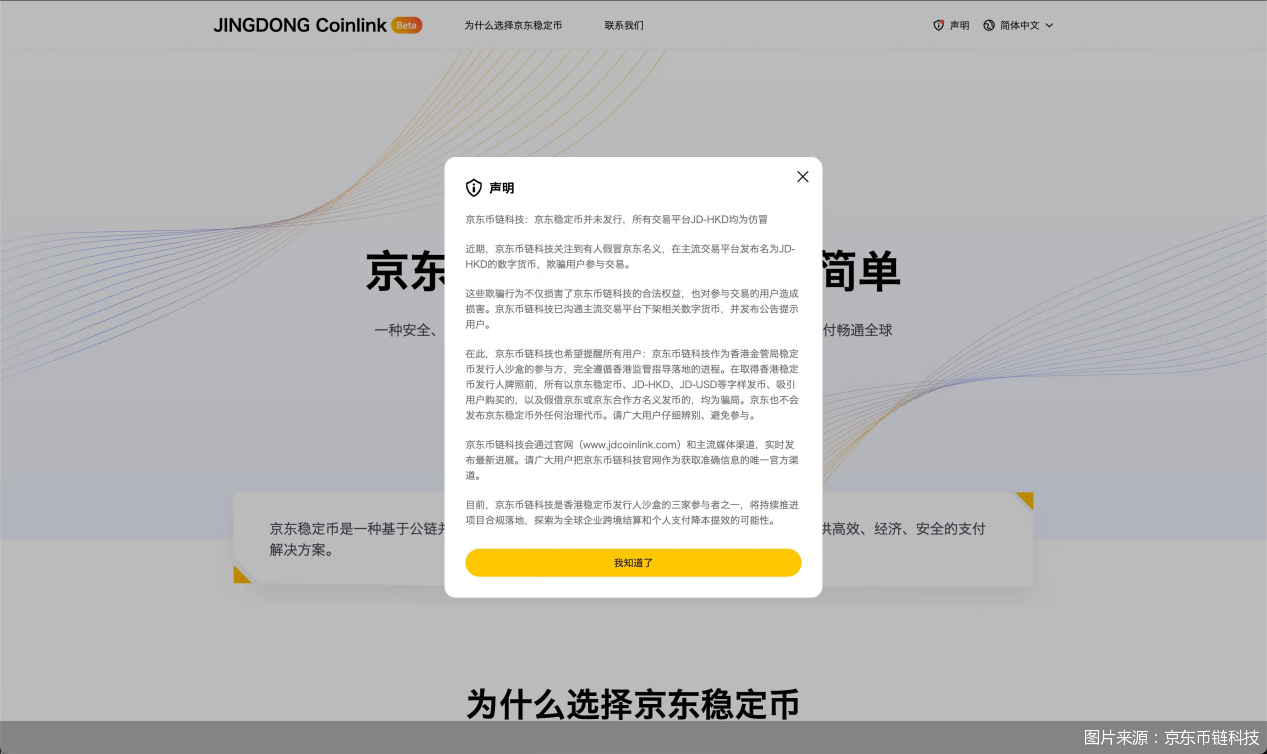
京东币链科技辟谣“JD-HKD”,警惕火热稳定币概念背后的陷阱
Bei Jing Shang Bao· 2025-07-20 11:57
Group 1 - JD Coin Chain Technology has issued a statement regarding the fraudulent use of its name in the promotion of a digital currency called JD-HKD, warning users to avoid participation in such scams [1] - The company emphasizes that it is a participant in the Hong Kong Monetary Authority's stablecoin issuance sandbox and is adhering to regulatory guidelines [1] - All tokens claiming to be JD stablecoins or using similar names are identified as scams, and JD will not issue any governance tokens outside of its stablecoin [1] Group 2 - Ant Group also warned about companies exploiting the concepts of "RWA" and "stablecoins" for fraudulent activities, indicating potential false collaborations with Ant Group [2] - The market for stablecoins has been heating up following the passage of the Stablecoin Regulation in Hong Kong, leading to an increase in scams using the stablecoin concept [2] - Regulatory bodies in various regions, including Beijing and Shenzhen, have issued warnings about scams that lure the public with high returns through the packaging of stablecoins and virtual currencies [2] Group 3 - Scams related to stablecoins often evolve from initial misinformation to Ponzi schemes, utilizing fake information and impersonating legitimate institutions [3] - Fraudsters may create fake applications or websites that closely resemble official ones to deceive consumers into making deposits, often showcasing false high returns [3] - The marketing strategies for these scams may include high-return promises, recruitment incentives, and misleading educational events [3]