茶叶

Search documents
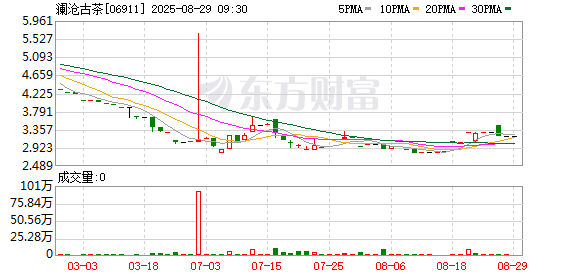
澜沧古茶中期股东应占亏损2894.6万元
Zheng Quan Shi Bao Wang· 2025-08-29 01:20
Core Insights - The company reported a revenue of 120 million RMB and a gross profit of 61.67 million RMB for the six months ending June 30, 2025, with a shareholder loss of 28.946 million RMB, translating to a loss per share of 0.23 RMB [2] Financial Performance - Revenue for the reporting period was 120 million RMB [2] - Gross profit amounted to 61.67 million RMB [2] - The company experienced a shareholder loss of 28.946 million RMB [2] - Loss per share was reported at 0.23 RMB [2] Market Strategy - The company adopted a market and customer demand-centric retail strategy to enhance its operational sustainability [2] - Adjustments were made in operational management, product development, and marketing policies to respond to changing consumer trends [2] Sales Channels - Sales revenue from offline distribution channels decreased by 71.5% year-on-year, primarily due to weak consumer spending in physical stores [2] - Conversely, sales from large customer channels grew by 103.7% year-on-year [2] Cost Management - The company optimized its business operations and service structure to improve operational efficiency and market responsiveness [2] - Sales and marketing expenses were reduced by 38.1% year-on-year [2] - Administrative expenses decreased by 16.8% year-on-year [2]

新股消息 | 八马茶业再次递表港交所 线下门店数量超3500家
智通财经网· 2025-08-28 22:54
Core Viewpoint - Baima Tea Industry Co., Ltd. has submitted an application to list on the Hong Kong Stock Exchange, with Huatai International, Agricultural Bank of China International, and Tianfeng International as joint sponsors [1][3]. Company Overview - Baima Tea is a leader in the high-end tea market in China, projected to be the top seller in the high-end Chinese tea sector in 2024 and recognized as the most well-known tea brand in China [3]. - The company ranks first among Chinese tea suppliers in terms of the number of tea chain specialty stores as of December 31, 2024, and leads in sales revenue in the high-end tea market, as well as in the Oolong and black tea markets [3]. Market Growth - The overall Chinese tea market is expected to grow from approximately RMB 288.9 billion in 2020 to about RMB 325.8 billion in 2024, with a compound annual growth rate (CAGR) of around 3.0%, and projected to reach approximately RMB 407.9 billion by 2029, with a CAGR of about 4.6% from 2024 to 2029 [4]. - The high-end tea market in China is growing faster than the overall tea market, with its size increasing from approximately RMB 89 billion in 2020 to about RMB 103.1 billion in 2024, reflecting a CAGR of approximately 3.7%, and expected to reach around RMB 135.3 billion by 2029, with a CAGR of about 5.6% from 2024 to 2029 [4]. Company Performance - The number of Baima Tea's offline stores (including direct-operated and franchised stores) is projected to increase from 2,613 as of January 1, 2022, to 3,585 by June 30, 2025, with franchised stores rising from 2,203 to 3,341 during the same period [6]. - Financial performance shows revenue for the fiscal years ending December 31 for 2022, 2023, and 2024, and for the six months ending June 30, 2025, as follows: approximately RMB 1.82 billion, RMB 2.12 billion, RMB 2.14 billion, and RMB 1.06 billion respectively [6][7]. - The net profit for the same periods is approximately RMB 166 million, RMB 206 million, RMB 224 million, and RMB 120 million respectively [7].
八马茶业再次递表港交所 线下门店数量超3500家
Zhi Tong Cai Jing· 2025-08-28 22:52
Core Viewpoint - Baima Tea Co., Ltd. has submitted its application to list on the Hong Kong Stock Exchange, with Huatai International, Agricultural Bank of China International, and Tianfeng International as joint sponsors [1] Company Overview - Baima Tea is a leader in China's high-end tea market, projected to be the top seller in the high-end Chinese tea sector in 2024 and recognized as the most well-known tea brand in China [3] - The company ranks first among Chinese tea suppliers in terms of the number of tea chain specialty stores as of December 31, 2024, and leads in sales revenue in the high-end tea market, as well as in the oolong and black tea segments [3] - Baima Tea has maintained the highest sales of Tieguanyin tea for over 10 years, Wuyi Rock tea for five years, and black tea for four years [3] - According to the 2024 China Customer Satisfaction Index report by Chnbrand, the "Baima" brand ranks first in brand awareness among Chinese chain tea brands [3] Market Analysis - The overall scale of the Chinese tea market is expected to grow from approximately RMB 288.9 billion in 2020 to about RMB 325.8 billion in 2024, with a compound annual growth rate (CAGR) of approximately 3.0%, and projected to reach around RMB 407.9 billion by 2029, with a CAGR of about 4.6% from 2024 to 2029 [4] - The high-end tea market in China is growing faster than the overall tea market, with its size increasing from approximately RMB 89 billion in 2020 to about RMB 103.1 billion in 2024, reflecting a CAGR of approximately 3.7%, and expected to reach around RMB 135.3 billion by 2029, with a CAGR of about 5.6% from 2024 to 2029 [4] - The market share of the top five companies in the high-end tea market has increased from approximately 5.5% in 2020 to about 5.6% in 2024, with Baima Tea's market share rising from approximately 1.1% to about 1.7% during the same period [4] Financial Performance - The number of Baima Tea's offline stores (including direct-operated and franchised stores) is projected to grow from 2,613 as of January 1, 2022, to 3,585 by June 30, 2025, with franchised stores increasing from 2,203 to 3,341 [6] - The company's revenue for the fiscal years ending December 31 for 2022, 2023, and 2024, as well as for the six months ending June 30, 2025, is reported as approximately RMB 1.82 billion, RMB 2.12 billion, RMB 2.14 billion, and RMB 1.06 billion respectively [6][7] - The net profit for the same periods is approximately RMB 166 million, RMB 206 million, RMB 224 million, and RMB 120 million respectively [7] - The average inventory turnover days for the years ending December 31, 2022, 2023, and 2024, as well as for the six months ending June 30, 2025, are reported as 166 days, 158 days, 166 days, and 168 days respectively [6]
今米房集团拟与云南西双版纳公司开展合作 开拓中国茶叶业务的销售及市场推广
Zhi Tong Cai Jing· 2025-08-28 16:25
目前,业务合作伙伴旗下经营(其中包括)三个初级加工厂及一个精鍊厂,总楼面面积超过1.5万平方米。 业务合作伙伴亦拥有逾3500亩古茶园,其中包括逾3500棵千年古茶树,茶叶年产量逾80吨。业务合作伙 伴以保护古茶园生态系统为使命,力求传承与创新双轨并进,致力于将正宗古茶送达每家每户。集团一 直与业务合作伙伴保持积极沟通,并拟于不久将来与业务合作伙伴订立谅解备忘录╱合作协议,共同成 立公司开展于中国云南省西双版纳的茶叶销售与市场推广、业务开发、茶产品销售及业务合作伙伴资产 活化。 董事认为,开拓中国茶叶业务的销售及市场推广符合公司及股东的整体利益。董事认为,集团将能够利 用其于餐饮业的既定经验及专业知识发展新业务,从而进一步多元化集团的收入来源,并最终提升集团 的整体财务表现。 今米房集团(08300)发布公告,公司已决议与一家成立于中国云南省西双版纳的公司(业务合作伙伴)开展 合作,于中国展开茶叶业务的销售与市场推广。业务合作伙伴的经营范围包括茶叶、预包装食品及散装 食品批发零售;茶叶种植、初加工、精制与销售;休閒农业旅游;餐饮服务及网络销售。 ...
今米房集团(08300)拟与云南西双版纳公司开展合作 开拓中国茶叶业务的销售及市场推广
智通财经网· 2025-08-28 16:21
Core Viewpoint - The company has decided to collaborate with a business partner based in Xishuangbanna, Yunnan, China, to develop tea sales and marketing operations in China [1] Group 1: Business Collaboration - The business partner's operations include wholesale and retail of tea, pre-packaged and bulk food, tea cultivation, initial processing, refinement, and sales, as well as leisure agricultural tourism and catering services [1] - The business partner operates three primary processing factories and one refining factory, with a total floor area exceeding 15,000 square meters [1] - The business partner owns over 3,500 acres of ancient tea gardens, including more than 3,500 ancient tea trees, with an annual tea production exceeding 80 tons [1] Group 2: Strategic Intent - The mission of the business partner is to protect the ancient tea garden ecosystem while striving for both heritage and innovation, aiming to deliver authentic ancient tea to every household [1] - The company has maintained active communication with the business partner and plans to soon establish a memorandum of understanding or cooperation agreement to jointly develop tea sales, marketing, and asset revitalization in Xishuangbanna [1] - The board believes that expanding into the Chinese tea business aligns with the overall interests of the company and its shareholders, leveraging existing experience in the catering industry to diversify revenue sources and enhance overall financial performance [1]
今米房集团(08300) - 自愿性公佈 业务最新资讯
2025-08-28 10:51
香 港 交易 及 結 算 所 有限 公 司 及 香港 聯 合 交 易 所有 限 公 司 對 本公 佈 的 內 容概 不 負 責, 對 其 準 確 性或 完 整 性 亦不 發 表 任 何 聲明 , 並 明 確 表示 概 不 就 因本 公 佈 全部 或 任 何 部 分內 容 而 產 生或 因 依 賴 該 等內 容 而 引 致 的任 何 損 失 承擔 任何責任。 JIN MI FANG GROUP HOLDINGS LIMITED 今 米 房 集 團 控 股 有 限 公 司 ( 於開曼群島註冊成立的有限公司) (股份代號:8300) 自願性公佈 業務最新資訊 業 務 合作 夥 伴 訂 立 諒解 備 忘 錄 ╱合 作 協 議 , 共同 成 立 公 司 開展 於 中 國 雲南 省 西 雙版 納 的 茶 葉 銷售 與 市 場 推廣 、 業 務 開 發、 茶 產 品 銷 售及 業 務 合 作夥 伴資產活化。 誠 如 本 公 司 截 至 二 零 二 五 年 三 月 三 十 一 日 止 年 度 的 年 報 所 披 露 , 由 於 自 COVID -19疫情爆發以來及於後疫情時代,香港整體餐飲市場持續存在不確 定 性 ,本 集 ...
“绿叶子”变“金叶子” 科技赋能撑起农户“钱袋子”
Yang Shi Wang· 2025-08-28 07:59
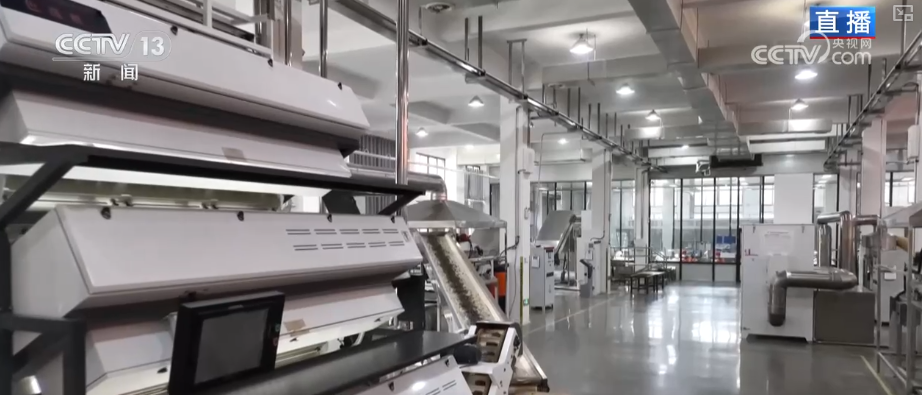
Core Viewpoint - Fujian Fuding is recognized as the "Hometown of Chinese White Tea," benefiting from a unique climate that enhances the flavor of white tea, with peak production occurring during the Mid-Autumn Festival and National Day [1] Processing and Production - White tea processing is divided into two main stages: initial processing in the tea garden, which includes withering and drying, followed by refining in a processing facility [4] - A fully automated white tea refining production line in Fuding operates continuously during the peak season, processing 6 tons of white tea daily for various markets [5] Quality Control - The refining process involves critical tasks such as sorting to remove impurities like old leaves, broken tea, and foreign materials [7] - The first step in sorting is "color selection," using infrared technology to identify and eliminate discolored tea leaves [9] - Following color selection, "shape selection" employs AI to assess the size and shape of tea leaves, removing stems and stones, while "high-pressure static electricity" removes fine hairs and feathers [11] - The final step, "air selection," uses airflow to separate lighter fragments from the quality tea leaves, which is more efficient than traditional manual methods [12][14] Integration of Tradition and Technology - The combination of traditional methods and modern technology enhances the quality of white tea while preserving its traditional flavor [16] Economic Impact - The "enterprise + union + farmer" model has been implemented to standardize tea cultivation and management, leading to improved quality and increased income for tea farmers [19] - The comprehensive output value of Fuding white tea is projected to reach 15.518 billion yuan in 2024, highlighting its significance as a source of income for local farmers [19]
一叶兴百业
Zhong Guo Zi Ran Zi Yuan Bao· 2025-08-27 02:51
Core Viewpoint - Wuyishan City prioritizes ecological protection while integrating culture, technology, and industry to promote the coordinated development of the tea industry, achieving significant economic growth and rural revitalization through the tea sector [2][4][18]. Group 1: Tea Industry Development - The tea industry in Wuyishan faced significant challenges, including low standards in tea garden area, production, market share, and product quality, which limited its economic impact [2]. - By 2024, the tea garden area expanded to 148,000 acres, with the number of workers increasing over tenfold, and the total industry output value surpassing 15 billion yuan, contributing to nearly half of rural residents' income [3]. Group 2: Cultural Empowerment - Wuyishan emphasizes the "living heritage" of tea culture, integrating ecological and historical values to drive high-quality regional development, showcasing the transformation from "green mountains and clear waters" to "golden mountains and silver mountains" [6]. - The city has established a comprehensive cultural communication strategy, including digital content and brand activities, to promote the ecological and cultural values of Wuyishan tea [6]. Group 3: Technological Empowerment - Wuyishan leverages technological innovation to reconstruct the tea industry's ecological value chain, enhancing quality and value through a full-chain technological upgrade [8]. - Collaborations with research institutions have led to the establishment of a provincial tea tree germplasm resource nursery, preserving and cultivating various tea varieties to enhance competitiveness [9][12]. Group 4: Industry Strengthening - The city promotes the development of large-scale and clustered tea enterprises, with 38 regulated tea companies by 2024, including three national leading enterprises, enhancing ecological value and sustainability [14][15]. - Wuyishan is building a traceable green production quality control system and a digital twin platform for the tea industry, achieving a 99.6% compliance rate in product inspections [15]. Group 5: Institutional Innovation - Wuyishan implements various ecological tea garden technologies and promotes a unified approach to ecological protection and economic development, ensuring mutual benefits for both [17][18]. - The establishment of a leadership group for high-quality tea industry development facilitates cross-departmental collaboration, enhancing policy formulation and industry planning [17].

茶旅双城跨省联动宜兴长兴斗茶促消费
Xin Hua Ri Bao· 2025-08-26 21:58
Group 1 - The "2025 Yixing VS Changxing Tea Tasting Conference" was held in Yixing, showcasing local teas and promoting cultural exchange between the two regions [1] - The event included promotional activities such as discounted scenic area tickets, accommodation, and local tea products, aimed at enhancing tourism and consumer engagement [1] - The tea industry in Yixing is significant, with 75,000 acres of tea gardens producing 1,086 tons of premium tea annually, generating a value of 610 million yuan [2] Group 2 - Yixing is recognized as Jiangsu's largest tea-producing area and one of the first Chinese famous tea towns, emphasizing the importance of tea industry development [2] - The region focuses on optimizing green ecological production techniques and enhancing the standardization and intelligent processing of tea [2] - Yixing actively integrates tea culture with tourism through innovative events, positioning its ancient tea as a new city brand [2]
湖北郧西:七夕产业“旺”起来
Ren Min Wang· 2025-08-26 11:29
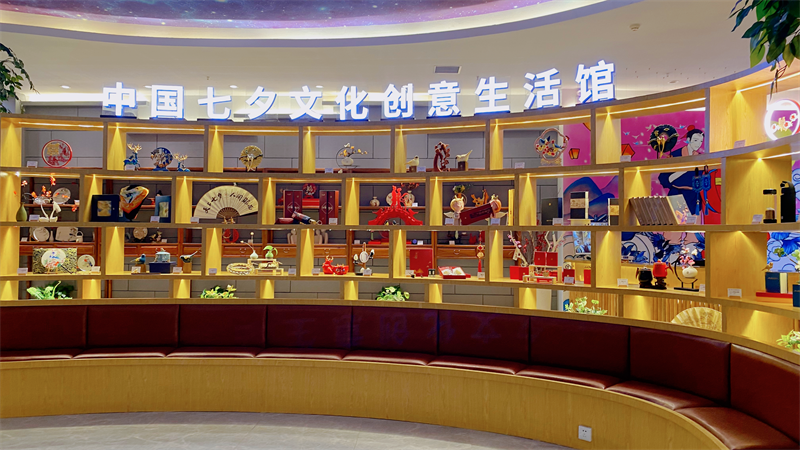
Group 1 - The core viewpoint of the articles highlights the integration of local cultural resources, specifically the Qixi Festival culture, into economic development, transforming traditional customs into economic empowerment for the region [2][6]. - The Qixi Tea Company in Yuxi County has produced 30,000 pounds of finished red tea this year, with an expected annual output value of over 35 million yuan, showcasing effective utilization of local tea resources [1]. - The county has developed over 5,000 acres of tea plantations through land transfer, directly benefiting over 500 local farmers by increasing their income [1]. Group 2 - The China Qixi Cultural Creative Life Museum has seen significant sales, with over 10,000 items sold in three days, generating more than 900,000 yuan in revenue, indicating strong consumer interest in Qixi-themed products [2]. - The county has launched various cultural products that incorporate Qixi elements, such as wedding customs and travel gift boxes, enhancing the cultural and economic synergy [2][6]. - Yuxi County has over 110 cultural industry enterprises related to the Qixi chain and has registered more than 120 trademarks, reflecting a robust growth in cultural entrepreneurship [6]. Group 3 - The county actively participates in national events to promote its cultural and agricultural products, aiming to expand the reach of "Yuxi Qixi" beyond local boundaries [6]. - Yuxi's Qixi cultural IP was recognized as one of the "Top 10 Annual IPs" at a major event, highlighting its potential for national recognition alongside other significant cultural IPs [6].