
智能网联汽车

Search documents
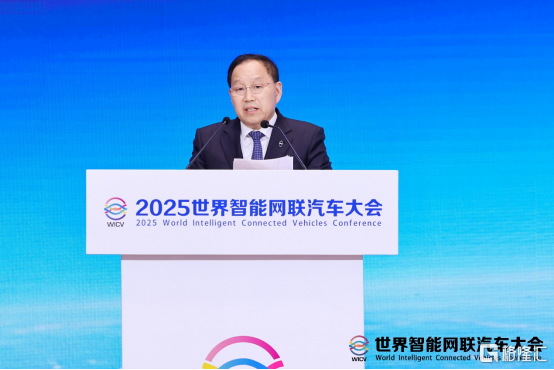
2025世界智能网联汽车大会开幕 赛力斯张兴海:安全是最大的豪华
Ge Long Hui· 2025-10-16 10:41
Core Insights - The 2025 World Intelligent Connected Vehicle Conference commenced in Beijing, highlighting the transformative impact of technological innovation on the automotive industry [1] - The chairman of Seres Group emphasized the need for a balance between safety and development while pursuing five major transformations in new vehicles: intelligent electric, digital space, intelligent connectivity, constant innovation, and travel partnership [1] Group 1: Industry Transformation - Rapid advancements in electrification, intelligence, connectivity, and sharing are driving a transformation in new vehicles, providing users with a novel driving experience [3] - The concept of proactive safety, likened to an "invisible guardian," addresses many safety issues associated with traditional vehicles, reinforcing the idea that safety is the ultimate luxury [3] Group 2: Safety Innovations - Seres Group has established a comprehensive intelligent safety system based on over 190 driving scenarios and 340 safety features, focusing on four key areas: life protection, vehicle body protection, health care, and privacy protection [3] - The company adheres to the principle that "no safety, no intelligence; no safety, no electrification; no safety, no luxury," continuously enhancing its intelligent safety framework [3] Group 3: Performance Metrics - As of now, the AITO Wenjie assisted driving system has accumulated nearly 3.8 billion kilometers, preventing over 2 million potential collisions and providing proactive services exceeding 200,000 instances [5] - The Wenjie M9 has become the first model to achieve over 4G in the C-IASI safety test, while the Wenjie M8 received the best overall score in the China Automotive Research "China Intelligent Vehicle Index" evaluation [5] Group 4: Future Outlook - The automotive industry is rapidly entering an era of deep exploration in AI, with Seres Group accelerating its exploration and layout to deliver a more emotional, intelligent, safe, and reliable travel experience for users [5]


雷军:智能网联汽车行业要共同抵制水军、黑公关等网络乱象
Sou Hu Cai Jing· 2025-10-16 10:24
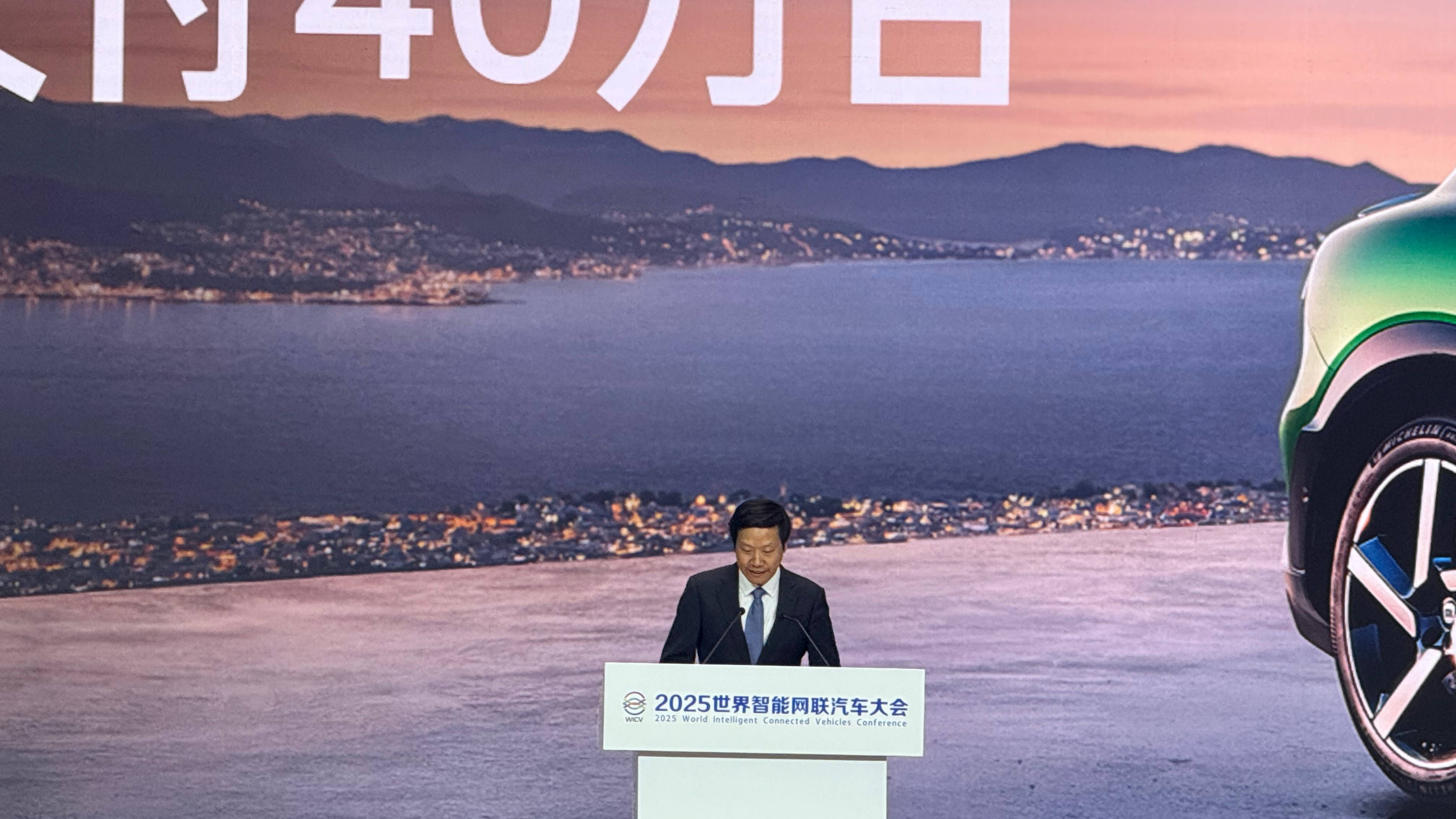
10月16日,由工业和信息化部、交通运输部、北京市人民政府联合主办的2025世界智能网联汽车大会在北京召开。小米集团创始人、董事长兼CEO雷军在大 会上发言时表示,全行业要在政府的指导下,以安全为基础,质量为根本,创新为方向,携手围绕重要的底层技术和重要的研发领域,把资源和精力集中到 科技创新和技术研发上,共同抵制水军、黑公关等网络乱象,一起营造积极向上、文明有序的产业发展环境。 上证报中国证券网讯(记者 窦世平 俞立严)10月16日,由工业和信息化部、交通运输部、北京市人民政府联合主办的2025世界智能网联汽车大会在北京召 开。小米集团创始人、董事长兼CEO雷军在大会上发言时表示,智能网联汽车行业非常复杂,涉及到的领域非常广泛,这不是一个单点突破的竞赛,而是一 个需要全行业共建共享的生态变革。 雷军介绍,小米已宣布造车4年半、产品发布1年半,在这个时间里共交付约40万台汽车。"智能网联汽车上半场电动化已初步完成,下半场智能化正在逐步 深入,智能化一系列的创新技术正在重塑汽车的产品定义、生产模式、商业模式和用户体验。" 雷军介绍,小米汽车的发布完成了人、车、家全生态的正式闭环,生态的价值正在逐步显现。至今,小 ...

雷军最新发声
财联社· 2025-10-16 10:21
Core Viewpoint - The development of intelligent connected vehicles is at a historical opportunity period, requiring industry unity and collaboration to build a new ecosystem and promote industry growth [1] Group 1: Industry Collaboration - The industry should unite under government guidance, focusing on safety, quality, and innovation to advance technological research and development [1] - There is a call to resist negative online phenomena such as cyberbullying and black public relations, fostering a positive and orderly development environment for the industry [1] Group 2: Technological Trends - AI large models are identified as a future trend for intelligent connected vehicles, presenting significant innovation opportunities [1] - Edge AI models can operate without internet connectivity, integrating signals from various sensors like cameras and microphones to enable features such as emotion recognition and multimodal interaction [1] Group 3: Company Strategy - The core strategy of the company is the "human-vehicle-home ecosystem," with automobiles being a crucial node [1] - Through interconnected scenarios and terminals, vehicles can leverage the entire ecosystem's AI computing power, offering diverse application scenarios and broad future industry opportunities [1]

9部门:推动智慧城市基础设施与智能网联汽车协同发展
Zhong Guo Xin Wen Wang· 2025-10-16 09:29
Core Viewpoint - The recent action plan issued by the Ministry of Housing and Urban-Rural Development and nine other departments aims to promote the development of smart city infrastructure in conjunction with intelligent connected vehicles, enhancing urban mobility and digital governance [1][2]. Group 1: Smart City Infrastructure - The action plan emphasizes the need for a collaborative development of smart city infrastructure and intelligent connected vehicles, focusing on the "vehicle-road-cloud integration" application trials [1]. - It proposes the construction of intelligent perception systems and urban cloud platforms, primarily utilizing smart multifunctional poles as the main carriers [1]. - The initiative aims to improve urban travel environments and enhance the level of digital governance in cities [1]. Group 2: Smart Parking - The plan includes continuous promotion of smart parking, advocating for the intelligent transformation and construction of urban parking facilities [1]. - It encourages local governments to build smart parking service management platforms, gradually improving features such as information queries, space reservations, sharing, route navigation, and contactless payments [1]. - The integration of fragmented parking resources into a unified network is expected to alleviate parking difficulties and reduce congestion caused by searching for parking spaces [2]. Group 3: Impact on Urban Mobility - The deployment of intelligent perception systems can address the limitations of single-vehicle intelligence in complex urban environments, enabling real-time data interaction between vehicles, roads, and clouds [1]. - This advancement is crucial for the large-scale application of high-level autonomous driving and for transforming urban governance from passive response to proactive intervention [2]. - The synergistic effect of smart city infrastructure and smart parking will enhance citizens' travel experiences and lay a solid foundation for urban digital governance, promoting a more efficient and resilient urban operation system [2].
小米集团董事长雷军:呼吁全行业以安全为基础聚焦技术研发,共同抵制网络水军等乱象
Zheng Quan Shi Bao Wang· 2025-10-16 09:29
Core Viewpoint - The development of intelligent connected vehicles is currently at a historical opportunity period, requiring the entire industry to unite and collaboratively build a new ecosystem for intelligent connected vehicles [1] Industry Summary - The industry is called to focus on safety as a foundation, quality as a fundamental aspect, and innovation as a direction for development [1] - There is an emphasis on concentrating resources and efforts on technological innovation and research and development in key underlying technologies and important research areas [1] - The industry is urged to collectively resist negative online phenomena such as internet trolls and black public relations, fostering a positive, civilized, and orderly development environment [1]
【财经早晚报】国际油价破位大跌;全市近4200只个股下跌;王健林与万达因合同纠纷被起诉
Sou Hu Cai Jing· 2025-10-16 09:18
Group 1: Industry Developments - "Linglong No. 1" successfully completed its cold test, marking a significant milestone for the world's first land-based commercial modular small reactor, which is expected to generate 1 billion kWh annually, meeting the electricity needs of 526,000 households in Hainan and reducing CO2 emissions by approximately 880,000 tons [2][2]. - Breakthroughs in solid-state battery technology have been achieved, allowing for a potential increase in range from 500 kilometers to over 1000 kilometers for electric vehicles, indicating a significant advancement in the next-generation lithium battery sector [2][2]. Group 2: Regulatory and Legal Actions - Beijing's market regulatory authority has cracked down on the first case of AI-generated false advertising, where a company misrepresented a product as a treatment for various diseases, highlighting the increasing scrutiny on AI applications in marketing [3][4]. - Singapore's sovereign wealth fund, GIC, has filed a lawsuit against NIO and its executives, alleging securities fraud related to inflated revenue figures through a partnership with CATL, marking a significant legal challenge for the electric vehicle manufacturer [6][7]. Group 3: Market Trends - The international oil prices have dropped significantly, with Brent crude falling to $61.5 per barrel and WTI dipping below $58 per barrel, reflecting a more than 5% decline this month due to oversupply and seasonal demand drops [1][1]. - The stock market showed a mixed performance with coal and semiconductor sectors leading gains, while overall trading volume decreased to 1.93 trillion yuan, indicating a market correction [5][5].
朱华荣:全球智能网联汽车标准体系仍存壁垒,建议加强标准互认
Zheng Quan Shi Bao Wang· 2025-10-16 08:21
Core Viewpoint - The future of automobiles is projected to be customizable smart vehicle robots, with L2 level assisted driving expected to become standard in new cars by 2030. However, the smart connected vehicle industry faces challenges due to an incomplete global standard system [1]. Industry Challenges - There are overlapping and contradictory industry standards that create cost pressures and technical difficulties for production and inspection [1]. - Significant differences in national standards regarding autonomous driving data security lead to issues of repeated certification and multiple compliance requirements for companies [1]. Recommendations - It is suggested that governments worldwide promote mutual recognition of standards to achieve a single certification that is globally accepted, thereby creating a unified, efficient, and sustainable development environment for smart connected vehicles [1].

“车路云一体化” 我国智能网联汽车已建成完整产业体系
Yang Shi Xin Wen· 2025-10-16 07:46
Core Insights - The 2025 World Intelligent Connected Vehicle Conference opened in Beijing, showcasing China's achievements in the intelligent connected vehicle industry in terms of technology and demonstration applications [1] - The Ministry of Industry and Information Technology (MIIT) highlighted that China has established a complete industrial system for intelligent connected vehicles, with leading technologies in high-performance chips, multi-modal perception, and intelligent control chassis [1] - The sales proportion of new passenger cars equipped with combined driving assistance functions exceeds 60%, indicating a significant market penetration [1] Group 1 - The MIIT reported that pilot applications of the "vehicle-road-cloud integration" are expanding across 20 cities, with a total of 35,000 kilometers of test demonstration roads opened nationwide [1] - Over 11,000 intelligent roadside units have been deployed, and 88 national and industry standards have been established, facilitating innovation in technology applications [1] - The conference will release reports on the phase results of the "vehicle-road-cloud integration" pilot applications and a technical roadmap for intelligent connected vehicle networks, aiming to build industry consensus [1] Group 2 - The Director of the Equipment Industry Development Center of MIIT, Qu Guochun, emphasized that the reports and action plans include policy directions, demonstration project lists, and pilot city data, highlighting the high industrial value [2] - The rapid development of China's intelligent connected vehicle industry is marked by continuous technological innovation and an increasing variety of application scenarios, transitioning from small-scale testing to a new phase of rapid technological advancement and ecosystem construction [2]
苗圩:在保障安全的前提下,科学有序推进AI在汽车产业落地
Zheng Quan Shi Bao Wang· 2025-10-16 07:24
Core Insights - The current wave of intelligence is reshaping the global automotive industry's competitive landscape, with artificial intelligence evolving from an optional technology to a core variable crucial for the survival and development of enterprises [1] - This transformation represents a critical battle for future industrial positioning, where any hesitation could result in missing out on a significant era [1] - The Chinese automotive industry must leverage its current advantages to lead in this profound transformation, injecting robust Chinese strength into the global automotive sector [1] Industry and Technology - There is an emphasis on advancing artificial intelligence technology in a scientific and orderly manner while ensuring safety [1] - The gradual expansion of applications for driving assistance and autonomous driving is highlighted as a means to steadily unlock commercial value [1]
重磅利好!9部门发布!
Zhong Guo Ji Jin Bao· 2025-10-16 04:16
Core Viewpoint - The action plan aims to promote the construction of new urban infrastructure that is digital, networked, and intelligent, enhancing urban risk prevention and governance capabilities by 2027 [1][4][6]. Group 1: Financing Mechanisms - Establish a diversified financing system led by government investment and supported by enterprise investment, encouraging local governments to strengthen policy guidance through reward and subsidy mechanisms [2][30]. - Support eligible projects to issue Real Estate Investment Trusts (REITs) in the infrastructure sector, while promoting market-oriented credit allocation by financial institutions without increasing local government hidden debts [2][30]. Group 2: Smart Urban Infrastructure - Implement action plans for the construction and renovation of smart municipal infrastructure, focusing on safety management and the integration of information technology [2][7]. - Promote the development of smart city infrastructure in conjunction with intelligent connected vehicles, enhancing urban travel environments and digital governance [2][8]. Group 3: Smart Residential Areas - Advance the construction of smart residential areas and community embedded service facilities, improving safety and management systems for residential buildings [3][10]. - Support the digital transformation of urban commercial areas and enhance the management of residential properties through smart technologies [3][10]. Group 4: Digital Home Development - Strengthen the construction of residential information infrastructure, promoting the installation of high-speed fiber networks and smart home products in both new and existing homes [3][11]. - Encourage the interconnectivity of digital home product platforms to enhance user experience and data security [3][11]. Group 5: Intelligent Construction and Industrialization - Foster the development of intelligent construction industry bases in cities, promoting the application of Building Information Modeling (BIM) technology across various infrastructure projects [3][12][18]. - Encourage the intelligent production and upgrading of construction components, integrating automation and innovative technologies [3][12][20]. Group 6: Urban Information Model (CIM) Platform - Build a comprehensive data resource system to enhance information sharing across urban planning, construction, and management sectors [3][13][22]. - Develop the CIM platform as a digital foundation for urban governance, facilitating multi-domain applications and risk assessments [3][13][24]. Group 7: Urban Operation Management - Promote a unified urban operation management service platform to enhance real-time monitoring and coordination of urban services [3][14][25]. - Establish a three-tiered platform system for urban operation management, ensuring data sharing and collaborative governance [3][14][26]. Group 8: Support Measures - Drive technological empowerment and talent cultivation in the new urban infrastructure sector, enhancing research and development capabilities [3][15][29]. - Strengthen data sharing and security measures to ensure the safe and efficient operation of urban infrastructure [3][15][31].