
渔业

Search documents
用足用好财政政策,为高质量发展提供坚实支撑
Qi Lu Wan Bao· 2025-12-11 07:05
Group 1: Fiscal Policy and Economic Growth - Qingdao's fiscal bureau is implementing a proactive fiscal policy to promote high-quality economic and social development, including securing 40.5 billion yuan in central funding and 7.15 billion yuan in local matching funds to stimulate consumption in sectors like automobiles and home appliances [1][2] - The city aims to expand effective investment by securing 270.1 billion yuan in transfer payments, a year-on-year increase of 8%, and increasing the general bond limit by 36.8% to 78 billion yuan, alongside a 16.5% increase in special bond limits to 677 billion yuan [2] - Qingdao has been selected as a pilot city for international consumption environment construction, receiving 500 million yuan in central financial support [2] Group 2: Support for Private Sector and Employment - The city has launched a "direct and fast enjoyment" reform pilot for enterprise support policies, disbursing 4.082 billion yuan through the "Qingdao Policy Pass" platform, with government financing guarantees reaching 166.29 billion yuan, a 26.21% increase [3] - Employment stability measures include allocating 1.56 billion yuan for employment support, resulting in 330,000 new urban jobs [7] Group 3: Investment in Innovation and Technology - Qingdao is increasing its fiscal technology special funds by 15% annually and has established a special fund for equity investment in technology to support research and development [4] - The city has introduced 28 measures to foster new productive forces, with an annual investment exceeding 5 billion yuan, and is supporting 899 enterprises in technological upgrades [4] Group 4: Rural Revitalization and Agricultural Support - A total of 1.1 billion yuan is allocated for rural revitalization, including high-standard farmland construction and agricultural insurance expansion, providing risk protection for farmers [5] - Emergency disaster relief funding of 13.57 million yuan has been allocated to support agricultural recovery efforts [5] Group 5: Social Welfare and Housing - Qingdao has prioritized social welfare spending, with 1,094.7 billion yuan allocated to social expenditures, accounting for 76.2% of total fiscal spending, an increase of 1.6 percentage points from the previous year [6] - The city is providing 1.5 billion yuan for rental subsidies and has initiated housing projects to meet diverse housing needs, including the renovation of old residential areas [7][8] Group 6: Fiscal Management and Governance - The city is enhancing fiscal management by implementing a zero-based budgeting reform and improving budget management systems to ensure efficient use of funds [9] - Qingdao is focusing on maintaining fiscal safety and ensuring adequate funding for essential services while managing government debt repayment [9]
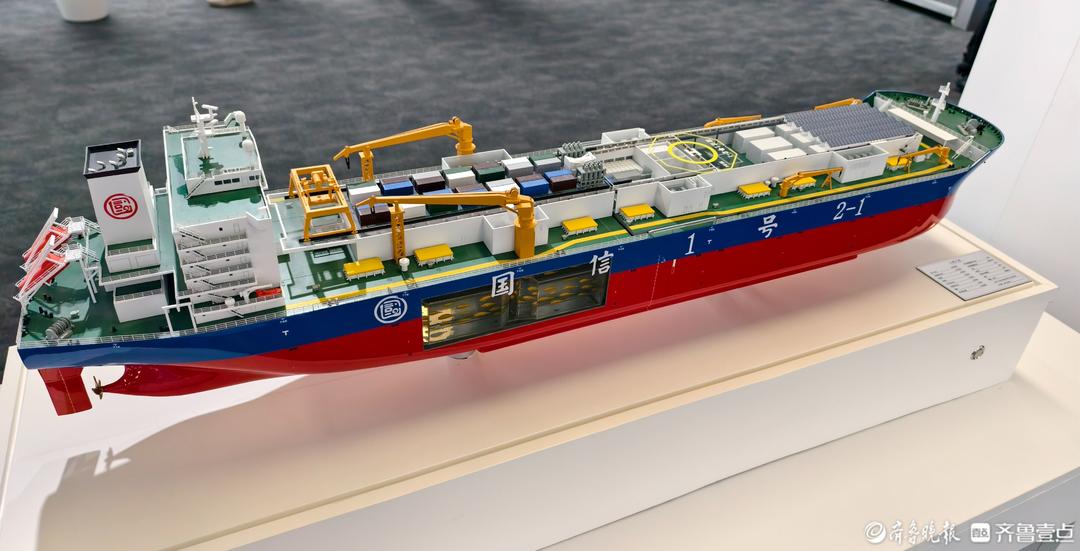
到深海去“牧鱼”!国信“移动海洋牧场”三船联动有多强?
Qi Lu Wan Bao· 2025-12-11 06:01
Core Viewpoint - The article highlights the advancements in China's deep-sea aquaculture industry, particularly through the introduction of innovative smart fish farming vessels, which are expected to enhance the production of high-quality protein and transform traditional aquaculture practices into a more industrialized and sustainable model [3][6]. Group 1: Industry Developments - The "Guoxin 1" series of smart aquaculture vessels, including the world's first 100,000-ton vessel and its 150,000-ton upgraded versions, signify a major leap in deep-sea aquaculture capabilities, with a combined annual production capacity of 10,000 tons [3][6]. - The vessels are designed to operate beyond 12 nautical miles, transitioning from fixed to mobile production, thereby expanding the operational range of aquaculture activities [4]. - The introduction of AI and digital technologies has led to over 160 technical breakthroughs, enhancing automation and mechanization rates to over 90%, with a 45% increase in operational efficiency compared to earlier models [6]. Group 2: Strategic Collaborations - The company is collaborating with various authoritative institutions, including Laoshan Laboratory and the Chinese Academy of Fishery Sciences, to establish a "Deep Blue Fishery Industry Research Institute," aiming to foster innovation and improve aquaculture species suitable for deep-sea environments [6]. - This initiative is part of a broader strategy to enhance the supply of high-quality protein in China and to promote the modernization and systematization of traditional fisheries [6].

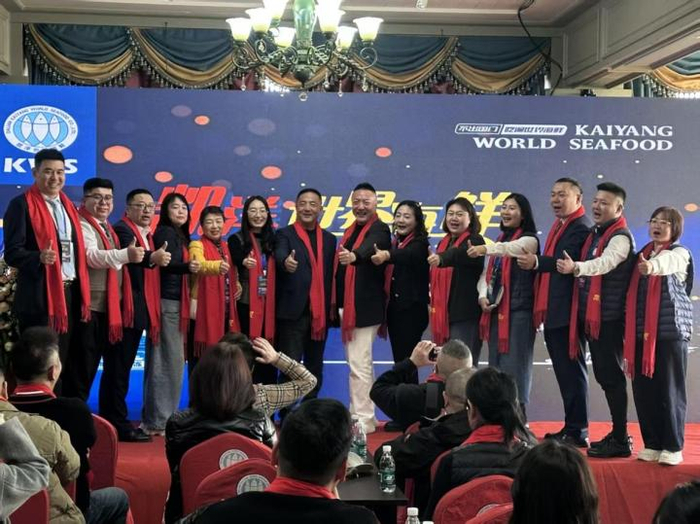
从"老渔夫"到"新主播":大连凯洋魏洋的直播破局路——一家企业带动千亿海鲜产业的辽宁实践
Zhong Guo Xin Wen Wang· 2025-12-11 05:04
Core Viewpoint - The transformation of the seafood industry in Dalian, led by the company Kaiyang and its representative Wei Yang, showcases the successful integration of live-streaming e-commerce into traditional business models, significantly enhancing sales and operational efficiency [4][5][8]. Group 1: Company Transformation - Kaiyang has successfully transitioned from traditional sales methods to a live-streaming e-commerce model, significantly increasing its market presence and sales volume [4][5]. - The company launched a comprehensive "online + offline + private domain + local flow" strategy to enhance its operational capabilities and customer engagement, marking a shift from single-channel sales to a multi-channel ecosystem [3][5]. - The live-streaming initiative has led to a substantial increase in customer interaction, with Wei Yang's account amassing over 1.5 million followers and achieving record sales during major shopping events [4][5]. Group 2: Industry Impact - The success of Kaiyang's live-streaming model has inspired other seafood companies in Dalian to adopt similar strategies, creating a collaborative ecosystem that has generated over 8,000 new jobs in the industry [7]. - The integration of local products into live-streaming sessions has expanded the sales scope beyond seafood, promoting regional specialties and enhancing the overall economic landscape of Dalian [7][8]. - The company's innovative approach has not only revitalized its own operations but has also contributed to the broader transformation of the seafood industry in Dalian, reflecting a proactive response to market challenges [8].
“光伏+农业”赋能乡村振兴
Xin Hua Ri Bao· 2025-12-10 21:41
Core Viewpoint - The integration of photovoltaic (PV) technology with agriculture is emerging as a powerful driver for rural revitalization and achieving dual carbon goals in Nanjing National Agricultural High-tech Zone, showcasing innovative practices such as soil-less vegetable cultivation and fish farming under solar panels [1] Group 1: Photovoltaic and Agriculture - The "PV + agriculture" model allows for the cultivation of vegetables without soil or pesticides, with the ability to control humidity, light, and temperature, resulting in a growth cycle that is 20 days shorter than traditional farming [1] - The output from the plant factory can reach approximately 150 kilograms of vegetables and 20,000 ornamental flowers daily, generating an annual output value of around 1.8 million yuan [1] - The combination of glass and PV structures in flower-growing greenhouses enhances flower yield and optimizes land use efficiency [1] Group 2: Photovoltaic and Aquaculture - The "PV + fish farming" trend involves floating solar panels on fish ponds, which helps reduce water evaporation, suppress algae growth, and improve fish quality [1] Group 3: Environmental and Economic Impact - The synergy between "PV + agriculture" is contributing significantly to green development and rural revitalization, aligning with the dual carbon objectives [1]
瑞士政府:将降低美国鱼类、海鲜及部分农产品的出口关税。
Xin Lang Cai Jing· 2025-12-10 16:10
Core Point - The Swiss government plans to reduce export tariffs on American fish, seafood, and certain agricultural products, which may enhance trade relations and market access for these goods [1] Group 1 - The reduction in tariffs is expected to benefit American exporters by making their products more competitive in the Swiss market [1] - This policy change reflects a broader trend of trade liberalization and could lead to increased imports of American agricultural products into Switzerland [1] - The specific details regarding the percentage reduction in tariffs and the categories of agricultural products affected have not been disclosed [1]

瑞士政府:作为回报,瑞士将降低从美国进口某些鱼类和农产品的关税。
Xin Lang Cai Jing· 2025-12-10 16:01
Group 1 - The Swiss government will lower tariffs on certain fish and agricultural products imported from the United States as a reciprocal measure [1]
渔业板块12月10日跌1.54%,开创国际领跌,主力资金净流出1.31亿元
Zheng Xing Xing Ye Ri Bao· 2025-12-10 09:04
Group 1 - The fishing sector experienced a decline of 1.54% on December 10, with KaiChuang International leading the drop [1] - The Shanghai Composite Index closed at 3900.5, down 0.23%, while the Shenzhen Component Index closed at 13316.42, up 0.29% [1] - Key stocks in the fishing sector showed the following closing prices and changes: - DaHu Co., Ltd. (600257) at 6.36, down 0.93% - HaoDangJia (600467) at 2.88, down 1.03% - ZhangZiIsland (002069) at 4.03, down 1.47% - ZhongShui Fishery (000798) at 11.64, down 1.69% - GuoLian Aquatic Products (300094) at 4.03, down 1.71% - KaiChuang International (600097) at 12.00, down 2.52% [1] Group 2 - The fishing sector saw a net outflow of 131 million yuan from main funds, with retail investors contributing a net inflow of 183 million yuan [1] - Detailed fund flow for key stocks includes: - HaoDangJia (600467) with a net inflow of 22.62 million yuan from main funds, but a net outflow of 17.83 million yuan from speculative funds [2] - ZhangZiIsland (002069) with a net outflow of 8.38 million yuan from main funds, but a net inflow of 14.36 million yuan from retail investors [2] - KaiChuang International (600097) with a net outflow of 18.53 million yuan from main funds, but a net inflow of 21.24 million yuan from retail investors [2] - DaHu Co., Ltd. (600257) with a net outflow of 21.40 million yuan from main funds, but a net inflow of 17.88 million yuan from retail investors [2] - GuoLian Aquatic Products (300094) with a net outflow of 52.29 million yuan from main funds, but a net inflow of 56.97 million yuan from retail investors [2] - ZhongShui Fishery (000798) with a net outflow of 52.86 million yuan from main funds, but a net inflow of 77.75 million yuan from retail investors [2]


广东现代化海洋牧场形成全产业链发展新格局
Zhong Guo Jing Ji Wang· 2025-12-10 08:12
Core Viewpoint - Guangdong is making significant progress in the construction of modern marine ranches, achieving a new pattern of integrated development across primary, secondary, and tertiary industries in the fishing sector [1] Group 1: Industry Performance - Guangdong's total aquatic product output is projected to reach 9.6637 million tons in 2024, a 10.34% increase compared to the end of the 13th Five-Year Plan (2020) [1] - The fishery output value is expected to be 209.781 billion yuan, reflecting a 30.4% growth from the end of the 13th Five-Year Plan [1] - The average net income per fishing household is anticipated to be 27,381.84 yuan, marking a 22.38% increase from the end of the 13th Five-Year Plan [1] Group 2: Development Strategies - Guangdong has established a comprehensive system for modern marine ranches, including planning and policy frameworks, as well as platforms for seed innovation, equipment innovation, and industry development [1] - The province has implemented 17 support measures and a series of policies related to primary development entities, fishing port economic zones, and land use [1] Group 3: Technological Advancements - Guangdong is leading in deep-sea aquaculture species and equipment, having established a modern marine ranch seed innovation center and a shared platform for technology collaboration with 63 top marine breeding teams [2] - The province has built 7,498 gravity-type deep-water cages, the highest number in the country [2] Group 4: Regional Developments - Coastal cities like Shantou and Zhanjiang are making notable progress in building a complete industrial chain for modern marine ranches [4] - Shantou has developed over 5 large-scale aquatic farming bases, achieving an annual output of 129,000 tons, and established 14 technology innovation platforms to support deep-sea aquaculture [4] - Zhanjiang's fishery economy has shown strong growth, increasing by 8.3% compared to the end of the 13th Five-Year Plan, focusing on seed innovation, aquaculture expansion, equipment upgrades, and industry clustering [4]
现代化海洋牧场托起“蓝色粮仓” 广东多项渔业指标全国居首
Guang Zhou Ri Bao· 2025-12-10 06:50
Core Viewpoint - Guangdong Province is making significant strides in modernizing its marine fisheries, achieving top national rankings in various key metrics such as total aquatic product output and fish farming production [1][2][8] Industry Development - Guangdong has established a new model of integrated development across the primary, secondary, and tertiary industries, enhancing the structure of its fishery industry and steadily increasing aquatic product supply capabilities [2][4] - The province has formed a complete industrial chain encompassing seed breeding, equipment manufacturing, feed and health products, facility farming, cold chain logistics, deep processing, and brand sales [4] Technological Innovation - Guangdong leads the nation in deep-sea breeding species and aquaculture equipment, having established a modern marine ranch seed industry innovation center that collaborates with 63 top marine breeding teams [3] - The province has achieved breakthroughs in artificial breeding technologies for several fish species and has produced 67.96 billion marine fish seedlings, accounting for about half of the national total [3] Economic Impact - In 2022, Guangdong's total aquatic product output reached 9.66 million tons, a 10.34% increase from the end of the 13th Five-Year Plan (2020), with marine aquaculture production hitting 3.77 million tons, marking a 13.76% growth [8] - The fishery output value reached 209.78 billion yuan, a 30.4% increase compared to the end of the 13th Five-Year Plan, while the average net income of fishing households rose to 27,381.84 yuan, up 22.38% [8] Infrastructure and Policy Support - The province has planned 29,300 square kilometers for fishery use at sea, ensuring sufficient space for modern marine ranching [6] - Guangdong has significantly reduced the fees for using marine areas for aquaculture, with an average reduction of about 78% for open sea farming areas, making it the lowest in the country [6] Future Plans - Guangdong aims to build a trillion-yuan-level industrial cluster, focusing on modern marine ranch construction and upgrading traditional nearshore farming facilities [7] - The province plans to enhance the integration of port and industry, establishing several national and provincial fishery economic zones to support modern marine ranching [7]
海南“十五五”规划建议:大力发展现代渔业产业园和深远海养殖 把渔业打造成农业经济新增长极
Zheng Quan Shi Bao Wang· 2025-12-10 02:32
Core Viewpoint - The Hainan Provincial Committee of the Communist Party of China has released recommendations for the 15th Five-Year Plan, emphasizing the development of tropical characteristic efficient agriculture as a key industry for Hainan's economy [1] Group 1: Agricultural Development - The plan aims to enhance the quality and efficiency of tropical characteristic agriculture, focusing on market demand, brand building, and differentiation as core strategies [1] - The initiative includes a comprehensive approach to develop the entire natural rubber industry chain for high-quality growth [1] - There is a commitment to strengthen the core competitiveness of key industries such as tropical fruits and winter melons, while promoting the cultivation and introduction of "novel and superior" varieties [1] Group 2: Fisheries and Livestock - The fisheries sector will undergo a transformation with a focus on modern fishery industrial parks and deep-sea aquaculture, positioning fisheries as a new growth driver for agricultural economy [1] - Livestock farming is set to transition towards ecological and facility-based upgrades [1] Group 3: Additional Agricultural Sectors - The plan encourages the development of under-forest economies and specialty industries such as tropical flowers and seedlings [1] - There is an emphasis on strengthening international agricultural cooperation in tropical regions, including the establishment of an international tropical agricultural science cooperation organization to build a global tropical agriculture center [1]