
海鲈

Search documents
跨进深远海 广东全产业链深耕“蓝色粮仓”
Xin Lang Cai Jing· 2025-12-21 20:41
Core Viewpoint - Guangdong has made significant advancements in deep-sea aquaculture, establishing itself as a leader in various fisheries metrics, with a total fishery output value reaching 209.78 billion yuan, a 30.4% increase compared to the end of the 13th Five-Year Plan [1] Group 1: Modern Marine Ranch Development - Guangdong has constructed a modern marine ranching system that integrates primary, secondary, and tertiary industries, significantly improving the structure of the fishery industry and enhancing water product supply capabilities [2] - The province has implemented the first national "Modern Marine Ranch Development Overall Plan," establishing a framework for planning and policy support, along with 17 supportive measures to facilitate high-quality development [2][3] - Traditional nearshore aquaculture is being upgraded through the transformation of net cages, with over 70,000 acres of traditional cages and oyster rafts dismantled and more than 60,000 acres of aquaculture facilities upgraded [2] Group 2: Complete Industry Chain - Guangdong has developed a complete industry chain for marine ranching, including seed breeding, equipment manufacturing, feed production, facility aquaculture, cold chain logistics, deep processing, and brand sales [3] - The establishment of several aquatic product processing parks has significantly enhanced the deep processing capabilities of aquatic products, contributing to the creation of three national key industry clusters worth over 20 billion yuan each [3] Group 3: Technological Advancements in Aquaculture - Guangdong leads the nation in the production of marine fish seeds and shrimp seeds, having cultivated 18 nationally approved marine species, establishing itself as a center for marine aquaculture species innovation [4] - Collaborative research efforts with 63 research teams have led to breakthroughs in artificial breeding technologies for various fish species, including significant advancements in the breeding of rare species [4][5] Group 4: Marine Equipment Upgrades - The introduction of large-scale deep-sea aquaculture equipment has significantly improved the scale and efficiency of deep-sea farming, supported by a robust marine equipment manufacturing industry [6] - Guangdong has established a comprehensive support system for marine ranch equipment upgrades, with 41 large-scale shipbuilding and supporting industrial enterprises projected to achieve an industrial output value of 58.7 billion yuan in 2024 [6] Group 5: Breakthroughs in Major Equipment - Guangdong has included deep-sea net cage farming platforms and large fishing vessels in its promotion directory for major technological equipment, encouraging innovation in automatic farming and environmental monitoring technologies [7] - Advanced deep-sea farming equipment has achieved comprehensive intelligent monitoring and automation capabilities, laying the foundation for "unmanned farming" [7]
现代化海洋牧场托起“蓝色粮仓” 广东多项渔业指标全国居首
Guang Zhou Ri Bao· 2025-12-10 06:50
Core Viewpoint - Guangdong Province is making significant strides in modernizing its marine fisheries, achieving top national rankings in various key metrics such as total aquatic product output and fish farming production [1][2][8] Industry Development - Guangdong has established a new model of integrated development across the primary, secondary, and tertiary industries, enhancing the structure of its fishery industry and steadily increasing aquatic product supply capabilities [2][4] - The province has formed a complete industrial chain encompassing seed breeding, equipment manufacturing, feed and health products, facility farming, cold chain logistics, deep processing, and brand sales [4] Technological Innovation - Guangdong leads the nation in deep-sea breeding species and aquaculture equipment, having established a modern marine ranch seed industry innovation center that collaborates with 63 top marine breeding teams [3] - The province has achieved breakthroughs in artificial breeding technologies for several fish species and has produced 67.96 billion marine fish seedlings, accounting for about half of the national total [3] Economic Impact - In 2022, Guangdong's total aquatic product output reached 9.66 million tons, a 10.34% increase from the end of the 13th Five-Year Plan (2020), with marine aquaculture production hitting 3.77 million tons, marking a 13.76% growth [8] - The fishery output value reached 209.78 billion yuan, a 30.4% increase compared to the end of the 13th Five-Year Plan, while the average net income of fishing households rose to 27,381.84 yuan, up 22.38% [8] Infrastructure and Policy Support - The province has planned 29,300 square kilometers for fishery use at sea, ensuring sufficient space for modern marine ranching [6] - Guangdong has significantly reduced the fees for using marine areas for aquaculture, with an average reduction of about 78% for open sea farming areas, making it the lowest in the country [6] Future Plans - Guangdong aims to build a trillion-yuan-level industrial cluster, focusing on modern marine ranch construction and upgrading traditional nearshore farming facilities [7] - The province plans to enhance the integration of port and industry, establishing several national and provincial fishery economic zones to support modern marine ranching [7]
剑指万亿级产业集群!广东海洋渔业多项指标全国领先,海洋牧场建设成效显著
Nan Fang Nong Cun Bao· 2025-12-09 05:34
Core Viewpoint - Guangdong's marine fishery industry is set to become a trillion-level industrial cluster, with significant achievements in modern marine ranch construction and leading national indicators in various metrics [5][6][12]. Group 1: Industry Achievements - Guangdong's total aquatic product output is projected to reach 9.6637 million tons in 2024, a 10.34% increase from the end of the 13th Five-Year Plan (2020) [15]. - The marine aquaculture output is expected to hit 3.7683 million tons, marking a 13.76% growth, the highest since 2011 [15]. - The fishery output value is anticipated to be 209.781 billion yuan, reflecting a 30.4% increase compared to the end of the 13th Five-Year Plan [16]. - The average net income per fishing household is projected to be 27,381.84 yuan, up by 22.38% from the end of the 13th Five-Year Plan [17]. Group 2: Technological Innovations - Guangdong has maintained its position as a leading province in marine seed production, with a projected marine fish seed output of 6.796 billion tails in 2024, accounting for about half of the national total [21]. - The province has developed 18 nationally approved new marine species, leading the country in quantity [22]. - Breakthroughs in deep-sea aquaculture equipment have positioned Guangdong as a national leader, with significant advancements in technology and management systems [30][39]. Group 3: Future Development Plans - The province aims to focus on building a trillion-level modern marine ranch industrial cluster, emphasizing the integration of various industries and the modernization of traditional facilities [54]. - Plans include high-standard construction of seed and equipment innovation centers, and the promotion of ecological aquaculture models [55]. - Guangdong will enhance the integration of land and sea, and develop a modern industrial system that promotes the transformation and upgrading of marine fisheries [56].


1500万返乡人:走出大山,为什么又重返大山
Xin Lang Cai Jing· 2025-09-17 06:21
Core Insights - A significant trend is emerging in China where millions are abandoning traditional urban success models to pursue entrepreneurial opportunities in rural areas, leveraging modern technology and e-commerce platforms [1][3][15] Group 1: Entrepreneurial Shift - Over 10 million Chinese have shifted from urban jobs to rural entrepreneurship, with a projected total of 15 million by mid-2025 [3][15] - The rise of new farmers, who utilize internet technology and modern business practices, is driving the growth of rural e-commerce and smart agriculture [3][15] - The Douyin platform has facilitated the sale of 10.2 billion agricultural products in the past year, averaging 24.48 million sales per day [3][30] Group 2: Case Studies of Success - Wu Shuangpeng, a former tech engineer, achieved over 10 million yuan in sales within a year by selling local oranges through live streaming, demonstrating the potential of e-commerce in rural areas [1][10] - The transformation of traditional farmers into e-commerce entrepreneurs is evident, as seen with local farmers like Li Fenglin, who transitioned from farming to live streaming [12][13] - Innovative products, such as pre-peeled chestnuts, have emerged from local entrepreneurs, leading to significant sales increases and inspiring others to follow suit [25][30] Group 3: Economic Impact - The agricultural landscape is being reshaped, with the emergence of new business models that prioritize consumer demand over traditional production methods [25][30] - The integration of technology in agriculture, such as automated sorting and drone logistics, is enhancing efficiency and product quality [13][30] - The growth of rural e-commerce is contributing to the economic revitalization of rural areas, with significant increases in sales and local employment opportunities [30][38] Group 4: Future Prospects - The Chinese government aims to support rural entrepreneurship, with plans to cultivate 1 million rural entrepreneurial leaders by 2025 [34][35] - The potential for rural areas to become economic engines is recognized, with a focus on attracting talent back to the countryside [32][34] - The success stories of new farmers are inspiring a wave of young people to return to their hometowns, fostering a new era of rural development [36][38]

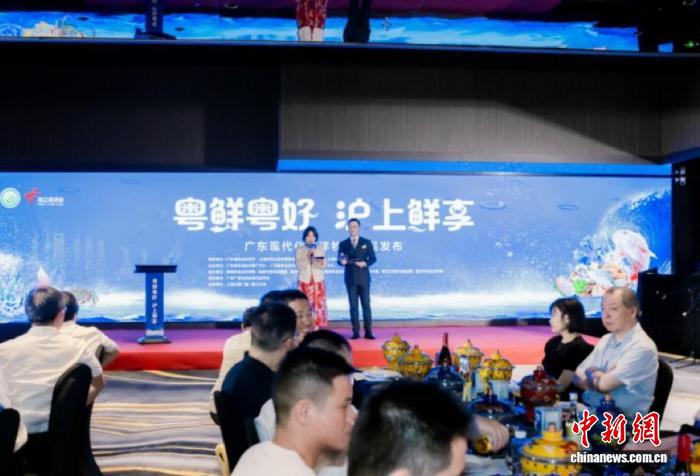
广东一批现代化海洋牧场臻品亮相上海外滩
Zhong Guo Xin Wen Wang· 2025-08-27 07:29
Core Viewpoint - Guangdong is leveraging its natural resources to promote modern marine ranching, aiming to establish a strong regional brand for marine products and significantly increase its aquaculture output by 2024 [2][6]. Group 1: Event Overview - A showcase of modern marine ranching products from Guangdong was held on August 26 in Shanghai, featuring the "Guangdong Fresh Products" regional public brand [1]. - The event included culinary demonstrations and interactive tastings, blending Shanghai and Guangdong flavors [4]. Group 2: Industry Insights - Guangdong's aquaculture production is projected to reach nearly 1 million tons by 2024, accounting for nearly half of the national total, indicating that one in every two marine fish in China will come from Guangdong [2]. - The province has achieved a 5.47% year-on-year growth in marine aquaculture production, reaching 3.7683 million tons in 2024, marking the highest growth rate in a decade [7]. Group 3: Product Highlights - Featured marine products included various fish species such as the South China Sea (Nanzhou) large yellow croaker, golden pomfret, sea bass, and others, showcasing the quality and diversity of Guangdong's marine offerings [6]. - Guangdong has pioneered artificial breeding technologies for several fish species and has built 6,517 gravity-type deep-water net cages, the highest number in the country [7].
第二十三届南海(阳江)开渔季活动8月15日至17日举行
Nan Fang Ri Bao Wang Luo Ban· 2025-08-11 08:08
Core Viewpoint - The 23rd South China Sea (Yangjiang) Fishing Season will take place from August 15 to 17, featuring 13 activities, the most in its history, aimed at promoting marine culture and integrating agriculture, culture, and tourism [1][2]. Group 1: Economic Impact - The fishing season is a significant agricultural and cultural tourism event in Guangdong, boosting fisheries, coastal tourism, dining, and cultural industries [1]. - Yangjiang aims to leverage marine resources to develop industries such as marine energy, seawater aquaculture, and marine equipment, contributing to the "blue food warehouse" and accelerating blue economic growth [1]. Group 2: Marine Ranch Development - The modern marine ranch industry chain in Guangdong has been continuously improved, encompassing seed breeding, equipment manufacturing, feed protection, facility aquaculture, cold chain logistics, deep processing, and brand sales [2]. - The province has established three national advantageous characteristic industry clusters, including golden pomfret, oysters, and sea bass, promoting the development of two 20 billion-level industry chains [2]. Group 3: Event Highlights - This year's fishing season will see over 3,400 fishing boats participating, marking the highest number of boats in history, with the "Fishing Order Release" as the core event [3]. - A variety of cultural activities, including a beach music festival, world model competition, night kite festival, and fireworks show, will enhance the event's appeal, with an expected daily attendance of nearly 100,000 and tourism revenue exceeding 200 million yuan during the event [3].
南海将迎来开渔季 阳江预计带动旅游收入超2亿元
2 1 Shi Ji Jing Ji Bao Dao· 2025-08-08 14:16
Group 1 - The annual South China Sea (Yangjiang) fishing season event will take place on August 15, with over 3,400 fishing boats participating, marking the highest number of boats in history [1] - The event will feature 13 activities, including a beach music festival, a world model competition, and a fireworks show, highlighting the rich maritime culture and unique traditions of the local fishing community [1] - The event aims to transform the fishing season from a "single ceremony" into a comprehensive cultural and tourism festival, significantly boosting regional tourism and local economy [2] Group 2 - The fishing moratorium in Guangdong lasts from May 1 to August 16 each year, allowing marine life to recover and ensuring sustainable fishing practices [2] - In 2024, the marine fishery industry in Guangdong is projected to exceed 68 billion yuan, with a focus on modern marine ranching and aquaculture, which is expected to grow by 5.47% [3] - Guangdong has established a complete industrial chain around modern marine ranching, including breeding, equipment manufacturing, and logistics, leading to the creation of several national-level fishing port economic zones [3]
珠海一季度GDP增速4.0%:服务业和外贸强势拉动,家电“以旧换新”激增84.7%
2 1 Shi Ji Jing Ji Bao Dao· 2025-04-28 07:06
Economic Overview - In the first quarter, Zhuhai's GDP reached 112.09 billion, with a year-on-year growth of 4.0%, indicating a stable economic start [1] - The primary industry added value was 1.64 billion, growing by 4.0%, while the secondary industry decreased by 0.6% to 44.94 billion, and the tertiary industry increased by 7.1% to 65.51 billion, becoming the main driver of economic growth [1] Tertiary Industry Performance - The tertiary industry's growth of 7.1% was primarily driven by significant increases in information transmission, software, and IT services (21.6%), cultural, sports, and entertainment (8.3%), and leasing and business services (7.9%) [1] - From January to February, the revenue of large-scale service industries reached 27.07 billion, up by 10.4%, with internet and related services, software and IT services, cultural, sports, and entertainment, and leasing and business services showing revenue growth of 114.5%, 32.2%, 12.3%, and 9.5% respectively [1] Retail and Consumption - The total retail sales of social consumer goods in Zhuhai for the first quarter reached 23.86 billion, a year-on-year increase of 5.7%, driven by the "old-for-new" policy [2] - Retail sales of household appliances surged by 84.7%, while automotive consumption showed weakness, with retail sales of automotive goods declining by 3.5% to 2.694 billion, accounting for 22.9% of total retail sales [2] Foreign Trade - Zhuhai's foreign trade performance was notable, with total import and export reaching 81.12 billion, a year-on-year increase of 15.7%, driven by a 26.5% increase in imports and an 11.2% increase in exports [2] - The number of foreign trade enterprises exceeded 3,000, marking an 8.8% increase, with significant growth in trade with the EU (21.8%), ASEAN (6.1%), and the Middle East (39.4%) [2] - Exports of electromechanical products reached 37.48 billion, growing by 13.1%, accounting for 68.6% of total exports, with notable increases in home appliances (6.4%), electronic components (18.1%), computers and parts (70.1%), and lithium batteries (122.3%) [2] Primary Industry Insights - The primary industry added value grew by 4.0%, reflecting accelerated agricultural modernization and significant achievements in marine ranching [3] - The total output value of agriculture, forestry, animal husbandry, and fishery increased by 5.1%, with fishery output accounting for nearly 80% [3] Secondary Industry Analysis - The secondary industry saw a 0.6% decline in added value, although high-tech sectors experienced growth, with industrial added value increasing by 4.8% [3] - Key sectors showed varied performance: precision machinery manufacturing increased by 41.7%, electronic information by 10.1%, and petrochemical by 9.2%, while biomedicine and home appliance sectors faced declines of 11.4% and 2.3% respectively [3] Investment Trends - Fixed asset investment decreased by 40.5%, although the decline narrowed by 5.9 percentage points compared to January-February, with industrial technological transformation investment achieving a positive growth of 5.6% supported by equipment renewal policies [3]