
工业机器人

Search documents
除了36年连冠,广东“十四五”还有哪些“隐藏技能”?
Nan Fang Du Shi Bao· 2025-11-07 11:31
Economic Growth - Guangdong's GDP increased from 12.44 trillion yuan to 14.16 trillion yuan from 2021 to 2024, with an average annual growth rate of 4.7% [1] - The manufacturing sector shows strong resilience, with 15 out of 31 manufacturing categories ranking first in the nation [1] - In 2024, Guangdong's production of new energy vehicles reached 3.618 million units, accounting for 25% of the national total [1] Infrastructure Development - The construction of major projects like the Shenzhen-Zhongshan Link has significantly reduced travel time within the Greater Bay Area, establishing a one-hour living circle [2] - The "Cross-Border Wealth Management Connect" business has surpassed 120 billion yuan, indicating financial integration within the region [2] Innovation and Reform - Guangdong has ranked first in regional innovation capability for eight consecutive years, with R&D expenditure reaching 510 billion yuan in 2024 [3] - The province's foreign trade performance remains strong, with total import and export volume exceeding 9 trillion yuan, maintaining the top position in the country for 39 years [3]
东海证券晨会纪要-20251107
Donghai Securities· 2025-11-07 09:33
Group 1: Industry Overview - The production of industrial robots in China has shown impressive growth, with a year-on-year increase of 29.8% in the first three quarters of 2025, reaching 595,000 units, surpassing the total production for 2024 [5][6] - Domestic brands have gained market share over foreign brands in the industrial robot sector, with exports of industrial robots increasing by 54.9% in the same period [5][6] - The rise of domestic robot manufacturers is attributed to breakthroughs in core component technologies and a deep understanding of the local market, enhancing cost efficiency and supply chain stability [6][7] Group 2: Market Demand and Applications - The automotive manufacturing sector remains a traditional application market for industrial robots, driving demand for welding, handling, and painting processes [7] - The lithium battery production sector has also seen increased robot applications across various stages, including handling, loading and unloading, gluing, stacking, and assembly [7] - The electronics industry, particularly in the 3C sector, has a growing demand for automation, with robots increasingly used in chip manufacturing, display assembly, and consumer electronics [7] Group 3: Company Analysis - Zhichun Technology (603690) - Zhichun Technology reported a revenue of 2.367 billion yuan for the first three quarters of 2025, a decrease of 10.33% year-on-year, with a net profit of 85 million yuan, down 56.08% [11][12] - The company's gross margin improved significantly in Q3 2025, reaching 35.07%, an increase of 8.24 percentage points from the previous quarter, driven by product structure optimization and cost control [13] - The company has focused on the integrated circuit sector, primarily serving leading domestic wafer manufacturers, with project scales and contract amounts expanding, although project execution cycles have lengthened, impacting short-term performance [12][14] Group 4: Investment Recommendations - The investment outlook for the industrial robot sector is positive, with a focus on leading companies such as Huichuan Technology and Estun, as well as component manufacturers like Greentec Harmonic [8] - For Zhichun Technology, despite short-term performance pressures, the long-term growth potential remains, with revenue projections for 2025, 2026, and 2027 adjusted to 3.263 billion, 3.765 billion, and 4.361 billion yuan respectively [15]
山东前9月工业机器人产量增43%,将再培育百个行业大模型
Da Zhong Ri Bao· 2025-11-07 08:18
Group 1 - Shandong aims to create around 100 industry-specific large models to establish itself as a national leader in artificial intelligence innovation [1][2] - The provincial government has allocated a total of 1 billion yuan, with an additional 200 million yuan this year, to support large model projects and industry-specific data resources [4] - The province has 1,124 AI-related enterprises, contributing to approximately 9% of the national industry scale, with a 43% increase in industrial robot production from January to September this year [4][6] Group 2 - Shandong is focusing on 13 key sectors, including chemicals and steel, to deepen the "AI+" initiative, aiming to develop 30 industry-specific large models and 20 key industry data repositories [6] - Six national-level platforms have achieved full coverage of large model applications, with successful projects like the intelligent lean management solution for the rubber tire industry [6] - The proportion of industrial enterprises producing intelligent products and achieving intelligent production in Shandong stands at 18% and 17.1%, respectively, leading the nation [6]



多元场景下,中国工业机器人走出差异化 AI 路径
Di Yi Cai Jing· 2025-11-06 13:06
Core Viewpoint - The integration of AI in industrial robots should focus on practical applications rather than sheer quantity, emphasizing the need for flexibility and efficiency in manufacturing processes [1][4]. Group 1: Current State of Industrial Robots - The execution in manufacturing primarily relies on either automated equipment or manual labor, each with its own limitations in flexibility and efficiency [4]. - Industrial robots currently require human intervention for tasks such as quality inspection and assembly, particularly when switching between different products [4]. Group 2: AI Integration in Robotics - The introduction of AI, particularly through visual algorithms, can enhance the functionality of industrial robots by enabling them to recognize workpieces and optimize operational processes through continuous learning [4]. - The effectiveness of AI in industrial robots is not determined by the amount of AI used, but rather by its relevance and integration with real-world scenarios [4]. Group 3: Competitive Advantage of Chinese Industrial Robots - Chinese industrial robot companies benefit from a diverse manufacturing landscape, allowing for better adaptation to various industry needs compared to overseas counterparts [5]. - The variety in China's manufacturing sectors, such as 3C electronics and automotive parts, provides rich data for training AI algorithms, enhancing their generalization capabilities [5].
深化开放合作 实现互利共赢
Xin Hua Ri Bao· 2025-11-06 08:27
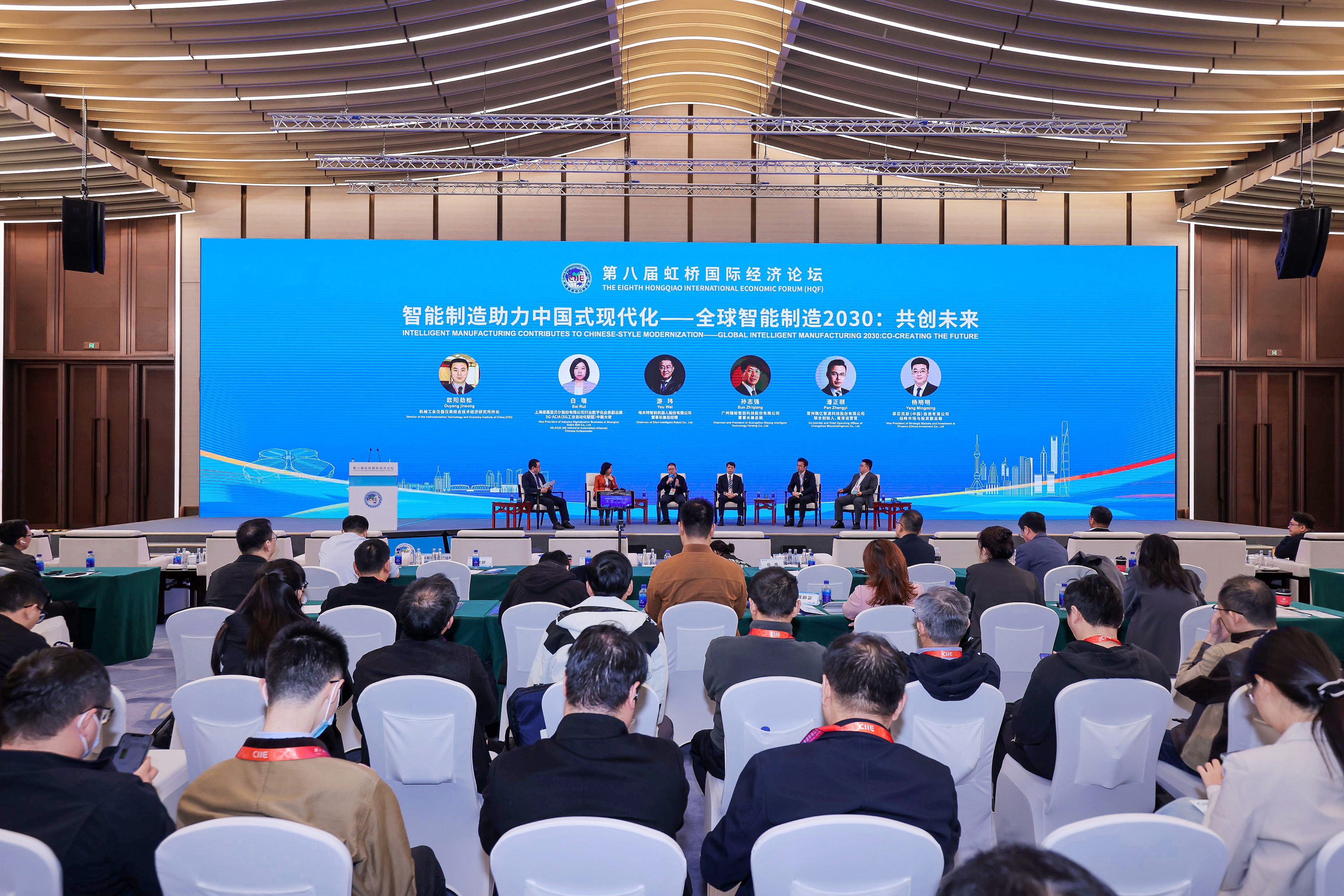
Core Points - The article emphasizes the importance of high-level opening up and deepening economic and trade cooperation to foster high-quality development in Jiangsu province [1][2] - The participation in the China International Import Expo highlights Jiangsu's commitment to attracting foreign investment and enhancing collaboration with global enterprises [1][2] Group 1: Economic Development and Foreign Investment - Jiangsu's provincial leadership is focused on leveraging the China International Import Expo to promote high-level foreign investment and economic cooperation [1] - Companies such as General Electric, Siemens, and Honeywell expressed their commitment to investing in Jiangsu, citing the province's robust economy and favorable business environment [1] - The provincial government aims to optimize traditional industries while nurturing emerging and future industries, providing ample opportunities for foreign enterprises [1] Group 2: Biopharmaceutical Industry - Jiangsu ranks among the top provinces in China for the biopharmaceutical industry, with ongoing efforts to enhance open innovation across the entire industry chain [2] - Pfizer, a leading global biopharmaceutical company, is looking to strengthen collaboration with Jiangsu in areas such as innovative research and clinical studies [2] - The provincial government is committed to creating a market-oriented, law-based, and international business environment to support the growth of enterprises in Jiangsu [2] Group 3: Cultural Exchange and Local Products - The expo features cultural exchange sections showcasing traditional crafts, non-heritage skills, and innovative consumer products, attracting significant visitor interest [2] - The provincial leadership encourages enhancing the exhibition experience to better showcase Jiangsu's cultural charm [2]
【“以旧换新”释放强劲需求,机床ETF(159663)走强,工业机器人产量高增印证景气度】
Mei Ri Jing Ji Xin Wen· 2025-11-06 05:48
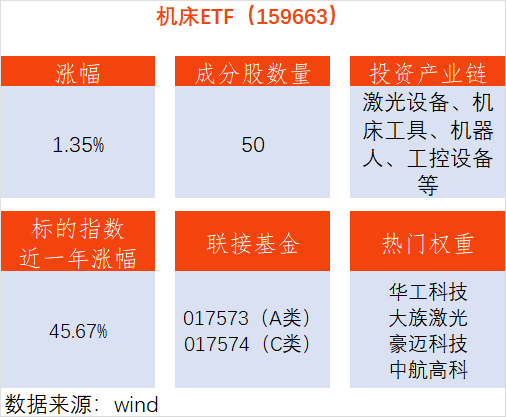
Group 1 - The A-share market saw a collective rise in the three major indices on November 6, with the Shanghai Composite Index increasing by 0.76%. Key sectors that performed well included non-ferrous metals, electric equipment, and electronics, while media and social services lagged behind [1] - The machine tool sector showed strength, with the machine tool ETF (159663.SZ) rising by 1.35%. Notable individual stocks included Yawen Co., which increased by 7.65%, Huaming Equipment by 5.99%, and Haimeixing by 5.20% [1] Group 2 - In September 2025, China's industrial robot production reached 76,300 units, marking a year-on-year growth of 28.3%. For the first nine months of 2025, production totaled 594,800 units, reflecting a year-on-year increase of 29.8%. This indicates a rapid development phase for the industrial robot industry, with growth rates significantly outpacing the overall industrial value-added growth [3] - The growth in industrial robot production is attributed to the government's "old-for-new" policy, which has stimulated equipment upgrade demand, along with effective loan interest subsidies that have reduced upgrade costs for enterprises. The downstream impact on industrial robot companies is gradually diminishing, and structural adjustments are concluding, suggesting potential investment opportunities as some companies pivot towards humanoid robot businesses [3] - The machine tool ETF (159663) closely tracks the China Machine Tool Index, which encompasses critical sectors in China's manufacturing industry, including high-end equipment manufacturing, laser equipment, machine tools, robots, and industrial control equipment. This ETF represents a core area for the implementation of innovation-driven and industrial upgrade practices [3]
拖住中国,吃掉欧盟!经贸大战背后,特朗普正在悄悄包围欧洲
Sou Hu Cai Jing· 2025-11-05 13:58
Core Viewpoint - The article discusses Trump's ongoing tariff policies aimed at China and the EU, highlighting the strategic objectives behind these measures and their implications for global trade dynamics [2][5][16]. Group 1: Tariff Policies and Objectives - Trump's tariffs on China are designed to create uncertainty and slow down China's industrial upgrades, with tariffs on high-tech products set to rise from 25% to 47% by January 2025 [2][3]. - The tariffs cover critical sectors such as semiconductors, electric vehicles, and industrial robots, while China has responded with a historic 84% tariff on all imports from the U.S. [3][5]. - The U.S. has also pressured companies like Apple and Tesla to relocate production from China to Southeast Asia or North America to maintain tariff benefits [3][5]. Group 2: Impact on the EU - Trump's approach to the EU involves targeted economic pressure, compelling the EU to eliminate tariffs on U.S. industrial goods while the U.S. maintains punitive tariffs on key EU products [7][10]. - A framework agreement was established where the EU agreed to purchase $750 billion in U.S. energy products and $40 billion in AI chips by 2028, indicating a significant economic concession [9][10]. - The U.S. has strategically divided the EU by offering concessions to Eastern European countries, thereby weakening the EU's collective response to U.S. policies [10][15]. Group 3: Broader Strategic Implications - The U.S. is not only applying economic pressure but also planning military withdrawals from Europe, which could further destabilize the region and increase reliance on U.S. security guarantees [12][13]. - Trump's actions have led to a growing awareness within the EU of the need for defense autonomy, as highlighted by the EU Commission President's remarks on strategic anxiety [15][16]. - The article concludes that while Trump's policies may disrupt global trade in the short term, they are unlikely to reverse the trend towards a multipolar world [16].
泰坦股份(003036.SZ):纱筒抓取关节技术适用于制造方面的工业机器人
Ge Long Hui· 2025-11-05 07:34
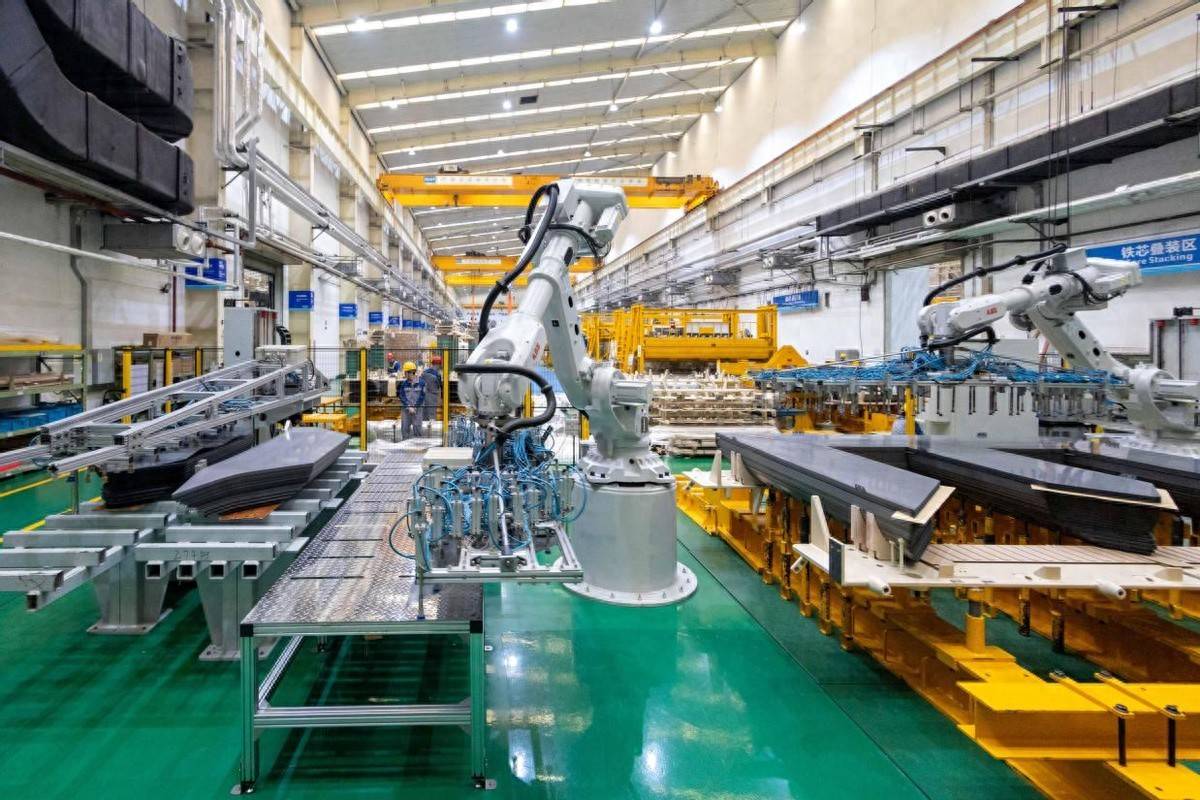
Core Viewpoint - Titan Holdings (003036.SZ) has indicated that its yarn tube grabbing joint technology is applicable in the manufacturing sector of industrial robots [1] Group 1 - The company is actively engaging with investors through its interactive platform [1] - The technology mentioned is specifically designed for industrial applications, highlighting the company's focus on manufacturing solutions [1]

泰坦股份:纱筒抓取关节技术适用于制造方面的工业机器人
Ge Long Hui· 2025-11-05 07:31
Core Viewpoint - Titan Holdings (003036.SZ) has indicated that its yarn tube gripping joint technology is applicable in the manufacturing sector for industrial robots [1] Group 1 - The company is actively engaging with investors regarding its technological advancements [1] - The yarn tube gripping joint technology represents a significant innovation for industrial robotics [1]
巨一科技股价跌5.03%,中欧基金旗下1只基金重仓,持有13.44万股浮亏损失22.71万元
Xin Lang Cai Jing· 2025-11-04 06:03
Group 1 - The core point of the news is that Ju Yi Technology's stock price has dropped by 5.03%, currently trading at 31.88 CNY per share, with a total market capitalization of 4.371 billion CNY [1] - Ju Yi Technology, established on January 18, 2005, is located in Hefei, Anhui Province, and specializes in the development, production, and sales of industrial robot integration and automotive parts equipment [1] - The company's main business revenue composition is 58.84% from intelligent equipment and 41.16% from new energy vehicle motor control components [1] Group 2 - From the perspective of fund holdings, one fund under China Europe Fund has a significant position in Ju Yi Technology, with 134,400 shares held, accounting for 0.43% of the fund's net value [2] - The fund, China Europe Small Cap Growth Mixed A (015880), has a total scale of 306 million CNY and has achieved a year-to-date return of 57.24% [2] - The fund's performance ranks 628 out of 8150 in its category this year, and it has a one-year return of 72.33%, ranking 319 out of 8043 [2] Group 3 - The fund managers of China Europe Small Cap Growth Mixed A are Qian Yating and Tang Minwei, with Qian having a tenure of 4 years and 3 days and a best fund return of 60.93% during this period [3] - Tang Minwei has been in the position for 105 days, with a best fund return of 16.82% during his tenure [3]
