科技股

Search documents
慢牛,“慢”比“牛”难多了!
雪球· 2025-09-22 07:58
Group 1 - The article discusses the phenomenon of large sell orders in the stock market, which appear to be a deliberate action rather than typical large fund exits, possibly indicating regulatory intentions to stabilize the market [3][4][5] - It highlights the current market environment as a "man-made bull market," where regulatory attitudes are seen as the core driving force behind market trends [4][6] - The article outlines three key performance indicators (KPIs) for the regulatory body, including market stability, investment financing reform, and strengthening regulatory enforcement, with market stability being the primary focus [8][9][10] Group 2 - The article emphasizes that the current market conditions are not conducive to a slow bull market, as the macroeconomic environment does not support stable growth in corporate earnings [15][16] - It notes that the current bull market is primarily driven by liquidity rather than fundamental improvements in company performance, leading to potential volatility [17][18] - The discussion includes the risks associated with a market that relies solely on valuation increases without corresponding earnings growth, which could lead to sharp declines if expectations are not met [17][19] Group 3 - The article describes the regulatory approach as a technical challenge, where maintaining a balance between market inflows and outflows is crucial for sustaining a slow bull market [22][24] - It suggests that controlling the index, particularly the Shanghai Composite Index, is a strategy to manage market sentiment and prevent excessive volatility [22][23] - The article concludes that effective market management requires a nuanced understanding of market dynamics and the ability to respond to changing conditions, emphasizing the importance of regulatory experience [25][28]


美联储降息点燃美股“蜜月行情”!AI热潮驱动下华尔街看好涨势延续
智通财经网· 2025-09-22 03:33
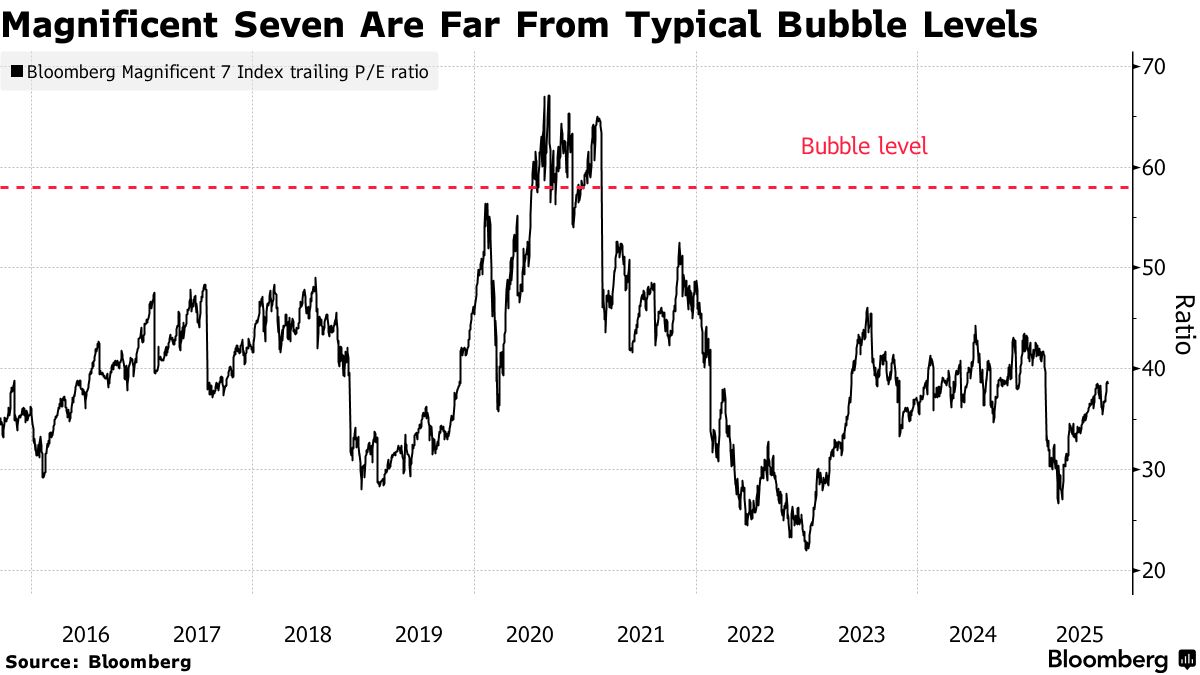
Group 1 - The core sentiment in the market is driven by optimism surrounding a more accommodative monetary policy and the AI boom, leading to a significant rise in U.S. stocks, breaking the historical trend of weak performance in September [1] - Bank of America strategists suggest that the "Magnificent Seven" stocks have further upside potential, with historical data indicating an average increase of 244% during past market bubbles from low to peak [1][2] - Current valuations of the "Magnificent Seven" stocks, with a price-to-earnings (P/E) ratio of 39, suggest that they are still within a bubble phase, as past bubbles typically ended at a P/E of 58 [2] Group 2 - Jeff Krumpelman from Mariner Wealth Advisors believes that the productivity gains driven by AI can support higher valuation levels, indicating that the market is in the early stages of AI development [2] - The S&P 500's expected P/E ratio is around 23, which, while above historical averages, is justified by the current market composition dominated by tech and communication services [2] - Concerns about market overheating are raised, with warnings that a true "melt-up" could lead to instability if driven by speculative behavior rather than fundamentals [2][3] Group 3 - Analysts from major financial institutions like Wells Fargo, Barclays, and Deutsche Bank have recently raised their S&P 500 target levels, citing earnings resilience and AI investment cycles as key drivers for the next market uptrend [3] - Despite the optimism, risks remain, including high valuations and reduced market breadth, which could lead to a more volatile short-term outlook [3] - Bill Smead from Smead Capital Management compares the current AI-driven enthusiasm to past market bubbles, predicting a potential collapse that could leave many investors disappointed [4]





华泰证券:港股情绪或仍有进一步改善空间 科技板块或依然处在布局区
Zheng Quan Shi Bao Wang· 2025-09-22 00:39
Core Viewpoint - The recent rebound of Hong Kong technology stocks is attributed to accelerated domestic AI advancements, with the Hang Seng Tech Index and Hang Seng Hong Kong Stock Connect Tech Index rising nearly 20% since the low in July [1] Group 1: Market Trends - The technology sector is expected to lead the third revaluation of Hong Kong stocks, as negative factors such as the food delivery war are largely priced in [1] - AI models, chip procurement, and capital expenditures are anticipated to accelerate, contributing to positive market sentiment [1] Group 2: Future Outlook - With the onset of a new round of monetary easing by the Federal Reserve and advancements in the internet and technology sectors, there is potential for further improvement in market sentiment for Hong Kong stocks [1] - The technology sector remains in a favorable position for investment opportunities [1]

人造慢牛
Hu Xiu· 2025-09-21 23:25
Group 1 - The article discusses unusual large sell orders in several securities stocks, which do not align with typical large fund selling strategies aimed at minimizing market impact [1][2] - There is speculation that these aggressive selling tactics may be a signal from regulatory authorities to convey certain market messages [2][3] - The current market dynamics reflect a regulatory approach focused on maintaining stability, with a historical context of managing market fluctuations to prevent extreme volatility [9][10][11] Group 2 - The regulatory framework includes three key performance indicators (KPIs): market stability, investment financing reform, and strengthening regulatory enforcement [6][7][8] - The article highlights that the current market environment is not conducive to a slow bull market, as macroeconomic conditions do not support stable growth in corporate earnings [17][19][20] - The ongoing bull market is primarily driven by liquidity rather than fundamental improvements in company performance, raising concerns about sustainability [20][21][22] Group 3 - The concept of a "manufactured slow bull market" is introduced, emphasizing the need for a balance between market inflows and outflows to maintain stability [28][29] - The article suggests that managing the stock market effectively requires a nuanced approach, particularly in controlling indices to influence investor sentiment and market dynamics [30][31][32] - The discussion includes the challenges faced by regulatory bodies in maintaining a stable market environment while preventing excessive speculation and volatility [39][41]
【环球财经】一周前瞻:美联储青睐的通胀指标揭晓
Sou Hu Cai Jing· 2025-09-21 03:09
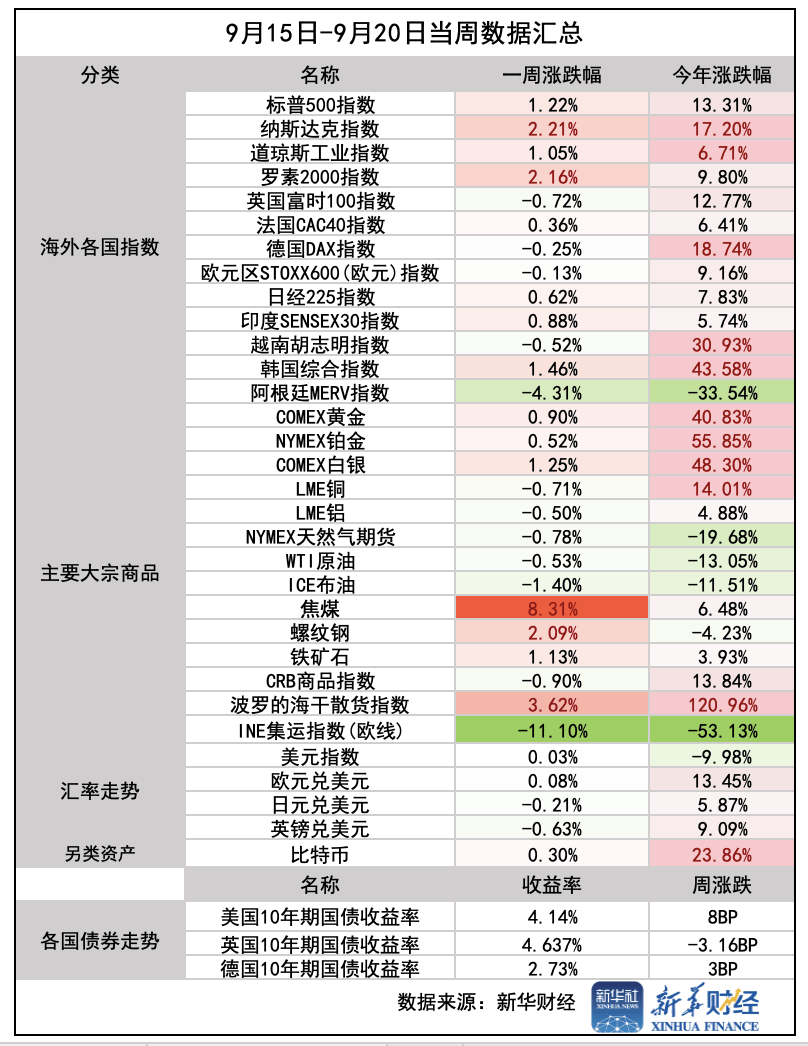
Group 1: Federal Reserve Actions - The Federal Reserve lowered the federal funds rate by 25 basis points to a range of 4.00%-4.25%, marking the first rate cut of the year and the first in nine months [1][5][6] - The rate cut is described as a "non-typical preventive cut" amid ongoing inflation pressures, indicating a cautious approach to monetary easing [5][6] Group 2: Market Reactions - U.S. stock markets reached new historical highs, with the S&P 500 index closing at 6664.36 points, up 1.22% for the week, and the Nasdaq composite index rising 2.21% to 22631.476 points [1][4] - Gold prices hit a historical high before experiencing slight profit-taking, with London spot gold recording a weekly increase of 1.14%, closing at $3685.07 per ounce [2][4] Group 3: Economic Indicators - The upcoming Personal Consumption Expenditures (PCE) data is expected to show a rebound in inflation, with predictions of a month-on-month increase from 0.2% to 0.32% and a year-on-year increase from 2.6% to 2.8% [5][6] - Analysts suggest that despite current low inflation pressures, a significant rebound is anticipated due to factors such as tariffs, energy price fluctuations, and labor market conditions [6][7] Group 4: Global Market Overview - European stock indices showed mixed results, with the STOXX 600 index down 0.13% and the German DAX 30 index down 0.25% for the week [2][4] - In the Asia-Pacific region, the Nikkei 225 index rose 0.62%, while the KOSPI index increased by 1.46% [2][4]
三大指数均创历史新高,黄金爆发,中概股就呵呵了
Ge Long Hui· 2025-09-20 20:29
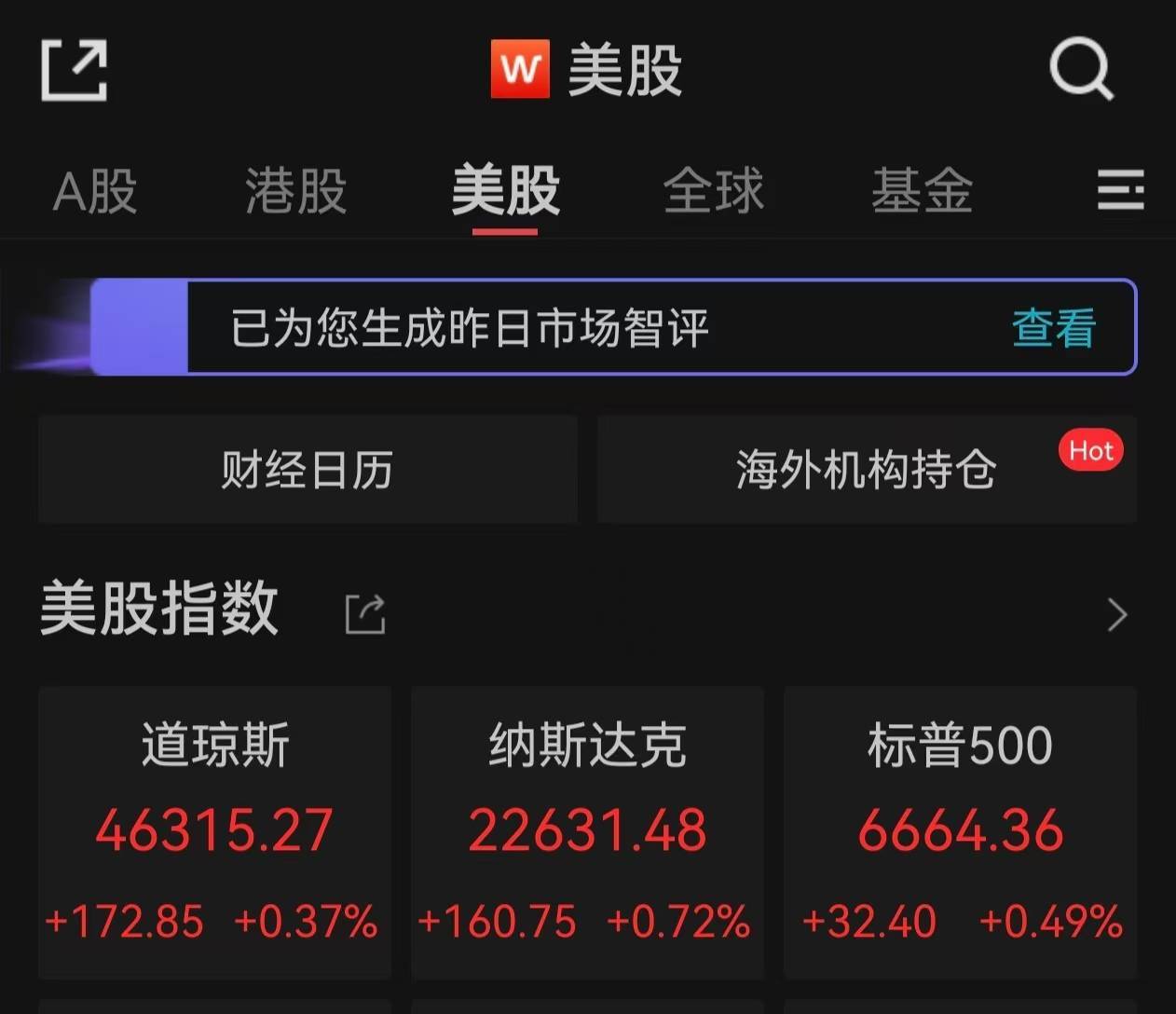
Market Performance - The three major U.S. stock indices reached historical highs, with the Dow Jones up 0.37%, Nasdaq up 0.72%, and S&P 500 up 0.49% [1] - Bank stocks showed mixed performance, with major banks like Bank of America, Citigroup, Goldman Sachs, and JPMorgan Chase experiencing slight gains, while others like Zions Bank and United Bank saw small declines [3] - Technology stocks also displayed a mixed trend, with Apple rising 3.2%, Tesla up 2.21%, and Microsoft up 1.86%, while Intel fell 3.24% [3] Chinese Concept Stocks - Chinese concept stocks experienced narrow fluctuations throughout the day, closing down 0.25%, with Pinduoduo dropping 2.62% and several others like Li Auto and iQIYI also declining over 1% [3] - However, Xpeng Motors rose 1.74%, and Alibaba, Bilibili, and Baidu saw slight increases [3] Gold Market - COMEX gold prices opened higher, closing up 1.12% at $3719.4 per ounce, with intraday fluctuations between a low of $3664.4 and a high of $3719.6 [3] - The gold market is currently facing contradictions, balancing fears of high prices against prevailing trends [3]


全球市场早报 | 美股三大指数续创新高,苹果涨超3%,国际油价走弱
Sou Hu Cai Jing· 2025-09-19 23:35
Market Performance - The three major U.S. stock indices closed at record highs for the second consecutive trading day, with the Dow Jones up 0.37%, S&P 500 up 0.49%, and Nasdaq up 0.72% [1][3] - For the week, the Dow Jones increased by 1.05%, S&P 500 by 1.22%, and Nasdaq by 2.21% [3] Sector Performance - Large technology stocks mostly rose, with the index of the seven major U.S. tech companies increasing by 1.22%. Notable individual stock performances included Apple up over 3%, Tesla up over 2%, and Microsoft up nearly 2% [3] - Bank stocks collectively rose, with JPMorgan up 0.49%, Goldman Sachs up 0.15%, and Wells Fargo up over 1% [3] - Energy stocks declined across the board, with ExxonMobil down nearly 1% and Chevron down over 1% [3] Airline and Chinese Stocks - Airline stocks showed mixed results, with Delta Airlines up 0.44% and Southwest Airlines up 0.77%, while American Airlines fell over 1% [4] - Chinese stocks had varied performance, with the Nasdaq China Golden Dragon Index down 0.25% and notable individual performances such as Pony.ai up nearly 19% [4] International Markets - European stock indices experienced slight declines, with the FTSE 100 down 0.12%, CAC40 down 0.01%, and DAX down 0.15% [4] Commodity Prices - International oil prices weakened, with West Texas Intermediate crude oil down 1.42% to $62.36 per barrel and Brent crude down 1.34% to $66.02 per barrel [5] Currency Movement - The U.S. dollar index rose by 0.3%, closing at 97.644 [5]
美银Hartnett:“美股七姐妹”估值泡沫远未见顶
Hua Er Jie Jian Wen· 2025-09-19 12:50
Core Viewpoint - The valuation bubble in large U.S. tech stocks has not yet peaked, and there is still room for further gains, according to Bank of America analysts [1][3]. Group 1: Valuation and Historical Comparison - The average price increase from the bottom to the peak in past major market bubbles has been 244%, while the "Magnificent Seven" (Tesla, Google, Apple, Meta, Amazon, Microsoft, and Nvidia) has seen a cumulative increase of 223% since March 2023 [3]. - Current trailing P/E ratio for the "Magnificent Seven" is 39 times, compared to historical bubbles where it typically reached 58 times [3]. - The stock prices of the "Magnificent Seven" are only 20% above their 200-day moving average, while historical bubbles have seen prices exceed this average by 29% [3]. Group 2: Market Sentiment and Drivers - Strong market sentiment, a favorable macroeconomic environment, ongoing enthusiasm for artificial intelligence, and expectations of further interest rate cuts by the Federal Reserve are key factors supporting the rise of tech stocks [4]. - The S&P 500 Information Technology Index has surged 56% since its low in April, with investors consistently buying during pullbacks [4]. Group 3: Investment Strategies - A recent fund manager survey indicated that "going long on the Magnificent Seven" is viewed as the most crowded trade, with 42% of respondents agreeing [5]. - The concentration of this trade aligns with historical bubble characteristics, as seen during the 2000 internet bubble [5]. - While optimistic about the continuation of the tech stock bubble, Bank of America analysts recommend a balanced strategy, suggesting a "barbell strategy" that includes both large tech stocks and some "bad value stocks" to manage risk [5].

美银:美股“七巨头”泡沫仍在膨胀!上涨空间尚未穷尽
智通财经网· 2025-09-19 11:05
Group 1 - The core viewpoint is that the bubble formed by large U.S. tech stocks has further expansion potential, with investors preparing for more upside [1][4] - The average increase from the low to peak during past market bubbles is 244%, indicating that the "Magnificent Seven" stocks, which have risen 223% since March 2023, still have room for growth [1] - Current valuations support the view of further upside for the "Magnificent Seven," with a price-to-earnings (P/E) ratio of 39 times, which is lower than the typical bubble peak of 58 times [1] Group 2 - Investor enthusiasm for U.S. tech giants has driven the stock market to new highs this year, with the S&P 500 Information Technology Index soaring 56% since its April low [4] - Positive macroeconomic conditions, ongoing excitement around artificial intelligence, and expectations of further interest rate cuts from the Federal Reserve are supporting the tech sector [4] - The "long Magnificent Seven" trade is viewed as the most crowded trade by 42% of respondents in a recent Bank of America fund manager survey [4] Group 3 - Historical analysis shows that bubbles are often short-lived and highly concentrated, as evidenced by the 61% rise in tech stocks in 2000, while other sectors declined [4] - Investors are advised to hedge their exposure to the large tech stock bubble by holding some "distressed value" assets, with potential opportunities in Brazil, the UK, and global energy stocks [4]
Immersion: Upgrading On Upcoming Barnes & Noble Education Catalyst - Buy
Seeking Alpha· 2025-09-19 09:16
Group 1 - The focus has shifted towards offshore drilling, supply industry, and shipping, including tankers, containers, and dry bulk [1] - The fuel cell industry is being monitored as it is still in its early stages of development [1] Group 2 - The individual has extensive experience in auditing and trading, having navigated significant market events such as the dotcom bubble and the subprime crisis [2] - The research provided aims to maintain high quality despite language barriers [2]