
海运

Search documents
中远海能:2024年年报点评:归母净利润+19.37%,外贸油运积极拓展西方市场-20250327
Xinda Securities· 2025-03-27 10:23
Investment Rating - The investment rating for the company is "Accumulate" [1] Core Views - The company is a global leader in oil transportation, with a positive supply-demand outlook and undervalued asset value [1] - The foreign trade oil transportation business is actively expanding into Western markets, maintaining diversified sources of cargo [2] - The LNG transportation business is experiencing steady growth [3] Financial Summary - In 2024, the company achieved total revenue of 232.44 billion, a year-on-year increase of 2.25%, with Q4 revenue of 61.00 billion, down 1.59% year-on-year [4] - The net profit attributable to the parent company for 2024 was 40.37 billion, up 19.37% year-on-year, with Q4 net profit of 6.21 billion, turning from loss to profit [4] - The company's operating volume (excluding time charter) reached 18 million tons in 2024, a year-on-year increase of 3.8%, with a transportation turnover of 604 billion ton-miles, up 13.6% year-on-year [4] - The company maintained the world's largest fleet of oil tankers, with 159 owned tankers totaling 23.74 million deadweight tons [4] - The foreign trade oil transportation business generated revenue of 145.74 billion in 2024, a year-on-year increase of 4.1%, but gross profit decreased by 13.5% [4] - The LNG transportation business achieved revenue of 22.29 billion, a year-on-year increase of 22.4%, with gross profit of 10.76 billion, up 25.23% [4] Earnings Forecast - The company is expected to achieve revenues of 265.50 billion, 281.14 billion, and 288.00 billion from 2025 to 2027, with year-on-year growth rates of 14.22%, 5.89%, and 2.44% respectively [7] - The net profit attributable to the parent company is projected to be 46.84 billion, 51.88 billion, and 54.77 billion for the same period, with year-on-year growth rates of 16.05%, 10.75%, and 5.56% respectively [7] - The corresponding EPS for 2025 is expected to be 0.98, with a P/E ratio of 11.64 [7]
中远海能(600026):2024年年报点评:归母净利润+19.37%,外贸油运积极拓展西方市场
Xinda Securities· 2025-03-27 07:28
Investment Rating - The investment rating for the company is "Accumulate" [1] Core Views - The company has shown a positive trend in its oil transportation business, actively expanding into Western markets and maintaining a diversified source of cargo [2] - The LNG transportation business has demonstrated steady growth [3] - The company reported a total revenue of 232.44 billion yuan for 2024, representing a year-on-year increase of 2.25%, while the net profit attributable to the parent company reached 40.37 billion yuan, up 19.37% year-on-year [4] - The company maintained the world's largest fleet of oil tankers, with 159 owned vessels totaling 23.74 million deadweight tons [4] - The foreign trade oil transportation business generated revenue of 145.74 billion yuan in 2024, a 4.1% increase year-on-year, despite a 13.5% decline in gross profit [4] - The LNG transportation business achieved revenue of 22.29 billion yuan, a 22.4% increase year-on-year, with a gross profit of 10.76 billion yuan, up 25.23% [4] Financial Summary - The company expects to achieve revenues of 265.50 billion yuan, 281.14 billion yuan, and 288.00 billion yuan for the years 2025 to 2027, with corresponding net profits of 46.84 billion yuan, 51.88 billion yuan, and 54.77 billion yuan, reflecting growth rates of 16.05%, 10.75%, and 5.56% respectively [7] - The earnings per share (EPS) are projected to be 0.98 yuan, 1.09 yuan, and 1.15 yuan for 2025 to 2027, with the price-to-earnings (P/E) ratio expected to be 11.64, 10.51, and 9.96 [7] - The company reported a gross profit margin of 27.2% for 2024, with a return on equity (ROE) of 11.3% [6]
如果美国对中国集装箱船收入港费
日经中文网· 2025-03-27 03:34
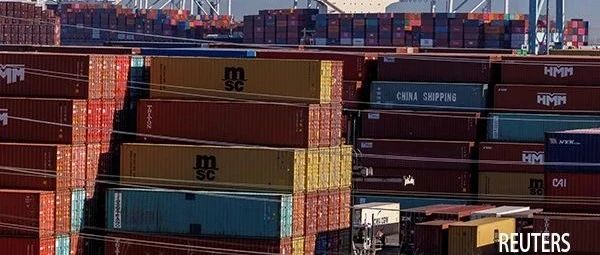
Core Viewpoint - The proposed restrictions by the Trump administration on Chinese ships entering U.S. ports could lead to significant increases in operational costs for major shipping companies and a reduction in U.S. exports, raising concerns within the global shipping and trade industry [1][6][8]. Group 1: Proposed Restrictions - The U.S. Trade Representative's Office (USTR) has proposed charging up to $1.5 million per entry for Chinese-built ships into U.S. ports, which would also apply to ships from other countries using Chinese shipping companies [2][4]. - The U.S. government aims to exclude Chinese-built ships and shipping companies due to concerns over China's dominance in the maritime industry, with China currently holding approximately 70% of new ship orders globally and 40% of maritime trade [4][5]. Group 2: Economic Impact - If the restrictions are implemented, major shipping companies could face an additional annual cost of $20 billion, which would likely be passed on to consumers [8][9]. - The American Association of Port Authorities (AAPA) estimates that U.S. exports could decrease by 12%, with oil and coal exports potentially dropping by 8% due to trade disruptions caused by these restrictions [8][10]. Group 3: Industry Response - The global shipping industry, including major players like MSC, has expressed significant concern over the proposed measures, indicating that the costs would ultimately burden consumers and lead to increased prices and potential job losses in the U.S. [8][10]. - The American Automotive Innovation Alliance has suggested that the U.S. shipbuilding capacity and operational scale would require at least seven years to grow, indicating that immediate restrictions may not be feasible [11]. Group 4: International Reactions - The Japanese shipping industry has voiced opposition to the U.S. restrictions, warning that such measures could have adverse effects on international trade [12][13].

邱慈观专栏丨海运行业渐进式脱碳:必备的过渡技术及金融支持
Peng Pai Xin Wen· 2025-03-25 09:21
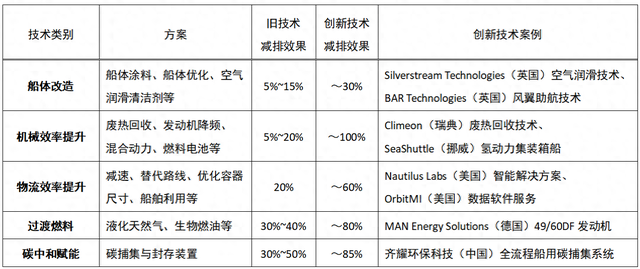
Core Viewpoint - The shipping industry is actively deploying emission reduction strategies in response to increasingly stringent carbon emission standards from the International Maritime Organization and the European Union, focusing on transitional technologies and financial support to achieve gradual decarbonization [1][11]. Transitional Technologies Development and Innovation - Transitional technologies for decarbonization in the shipping industry can be categorized into three types: efficiency improvement technologies, transitional fuels, and carbon-neutral enabling technologies [2]. - Specific examples of transitional technologies include hull optimization, waste heat recovery, and the use of liquefied natural gas and biofuels [3][4]. Innovation Technology Cases - Various innovative technologies have been developed to enhance emission reduction effectiveness, such as air lubrication technology and hydrogen-powered vessels, which significantly improve the reduction rates compared to traditional methods [4][5]. - The economic benefits of transitional technologies are notable, as they often involve lower costs compared to zero-carbon technologies, making them more feasible for implementation [5]. Financing Transitional Technologies - Financial support is crucial at all stages of transitional technology development, with different financing tools and models needed based on the risk and return profiles of the technologies [6][9]. - Examples of financing cases include the use of policy-based financial tools, transformation loans, and mixed financing models to support various projects in the shipping industry [7][8]. Domestic and International Financing Cases - International financing cases demonstrate the effectiveness of equity and mixed financing in incubating innovative technologies, while domestic cases show a lack of diversity and granularity in financing tools [10][11]. - The limited number of domestic financing cases highlights the need for improved structures and verification of financing models to support the shipping industry's decarbonization efforts [10]. Recommendations for Future Development - The industry should focus on advancing transitional technologies and recognizing their importance in achieving decarbonization goals, leveraging successful international practices [11][12]. - A comprehensive approach involving risk assessment, appropriate financing tools, and government support is essential for fostering innovation and investment in transitional technologies [12][13][14].
2025夏秋时刻表点评:时刻同比负增,冗余供给“挤水分”
Changjiang Securities· 2025-03-18 01:24
Investment Rating - The report maintains a "Positive" investment rating for the transportation industry [8] Core Insights - The 2025 summer and autumn flight schedule shows a year-on-year decline in flight slots, indicating a tightening supply and a reduction in redundant slots [3][12] - Domestic passenger traffic shows a slight increase, while prices continue to decline at a slower rate [4][42] - Oil shipping has seen a slight rebound, while bulk shipping continues to rise [5] - The logistics sector reports a year-on-year increase in bulk transportation prices, although coal transport volumes have weakened [6] Summary by Sections Flight Schedule Analysis - The Civil Aviation Administration of China has released the 2025 summer and autumn flight schedule, indicating a 3.3% year-on-year decline in weekly passenger flights compared to the summer of 2024 [3][12] - The report highlights that the increase in flight slots from previous airport capacity expansions is coming to an end, leading to tighter control over capacity release [3][12] Passenger Transport - As of March 15, 2025, the seven-day moving average for domestic flight volume shows no change year-on-year, while passenger volume has increased by 3% [4] - International flight volume has increased by 21%, and international passenger volume has risen by 24% compared to 2024 [4] - Domestic ticket prices have decreased by 11% year-on-year, with a current average price of 560 yuan [4][38] Shipping Sector - Oil shipping rates have increased by 3.1% to 35,000 USD per day, driven by tightening sanctions on Iran and increased demand for compliant oil transport [5] - The shipping container index has dropped by 8.1% to 1,319 points, indicating ongoing challenges in the container shipping market [5] - The Baltic Dry Index (BDI) has risen by 19.2% to 1,669, supported by increased shipments of bauxite and other bulk commodities [5] Logistics Overview - The total express delivery volume for the week of March 3-9, 2025, reached approximately 3.885 billion items, a year-on-year increase of 24.2% [6] - The national average price for bulk commodity road transport has risen by 4.2% month-on-month and 3.2% year-on-year [6] - Recommendations include focusing on companies with stable performance and high dividend ratios, such as SF Express [6]
汽车运输船租金比新冠疫情后的高位下跌4成
日经中文网· 2025-03-14 05:23
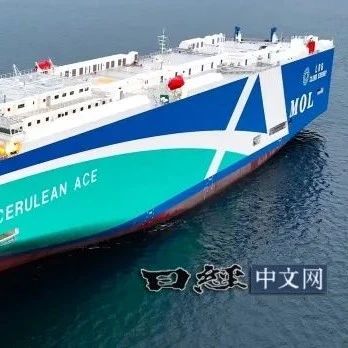
汽车运输船的租金从新冠疫情后的最高位开始下降 2025年将有超过70艘新汽车运输船交付,有可追溯数据的2007年以来最多。特朗普的汽车关税政策也被 视为不稳定因素。另一方面。中国的汽车出口量在2023年超过日本,首次成为世界第一,2024年又同比 增长2成…… 新冠疫情暴发后一直徘徊在历史高位的汽车专用运输船的租金转为下降。由于新船投放市场,船只短缺 的情况开始缓解,目前的租金相较于疫情后的高位下降了4成。今后,美国特朗普政府的汽车关税政策 被视为影响运输供需情况的不稳定因素,可能会对未来的市场行情产生影响。 英国调查公司克拉克森研究(Clarksons Research)的数据显示,能装载6500辆汽车的运输船的租金在 2024年12月时为每天6.5万美元(1年期合同)。虽然一直到2024年10月租金都保持在10万美元以上的高 位,但到年底时却急剧下跌。据行业相关人士称,进入2025年后市场行情仍没有恢复。 还有观点指出,往年年底源于紧急供货的临时运输需求经常会增加,本次并未增加,导致2024年年底的 价格下跌加剧。这似乎与中国和欧洲的经济停滞及汽车需求疲软有关。 关于今后汽车运输船的租金行情,短期内弱势因 ...
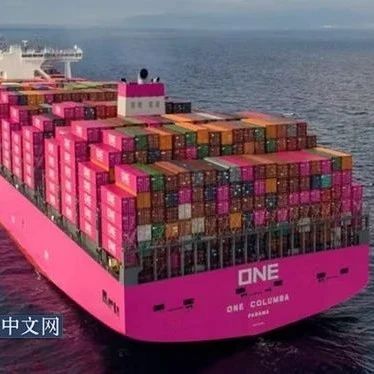
海运需求扩大,日本ONE加码投资运力提升3成
日经中文网· 2025-03-04 03:02
Core Viewpoint - Ocean Network Express (ONE) plans to invest over 3 trillion yen (approximately 25 billion USD) in growth areas by the fiscal year 2030, driven by the ongoing supply-demand tension in container shipping [1][2]. Investment Plans - ONE will construct 42 new container ships between fiscal years 2025 and 2028, increasing its operational scale by approximately 570,000 TEU compared to August 2024 [2]. - The total investment of 25 billion USD will also include port construction costs for handling its containers [2]. Market Dynamics - The global trade volume is expected to grow by 2.7% in 2024 and 3.0% in 2025, with a shift in production bases from China to Southeast Asia and India, leading to new cargo flows [3]. - The geopolitical landscape, particularly the worsening situation in the Middle East, is anticipated to increase shipping times and the number of vessels at sea, prompting ONE to expand its fleet to capture market share [3]. Competitive Landscape - Major global shipping companies are also increasing their fleet sizes, with MSC and Maersk planning to add new vessels, indicating a competitive investment environment in the shipping industry [3]. - In 2024, a record 457 container ships were built globally, with a projected 6% increase in operational capacity by the end of 2025 [3]. Impact of Tariffs - The imposition of tariffs by the U.S. on various countries is expected to positively impact the shipping industry, as companies shift production bases to avoid tariffs, resulting in increased shipping volumes from Asia to the U.S. [4].
每日报告回放-20250319
Guotai Junan Securities· 2025-02-18 03:02
Investment Rating - The report does not explicitly provide an investment rating for the industry Core Insights - The report highlights a significant increase in private sector risk appetite, with January's social financing stock growth maintaining at 8.0% and new social financing reaching 7.06 trillion yuan, a year-on-year increase of 586.6 billion yuan [6] - The report discusses the impact of tariffs on trade, indicating that current tariff measures have led to a 1.9% decline in Chinese exports and a 0.7% increase in U.S. inflation [11][14] - The report emphasizes the importance of AI investment driven by the localization of DeepSeek, predicting a compound annual growth rate of 46.2% for China's intelligent computing scale from 2023 to 2028 [32][34] Summary by Sections Private Sector Risk Appetite - In January, new loans amounted to 5.13 trillion yuan, with a year-on-year increase of 210 billion yuan, indicating a strong start to the year despite a high base in 2024 [6] - The report notes that the increase in loans is primarily driven by short-term loans, with 2.8 trillion yuan of the 4.3 trillion yuan increase being short-term [7] - The report also mentions that the M2 growth rate was 7.0%, while M1 growth was only 0.4%, reflecting a divergence in deposit and monetary growth [8] Tariff Impact Analysis - The report outlines three potential scenarios regarding tariffs, with varying impacts on Chinese exports and U.S. inflation [11][12][16] - The first scenario suggests a minimal impact with a tariff increase of no more than 20%, while the second scenario could lead to a 12.5% reduction in Chinese exports and a 0.4-0.8% increase in U.S. inflation [14][16] - The third scenario posits that tariffs may serve as leverage for broader negotiations, potentially resulting in lower overall tariff increases [17][18] AI Investment and Localization - The report identifies a surge in demand for AI applications due to the localization of DeepSeek, which is expected to accelerate deployment in sectors like government and finance [33] - It predicts that the investment in AI infrastructure will significantly increase, with a focus on domestic AI chip companies adapting to DeepSeek models [34] - The report also highlights the potential for mergers and acquisitions in the "hard technology" sector, driven by state-owned enterprises [34] Market Strategy and Outlook - The report anticipates a sideways movement in the stock index following a rapid rebound, with technology remaining a key focus area [39] - It emphasizes the importance of AI-related investments and the potential for growth in sectors benefiting from technological advancements [40] - The report suggests that the market will continue to react to external policy changes and internal economic conditions, with a focus on high-dividend assets amid volatility [43][44]

CBL International Limited (Nasdaq: BANL)2024年度业绩发布会
2024-10-31 00:57
Summary of Conference Call Transcript Company and Industry Overview - The conference call discusses CBL, a company involved in the marine fuel supply industry, particularly focusing on the container shipping sector. CBL services 9 out of the top 12 container shipping companies globally, which collectively hold approximately 60% of the market share in container shipping [1][6]. Key Points and Arguments Industry Dynamics - Global maritime trade is expected to face significant disruptions in 2024 due to geopolitical tensions, particularly the Red Sea crisis affecting key maritime routes like the Suez Canal [1]. - Despite a forecasted slowdown in global GDP growth to 2.6% in 2024, maritime trade shows resilience with an overall trade volume increase of 2%, and container trade growing by 3.5% [2]. Financial Performance Highlights - CBL reported a total revenue increase of 35.9%, reaching $592.5 million, driven by higher demand and operational expansion [3]. - Operating cash flow surged by 80.6%, reflecting improved efficiency and cash management [3]. - Gross profit decreased by 25.5% from $7.21 million to $5.37 million, primarily due to strategic pricing adjustments and increased operational costs [4]. - Operating expenses rose significantly by 56.8%, attributed to business expansion and investments in biofuel operations and ESG initiatives [4]. Regional Revenue Distribution - Mainland China accounted for 56.3% of total revenue, followed by Hong Kong at 30.3%, and Malaysia at 9.8% [5]. - Notable revenue growth was observed in regions like Europe, Japan, Vietnam, and Thailand, with growth rates reaching up to 291% [5]. Operational Expansion - CBL expanded its global service network from 36 ports to over 60, covering major ports across four continents [6]. - New service offerings include biofuel supply services in Malaysia and India, enhancing CBL's operational footprint [6]. ESG and Sustainability Initiatives - CBL emphasizes its commitment to ESG principles, integrating them into its core strategy to create long-term value [9]. - The company has launched biofuel products that significantly reduce greenhouse gas emissions and has received certifications to ensure compliance with sustainable fuel standards [8][10]. Future Outlook and Strategic Initiatives - CBL plans to continue expanding its service network and customer base while focusing on sustainable fuel development, including biofuels and exploring methanol and LNG [12][13]. - The company aims to enhance operational efficiency through automation and IT investments, which are expected to improve resource allocation and reduce costs [13][16]. Challenges and Responses - The company faces challenges related to rising operational costs and a decline in gross margins due to competitive pricing strategies [15][16]. - CBL is committed to improving profitability by leveraging economies of scale and enhancing its service offerings [16][24]. Capital Management - CBL conducted a private placement to raise funds for network expansion, biofuel development, and debt repayment, indicating a strategic approach to capital management [25][26]. - The company aims to maintain liquidity and financial flexibility while pursuing growth opportunities [26][27]. Additional Important Information - CBL's service network is primarily concentrated in the Asia-Pacific region, with no current operations in the U.S., minimizing the impact of U.S. port fee policies on its business [22]. - The company is closely monitoring regulatory changes that could affect global shipping and trade dynamics [22]. This summary encapsulates the key insights from the conference call, highlighting CBL's operational strategies, financial performance, and market outlook amidst a challenging industry landscape.

别让太阳升起来!
猫笔刀· 2024-07-08 14:08
今天两市成交额5800亿,已经连续好几天低于6000亿。市场中位数下跌2.98%,又是鬼哭狼嚎的一天。 外资今天净卖出22亿,自从6月6日之后只有2天是净流入的,30天里累计抛售了730亿。 但a股肯定不是他们砸蹋的,这一个月仅国家队入场救市买了就不止1000亿,除了外资外还有很多内资 在砸盘。我手头没数据,但凭感觉机构和散户都有在卖,这个位置肯定谈不上止盈,都是流着泪止损的 人。 一天6000亿,抛压很小,但糟糕的是没人买。其实股市和现在的房市挺像的,出了很多利好,但无法提 振市场信心,成交量低迷,价格还在持续阴跌。 今天又是接近5000只股下跌,到了现在这个地步已经是很明显的流动性危机,只有流动性枯竭这种全领 域的群伤魔法才能打出这种效果,不论行业不论题材,直接开大,除了魔免的qdii基金和少数吃了无敌 药水的抱团红利股,别的都是嘎嘎掉血。 有些人亏的受不了了,想换仓到美股基金或者国内的长江电力们,来问我有没有风险,呃,怎么可能没 风险,要有没风险的好事按中国的国情你普通人就肯定要找关系才能买。 纳斯达克目前的估值处于近20年的高位,另外a股的qdii基金还普遍有3-5%的溢价。同样的,长江电力 的pe现 ...