
生物技术

Search documents
连亏9年半的诺思兰德拟发H股 2024年北交所募资2.3亿
Zhong Guo Jing Ji Wang· 2025-10-15 03:09
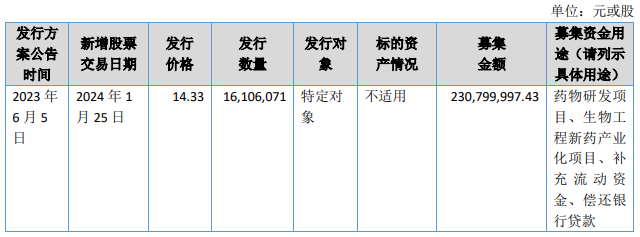
Core Viewpoint - Norland plans to issue H-shares and list on the Hong Kong Stock Exchange to enhance its international presence, brand image, and funding capabilities for long-term development [1] Group 1: H-Share Issuance - The company is in discussions with intermediaries regarding the H-share issuance and listing, with specific details yet to be determined [1] - The issuance and listing require approval from the board, shareholders, and regulatory bodies including the China Securities Regulatory Commission and the Hong Kong Stock Exchange [1] - There is significant uncertainty regarding the approval and implementation of the H-share issuance [1] Group 2: Fundraising History - Over the past five years, Norland has raised a total of 478 million yuan through two fundraising rounds [2] - In 2020, the company issued 41,126,749 shares at a price of 6.02 yuan per share, raising approximately 229 million yuan after expenses [2] - In 2023, the company received approval to issue 16,106,071 shares at a price of 14.33 yuan per share, raising approximately 224 million yuan after expenses [3] Group 3: Financial Performance - Norland has reported losses for nine and a half consecutive years, with net profits from 2016 to 2025 showing consistent negative figures [5] - The company's net profit attributable to shareholders was -45.18 million yuan for the most recent reporting period, an improvement from -48.14 million yuan in the previous period [6] - Revenue for the latest period was approximately 36.5 million yuan, reflecting a 1.47% increase from the previous year [6]


康桥资本旗下瑞桥信贷二期美元基金完成5亿美元募集
Sou Hu Cai Jing· 2025-10-15 01:33
投资界10月15日消息,康桥资本今日宣布,旗下瑞桥信贷二期美元基金(R-Bridge Healthcare Fund II, 简称"RBF II")完成募集,总募资金额达5亿美元。该基金为亚洲规模最大的专注于医疗健康领域的信 贷基金之一。RBF II将在全球范围内投资,助力医疗创新及行业可持续增长。 RBF II吸引了来自全球的多元化机构投资者,包括主权财富基金、养老基金、金融机构及家族办公室。 该基金延续其独特的差异化投资策略,面向拥有即将有产品获批或产品处于商业化阶段的生物技术公司 及医疗器械或服务企业,提供基于药品特许权和销售收入的融资结构,覆盖北美、欧洲、亚洲及其他全 球主要市场。通过定制化的非稀释性融资解决方案,RBF II将帮助企业加速商业拓展,同时为投资者实 现具吸引力的风险调整回报与稳健的下行保护。 康桥资本高级董事总经理兼瑞桥信贷基金负责人Michael Keyoung博士表示,我们衷心感谢新老投资者 的信任与支持,使我们能够以全球化视角在亚洲及更广泛市场推动信贷投资的发展。我们坚信,非稀释 性信贷解决方案已成为全球医疗健康资本市场的重要组成部分,并将在欧洲、亚洲与美国迎来更多机 遇。凭借我 ...
Tenaya Therapeutics (NasdaqGS:TNYA) Conference Transcript
2025-10-14 12:00
Summary of Tenaya Therapeutics Conference Call (October 14, 2025) Company Overview - **Company**: Tenaya Therapeutics (NasdaqGS:TNYA) - **Focus**: Genetic medicine, specifically gene therapies for cardiomyopathies Key Assets - **TN-201**: Targets MYBPC3-positive hypertrophic cardiomyopathy (HCM) patients - **TN-401**: Targets PKP2-positive arrhythmogenic right ventricular cardiomyopathy (ARVC) patients - Both therapies utilize AAV9-based vectors and are currently in clinical trials [3][4][5] Core Points and Arguments TN-201 (HCM) - **Mechanism**: AAV9 vector delivering a full-length MYBPC3 gene with a cardiomyocyte-specific promoter [4] - **Unique Selling Proposition**: Addresses the underlying genetic cause of HCM, particularly for non-obstructive forms, which represent 70% of the patient population [9][10] - **Market Context**: Current therapies like Camzyos are not approved for non-obstructive HCM, highlighting a significant unmet need [10] - **Clinical Data**: Positive interim data from the MyPeak-1 study showed safety and tolerability, with two out of three patients experiencing significant improvements in cardiac biomarkers [14][15][18] - **Durability of Effect**: All patients in the first dose cohort reached New York Heart Association Class I, indicating no disease impact on daily living [18] TN-401 (ARVC) - **Mechanism**: AAV9 vector delivering a full-length PKP2 gene [29] - **Unmet Need**: ARVC is a severe condition with no approved therapies addressing its genetic cause, leading to high morbidity and mortality [30] - **Preclinical Data**: Demonstrated prevention of arrhythmia and cardiac remodeling in severe preclinical models [32] - **Clinical Trial**: Ongoing Phase 1b trial (RIDGE-1) with expected data release in Q4 2025 [33] Additional Important Insights - **Safety Database**: AAV9 has the largest safety database among AAV vectors, enhancing confidence in its use [6] - **Innovative Engineering**: The company has developed unique promoters and molecular designs to optimize gene delivery [4][5] - **Data Presentation**: Upcoming data at the AHA conference is highly anticipated, with a focus on safety and efficacy [22][20] - **Comparison with Peers**: The company is mindful of how its data compares with other gene therapy programs, emphasizing the importance of robust protein measurement methods [35][36] Conclusion - **Future Outlook**: Tenaya Therapeutics is positioned to address significant unmet needs in cardiomyopathy with its innovative gene therapies, backed by promising clinical data and a strong safety profile [13][20]

30年前,比尔·盖茨的一笔“烂投资”,如今用两位诺奖得主震惊世界
创业邦· 2025-10-14 10:25
以下文章来源于TOP创新区研究院 ,作者产业升级研究组 TOP创新区研究院 . 创新区研究,就在TOP研究院。TOP研究院专注于全球创新区的一体化研究,从Talent(个人), Organization(组织), Place(区域)三大维度出发,通过"研究/连接/ 分享",探索中国创新区的实践路径。 来源丨 TOP创新区研究院(ID:TOP_Lab) 2025年10月,当诺贝尔生理学或医学奖的聚光灯打在玛丽·布朗科(Mary Brunkow)和弗雷德·拉姆斯德尔(Fred Ramsdell)身上时,整个科学界为之 沸腾。 这也是一个关于耐心资本、科学远见和长期主义的传奇故事—— 一项足以改变世界的伟大发现,但其种子往往播撒在最意想不到的土壤里。 今天,就让我们穿越30年的时光,回到那个激动人心的起点,探寻这家被遗忘的公司,如何造就了两位诺贝尔奖得主。 "人类登月计划" 咱们的故事要从上世纪90年代初讲起。 他们揭开了人体免疫系统"维和部队"——调节性T细胞(Tregs)的神秘面纱,为攻克癌症、自身免疫性疾病(如红斑狼疮、类风湿关节炎)带来了革命性 的曙光。 然而,当媒体深挖这两位科学家的履历时,一个尘封的名字 ...

中等技术陷阱!新晋诺奖得主阿吉翁揭欧洲技术竞争落后原因
Di Yi Cai Jing· 2025-10-14 06:25
Core Insights - Europe is lagging behind the US and China in high-tech innovation, primarily due to a lack of appropriate policies and systems to stimulate breakthrough innovations, resulting in a focus on low to medium-end incremental innovations [1][3] R&D Investment and Focus - European R&D investment is overly concentrated in mature medium-tech industries, with 45% of EU corporate R&D funds directed towards automotive, chemical, and telecommunications sectors, while only 45% is allocated to high-tech industries [3] - In contrast, the US allocates 85% of its R&D funds to high-tech sectors such as software, pharmaceuticals, and biotechnology, leading to faster economic growth and higher productivity [3] - The EU's R&D expenditure as a percentage of GDP is only 2.2%, significantly lower than the US at 3.5%, and also below China and Japan [4] Structural Issues - The historical reliance on traditional industries, particularly the automotive sector, has hindered the transition to high-tech innovation in Europe [5] - The lack of a true single market and a comprehensive innovation financing ecosystem in Europe is a significant barrier to stimulating high-tech breakthroughs [6] - Fragmented capital markets in Europe result in a scarcity of debt resources and venture capital, which are crucial for R&D funding [7] Policy Recommendations - There is a need for Europe to adopt a more balanced approach between competition policy and industrial policy, similar to the US model, particularly in key areas like defense, climate, AI, and biotechnology [7] - Establishing a long-term funding mechanism for laboratories and a technology-neutral, mission-oriented innovation policy could help drive disruptive innovations in Europe [7]

每日全球并购:紫金矿业完成收购Raygorodok金矿项目|九福来完成收购河南丽轩网络科技(10/13)
Xin Lang Cai Jing· 2025-10-13 21:06
Group 1 - Bristol Myers Squibb agrees to acquire Orbital Therapeutics for $1.5 billion in cash to enhance its cell therapy product portfolio, focusing on next-generation RNA drugs [1] - Fonda Holdings plans to acquire 100% of Shanghai Guanhua Medical Technology for RMB 270 million, which specializes in clinical trial technology services [2] - Shengxing Holdings announces the acquisition of machinery from A and B sellers for a total of HKD 6.45 million and HKD 6.2 million, respectively, along with a financing lease agreement [3] Group 2 - Jiufu Lai completes the acquisition of 100% equity in Henan Lixuan Network Technology, with all conditions met for the transaction [4] - Zijin Mining completes the acquisition of 100% equity in the Raygorodok gold mine project in Kazakhstan, which has rich resources [5] - Luxshare Precision announces progress in acquiring equity and assets from subsidiaries of Wentech Technology [6] Group 3 - Tianjin Jieqiang Power Equipment completes the acquisition of 51% equity in Shandong Carbon Seeking New Materials as part of its strategic development plan [7] - Global Infrastructure Partners (GIP) is in advanced negotiations to acquire Aligned Data Centers from Macquarie Group, with a potential transaction value of up to $40 billion [8]

重磅首发!成都高科10亿成果转化基金首批投资瞄准五大硬科技企业
Sou Hu Cai Jing· 2025-10-13 12:53
Group 1: Investment Overview - Chengdu Gaoke Group and Chengdu High-tech Zone Xinrong Angel Investment Co., Ltd. have jointly established the Chengdu Gaoke Technology Achievement Transformation Venture Capital Partnership, which has completed investments in five companies totaling tens of millions [1][6] - The fund aims to support the transformation and industrialization of key technologies in the Chengdu High-tech Zone, with a total fund size of 1 billion yuan and a duration of 10 years [6] Group 2: Company Profiles - Chengdu Ruixinxing Technology Co., Ltd. specializes in autonomous mobile robots and AI camera products, recognized for its high-quality supply chain and innovation in industrial applications [1] - Tuxun Technology focuses on innovative products for wireless connectivity and provides ICT integrated access network solutions based on 3GPP standards [2] - ZhiFou Ruida is a pioneer in UWB technology, having launched the world's first mass-produced UWB parking radar product and collaborating with major domestic electric vehicle manufacturers [3] - Shengshi Junlian, founded by Dr. Liu Jianghai, specializes in biopharmaceuticals and has developed a high-throughput antibody screening platform, completing over 300 commercial projects [5]
一周港股IPO:东鹏饮料、坦博尔、诚益生物3家递表,三一重工、八马茶业等4家通过聆讯
Cai Jing Wang· 2025-10-13 11:13
Core Insights - The article highlights the recent activities in the Hong Kong stock market, including companies filing for IPOs, passing hearings, and new stock listings. Group 1: Companies Filing for IPOs - Tambor Group Limited filed for an IPO on October 8, 2023, with CICC as the sole sponsor. It is a leading outdoor apparel brand in China, projected to have revenues of approximately RMB 7.32 billion in 2022, growing to RMB 13.02 billion by 2025 [2] - Chengyi Biotechnology Cayman Limited also filed on October 8, 2023, with Jefferies, Bank of America, and CICC as joint sponsors. The company focuses on developing new oral small molecule drugs for unmet medical needs in cardiovascular and inflammatory diseases, with projected revenues of USD 36.06 million in 2023, increasing to USD 221 million in 2024 [3] - Dongpeng Beverage Group Limited submitted its application on October 9, 2023, with Huatai International, Morgan Stanley, and UBS as joint sponsors. It is the leading functional beverage company in China, with revenues expected to rise from RMB 85 billion in 2022 to RMB 158.3 billion by 2025 [4] Group 2: Companies Passing Hearings - Dipo Technology Co., Ltd. passed the hearing on October 12, 2023, with a focus on providing AI solutions for enterprises. It is ranked first in the Chinese enterprise-level AI application solutions market, with projected revenues of RMB 1.01 billion in 2022, growing to RMB 2.43 billion by 2025 [5][6] - Cambridge Technology Co., Ltd. also passed the hearing on October 12, 2023, with a focus on ICT industry services. It ranks fifth in the global optical and wireless connection device market, with revenues expected to reach RMB 37.84 billion in 2022 [7] - SANY Heavy Industry Co., Ltd. passed the hearing on October 12, 2023, and is recognized as a leading global engineering machinery company, with revenues projected to be RMB 808.39 billion in 2022 [8] - Eight Horses Tea Co., Ltd. passed the hearing on October 12, 2023, and is a leader in the high-end tea market in China, with revenues expected to grow from RMB 18.18 billion in 2022 to RMB 21.43 billion by 2025 [9] Group 3: Companies Launching IPOs - Zhida Technology (02650.HK) launched its IPO from September 30 to October 6, 2025, with a final price of HKD 66.92 per share [10] - Jinye International Group (08549.HK) also launched its IPO during the same period, with a share price of HKD 0.65 [10] - Xuan Bamboo Biotechnology-B (02575.HK) launched its IPO from October 6 to October 10, 2025, with a share price of HKD 11.6 [11] - Yunji (02670.HK) launched its IPO from October 8 to October 13, 2025, with a share price of HKD 95.6 [12] - Haixi New Drug (02637.HK) launched its IPO from October 9 to October 14, 2025, with a price range of HKD 69.88 to 86.40 [12] Group 4: New Stock Listings - Changfeng Pharmaceutical (HK:02652) was listed on October 8, 2025, closing at HKD 38.50 per share, with a gain of 161.02% [13] - Jinye International Group (HK:08549) was listed on October 10, 2025, closing at HKD 2.15 per share, with a gain of 330.00% [14] - Zhida Technology (HK:02650) was also listed on October 10, 2025, closing at HKD 195.5 per share, with a gain of 192.14% [15]

候选产品获阿斯利康青睐,诚益生物有哪些看点?
Sou Hu Cai Jing· 2025-10-13 10:17
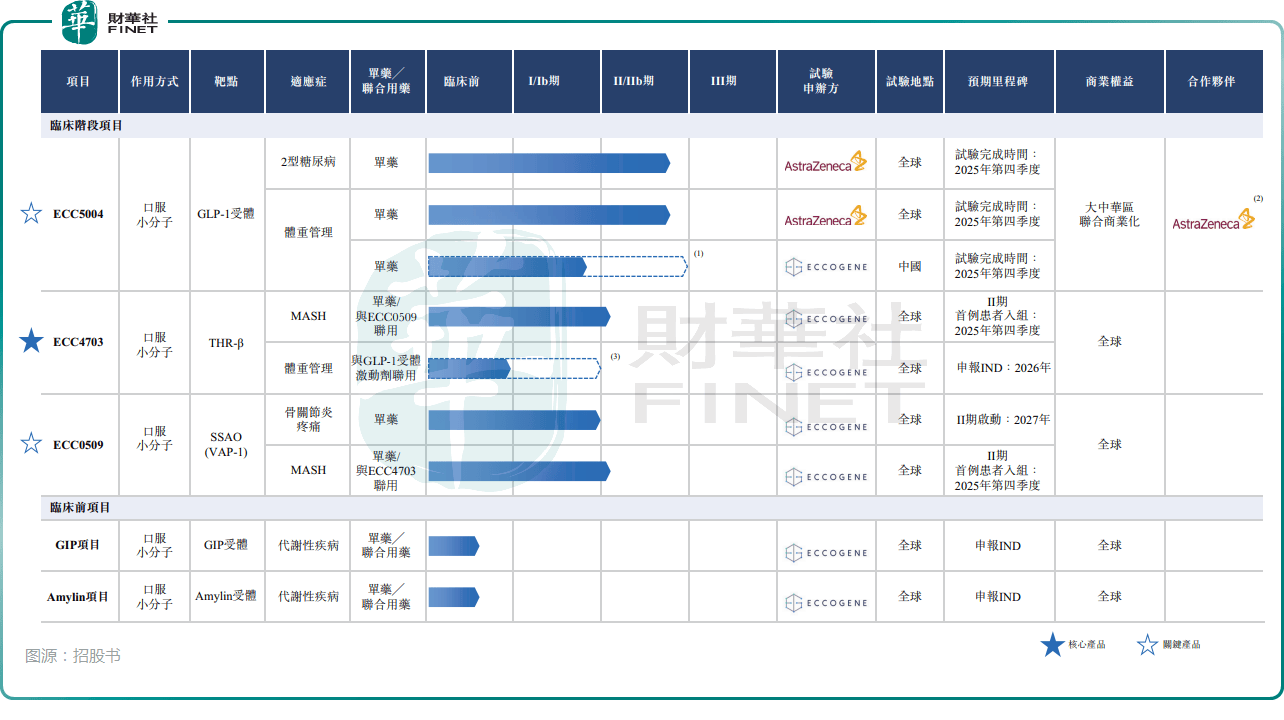
Core Viewpoint - Chengyi Biotechnology has submitted its prospectus to the Hong Kong Stock Exchange for an IPO under Chapter 18A, aiming to raise funds for the development of its core products and enhance its operational capabilities [1][12]. Company Overview - Chengyi Biotechnology was founded in 2018 by Jingye Zhou and Jianfeng Xu in Shanghai, focusing on developing new oral small molecule drugs for unmet medical needs in cardiovascular metabolic diseases and inflammatory diseases [2][3]. - The company has developed a TRANDD platform to support its research and development workflow, which includes target selection, product characteristics development, and early clinical trial design [3]. Product Pipeline - The core product, ECC4703, is an oral liver-targeting THR-β agonist aimed at treating metabolic-associated fatty liver disease (MASH) and obesity, with potential to significantly reduce liver fat and fibrosis while minimizing cardiovascular risks [4][6]. - Another key product, ECC5004, is a once-daily oral GLP-1 receptor agonist for weight management and type 2 diabetes, expected to be a best-in-class treatment [6][11]. - The product pipeline also includes ECC0509, an oral small molecule SSAO inhibitor for osteoarthritis pain, which can be used in combination with GLP-1 receptor agonists [6][11]. Financial Performance - Chengyi Biotechnology's revenue surged from $36.06 million in 2023 to $221.29 million in 2024, with a profit turnaround to $138.84 million in the same year [8][10]. - However, in the first half of 2025, revenue dropped significantly to $557,000, resulting in a loss of $20.11 million [9][10]. Funding and Valuation - The company has completed multiple funding rounds, with a post-money valuation reaching approximately $498 million after a $25 million Series C round in December 2023 [7][8]. - The exclusive collaboration agreement with AstraZeneca for ECC5004 includes an upfront payment of $185 million and potential milestone payments totaling up to $1.825 billion, which will significantly impact future revenues [11]. Use of Proceeds - The funds raised from the IPO are intended for the development of core products, including ECC4703 and ECC5004, as well as for operational expenses and further development of the TRANDD platform [12].
爆!CATL 时代智能狂揽 20 亿晋身 “独角兽”;零重力飞机获 A+++轮,押注新能源航空 | 每周十大股权投资
Sou Hu Cai Jing· 2025-10-13 09:03
Financing Transactions - Zero Gravity Aircraft Industry announced the completion of A+++ round financing with nearly 300 million RMB, led by CITIC Securities and Luoyang Cultural Tourism Group, focusing on eVTOL and electric fixed-wing aircraft development [1] - Natural堂 Group completed a new financing round with an investment of 300 million RMB from Jiahua Capital, with a valuation exceeding 7 billion RMB [2] - Chengdu Nureter Medical completed approximately 800 million RMB in D round financing, focusing on medical isotopes and radiopharmaceuticals [3] - CATL Intelligent, a subsidiary of CATL, completed its first external financing round exceeding 2 billion RMB, becoming the first "unicorn" in the smart chassis sector [4] - Changxin Storage received a strategic investment of 450 million RMB, with a valuation exceeding 140 billion RMB, as it approaches its IPO [5] - Didi Autonomous Driving announced the completion of 2 billion RMB in D round financing, with a post-investment valuation exceeding 5 billion USD [6] - Shimo Microelectronics completed over 100 million RMB in B round financing, focusing on high-performance analog signal chain chip design [7] - Huadao Biotechnology completed over 100 million RMB in D+2 round financing, aiming to accelerate the industrialization of affordable cell therapies [8] - Xijing Technology completed E+ round financing, with participation from Wuliangye Fund, focusing on AI solutions for logistics [9] - Expedition Therapeutics announced the completion of 165 million USD in A round financing, focusing on innovative therapies for autoimmune and respiratory diseases [10][11] Company Highlights - Zero Gravity Aircraft Industry aims to build a third transportation ecosystem, with its RX1E-A electric fixed-wing aircraft already in mass production [1] - Natural堂 Group is positioned as China's third-largest domestic cosmetics group, with Jiahua Capital providing comprehensive support for its future development [2] - Nureter Medical is focused on breaking the dependency on imported isotopes and advancing the domestic nuclear medicine industry [3] - CATL Intelligent is set to launch its first chassis model in 2024, leveraging CATL's battery technology [4] - Changxin Storage is advancing its 15nm technology and expanding production capacity, targeting a 50% increase in DRAM shipments by 2025 [5] - Didi Autonomous Driving is enhancing its AI algorithms and L4 autonomous driving applications, with plans for new vehicle deliveries by the end of 2025 [6] - Shimo Microelectronics aims to fill the domestic high-end market gap in analog signal chain chips [7] - Huadao Biotechnology is focused on making cell therapies affordable, with several products expected to launch by 2026 [8] - Xijing Technology has achieved commercial delivery of its AI solutions across multiple countries [9] - Expedition Therapeutics is advancing its clinical research for innovative treatments in autoimmune diseases [10][11]