种植业

Search documents
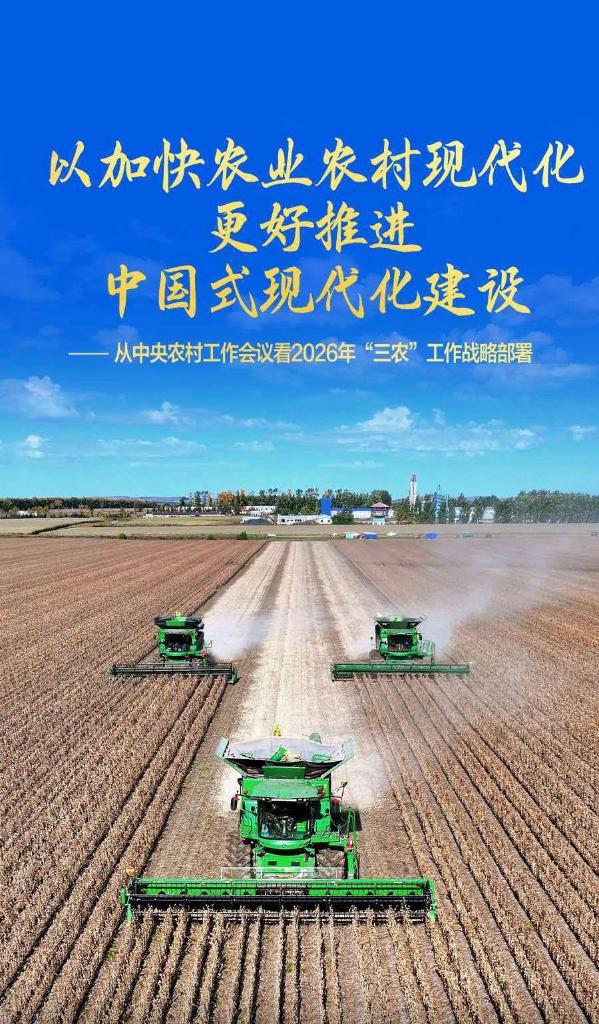
从中央农村工作会议看2026年“三农”工作战略部署
Xin Hua She· 2025-12-31 04:10
Core Viewpoint - The Central Rural Work Conference emphasized the importance of agricultural and rural modernization as a key component of China's overall modernization strategy, with a focus on ensuring food security and promoting rural revitalization [2][3][5]. Group 1: Agricultural and Rural Modernization - The conference highlighted the need to anchor agricultural and rural modernization as a priority for the comprehensive construction of a socialist modern country, reflecting the Party's deep understanding of the current agricultural development situation [2][4]. - A series of strategic deployments were discussed to accelerate agricultural modernization, including the development of new agricultural productivity, improvement of rural living environments, and deepening rural reforms [3][4]. Group 2: Food Security - The conference underscored the necessity of solidifying food security, with measures such as stabilizing grain and oil production and implementing a new round of grain production capacity enhancement actions [5][6]. - Protecting arable land was identified as crucial for food security, with commitments to maintain stable planting areas and optimize crop structures [6][7]. Group 3: Poverty Alleviation and Rural Revitalization - The transition to a normalized support phase for poverty alleviation was emphasized, with a focus on integrating this into the rural revitalization strategy to prevent a return to poverty [8][10]. - The conference proposed various measures to support underdeveloped areas, ensuring long-term assistance and monitoring mechanisms to sustain poverty alleviation achievements [8][10][11]. Group 4: Rural Infrastructure and Living Conditions - The need to improve rural living conditions and infrastructure was highlighted, with a focus on creating quality living spaces in rural areas and enhancing the overall rural environment [12][13]. - The conference called for a balanced approach to rural development, emphasizing the importance of both hard infrastructure and soft environmental factors, including cultural and social aspects [12][13]. Group 5: Rural Reform and Investment - Further deepening rural reforms was identified as essential for energizing rural development, particularly in managing land relations as the second round of land contracts approaches expiration [14][16]. - The conference proposed innovative financing mechanisms for rural revitalization to attract financial and social capital, aiming to enhance investment in rural areas [16].

不掉队 赶上来|一块地整好用好,产生多少价值
Ren Min Ri Bao· 2025-12-31 02:59
Core Viewpoint - The article highlights the successful implementation of comprehensive land consolidation in Yongren Village, Guangxi, which has transformed fragmented and low-quality farmland into larger, more productive plots, leading to increased agricultural output and improved livelihoods for local residents [1][2][3]. Group 1: Land Consolidation and Agricultural Improvement - The land consolidation project involved merging small plots into larger ones, improving irrigation and agricultural practices, which has led to a significant increase in water rice planting area from 3.75 acres to 1283.25 acres [4]. - The village's collective economic income is projected to reach 375,000 yuan in 2024, with per capita disposable income for villagers nearing 15,000 yuan [4]. Group 2: Community Engagement and Economic Development - The local government has established a clear implementation plan for land consolidation, ensuring legal compliance and community involvement, which has helped build trust among villagers and attract investment from enterprises [3]. - Villagers are actively participating in the new agricultural economy, with many working in food mushroom farms and engaging in livestock farming, leading to better income opportunities compared to traditional farming methods [4][5]. Group 3: Infrastructure and Tourism Development - The construction of a water retention dam has not only improved irrigation but also enhanced the village's tourism potential, with an estimated 100,000 visitors expected by 2025 [5]. - The village has transformed idle land into facilities for agricultural production, such as mushroom farming, generating additional rental income for the community [5].
一块地整好用好,产生多少价值(不掉队 赶上来)
Ren Min Ri Bao· 2025-12-31 00:37
Core Viewpoint - The article discusses the comprehensive land consolidation efforts in Guangxi's Hechi, focusing on transforming fragmented farmland into larger, more productive agricultural areas, which has led to increased income and improved living conditions for local villagers [1][4]. Group 1: Land Consolidation Efforts - The initiative aims to merge small plots of land into larger, more manageable units, improving agricultural productivity and efficiency [1][3]. - The local government has implemented a comprehensive plan to ensure legal compliance and transparency in land ownership and usage during the consolidation process [3]. Group 2: Economic Impact on Villagers - Villagers have expressed initial concerns about losing their land and income during the consolidation, but the government has provided compensation and support during the transition [2][3]. - The consolidation has resulted in a significant increase in rice planting area from 3.75 acres to 1283.25 acres, enhancing food production and economic opportunities [4]. Group 3: Community Engagement and Benefits - The local community has become actively involved in the consolidation process, with clearer rules and visible benefits encouraging participation [4][5]. - The establishment of a labor service company has provided job opportunities for villagers, with individuals earning approximately 3500 yuan per month through local agricultural initiatives [5]. Group 4: Future Prospects - The construction of a water dam has not only improved irrigation but also enhanced tourism potential, with an expected 100,000 visitors by 2025 [6].
产能提升 常态帮扶 空间提质——专家解读2026年“三农”工作三大亮点
Shang Hai Zheng Quan Bao· 2025-12-31 00:03
Core Viewpoint - The Central Rural Work Conference held on December 29-30 in Beijing discussed the draft opinions on agricultural and rural modernization, emphasizing the importance of agriculture in China's overall modernization strategy and outlining key initiatives for the "14th Five-Year Plan" period [1] Group 1: Enhancing Agricultural Production Capacity and Quality - The main focus is on enhancing agricultural production capacity and quality efficiency, with an emphasis on stabilizing grain and oil production and implementing a new round of actions to increase grain production capacity by 100 billion jin [2] - The new terminology of "stabilizing grain and oil production" reflects the current needs of agricultural supply, particularly due to high dependence on imports for oilseed crops [2] - Increasing yield per unit area is identified as a critical pathway to overcome production bottlenecks, particularly for major crops like rice, wheat, corn, and soybeans [2] Group 2: Strengthening Agricultural Technology and Innovation - The conference proposed strengthening key agricultural technologies and efficiently transforming scientific achievements, focusing on developing new agricultural productivity tailored to local conditions [3] - Developing new agricultural productivity is seen as essential for addressing low efficiency, resource waste, and environmental pressures in traditional agriculture [3] Group 3: Establishing Poverty Prevention Mechanisms - A key measure is to establish a regular mechanism to prevent poverty, with a focus on supporting underdeveloped areas and consolidating poverty alleviation achievements [4] - The transition to a normalized support phase for poverty alleviation is expected to begin in 2026, with continued policy support and measures [4] Group 4: Promoting County-Level Industries - The conference highlighted the importance of cultivating and expanding county-level industries to enhance farmers' participation in industrial development and improve income [5] - Developing industries with comparative advantages at the county level is crucial for preventing large-scale poverty and promoting rural employment opportunities [5] Group 5: Building Livable and Workable Villages - The need to promote the construction of livable and workable villages is emphasized, with a focus on optimizing rural spatial layout and improving living conditions [6] - The concept of creating quality living spaces in rural areas is seen as a core aspect of urban-rural integration, aiming to enhance rural living standards while preserving local characteristics [6] Group 6: Innovating Financing Mechanisms for Rural Development - The conference called for innovative financing mechanisms to invigorate rural development, including the promotion of agricultural facility and livestock collateral financing [7] - Ongoing exploration of financing solutions, such as agricultural machinery collateral and increased bank support for agricultural credit, is expected to provide financial support for agricultural production and rural construction [7]
产能提升 常态帮扶 空间提质 专家解读2026年“三农”工作三大亮点
Shang Hai Zheng Quan Bao· 2025-12-30 19:26
Core Insights - The central theme of the article revolves around the key highlights of the 2026 "Three Rural Issues" work, emphasizing the modernization of agriculture and rural areas as a crucial aspect of China's overall modernization strategy [1] Group 1: Agricultural Production Capacity and Quality - Enhancing agricultural comprehensive production capacity and quality is identified as the main focus for accelerating agricultural modernization, with an emphasis on stabilizing grain and oil production [2] - The meeting introduced a new initiative to implement a new round of actions aimed at increasing grain production capacity by 1 billion jin, focusing on major crops like rice, wheat, corn, and soybeans [2] - The shift from "stabilizing grain production" to "stabilizing grain and oil production" reflects the current reality of China's agricultural supply, addressing the high dependency on imports for oilseed crops [2] Group 2: Technological Advancements - The meeting highlighted the need to strengthen core agricultural technologies and efficiently convert scientific achievements into practical applications, which is essential for addressing traditional agricultural inefficiencies [3] - Developing new agricultural productivity is seen as a key pathway to enhance efficiency and reduce resource waste, thereby ensuring food security [3] Group 3: Poverty Alleviation Mechanisms - Establishing a regular mechanism to prevent poverty is deemed a critical measure for advancing agricultural modernization, with a focus on continuous support for underdeveloped regions [4] - The transition to a normalized assistance phase post-2025 will maintain the intensity of poverty alleviation policies and measures [4] Group 4: County-Level Economic Development - The meeting emphasized the importance of cultivating and expanding county-level industries to enhance farmers' participation in economic development, which is vital for preventing large-scale poverty [5][6] - Developing industries with comparative advantages at the county level can create local employment opportunities and support returning migrant workers, contributing to farmers' sustained income growth [6] Group 5: Rural Infrastructure and Living Conditions - Promoting the construction of livable and workable rural areas is essential for agricultural modernization, with a focus on improving rural infrastructure and living conditions [7] - The concept of creating quality living spaces in rural areas aims to integrate urban and rural development while preserving rural characteristics [7] Group 6: Financial Mechanisms for Rural Development - The meeting called for innovative financing mechanisms to invigorate rural development, including the promotion of collateral financing for agricultural facilities and livestock [8] - Ongoing efforts to explore various financing solutions aim to alleviate funding challenges for agricultural production and rural construction, thereby supporting the steady advancement of agricultural modernization [8]
全球媒体聚焦 | 美媒:通货膨胀和关税政策下的美国农民在苦苦挣扎
Sou Hu Cai Jing· 2025-12-30 15:39
Core Viewpoint - Despite a $12 billion relief plan from the U.S. federal government, American farmers continue to struggle under the impacts of inflation and tariff policies [1][3]. Group 1: Government Relief and Its Implications - The U.S. government has announced significant funding to assist farmers in response to the adverse effects of tariff policies on agriculture [3]. - The relief plan implicitly acknowledges that past government policies have fundamentally altered the agricultural landscape and threaten farmers' livelihoods [3][4]. - There is uncertainty regarding whether these damaging policies will also harm the relationship between the president and his most loyal voter base [3]. Group 2: Economic Challenges Faced by Farmers - Farmers have faced rising costs for tractors, combines, and fertilizers due to tariffs imposed on specific goods from countries like Canada [4]. - The Iowa Farmers Union leader expressed concerns that the current situation has dismantled trade systems without establishing effective plans for reconstruction [4]. - A significant increase of 60% in bankruptcy filings among farmers in the first half of this year compared to the same period in 2024 has been reported, marking the highest level since 2020 [5]. Group 3: Historical Context and Current Sentiments - Iowa Senator Chuck Grassley noted that farmers are experiencing a "storm" of low food prices, high input costs, industry consolidation, and tariff policy uncertainty, reminiscent of the agricultural crisis in the 1980s [7]. - The president of the Iowa Soybean Association indicated that the government relief may not be sufficient, with many farmers fearing this could be their last year in business [7]. - Farmers are questioning the effectiveness of the government relief plan, with some expressing a preference for more sensible economic and trade policies over reliance on government aid [8].
乡村振兴在行动丨不止诗和远方!解锁瓯海乡村的发展密码
Xin Lang Cai Jing· 2025-12-30 12:58
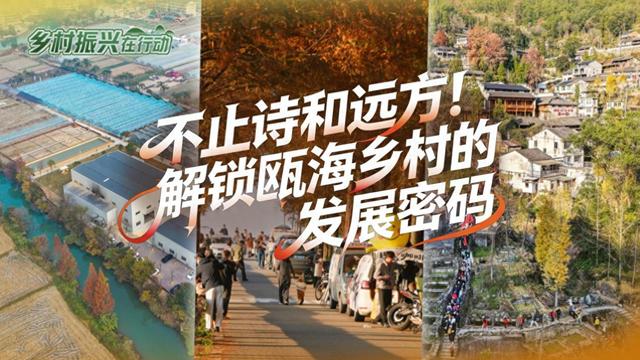
Core Insights - The article highlights the comprehensive revitalization of rural areas in Wenzhou's Ouhai District, integrating traditional agriculture with modern technology and innovative practices to enhance productivity and economic growth [1][3]. Group 1: Technological Empowerment in Agriculture - The use of agricultural drones has significantly improved efficiency in transporting crops, with a single drone capable of transporting up to 20,000 pounds per day, compared to the 4,000-6,000 pounds that can be carried by manual labor in a day [3][5]. - A new variety of rice tested in Ouhai achieved a yield of 1,500 pounds per acre, showcasing advancements in agricultural practices and crop management [5]. - The establishment of the Qiangcun Agricultural Service Center aims to provide standardized services to farmers, enhancing the mechanization and intelligence of agriculture in the region [5]. Group 2: Ecological Transformation and Economic Growth - The transformation of Yanzhai Village from a "garbage village" to a scenic area involved the removal of over 2,500 tons of waste and the creation of public spaces, leading to increased tourism and economic activity [6][8]. - The integration of natural landscapes with events and markets has turned previously overlooked areas into popular tourist destinations, benefiting local farmers and businesses [8]. Group 3: Creative Initiatives and Youth Engagement - Ouhai is transforming rural areas into hubs for young talent through innovative projects like the immersive game "Zeya Continent," which connects youth with local culture [9][11]. - A multi-layered support system has been established to attract young professionals to rural areas, including the introduction of rural managers and practice stations linked to universities [11]. - New recreational activities such as ATV rides and paragliding are emerging, driving stable visitor traffic and supporting local hospitality and dining industries [11]. Group 4: Overall Impact on Rural Revitalization - The combined efforts in technology, ecology, and creativity are effectively driving the comprehensive revitalization of rural areas in Ouhai, demonstrating a successful model for rural development [13].
2026年“三农”工作锚定哪些目标?
Jing Ji Guan Cha Wang· 2025-12-30 12:38
Core Insights - The Central Rural Work Conference emphasizes the importance of agricultural modernization in the context of China's overall modernization, aiming to accelerate the construction of a strong agricultural nation [2][3] Summary by Categories Agricultural Production - The conference outlines a "new round of 100 billion jin grain production capacity enhancement action," aiming to stabilize grain and oil production and improve the quality of grain varieties [2][3] - The goal is to achieve an increase of over 100 billion jin in grain production capacity by 2030, with a target of approximately 420 kilograms of grain per mu [3][4] Rural Development and Employment - The conference stresses the need to promote stable income growth for farmers and improve the income guarantee mechanism for grain farmers [4][5] - It highlights the dual pillars of income growth: ensuring stable employment for migrant workers and supporting entrepreneurship for returning farmers [5] Rural Infrastructure and Environment - There is a focus on improving rural living conditions and optimizing land use, with an emphasis on creating high-quality living spaces in rural areas [6] - The conference calls for continuous improvement of rural human settlements and addressing issues such as waste management and sanitation [2][6] Policy and Reform - The conference indicates a commitment to deepening rural reforms, including a second round of land contract extensions for 30 years, aimed at stabilizing farmers' land rights and enhancing resource utilization [3][4] - It also emphasizes the need for a systematic approach to prevent poverty and support underdeveloped regions [2][4]
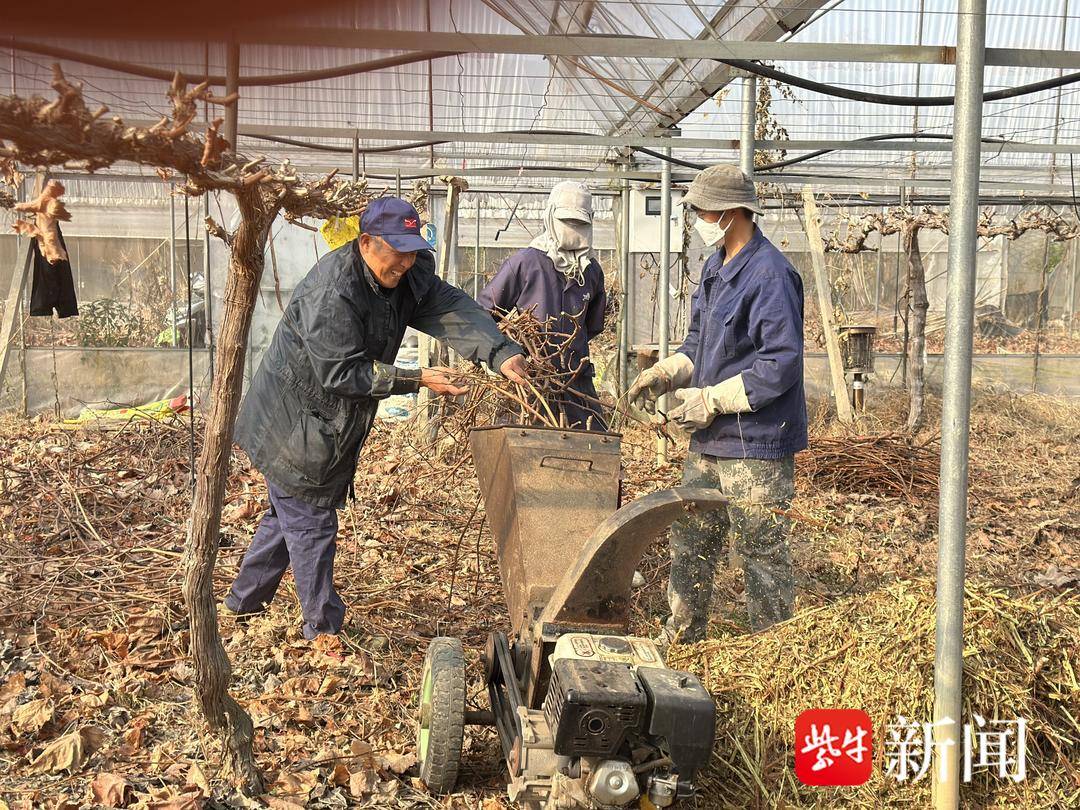
镇江京口葡萄园冬剪碎枝还田,生态循环助力来年葡萄提质
Yang Zi Wan Bao Wang· 2025-12-30 11:23
Core Viewpoint - The article highlights the sustainable agricultural practices being implemented at the Rose Vineyard in Zhenjiang Jingkou Economic Development Zone, focusing on winter pruning and organic fertilization to enhance soil quality and grape yield for the upcoming season [1]. Group 1: Sustainable Practices - Workers are actively engaged in winter pruning and organizing at the vineyard, utilizing machinery to crush the pruned branches [1]. - The crushed branches are returned to the soil as organic fertilizer, which effectively improves soil structure and enhances fertility [1]. - This eco-friendly approach reduces the reliance on chemical fertilizers, contributing to a healthier environment and better nutrient accumulation for the grapevines [1]. Group 2: Future Outlook - The meticulous and ecological winter management practices are expected to lead to higher quality grapes and increased harvest in the coming year [1].
农业农村部和中国气象局联合发布农业低温冻害风险提示
Zhong Guo Xin Wen Wang· 2025-12-30 08:49
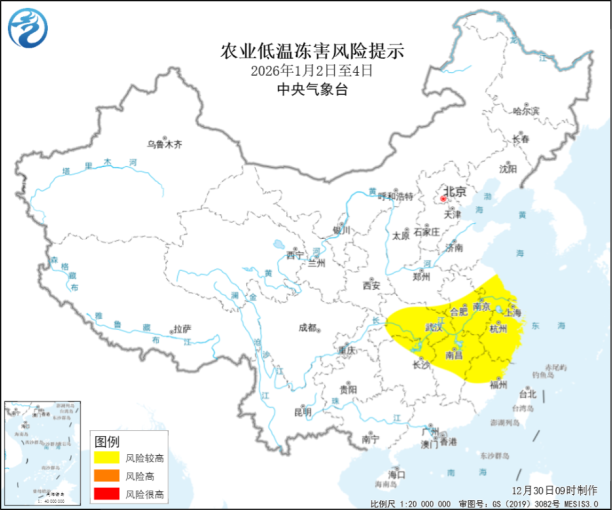
Core Viewpoint - The Ministry of Agriculture and Rural Affairs and the China Meteorological Administration issued a risk warning for agricultural low-temperature frost damage, predicting significant snowfall and temperature drops in central and eastern China from December 30, 2025, to January 2, 2026 [1]. Summary by Relevant Sections - **Weather Forecast**: A large-scale rain and snow event is expected in central and eastern China, with heavy snow and localized blizzards in regions such as Jianghan, western Huanghuai, southern Shanxi, and central and southern Shaanxi [1]. - **Temperature Changes**: A strong cold air mass will cause temperatures in the Yangtze River middle and lower reaches to drop by 6 to 8 degrees Celsius, with some areas in Zhejiang and western Hubei experiencing drops exceeding 10 degrees Celsius [1]. - **Frost Damage Risk**: The lowest temperature line is expected to move south to the central and southern regions of Jiangnan by the early morning of January 3. Areas such as southern Jiangsu, central Anhui, most of Hubei, northern Jiangxi, northern Zhejiang, and northern Fujian face a high risk of low-temperature frost damage to rapeseed, open-field vegetables, and economic fruit trees from January 2 to 4 [1]. - **Preventive Measures**: Recommendations include checking and reinforcing production facilities, harvesting mature fruits and vegetables, and implementing protective measures such as covering for warmth, emergency heating, and applying antifreeze agents to mitigate agricultural frost damage [1].