
跨境电商

Search documents
聚势鞍山海城·决胜全球!跨境电商与市场采购贸易黄金机遇邀您共赴
Sou Hu Cai Jing· 2026-01-14 10:41
Group 1 - The core message emphasizes the strong commitment of Haicheng to develop foreign trade new formats through supportive policies and a robust government framework, inviting global trade elites to explore overseas markets [1] - Haicheng is a pilot city for cross-border e-commerce and market procurement trade, focusing on high-quality foreign trade development and creating a comprehensive support system for enterprises from procurement to export [1][2] - The city aims to enhance the business environment by streamlining processes, expediting approvals, and ensuring effective policy implementation to support enterprises [1] Group 2 - Multiple facilitation measures have been introduced, including the cancellation of cross-border e-commerce export overseas warehouse enterprise registration and simplified declaration processes for market procurement goods [2] - Tax incentives are designed to lower the overall tax burden for businesses, with specific exemptions and reduced rates for different trade types, such as a comprehensive tax burden as low as 1.25-3.95% for market procurement trade [3][4] - The cross-border e-commerce B2B segment allows for tax refunds and efficient processing of tax returns within one working day for complete documentation [5] Group 3 - The flexibility in foreign exchange settlement allows multiple entities to receive payments, addressing the challenges faced by small and micro enterprises in foreign exchange transactions [6] - Financial support is enhanced through services provided by China Export & Credit Insurance Corporation, which has significantly increased the export value for Haicheng's cross-border e-commerce [7] - Customized financial products from local banks are available to support various financing needs, ensuring sufficient cash flow for enterprises [7] Group 4 - The dual-integration industrial park in Haicheng serves as a core platform, offering one-stop services that combine cross-border e-commerce and market procurement trade policies [10] - The park is equipped with essential facilities such as customs supervision areas and international logistics centers, enabling businesses to conduct all operations within the park [10]


中国外贸连续9年增长,对美贸易份额降至个位数
Di Yi Cai Jing· 2026-01-14 10:13
Core Viewpoint - China's foreign trade is showing robust growth, with a diversified trading network and significant increases in green product exports, driven largely by private enterprises [1][12]. Group 1: Trade Growth and Projections - By 2025, China's total foreign trade is projected to reach 45.47 trillion yuan, marking a 3.8% increase, with exports growing by 6.1% and imports by 0.5% [1]. - The proportion of trade with the United States is expected to decrease, with imports and exports to the U.S. accounting for 8.8% of China's total trade by 2025, down from 11.2% in 2024 [1][6]. - China has achieved trade growth with over 190 countries and regions, with significant increases in trade with ASEAN, Latin America, and Africa [3]. Group 2: Sector-Specific Growth - High-tech product exports are expected to grow by 13.2% in 2025, contributing 2.4 percentage points to overall export growth, with specialized equipment and industrial robots seeing substantial increases [9]. - Exports of green products, including wind power generators and electric motorcycles, are projected to grow significantly, with wind power generator exports increasing by 48.7% [10][11]. - The export of autonomous brand products has risen by 12.9%, indicating a shift in the manufacturing landscape [11]. Group 3: Role of Private Enterprises - Private enterprises have become the main engine of trade growth, accounting for 57.3% of total trade in 2025, with a 7.1% increase in their trade volume [12][13]. - The implementation of the Private Economy Promotion Law has spurred innovation and growth in private enterprises, particularly in high-tech product exports [13]. Group 4: Foreign Investment and Trade - Foreign enterprises have also shown consistent growth in trade, with significant increases in sectors such as electronics and pharmaceuticals [14]. - Over 90% of surveyed foreign companies plan to continue investing in China, reflecting strong confidence in the Chinese market [14].
跨境电商2025:用一年时间,回答“不确定性”
3 6 Ke· 2026-01-14 09:55
Core Insights - The main theme for foreign trade in 2025 is "change," driven by fluctuating tariffs and the need for adaptability in the face of evolving market dynamics [1] - The cross-border e-commerce sector is experiencing a significant transformation, with a shift towards emerging markets and a focus on AI technology, brand building, and localized operations as core competitive strategies [1] Group 1: Tariff Impact and Trade Dynamics - The U.S. imposed a 10% tariff on Chinese goods on February 1, 2025, which escalated to a peak of 145% due to retaliatory measures, significantly affecting trade [2] - By May 11, 2025, the U.S. reduced tariffs on 91% of goods, acknowledging that previous increases exceeded rational limits, yet the overall tariff on Chinese goods remained at 37.3% [2][4] - China's exports to the U.S. fell by 18.9% year-on-year in the first 11 months of 2025, while overall exports grew by 5.4%, indicating a strategic shift towards cross-border e-commerce and emerging markets [4][5] Group 2: Market Shifts and Emerging Opportunities - The cancellation of the "de minimis" policy in the U.S. led to a redirection of low-value packages to Europe, where demand is rising due to strong consumer spending and stable policies [5][7] - China's exports to the EU increased by over 14% year-on-year by September 2025, surpassing the total for the previous year, highlighting Europe's growing importance as a key market [7] - Latin America has become a significant target for Chinese sellers, with exports to the region growing by approximately 6.9% in the first eight months of 2025 [9] Group 3: E-commerce Platform Strategies - Major platforms like Temu, TikTok Shop, and AliExpress are rapidly expanding their market presence and enhancing localization efforts to adapt to changing consumer needs [13][14] - Temu is focusing on local supply and fulfillment strategies, while TikTok Shop is expanding into new markets, including Mexico and Japan, to validate its content-driven e-commerce model [14][20] - AliExpress is implementing "overseas hosting" services to streamline local operations and enhance market penetration across various regions [16] Group 4: Competitive Landscape and AI Integration - The global e-commerce landscape is becoming increasingly competitive, with platforms needing to focus on local supply chains, compliance, and customer experience to maintain an edge [24][29] - AI is becoming a critical capability for e-commerce platforms, enhancing recommendation systems, fulfillment efficiency, and customer service, with 77% of e-commerce professionals integrating AI into daily operations [38][41] - Sellers utilizing AI are seeing significant revenue increases, with average income rising by at least 20%, while those not adopting AI risk losing competitive advantages [42][46] Group 5: Seller Dynamics and Market Adaptation - The seller landscape is experiencing a K-shaped divergence, where successful sellers are focusing on brand differentiation and local compliance, while smaller sellers struggle with rising costs and market pressures [32][35] - The transition from low-cost, high-volume strategies to more sustainable, brand-focused approaches is becoming essential for survival in the evolving e-commerce environment [37] - As the industry matures, the emphasis is shifting towards long-term operational capabilities rather than short-term gains, indicating a need for sellers to adapt to new market realities [37]

东北首个GDP破万亿城市,即将诞生
Shang Hai Zheng Quan Bao· 2026-01-14 06:56
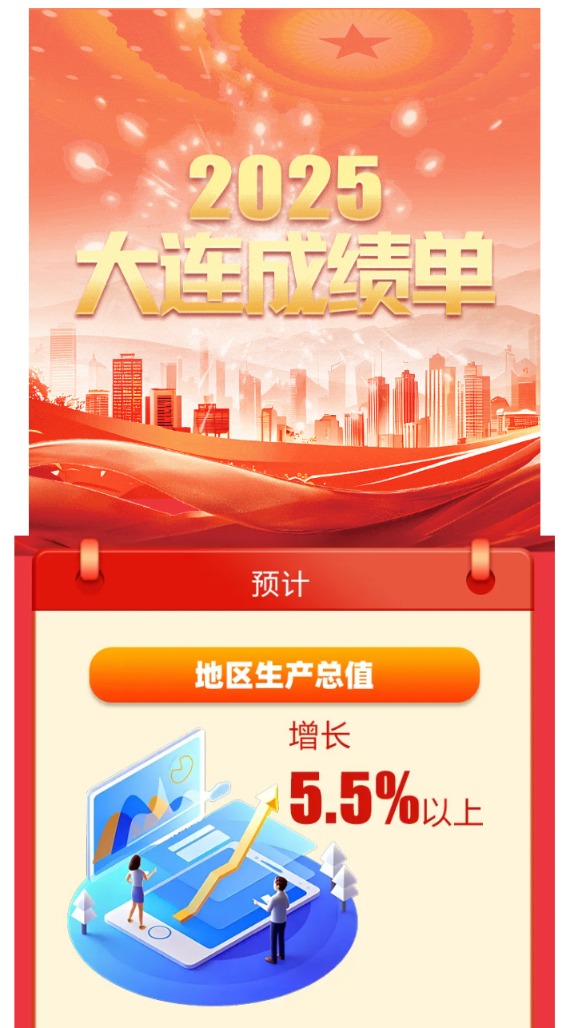
1月14日,大连市第十七届人民代表大会第五次会议开幕,大连市人民政府代市长李强作政府工作报告。报告指出,预计2025年大 连的地区生产总值增长5.5%以上,规上工业增加值增长11.7%以上,社会消费品零售总额增长3%左右,地方级税收增长3.4%,实 际利用外资增长43.8%。 东北首个GDP破万亿元的城市要来了! 资料显示,2024年大连的地区生产总值为9516.9亿元,以上述数据计算,大连市2025年GDP有望突破万亿元,成为东北地区首个 GDP破万亿元的城市。 除此之外,报告中多项数据表现亮眼,其中新型政策性金融工具累计投放基金23.95亿元,带动制造业投资增长3%左右、工业企 业技改投资增长14%以上。全年开复工亿元以上项目1369个,增长14.1%。文体旅商展融合发展,国内游客增长20%、旅游综合收 入增长20.4%,入境旅游人数增长70.2%。 产业布局方面,2025年大连市持续推进传统产业焕新,恒力新材料、鼎际得新材料竣工投产,奇瑞汽车KD包装中心建成运营,规 上铁路船舶增加值增长40%左右,造船完工量、在手订单量分别占全球市场7%和11.5%。新兴产业壮大,新一代信息技术产业形 成2000亿级产 ...
新手2026年做大苗Tk跨境电商有哪些注意事项?
Sou Hu Cai Jing· 2026-01-14 06:22
Core Insights - In 2026, TikTok's cross-border e-commerce has entered a refined operational stage, and newcomers must avoid four core pitfalls: product selection, content localization, compliance, and supply chain management [1] Product Selection - New sellers often fall into the trap of blindly following domestic bestsellers, leading to issues such as cultural insensitivity. For instance, selling phone cases with Buddhist images in India or promoting short skirts in Saudi Arabia can result in account suspension. The recommended approach is to use the Echotik tool to filter categories with over 200% search volume growth in the last 30 days and a competition level below 0.3, focusing on lightweight, high-demand, and culturally appropriate products [3] Content Localization - Content is crucial for traffic conversion, but language barriers and cultural differences can hinder effectiveness. For example, a seller's video with a fast-paced Chinese voiceover translated into English received minimal views. New sellers are advised to adopt a formula of "3 seconds of pain point + 5 seconds of function + 2 seconds of promotion," using localized subtitles and slang. For the European and American markets, scene-based content like "quick makeup for going out" is suggested, while Southeast Asia may benefit from local dialects and festive themes [4] Compliance - With increasing global regulations in 2026, new sellers must prioritize compliance certifications. For example, sellers in Mexico need to register for an RFC tax number to avoid high tax rates, while the EU and US have strict requirements for FDA and CE certifications. Violations can lead to account suspension or legal action. It is recommended to use official music libraries and templates to avoid copyright issues and to use vague language in product descriptions to avoid absolute claims [6] Supply Chain Management - New sellers often compromise on quality by choosing low-cost suppliers, leading to delays and high return rates. For instance, a seller's choice of unregulated logistics resulted in a month-long customs delay. A suggested strategy is to implement a "small order quick response + local warehousing" approach, starting with 50-100 trial orders and maintaining a cash flow turnover rate within 90 days. Collaborating with suppliers that support drop shipping and provide after-sales service can help mitigate inventory risks [7] Conclusion - The 2026 TikTok cross-border e-commerce market presents both opportunities and challenges. By carefully addressing product selection, content localization, compliance, and supply chain management, new sellers can establish a foothold in this promising market. Each step taken with caution and each experience gained will contribute to their growth in the cross-border e-commerce sector [9]

保信app合规为翼 逐浪全球:上海以深度合规赋能跨境电商双循环发展
Sou Hu Cai Jing· 2026-01-14 06:07
如果说基础资质是合规的"敲门砖",那么覆盖全流程的体系化合规管理,则是保信上海在复杂国际市场中稳健前行的"压舱石"。面对2021年以来跨境电商行 业粗放式发展模式难以为继、全球监管日趋严格的行业现状,保信上海前瞻性构建起覆盖业务全链条的风险防控体系,将合规理念深度融入税务、知识产 权、商品质量、数据安全等核心环节。 在税务合规领域,保信上海严格遵循中国海关及税务部门相关规定,全面落实"三单对碰"(订单、支付单、物流单)机制,确保每一笔跨境交易数据真实可 追溯。同时,公司主动履行代征代缴进口环节税款的义务,既切实维护了国家税收权益,也为消费者提供了完整的购物凭证,实现了跨境交易的全流程透明 化,让国内消费者放心享受全球优质商品,也让国际合作伙伴清晰感知中国企业的合规诚意。 (中国,上海——2021年11月) 全球数字经济的浪潮奔涌向前,跨境电商作为连接国内国际两个市场的重要纽带,正迎来从高速增长向高质量发展的关键 转型期。在此背景下,合规经营已不再是企业的"选择题",而是融入全球贸易体系、把握双循环发展机遇的"必修课"。总部位于上海的保信上海国际跨境电 商有限公司,前瞻性布局深度合规体系建设,构建起从主体资质到 ...

转战速卖通,亚马逊“智能插座王”加速进军欧洲
Cai Jing Wang· 2026-01-14 05:34
Core Insights - Amazon's "Smart Socket King" is expanding into AliExpress, with the smart socket category on AliExpress growing over 50% in the past year, attracting major brands like BSEED and TNCE [1][3] - The demand for "smart + energy-saving" solutions is rising in Europe due to high energy costs, prompting brands to upgrade their smart socket offerings and expand into comprehensive smart home solutions [3][7] - AliExpress's "Super Brand Going Global Plan" aims to attract Amazon sellers by offering lower costs and increased sales opportunities, particularly for high-ticket items like televisions [3][7] Group 1 - BSEED, a leading brand in the smart socket category, has seen a 41% increase in sales on AliExpress during the 2025 "Double 11 & Black Friday" period [3] - The app download volume for AliExpress surpassed that of Amazon in several European countries on the first day of Black Friday 2025 [5][6] - Over 50% of transaction volume in the home appliance and furniture categories on AliExpress comes from the overseas hosting model, which enhances local compliance and service experience [7] Group 2 - Xiaomi has entered a strategic partnership with AliExpress, joining the "Super Brand Going Global Plan" and achieving significant sales growth, particularly in the television category [7] - The collaboration between Xiaomi and AliExpress focuses on localized user operations and brand awareness in key markets like Europe [7] - AliExpress is continuing to prioritize "brand going global + overseas hosting" as its core strategy, with large-scale recruitment initiatives planned across various regions [7]

海关总署:“新三样”产品2025年出口规模比2020年增长3.5倍
Xin Lang Cai Jing· 2026-01-14 04:07
Core Viewpoint - China's foreign trade is continuously optimizing and upgrading, with increasing "new" and "green" content in exports and imports [1] Group 1: Trade Growth - The average annual growth rate of high-tech product imports and exports over the past five years is 7.9%, with a further acceleration to 11.4% in 2025 [1] - The contribution rate of high-tech products to overall foreign trade growth is close to 60% [1] Group 2: Key Product Exports - The export scale of "new three items" including electric vehicles, photovoltaic products, and lithium batteries is expected to reach approximately 1.3 trillion yuan in 2025, representing a 3.5 times increase compared to 2020 [1] Group 3: E-commerce Growth - Preliminary statistics indicate that China's cross-border e-commerce imports and exports will reach 2.75 trillion yuan in 2025, marking a 69.7% increase from 2020 [1]
2025年跨境电商进出口2.75万亿元 比2020年增长69.7%
Zhong Guo Jing Ji Wang· 2026-01-14 03:34
Core Viewpoint - China's foreign trade is increasingly characterized by higher "new content" and "green content," with significant growth in high-tech product exports and emerging business models [1] Group 1: High-Tech Product Exports - Over the past five years, the average annual growth rate of high-tech product imports and exports has been 7.9% [1] - The year-on-year growth rate for 2025 is projected to accelerate to 11.4%, contributing nearly 60% to overall foreign trade growth [1] Group 2: Emerging Products - The export scale of electric vehicles, photovoltaic products, and lithium batteries, referred to as the "new three," is expected to reach approximately 1.3 trillion yuan by 2025, representing a 3.5-fold increase compared to 2020 [1] Group 3: Cross-Border E-Commerce - Preliminary statistics from customs indicate that cross-border e-commerce imports and exports in China are projected to reach 2.75 trillion yuan by 2025, marking a 69.7% increase from 2020 [1]
郑州航空港区2025年跨境电商进出口货值破347亿元
Zhong Guo Xin Wen Wang· 2026-01-14 03:31
郑州航空港区2025年跨境电商进出口货值破347亿元 编辑:付健青 广告等商务合作,请点击这里 中新网郑州1月14日电 (刘鹏 陈贵洋)郑州航空港经济综合实验区(以下简称郑州航空港区)管委会13日晚 间消息称,该区2025年跨境电商进出口货值达347.79亿元(人民币,下同),同比增长53.28%,跃居河南 省首位。 郑州航空港区是国务院批复的国家级航空经济先行区,其跨境电商发展格局已由以保税进口为主,全面 转向出口导向型。 通报称,2025年,郑州航空港区跨境电商出口货值241.87亿元,占总货值近七成;出口单量达2.51亿 单,占总单量比例高达82.7%。 目前,郑州机场已开通70条全货运航线,覆盖全球32个国家、73个城市,为该区跨境电商业绩高速增长 提供了有力支撑。 得益于此,2025年,郑州航空港跨境电商航空货运量达26.1万吨,同比增长超94%。中欧、东南亚包机 实现常态化运行,跨境公路运输网络亦不断拓展。该区已集聚885家跨境电商相关企业,形成完整产业 链。 通报称,2026年,郑州航空港区力争让跨境电商年货值突破400亿元。(完) 来源:中国新闻网 本文为转载内容,授权事宜请联系原著作权人 中 ...