银行

Search documents
中国工商银行取得业务处理方法及其装置专利
Sou Hu Cai Jing· 2026-03-24 05:21
Group 1 - The State Intellectual Property Office of China has granted a patent to Industrial and Commercial Bank of China Limited for a technology related to "business processing methods and their devices, program products, and electronic equipment" with the authorization announcement number CN119835328B, and the application date is December 2024 [1] - Industrial and Commercial Bank of China Limited was established in 1985 and is located in Beijing, primarily engaged in monetary financial services [1] - The registered capital of Industrial and Commercial Bank of China Limited is approximately 35.64 billion RMB [1] Group 2 - According to data analysis from Tianyancha, Industrial and Commercial Bank of China Limited has invested in 28 enterprises and participated in 10,997 bidding projects [1] - The company has 965 trademark information entries and 5,000 patent information entries, along with 79 administrative licenses [1]

从”双审批“到发行放量:银行二永债供给节奏的梳理与展望-20260324
GUOTAI HAITONG SECURITIES· 2026-03-24 05:06
1. Report Industry Investment Rating No information provided in the report. 2. Core Viewpoints of the Report - Bank secondary bonds may see a significant issuance volume in Q2 2026, potentially exceeding historical levels. The investment strategy should focus on "configuring for coupon income and trading from short - to long - term bonds" [1][3][40]. - The issuance of bank Tier 2 and perpetual bonds is subject to a "dual - approval" regulatory framework. The People's Bank of China focuses on "balance management", while the National Financial Regulatory Administration implements "hierarchical jurisdiction" and "quota validity period" management [3][15]. - In 2026, the supply of bank sub - debt is expected to remain stable with a slight increase. The net issuance of bank Tier 2 and perpetual bonds is estimated to be around 400 billion yuan, and the total issuance of 10 - year Tier 2 bonds, 15 - year Tier 2 bonds, perpetual bonds, and TLAC bonds is about 2 trillion yuan [3][33][34]. - The Q2 2026 issuance of bank sub - debt is predicted to be around 90 billion yuan, with a range of 700 - 1100 billion yuan, showing a significant increase compared to 2024 - 2025 [3][39][40]. 3. Summary by Directory 3.1 Commercial Banks' Regulatory Collaborative Framework for Capital Instrument Issuance: The "Dual - Approval" System of the People's Bank of China and the Financial Regulatory Administration - Commercial banks issuing Tier 2 capital bonds and perpetual bonds must obtain administrative approvals from both the People's Bank of China and the National Financial Regulatory Administration. The People's Bank of China focuses on "balance management", setting annual balance limits and the validity period usually ends at the end of the year. The Financial Regulatory Administration implements "hierarchical jurisdiction" and "quota validity period" management, with different approval authorities for different types of banks and a 24 - month approval validity period [15]. 3.2 Dynamic Laws of New Approvals, Outstanding Amounts, and Actual Issuance of Tier 2 and Perpetual Bonds - **Seasonal Characteristics of Issuance and Regulatory Approval Rhythms**: In recent years, the approval of Tier 2 and perpetual bonds has shown a phased and concentrated release, with obvious seasonality. The approval peaks are mainly in Q2 and Q4, especially for state - owned large - scale banks. Small and medium - sized banks have a more balanced approval rhythm [17]. - **Interval from "Approval" to "First Issuance": Fast for Large Banks, Slow for Small and Medium - sized Banks**: The interval from approval to first issuance shows a pattern of "fast for large banks, slow for small and medium - sized banks". State - owned large - scale banks and joint - stock banks usually have an average interval of 20 - 40 days, while city and rural commercial banks have an average interval of more than 40 days. In recent years, the issuance conversion efficiency of joint - stock banks, city commercial banks, and rural commercial banks has improved [21]. - **First - Issuance Amount after Approval: Large Banks Issue in Batches, Small and Medium - sized Banks Issue Concentratedly**: Large banks, such as state - owned large - scale banks and joint - stock banks, tend to use the approved quotas in batches according to market conditions. Small and medium - sized banks, like city and rural commercial banks, prefer to issue a large amount in the first issuance after approval. However, the overall average issuance rhythm of all types of banks is relatively fast, and most of the approved quotas are issued within one year [27][28][31]. 3.3 Deduction of the Supply Rhythm of Bank Sub - debt in 2026 - **Supply Forecast of Bank Sub - debt in 2026: Slightly Increased Net Issuance, Stable Total Issuance**: In 2026, the supply of bank sub - debt is expected to remain stable. It is estimated that the net issuance of bank Tier 2 and perpetual bonds is about 400 billion yuan, and the rest of the capital needs will be met by issuing TLAC bonds. The total issuance of 10 - year Tier 2 bonds, 15 - year Tier 2 bonds, perpetual bonds, and TLAC bonds is about 2 trillion yuan, slightly higher than that in 2024 - 2025 [33][34]. - **Will the Supply Shock of Tier 2 and Perpetual Bonds in Q2 Be Strong? The Increment May Be Significant**: As of March 2026, the total approved but unissued amount of Tier 2 and perpetual bonds in the market is about 1.62 trillion yuan. The potential supply mainly depends on the conversion rhythm of state - owned large - scale banks' approved but unissued amounts. The estimated issuance amount of bank sub - debt in Q2 2026 is about 90 billion yuan, with a range of 700 - 1100 billion yuan, showing a significant increase compared to 2024 - 2025 [37][39][40]. 3.4 Investment Strategy: Focus on Configuring for Coupon Income, Trade from Short - to Long - term Bonds - In the context of a possible concentrated release of supply in Q2, rising economic inflation expectations, and the presence of allocation power from fixed - income plus funds and wealth management products, the investment in bank Tier 2 and perpetual bonds should focus on "configuring for coupon income and trading from short - to long - term bonds". - The allocation portfolio should mainly focus on medium - and short - term durations, moderately taking risks such as rating downgrades and insufficient liquidity at curve singularities. The bottom - position should focus on 1 - 3 - year bonds and can gradually expand to about 4 - year bonds. Credit downgrades can focus on small and medium - sized banks with an implied rating of AA - or above, and pay attention to valuation repair opportunities brought by mergers and acquisitions or special bond injections. Regions such as Jiangsu and Zhejiang are preferred. - Take advantage of the price adjustment window caused by the supply shock in Q2 for allocation. Slightly focus on Tier 2 capital bonds with better liquidity, and consider trading from short - to long - term durations to play the convexity point. However, be aware of the fluctuations of these bonds during quarter - end, redemptions of fixed - income plus funds, and supply shocks, and consider fast - in - and - fast - out trading strategies or neutral hedging protection [40][41].
中国农业银行取得数据处理方法及相关平台专利
Sou Hu Cai Jing· 2026-03-24 04:47
Group 1 - The core point of the article is that Agricultural Bank of China has obtained a patent for a "data processing method, big data processing platform, electronic device, and storage medium" with the announcement number CN114281651B, applied for on December 2021 [1] - Agricultural Bank of China was established in 1986 and is located in Beijing, primarily engaged in monetary financial services [1] - The registered capital of Agricultural Bank of China is approximately 34.998 billion RMB [1] Group 2 - According to data analysis from Tianyancha, Agricultural Bank of China has invested in 16 enterprises and participated in 24,707 bidding projects [1] - The bank has 1,308 trademark information entries and 5,000 patent information entries, along with 121 administrative licenses [1]

中国工商银行取得软件的检测方法专利
Sou Hu Cai Jing· 2026-03-24 04:13
Group 1 - The core point of the article is that the Industrial and Commercial Bank of China (ICBC) has obtained a patent for a method, system, computer storage medium, and electronic device related to software detection, with the patent announcement number CN116303021B and an application date of March 2023 [1] Group 2 - ICBC was established in 1985 and is located in Beijing, primarily engaged in monetary financial services [1] - The registered capital of ICBC is approximately 35.64 billion RMB [1] - According to data analysis, ICBC has invested in 28 companies, participated in 10,997 bidding projects, has 965 trademark information entries, 5,000 patent information entries, and holds 79 administrative licenses [1]
超4500股上涨
第一财经· 2026-03-24 03:47
Market Overview - The Shanghai Composite Index rose by 0.95% to 3849.34, with a trading volume of 591.68 billion [4][5] - The Shenzhen Component Index increased by 0.26%, while the ChiNext Index fell by 0.79% [3][4] - The total trading volume in the Shanghai and Shenzhen markets reached 1.32 trillion, a decrease of 143.2 billion compared to the previous trading day [5] Sector Performance - The shipping, electricity, gold, and chemical fiber sectors showed significant gains, while lithium mining, GPU, deep-sea technology, cross-border e-commerce, innovative pharmaceuticals, computing power leasing, and AI application themes were active [4][12] - The banking sector experienced a rebound, with Qingdao Bank rising over 4% and several other banks increasing by over 3% [6][12] - The military industry sector saw a short-term surge, with Longcheng Military Industry hitting the daily limit [8] Notable Stocks - Hunan Development and Huaguang Huaneng reached their daily limit, while several other stocks in the green energy sector also performed well [5] - In the computing power chip sector, Muxi Co. rose over 10%, with other related stocks following suit [6] - Storage chip stocks mostly declined, with Puran Co. dropping over 10% [6][10] Opening Trends - The A-share market opened higher, with the Shanghai Composite Index up 0.95%, the Shenzhen Component Index up 1.27%, and the ChiNext Index up 0.98% [11][12] - The Hang Seng Index opened 1.55% higher, with notable gains in stocks like Old Puhuang and WuXi AppTec [13][14]


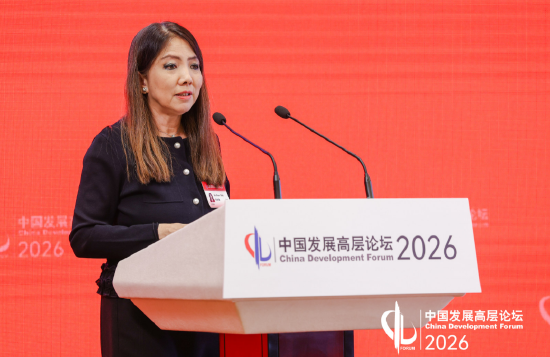
星展集团陈淑珊:中国安全、稳定、透明的营商环境给企业发展提供了强大助力
Xin Lang Cai Jing· 2026-03-24 03:38
Core Viewpoint - The China Development Forum 2026 emphasizes high-quality development and co-creation of new opportunities, highlighting the importance of a stable and transparent business environment for corporate growth [1][4]. Group 1: Business Environment - The stable, secure, and transparent business environment in China provides strong support for enterprise development, necessitating ongoing communication and trust-building among all parties for long-term market prosperity [3][6]. Group 2: Financial Institutions' Role - Financial institutions must prioritize trust as a foundation, with the CEO of DBS proposing four additional "D" attributes: Dependable (stability), Diversify (risk dispersion), Digital (digitalization), and Disruption (innovation) to address challenges and seize opportunities [3][6]. Group 3: China's Global Position - China is positioned to lead in key areas such as artificial intelligence and is increasingly influential in global capital and financial markets, balancing stability and innovation to drive economic transformation and global growth [3][6].

中国民生银行信用卡中心深入开展“3·15”金融消费者权益保护教育宣传活动
Huan Qiu Wang· 2026-03-24 03:17
Core Viewpoint - The event organized by China Minsheng Bank Credit Card Center aimed to enhance financial consumer rights protection and educate new employment groups about financial knowledge and risks [1] Group 1: Event Overview - The financial consumer rights protection education activity took place at Beijing SF Express, attended by representatives from the National Financial Supervision Administration, SF Express, and China Minsheng Bank [1] - The event focused on the theme "Clear Financial Network, Protect Safe Consumption," integrating financial knowledge dissemination with consumer rights protection [1] Group 2: Target Audience and Content - The initiative specifically targeted new employment groups such as couriers and truck drivers, aiming to improve their financial risk awareness and ability to identify scams [1] - Topics covered included prevention of telecom network fraud, personal information security, rational investment and financial management, and avoidance of illegal financial activities [1] Group 3: Engagement and Feedback - The atmosphere at the event was lively, with over a hundred SF employees actively participating and engaging in discussions [1] - Participants expressed appreciation for the professional and warm nature of the educational activity, feeling the financial institution's concern for new employment groups [1] Group 4: Future Plans - China Minsheng Bank Credit Card Center plans to continue its commitment to consumer rights protection by regularly conducting financial knowledge dissemination activities [1] - The center aims to contribute to creating a safe and clear financial consumption environment [1]

ETF周度配置导航2026.03.20(总10期)
申万宏源证券上海北京西路营业部· 2026-03-24 02:17
Core Viewpoint - The A-share market has experienced a significant decline, with the Wind All A index dropping by 4.13%. The market is currently trading on "stagflation" expectations, with concerns that inflation may rise rapidly, suppressing demand and potentially leading to a recession. Despite this, the A-share market still holds investment value due to China's stable supply capabilities amidst global supply vulnerabilities caused by geopolitical events. The recommendation is to focus on structural opportunities in China's advantageous sectors once market sentiment shifts [3][22]. Market Performance - The A-share market has seen a comprehensive pullback, with significant declines in broad-based indices such as the CSI 500 and the Guozheng 2000, which experienced deeper weekly losses [9]. - Key indices and their weekly performance include: - Shanghai Composite Index: -2.47% - CSI 300: -2.19% - CSI 500: -5.82% - Guozheng 2000: -5.45% - ChiNext Index: +1.26% [10][17]. Industry Performance - In terms of industry performance, the communication, banking, and food & beverage sectors showed relatively better performance with weekly changes of +2.10%, +0.36%, and -0.48% respectively [14][17].
恒指低开低走,收市跌894点
Guodu Securities Hongkong· 2026-03-24 02:10
Group 1: Market Overview - The Hang Seng Index closed down 894 points or 3.54%, ending at 24,382 points, with a total market turnover of 368.68 billion [3] - The decline was influenced by geopolitical tensions and rising oil prices, leading to a significant drop in the Hong Kong stock market, which fell below the 25,000 mark [4] - The decline in the market was part of a broader trend, with the Hang Seng Index experiencing a cumulative drop of 1,642 points or 6.31% over three consecutive days [4] Group 2: Economic Forecasts - Hang Seng Bank raised its economic growth forecast for Hong Kong from 2.5% to 3.1% due to increased local and external demand, which is expected to support overall economic performance [8] - The bank noted that the recovery in consumer demand reflects strong performance in asset markets, particularly in the stock and property sectors [8] Group 3: Company News - Country Garden expects a profit of between 1 billion to 2.2 billion RMB for the year ending December 2023, primarily due to non-cash gains from debt restructuring [12] - WuXi AppTec reported a 38% increase in profit to 1.48 billion RMB for the year ending December 2023, with revenue rising by 46.69% to 5.944 billion RMB [13] - Henderson Land Development reported a 38% drop in basic profit, with shareholder profit at 5.653 billion RMB, attributed to reduced gains from land sales compared to the previous year [14] - Lao Poo Gold announced a significant profit increase of 2.3 times to 4.868 billion RMB, with revenue growing by 2.21 times to 27.303 billion RMB [15]




中国发展高层论坛2026丨交通银行行长张宝江:恪守金融服务实体经济本源至关重要
Sou Hu Cai Jing· 2026-03-24 01:36
Core Viewpoint - The discussion at the China Development Forum highlighted the importance of financial innovation in supporting high-quality development and the role of digital transformation in the financial sector [2]. Group 1: Financial Innovation and Digital Transformation - The financial sector is transitioning from traditional, manual, and factor-driven services to intelligent, data-driven models due to rapid digitalization [2]. - The "航贸数链" project, led by the Bank of Communications and relevant national departments, aims to address issues of information asymmetry and high trust costs in cross-border trade using blockchain technology [3]. Group 2: Solutions Offered by the "航贸数链" Project - Data transparency is enhanced by putting documents, contracts, and logistics data on the blockchain, which prevents tampering and allows for traceability, effectively addressing trust issues [3]. - The project automates and digitizes the entire process of customs, logistics, settlement, and financing, significantly reducing document verification times from at least two days to 30 minutes for offshore trade and from six hours to 10 minutes for oil and gas transactions [4]. - The project improves collaboration among various stakeholders in the supply chain, addressing issues like congestion and delays by integrating business, logistics, information, and financial flows [4]. Group 3: Market Acceptance and Future Prospects - Approximately 300,000 import and export enterprises have joined the platform, with a total transaction amount reaching 1 trillion yuan [4]. - Future expansions of the project may include multimodal transport, bulk supply chain financing, trade credit letters, and innovations in digital currency applications [4]. Group 4: Key Insights from the Project - High-level openness in China is essential for the application of innovation [4]. - The integration of cutting-edge technology and data resources is crucial for delivering practical value to clients [4]. - Maintaining a focus on serving the real economy is vital for financial innovation to be meaningful and effective [4].