中式面馆

Search documents
“始祖鸟平替”,要IPO了
投中网· 2025-11-23 07:04
Core Viewpoint - The article discusses the growth and upcoming IPO of the outdoor clothing brand "Bershka," which has gained significant market traction in China, particularly in the sub-1000 yuan segment of the market, and highlights its rapid revenue growth and strategic partnerships with various investors [6][7][10]. Group 1: Company Overview - "Bershka" was founded in 2012 and has quickly established itself in the outdoor clothing market, selling over 3.8 million pieces of jackets in three years [7][10]. - The brand is recognized for its high cost-performance ratio and professional features, earning the nickname "the alternative to Arc'teryx" [7][10]. - The company has received investments from various entities, including state-owned enterprises and venture capital firms, achieving a valuation of 2.8 billion yuan [12][14]. Group 2: Financial Performance - Revenue increased from 378 million yuan in 2022 to 908 million yuan in 2023, with projections of 1.766 billion yuan in 2024 [10]. - The gross margin improved from 54.3% in 2022 to 59.6% in 2024, indicating strong profitability [10]. - Net profit surged from 24 million yuan in 2022 to 152 million yuan in 2023, with expectations to reach 283 million yuan in 2024 [10]. Group 3: Investment and Growth Strategy - The company has completed two rounds of financing, with the latest round raising nearly 600 million yuan, further boosting its valuation to 2.8 billion yuan [14][16]. - Partnerships with influential investors like Tencent are aimed at enhancing market reach and brand recognition [16]. - The company plans to diversify its product offerings beyond jackets to include down jackets, fleece, and outdoor footwear through acquisitions [10][15]. Group 4: Market Context - The article notes a trend of consumer companies accelerating their IPOs in Hong Kong, with several brands, including "Bershka," preparing for listings [17][18]. - The competitive landscape is heating up, with other consumer brands also seeking to capitalize on favorable market conditions for IPOs [19][20].


32元一碗的遇见小面赴港IPO,能否拯救行业“断食”危机
Sou Hu Cai Jing· 2025-11-22 05:45
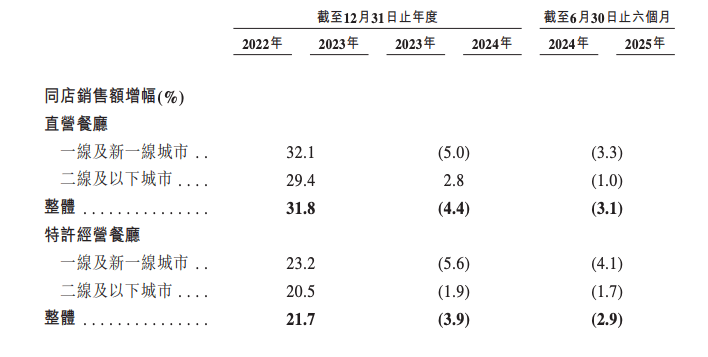
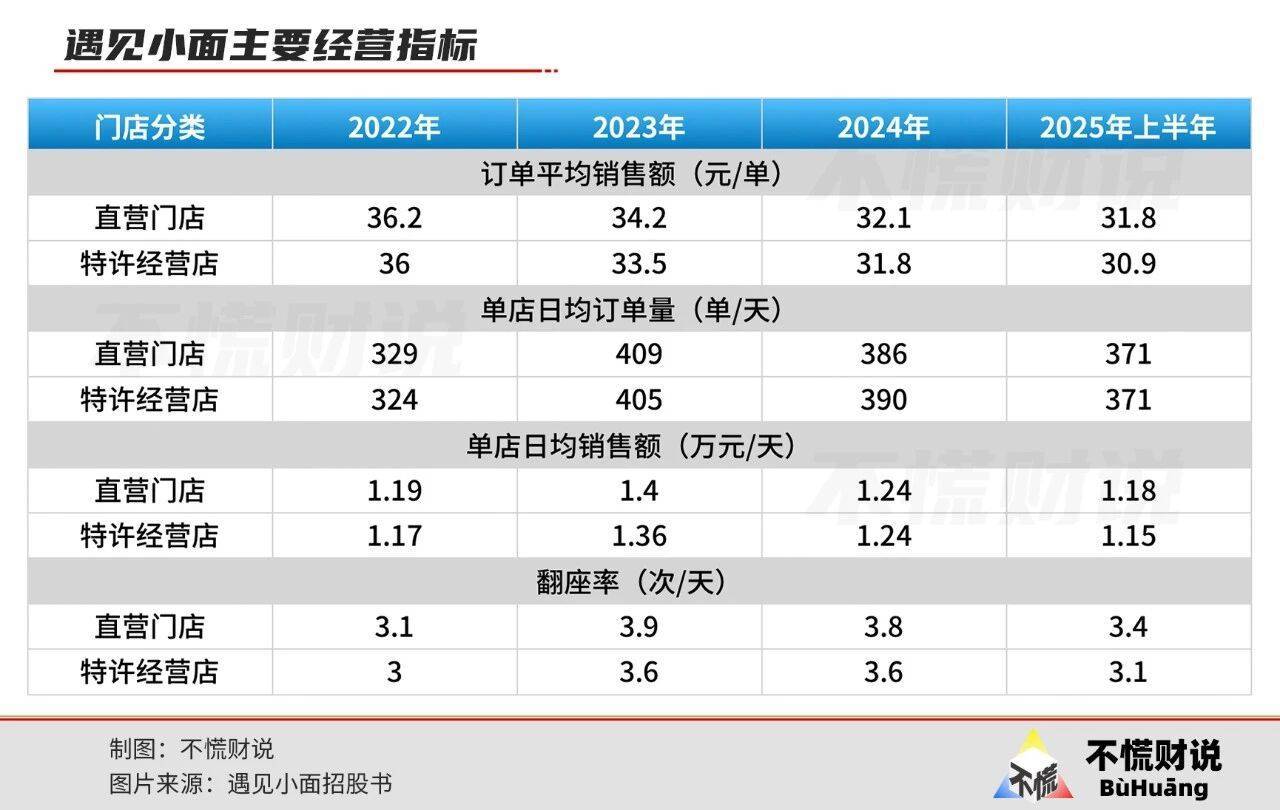
Core Viewpoint - The Chinese noodle restaurant sector, long overlooked by capital, is experiencing renewed interest with the IPO of Guangzhou Yujian Xiaomian Catering Co., Ltd. (Yujian Xiaomian), which has built a network of over 450 stores in 11 years and is the fourth largest operator in China [2][4]. Company Performance - Yujian Xiaomian's revenue increased from 418 million yuan in 2022 to 1.154 billion yuan in 2024, with net profit turning from a loss of 35.973 million yuan to a profit of 60.7 million yuan during the same period [2]. - In the first half of 2025, the company maintained double-digit growth, with revenue and net profit growth rates of 33.7% and 95.77%, respectively [2]. Market Dynamics - The noodle restaurant market in China is highly fragmented, with a market size of 286.6 billion yuan in 2024, expected to reach 495.6 billion yuan by 2029, reflecting a compound annual growth rate of 11.0% [9]. - Yujian Xiaomian holds a market share of only 0.5%, ranking fourth among competitors, indicating a lack of significant market dominance [9]. Expansion Strategy - Yujian Xiaomian has rapidly expanded its store count from 170 at the end of 2022 to 451 by mid-2025, primarily through company-owned stores [15]. - The average time to open a new store has decreased from 4.5 days in 2023 to about 3 days in 2025, showcasing accelerated growth [15]. Financial Health - The company has seen a significant increase in rental liabilities, rising from 439 million yuan in 2022 to 762 million yuan by mid-2025, which poses a challenge for debt repayment [17]. - As of mid-2025, Yujian Xiaomian's cash and cash equivalents were only 50.03 million yuan, insufficient to cover its rental liabilities [17]. Competitive Landscape - The noodle restaurant sector has seen a decline in capital interest, with financing events dropping from 21 in 2021 to none in 2024, contrasting with other food and beverage sectors that have maintained investor interest [8]. - Yujian Xiaomian's reliance on a direct store model, while ensuring brand consistency, has led to high investment costs and management complexity [15]. Operational Challenges - The average order value has decreased from 36.2 yuan per order in 2022 to 32.1 yuan in 2024, indicating a reliance on volume rather than profitability per store [10]. - The company faces a decline in key operational metrics, such as daily average sales per store and turnover rates, which have dropped from 1.4 million yuan to 1.18 million yuan per day [11].
IPO一周资讯|AI与智能制造引领本周递表热潮
Sou Hu Cai Jing· 2025-11-21 10:04
Group 1: Recent IPOs - Zhongwei Co., a new energy materials company, officially listed on the Hong Kong Stock Exchange, raising approximately HKD 3.544 billion by offering about 104 million shares [1] - Jiansu, a supply chain management service provider, submitted an IPO application to the SEC for a Nasdaq listing, focusing on the plastic and chemical industries in China [2] - Defeng Technology, an independent AIoT provider, filed for an IPO on the Hong Kong Stock Exchange, specializing in energy and manufacturing sectors [3] - Kanop, an industrial robotics company, applied for an IPO on the Hong Kong Stock Exchange, ranking first among Chinese welding robot manufacturers [4] - NobiKan, an AI company, refiled for an IPO on the Hong Kong Stock Exchange after previous applications lapsed, focusing on AI and digital twin technologies [5] - Dongshan Precision, a PCB supplier for edge AI devices, submitted an IPO application to the Hong Kong Stock Exchange, aiming to become a leading supplier in the sector [6] - Mandi International, a consumer healthcare company, filed for an IPO on the Hong Kong Stock Exchange, leading the market in hair health products [7] - Lingyi Intelligent Manufacturing, an AI hardware platform, applied for an IPO on the Hong Kong Stock Exchange, ranking first in high-precision components for AI terminal devices [8] Group 2: Upcoming IPOs - Quantitative Platform is set to launch its IPO from November 19 to November 24, aiming to raise approximately HKD 131 million [9] - Haiwei Electronics plans to conduct its IPO from November 20 to November 25, targeting to raise around HKD 440 million [10] Group 3: Recent Hearings - Yujian Xiaomian, a modern Chinese noodle brand, passed the listing hearing on the Hong Kong Stock Exchange, operating 440 restaurants in mainland China and 11 in Hong Kong [11] - Jinyan High-tech, a kaolin company, also passed the listing hearing, focusing on the production of calcined kaolin products [12] - Naxin Micro, a provider of analog chips, passed the listing hearing, specializing in automotive electronics and consumer electronics [13] - Lemo, a smart massage service provider, passed the listing hearing, leading the market in smart massage services in mainland China [14] Group 4: Market Developments - The Singapore Exchange and Nasdaq announced a collaboration to simplify dual listings, aiming to launch a "Global Listing Board" by mid-2026 [15]
遇见小面通过港交所聆讯 招银国际为独家保荐人
Zheng Quan Shi Bao Wang· 2025-11-18 00:12
Core Viewpoint - Yujian Xiaomian has passed the main board listing hearing of the Hong Kong Stock Exchange, with CMB International as its sole sponsor [1] Company Summary - Yujian Xiaomian is the fourth largest operator of Chinese noodle restaurants in China, with a market share of 0.5% based on total merchandise transaction value in 2024 [1] - The company operates the "Yujian Xiaomian" brand in mainland China and Hong Kong, with 451 restaurants as of October 8, 2025, and an additional 101 restaurants in preparation [1] - Most of the restaurants are located in eastern and southern China, with over half situated in Guangdong Province [1] - The company's product offerings are based on Chongqing noodles and have expanded to include various spicy and non-spicy dishes, such as noodles, rice, snacks, and beverages [1] - Yujian Xiaomian employs both direct operation and franchising models, with 86 franchised restaurants as of June 30, 2025 [1] Industry Summary - The Chinese Chinese noodle restaurant market is a significant component of the Chinese fast food market, with an estimated market share of approximately 29.8% in 2024 [1] - The overall Chinese fast food restaurant market is highly fragmented, with the top five participants holding a combined market share of only 3.0% in 2024 [1] - Yujian Xiaomian ranks thirteenth in the Chinese noodle restaurant market, with a market share of 0.14% [1] - The Chinese noodle restaurant market is expected to continue accelerating, with total merchandise transaction value projected to reach 510 billion RMB by 2029, reflecting a compound annual growth rate (CAGR) of 10.9% [1] - The market for noodle restaurants focusing on Sichuan and Chongqing flavors is anticipated to grow particularly strong, with total merchandise transaction value expected to reach 135.7 billion RMB by 2029, representing a CAGR of 13.2% [1]
遇见小面通过港交所聆讯 为中国第四大中式面馆经营者
Zhi Tong Cai Jing· 2025-11-17 06:37
Core Viewpoint - Guangzhou Yujian Xiaomian Restaurant Co., Ltd. is preparing for an IPO on the Hong Kong Stock Exchange, with CMB International as the sole sponsor. The company is the fourth largest operator of Chinese noodle restaurants in China, holding a market share of 0.5% as of 2024 [1][4]. Company Overview - The company operates the Yujian Xiaomian brand in mainland China and Hong Kong, with a network of 440 restaurants in 22 cities in mainland China and 11 in Hong Kong as of October 8, 2025. It has 101 new restaurants in the pre-opening stage [4]. - The company’s restaurant locations are primarily in eastern and southern China, with over half located in Guangdong Province [4]. Market Position - The Chinese fast food restaurant market, which includes Chinese noodle restaurants, is a significant segment of the overall Chinese dining service market, projected to account for approximately 17.6% in 2024. The market is highly fragmented, with the top five players holding about 3.0% market share [5]. - The company ranks 13th in the overall Chinese fast food restaurant market with a market share of 0.14% based on total merchandise transaction value [5]. Business Model and Growth - The company has successfully expanded its restaurant count from 133 to 451, representing a growth of 239.1% during the reporting period [5]. - The company operates through both direct management and franchising, with 86 franchised restaurants as of June 30, 2025 [7]. Financial Performance - Revenue figures for the company are as follows: approximately RMB 800.5 million in 2023, RMB 1.154 billion in 2024, and RMB 703.2 million for the six months ending June 30, 2025. Profits for the same periods were RMB 45.9 million, RMB 60.7 million, and RMB 41.8 million respectively [8]. - The company’s financial performance has shown rapid growth, supported by a strong brand presence and effective management strategies [7]. Market Outlook - The Chinese noodle restaurant market is expected to grow significantly, with total merchandise transaction value projected to reach RMB 510 billion by 2029, reflecting a compound annual growth rate (CAGR) of 10.9% from 2025 to 2029 [7]. - The Sichuan-Chongqing flavored noodle market is anticipated to grow even faster, with a projected CAGR of 13.2% during the same period [7].
遇见小面冲刺IPO,靠的是“不地道”?
Sou Hu Cai Jing· 2025-11-02 01:01
Core Insights - "Yujian Xiaomian" aims to become the first publicly listed Chinese noodle restaurant, having opened over 450 locations nationwide and recently updated its prospectus for an IPO in Hong Kong [3][12]. Group 1: Business Model and Market Position - The brand targets office workers in urban areas, offering a quick, affordable meal option with a diverse menu and consistent quality [1][3]. - The founders, a team of three graduates from South China University of Technology, leveraged their backgrounds in international fast food chains to create a scalable business model [3][5]. - "Yujian Xiaomian" capitalizes on the growing popularity of Chongqing noodles, adapting the flavor profile to suit the tastes of Guangdong consumers while establishing a presence in shopping centers rather than traditional street locations [4][5]. Group 2: Growth and Expansion - The company has experienced rapid growth, increasing its store count from 133 in early 2022 to 451 by mid-2025, with a valuation reaching nearly 1 billion yuan after multiple funding rounds [12][14]. - The brand has strategically expanded into major cities like Shanghai and Beijing, while avoiding the Chongqing market, focusing instead on non-local consumers [14][15]. - "Yujian Xiaomian" has a low market share of 0.5% in the broader Chinese noodle market, indicating significant room for growth despite the competitive landscape [15][17]. Group 3: Digitalization and Standardization - The company emphasizes a fully digitalized operational model, converting traditional cooking measurements into precise metrics to ensure consistency across all locations [6][9]. - "Yujian Xiaomian" has accumulated 22.1 million members, with a 44.5% repurchase rate among stored-value members, showcasing strong customer retention strategies [9][10]. - The brand's digital approach includes utilizing WeChat for ordering and private group marketing, enhancing customer engagement and operational efficiency [9][10]. Group 4: Future Strategies - Future plans include expanding into lower-tier markets, increasing the number of franchise locations, and exploring international markets [17][18]. - The company aims to balance the need for standardization with maintaining the authentic experience of traditional Chinese cuisine, which poses a challenge as it scales [18].
“午饭搭子”要上市了?30元预制面能否留住打工人的胃?
Xin Jing Bao· 2025-10-28 09:51
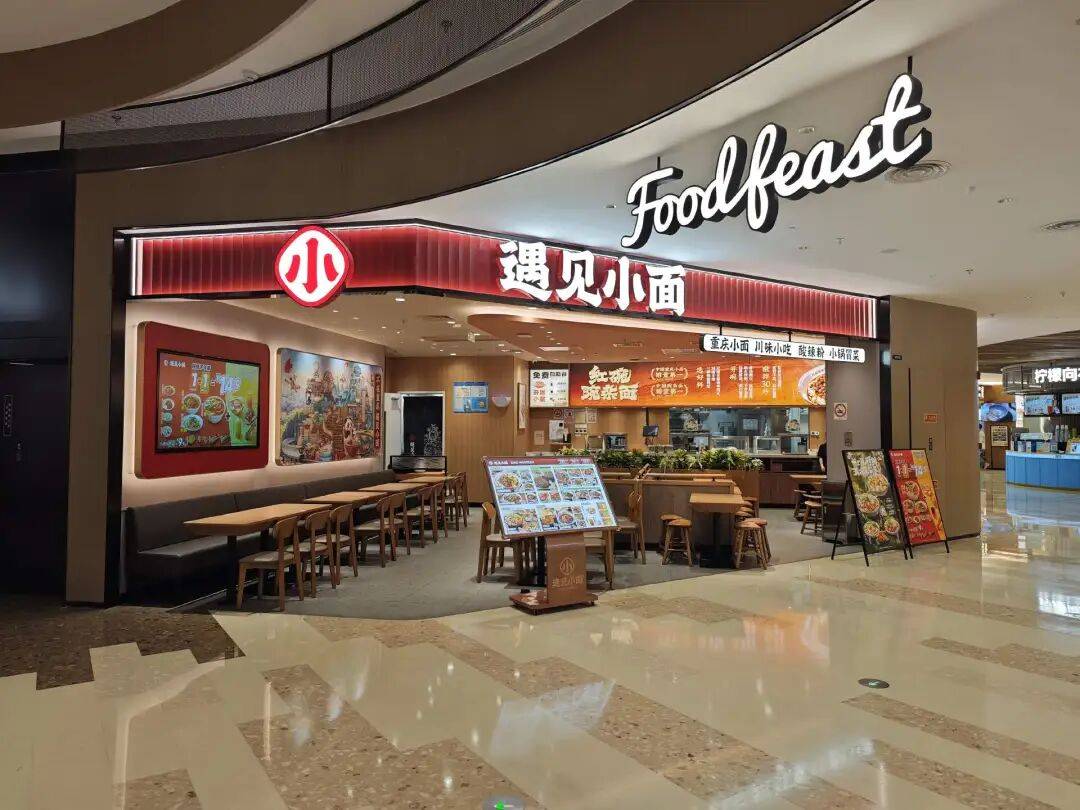
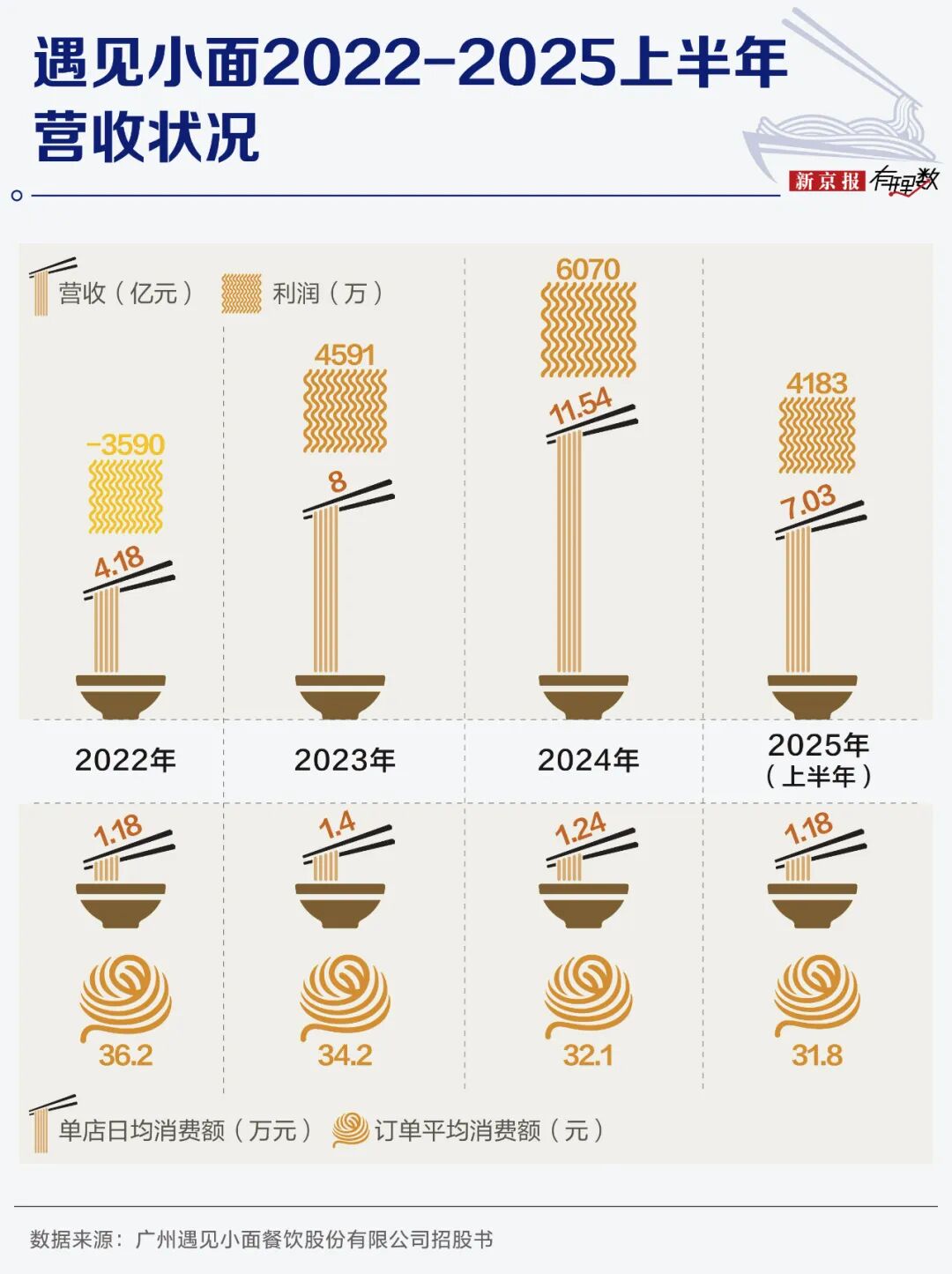
Core Viewpoint - Guangzhou Yujian Xiaomian Catering Co., Ltd. is attempting to relist on the Hong Kong Stock Exchange after a failed attempt earlier this year, aiming to become the first publicly listed Chinese noodle restaurant [1][2] Company Performance - From 2022 to 2024, Yujian Xiaomian's revenue is projected to grow from 418 million RMB to 1.154 billion RMB, but the growth rate is expected to slow significantly in 2024 [3][7] - The average transaction value has been declining for four consecutive years, dropping from 36.2 RMB in 2022 to 32.1 RMB in 2024, and further to 31.8 RMB in the first half of 2025 [3][4] - Daily sales per store are also decreasing, with an average of 14,000 RMB in 2023 falling to 12,400 RMB in 2024, a decline of 11.43% [3] Market Context - The total transaction value of the Chinese noodle restaurant market is expected to reach 286.6 billion RMB in 2024, with a compound annual growth rate (CAGR) of 12.7% from 2020 to 2024, but slowing to 10.9% from 2025 to 2029 [7] - The top five players in the noodle restaurant market only account for 2.9% of the total market share, indicating low brand loyalty among consumers [12] Competitive Landscape - Other noodle brands like He Fu Lao Mian and Wu Ye Ban Mian have also attracted significant investment, with major capital backing from firms like Tencent and Hillhouse Capital [10] - Despite previous interest, the noodle restaurant sector has seen a decline in new capital investments since 2022 [12] Expansion Strategy - Yujian Xiaomian plans to continue expanding its store count, with projections to open 150 to 230 new stores annually from 2026 to 2028 [23] - The company has a centralized kitchen system for standardized food preparation, which allows for quick service, appealing to busy urban professionals [18] Challenges - The brand faces criticism regarding food safety and quality, with over 200 complaints reported, primarily related to food safety issues [24] - The pricing strategy, with average transaction values above 30 RMB, may hinder market penetration in lower-tier cities where local competitors offer lower prices [20][23]
遇见小面冲击港股IPO:规模狂奔难掩单店失速,盈利困境何解?
Sou Hu Cai Jing· 2025-10-26 13:36
Core Viewpoint - The company "Yujian Xiaomian" is rapidly expanding its chain of Chinese noodle restaurants and aims to become the first publicly listed company in this sector, despite facing challenges such as declining average spending per customer and high debt levels [1][10]. Expansion and Growth - Founded in 2014, Yujian Xiaomian has grown to 451 stores and plans to exceed 500 by the end of the year, with a remarkable expansion rate of nearly one store every three days [1][3]. - Revenue has increased from approximately 418 million RMB in 2022 to an expected 1.154 billion RMB in 2024, reflecting a compound annual growth rate of 66.2% [5][6]. Financial Performance - The company achieved profitability in 2023, with net profits of 46 million RMB, but overall profit margins remain low, with adjusted net profit margins around 5% [7][10]. - Despite revenue growth, the company faces a "growth without profit" dilemma, as profits have not kept pace with revenue increases [6][7]. Pricing Strategy and Market Position - Yujian Xiaomian has adopted a pricing strategy aimed at increasing customer volume, resulting in a decline in average spending per customer from 36.2 RMB in 2022 to 31.8 RMB in the first half of 2025 [8][9]. - The company ranks fourth in the industry but holds less than 1% market share, indicating significant competition [8]. Operational Challenges - The company has experienced a decline in table turnover rates and average daily sales per store, which have negatively impacted overall sales performance [8][9]. - Quality control and management issues have emerged, leading to regulatory scrutiny and customer complaints [12]. Financial Structure and Liquidity - As of the end of 2024, the company's debt-to-asset ratio was 89.86%, indicating high leverage, while the current ratio was only 0.5, suggesting liquidity challenges [10][12]. - The company has distributed dividends totaling 34.2 million RMB before its IPO, further straining its financial resources [12].
市占率仅0.5%,品控问题频发,“中式面馆第一股”拿什么撑起30亿估值?
凤凰网财经· 2025-10-23 09:00
Core Viewpoint - The article discusses the rapid growth and challenges faced by "Yujian Xiaomian," a leading Chinese noodle brand, as it prepares for its IPO in Hong Kong, highlighting its impressive valuation increase and the controversies surrounding its operations and management [1][26]. Group 1: Company Overview - "Yujian Xiaomian" started as a small noodle shop in Guangzhou and has grown to achieve an annual revenue of 1.1 billion yuan, attracting significant investments from major firms like Lenovo and Country Garden [1][3]. - The company has seen its valuation soar from 13 million yuan to 3 billion yuan, marking a nearly 230-fold increase over ten years [1][4]. - As of mid-2025, the company plans to operate 451 restaurants, with a goal of surpassing 500 by the end of the year [6][11]. Group 2: Financial Performance - The company reported a revenue increase from 418 million yuan in 2022 to 1.154 billion yuan in 2024, with a significant rise in the number of orders from 14.16 million to 42.09 million during the same period [6][15]. - Despite the revenue growth, the average daily sales per store decreased from 13,900 yuan in 2023 to 12,400 yuan in 2024, indicating a decline of approximately 10.8% [15]. - The company's net profit margin has also been squeezed, with average net profit per store dropping from 182,000 yuan to 169,000 yuan [15]. Group 3: Market Position and Competition - "Yujian Xiaomian" ranks fourth in the Chinese noodle market with a total transaction value of 1.348 billion yuan in 2024, holding a market share of 0.5% [14]. - The market is highly fragmented, with the top five companies collectively holding only 2.9% of the market share, suggesting significant room for consolidation [14]. Group 4: Challenges and Controversies - The company faces scrutiny over food safety issues, with multiple complaints reported on consumer platforms regarding food quality and safety [18][19]. - A recent controversy arose when a public relations executive received a layoff notice at home, raising concerns about the company's internal management practices [25]. - The company has also been criticized for its dividend payouts, which amounted to over 34 million yuan, representing 56% of its projected net profit for 2024, leading to questions about its financial strategy [26][29].

告别“融资狂奔”?遇见小面年入10亿后,欲靠“下沉+出海”寻求新解药
Sou Hu Cai Jing· 2025-10-23 08:07
Core Viewpoint - The company "Yujian Xiaomian" has submitted its prospectus to the Hong Kong Stock Exchange, highlighting its rapid expansion and the challenges it faces in maintaining profitability amidst declining same-store sales and average transaction values [1][2]. Group 1: Company Overview - Founded by former McDonald's employee Song Qi in 2014, Yujian Xiaomian applies Western fast-food management standards to Chinese noodle shops, achieving a peak valuation of 3 billion yuan [1][4]. - The company has rapidly expanded its store count to over 450 nationwide, with annual revenue surpassing 1 billion yuan and achieving profitability [2][5]. Group 2: Financial Performance - Revenue growth from 2022 to 2024 was significant, with figures of 418 million yuan, 801 million yuan, and 1.154 billion yuan respectively, reflecting a compound annual growth rate of approximately 66% [6]. - In the first half of 2025, the company reported revenue of 703 million yuan, a year-on-year increase of 33.8%, and a net profit of 41.83 million yuan, up 95.8% [6]. Group 3: Market Challenges - Despite rapid growth, the company faces declining average transaction values, which fell from 36.1 yuan in 2022 to 32 yuan in 2024, and same-store sales also decreased [8][10]. - The company operates approximately 80% of its stores in first-tier and new first-tier cities, where operational costs are higher, leading to lower profit margins compared to second-tier cities [10][11]. Group 4: Competitive Landscape - The Chinese noodle market is highly fragmented, with the top five companies holding only 2.9% of the market share, and Yujian Xiaomian's share at 0.5% [14]. - The company competes not only with other noodle shops but also with various fast-food categories, necessitating price adjustments to retain customers [15]. Group 5: Future Strategy - The company plans to open 150 to 230 new stores annually from 2026 to 2028, focusing on both domestic market penetration and potential international expansion [7][12]. - The challenge remains to transition from a growth model reliant on financing to one focused on sustainable profitability, addressing the "scale curse" that many fast-food brands face [16].