
农产品批发

Search documents
新春走基层 | 价稳量足,“菜篮子”供应有保障
Huan Qiu Wang· 2026-02-08 00:34
Core Insights - The supply of agricultural products, particularly tomatoes, is stable and sufficient ahead of the Spring Festival, ensuring that consumer demand is met [1][3]. Group 1: Market Overview - Beijing's Xinfadi Agricultural Products Wholesale Market is a key distribution center in North China, with over 5,000 designated customers and a transaction volume of 15.6 million tons and a transaction value of 128.8 billion yuan last year [1]. - Recent fluctuations in tomato prices are primarily influenced by supply and demand dynamics, with a decrease in planting area and extreme weather contributing to earlier price increases [3]. Group 2: Price Trends - The average wholesale price of black frame tomatoes decreased from 2.75 yuan per jin to 2.5 yuan between January 31 and February 6, while other varieties also saw price reductions [2]. - Despite recent price drops, current tomato prices remain over 1 yuan higher than the same period last year, impacting sales volume to some extent [3]. Group 3: Supply Chain and Logistics - Xinfadi has established a robust supply chain with 3.3 million acres of planting bases across 22 provinces, ensuring daily supplies of 23,000 tons of vegetables and 14,000 tons of fruits, which is 20% more than usual [5]. - The Ministry of Commerce is guiding local wholesale markets and large chain supermarkets to strengthen supply connections and establish stable direct supply channels [3]. Group 4: Consumer Demand - The market is experiencing a peak in trading activity as the Spring Festival approaches, with increased demand for various agricultural products [3][5]. - The logistics centers in other regions, such as Xiamen and Ningxia, are also ensuring a steady supply of affordable vegetables to meet festive demand [5].
北京新发地:价稳量足,“菜篮子”供应有保障
Xin Lang Cai Jing· 2026-02-07 22:52
Core Insights - The recent fluctuations in tomato prices are primarily influenced by supply and demand dynamics, with a notable increase in prices during the end of last year due to reduced planting areas and high demand before the New Year [3] Group 1: Market Overview - Beijing's Xinfadi Agricultural Products Wholesale Market is a significant hub for agricultural distribution in North China, with over 5,000 designated customers and a transaction volume of 15.6 million tons and a transaction value of 128.8 billion yuan last year [1] - The market has seen a recent increase in trading activity, with a peak in transactions observed in the afternoon, indicating strong demand ahead of the Spring Festival [3] Group 2: Price Trends - Recent data shows a decline in wholesale prices for tomatoes, with black frame tomatoes dropping from 2.75 yuan to 2.5 yuan per jin, and white frame tomatoes decreasing from 4.8 yuan to 4.6 yuan per jin [2] - Despite the recent price drop, current prices remain over 1 yuan higher than those before last year's Spring Festival, indicating a sustained level of demand [3] Group 3: Supply Chain and Logistics - Xinfadi has established a robust supply chain with 3.3 million acres of planting bases across 22 provinces, ensuring a daily supply of 23,000 tons of vegetables and 14,000 tons of fruits, which is 20% higher than usual [5] - The market is prepared for the pre-festival purchasing surge, with sufficient stockpiles to meet consumer demand [5] Group 4: Regional Supply Efforts - Other regions, such as Fujian and Ningxia, are also enhancing their supply systems to ensure a steady flow of agricultural products, contributing to price stability and availability during the festive season [5]
价稳量足,“菜篮子”供应有保障(新春走基层)
Ren Min Ri Bao· 2026-02-07 22:28
Core Insights - The recent fluctuations in tomato prices are primarily influenced by supply and demand dynamics, with a notable increase in prices due to reduced planting areas and extreme weather conditions, followed by a decrease as supply from major production areas improves [3] Group 1: Market Overview - Beijing's Xinfadi Agricultural Products Wholesale Market is a significant hub, with over 5,000 designated customers and a transaction volume of 15.6 million tons and a transaction value of 128.8 billion yuan last year [1] - The market has seen a recent increase in trading activity, especially as the Spring Festival approaches, with a notable rise in demand for various agricultural products [5] Group 2: Price Trends - Recent data indicates that the wholesale price of black frame tomatoes decreased from 2.75 yuan per jin to 2.5 yuan, while other varieties also saw price reductions [2] - The average wholesale price of tomatoes peaked at 9.31 yuan per kilogram in late December, with some retail prices in supermarkets nearing 10 yuan per jin [1][2] Group 3: Supply Chain and Logistics - Xinfadi has established a robust supply chain with 3.3 million acres of planting bases across 22 provinces, ensuring a daily supply of 23,000 tons of vegetables and 14,000 tons of fruits, which is 20% more than usual [5] - The market is prepared for the pre-festival purchasing surge, with sufficient stockpiles to meet consumer demand [3][5] Group 4: Industry Response - The Ministry of Commerce is guiding local wholesale markets and large chain supermarkets to organize suitable supplies from major production areas, enhancing the connection between production and sales [3] - The market's management is actively ensuring a stable supply of goods to maintain price stability during the festive season [5]
24小时运转 守护首都“菜篮子”安全
Xin Lang Cai Jing· 2026-02-07 06:19
Core Insights - The central government's focus on the "vegetable basket" project has been reiterated in this year's No. 1 Central Document, emphasizing the importance of food safety and supply assurance [1] Group 1: Market Operations - The Xinfadi Agricultural Products Wholesale Market operates 24 hours a day, testing over 1,500 batches of agricultural products daily to ensure market safety [1] - The market currently sees daily vegetable supply reaching 23,000 tons, fruit at 14,000 tons, seafood over 2,000 tons, and livestock including over 200 cattle and 1,500 sheep [1] Group 2: Testing Procedures - The testing center employs a systematic approach for pesticide residue detection, utilizing specialized equipment and procedures to ensure compliance with safety standards [2] - Merchants are required to submit detailed information about their products, including origin and compliance certificates, to facilitate traceability and risk management [2] Group 3: Quality Control Measures - The testing center is operated by a third-party professional organization, which conducts batch testing and special inspections on key agricultural products, especially during peak purchasing periods like the Spring Festival [3] - In the event of non-compliance, immediate notifications are sent to merchants, and the information is relayed to regulatory authorities to maintain food safety standards [3]


北京“菜篮子”,拎得稳稳的(新春走基层)
Ren Min Ri Bao Hai Wai Ban· 2026-02-07 00:28
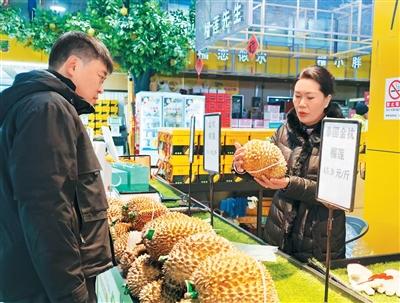
Core Viewpoint - The New Agricultural Products Wholesale Market in Beijing, known as Xinfadi Market, plays a crucial role in supplying a wide variety of fresh produce to consumers, with a focus on enhancing supply chain efficiency and expanding product offerings through strategic partnerships and innovative sales channels [2][3][6]. Group 1: Supply Chain and Production - The market operates on a model that integrates production bases across the country, ensuring a steady supply of high-quality vegetables and fruits, with a focus on collaboration with local farming cooperatives [3][5]. - Li Jun, a leading eggplant wholesaler, has established seven production bases since 2013, covering 1,600 acres and collaborating with over 30 rural cooperatives, which helps in achieving a daily sales volume of approximately 30 tons of eggplants [2][3]. Group 2: Product Diversification and Quality - The market has expanded its offerings to include international products, such as durians from Thailand and Malaysia, reflecting a shift towards premium consumer preferences and global sourcing [4][5]. - The introduction of the International Durian Pavilion highlights the market's commitment to providing high-quality exotic fruits, with sales of durians reaching over 100 million yuan quarterly [5]. Group 3: E-commerce and Sales Channels - The rise of live-streaming e-commerce has transformed the market's sales approach, allowing for rapid delivery of fresh produce, with a reported annual sales exceeding 100 million yuan since 2023 [6]. - The market has established partnerships with major logistics companies to ensure efficient delivery services, enhancing customer experience and accessibility to a wide range of agricultural products [6].
记者探访新发地检验检测中心 24小时运转守护首都“菜篮子”
Xin Lang Cai Jing· 2026-02-07 00:07
Core Insights - The New Fa Di Market plays a crucial role in ensuring food safety by conducting over 1,500 inspections of agricultural products daily, especially as demand increases during the festive season [1][2] - The market has seen a significant rise in the supply of vegetables (23,000 tons), fruits (14,000 tons), seafood (over 2,000 tons), and livestock, with a 20% increase in demand for gift packages [1] Group 1: Market Operations - The New Fa Di Market operates a reservation system for agricultural products, requiring merchants to submit origin and personnel information along with compliance certificates to ensure traceability and risk management [2] - The inspection center is managed by a third-party professional organization, which conducts batch inspections on incoming goods and special checks on key agricultural products [2] Group 2: Inspection Process - The inspection process involves a detailed procedure where samples are taken, weighed, and tested for pesticide residues, with results available to merchants via a QR code [2] - If any non-compliant products are detected, the market promptly informs the merchant, initiates a withdrawal process, and notifies regulatory authorities to maintain food safety [2]
24小时运转守护首都“菜篮子”
Xin Lang Cai Jing· 2026-02-06 23:03
Core Insights - The New Fa Di Market plays a crucial role in ensuring food safety by conducting over 1,500 inspections of agricultural products daily, especially during peak seasons like the upcoming Spring Festival [1][2] - The market has seen a significant increase in demand for various products, with vegetable supply reaching 23,000 tons, fruit at 14,000 tons, seafood over 2,000 tons, and a notable 20% rise in demand for gift boxes and combo packages [1] Inspection and Safety Measures - The inspection center operates 24/7, providing real-time results to merchants through a dedicated QR code system after samples are tested for pesticide residues [2] - The market employs a reservation system for product entry, requiring merchants to submit detailed information about the origin and compliance of their goods, establishing a robust traceability and risk management framework [2] - Non-compliant products are promptly reported to merchants and regulatory authorities, ensuring swift action to maintain food safety standards [2]
鲜货满仓供应足 物流畅通一日达
Xin Lang Cai Jing· 2026-02-06 21:01
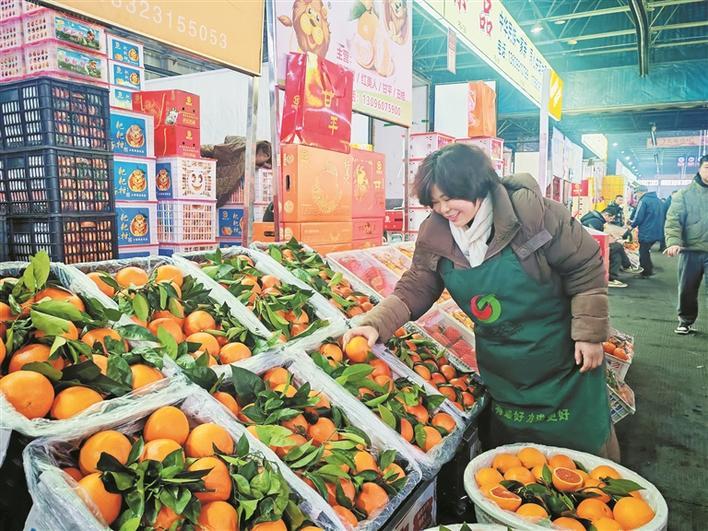
Core Insights - The logistics upgrade in Xinjiang has significantly improved the efficiency of fresh produce supply chains, with the opening of the Urumqi-Weili Highway reducing transportation time and costs [3][5]. Group 1: Logistics and Supply Chain - The Urumqi-Weili Highway has become a key node in the fresh supply chain across Xinjiang, allowing for an average reduction of over 200 kilometers in transportation distance and improving delivery times by over 50% [3]. - The logistics company has implemented a comprehensive supply guarantee plan for the Spring Festival, ensuring sufficient and fresh goods through organized sourcing, logistics coordination, and safety management [3]. Group 2: Market Dynamics - The Xinjiang Jiuding Wholesale Market has seen a surge in high-end fruit sales, with products like cherries and Yaba Yaba oranges being popular among consumers, supported by direct sourcing and cold chain logistics [5]. - The market has established an international transportation model that significantly reduces shipping times, allowing for exports to countries like Kazakhstan and Russia, with 60% of certain products now being exported [5]. Group 3: Technology and Innovation - The Jiuding Logistics Group is developing a centralized procurement and distribution center, launching a mini-program for online bulk purchasing, which aims to transition the market from traditional wholesale to a smart supply chain model [6]. - The mini-program features over 8,000 products and achieves a daily transaction volume of around 100 tons, enhancing the connection between farmers, businesses, and consumers [6].
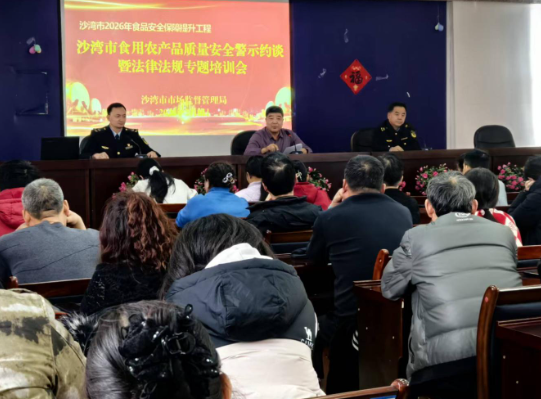
沙湾市召开食用农产品质量安全警示约谈暨法律法规专题培训大会
Zhong Guo Shi Pin Wang· 2026-02-06 12:57
Core Insights - The article discusses a recent conference held in Shawan City aimed at strengthening the quality safety of edible agricultural products and enhancing the legal compliance awareness among industry stakeholders [1] Group 1: Conference Overview - The conference was organized to address the responsibilities of business entities in ensuring food safety and to provide specialized training on relevant laws and regulations [1] - Attendees included representatives from large supermarkets, the Baoyuan agricultural wholesale market, and food product wholesalers [1] Group 2: Issues Identified - The meeting reported on the non-compliance of edible agricultural products in 2025, highlighting issues such as inadequate implementation of responsibility by business units, lax enforcement of procurement verification, and poor management of market entry controls [3] - Business units were urged to rectify identified issues within a specified timeframe and to conduct comprehensive self-checks to prevent future lapses in food safety management [3] Group 3: Regulatory Measures - The regulatory body emphasized the importance of strict adherence to procurement verification, documentation, and record-keeping processes, making the verification of compliance certificates a core control measure [4] - Continuous monitoring and follow-up inspections will be conducted to ensure compliance, with severe penalties for repeat offenders [4] Group 4: Training and Awareness - Following the warning meeting, specialized training sessions were conducted to enhance the legal knowledge and food safety risk management capabilities of the attendees [4] - The city plans to intensify regulatory enforcement and monitoring efforts, adopting a "zero tolerance" approach towards violations to safeguard public health [4]

春节保供 北京新发地市场日均检测1500批次农产品样品 供应蔬菜2.3万吨
Bei Jing Shang Bao· 2026-02-06 07:04
Core Insights - Beijing Xinfadi Market is implementing multiple measures to ensure supply and enhance food safety inspections during the peak purchasing period of the Spring Festival [1] Group 1: Supply Management - The market has established strict entry management, requiring vendors to pre-register information about the origin, goods, and personnel, along with uploading compliance certificates for agricultural products to ensure traceability [1] - To meet pre-festival purchasing demands, the market has prepared by increasing daily supply to approximately 23,000 tons of vegetables, 14,000 tons of fruits, over 2,000 tons of seafood, more than 200 head of cattle, and 1,500 sheep, representing a 20% increase compared to normal supply levels [1] Group 2: Food Safety Measures - Beijing Xinfadi Market is collaborating with third-party testing agencies to increase the number of inspectors during peak trading times, conducting batch inspections on incoming goods, and focusing on key categories such as strawberries, cherries, and vegetables, with daily testing of 1,500 samples [1] - Any agricultural products that fail inspections will result in immediate notification to vendors for market withdrawal, and the information will be reported to regulatory authorities and the origin [1] Group 3: Operational Readiness - Approximately 2,000 vendors will remain at Beijing Xinfadi Market during the Spring Festival, with management assigning dedicated personnel to maintain trading order and ensure stable supply of agricultural products [1]