冰箱

Search documents
海尔麦浪冰箱越南上市夯实冠军地位
Quan Jing Wang· 2025-11-11 09:08
Core Insights - Haier's Mairang refrigerator has achieved sales of over 700,000 units in less than 9 months in China, with a growth rate exceeding 50% [1] - The Mairang refrigerator has successfully entered the Vietnamese market, following its expansion into Thailand, Malaysia, and the Philippines [1] - Haier's refrigerator has become the number one brand in market share in Vietnam and the fastest-growing brand in the region [1] Product Features - The Mairang refrigerator features a multi-door design for categorized storage, HCS humidity control technology, and ABT Pro sterilization function, catering to local consumer needs for fresh and safe food storage [1] - It includes Smart Ice technology for quick ice production and an open beverage space that accommodates 95% of common beverage sizes, aligning with local preferences for cold drinks [1] - The refrigerator's ultra-thin 594mm design and color options of cream white and sunshine gold appeal to quality-conscious consumers in upscale apartment living [1] Market Performance - Haier's AQUA brand in Vietnam has launched the TM700 series refrigerator, equipped with dual water dispensers and dual ice-making modules, addressing diverse cold drink needs [1] - The Mairang refrigerator's launch has led to its presence in over 100 core stores nationwide, allowing customers to experience and order the product directly [1] - By H1 2025, Haier is expected to maintain the top market share in Southeast Asia for refrigerators, with large refrigerator sales increasing by over 50% [2]



双系统深冷科技,澳柯玛白海豚双系统冰箱重磅上市
Zhong Guo Zhi Liang Xin Wen Wang· 2025-11-11 09:03
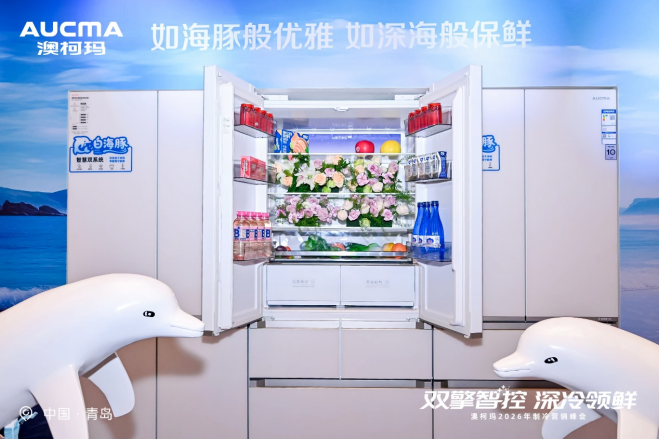
Core Viewpoint - The launch of the Aucma White Dolphin Dual-System Refrigerator at the 2026 Refrigeration Marketing Summit highlights its innovative features and design, aiming to redefine the value standards of high-end refrigerators [1][14]. Group 1: Product Features - The refrigerator features a skin-like glass panel, symbolizing the smooth skin of a dolphin, and incorporates -36℃ deep freezing technology for superior preservation capabilities [1]. - It utilizes two completely independent cooling systems, allowing for separate temperature control in the refrigeration and freezing compartments, effectively preventing food odor mixing [2][3]. - The -36℃ deep freezing technology minimizes nutrient loss and maintains the original taste of frozen foods by rapidly passing through the maximum ice crystal formation zone [5]. Group 2: Preservation Technologies - The refrigerator includes Zero Crystal Magnetic Fresh technology, which creates a uniform magnetic field to decompose large molecular clusters in food, achieving a "below 0℃ without freezing" effect [7]. - Low Oxygen PLUS technology reduces oxygen concentration to delay oxidation, extending the freshness period of fruits like grapes and cherries [7]. Group 3: Smart Features - An intelligent temperature sensing system monitors temperature changes in real-time, quickly adjusting cooling intensity to maintain stable temperatures and protect food quality [9]. - The AI smart purification system releases positive and negative ions to capture and decompose bacteria, viruses, and odor molecules, creating a clean preservation environment for food [9]. Group 4: Design and Usability - The refrigerator features a slim design of 59.4cm for seamless integration into kitchen cabinetry, enhancing aesthetic appeal while maintaining functionality [10]. - It is equipped with a full-width intelligent lighting system that provides even illumination, allowing users to easily see food items without bending down [10]. Group 5: Capacity Options - Aucma offers three different capacity models of the White Dolphin Dual-System Refrigerator: 508 liters French four-door, 507 liters French five-door, and 506 liters cross-door, catering to various household needs [12].

海信冰箱城市巡展启动 以创新科技定义“舌尖上的理想家”
Zhong Guo Zhi Liang Xin Wen Wang· 2025-11-09 14:19
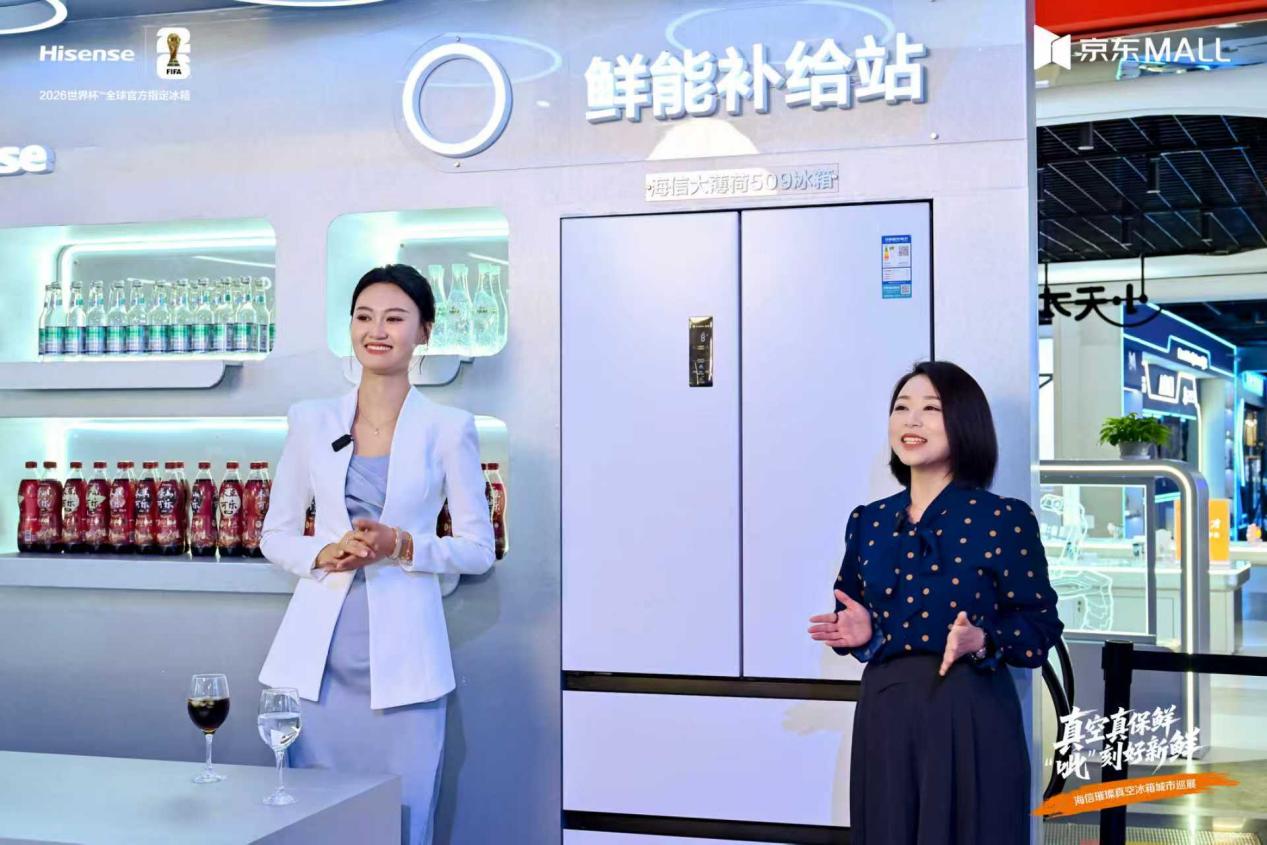
Core Insights - Hisense launched its "Vacuum Fresh Preservation" city tour in Chongqing, showcasing innovative products featuring its vacuum preservation technology and the industry-first "Magnetic Light Curtain Panel" [2][3] - The Hisense Brilliant Vacuum First-Class 650 refrigerator stands out with its aesthetic design and a large capacity of 650 liters, utilizing original vacuum magnetic field preservation technology for molecular-level freshness [2][5] - The Magnetic Light Curtain Panel enhances the refrigerator's interaction and integration with home decor, allowing for the attachment of various items while maintaining a transparent glass appearance [3][5] Product Highlights - The Brilliant Vacuum First-Class 650 refrigerator is noted for its elegant design and significant storage capacity, achieving a high volume-to-width ratio [2] - The Hisense Little Durian 500 refrigerator features a "Vacuum Cube" design to create a sealed space for strong-smelling ingredients, while the Big Mint 509 refrigerator emphasizes large capacity, slim integration, and advanced technology [5] - Hisense's freezer offerings provide professional-grade freezing solutions for families needing substantial storage, complementing the refrigerator lineup for a comprehensive food preservation ecosystem [5] Technological Innovations - The vacuum preservation technology represents Hisense's commitment to achieving ultimate freshness for food at a molecular level [3][5] - The Magnetic Light Curtain Panel addresses the dual needs of aesthetics and functionality, transforming the refrigerator door into a personalized family display area [3]

海尔冰箱发布AI+新鲜方案夯实领航地位
Xin Lang Cai Jing· 2025-11-05 04:45
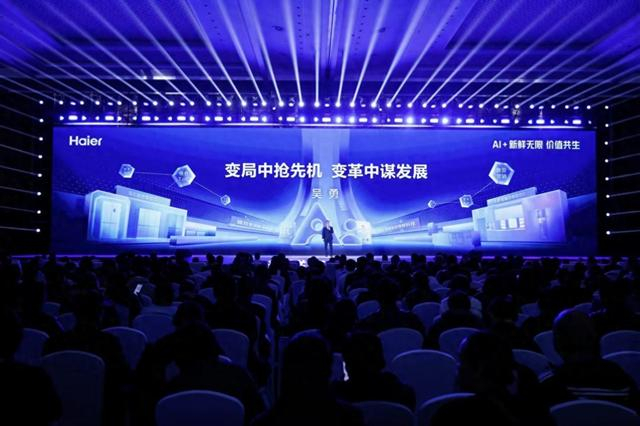
Core Insights - Haier's refrigerator division has achieved significant growth in a challenging market, with a market share of 47.2% in the first three quarters of 2025, reflecting a year-on-year increase of 3.1 percentage points, leading both in share and growth [1][3] - The company's growth strategy focuses on a full-chain digital transformation driven by AI, aiming to meet user needs precisely and co-create popular products with users, leading to high-quality growth [1][5] Group 1: Strategic Transformation - The industry faces intensified homogenization and a linear "production-sales" model that has reached its limits, prompting Haier to reshape this model into a user-driven closed-loop ecosystem covering R&D, smart manufacturing, and marketing [3][5] - Haier's AI transformation strategy includes direct user feedback integration into R&D, shifting from a production-centric to a demand-driven innovation approach [5][6] Group 2: Manufacturing and Marketing Innovations - Haier has established three lighthouse factories, integrating cutting-edge technologies like digital twins, 5G, big data, and AI to create an efficient and high-quality manufacturing system, ensuring rigorous quality control with AI visual inspections [5][6] - The marketing strategy employs "full-stack AI + full-domain ToC," enabling precise user demand capture and transforming online traffic into actual sales, creating a self-optimizing growth cycle [5][6] Group 3: Product Development and User Experience - Haier has launched the AI full-space preservation solution, enhancing user experience from "functional satisfaction" to "scenario customization" through a six-product matrix [5][11] - The Boguang series redefines user experience by upgrading from "passive storage" to "active management," utilizing AI to create personalized preservation plans based on a vast knowledge base [6][11] - The Mairang series exemplifies user co-creation, with AI-driven feedback leading to rapid product iterations and impressive sales performance during the pre-sale period [8][9] Group 4: Addressing Diverse Consumer Needs - The Tianyue series caters to multi-generational families with over 550L capacity and 13% energy savings, while the Hanyue series maximizes storage capacity within the same dimensions [11] - The Shanchahua series features a professional ultra-thin design for seamless integration into home decor, and the Xiaohonghua series offers customizable color panels to enhance aesthetic appeal [11] - Haier's AI full-space preservation solution not only boosts its market share but also provides a replicable model for the industry to escape price wars and achieve sustainable value growth [11]
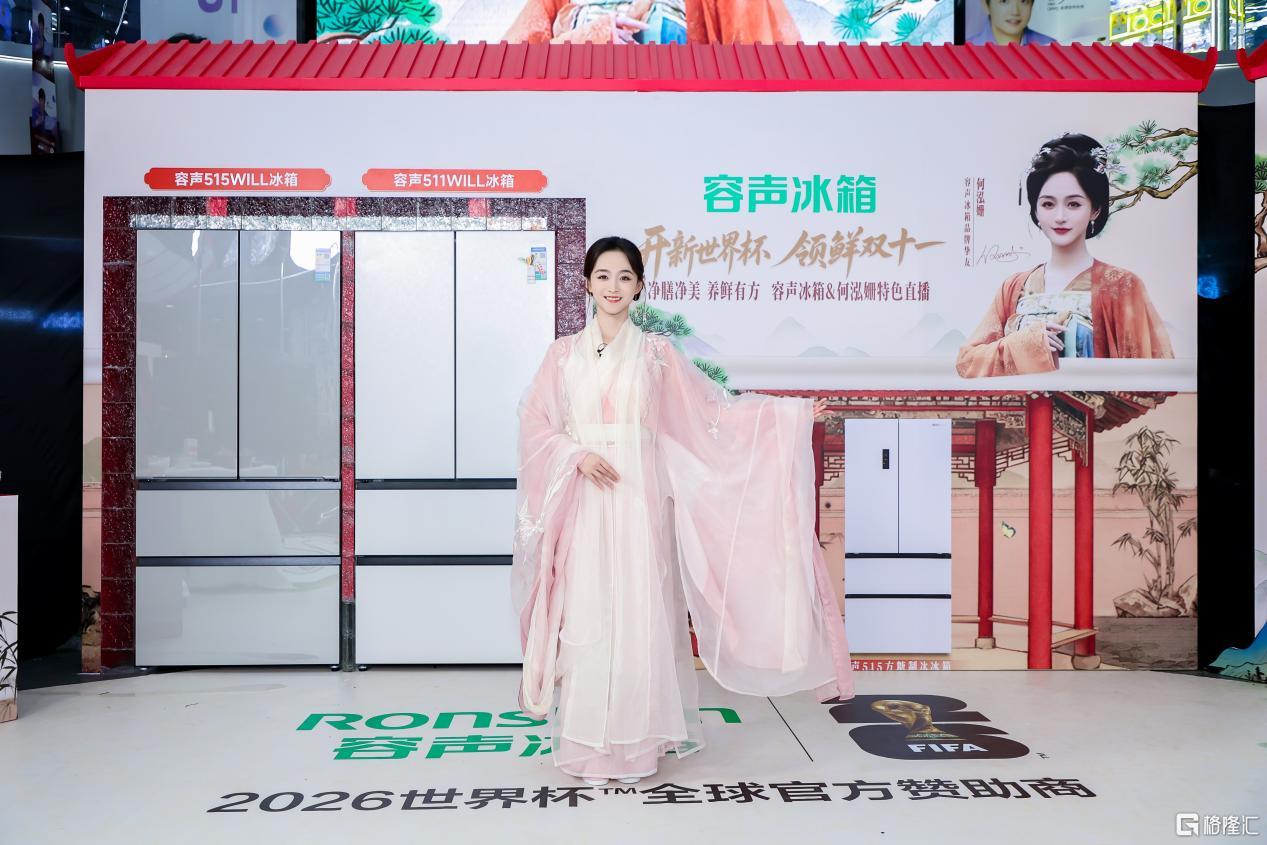
何泓姗“穿越”当“姗妃”,容声冰箱成宫廷“尚方宝鉴”
Ge Long Hui· 2025-11-04 21:18
Core Insights - The event organized by Rongsheng Refrigerator in Changsha JD MALL featured a unique "flash + live" brand experience, showcasing the company's innovative technologies and engaging storytelling [2][4] - The live broadcast highlighted the IDP Dual Purification 2.0 technology and WILL Fresh-keeping technology, emphasizing the brand's commitment to providing a healthy lifestyle through effective food preservation [2][4] Group 1: Event Highlights - The event featured actress He Hongshan as a "super user," who performed in an immersive live drama that creatively integrated ancient and modern themes [2] - The storyline revolved around food preservation challenges, showcasing the capabilities of the Rongsheng Fangtang refrigerator, particularly its 99.9% active odor removal rate and zero cross-contamination effect [2][4] - The live broadcast served as a platform for deep communication of the brand's values, effectively addressing consumer demands for food preservation and quality living [4] Group 2: Product Performance - The Rongsheng 511 WILL refrigerator demonstrated its ability to rejuvenate wilted fruits and vegetables, reinforcing the product's promise of extreme freshness and food safety [4] - The event included a segment where the company president recommended various models from the Fangtang series, highlighting their technical advantages in odor and virus purification [4] - Data from AVC indicated that the Rongsheng Fangtang refrigerator flagship model ranked first in offline new product sales from January to June 2025, while the 515 model topped online sales for French-style four-door refrigerators, showcasing a "dual-line leading" position in the market [4][5] Group 3: Market Impact - As the Double Eleven pre-sale period approaches, the competitive edge of the Fangtang series refrigerators is expected to further intensify, with two models ranking among the top three in market sales during the 41st week of 2025 [5] - The "flash + live" event not only energized sales for Double Eleven but also provided a model for the industry on how to synergize technological innovation with user insights [5]
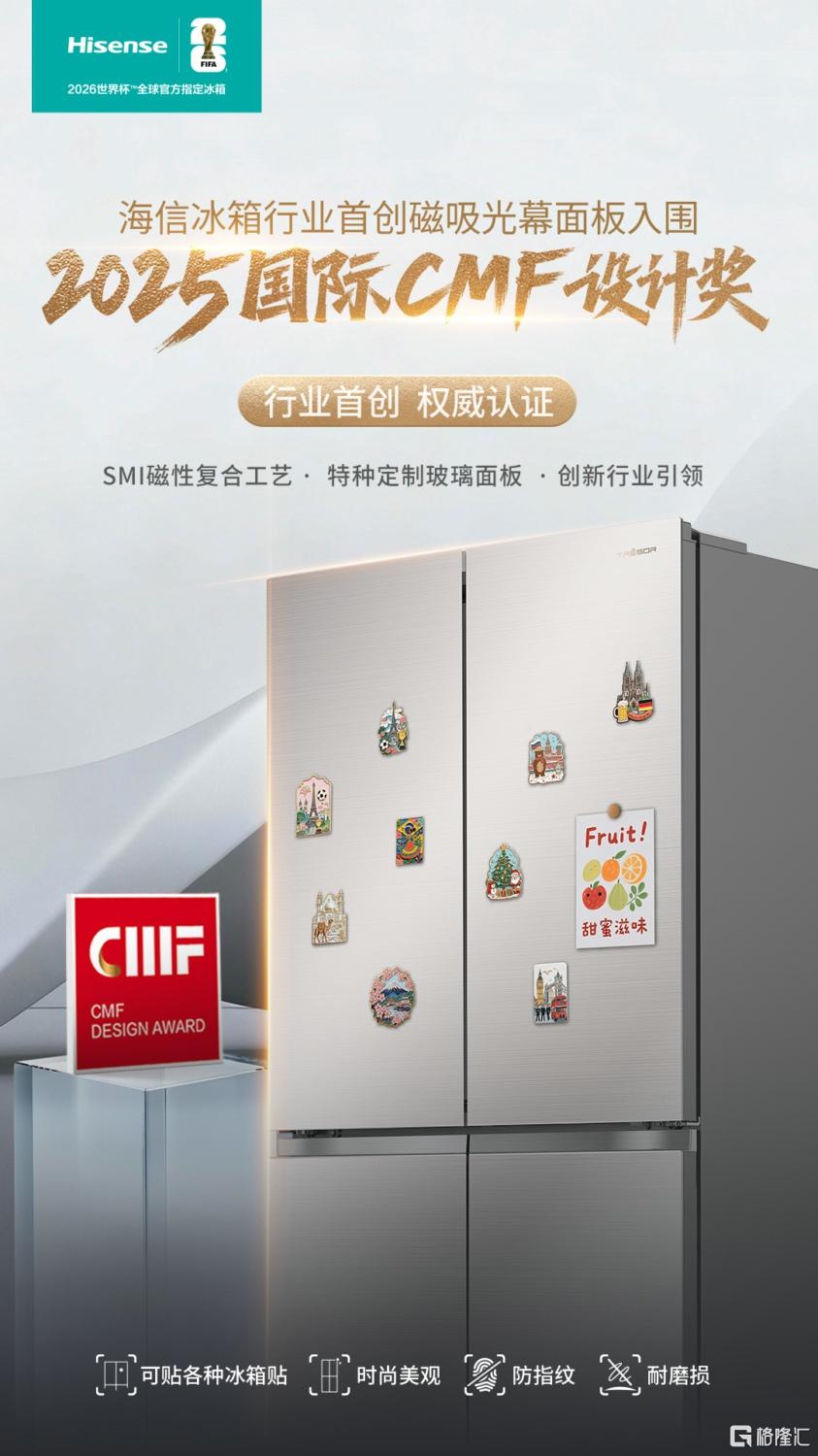
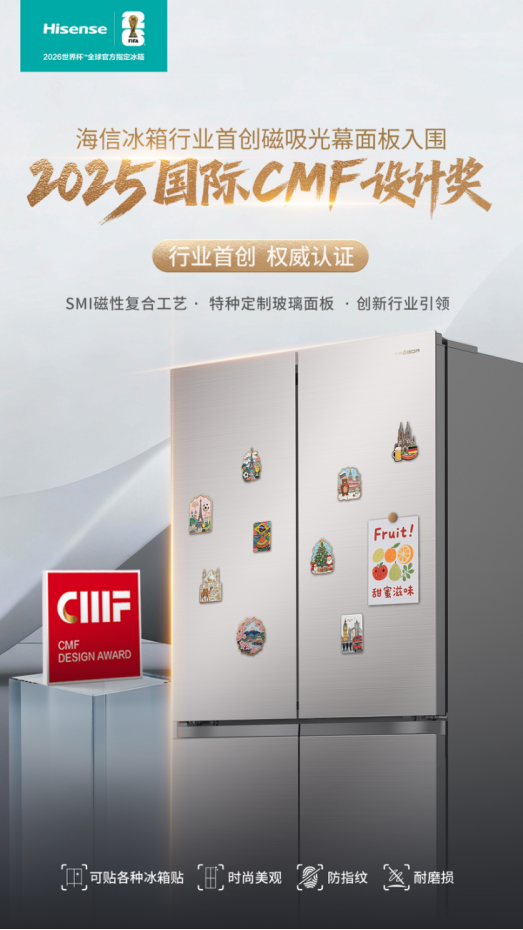
首创磁吸光幕门板,海信冰箱破解高端家电美学与功能兼容难题
Ge Long Hui· 2025-11-04 21:18
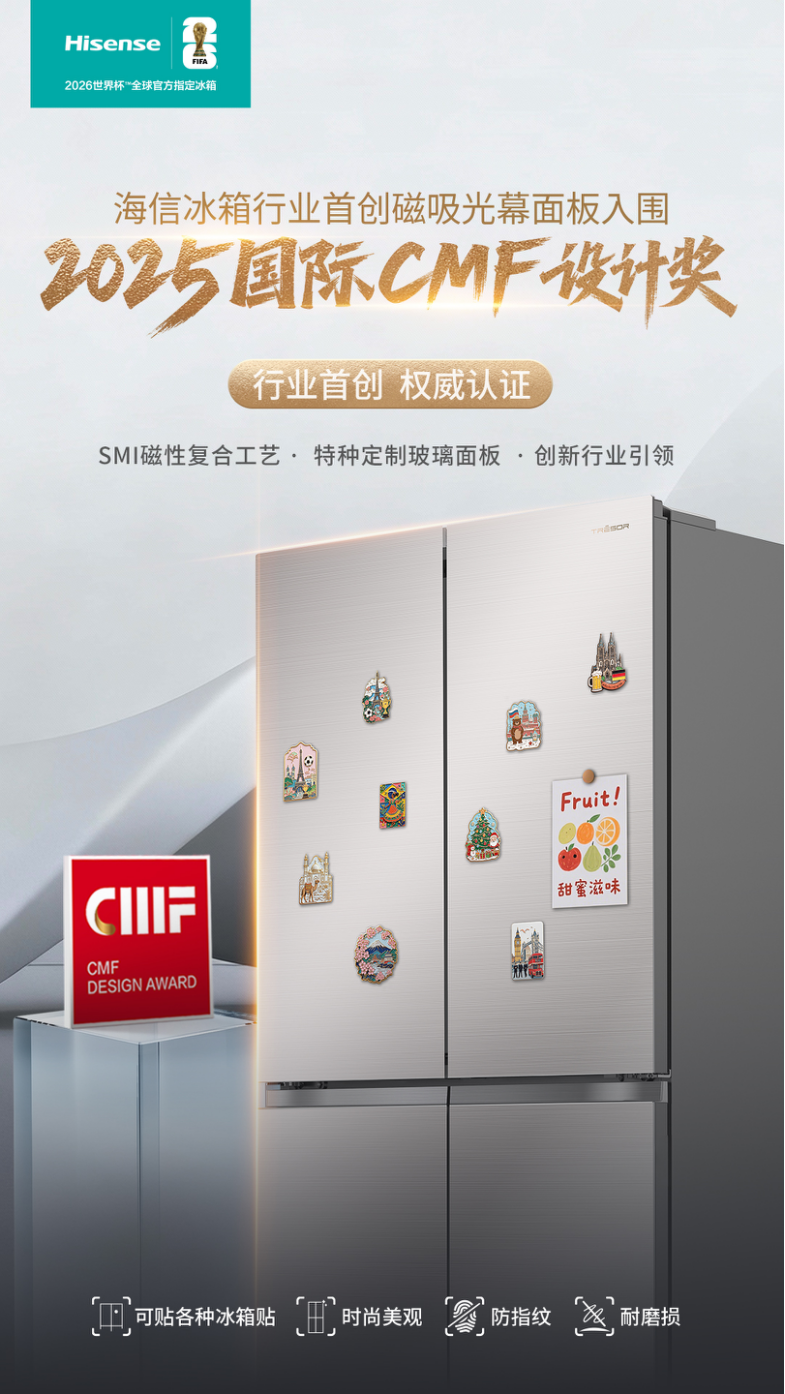
Core Insights - The home appliance industry has witnessed a significant innovation with Hisense refrigerator launching the world's first magnetic light curtain door panel, which has been recognized in the 2025 International CMF Design Awards [1][5] - This breakthrough technology addresses the long-standing user pain point of glass door refrigerators being aesthetically pleasing yet unable to hold magnets, redefining the design standards for high-end refrigerators [1][5] Group 1: Technological Innovation - Hisense's magnetic light curtain door panel integrates a unique magnetic medium composite technology within the glass, allowing for strong magnetic adhesion without compromising aesthetics, flatness, or insulation performance [5][6] - The door panel enables users to attach family photos, travel mementos, and reminders, transforming the refrigerator into a center for family memories and emotional connections [5][6] Group 2: Aesthetic and Functional Attributes - The magnetic light curtain door panel features the industry's first SMI magnetic composite technology, offering various texture options that enhance visual appeal and home compatibility while providing practical attributes like antibacterial properties, high hardness, fingerprint resistance, and ease of cleaning [6] - This innovation represents Hisense's commitment to user-centered design and continuous technological advancement, balancing external user experience with internal preservation technology [6] Group 3: Market Performance - Hisense's third-quarter report indicates strong performance in refrigerator sales, ranking first in sales across 11 global markets, showcasing the company's product strength, brand power, and global operational capabilities [7] - The successful integration of user-centric innovations, from the magnetic light curtain to vacuum preservation technology, has garnered positive feedback from global consumers, affirming Hisense's competitive edge in the high-end market [7]
让冰箱贴回归!海信磁吸光幕门板守护千家万户的“生活仪式感”
Zhong Guo Zhi Liang Xin Wen Wang· 2025-11-03 07:55
Core Insights - The introduction of Hisense's magnetic light curtain door panel marks a significant innovation in the home appliance industry, addressing the long-standing user pain point of aesthetic yet non-adhesive glass door panels [1][3] - This breakthrough technology redefines the design standards for high-end refrigerators by integrating aesthetics, functionality, and emotional connection [1][3] Product Innovation - Hisense's magnetic light curtain door panel was developed after six years of research, utilizing a unique magnetic composite technology that allows for strong magnetic adhesion without compromising the panel's aesthetics, flatness, or insulation performance [3][4] - The door panel supports various magnetic attachments, enabling users to display family photos, travel souvenirs, and reminders, thus transforming the refrigerator into a center for family memories and rituals [3][4] Aesthetic and Functional Attributes - The magnetic light curtain door panel features SMI magnetic composite technology, offering a visually appealing and tactilely warm experience with multiple texture options [3][4] - It possesses practical attributes such as antibacterial properties, high hardness, fingerprint resistance, and ease of cleaning, achieving a perfect balance between visual aesthetics and tactile smoothness [3][4] Market Recognition and Performance - Hisense's commitment to user-centered design and continuous technological innovation is exemplified by the magnetic light curtain door panel and its advancements in core preservation technologies [4] - The company's third-quarter report indicates strong performance in refrigerator sales, reflecting enhanced product strength, brand power, and global operational capabilities [4]
海信冰箱攻克磁性介质复合技术 磁吸光幕门板树立功能性美学新标杆
Zhong Guo Jin Rong Xin Xi Wang· 2025-11-02 01:07
Group 1 - The core innovation in the home appliance industry is the launch of Hisense's magnetic light curtain door panel, which addresses the user pain point of traditional glass door refrigerators being aesthetically pleasing but lacking magnetic attachment capabilities [4][5] - Hisense's magnetic light curtain door panel technology utilizes a unique magnetic composite technology within the inner layer of special glass, allowing for strong magnetic adhesion without compromising the panel's aesthetics, flatness, or insulation performance [4] - The new door panel design enhances the refrigerator's role as an emotional center in the home, allowing users to attach personal items like photos and notes, thus integrating functionality with emotional significance [4] Group 2 - Hisense's exploration of aesthetics continues with the introduction of the magnetic light curtain door panel, which features the industry's first SMI magnetic composite technology, offering various texture options and practical attributes such as antibacterial properties, high hardness, fingerprint resistance, and ease of cleaning [5] - According to Hisense's third-quarter report, the refrigerator segment has shown strong performance, ranking first in sales across 11 countries globally, indicating a significant enhancement in product strength, brand power, and global operational capabilities [5] - Hisense's user-centered innovation approach, from the magnetic light curtain to vacuum technology for preserving food freshness, is receiving positive feedback from global consumers [5]
海信“双11”圆梦爆改局,超薄真空冰箱破解生活难题
Huan Qiu Wang· 2025-10-30 02:04
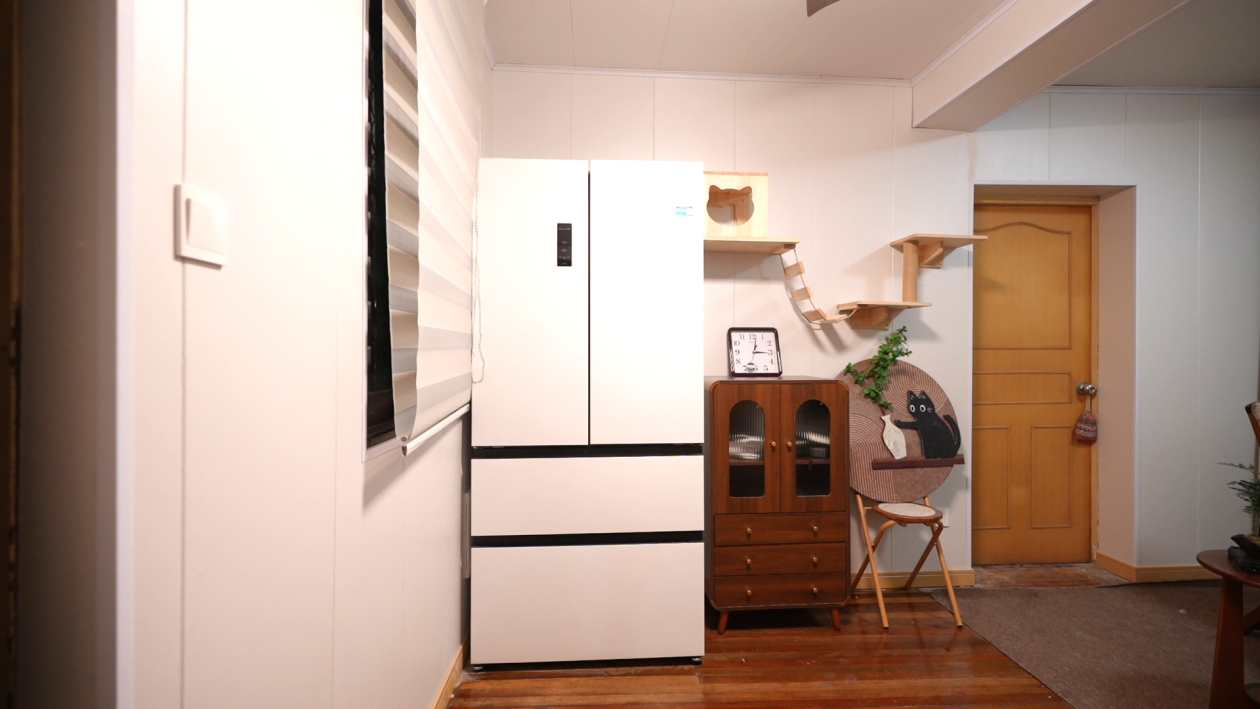
Core Insights - The article highlights the innovative solutions provided by Hisense to address the mismatched needs of modern households through customized refrigerator designs [1][2][4]. Group 1: Shanghai Case Study - In Shanghai, Hisense introduced the ultra-thin Hisense Big Mint 509 refrigerator, featuring a 60 cm slim body and a capacity of 509 liters, catering to the needs of a pet owner [2]. - The refrigerator employs a dual-system independent circulation design for refrigeration and freezing, preventing odor mixing and ensuring optimal taste for both human and pet food [2]. - The design includes a French-style large drawer with a steel sliding track and balance stabilizer, making it user-friendly for elderly individuals [2]. - The refrigerator also features DBD ion active sterilization and deodorization technology, achieving a sterilization rate of 99.9999% [2]. Group 2: Jinan Case Study - In Jinan, Hisense provided the Hisense Vacuum 510 refrigerator, which emphasizes "preserving original flavor, preventing odor mixing, and enhancing taste" [4]. - This refrigerator utilizes original vacuum ice temperature technology to create an independent, sealed vacuum environment, effectively isolating odor molecules [4]. - The vacuum magic storage box allows for categorized independent storage, enabling the simultaneous storage of strong-smelling foods without affecting the taste of other items [4]. Group 3: Overall Impact - The initiative showcases how technology and warmth can enhance the quality of life in different urban settings, reflecting Hisense's commitment to innovation and customer satisfaction [6].
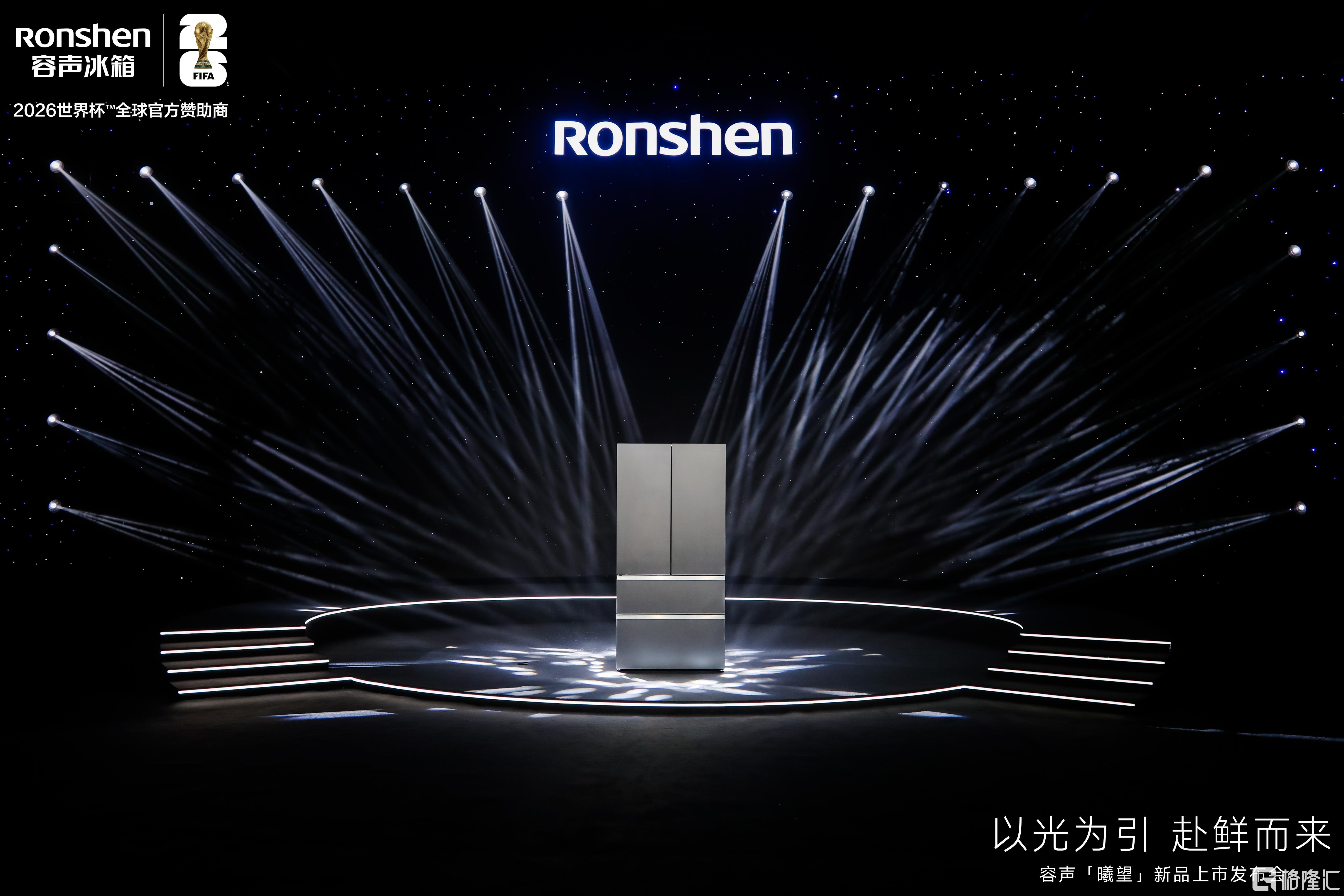
不止养鲜,更养心:容声“曦望”重新定义高端家电价值
Ge Long Hui· 2025-10-27 13:12
Core Insights - Ronshen has launched its high-end refrigerator model "Xiwang," focusing on emotional needs and aesthetic experiences for modern urban consumers [6][8] - The design philosophy of "Xiwang" is inspired by the "Yaoguang" star from the Big Dipper, aiming to create a home appliance that soothes emotions and enhances daily life [6][8] - The product features a luxurious panel design and innovative lighting that simulates the flow of stars, emphasizing both aesthetic and ergonomic considerations [6][8] Company Strategy - Ronshen is transitioning from being a "functional manufacturer" to a "high-end lifestyle co-builder," aiming to create a more vibrant and emotionally resonant living environment for users [8][11] - The marketing strategy emphasizes a lifestyle that nurtures emotions, fresh ingredients, and individual vitality, reflecting a shift in consumer expectations [8][11] Industry Trends - The launch of "Xiwang" signifies a broader trend in the home appliance industry, moving from technical competition to building emotional value [11] - In an era of material abundance, home appliances are increasingly seen as tools for emotional stability and spiritual comfort [11]