智能设备

Search documents
罗永浩713万元股权被冻结
第一财经· 2026-01-22 05:09
工商信息显示,锤子科技(成都)股份有限公司成立于2012年5月,法定代表人为管志良,注册资本 约3149.8万人民币,经营范围含基础软件服务、应用软件服务、组织文化艺术交流活动、维修通讯设 备、生产手机等。 不过,对于股权遭到冻结一事,截至发稿,对方尚未回应。 1月22日,记者从国家企业信用信息公示系统获悉,1月20日,罗永浩新增一则股权冻结信息,股权所 在企业为锤子科技(成都)股份有限公司,冻结股权数额超过713万元人民币,冻结期限自2026年1月 20日至2029年1月19日,执行法院为北京市丰台区人民法院。 另据公开信息显示,锤子科技 (成都) 股份有限公司是一家2012年5月成立于成都的智能设备及生态链 产品企业,罗永浩任董事长。公司主要从事中高端智能手机、智能工作站及生态链产品的设计、研发与 销售。 此前罗永浩曾经因为西贝相关事件广受外界关注。 对于"西贝将一次性关闭全国102家门店,占门店总数的30%"的传闻,1月15日,贾国龙表示:"这次 关闭的102家门店在一季度陆续完成,所有不得不离职的员工,工资一分钱不会差。所有顾客储值卡随 时可用在其他门店,想退卡的立刻就退。有些接了年夜饭的门店,虽然立 ...


趋势研判!2026年中国智能设备行业发展历程、政策、发展现状、重点企业及未来趋势:全场景智能化生态加速形成,引领智能设备规模达万亿级别[图]
Chan Ye Xin Xi Wang· 2026-01-22 01:07
Core Insights - The smart device industry is experiencing significant growth driven by increasing consumer demand and advancements in technology, with the market size in China projected to grow from 5,133 billion yuan in 2018 to 17,157 billion yuan by 2024, representing a compound annual growth rate (CAGR) of 22.28% [1][14][15] - The industry is categorized into three main segments: smart home, smart wearables, and smart mobility, each with distinct applications and market dynamics [3][16][17] Industry Overview - Smart devices integrate hardware, software, and internet technologies, enabling them to perform tasks such as data collection and self-optimization [1][14] - The market is expected to reach 20,979 billion yuan by 2025, indicating continued growth and innovation in the sector [1][14] Industry Development Stages - The smart device industry in China has evolved through three phases: the initial stage (1990s to early 2000s), the development stage (2000 to 2015), and the explosive growth stage (2015 to present), with significant technological advancements and market expansion occurring in the latter two phases [6][8] Industry Policies - The Chinese government has implemented various policies to support the smart device industry, including initiatives to promote digital transformation and the development of smart products across multiple sectors [8][9] Industry Value Chain - The smart device industry value chain consists of upstream raw materials, hardware, and software systems; midstream manufacturing; and downstream applications in sectors such as healthcare, education, and transportation [10][11] Market Segmentation - The smart home market is characterized by diverse competition among traditional appliance manufacturers and tech companies, with a focus on integrated solutions and consumer experience [15] - The smart wearable segment includes products like smart glasses and smartwatches, with significant growth potential driven by consumer acceptance and technological advancements [16][17] - The smart mobility sector, particularly smart cars, is rapidly expanding, with the market size projected to grow from 777 billion yuan in 2020 to 2,152 billion yuan by 2024, reflecting a CAGR of 29% [17][18] Competitive Landscape - The smart device industry is marked by an ecosystem of competition, with leading companies leveraging core technologies and brand advantages to create comprehensive solutions across various applications [18][19] Future Trends - The industry is expected to see innovations in human-computer interaction, moving towards more natural and multi-modal interfaces [21] - There will be a shift from single-product intelligence to integrated scene intelligence, enhancing cross-device collaboration and user experience [22] - Smart devices will increasingly focus on personalized health management, evolving into digital health assistants capable of providing tailored recommendations [24]





东土科技(300353.SZ):AI应用方面,公司已在半导体设备、智能塔吊等核心场景中应用
Ge Long Hui A P P· 2026-01-21 07:19
Core Viewpoint - The company is leveraging AI applications in key sectors such as semiconductor equipment and smart tower cranes to enhance operational efficiency and quality control [1] Group 1: AI Applications in Semiconductor Equipment - The company utilizes intelligent controllers to achieve bus-level high-speed data acquisition and real-time AI analysis in semiconductor equipment [1] - This technology enables intelligent automatic temperature control during production processes and precise detection of wafer quality [1] - The solutions address core issues in semiconductor manufacturing, such as insufficient process stability and challenges in quality control [1] Group 2: AI Applications in Smart Tower Cranes - In the smart tower crane sector, the company integrates AI visual algorithms with autonomous control technology [1] - This integration allows for real-time monitoring of hook sway and dynamic suppression, resulting in an efficient anti-sway function [1]

焕新蝶变——上海普陀真如城市副中心发展掠影
Zhong Guo Jing Ji Wang· 2026-01-20 23:10
Core Viewpoint - The article highlights the rapid development and transformation of the Zhenru urban sub-center in Shanghai, showcasing its potential as a new highland for industrial aggregation and digital economy innovation [8]. Group 1: Urban Development - The Zhenru urban sub-center has evolved from the largest "urban village" in Shanghai to a vibrant area with significant industrial concentration [8]. - Key developments include the Shanghai Zhenru Huanyu City MAX and the China Overseas Center, contributing to a total area of nearly one million square meters of urban landmarks [8]. - The area aims to enhance the capabilities of Shanghai West Station and promote urban renewal projects such as "Zhenru Cui Valley" and "Zhenru Heart" [8]. Group 2: Economic and Industrial Focus - The Zhenru urban sub-center is positioned to become a hub for high-end business, a digital transformation demonstration zone, and a cultural commercial landmark [8]. - The development strategy focuses on integrating technology and industrial innovation, aligning with the Yangtze River Delta integration strategy [8]. - The area will leverage platforms like the "Innovation Lane" and the Shanghai International Digital Advertising Park to foster deep integration of technological and industrial innovation [8]. Group 3: Community and Ecological Considerations - The development approach emphasizes a people-centered philosophy, driven by industry and grounded in ecological sustainability [8]. - The Zhenru urban sub-center is envisioned as a model for urban development that integrates production and city life [8].

靠出口智能对讲设备年入3亿,睿云联拿什么突破成长“瓶颈”?
Zhi Tong Cai Jing· 2026-01-19 12:50
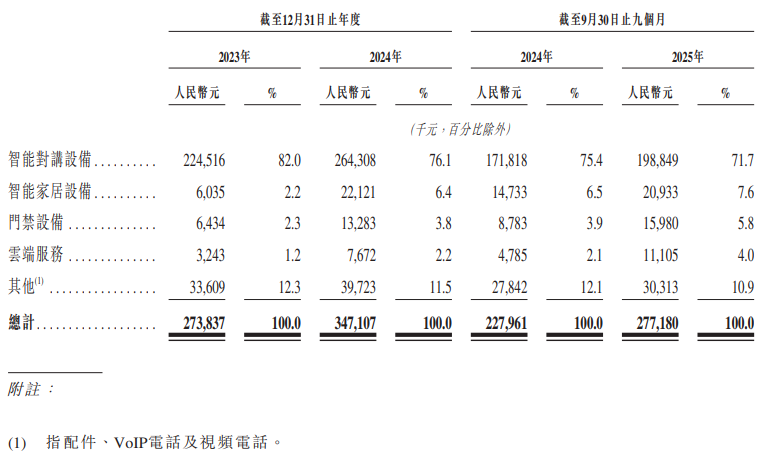
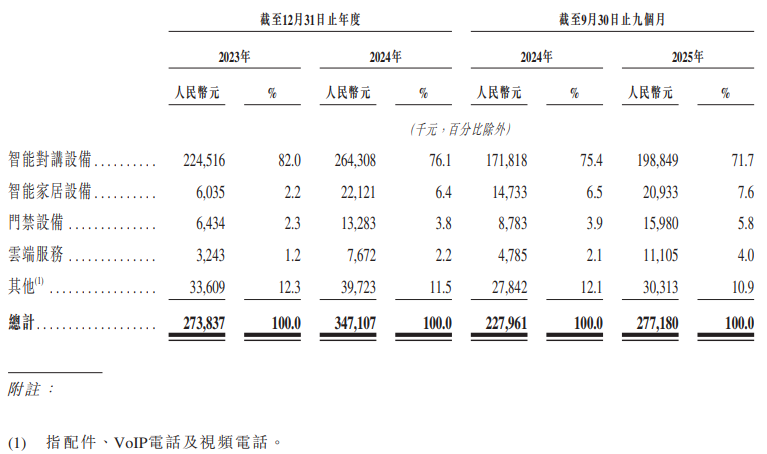
Core Viewpoint - The smart intercom system market is experiencing explosive growth, driven by the rapid development of new information technologies and the increasing demand for smart community management and emergency response solutions. The global intercom market is projected to grow from $1.68 billion in 2020 to $2.71 billion by 2024, with a compound annual growth rate (CAGR) of 12.7% [1]. Industry Growth - The global intercom market is expected to reach $3.93 billion by 2029, indicating a strong upward trend in demand for smart intercom solutions [1]. - The market is characterized by a significant unmet demand, as many existing buildings still rely on outdated intercom systems that require upgrades or replacements [3]. Company Performance - Xiamen Ruiyun Lianxin Technology Co., Ltd. (Ruiyun Lian) has submitted a listing application to the Hong Kong Stock Exchange, reflecting its growing market influence. By September 2025, the company expects to have sold nearly 2 million smart community solutions globally [1]. - Ruiyun Lian's revenue for 2024 is projected to increase by 26.8% to RMB 347 million, with a further 21.6% growth expected in the first nine months of 2025, reaching RMB 277 million [2]. - The company's net profit for the first nine months of 2025 is expected to be RMB 44.57 million, a nearly 60% year-on-year increase [2]. Revenue Structure - The majority of Ruiyun Lian's revenue comes from smart intercom devices, accounting for 82% in 2023, but this percentage is gradually declining [3]. - Revenue contributions from smart home devices, access control devices, and cloud services are increasing, with smart home devices rising from 2.2% in 2023 to 7.6% in the first nine months of 2025 [4]. Profitability - Ruiyun Lian's overall gross margin has shown slight fluctuations, with rates of 49.9% in 2023, 52.1% in 2024, and 50.7% in the first nine months of 2025 [5]. - The gross margin for smart intercom devices has remained stable around 53%, while the margins for smart home devices and access control devices have improved significantly [6]. Market Position - Ruiyun Lian leads in shipment volumes in North America and Europe for smart intercom products, but ranks second in revenue in North America and third in Europe, suggesting a competitive pricing strategy [8]. - The company plans to expand its product range and focus on promising sectors such as elderly care, aiming to develop innovative solutions that can disrupt traditional market models [10]. Future Outlook - The intercom industry is at a pivotal point, with trends indicating a shift towards integration with smart home systems and the exploration of new market opportunities in emerging regions like the Middle East and Southeast Asia [8][10]. - Ruiyun Lian's upcoming IPO in Hong Kong is expected to enhance its growth prospects, but it will also subject the company to greater scrutiny regarding its growth sustainability and market potential [11].
新股前瞻|靠出口智能对讲设备年入3亿,睿云联拿什么突破成长“瓶颈”?
智通财经网· 2026-01-19 12:39
Core Viewpoint - The smart intercom system market is experiencing explosive growth, driven by advancements in 5G, IoT, and big data, with a projected increase from $1.68 billion in 2020 to $2.71 billion by 2024, reflecting a compound annual growth rate (CAGR) of 12.7% [1]. Industry Growth - The global intercom market is expected to reach $3.93 billion by 2029, indicating a strong demand for smart community solutions that align with global elder care policies [1]. - The market is characterized by a significant demand for smart intercom systems, particularly in new residential and existing community upgrades [1][3]. Company Performance - Xiamen Ruiyun Lianxin Technology Co., Ltd. (Ruiyun Lian) has submitted a listing application to the Hong Kong Stock Exchange, indicating its growth trajectory [1]. - Ruiyun Lian's revenue is projected to increase by 26.8% to RMB 347 million in 2024, with a further 21.6% growth to RMB 277 million in the first nine months of 2025 [2]. - The company's net profit for the first nine months of 2025 is reported at RMB 44.57 million, a nearly 60% year-on-year increase [2]. Revenue Structure - The majority of Ruiyun Lian's revenue comes from smart intercom devices, accounting for 82% in 2023, though this percentage is gradually declining [3][4]. - Revenue contributions from smart home devices, access control devices, and cloud services are increasing, with smart home devices rising from 2.2% in 2023 to 7.6% in the first nine months of 2025 [4]. Profitability - Ruiyun Lian's overall gross margin has shown slight fluctuations, with a gross margin of 49.9% in 2023, increasing to 52.1% in 2024, and slightly decreasing to 50.7% in the first nine months of 2025 [5][6]. - The gross margin for smart intercom devices remains stable around 53%, while the margins for smart home and access control devices have shown improvement [6][7]. Market Position - Ruiyun Lian leads in intercom product shipments in North America and Europe, but ranks second in revenue in North America and third in Europe, suggesting a competitive pricing strategy [8][10]. - The company is exploring new product lines, including fall detection radar and companion robots, to enhance its market offerings [10]. Future Outlook - The intercom industry is at a pivotal point, with trends indicating a shift towards integrated smart home solutions and expanded connectivity within smart communities [8]. - Ruiyun Lian plans to focus on emerging markets with low penetration rates, particularly in the Middle East and Southeast Asia, to enhance brand recognition and market entry [10][11].
中国智能手表在全球卖爆了
Xin Lang Cai Jing· 2026-01-19 12:16
Core Insights - China's foreign trade is projected to exceed 45 trillion yuan by 2025, marking a historical high with a focus on optimizing export structure and innovation [1] Trade Performance - High-tech product exports are expected to grow by 13.2% in 2025 [1] - The export value of industrial robots will surpass imports for the first time, achieving net exports [1] - Smart watches and smart toys are expected to be popular in over 170 countries and regions, with export growth rates for handling and welding robots exceeding 60% [1] Import Dynamics - China's import scale is set to reach a historical high of 18.48 trillion yuan in 2025, with growth in imports from over 130 countries and regions [1] Market Positioning - More than one-third of over 200 countries and regions view China as a major export destination [1] Business Composition - The share of private enterprises in China's total foreign trade is expected to increase by 1.8 percentage points to 57.3% [1] - Private enterprises are making significant contributions across various sectors, including marine equipment and low-altitude aircraft, with over 70% of the foreign trade value from specialized "little giant" enterprises coming from private firms [1] Foreign Investment - Foreign enterprises are maintaining confidence in the Chinese market, with import and export values reaching 13.27 trillion yuan, a growth of 3.7%, marking seven consecutive quarters of growth [1] - Notable performance is observed in the computer, communication, and pharmaceutical manufacturing sectors [1]
穿上机械外骨骼,能变“超人”吗(唠“科”·科幻里的科学)
Ren Min Wang· 2026-01-16 22:34
Core Insights - The article discusses the evolution and application of exoskeleton technology in military, industrial, and medical rehabilitation fields, highlighting its potential to enhance human capabilities and improve quality of life [1][3]. Group 1: Exoskeleton Applications - Exoskeletons are being utilized as "super add-ons" for workers, "weight-bearing tools" for soldiers, and rehabilitation aids for patients with mobility impairments [1]. - The technology aims to provide precise assistance by predicting user movements and adjusting support accordingly [1]. Group 2: Technical Challenges - Current exoskeletons often have rigid frameworks that are heavy and not adaptable to individual body parameters, leading to discomfort during prolonged use [2]. - There is a need for seamless integration with human movement, particularly during complex tasks like running or jumping, which current models struggle to achieve [2]. - Battery life and energy density remain significant challenges that hinder the widespread adoption of exoskeletons [2]. Group 3: Future Developments - Advances in material science are leading to lighter and more comfortable exoskeletons, while AI models are enabling personalized assistance based on user needs [3]. - As manufacturing costs decrease, exoskeletons are expected to transition from high-end medical and military products to everyday aids for the elderly and other groups [3]. - The technology is anticipated to expand into complex environments such as space exploration and disaster rescue, enhancing human capabilities further [3].
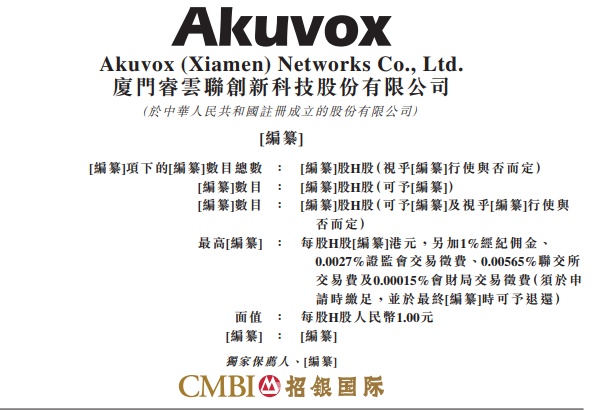
新股消息 | 睿云联递表港交所
智通财经网· 2026-01-16 10:46
Group 1 - The core point of the article is that Xiamen Akuvox Networks Co., Ltd. has submitted a listing application to the Hong Kong Stock Exchange, with CMBI as the sole sponsor [1] - Akuvox is recognized as a global leader in smart intercom solutions, providing AI-driven smart intercoms, access control devices, smart home equipment, and cloud services [1] - The company targets the global mid-to-high-end market and focuses on four main scenarios: residential, elderly care, commercial office, and community unified management [1]
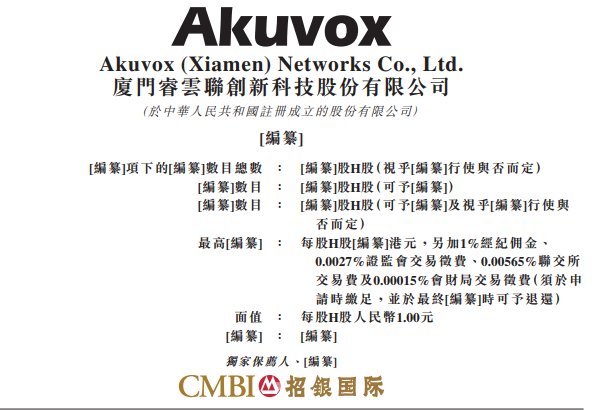
睿云联递表港交所
Zhi Tong Cai Jing· 2026-01-16 10:45
Group 1 - The core point of the article is that Xiamen Ruijun Lian Innovation Technology Co., Ltd. has submitted a listing application to the Hong Kong Stock Exchange, with CMBI as the sole sponsor [1] - Ruijun Lian is positioned as a global leader in smart intercom solutions, providing AI-driven products that cover multiple scenarios including intercoms, access control devices, smart home equipment, and cloud services [1] - The company targets the global mid-to-high-end market and focuses on four main scenarios: residential, elderly care, commercial office, and community unified management [1]