智能设备制造

Search documents
杭州永创智能设备股份有限公司 关于归还临时补充流动资金的募集资金的公告
Zhong Guo Zheng Quan Bao - Zhong Zheng Wang· 2026-01-08 23:08
Group 1 - The company has repaid a total of RMB 50 million of temporarily used idle raised funds as of January 8, 2026 [2][3] - The company approved the use of RMB 50 million of idle raised funds for temporary working capital on February 28, 2025, with a usage period of 12 months [3] - The repaid funds were returned to the designated account ahead of schedule, and the company notified its sponsor institution and representative of the repayment [3]

北方长龙拟购顺义科技51%股份,标的曾曲线上市未果
Bei Jing Shang Bao· 2026-01-08 12:52
Group 1 - The core point of the article is that Beifang Changlong plans to acquire 51% of Shenyang Shunyi Technology Co., Ltd. through a cash payment, marking a significant asset restructuring for the company [1] - The transaction does not involve issuing shares, does not constitute a related party transaction, and will not lead to changes in the controlling shareholder or actual controller of Beifang Changlong [1] - Shunyi Technology focuses on five major product areas: health management systems, intelligent detection equipment, simulation equipment, maintenance support equipment, and intelligent control systems [1] Group 2 - Beifang Changlong expects that the completion of this transaction will enhance its business scale and profitability, improve its operational risk resistance, and elevate overall asset quality and core competitiveness [1] - In 2025, Cixing Co., Ltd. had previously planned to acquire 75% of Shunyi Technology, but the deal was ultimately terminated in August of that year [1]
中科星图等成立科技公司,含雷达及配套设备制造业务
Zheng Quan Shi Bao Wang· 2026-01-08 05:37
Core Viewpoint - A new company, Shaanxi Hanxiang Xingyu Technology Co., Ltd., has been established, focusing on the manufacturing of intelligent unmanned aerial vehicles and related technologies [1] Company Overview - The legal representative of the company is Shang Hai [1] - The business scope includes the manufacturing of intelligent unmanned aerial vehicles, radar and supporting equipment, research and development of intelligent robots, and development of artificial intelligence public data platforms and basic software [1] Shareholding Structure - The company is jointly held by Hanzhong Hanxiang Low-altitude Economic Operation Management Co., Ltd. and Zhongke Xingtou's subsidiary, Zhongke Xingtou Low-altitude Cloud Technology (Qingdao) Co., Ltd. [1]

政策加速智能终端升级! 联想抢占 “AI + 制造”万亿市场先机
Ge Long Hui· 2026-01-08 03:55
针对工业巡检等场景新型终端产业化要求,联想晨星智能运维方案已形成成熟能力。其多形态智能巡检 设备在变电站、工业厂区等场景广泛应用,Edge AI技术为场景落地提供硬核支撑。政策推动相关终端 商业化,将为联想智能巡检方案规模化推广打开空间,深化工业智能化渗透。 在具身智能与人形机器人领域,联想同样走在前列,晨星足式机器人已实现商业化应用,"端-边-云"混 合式AI架构为人形机器人落地奠定基础。政策对人形机器人中试基地、标杆产线的支持,将助力联想 完善研发产业化链条,依托自身智能制造工厂资源打造行业示范,实现AI与制造的良性循环。 分析认为,此次政策为制造业智能化转型注入动力,联想凭借多领域前瞻布局与全栈能力,与政策导向 全方位契合。 1月7日,工业和信息化部等八部门印发《"人工智能+制造"专项行动实施意见》。意见指出,加速智能 终端升级。支持端侧模型、开发应用工具链等技术突破,培育智能手机、电脑、平板、智能家居等人工 智能终端。聚焦工业巡检、远程医疗等重点场景,加快增强现实/虚拟显示(AR/VR)可穿戴设备、脑 机接口等新型终端的产业化、商业化进程。推动具身智能产品创新,建设人形机器人中试基地和训练 场,打造人 ...

八部门:聚焦工业巡检、远程医疗等重点场景 加快增强现实/虚拟显示(AR/VR)可穿戴设备、脑机接口等新型终端的产业化、商业化进程
Zheng Quan Shi Bao Wang· 2026-01-07 10:07
人民财讯1月7日电,工业和信息化部等八部门印发《"人工智能+制造"专项行动实施意见》,其中提 出,加速智能终端升级。支持端侧模型、开发应用工具链等技术突破,培育智能手机、电脑、平板、智 能家居等人工智能终端。聚焦工业巡检、远程医疗等重点场景,加快增强现实/虚拟显示(AR/VR)可穿戴 设备、脑机接口等新型终端的产业化、商业化进程。推动具身智能产品创新,建设人形机器人中试基地 和训练场,打造人形机器人标杆产线,在典型制造场景率先应用。 ...
外贸向“新”向“绿”加速跑 以“造高端”巩固“卖全球”优势为经济增长注入新动能
Yang Shi Wang· 2026-01-07 02:31
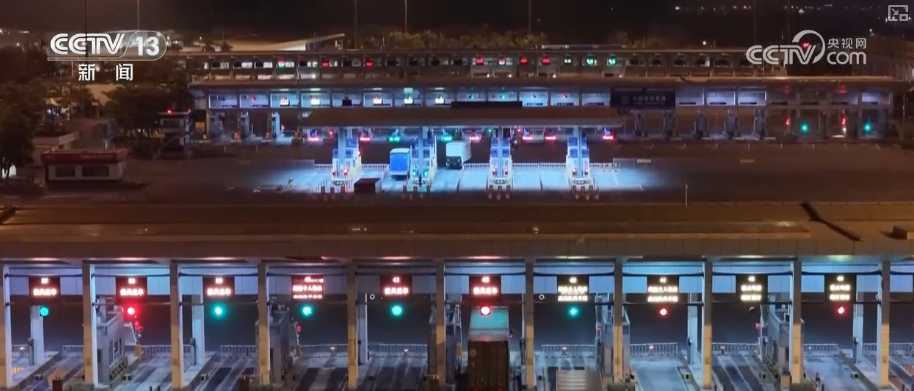
Core Insights - Shenzhen's foreign trade import and export volume is projected to rank first among Chinese cities by 2025, with a focus on solidifying advantages and expanding new growth points in foreign trade [2] Group 1: Export Trends - The Shenzhen Bay Customs reported that high-value, intelligent products like cleaning robots are becoming the main export items, with high-tech products accounting for nearly 50% of the export value [4] - A cleaning robot manufacturing company is ramping up overseas order deliveries and simultaneously developing a new product, an intelligent robotic dog [6][8] - In a recent business matching event, over ten companies established partnerships to facilitate overseas sales, with one product expected to sell over 200,000 units by 2025 [10] Group 2: Innovation and Growth - Shenzhen is home to 1,333 national-level specialized and innovative "little giant" enterprises, the highest number among Chinese cities, aiming to enhance the international market presence of high-tech products [12] - Many tech companies in Shenzhen do not have dedicated foreign trade departments, yet their products are still successfully exported, supported by an increasingly comprehensive overseas service system [13] Group 3: Service Ecosystem - The Xinghe Park in Longgang, Shenzhen, hosts over 100 overseas service companies, providing a "one-stop" service for businesses, covering customs, logistics, and intellectual property services [15] - A service provider reported a 30% business growth at the start of 2026, with over 100 new clients, indicating a robust demand for assistance in navigating overseas markets [17] Group 4: Green Transformation - Shenzhen's foreign trade is accelerating its green transformation, with initiatives in green manufacturing, logistics, and services being implemented [22][23] - A new production line for a green packaging company has commenced, utilizing recycled plastic bottles to create environmentally friendly packaging for cosmetics [23][24] - The logistics sector is also adopting clean energy solutions, with over 60% of clean energy vehicles in use at the Yantian Port, contributing to a significant reduction in carbon emissions [26] Group 5: Future Initiatives - Shenzhen's market supervision authority plans to enhance international trade services and promote carbon footprint certification for products, aiming to improve export competitiveness [28] - The construction of a green trade system in Shenzhen is accelerating, with a carbon footprint certification platform being integrated into the international trade single window [29]

“这就是最真切的获得感”——税惠红利为科创企业赋能
Zhong Guo Zheng Quan Bao· 2026-01-07 00:04
Group 1 - The core viewpoint of the articles highlights the significant impact of tax incentives on technology and manufacturing companies, enabling them to enhance innovation, expand production capacity, and improve cash flow [1][2][3] Group 2 - Beijing Jizhi Hezhong Technology Co., Ltd. has seen a surge in overseas orders for its innovative hydrogen-powered motorcycles, with some markets experiencing order volumes doubling, positioning the company favorably in the global market [1] - The company’s president, Fang Gang, emphasized the importance of tax benefits, which provided nearly 4 million yuan in R&D expense deductions and high-tech enterprise income tax reductions, facilitating the establishment of a smart factory in Dazhou, Sichuan [1] - Sichuan Xinwanxing Carbon Fiber Composite Materials Co., Ltd. is leveraging tax incentives to overcome financial pressures associated with continuous R&D, having received 4.1638 million yuan in tax reductions since 2025, which has been fully reinvested into research and development [1] - The tax incentives include a reduced income tax rate of 15% for high-tech enterprises, a 40% reduction in tax burden, and accelerated VAT refunds, significantly benefiting cash flow for companies [2] - National tax data indicates that from January to November 2025, tax reductions and refunds supporting technological innovation and manufacturing reached 23.725 billion yuan, with high-tech industry sales increasing by 14.7% and smart equipment manufacturing by 28.2% [2] - Companies are also receiving tailored services from tax authorities, such as customized R&D expense collection manuals, which enhance their ability to invest in innovation [2] - The expectation for continued optimization of VAT and tariff policies in 2026 is expressed, particularly for innovative products like hydrogen-powered motorcycles, to support market expansion and technological advancement [2][3]
营销驱动下的“逆袭”能否持续?
Mei Ri Shang Bao· 2026-01-06 22:25
Core Viewpoint - The company Future Wearable Technology Co., Ltd. is seeking to go public in Hong Kong after two unsuccessful attempts at an A-share IPO, leveraging its popular SKG massage devices and celebrity endorsements to capture market share in the smart wearable health device sector [1][2] Group 1: Company Overview - Future Wearable was established in 2007 and specializes in smart soothing wearable devices, health watches, and sports recovery equipment, with applications in home, office, and sports settings [1] - According to Frost & Sullivan, Future Wearable holds a 21.5% market share in China's smart soothing wearable device market as of 2024, making it the market leader by GMV [1] Group 2: Marketing and Sales Strategy - The company has effectively utilized celebrity endorsements, notably from stars like Wang Yibo and Yang Yang, to penetrate the young consumer market, transforming SKG into a "internet celebrity" product in the massage device sector [1] - Sales figures indicate that the company can achieve annual revenue of 1 billion yuan, with a net profit of 500 million yuan over four years [1] Group 3: Financial and Operational Challenges - The company's heavy reliance on marketing has raised concerns, as sales and marketing expenses increased from 18.2% to 22.6% of total revenue from 2022 to the first three quarters of 2025, while R&D expenses decreased from 9.1% to 6.6% during the same period [2] - Future Wearable has faced challenges in its IPO journey, including withdrawal from the Growth Enterprise Market, a brief listing on the New Third Board, and termination of guidance for the Beijing Stock Exchange [2] Group 4: Future Plans and Innovations - To reduce dependence on a single product category and marketing, Future Wearable is expanding its product line, including the launch of a blood pressure and ECG monitoring watch [2] - The company plans to increase R&D investment to explore cutting-edge technologies and build a more resilient and forward-looking innovation ecosystem, with IPO proceeds aimed at enhancing R&D capabilities, brand building, and supplementing working capital [2]
厨纪AI炒菜机器人-F3应用方案:中国餐饮供应链研究报告
Hong Can Chan Ye Yan Jiu Yuan· 2026-01-06 13:02
Investment Rating - The report does not explicitly provide an investment rating for the industry Core Insights - The restaurant industry in China is experiencing a slowdown in revenue growth, with a significant decline in growth rate from 2023 to 2024, dropping from 20.4% to 5.3% and further to 3.3% in 2025 [2][3] - The number of restaurant outlets has decreased by 3.8% year-on-year as of Q3 2025, indicating a shift towards a saturated market with intensified competition [4] - The chain restaurant rate is projected to increase from 23% in 2024 to 25% in 2025, highlighting a trend towards consolidation and brand expansion [4][6] Summary by Sections Revenue Trends - In 2024, the total restaurant revenue in China reached 5.57 trillion yuan, with a year-on-year growth of 5.3%, a decline of 15.1 percentage points from 2023 [2] - By November 2025, the revenue exceeded 5.2 trillion yuan, with a further decline in growth rate to 3.3% [2] Market Dynamics - The restaurant industry is entering a phase of stock competition, with over 7.7 million outlets reported in Q3 2025, a decrease from the previous year [4] - The chain restaurant rate has been steadily increasing, with predictions indicating a rise to 25% in 2025 [4][6] Labor Challenges - Rising labor costs and a shortage of skilled workers are significant challenges for restaurant brands, with the average salary for chefs and service staff reaching 6,696 yuan and 4,851 yuan respectively in Q3 2025 [7][8] - Labor costs account for 28.6% of total expenses, with projections indicating this could exceed 35% due to rising minimum wage standards [9] Technological Adoption - To address labor challenges, restaurant brands are increasingly adopting smart equipment and semi-finished products to enhance efficiency and reduce costs [12] - The introduction of smart cooking robots, such as the Chef AI Cooking Robot-F3, is gaining traction as a solution to improve operational efficiency and standardize food quality [13][17] Product Features of Chef AI Cooking Robot-F3 - The Chef AI Cooking Robot-F3 features advanced cooking technology, including a three-layer composite pot and high-temperature cooking capabilities, which enhance food quality and reduce reliance on skilled labor [17][18] - The robot's user-friendly interface and automatic cleaning functions significantly lower training costs and operational complexity for staff [20] Application Scenarios - In various restaurant settings, such as fast-casual dining and traditional Chinese cuisine, the Chef AI Cooking Robot-F3 has demonstrated its ability to improve efficiency, reduce labor needs, and enhance revenue [21][24][25] - For instance, a fast-casual brand reported a 30% to 50% increase in revenue after implementing the robot, while a traditional Chinese restaurant saw a threefold increase in dish sales [24][25] Company Overview - Topband Co., Ltd., established in 1996, is a leading player in the smart control industry, focusing on the development and production of smart cooking robots under the Chef brand [30][31]

乐歌股份:公司的仓储助力机器人等自主研发制造的产品主要应用于自有工厂的智能制造以及海外仓的智慧物流方面
Zheng Quan Ri Bao Wang· 2026-01-06 11:47
Group 1 - The core viewpoint of the article is that Lege Co., Ltd. (300729) is actively developing and utilizing its self-researched and manufactured warehouse assistive robots for smart manufacturing in its own factories and smart logistics in overseas warehouses [1] - The company has already deployed some of its equipment in operations, indicating a practical application of its technology [1] - There is a potential for the company to sell mature products externally in the future, depending on market conditions [1]