细胞治疗

Search documents
上海企业反“内卷”的底气,从何而来?解放日报调研本市民营经济→
Sou Hu Cai Jing· 2025-09-17 06:54
Group 1 - The private economy in Shanghai plays a crucial role, contributing nearly 30% of the city's industrial output and fixed asset investment, and accounting for three-quarters of new employment in 2024 [1] - Shanghai is home to 80% of the "specialized, refined, distinctive, and innovative" enterprises, as well as "little giant" companies, which are predominantly private enterprises [1] - The success of Black Lake Technology is attributed to breakthroughs in AI empowerment and equipment adaptability, enabling quality cultural and artistic resources to reach global markets without physical space limitations [3][4] Group 2 - Black Lake Technology has assisted over 30,000 factories in digital transformation, becoming the leading industrial software provider in the Asia-Pacific region [4] - The founder of Black Lake Technology noted that the digital transformation wave has led more enterprises to recognize the importance of digital solutions, which is a market opportunity for the company [4] - The establishment of Union Medical, which focuses on high-end medical equipment, has shifted the reliance on imported brands to domestic production, with products now in over 15,000 clinical and research institutions globally [6][8] Group 3 - Union Medical has formed deep collaborations with universities and hospitals, enhancing its innovation capabilities through industry-academia integration [8] - The company has cultivated nearly 1,000 quality domestic suppliers, including around 100 "specialized, refined, distinctive, and innovative" enterprises, contributing to the capital market [8] - The logistics technology company, Westwell Technology, has expanded its services from single logistics scenarios to multi-modal transport across 28 countries, emphasizing the importance of AI and application scenarios for product iteration [10]



华龛生物完成数亿元B+轮融资 开启细胞产业化发展2.0时代
Zheng Quan Ri Bao Wang· 2025-09-15 08:47
Group 1 - Beijing Huakan Biotechnology Co., Ltd. has successfully completed a B+ round financing of several hundred million yuan, attracting multiple leading investment institutions [1] - The funds from this round will be used to enhance the technical research and development of the cell production system, expand the product matrix, and upgrade the overall solution for large-scale amplification covering the entire lifecycle of cell drugs [1][2] - The company has developed a "3D cell intelligent manufacturing platform" that enables large-scale, automated, and intelligent production of cell drugs, achieving cell preparation in the range of tens of billions to hundreds of billions in a single batch [2] Group 2 - Huakan Biotechnology has established a nearly 7,000 square meter research and transformation platform and a 6,000 square meter GMP production platform, including a 3D FloTrix® cell technology platform [2] - The company has assisted multiple global clients in completing clinical research approval applications for stem cell new drugs, contributing to the approval of China's first stem cell drug [2] - The company is actively implementing a "technology going abroad, industry win-win" strategy, establishing substantial cooperation with clients in over 20 countries and regions across Asia, Europe, and North America [3]
细分赛道频出“领头羊”,横琴怎么做到的?丨洞见横琴2025
2 1 Shi Ji Jing Ji Bao Dao· 2025-09-05 06:31
Core Viewpoint - The Hengqin Guangdong-Macao Deep Cooperation Zone has successfully carved out a unique development path by focusing on high-barrier niche industries, leveraging its geographical advantages and policy support to foster innovation and collaboration with Macau [1][3][6]. Group 1: Industry Development Strategies - Hengqin has adopted a differentiated approach to development, avoiding traditional large-scale industrial recruitment and instead focusing on what can be uniquely achieved in the region [3]. - The cooperation zone emphasizes the integration of innovation resources between Macau and the mainland, particularly in the fields of biomedical and health industries, through platforms that enhance collaboration and digital empowerment [1][4]. - The establishment of leading enterprises like Aimsitan in the stem cell sector demonstrates Hengqin's commitment to nurturing high-tech industries despite the inherent risks and challenges [3][6]. Group 2: Investment and Funding Mechanisms - Hengqin has set up various investment platforms, such as the Hengqin Guangdong-Macao Development Investment Co., to provide financial support across all stages from research and development to industrialization [5]. - The region's policies, including tax incentives for enterprises and talent, are designed to attract high-end professionals and innovative companies [9]. Group 3: Collaborative Ecosystem - The collaboration between Hengqin and Macau is exemplified by the establishment of the Zhuhai Macao Technology Research Institute, which focuses on applied research and technology transfer, leveraging the strengths of Macau University [7][8]. - The "30-minute cross-border research transformation circle" facilitates seamless collaboration between Macau's research capabilities and Hengqin's industrialization efforts, creating a closed-loop innovation ecosystem [8]. Group 4: Market Expansion and Internationalization - The cooperation zone serves as a bridge for enterprises to access both the mainland market and international platforms, particularly in Portuguese-speaking countries, enhancing their global reach [10][11]. - Companies like Deep Future Technology are leveraging the cooperation zone's advantages to develop products tailored for Portuguese-speaking markets, thus accelerating their international expansion [12].
金斯瑞生物科技:营收大增81.9%,经调净利增速超5倍,盈利韧性穿越周期
Ge Long Hui· 2025-08-20 06:28
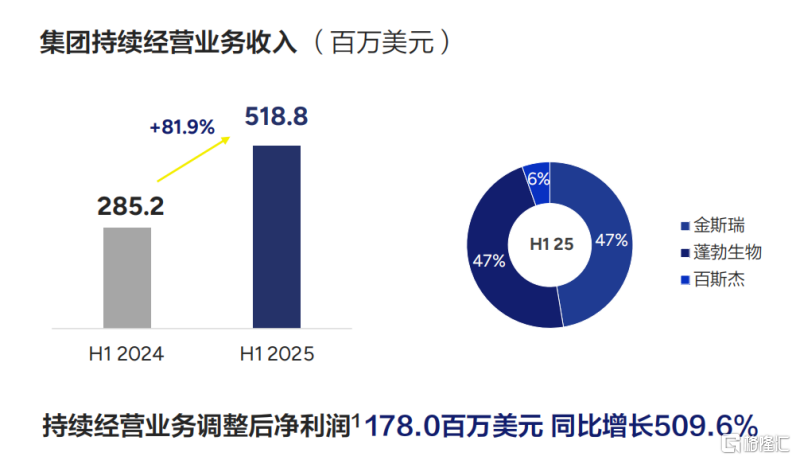
Core Insights - The article highlights the significant growth and strategic advancements of the company, Kingsoft, in the context of a rapidly evolving global environment, particularly in the innovative pharmaceutical sector [1][21] - The company has achieved remarkable financial results in the first half of 2025, with a substantial increase in revenue and profit, indicating strong operational resilience and growth potential [2][16] Financial Performance - In the first half of 2025, the company reported a revenue of $518.8 million, representing a year-on-year increase of 81.9% [2] - The gross profit reached $320.6 million, up 140.1% year-on-year, while the adjusted net profit from continuing operations surged to $178 million, a staggering increase of 509.6% [2] - The company’s cash reserves stood at $967 million as of June 30, 2025, providing a solid foundation for future research and development investments [2] Business Segments - **Life Sciences Services and Products**: This segment generated $247.6 million in revenue, a growth of 11.3% year-on-year, with a notable increase in the share of custom protein services [5][6] - **Biopharmaceutical CDMO**: The CDMO business saw a remarkable revenue increase of 511.1% to $246.9 million, driven by advancements in antibody protein drugs and cell gene therapy [10][11] - **Industrial Synthetic Biology Products**: Revenue in this segment reached $28.3 million, growing by 8.4% year-on-year, with strong performance in the enzyme market [13] - **Cell Therapy**: The company’s joint venture, Legend Biotech, reported net sales of approximately $439 million for CARVYKTI, marking a 136% increase, with expectations of reaching operational breakeven by the end of 2025 [14] Strategic Initiatives - The company is focusing on global expansion and automation, with plans to achieve full automation in its four major factories by the end of 2025, enhancing production efficiency and supply chain resilience [6][17] - Kingsoft is leveraging its technological advancements and strategic partnerships to enhance its market position and drive future growth [16][19] Market Outlook - The recovery of the innovative pharmaceutical market is expected to boost demand for CXO services, providing ongoing growth momentum for the company [16] - The company’s management is optimistic about future performance, projecting a revenue growth of 13%-15% for the life sciences business and maintaining a strong outlook for its other segments [18][19]

茵冠生物市场化融资取得阶段性进展,已获数千万元融资
Nan Fang Du Shi Bao· 2025-08-19 14:56
Core Viewpoint - Shenzhen Yinguang Biotechnology Co., Ltd. has made significant progress in market financing, securing several tens of millions in funding to advance its stem cell innovative drugs and international business cooperation [2] Company Summary - Yinguang Biotechnology is a high-tech enterprise in the field of cell therapy, having established an industry-leading system of "one museum, one bank, and four platforms" [2] - The company has over ten research and development pipelines, with four stem cell drugs having received IND clinical trial application acceptance [2] - Yinguang Biotechnology has integrated clinical resources by collaborating with several top-tier hospitals in China, with four clinical research projects approved and recruitment initiated [2] Investment Summary - The investment from Hainan Kuncheng Wanxi Management Partnership is driven by Yinguang Biotechnology's leading technology, research, production, and commercialization capabilities [2] - The investment aims to support the rapid development of Yinguang Biotechnology and empower international cooperation [2] Industry Summary - The implementation of policies such as the "Shenzhen Special Economic Zone Cell and Gene Industry Promotion Regulations" is expected to further develop the related industry [2] - Yinguang Biotechnology is accelerating the industrialization of multiple stem cell drugs, and the recent financing progress indicates positive capital sentiment towards the industrialization of cell therapy [2]

午间涨跌停股分析:87只涨停股、2只跌停股,有色·钨概念活跃,中钨高新涨停
Xin Lang Cai Jing· 2025-08-19 03:50
Group 1 - A-shares experienced significant activity with 87 stocks hitting the daily limit up and 2 stocks hitting the limit down on August 19 [1] - The non-ferrous metal and tungsten concept stocks were particularly active, with Zhongtung High-tech reaching the daily limit up [1] - The CPO concept stocks showed strength, with Cambridge Technology achieving two consecutive limit ups [1] Group 2 - Cell therapy concept stocks rose, with Jimin Health achieving four consecutive limit ups and Nanjing Xinbai hitting the daily limit up [1] - Notable stocks with consecutive limit ups included *ST Aowei with 9 limit ups in 10 days, and Huasheng Tiancai with 6 limit ups in 9 days [1] - Other stocks showing strong performance included Jintian Shares with 5 consecutive limit ups and Zhongdian Xindong with 4 limit ups in 6 days [1] Group 3 - *ST Gaohong faced a continuous decline with 7 consecutive limit downs, while *ST Nanzhi also hit the limit down [1] - The overall market sentiment reflected a mix of strong performers and struggling stocks, indicating varied investor interest across sectors [1]

晚报 | 8月14日主题前瞻
Xuan Gu Bao· 2025-08-13 14:39
Robotics - The 2025 World Humanoid Robot Games will be held in Beijing from August 14 to 17, featuring 280 teams and over 500 humanoid robots competing in 26 events and 538 competition items [1] - The event marks the first global humanoid robot competition, focusing on robots with human-like forms and embodied intelligence, indicating a critical point for the humanoid robot industry [1] - The market for humanoid robots is expected to expand significantly due to advancements in AI and precision manufacturing, with demand for key components like servo motors and AI algorithms likely to increase [1] Low Earth Orbit Satellites - China successfully launched the low Earth orbit satellite internet group 08 using the Long March 5B rocket, marking the 588th flight of the Long March series [2] - The frequency of satellite launches has significantly increased, indicating that China's satellite internet is entering a rapid networking phase [2] - The new leadership at StarNet is expected to accelerate the launch and bidding processes, propelling the industry towards a "hundred arrows and thousand stars" era [2] AI in Healthcare - The pharmaceutical sector saw a rise in stock prices following the release of an action plan by the Zhejiang Provincial Health Commission to promote "AI + Healthcare" [3][4] - The plan aims to develop multi-modal medical industry models and autonomous AI research frameworks, enhancing service capabilities across various healthcare sectors [3] - The commercialization of AI in healthcare is expected to accelerate, driven by supportive policies and advancements in applications like AI pathology diagnosis and AI imaging [4] Cell Therapy - The National Healthcare Security Administration has approved the preliminary review of the 2025 National Basic Medical Insurance drug directory, with CAR-T therapy gaining attention [5] - Seven CAR-T products are in the spotlight, with five applying for the commercial insurance innovation drug directory and three aiming for basic medical insurance [5] - The commercial insurance innovation drug directory is designed to include high-value innovative drugs that cannot yet be included in the insurance directory, facilitating earlier market entry for these products [5] Charging Infrastructure - Huawei Digital Energy is accelerating the construction of a high-quality megawatt supercharging network across China [6] - The market for supercharging is expected to exceed 200 billion yuan by 2025, with a compound annual growth rate of over 40% [6] - The growth of the electric vehicle market and the demand for efficient charging solutions are driving the expansion of supercharging technology [6]
中基长寿科学(00767)拟收购亚洲综合细胞库100%股权
智通财经网· 2025-08-04 12:12
Group 1 - The company, Zhongji Changshou Science (00767), has signed a non-binding memorandum of understanding to acquire 100% equity of the target company, Comprehensive Cell Bank Limited, from China International Orthopedic Medical Group Limited [1] - The target company specializes in cell therapy, cell drug research and development, and health longevity management services, holding the Comprehensive Cell Bank [1] Group 2 - Comprehensive Cell Bank is the world's largest international autologous immune cell bank and is recognized for meeting various international standards, including FDA, AABB, and PIC/S cGMP [2] - It is the only clinical cell bank in Asia registered with the FDA for both immune cells and stem cells, ensuring compliance with international standards for cell management [2] Group 3 - The Comprehensive Cell Bank began operations on November 17, 2018, and possesses patented technologies in cancer early screening, NK cells, stem cells, and cartilage cells, along with 22 advanced medical testing platforms [3] - The company can provide services to 300,000 people globally, with potential revenue exceeding HKD 30 billion from immune cell storage, cancer early screening, longevity medical testing, and related cell therapies [3]
助力细胞治疗产业化,济南推出首台国产双智能化细胞制备平台
Qi Lu Wan Bao Wang· 2025-08-01 07:20
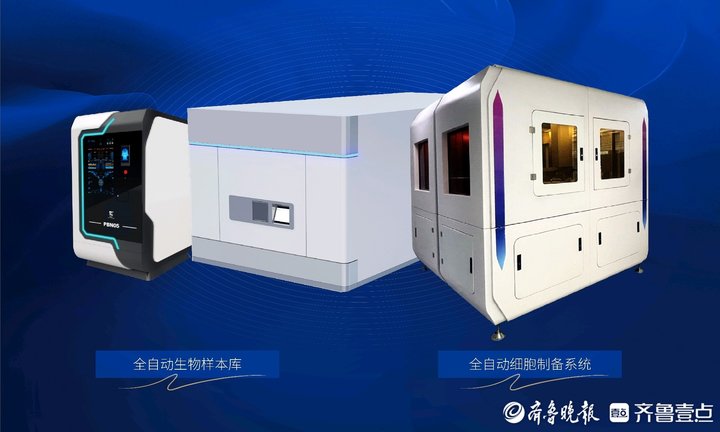
Core Viewpoint - The launch of the dual intelligent cell production and storage management platform marks a significant advancement in China's cell and gene therapy (CGT) industry, which is expected to grow substantially by 2030, reaching a global market size of $11 billion [1][2]. Group 1: Industry Insights - The CGT industry is recognized as a key area of support by the Chinese government, as outlined in the "Healthy China 2030" initiative, positioning cell therapy as an important sector for new productive forces [1]. - The global cell manufacturing market is projected to reach $11 billion by 2030, indicating a growing demand for advanced cell manufacturing technologies [1]. - China's CGT industry is still in its early stages, with the cell preparation market largely dominated by foreign companies, facing challenges such as high costs and low flexibility [1]. Group 2: Company Developments - The dual intelligent cell production and storage management platform is the first fully automated system in China that caters to both adherent and suspension cell cultures, showcasing significant technological innovation [2][3]. - The platform integrates expertise from various institutions, including the Shenzhen Institute of Advanced Technology, Nanyang Technological University, and Shandong University, demonstrating a successful collaboration between academia and industry [3]. - The platform achieves two major technological breakthroughs: redefining cell manufacturing standards through automation and machine learning, and revolutionizing sample management in ultra-low temperature environments [3].
Nature Cancer:揭开CAR-T、CAR-NK细胞持久性调控新通路
生物世界· 2025-07-23 08:07
Core Viewpoint - CAR-T cell therapy has significantly transformed the treatment of B-cell malignancies and is showing initial effectiveness in solid tumors, but there is an urgent need to optimize current treatment protocols due to many patients not responding or developing resistance [2]. Group 1: CAR Therapy Mechanisms - The progression of disease after CAR therapy can be attributed to various factors, categorized into intrinsic tumor factors, tumor microenvironment, or intrinsic resistance mechanisms of lymphocytes [2]. - Factors related to lymphocytes expressing CAR are particularly noteworthy, as they may be altered during the in vitro cell manufacturing process [2]. - Recent clinical data indicate that the expansion and persistence of CAR-T cells in vivo are often associated with better therapeutic outcomes, which also applies to CAR-NK cells [2]. Group 2: Research Findings - A study published on July 22, 2025, in Nature Cancer reveals that the persistence of CAR-engineered lymphocytes (CAR-T and CAR-NK cells) is regulated by a FAS ligand–FAS autoregulatory circuit [3][4]. - The expression of FAS ligand (FAS-L) is primarily found in endogenous T cells, natural killer (NK) cells, and CAR-T cells, with minimal expression in tumor and stromal cells [9]. - The research team demonstrated that CAR-T and CAR-NK cell survival is influenced by FAS-L regulation, as evidenced by the enrichment of CAR-T and CAR-NK cells expressing a dominant negative FAS receptor (ΔFAS) post-transplantation [10]. Group 3: Implications for Treatment - The study suggests that the persistence of CAR-engineered lymphocytes is controlled by the FAS-L/FAS autoregulatory circuit, which could have significant implications for enhancing the efficacy of CAR therapies [11].