酒

Search documents
紫牛热点∣网购辣椒面里发现形似鼠头异物?当地市场监督管理局:已开展全面调查核实
Yang Zi Wan Bao Wang· 2025-12-09 04:39
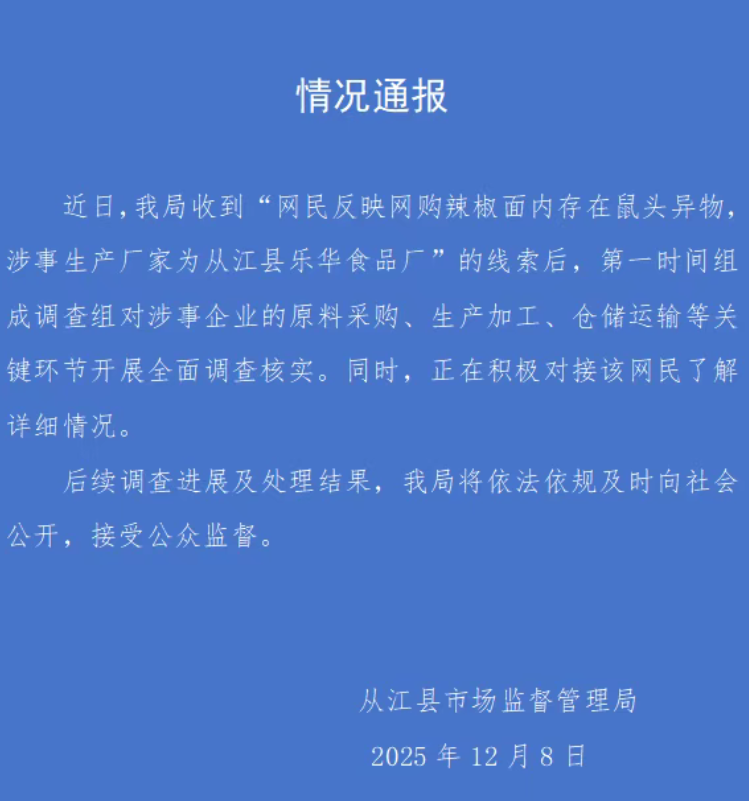
Group 1 - A social media user reported finding a foreign object resembling a mouse head in a purchased chili powder product [1][4] - The product in question is manufactured by Lehua Food Factory located in Congjiang County, Guizhou Province, which was established in 2020 and primarily engages in the production of alcoholic beverages, drinks, and refined tea [6] - The Congjiang County Market Supervision Administration has initiated an investigation into the matter, focusing on the key processes of raw material procurement, production, storage, and transportation [4][6] Group 2 - The factory has a registered capital of 500,000 RMB [6] - The local market supervision authority is actively contacting the affected consumer to gather detailed information regarding the incident [4] - A preliminary situation report was released by the Congjiang County Market Supervision Administration, indicating that they are committed to transparency and will publicly disclose further investigation results [4]

告别低谷,LP出资显著回暖
FOFWEEKLY· 2025-12-08 10:19
Core Insights - The market has moved past its low point, with volatility recovery becoming the new norm, driven by strategic guidance from top-level policies and an influx of patient capital [3][31]. - Institutional LP funding activity has shown a significant increase compared to 2024, despite a 27% month-over-month decline in October, reflecting a 42.5% year-over-year growth [5]. Group 1: Institutional LP Funding Trends - In October, 394 new private equity and venture capital funds were registered, marking a 29.3% month-over-month decline but a 55.1% year-over-year increase [5]. - The funding activity of industrial LPs, particularly state-owned enterprises, remained stable, acting as a "ballast" in the market, focusing on strategic investments in core business upgrades and hard technology sectors [7][14]. - Financial institutions showed a mixed funding pattern, with bank-affiliated AICs gaining prominence, while traditional banks and insurance companies remained cautious [8][21]. Group 2: LP Type Structure - In October, the highest funding share came from industrial LPs at 41.77%, followed by policy LPs at 32.59%, financial LPs at 20.83%, and public LPs at 0.11% [11]. - Industrial LPs' funding activity decreased by 26% month-over-month, with non-listed companies showing more resilience compared to listed firms [14]. - Policy LPs experienced a 30% month-over-month decline in funding activity but a 20% year-over-year increase, indicating a cautious but persistent trend towards new productive forces [20]. Group 3: Regional Dynamics - Jiangsu Province exhibited notable resilience, with a 13% month-over-month decline in funding activity, the smallest among major provinces, while funding scale increased by 44% [25]. - The establishment of the Jiangsu Social Security Science and Technology Innovation Fund, with an initial scale of 50 billion yuan, is expected to inject long-term confidence and development momentum into the market [27]. - The core triangle of Suzhou, Nanjing, and Wuxi remains a focal point for capital aggregation and industrial layout, supported by significant fund establishments [27]. Group 4: Future Outlook - The private equity market is expected to continue its recovery, driven by strategic demands from industrial capital and long-term guidance from policy capital, with a focus on sectors like smart manufacturing, artificial intelligence, and renewable energy [31]. - The alignment of capital flows with industrial policies indicates a new development phase for China's private equity market, emphasizing the need for enhanced capabilities and specialization among GPs [31].

ETF今日收评 | 标普生物科技、半导体设备、机器人等相关ETF涨超3%
Sou Hu Cai Jing· 2025-12-04 07:40
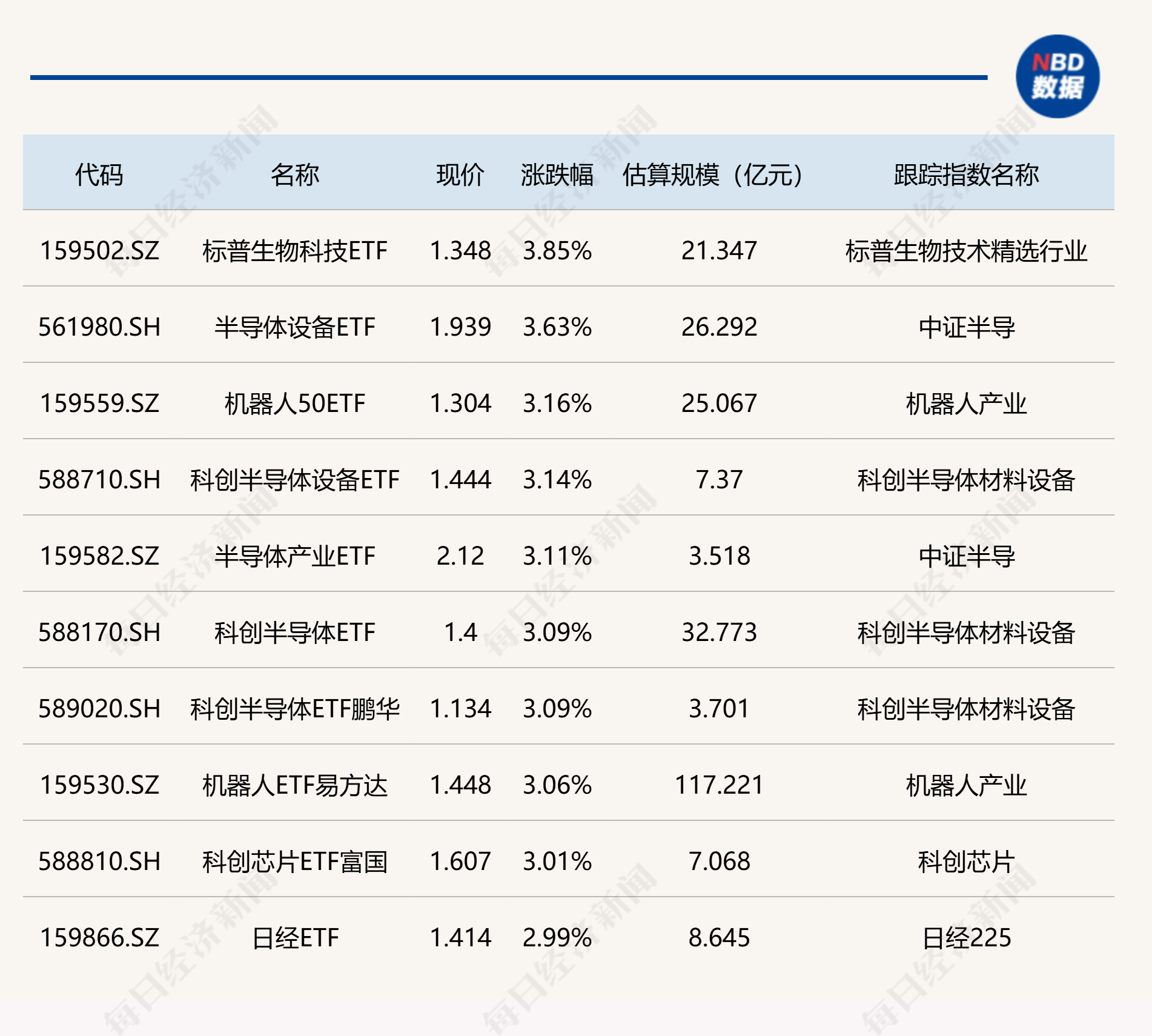
Market Overview - The market is showing signs of recovery with the ChiNext Index rising over 1%. The robotics sector has seen a significant surge, while the commercial aerospace concept continues to perform strongly. The Fujian sector is also active, whereas the consumer goods sector is experiencing fluctuations, and the Hainan sector is collectively weakening [1]. ETF Performance - ETFs related to biotechnology, semiconductor equipment, and robotics have all increased by over 3%. Specific ETFs include: - S&P Biotechnology ETF: 3.85% increase - Semiconductor Equipment ETF: 3.63% increase - Robotics 50 ETF: 3.16% increase [2]. Semiconductor Market Outlook - The World Semiconductor Trade Statistics Organization has revised its estimate for the global semiconductor market size for 2025 upwards by approximately $45 billion to $772 billion, with a year-on-year growth rate expanding to 22%. The market size for 2026 is projected to reach $975 billion, achieving over 25% year-on-year growth, nearing the $1 trillion mark [3]. Long-term Trends in Semiconductor and Robotics - Analysts indicate that the long-term development logic supporting the semiconductor sector remains unchanged, emphasizing supply chain security and self-sufficiency as ongoing trends. The localization of equipment and materials is seen as a strong rationale under top-level design. Digital chips are identified as the core carrier of computing autonomy, and advanced packaging and testing are expected to benefit from technological upgrades. In the robotics sector, significant progress in humanoid robotics is noted, indicating rapid commercialization. Short-term focus should be on industry fluctuations driven by events, while long-term attention should be on high-quality companies with certainty in the supply chain [4]. Decline in Consumer Sectors - The consumer sectors, particularly alcohol and tourism-related ETFs, have seen declines of over 1%. Specific ETFs include: - Alcohol ETF: -1.58% - Tourism ETF: -1.54% [5][6].

海澜之家,要卖水了?
21世纪经济报道· 2025-12-03 06:41
海澜集团旗下主品牌海澜之家,2014年以"男装第一股"的身份登陆A股,最新市值近300亿元,近日递表港交所,拟冲刺"A+H"上市。 【详见 →】 出品丨21财经客户端 21世纪经济报道 三大股指盘中翻绿,A股超千股上涨,煤炭股强势,大有能源等多股涨停,航天动力上演地天板 A股赚钱效应显著公募百亿定增扫货 SFC 21君荐读 记 者丨毕凤至 江佩佩 12月1日,无锡千亿服装民企海澜集团在官方微信公众号发布"庆生海报",庆祝海澜集团成立37周年。同一天,一家名为"海澜之水"的水饮公 司悄然注册成立。 天眼查App显示,近日,江阴海澜之水饮料有限公司成立,法定代表人为薛海军,注册资本500万人民币,经营范围包括食品销售、食品用塑料 包装容器工具制品销售、塑料制品销售、保健食品销售等。股东信息显示,该公司由海澜之家品牌管理有限公司全资持股。 | | 都在用的自业查询工具 | 更公司 查老板 查关系 | 查风险 | | | | | | | --- | --- | --- | --- | --- | --- | --- | --- | --- | | | 中小企业发展子基金旗下机构 | 江阴海澜之水饮料有限公司 | (× ...

宋河酒业增资至20亿元
Mei Ri Jing Ji Xin Wen· 2025-12-02 05:15
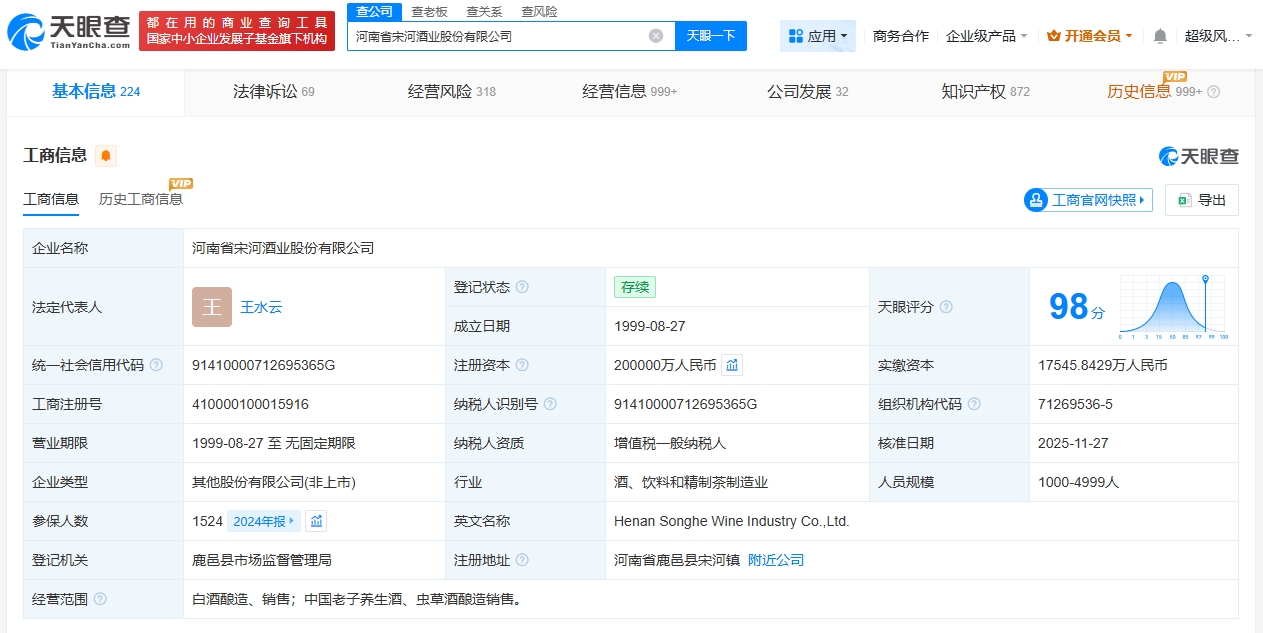
Core Viewpoint - Henan Songhe Wine Industry Co., Ltd. has increased its registered capital from approximately 175 million RMB to 2 billion RMB, representing an increase of about 1040% [1]. Company Information - The company was established in August 1999 and is legally represented by Wang Shuiyun [1]. - The business scope includes the brewing and sales of liquor, specifically Baijiu, as well as the production and sales of Chinese Laozi health wine and Cordyceps wine [2]. - The company is jointly held by Furen Pharmaceutical Group Co., Ltd., Jiaxing Hejin Chunhua Investment Partnership (Limited Partnership), and Zhu Wencheng among others [1]. Financial Changes - The registered capital change reflects a significant financial restructuring, with the new capital amounting to 2 billion RMB, which is a substantial increase from the previous 175 million RMB [1][2].
2025年1-10月全国酒、饮料和精制茶制造业出口货值为189.1亿元,累计下滑4.1%
Chan Ye Xin Xi Wang· 2025-11-30 02:16
Core Insights - The article discusses the performance of China's beverage industry, highlighting a significant decline in export value for the sector in 2025 compared to previous years [1]. Industry Summary - In October 2025, the export value of the national wine, beverage, and refined tea manufacturing industry was 1.64 billion yuan, representing a year-on-year decrease of 23.9% [1]. - From January to October 2025, the cumulative export value for the same industry reached 18.91 billion yuan, showing a cumulative year-on-year decline of 4.1% [1]. - The data indicates a downward trend in the export performance of the beverage sector over the years leading up to 2025 [1]. Company Summary - The article lists several companies in the beverage sector, including Chengde Lulule (000848), Sunshine Dairy (001318), Huangshi Group (002329), and others, indicating their relevance in the industry landscape [1].

2025年第47周:酒行业周度市场观察
艾瑞咨询· 2025-11-27 00:04
Group 1: High-end Baijiu Industry Reflection - The high-end baijiu industry faces short-term challenges, but the core investment logic remains unchanged, with leading companies like Moutai and Wuliangye maintaining long-term investment value due to brand moat, high gross margins (over 85%), and stable cash flow [3][4] - Current inventory pressure is significant, with Moutai's price dropping below 1800 yuan, yet cultural foundations and business models support resilience [3] - Valuations have returned to reasonable levels, with Wuliangye's P/E ratio at 14 times, and high dividends (Luzhou Laojiao's dividend yield exceeds 6%) provide a safety net [3][4] Group 2: Instant Retail and Alcohol - Instant retail is rapidly penetrating the alcohol industry, but manufacturers experience uneven effects, with platforms like Douyin tightening regulations on low-price sales [5] - The online alcohol sales are primarily dominated by beer, with baijiu being less represented, indicating a need for balance between online and offline channels [5] - Challenges include high costs for distributors and risks of counterfeit products, necessitating a differentiated development approach rather than blindly following trends [5] Group 3: Domestic Wine Industry Challenges - The domestic wine industry faces a "bumper harvest but no profit" dilemma due to supply-demand imbalances, homogenization, and competition from imported wines [7] - Low capacity utilization and lack of product differentiation exacerbate the crisis, with high costs and weak industry chains further complicating recovery [7] - Solutions involve focusing on unique terroir characteristics, creating differentiated IP, and embracing new consumption scenarios to drive sustainable development [7] Group 4: E-commerce and Alcohol Market Dynamics - E-commerce platforms are aggressively using subsidies and low-price pre-sales to disrupt offline pricing, leading to conflicts with traditional alcohol distributors [12] - The market is experiencing a "tear and reconstruction" phase, with some distributors forced to supply online, creating a dependency relationship [12] - Future collaboration is essential, with e-commerce expanding breadth and alcohol distributors deepening service to achieve industry chain upgrades centered on consumer needs [12] Group 5: Young Consumer Trends - Young consumers are shifting their purchasing criteria from "value for money" to "worth it," with emotional resonance becoming a key factor in their buying decisions [15][16] - Products like Qingdao White Beer have gained popularity by aligning with emotional and quality expectations, reflecting a broader trend in consumer behavior [15][16] Group 6: Innovations in Alcohol Products - New product launches, such as the "No Rush Sparkling Yellow Wine," signify a shift towards value creation in the yellow wine industry, targeting younger consumers with innovative blends [18] - The introduction of limited-edition products, like the "Bingwu Horse Year Zodiac Wine" by Jianan Chun, highlights the importance of cultural significance and scarcity in appealing to high-end markets [37] Group 7: Industry Resilience and Transformation - The baijiu industry is transitioning from high-speed growth to a focus on quality, with leading brands maintaining their positions while smaller firms face increased pressure [11] - Companies are encouraged to concentrate on product quality, brand building, and operational efficiency to achieve sustainable growth amid industry adjustments [11] - The emergence of new business models, such as "group buying," reflects innovative approaches to address challenges like high inventory and price control [21]




ETF及指数产品网格策略周报(2025/11/25)
华宝财富魔方· 2025-11-25 09:38
Group 1: Mobile Games - The article discusses the growth and potential of the mobile gaming industry, highlighting its increasing popularity and revenue generation in recent years [1]. Group 2: ETF Grid Strategy - The ETF grid strategy focuses on several key ETFs, including the Hang Seng Innovative Drug ETF (520500.SH), which benefits from unprecedented domestic policy support for innovative drug development, such as the establishment of a "dual directory" multi-level payment system [3][4]. - The innovative drug pipeline in China has reached 7,041 projects, accounting for 29.5% of the global total, with a year-on-year growth of 15.1%, significantly outpacing the global average [4]. - The military ETF (512560.SH) is expected to benefit from a historical high defense budget of 1.81 trillion yuan in 2025, which represents a 7.2% increase, although it remains below 1.3% of GDP [7]. - The liquor ETF (512690.SH) has shown wide fluctuations in 2025, with an average daily amplitude of 1.77%, providing opportunities for frequent trading and profit capture [11]. - The Sci-Tech Chip Design ETF (588780.SH) focuses on the chip design sector, which is crucial for China's strategy to achieve technological self-reliance amid global competition [14].

ETF及指数产品网格策略周报-20251125
HWABAO SECURITIES· 2025-11-25 09:06
Group 1: Overview of Grid Trading Strategy - The essence of "grid trading" is a high buy low sell strategy, which does not predict market trends but utilizes natural price fluctuations within a certain range to generate profits, making it suitable for frequently fluctuating markets [3][12] - Characteristics of suitable grid trading targets include: selecting on-market targets, stable long-term trends, low trading costs, good liquidity, and high volatility, with equity ETFs being relatively appropriate for grid trading [3][12] Group 2: Analysis of ETF Grid Strategy Targets - The Hang Seng Innovation Drug ETF (520500.SH) focuses on China's innovative drug pipeline, which ranks second globally, with significant policy support enhancing commercialization and internationalization opportunities [3][13] - The Military Industry ETF (512560.SH) is expected to benefit from a new round of military procurement cycles driven by the "14th Five-Year Plan" and increasing defense budgets, which are projected to reach 1.81 trillion yuan in 2025, a 7.2% increase year-on-year [4][14] - The Wine ETF (512690.SH) is characterized by price fluctuations within a certain range and is currently at a historical low valuation, making it suitable for grid strategies, with a daily average fluctuation of 1.77% as of November 21, 2025 [5][17] - The Sci-Tech Chip Design ETF (588780.SH) aims to capitalize on the AI and domestic substitution trends, focusing on the design segment of the chip industry, which is crucial for technological independence and security [6][18]
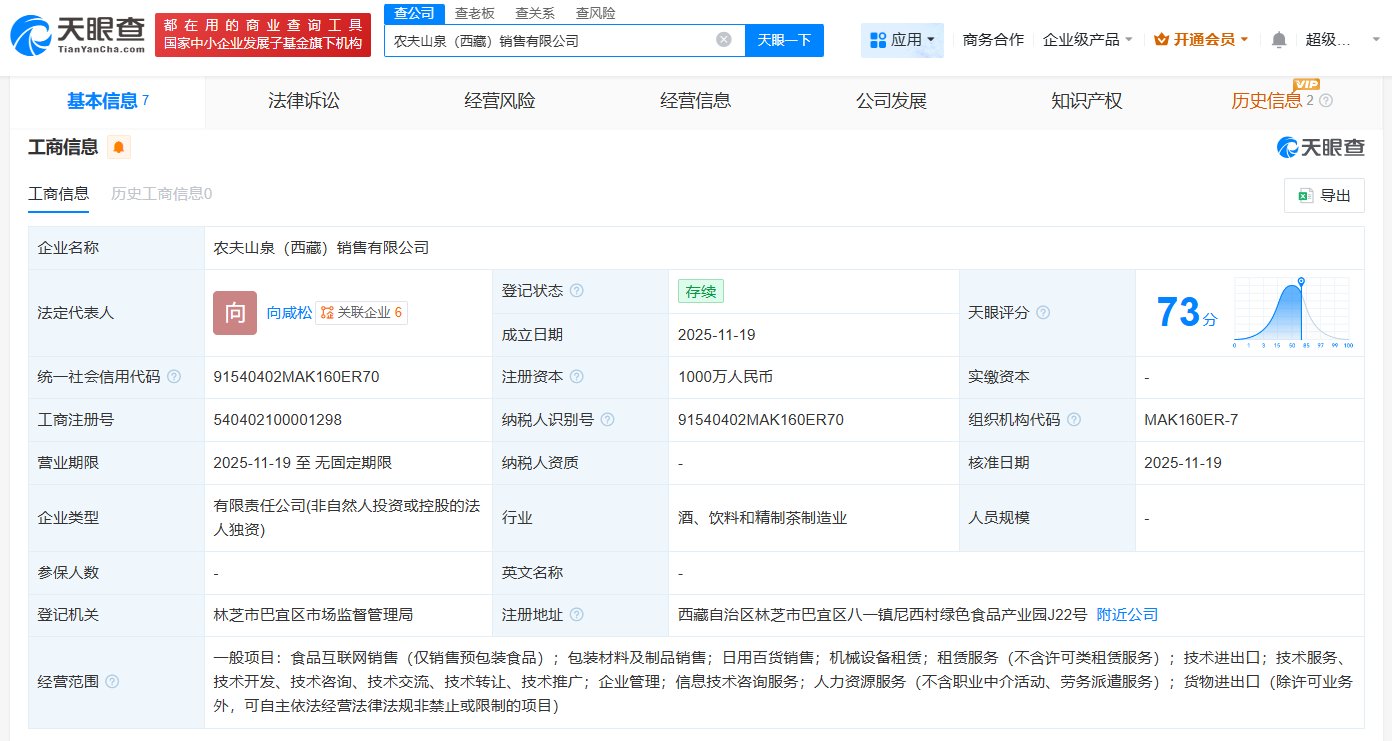
农夫山泉在西藏成立销售公司 注册资本1000万元
Mei Ri Jing Ji Xin Wen· 2025-11-24 05:25
Core Viewpoint - Recently, Nongfu Spring (Tibet) Sales Co., Ltd. was established, fully owned by Nongfu Spring Co., Ltd., with a registered capital of 10 million RMB, focusing on internet sales of food and other related activities [1][2]. Company Information - The legal representative of the new company is Xiang Xiansong [1]. - The registered capital is 10 million RMB [1]. - The company is classified under the beverage manufacturing industry [2]. - The business scope includes internet sales of pre-packaged food, sales of packaging materials and daily necessities, and machinery equipment leasing [2]. Shareholder Information - The sole shareholder of Nongfu Spring (Tibet) Sales Co., Ltd. is Nongfu Spring Co., Ltd., holding 100% of the shares [2].