采矿

Search documents
“亚洲锂都”,注销27宗采矿许可证
中国能源报· 2025-12-17 12:11
Core Viewpoint - The announcement by the Yichun City Natural Resources Bureau regarding the proposed cancellation of 27 mining rights has sparked significant concern within the lithium battery industry, with some companies filing objections [1]. Group 1: Mining Rights Cancellation - The proposed cancellation of mining licenses is due to their expiration, with 18 licenses having expired between 2010 and 2019, one expiring in 2023, and five set to expire in 2024 [1]. - The specific mining rights affected include those held by Jiangxi Special Electric Motor Co., Ltd. for the lithium-containing ceramic stone mine in the Lion Ridge area, which is one of the 27 licenses proposed for cancellation [3]. Group 2: Company Response - Jiangxi Special Electric Motor has submitted an objection to the Yichun City Natural Resources Bureau regarding the cancellation of its mining rights, proposing solutions to extend the mining license for the Lion Ridge area [3]. - The company holds a production capacity of 1.2 million tons per year for the Lion Ridge mine, which has an area of 0.1114 square kilometers, and its mining license is valid until September 15, 2024 [3]. Group 3: Market Impact - The cancellation of the mining rights is expected to have a limited impact on the actual supply of lithium carbonate, as the licenses in question have already expired [6]. - The price of lithium carbonate futures has seen significant increases, with the main contract surpassing 100,000 yuan per ton, reflecting the market's response to supply and demand dynamics in the new energy battery industry [5][7]. - Analysts predict that domestic lithium carbonate production will continue to grow, driven by new production lines and strong demand from the electric vehicle and energy storage markets [7].

华泰 | 宏观:短期扰动之外美国私人就业维持扩张——11月非农点评
Xin Lang Cai Jing· 2025-12-17 00:23
Overview - The core point of the article is that the U.S. labor market showed resilience in November, with non-farm payrolls increasing by 64,000, surpassing Bloomberg's consensus estimate of 50,000, while the unemployment rate rose to 4.6% [1][2]. Employment Data - In November, the U.S. added 64,000 non-farm jobs, a significant recovery from October's loss of 105,000 jobs [4]. - The private sector added 69,000 jobs in November, up from 52,000 in October, indicating a stable expansion despite government sector disruptions [3][5]. - The unemployment rate increased by 0.2 percentage points from September, attributed partly to a rise in the labor participation rate to 62.5% [1][3]. Wage Growth - Hourly wage growth showed a decline, with a month-over-month increase of only 0.1% in November, down from 0.4% in October [1][4]. - The three-month annualized growth rate of hourly wages fell from 4.2% in October to 3.1% in November [3][4]. Sector Contributions - The service sector remained the primary contributor to job growth, adding 50,000 jobs, with healthcare being a significant driver [3][5]. - The goods-producing sector saw a marginal improvement, adding 19,000 jobs, primarily due to gains in construction, while manufacturing and mining continued to decline [3][5]. Market Reactions - Following the employment data release, market expectations for interest rate cuts in 2026 slightly increased, with a 2 basis point rise to 60 basis points [1]. - The 2-year U.S. Treasury yield fell by 3 basis points to 3.48%, while the 10-year yield remained stable at 4.16% [1].

哥伦比亚2025年前11个月外商直接投资同比下降逾16%
Shang Wu Bu Wang Zhan· 2025-12-16 16:25
Core Insights - Foreign direct investment (FDI) in Colombia reached $8.368 billion in the first 11 months of 2025, representing a year-on-year decrease of 16.5% [1] Group 1: Sector Performance - The oil and gas, as well as mining sectors, experienced a significant decline in foreign investment, dropping to $6.384 billion, which is a decrease of approximately $770 million compared to the previous year [1] - Non-resource sectors saw a decline of over 30% in attracted investments year-on-year [1] Group 2: Securities Investment - There was a notable recovery in foreign securities investment, with a net inflow of $7.065 billion this year, reversing the substantial outflow from the previous year [1] - The recovery in securities investment was primarily driven by certain external debt management operations and government bond issuances [1] Group 3: Economic Implications - The decline in foreign investment, particularly in non-resource sectors, poses challenges for employment and long-term technology transfer [1]
智汇矿业12月11日至12月16日招股 拟全球发售1.22亿股H股 引入斯派柯等基石投资者
Zhi Tong Cai Jing· 2025-12-10 23:34
Core Viewpoint - The company, Zhihui Mining (02546), is set to launch a global offering of 122 million H-shares, with a price range of HKD 4.1 to HKD 4.51 per share, aiming to raise approximately HKD 471 million for business enhancements and operational capabilities [1][2]. Group 1: Offering Details - The global offering will consist of approximately 10% for public sale in Hong Kong and 90% for international sale, with trading expected to commence on December 19, 2025 [1]. - The company has entered cornerstone investment agreements with investors, committing to purchase shares at the maximum price of HKD 4.51, totaling around HKD 224 million [1]. Group 2: Use of Proceeds - Approximately 29.2% of the net proceeds will be allocated to enhance mining capabilities [2]. - About 23.4% will be invested in exploration within the mining rights in Tibet [2]. - 18.7% will be used to improve ore processing and optimize production capabilities [2]. - 14.0% is earmarked for investments and acquisitions of growth potential assets [2]. - 7.7% will be utilized for working capital and other general corporate purposes before 2030 [2]. - 7.0% will be allocated for repaying bank loans before 2026 [2]. Group 3: Financial Performance - The company's total revenue for the years ending December 31 for 2022, 2023, and 2024, as well as for the seven months ending July 31, 2025, were approximately RMB 482 million, RMB 546 million, RMB 301 million, and RMB 257 million, respectively [3]. - Gross profit figures for the same periods were approximately RMB 175 million, RMB 218 million, RMB 105 million, and RMB 85.7 million, with gross profit margins of about 36.2%, 39.9%, 34.7%, and 33.4% [3]. - Net profit for the respective years was approximately RMB 118 million, RMB 155 million, RMB 55.9 million, and RMB 51.7 million, with net profit margins of about 24.4%, 28.3%, 18.5%, and 20.2% [3].
“设备烂光了谁来赔”追踪:东方矿业能否申请国家赔偿?
第一财经· 2025-12-10 09:16
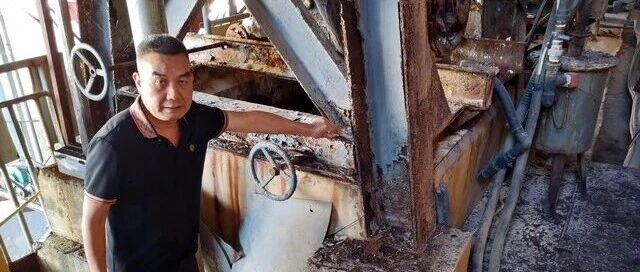
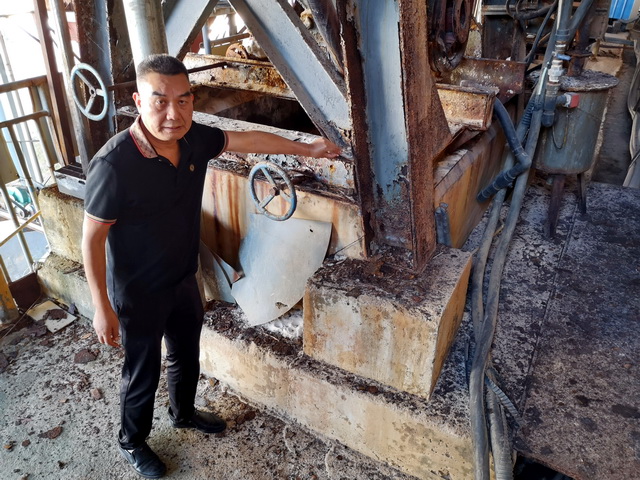
Core Viewpoint - The article discusses the challenges faced by Dongfang Mining Co., Ltd. in Fujian Province regarding the renewal of mining rights, leading to significant operational and financial difficulties for the company [3]. Group 1: Company Background - Dongfang Mining was established in 2003 and has invested over 100 million yuan in mining operations, specifically in quartzite mining for glass production [4]. - The company was once a major taxpayer in the region, contributing a total of 12.474 million yuan in taxes by the end of 2021 [4]. Group 2: Operational Challenges - The company faced a shutdown due to legal issues, resulting in all production equipment becoming corroded and unusable [6][7]. - After regaining its mining rights in the first half of 2023, Dongfang Mining decided to abandon production recovery efforts due to financial constraints and the deteriorated state of its equipment [3][7]. Group 3: Legal and Financial Issues - Dongfang Mining applied for state compensation in August 2023, but the local court denied the claim, citing insufficient evidence to prove any wrongdoing by the authorities [7][9]. - Legal experts argue that the debts incurred by Dongfang Mining were a direct result of the seizure and freezing of its assets, which should warrant compensation from the state [9][10]. Group 4: Government Response - The local government has acknowledged the situation and is working to improve the business environment for mining companies by addressing the issues faced by enterprises like Dongfang Mining [7][10].
“设备烂光了谁来赔”追踪:东方矿业能否申请国家赔偿?
Di Yi Cai Jing· 2025-12-10 07:23
Core Viewpoint - The article discusses the challenges faced by Dongfang Mining Co., Ltd. in Fujian Province regarding the renewal of mining rights, which has led to significant operational difficulties and financial distress for the company [1][2]. Group 1: Company Background - Dongfang Mining was established after acquiring a previously inactive mining company and has invested over 100 million yuan in its operations over 18 years [2]. - The company was a significant taxpayer in the region, contributing a total of 12.474 million yuan in taxes by the end of 2021 [2]. Group 2: Operational Challenges - The company faced a shutdown due to legal issues, resulting in the deterioration of its equipment and facilities, which are now rusted and unusable [4]. - Dongfang Mining decided to abandon production recovery efforts in August 2023 and sought state compensation, which has not been successful [4][5]. Group 3: Legal and Compensation Issues - The local court denied the compensation request from Dongfang Mining, citing insufficient evidence to prove any wrongdoing by law enforcement during the investigation [5]. - Legal experts argue that the company should be compensated for debts incurred due to the seizure of its assets, which hindered its ability to operate normally [6]. Group 4: Government Response - The local government has acknowledged the situation and is working to improve the business environment for mining companies by addressing the issues faced by Dongfang Mining [9].
科特迪瓦拟将采矿和能源行业发展为国家经济第二大支柱
Shang Wu Bu Wang Zhan· 2025-12-09 18:19
Core Insights - The Ivorian government has officially launched the Comprehensive Policy for Minerals and Energy (PIRME), aiming to transform the mining and energy sectors into key drivers of national economic growth [1] - The policy targets increasing the contribution of these sectors to GDP from 7% in 2022 to 14% by 2040, positioning them as the second-largest pillar of economic development after agriculture [1] Investment and Funding - PIRME is expected to invest 38 trillion West African francs (approximately $67.53 billion) over 15 years, divided into three five-year plans [1] - The allocation of funds includes 41% for energy, 30% for mining, and 29% for oil and gas resources [1] Resource Development and Economic Shift - The policy emphasizes the comprehensive development and utilization of resources such as gold, manganese, nickel, iron, lithium, and oil and gas, aiming to create a complete industry chain from exploration to local processing [1] - PIRME signifies a major shift from a historically agriculture-centered economic model to a more diversified approach, ensuring fair income distribution and environmental protection while providing reliable and affordable energy for all [1] Production Goals - The initiative aims to position Côte d'Ivoire among the leading gold-producing countries in Africa, with targets of producing 10 million tons of iron ore and 500,000 barrels of oil per day [1]
印尼出台外汇新规:自然资源出口商外汇收入需在国有银行存放一年,限兑50%
Sou Hu Cai Jing· 2025-12-09 07:35
Group 1 - The Indonesian government is revising regulations on foreign exchange earnings from natural resource exports, requiring exporters to deposit all foreign exchange earnings in state-owned banks for at least one year [1] - Exporters will only be allowed to convert up to 50% of their earnings into Indonesian rupiah, aimed at retaining more US dollars domestically to support the weakening currency [1] - The core objective of the new regulations is to ensure effectiveness in increasing the domestic supply of US dollars and to close regulatory loopholes [1] Group 2 - The Indonesian rupiah has depreciated over 3% in the past year, with the USD/IDR exchange rate around 16,668 on December 8 [3] - Indonesia's foreign exchange reserves increased slightly to $150.1 billion as of November 2025, but are down from $156.1 billion in January [3] - Commodity exporters in Indonesia may face cash flow issues due to the tightening of foreign exchange controls, potentially leading to increased borrowing costs [3]
大中矿业:湖南大中赫神家湾选厂及配套砂石骨料生产线项目计划于2026年实现投产
Mei Ri Jing Ji Xin Wen· 2025-12-09 03:49
Core Viewpoint - The company is progressing with the construction of the Hunan Dazhong He Lithium Shenjiaban selection plant and the associated sand and gravel aggregate production line, with plans for production to commence in 2026 [1] Group 1 - The project is currently in the civil construction phase and is advancing according to the established schedule [1] - The company encourages stakeholders to monitor the progress of the Hunan lithium mine project through its regular reports [1]
【风口研报】AI数据中心柴发+机器人减速器+关节模组+PEEK,这家公司与国内外众多知名客户建立配套合作
财联社· 2025-12-08 13:19
Group 1 - The article highlights a company that is actively engaging in the AI data center sector, collaborating with numerous well-known domestic and international clients in areas such as AIDC and humanoid robots [1] - The company has acquired multiple mining rights and possesses technology that can enhance metal recovery rates while reducing energy consumption, indicating that its non-ferrous business may become a second growth curve [1]