AIoT

Search documents
特斯联与新华三达成战略合作
Zheng Quan Shi Bao Wang· 2025-10-16 03:04
Core Viewpoint - The strategic cooperation between Teslian and H3C aims to leverage their strengths in AIoT computing platforms and heterogeneous computing ecosystem development [1] Group 1: Strategic Cooperation - Teslian and H3C will focus on deep collaboration in building AIoT computing platforms and heterogeneous computing ecosystems [1] - The partnership will utilize Teslian's expertise in heterogeneous computing compilation and spatial intelligence, along with H3C's comprehensive layout across the entire industry chain of "cloud-network-security-computing-storage-end" [1] Group 2: Innovation and Application - The collaboration is expected to enhance innovation and application of domestic computing power in the AIoT sector [1] - The joint efforts will accelerate the construction of an efficient, intelligent, and secure heterogeneous computing ecosystem [1] Group 3: Development and Integration - The partnership aims to promote the development and application of heterogeneous computing integration [1]
AIoT行业专题
2025-09-28 14:57
Summary of AIoT Industry Conference Call Industry Overview - The AIoT industry is experiencing significant advancements in edge AI, driven by reduced inference costs, improved model performance, and increased competition among models [2][4][5] - The IoT industry is on an upward trend, with companies like Tuya Smart and Xiaomi reporting substantial growth [8][9] Key Companies and Developments - **NVIDIA**: - Reduced AI inference costs and power consumption through hardware upgrades and architectural optimizations [2][4] - Launched the Robin CPX GPU to enhance efficiency for specific workloads [2][5] - **Deepseek**: - Innovated with sparse MOE architecture and attention mechanism MLA to lower model training and inference costs [2][5] - Released Deepseek R1, which uses distillation technology to reduce computational complexity while maintaining performance [2][5] - **Yuran**: - Launched AR toys like Bubble Popper and Coco Mate, achieving significant market response and sales [2][6] - **Espressif Systems (乐鑫科技)**: - A leading WiFi MCU supplier, with revenue growth exceeding expectations, projecting a 30% increase for the year [2][9] - Maintains a gross margin of approximately 40% and has a robust product matrix including core products like S3 [4][10][11] Market Trends and Insights - Edge AI is primarily being adopted in the AR toy sector due to lower hardware and model performance requirements [6] - The IoT connection landscape is dominated by short-range connections, with WiFi and Bluetooth accounting for over 70% of total connections [7] - The ALT industry, which is crucial for edge AI, shows promising growth potential [8] Financial Performance - Espressif Systems has consistently achieved revenue growth, with traditional smart home business growing at 10%-15% and new products contributing to overall revenue [9][10] - The company’s effective cost management has led to sustained profit margin improvements, with a projected 70% increase in net profit for 2025 [11] Developer Ecosystem - The company employs a to D to B business model, leveraging a developer ecosystem to expand its customer base [12] - Over 150,000 open-source projects have been developed, attracting partnerships with major firms like ByteDance and OpenAI [12][13] - The developer ecosystem is crucial for meeting the needs of emerging applications like AI toys, positioning the company as a key player in the edge AI market [14] Conclusion - The AIoT industry is poised for growth, with significant contributions from key players like NVIDIA, Deepseek, and Espressif Systems. The focus on edge AI applications, particularly in the AR toy market, alongside a strong developer ecosystem, positions these companies favorably for future opportunities.

小米集团:2025 年秋季发布会回顾- 生态全链高端化;17 ProPro Max 创新成焦点;买入评级
2025-09-26 02:32
Xiaomi Corp. (1810.HK) Conference Call Summary Company Overview - **Company**: Xiaomi Corp. - **Ticker**: 1810.HK - **Market Cap**: HK$1.5 trillion / US$198.1 billion - **Enterprise Value**: HK$1.3 trillion / US$172.5 billion - **Current Price**: HK$59.45 - **Target Price**: HK$66.00 - **Upside Potential**: 11.0% [1][21] Key Product Launches - **Xiaomi 17 Series**: Launched flagship smartphones including Xiaomi 17, 17 Pro, and 17 Pro Max with innovative features and competitive pricing starting from Rmb4,499 for the base model [1][25] - **AIoT Products**: Introduction of 6 new premium AIoT products including tablets, TVs, routers, and smart speakers, with a focus on the European market [1][44] - **HyperOS 3.0**: Upgraded operating system with enhanced efficiency and AI capabilities [1][46] Core Insights 1. **Smartphone Pricing Strategy**: - The 17 Pro's pricing is Rmb200-500 lower than previous versions, potentially attracting more consumers and increasing market share in the Rmb5k+ segment [2][27] - Xiaomi's market share in the Rmb5-6k segment was approximately 15% in 2Q25, compared to 25% in the Rmb4-5k segment [2][21] 2. **Electric Vehicle (EV) Commitment**: - Launched customization services for YU7 Max and SU7 Ultra, aiming to strengthen its position in China's premium auto market [3][22] - Average delivery capacity is expected to increase as the run rate approaches 10k units/week [3][22] 3. **AIoT Warranty Service**: - Announced a 10-year free warranty for all ACs sold from 2025, surpassing the industry standard of 6 years [4][20] Financial Projections - **Revenue Growth**: - Projected revenue for 2024 is Rmb365.9 billion, increasing to Rmb737.6 billion by 2027 [7][21] - Total revenue growth rates are expected to be 35.0% in 2024, 29.2% in 2025, and 20.0% in 2027 [15][21] - **Earnings Per Share (EPS)**: - New EPS estimates are Rmb1.07 for 2024, Rmb1.56 for 2025, and Rmb2.62 for 2027 [7][21] - **Profit Margins**: - EBITDA margin projected to increase from 8.4% in 2024 to 11.9% in 2027 [15][21] Market Dynamics - **AIoT Revenue Growth**: Expected to moderate in 2026 due to a higher base, with a notable slowdown in growth rates [50][21] - **Competitive Landscape**: Xiaomi's pricing strategy aims to capture market share from competitors, particularly in the premium smartphone segment [27][21] Additional Considerations - **Upcoming Events**: - Monitoring EV delivery capacity ramp-up and Singles' Day GMV data [22][21] - Anticipation of new EV model filings with MIIT [22][21] - **Investment Recommendation**: - Maintain a "BUY" rating with a target price of HK$66, reflecting a modest increase from previous estimates [21][1] This summary encapsulates the key points from the Xiaomi conference call, highlighting product launches, financial projections, and strategic insights into the company's market positioning and future outlook.

特斯联与优必选强强联手,融合打造具身智能
Di Yi Cai Jing· 2025-09-17 08:59
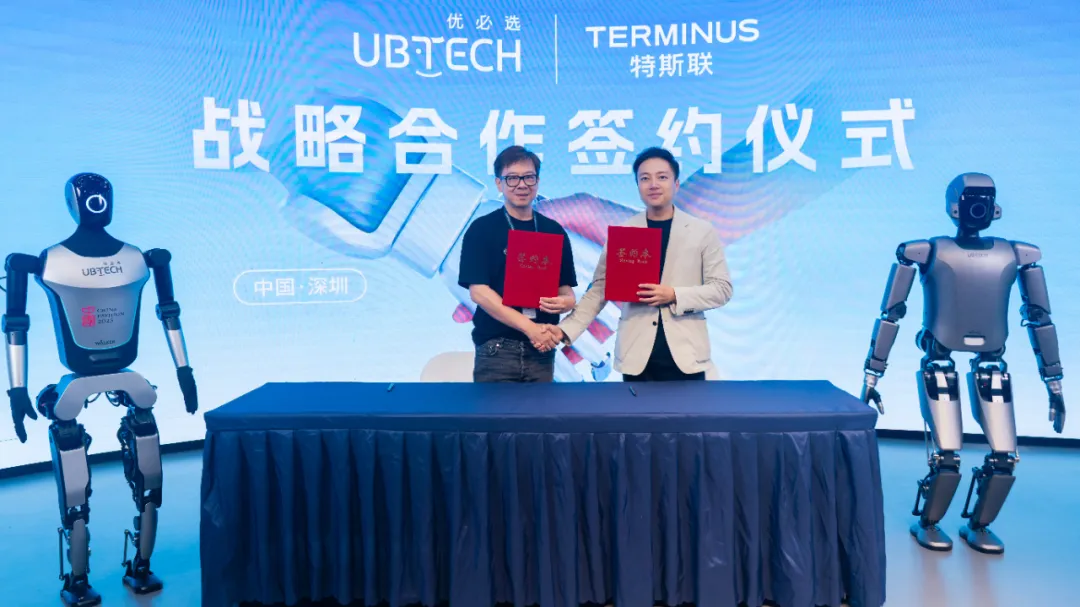
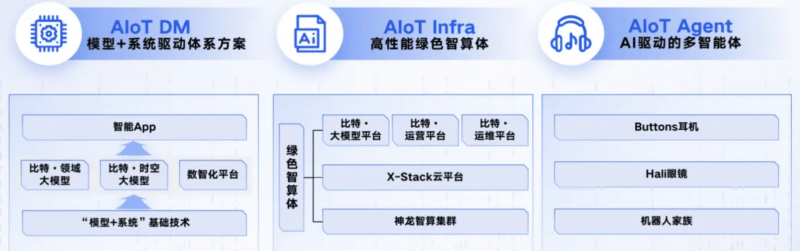
Core Viewpoint - The strategic partnership between TUSI and UBTECH aims to integrate spatial intelligence and embodied intelligence to enhance the capabilities of humanoid robots, creating a new paradigm for multimodal training and promoting the comprehensive deployment of intelligent robots [1][3]. Group 1: Strategic Collaboration - TUSI, a leader in spatial intelligence, and UBTECH, a pioneer in humanoid robotics, have signed a strategic cooperation agreement to share and innovate on their respective technologies [1][3]. - The collaboration is based on mutual recognition of each other's technological strengths and industrial value, aiming to create highly autonomous and interactive next-generation intelligent robots [3]. Group 2: Technological Capabilities - UBTECH possesses full-stack technology capabilities in humanoid robotics, including advanced hardware, AI technology, and integration of robotics with AI [3]. - TUSI has developed a three-layer strategic system focusing on AIoT infrastructure, AIoT domain models, and AIoT intelligent agents, with nearly 10,000 spatial intelligence project cases since 2015 [3][4]. Group 3: Spatial Intelligence - Spatial intelligence is crucial for robots to interact with the physical world, enabling them to understand complex, unstructured environments [4]. - TUSI's self-developed spatial large model allows for multi-modal integration and reasoning, helping robots to comprehend physical laws and perform complex task planning [4]. Group 4: AIoT Intelligent Agents - TUSI's intelligent agents possess capabilities such as human-like thinking, long-term memory, high-dimensional perception, and teamwork, enhancing robots' decision-making and collaborative abilities in complex environments [5]. - UBTECH's humanoid robots serve as intelligent terminals that can autonomously move and perform precise operations, continuously validating and enhancing spatial reasoning models through real-world interactions [5]. Group 5: Market Implications - The partnership between TUSI and UBTECH is expected to create significant opportunities for business upgrades and global market expansion, especially as TUSI is in the process of an IPO [5].

特斯联与优必选达成战略合作:让机器人更容易“看懂”世界
Zheng Quan Shi Bao Wang· 2025-09-17 05:10
Core Insights - A strategic partnership has been established between Teslian, a leading AIoT company in China, and UBTECH, known as the "first humanoid robot stock," focusing on the integration of spatial intelligence and embodied intelligence [1][2][3] - The collaboration aims to create a new paradigm of multimodal training based on spatial intelligence, enhancing the capabilities of intelligent robots in real-world environments [1][2] Group 1: Company Profiles - Teslian has been deeply involved in the spatial intelligence sector since 2015, with nearly 10,000 project cases, establishing a three-tier strategic system centered on AIoT infrastructure, models, and intelligent agents [2] - UBTECH possesses leading technologies in robot hardware, AI, and the integration of robotics and AI, which are crucial for the development of intelligent agents capable of interacting with the physical world [1][2] Group 2: Technological Integration - The partnership emphasizes the deep integration of spatial intelligence and embodied intelligence, aiming to develop the next generation of intelligent robots with high autonomy and interaction capabilities in the physical world [2] - The combination of Teslian's spatial models and high-quality spatial data with UBTECH's humanoid robots will enhance the robots' ability to autonomously navigate and perform precise operations in real environments [3] Group 3: Market Implications - The collaboration is expected to create significant opportunities for business upgrades and global market expansion, especially as Teslian is in the process of an IPO, potentially becoming the "first AIoT stock" [3]

小米2025年Q2财报:多元化增长全面提速
Counterpoint Research· 2025-09-04 01:04
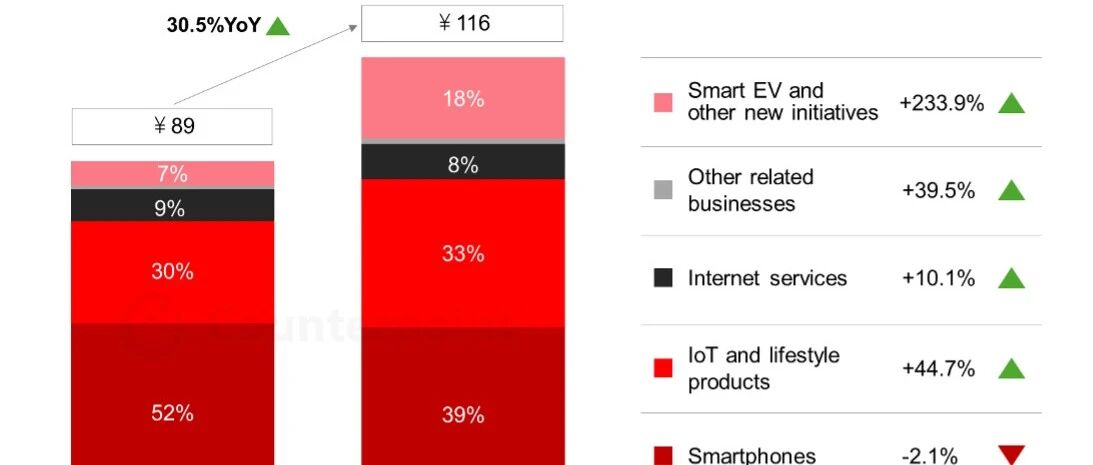
Core Viewpoint - Xiaomi's diversified strategy is supporting resilient growth, with significant contributions from its automotive and IoT businesses, despite a decline in smartphone revenue [4][10]. Financial Performance - In Q2 2025, Xiaomi's revenue grew by 30.5% year-over-year, with the smartphone business accounting for less than half of total revenue [4]. - The IoT business achieved a record revenue of 38.7 billion yuan, marking a 44.7% year-over-year increase, driven by the expansion of offline stores [8]. - Smartphone revenue declined by 2% year-over-year, with a 2.7% drop in average selling price (ASP) [10]. Product and Market Strategy - Xiaomi's smartphone shipments have seen eight consecutive quarters of year-over-year growth, although revenue was offset by ASP declines [9]. - The launch of the YU7 electric SUV exceeded expectations with over 240,000 orders in 18 hours, indicating strong demand for Xiaomi's automotive offerings [15]. - Xiaomi plans to open 1,000 new direct stores annually to enhance channel control and operational efficiency [8]. Innovation and R&D - Xiaomi's first self-developed 3nm flagship chip, XRING O1, has been officially released, showcasing its commitment to long-term innovation and breakthroughs in the high-end market [9][15]. - The company is expected to invest 30 billion yuan in R&D by 2025, with approximately 25% allocated to AI [15]. Strategic Insights - The integration of smartphones, electric vehicles, and AIoT is central to Xiaomi's strategy, creating a connected ecosystem that enhances user engagement and drives IoT hardware sales [11]. - Xiaomi's electric vehicle business is projected to achieve quarterly or monthly profitability by late 2025, although full profitability will take longer due to significant initial investments [15].
交银国际:降小米集团-W目标价至60港元 次季业绩符预期
Zhi Tong Cai Jing· 2025-08-22 06:28
Group 1 - The core viewpoint of the report is that Xiaomi Group's automotive performance in Q2 is impressive, while the smartphone business adjustments are largely in line with expectations [1] - Xiaomi's Q2 revenue and adjusted net profit were 116 billion and 10.8 billion RMB respectively, meeting market expectations [1] - Automotive revenue increased by 40% year-on-year, with a gross margin of 26.4%, a historical high driven by average selling price growth and platform scale effects [1] Group 2 - Smartphone revenue decreased by 2% year-on-year, primarily due to the REDMI A5 launch lowering overseas average selling prices, while domestic average selling prices benefited from an increase in high-end model proportions [1] - Smartphone gross margin declined by 0.9 percentage points to 11.5% quarter-on-quarter, attributed to rising storage prices impacting mid-to-low-end models [2] - AIOT revenue grew by 45% year-on-year, with a gross margin of 22.5%, slightly down by 2.7 percentage points due to the 618 promotion [2] Group 3 - The company maintained a "buy" rating but adjusted the target price from 67 HKD to 60 HKD based on a 25x P/E for mobile and a 2.2x P/S for automotive business by 2026 [1] - The forecast for automotive revenue in 2026 was slightly adjusted to 182 billion RMB from a previous estimate of 181.7 billion RMB [2] - Revenue forecasts for 2025 and 2026 were lowered to 483 billion and 605.8 billion RMB respectively, along with adjusted earnings per share estimates for those years [2]

特斯联IPO在即:透视AI独角兽的成长逻辑与港股上市前景
Sou Hu Cai Jing· 2025-08-20 06:06
Core Insights - The early losses in the artificial intelligence industry are seen as a common challenge, with significant R&D investments and a lengthy commercialization phase being typical for technology-driven sectors [1] - Despite the losses, there are underlying signs of value growth, particularly for Teslion, a leading AIoT company preparing for its IPO in Hong Kong [1] Company Overview - Teslion, established in 2015, focuses on three strategic directions within the AIoT field: AIoT models, AIoT infrastructure, and AIoT intelligent agents [3] - The company's AI industry digitalization business is expected to experience explosive growth in 2024, with revenue projected to increase from 624 million to 1.64 billion, marking a 162.9% rise [3] Financial Performance - Teslion's total customer base grew from 224 in 2022 to 342 in 2024, with annual new customer signings of 175, 193, and 194 respectively [3] - The company achieved remarkable revenue growth from 738 million in 2022 to 1.843 billion in 2024, reflecting a year-on-year growth rate of 83.2% and a compound annual growth rate of 58% over three years [3] Competitive Position - Teslion's growth rate outpaces other publicly listed AI companies, with competitors like SenseTime (10.8%), Horizon Robotics (53.6%), UBTech (23.6%), and Fourth Paradigm (25.1%) lagging behind [4] - A significant portion of Teslion's reported losses is attributed to non-cash items such as changes in the fair value of preferred shares, indicating that the actual operational performance is improving [4] Market Recognition and Future Prospects - In the "2025 China Unicorn Enterprise Development Report," Teslion ranks 24th among 115 unicorns in Beijing and 5th among AI companies [5] - The company is expected to raise 650 million in its D++ round of financing, with a post-investment valuation of 21.619 billion, positioning it as a potential leader in the Hong Kong IPO market for AI companies [4] - The upcoming IPO is anticipated to enhance the attractiveness of the Hong Kong stock market's technology sector and inject new vitality into value discovery [5]
高盛:降小米集团-W目标价至65港元 次季业绩大致符预期
Zhi Tong Cai Jing· 2025-08-20 05:43
Core Viewpoint - Goldman Sachs reports that Xiaomi Group-W (01810) Q2 performance is largely in line with expectations, with a 30% year-on-year revenue growth and a 75% increase in adjusted net profit, exceeding the bank's forecasts by 7% to 13% [1] Financial Performance - Revenue increased by 30% year-on-year, driven by strong performance in AIoT, which grew by 45%, surpassing Goldman Sachs and market predictions by 2% and 8% respectively [1] - Adjusted net profit rose by 75% year-on-year, exceeding Goldman Sachs' expectations [1] Product Performance - Electric vehicle sales offset weak smartphone sales, indicating a shift in product demand [1] Forecast Adjustments - Revenue forecasts for Xiaomi from 2025 to 2027 remain largely unchanged, but adjusted net profit forecasts have been lowered by 1% to 4% due to increased R&D investments and taxes [1] - Target price has been reduced from HKD 69 to HKD 65, while maintaining a "Buy" rating [1] Stock Performance - Over the past three months, Xiaomi's stock performance has aligned closely with index trends, with a year-to-date increase of 54% [1] - Concerns about the slowdown in AIoT sales growth and the gradual increase in electric vehicle manufacturing capacity have been noted, despite a slight rise in delivery volumes in August [1]
摩根斯坦利&瑞银:小米二季报解读,汽车业务高毛利率弥补手机疲软,下半年关键看北京第二工厂产能爬坡48/64
美股IPO· 2025-08-20 04:29
Core Viewpoint - The electric vehicle (EV) business has become the biggest highlight for Xiaomi in the latest quarter, with both Morgan Stanley and UBS emphasizing that EV deliveries will be a key driver for the stock price in the second half of the year [1][5][11]. Financial Performance - Xiaomi's Q2 2025 adjusted net profit reached 10.831 billion RMB, a year-on-year increase of 75.4%, marking the highest quarterly profit in history [3]. - Total revenue for Q2 reached 115.956 billion RMB, a year-on-year growth of 30% and a quarter-on-quarter growth of 4%, exceeding Morgan Stanley's expectations by 3% [15]. - The company's overall gross margin improved to 22.5%, up 1.8 percentage points year-on-year, but down 0.3 percentage points quarter-on-quarter [8]. Business Segment Analysis - The EV business showed a gross margin of 26.4%, significantly up by 3.3 percentage points quarter-on-quarter, indicating strong profit potential [8]. - AIoT business gross margin was 22.5%, up 2.8 percentage points year-on-year but down 2.7 percentage points quarter-on-quarter [9]. - The smartphone business faced challenges with a gross margin of 11.5%, down 0.7 percentage points year-on-year and 0.9 percentage points quarter-on-quarter, reflecting intense market competition [10]. Electric Vehicle Business Insights - UBS maintains a delivery forecast of 720,000 units for 2026, assuming full capacity operation of the second-phase factory [14]. - The average selling price of EVs increased by 6.4% quarter-on-quarter to 254,000 RMB, driven by high-end models SU7 Ultra and YU7 [11]. - The strong order intake for the YU7 model is expected to drive EV delivery volumes, which will be a key catalyst for stock price growth in the second half of the year [13]. Market Outlook - Morgan Stanley maintains an "Overweight" rating with a target price of 62 HKD, indicating an 18% upside potential from the current stock price [1][5]. - The company's diversified business strategy is proving effective, with the rapid development of the EV business opening new growth avenues [17].