
Alcoholic Beverages

Search documents
Jim Cramer Discusses Molson Coors (TAP) & Alcohol Industry
Yahoo Finance· 2025-12-30 03:19
Company Overview - Molson Coors Beverage Company (NYSE:TAP) is an alcoholic beverage company facing challenges in the broader alcoholic beverage industry, with shares down 18% year-to-date [2]. Financial Performance - The company reported $2.97 billion in revenue and $1.67 in adjusted earnings per share for the third quarter [2]. - A forecast indicates a 3% to 4% decline in sales for 2025 [2]. Analyst Insights - JPMorgan initiated coverage of Molson Coors with a Neutral rating and a $49 share price target, noting improved business fundamentals but ongoing struggles in the market [2]. - Analyst caution reflects the overall weakness in the alcoholic beverage sector [2]. Market Trends - Jim Cramer highlighted a shift in alcohol consumption patterns, suggesting that older demographics, traditionally the largest consumers, are aging out, while younger consumers are favoring non-alcoholic options like mocktails [3]. - The alcoholic beverage market is experiencing a downturn, with specific categories like beer and spirits facing significant challenges [3].

观酒|“打酒铺”火了,散酒模式能成酒企的“压力出口”吗?
Nan Fang Du Shi Bao· 2025-12-29 05:37
Core Insights - The Chinese liquor industry is undergoing significant transformation in 2025, facing challenges such as high channel inventory and weak terminal sales, while also experiencing new opportunities driven by changing policies, consumer behavior, and market scenarios [2] Group 1: Industry Trends - The resurgence of "loose liquor" sales, a traditional model, has gained attention this year, with innovative pricing strategies attracting consumers [2][3] - New "liquor bars" are rapidly emerging, allowing consumers to purchase liquor by the cup, which has revitalized the loose liquor market and gained acceptance among younger consumers [3][4] - The market for loose liquor is projected to exceed 800 billion yuan in 2024 and reach a trillion yuan by 2025, indicating significant growth potential [14] Group 2: Consumer Behavior - Young consumers are particularly drawn to the novelty of purchasing premium liquor like Moutai at lower prices in these new liquor bars, leading to increased sales and curiosity [7][8] - The new liquor bars are designed to be visually appealing and cater to social media engagement, creating a "third space" for young consumers to enjoy [12] Group 3: Company Strategies - Major liquor companies are entering the liquor bar market, with brands like Gujing Gongjiu and Kuozi Jiu actively opening their own outlets to tap into community consumption [11] - Companies are leveraging the high-frequency sales model of liquor bars to alleviate inventory and cash flow pressures, especially as many face declining revenues [14] Group 4: Challenges and Concerns - Despite the excitement around new liquor bars, there are concerns regarding profitability, cost pressures, and the balance of interests with traditional distributors [15][16] - Food safety issues related to loose liquor have raised public concerns, with incidents of contamination affecting consumer trust [17]



茅台保健酒董事长:2026年不搞内耗,将推出多款创新露酒
Xin Lang Cai Jing· 2025-12-29 04:21
Core Insights - The Moutai Group's health liquor division is focusing on a dual-track strategy for 2026, aiming to clarify brand boundaries and streamline its structure [3] - The company plans to enhance its product offerings by introducing more herbal-based liquors to meet diverse market demands [3] - Moutai's marketing strategy will emphasize content marketing, with a goal to reach over 1 billion consumers and establish a unique brand recognition [3] Strategic Focus - The dual-track strategy involves creating a brand development matrix that ensures "price and quality alignment, clear tiering, and differentiated development" to avoid internal competition [3] - The mainstream sauce-flavor segment will center around the Moutai Chun series for the price range below 200 yuan, while the Taiyuan brand will target the sub-100 yuan market [3] - The differentiated brand matrix will include Moutai's "not old wine" as the leading product, supported by Moutai Yuan, MTC, and Weishu [3] Market Performance - Recent data indicates that the terminal transaction price of Feitian Moutai has stabilized between 1816 and 1827 yuan over the past five days [3] - The price of premium Moutai has increased by 114 yuan within the same period, rising from 2281 yuan to 2395 yuan, marking a 5% increase [3]

PAG and KKR to Acquire Sapporo Real Estate from Sapporo Holdings
Businesswire· 2025-12-24 06:50
Core Viewpoint - PAG and KKR have signed definitive agreements to acquire 100% of Sapporo Real Estate from Sapporo Holdings, with the first tranche of 51% expected to close on June 1, 2026, facilitating a smooth transition [1] Group Overview - Sapporo Holdings has a history of over 140 years and operates in three main sectors: alcoholic beverages, food and soft drinks, and real estate. The company aims to focus on its alcoholic beverages business by divesting its real estate segment [2][5] - Sapporo Real Estate manages a diverse portfolio of commercial, office, hotel, and residential assets primarily in Ebisu and Sapporo. Post-transaction, it will operate as an independent entity under PAG and KKR [3][7] Strategic Intent - Sapporo Holdings plans to reinvest proceeds from the sale into growth initiatives within its alcoholic beverages business, enhancing customer experiences and focusing on capital efficiency [2] - PAG and KKR intend to leverage their extensive global networks and operational expertise to enhance the value of Sapporo Real Estate's portfolio and contribute to urban development [3][4] Investment Firms Overview - PAG is a leading alternative investment firm in the Asia-Pacific region, managing over USD 55 billion in assets and having invested more than USD 48 billion in real estate across the region [8] - KKR is a global investment firm that focuses on alternative asset management and aims to generate attractive investment returns through a disciplined approach and support for portfolio companies [9]



2025年第51周:酒行业周度市场观察
艾瑞咨询· 2025-12-24 00:04
Industry Environment - The Chinese liquor industry faces three major challenges by 2025: demographic changes, deepening technological revolution, and internal industry adjustments. The shift from "scale expansion" to "structural optimization" is necessary due to population decline and a decrease in the main consumer demographic. AI technology is driving the smart transformation of the industry, reshaping production and marketing models. Solutions include returning to pragmatic values, upgrading technology and quality to meet diverse consumer demands, and enhancing brand IP and emotional connections to build a symbiotic commercial ecosystem [2][3] 1919 Strategic New Vision - The liquor distribution industry is transitioning from traditional inventory models to user operation and instant retail. 1919, as an industry leader, is implementing a "center store + front warehouse" model and a F2B2C supply chain, developing six core capabilities (brand, scale, online customer acquisition, offline fulfillment, supply chain, data sales) for efficient localized service. Collaborations with platforms like Taobao and Meituan have led to significant growth, with plans to expand to over 100,000 front warehouses by 2026. This strategy aligns with young consumer demands, potentially capturing 60%-70% of liquor retail market share [4] Insights from Cross-Industry Products - The introduction of cross-industry products like Mingren soda water has highlighted the collective anxiety within liquor channels due to high inventory and slow sales. Mingren's positioning as a beverage for both before and after drinking has penetrated liquor consumption scenarios, with over 3 million terminal outlets. This case emphasizes the need to shift from product selling to providing scene-based solutions and creating closed-loop experiential marketing [5] "Liquor + New Energy" Growth Potential - Several liquor companies are forming strategic partnerships with new energy giants to explore new paths for industry integration. Collaborations aim to reduce high energy costs in liquor production and build green supply chains, responding to carbon neutrality goals. Leading companies are leveraging these partnerships to expand high-end consumer bases and explore new growth points [6][7] E-commerce Tax Implications - New e-commerce tax regulations set to take effect in October 2025 will require platforms to report merchant data, eliminating tax ambiguities in liquor e-commerce. While small merchants are exempt, larger businesses will face stricter compliance, curbing practices like price dumping. This policy shift is expected to foster fair competition, pushing the industry towards value-based competition rather than price wars [8] New Survival Coordinates for Liquor Merchants - As competition intensifies and channels flatten, traditional profit models based on price differences are becoming obsolete. Merchants must enhance service capabilities, focusing on sales rates, user engagement, and data operations. Manufacturers are shifting from price support to funding market actions for distributors, creating a new formula of "price difference + service commission" [9] Transformation of Tobacco Shops - The traditional tobacco shop industry is undergoing significant transformation, facing challenges but not extinction. The industry is characterized by a "pyramid structure," with small shops leveraging low costs and new channels. Future directions include using digital tools to enhance efficiency and optimizing product offerings to stimulate repeat purchases [10][11] Insights on the Beer Industry - The Chinese beer industry is entering a phase of sustainable development and smart manufacturing, with a focus on high-end products and craft beers. The industry is shifting from scale expansion to value realization, emphasizing health and specialty in product development [12] Changes in Sichuan Banquet Alcohol Consumption - The Sichuan banquet alcohol market is witnessing a shift from traditional "white wine + red wine" combinations to "white wine + low-alcohol beverages," with over 50% of low-alcohol drinks being served. This trend reflects changing consumer preferences towards practicality and cost-effectiveness [12] New Trends in Liquor Chains - The liquor industry is experiencing structural changes driven by diversified consumption, fragmented channels, and personalized demands. The focus is shifting from "single-point breakthroughs" to "full-domain integration," emphasizing the importance of service value and user relationships [13] Brand Dynamics - The health-focused liquor market is rapidly growing, with brands like Zhenjiu leveraging technology and quality assurance to meet consumer demands. The market for health-oriented liquor is projected to reach 58.36 billion yuan by 2024 [14] Cultural Empowerment in Branding - Tiananmen Sauce Liquor emphasizes quality and cultural heritage during industry adjustments, showcasing its commitment to traditional craftsmanship and cultural transmission [15] Young Consumer Engagement Strategies - Wuliangye's collaboration with Pure K to target young consumers has resulted in significant sales growth, demonstrating innovative paths for integrating liquor into youth culture [16][17] Strategic Planning for Future Growth - Xifeng Liquor is focusing on brand youthfulness and internationalization, leveraging technology and cultural confidence to enhance its market position [18] Quality as a Competitive Edge - The liquor industry is transitioning from scale expansion to value enhancement, with quality and culture becoming key competitive factors. Companies like Congtai Liquor are emphasizing quality assurance and regional collaboration to drive growth [19] Evolution of Instant Retail - The liquor industry is moving towards "full-domain retail," emphasizing efficiency and value over price competition. Companies are encouraged to adopt a holistic approach to retail strategies [20] Low-Alcohol Product Success - The introduction of low-alcohol products like Guojiao 1573 has achieved significant market success, highlighting the trend towards healthier drinking options [21] Innovative Marketing Strategies - The collaboration between Wuliangye and FIFA for a new product launch demonstrates the effectiveness of sports marketing in engaging younger audiences [22] Cultural Exchange through Alcohol - The partnership between Chinese and French brands during a state visit symbolizes the cultural exchange and recognition of Chinese liquor on the international stage [28] New Consumption Scenarios - The launch of new products by JunTai Liquor targets both everyday celebrations and high-end collections, reflecting the evolving consumption landscape [29] Commitment to Quality and Development - Xifeng Liquor is reinforcing its commitment to quality and cultural heritage, aiming to lead the industry towards high-quality development [30]



Jim Beam to halt whiskey production for one year
NBC News· 2025-12-23 20:33
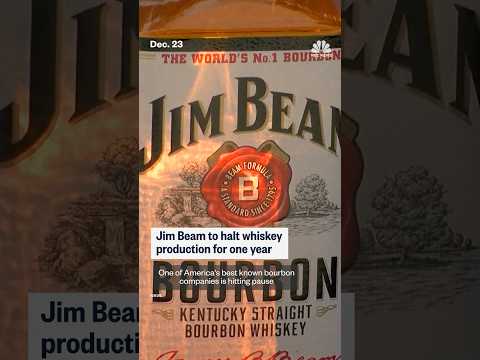
Production Adjustment - Jim Beam 将于 1 月 1 日暂停其在肯塔基州主要酿酒厂的生产 [1] - 暂停生产是由于陈酿酒桶供应增加以及对贸易战的不确定性 [1] Business Strategy - 公司表示暂停是必要的,同时投资于视觉增强 [1] Market Condition - 威士忌市场显示出紧张迹象 [1]
美国消费行业策略:是否已至抛售尾声?是否需准备行业轮动?-U.S. Consumer Strategy; have we reached capitulation yet & should we prepare for a sector rotation_ Webinar Transcript
2025-12-22 14:29
Summary of U.S. Consumer Strategy & Quantitative Research Webinar Industry Overview - The focus is on the U.S. Consumer sector, specifically Consumer Discretionary and Consumer Staples, which have underperformed the market by low double-digit percentages year-to-date in 2025 [3][18]. Core Insights and Arguments - **Market Performance**: 2025 has been challenging for the Consumer sector, with both Discretionary and Staples underperforming. Consumer Staples are now seen as attractive due to favorable price-to-forward earnings valuation multiples [3][31]. - **Sector Dynamics**: There is a contrasting performance between Consumer Staples and technology sectors, raising concerns about a potential tech bubble. Economic factors such as cutbacks in healthcare and SNAP benefits for low-income consumers, alongside inflation, could lead to an economic slowdown [4][19]. - **Investment Recommendations**: Focus on Consumer stocks that are: 1. More international 2. Exposed to higher-income consumers 3. Defensive in nature 4. Not facing idiosyncratic pressures that are not fully priced in [3][22]. - **Key Themes**: Tariff volatility, GLP-1 drug uptake, and consumer bifurcation are critical themes to monitor. Lower-income households are pressured by cutbacks, while higher-income households may benefit from upcoming tax breaks [5][20]. Subsector Recommendations - **Consumer Staples**: Emphasis on companies with international exposure in Soft Beverages and Household & Personal Care, as well as defensive Broadline Retailers. Caution is advised around companies negatively impacted by GLP-1 drug uptake [6][22]. - **Consumer Discretionary**: Focus on higher-quality names with reliable earnings performance. Caution is advised for those without a quality bias, although companies catering to higher-income consumers may benefit from tax breaks in 2026 [6][22]. Performance Metrics - **Consumer Discretionary**: - Best performers include Casinos (23.7%), Apparel Retail (22.7%), and Automotive Retail (19.1%). Weakest sectors include Textiles, Apparel, and Luxury Goods (2.1%) [27][28]. - **Consumer Staples**: - Dollar Stores (49.5%) and Tobacco (29.8%) are leading, while Food Producers (-7.3%) and Alcoholic Beverages (-28.6%) are lagging [29][30]. Valuation Insights - **Valuation Multiples**: Discretionary multiples are about 10% cheaper than historical averages, while Staples are in line with historical averages despite underperformance [31][32]. - **Stock Performance Drivers**: In 2025, multiple expansion has driven stock performance more than earnings growth in both sectors [44]. Earnings Revisions - **Sales Expectations**: Remained stable across consumer discretionary sectors, while earnings per share revisions have shown significant dispersion, particularly declining in textiles and luxury goods due to tariff impacts [51][52]. Conclusion - The current environment is characterized by significant sector rotation and stock-picking opportunities. Analysts recommend focusing on high-quality, defensive stocks with international exposure as the market navigates through economic uncertainties and potential sector shifts [21][22].


Jim Cramer on Diageo: “I See A Lot of Their Lines of Business Not Doing Well”
Yahoo Finance· 2025-12-21 15:07
Group 1 - Diageo plc (NYSE:DEO) is facing challenges in its business lines, with a noted decline in performance across various segments [1][2] - The company offers a dividend yield of 5.6%, which may provide some support for the stock price despite the overall business struggles [1] - There is a growing trend among consumers, particularly younger generations, towards health and wellness, which negatively impacts alcohol consumption [2] Group 2 - The competitive landscape for alcoholic beverages is intensifying, with alternatives like gummies gaining popularity, leading to a preference shift away from traditional alcohol products [2] - Comparatively, certain AI stocks are perceived to have greater upside potential and lower downside risk than Diageo, indicating a shift in investment focus [2]

封关首日,海南酒市“慢热”?
Sou Hu Cai Jing· 2025-12-19 11:43
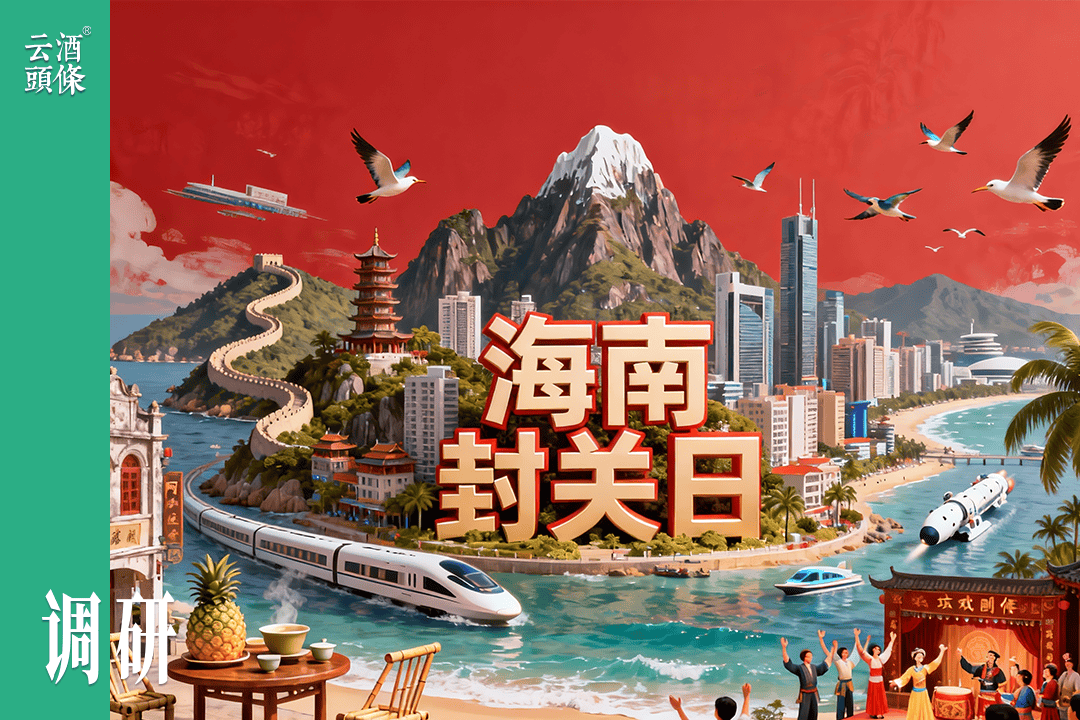
Core Viewpoint - The liquor market in Hainan has not shown significant reactions to the recent closure of the island, primarily due to unchanged tax rates on alcoholic beverages [2][3][4]. Group 1: Market Response - Despite widespread attention on the closure, local liquor market activity remains subdued, with many distributors noting minimal impact from the new policies [2][3]. - The tax rate for liquor has not changed, which is a key reason for the slow market response [3][4]. - The first day of the closure saw strong sales in other imported products like electronics and cosmetics, but the liquor sector remained quiet [3][4]. Group 2: Future Outlook - Industry experts believe that as the self-trade port policies are refined, the liquor market will gradually warm up [3][5]. - The self-trade port is expected to attract large enterprises and high-end talent, which could significantly benefit the liquor industry in the long run [5][9]. - The liquor market in Hainan, although currently valued at 60-70 billion yuan (approximately one-tenth of markets in Henan and Shandong), is seen as a potential hub for the export of Chinese liquor [9][10]. Group 3: Industry Developments - Numerous liquor companies, including major brands like Moutai and Fenjiu, have established operations in Hainan, indicating a strategic focus on the region [7][8]. - The number of liquor-related enterprises in Hainan has been increasing, with 567 production-related companies and 3,209 wholesale businesses reported [8]. - The AIIC Wine Industry Innovation and Investment Conference has been successfully held in Hainan, facilitating connections between the liquor industry and capital investment [9].
MGP Ingredients Announces Board Transition
Businesswire· 2025-12-16 21:30
Core Insights - MGP Ingredients, Inc. announced the retirement of Karen Seaberg from its Board of Directors after over 15 years of service, effective December 14, 2025, and the appointment of Julie Francis as a new director, effective December 15, 2025 [1][2][3] Group 1: Leadership Transition - Karen Seaberg has served as a long-standing director and Chairman of the Board from 2014 to 2024, providing leadership during significant growth and transformation periods for the company [2] - Julie Francis, the current CEO, has been recognized for her strong leadership and strategic focus, which is expected to enhance the Board's effectiveness as the company continues to execute its long-term strategy [3] Group 2: Company Background - MGP Ingredients, Inc. has been operational since 1941, focusing on the alcoholic beverage and specialty ingredient industries through three segments: Branded Spirits, Distilling Solutions, and Ingredient Solutions [4] - The company is a leading spirits distiller with a portfolio of premium brands, including Penelope, Rebel, Remus, and Yellowstone bourbons, as well as El Mayor tequila, and operates distilleries in Indiana and Kentucky [4]

