
债券

Search documents
20年期日本国债收益率上升3.0个基点至3.015%
Mei Ri Jing Ji Xin Wen· 2026-01-05 00:56
Group 1 - The 20-year Japanese government bond yield increased by 3.0 basis points to 3.015% [1]
债市开局转捩点
SINOLINK SECURITIES· 2026-01-04 15:34
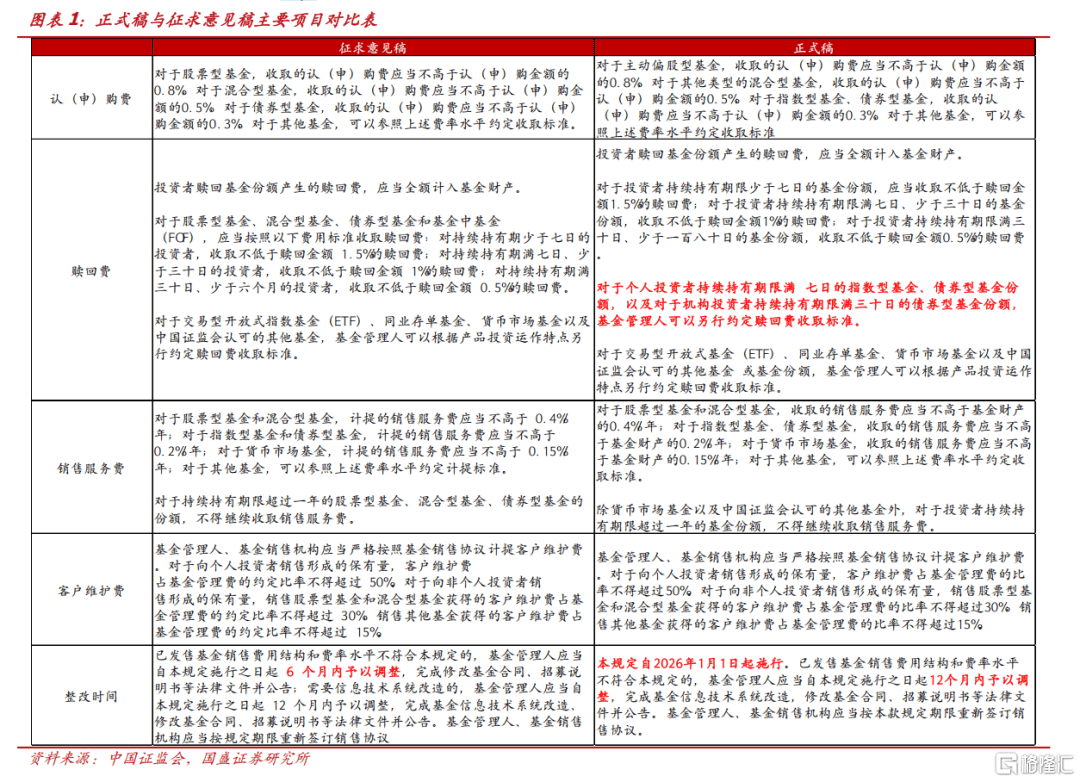
Group 1 - The bond market experienced significant volatility throughout 2025, with a notable concentration of investor positions in 1 to 3-year interest-bearing assets as a defensive strategy against net value uncertainty [2][10][11] - In December, the yield on 30-year government bonds reached a high of 2.2925%, reflecting the market's fragile sentiment and the impact of year-end assessments [10][11] - The introduction of new regulations regarding redemption fees for bond funds provided some relief to the anxious bond market, potentially reshaping investment strategies going into 2026 [10][11] Group 2 - The regulatory environment has shifted positively, with the new redemption fee rules easing previous constraints, which may lead to a recovery in the bond market [3][27] - The pricing of 5-year bank subordinated bonds is expected to see a valuation recovery of 5 to 10 basis points, with new pricing logic anticipated to return to the range of 2.1% to 2.15% [4][43] - The high yields on long-term credit bonds are influenced not only by the new redemption regulations but also by inherent liquidity issues, which may limit trading activity [3][38] Group 3 - The market has shifted focus from seeking excess returns to strictly controlling drawdowns, as evidenced by the significant trading volume in medium-term municipal bonds [11][22] - Fund managers have been the primary drivers of mid-term bond allocations, with net purchases reaching a weekly high of 21.2 billion, surpassing the average weekly volume from October to year-end [11][20] - The strategy of investing in 3-year AA+ municipal bonds has proven to be the most effective in December, highlighting the trend towards medium-term securities [22][23]
周观:公募基金销售新规正式稿落地,债市修复可期(2025年第51期)
Soochow Securities· 2026-01-04 14:03
Group 1: Report Industry Investment Rating - Not provided in the content Group 2: Core Viewpoints of the Report - The bond market at the end of 2025 was volatile and weak, mainly affected by year - end institutional behavior changes and strong December PMI data. The official draft of the new regulations on public fund sales is expected to have a positive impact on the bond market, and the bond market at the beginning of 2026 is likely to recover [13][16]. - In 2026 Q1, the bond market has both risks and opportunities. At the beginning of 2026, the possibility of a significant tightening of funds similar to that in early 2025 is small. Higher interest rates are beneficial for allocation - type institutions, while trading - type institutions can focus on capital interest rates and potential reserve requirement ratio and interest rate cuts [17]. - The "grand narrative" pricing and cyclical factors of gold are positive in 2026, and gold is expected to play an important role in different asset portfolios. The long - term value of the RMB is underestimated, but in the medium - term, the supporting role of macro - policies during the transformation from exogenous to endogenous growth needs to be considered [20]. - The latest PMI and EIA data in the US show increased inflationary pressure and slowed economic expansion momentum. The market's expectation of the Fed's interest rate cut has become more cautious. There are significant policy differences within the Fed, and the monetary policy path requires more data for confirmation [21]. Group 3: Summary According to Relevant Catalogs 3.1 One - Week Viewpoints - **Impact of PMI and New Fund Sales Regulations on the Bond Market**: From December 26 to 31, 2025, the yield of the 10 - year Treasury active bond rose 1.45bp from 1.8355% to 1.85%. On December 31, the release of PMI data initially suppressed the bond market sentiment, and the official draft of the new regulations on public fund sales had limited impact on the bond market that day [11][12]. - **Analysis of US Economic Data and Bond Yields**: The US December PMI initial values were all lower than expected, EIA inventory data changed, and the housing and labor markets showed mixed signals. The Fed's policy differences were significant, and the short - term interest - rate cut faced resistance [21][22][32]. 3.2 Domestic and Foreign Data Summaries - **Liquidity Tracking**: From December 29 to 31, 2025, the net investment in the open market was 117.1 billion yuan. The money market interest rates and bond yields showed certain changes [36][41]. - **Domestic and Foreign Macroeconomic Data Tracking**: Steel prices generally rose, LME non - ferrous metal futures official prices increased across the board. Overseas, the US stock and bond markets, and commodity prices also had corresponding fluctuations [59]. 3.3 Local Bond One - Week Review - **Primary Market Issuance Overview**: From December 29, 2025, to January 2, 2026, 9 local bonds were issued, with a total issuance amount of 26 billion yuan, including 11.5 billion yuan in refinancing bonds and 14.5 billion yuan in new special bonds. The net financing amount was 17.449 billion yuan, mainly invested in comprehensive projects [84]. - **Secondary Market Overview**: The local bond stock was 54.61 trillion yuan, with a trading volume of 133.992 billion yuan and a turnover rate of 0.25%. The top three provinces in terms of trading activity were Guangdong, Sichuan, and Zhejiang, and the top three active terms were 30Y, 10Y, and 20Y [97]. - **This Month's Local Bond Issuance Plan**: The issuance plans for Shandong and Zhejiang provinces from January 5 to 9, 2026, were provided [103]. 3.4 Credit Bond Market One - Week Review - **Primary Market Issuance Overview**: A total of 81 credit bonds were issued, with a total issuance of 74.42 billion yuan, a total repayment of 136.119 billion yuan, and a net financing of - 61.7 billion yuan. The net financing of urban investment bonds was - 8.818 billion yuan, and that of industrial bonds was - 52.882 billion yuan [104][105]. - **Issuance Interest Rates**: The issuance interest rates of short - term financing bonds, medium - term notes, and corporate bonds showed different degrees of change [118]. - **Secondary Market Transaction Overview**: The total trading volume of credit bonds was 242.219 billion yuan, with short - term financing bonds and medium - term notes having relatively large trading volumes [119]. - **Yield to Maturity**: The yields of short - term financing bonds, medium - term notes, corporate bonds, and urban investment bonds showed a differentiated trend [121][123][125]. - **Credit Spreads**: The credit spreads of short - term financing bonds, medium - term notes, corporate bonds, and urban investment bonds showed different degrees of change, with the credit spreads of urban investment bonds generally widening [128][131][134]. - **Grade Spreads**: The grade spreads of short - term financing bonds, medium - term notes, and corporate bonds generally widened, while those of urban investment bonds showed a differentiated trend [135][141][142]. - **Trading Activity**: The industrial sector had the largest trading volume of bonds, reaching 152.732 billion yuan. The top five most actively traded bonds in each category were listed [147]. - **Subject Rating Changes**: The subject ratings of several companies were upgraded, including Yichun Development Investment Group Co., Ltd., and Suining Tianyi Investment Group Co., Ltd. [149].
[1月4日]美股指数估值数据(港股2026年开门红,A股会跟上吗;全球指数星级更新)
银行螺丝钉· 2026-01-04 13:59
Group 1 - The article discusses the performance of global stock markets during the New Year holiday, noting a general decline from Monday to Wednesday, followed by a significant rise on Friday, with the global stock index increasing by 0.74% [4][7][8]. - The Hang Seng Index rose by 2.76% and the Hang Seng Technology Index increased by 4% on Friday, marking a strong start to 2026 [10]. - Chinese concept stocks in the US saw a notable increase of 4.64%, attributed to the recent appreciation of the Renminbi against the US dollar, which positively impacted the valuation of Renminbi-denominated assets [11][21]. Group 2 - The article highlights the impact of the Renminbi's strong performance on asset valuations, particularly during periods of US dollar depreciation, which has been observed over the past year [21][23]. - It mentions that the last bull market for A-shares and H-shares occurred during a similar dollar depreciation phase from 2019 to 2021, suggesting that continued dollar easing in 2026 could benefit these markets [25][26]. - The article also notes that interest and exchange rates are cyclical, indicating potential buying opportunities during rate hikes and selling opportunities during rate cuts [28][29]. Group 3 - A star rating system for global stock markets is introduced, indicating that the market was undervalued during certain periods in 2018, 2020, and 2022, with the current rating around 3 stars, suggesting a normal valuation [30][31]. - The article points out that while there are global stock index funds available in overseas markets, there are currently no such funds in mainland China, although a simulated global index investment strategy is available through advisory combinations [33]. Group 4 - The article promotes a new edition of the book "The Long-Term Investment Secret," which has been updated with nearly 30 years of data and includes new chapters on various asset classes, emphasizing the long-term benefits of stock investments [39][40]. - It concludes that a certain proportion of family assets should be allocated to stocks for wealth accumulation, despite the inherent volatility and risks associated with stock investments [41].

利率市场趋势定量跟踪:利率价量择时观点转向中性-20260104
CMS· 2026-01-04 13:04
Quantitative Models and Construction Methods 1. Model Name: Multi-Cycle Timing Model for Domestic Interest Rates - **Model Construction Idea**: The model uses kernel regression algorithms to identify the support and resistance lines of interest rate trends. It evaluates the breakthrough patterns of interest rate movements across different investment cycles to provide multi-cycle composite timing signals[9][21]. - **Model Construction Process**: 1. **Data Input**: Yield-to-Maturity (YTM) data for 5-year, 10-year, and 30-year government bonds is used as the basis for analysis[9][21]. 2. **Cycle Definition**: - Long cycle: Monthly frequency - Medium cycle: Bi-weekly frequency - Short cycle: Weekly frequency[9][21]. 3. **Signal Generation**: - For each cycle, the model identifies upward or downward breakthroughs in interest rate trends. - A composite score is calculated based on the number of consistent signals across the three cycles. If at least two out of three cycles show the same directional breakthrough, a timing signal is generated[9][21]. 4. **Final Signal**: - The final signal is classified as "neutral," "neutral oscillation," or "neutral with a slight upward/downward bias" based on the composite score[9][21]. - **Model Evaluation**: The model effectively captures interest rate trends and provides actionable timing signals for different bond maturities[9][21]. 2. Model Name: Multi-Cycle Timing Model for U.S. Interest Rates - **Model Construction Idea**: The domestic multi-cycle timing model is applied to the U.S. Treasury market to generate timing signals for U.S. interest rates[18]. - **Model Construction Process**: 1. **Data Input**: 10-year U.S. Treasury YTM data is used as the basis for analysis[18]. 2. **Cycle Definition**: - Long cycle: Monthly frequency - Medium cycle: Bi-weekly frequency - Short cycle: Weekly frequency[18]. 3. **Signal Generation**: - The model identifies upward or downward breakthroughs in interest rate trends for each cycle. - A composite score is calculated based on the number of consistent signals across the three cycles. If at least two out of three cycles show the same directional breakthrough, a timing signal is generated[18]. 4. **Final Signal**: - The final signal is classified as "neutral" or "neutral oscillation" based on the composite score[18]. - **Model Evaluation**: The model demonstrates adaptability to the U.S. market, providing consistent timing signals for U.S. Treasury yields[18]. --- Model Backtesting Results 1. Multi-Cycle Timing Model for Domestic Interest Rates - **5-Year YTM**: - Long-term annualized return: 5.47% - Maximum drawdown: 2.88% - Return-to-drawdown ratio: 1.9 - Short-term annualized return (since 2024): 2.1% - Maximum drawdown: 0.59% - Return-to-drawdown ratio: 3.57 - Long-term excess return: 1.06% - Short-term excess return: 0.77%[22][34] - **10-Year YTM**: - Long-term annualized return: 6.04% - Maximum drawdown: 2.74% - Return-to-drawdown ratio: 2.21 - Short-term annualized return (since 2024): 2.33% - Maximum drawdown: 0.58% - Return-to-drawdown ratio: 4.03 - Long-term excess return: 1.63% - Short-term excess return: 1.19%[25][34] - **30-Year YTM**: - Long-term annualized return: 7.32% - Maximum drawdown: 4.27% - Return-to-drawdown ratio: 1.71 - Short-term annualized return (since 2024): 2.95% - Maximum drawdown: 0.92% - Return-to-drawdown ratio: 3.22 - Long-term excess return: 2.42% - Short-term excess return: 2.65%[30][34] 2. Multi-Cycle Timing Model for U.S. Interest Rates - **10-Year YTM**: - Final signal: Neutral oscillation - Composite score: 1 upward breakthrough in the short cycle, no signals in the long and medium cycles[18][20] --- Quantitative Factors and Construction Methods 1. Factor Name: Interest Rate Structure Indicators (Level, Term, Convexity) - **Factor Construction Idea**: The factor set quantifies the structural characteristics of the interest rate market, including level, term, and convexity, to provide insights into market positioning and mean-reversion tendencies[6]. - **Factor Construction Process**: 1. **Level Structure**: - Definition: Average YTM across maturities - Current value: 1.58% - Historical percentiles: 18% (3 years), 11% (5 years), 5% (10 years)[6]. 2. **Term Structure**: - Definition: Slope of the yield curve - Current value: 0.55% - Historical percentiles: 50% (3 years), 34% (5 years), 40% (10 years)[6]. 3. **Convexity Structure**: - Definition: Curvature of the yield curve - Current value: 0.06% - Historical percentiles: 41% (3 years), 25% (5 years), 21% (10 years)[6]. - **Factor Evaluation**: These factors provide a comprehensive view of the interest rate market's structural dynamics, aiding in timing and allocation decisions[6]. --- Factor Backtesting Results 1. Interest Rate Structure Indicators - **Level Structure**: Current value: 1.58%, historical percentiles: 18% (3 years), 11% (5 years), 5% (10 years)[6] - **Term Structure**: Current value: 0.55%, historical percentiles: 50% (3 years), 34% (5 years), 40% (10 years)[6] - **Convexity Structure**: Current value: 0.06%, historical percentiles: 41% (3 years), 25% (5 years), 21% (10 years)[6]
一月债市的风险和机会
Sou Hu Cai Jing· 2026-01-04 12:14
Core Viewpoint - The bond market weakened in the last week before the holiday, with government bond rates rising while credit bonds strengthened. The expectation is for a recovery in the bond market post-holiday due to regulatory changes and easing bank pressure [1][7]. Group 1: Market Performance - In the last week before the holiday, the 10-year and 30-year government bond rates increased by 1.0bps and 4.4bps to 1.85% and 2.27%, respectively, while short-term rates also rose [1][7]. - Credit bonds showed strength, with 3-year and 5-year AAA secondary capital bond rates slightly declining, and the 1-year AAA certificate of deposit rate decreasing by 1.0bps to 1.63% [1][7]. Group 2: Regulatory Changes - The new public fund fee regulations, which are more lenient than the draft proposal, are expected to alleviate redemption pressure and support the bond market recovery. The final version allows for certain exemptions on redemption fees for long-term holders [1][7]. Group 3: Bank Pressure and Supply - The easing of bank indicator pressures, particularly from large banks, is anticipated to enhance overall allocation strength in the bond market. The Basel framework adjustment will reduce the parallel shift limit from 250bps to 225bps, effective January 1, 2026 [2][9]. - The government bond issuance plan for the first quarter is set at 2.1 trillion, lower than the 2.5 trillion planned for the same period in 2025, but with an accelerated issuance schedule [9][10]. Group 4: Credit and Funding Dynamics - The concentration of credit issuance in January is expected to impact the bond market. The proportion of first-quarter credit issuance has increased from 36.2% in 2020 to an estimated 59.8% in 2025, with January alone potentially accounting for 35% of annual credit [10][14]. - Despite the anticipated surge in credit issuance, current credit demand remains low, indicating that the impact on the bond market may be more rhythmical rather than trend-based [14][15]. Group 5: Future Outlook - The bond market is expected to recover post-holiday, with smoother recovery anticipated after late January, despite ongoing supply pressures and increased funding demands [15]. - The expectation is that the 10-year government bond may reach new lows in the first half of the year [15].
固定收益周度策略报告:超长债的“票息价值”-20260104
SINOLINK SECURITIES· 2026-01-04 12:02
超长债偏弱运行的三重压力 岁末阶段,收益率曲线整体沿陡峭化路径运行,与我们此前提示一致。在长端整体承压的背景下,超长期限调整幅度 更为突出。这反映出超长端的三重压力正在被广泛预期和集中定价: 供给压力不小,而流动性红利近尾声。从发行、存量与成交期限三个维度进行国际比较可见,当前国内政府债融资和 存量期限结构与美国较为相似。而若与德日对比,尤其是在低利率环境与跨周期资金需求的双重推动下,仍不排除有 进一步向长期限结构演变的空间。然而,与融资期限的长期化相比,超长债流动性的提升可能已接近瓶颈。国内超长 债交易活跃度已显著高于海外成熟市场,进一步扩张空间受限。这些潜在变化方向,对超长债利差构成向上压力。 对融资成本的政策导向从"推动下降"转向"低位运行",从比价角度制约超长端利率下行空间。央行措辞变化反映 出,社会融资成本或已处于政策合意的低位水平。而过去五年间,30 年期国债利率累计下行约 146BP,与企业贷款利 率 147BP 的降幅基本持平。比价维度看,超长端利率脱离比价关系而下行的动力显著降低。 需求格局存在挑战。当前市场对久期边际偏好减弱、负债端对波动容忍度下降,机构对超长债的承接力弱化。对 30- 1 ...
【金融发展】2025年国债市场年鉴:筹资精准服务国家战略 收益率于预期交织中锚定“新平衡”
Xin Lang Cai Jing· 2026-01-04 11:30
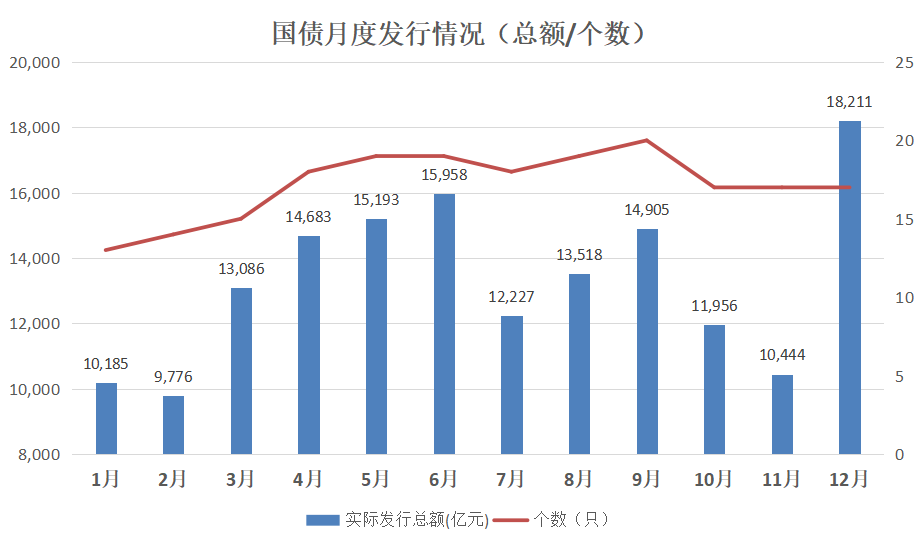
Core Viewpoint - The 2025 Chinese government bond market has undergone deep calibration amid frequent macro narratives and intense long-short logic battles, characterized by record supply and a proactive issuance pace in the primary market, effectively supporting active fiscal policies while the secondary market experienced a narrow range of fluctuations in the 10-year bond yield, which gradually shifted downward throughout the year [1][13]. Group 1: Primary Market Dynamics - In 2025, the primary market for government bonds achieved a historic leap under the theme of "active fiscal policy moderately strengthened, quality improved," with notable features including increased supply scale, scientifically advanced issuance pace, and continuous optimization of maturity structure [2][15]. - The total issuance of government bonds reached a historic high of 16,014.02 billion yuan, a significant increase of 28.37% compared to 12,474.83 billion yuan in 2024, with 206 bonds issued throughout the year [2][15]. - The issuance of special bonds focused on long-term funding for national strategic security areas and key projects, with the issuance of ultra-long special bonds reaching 1.3 trillion yuan, expected to significantly boost annual GDP growth [5][19]. Group 2: Interest Rate Trends - The overall issuance interest rates of government bonds declined, effectively guiding the financing costs across society. The short-term interest rates (1-3 years) ranged from 1.16% to 1.79%, while the 10-year bond issuance rate stabilized around 1.78% [6][19]. - The systematic decline in issuance costs of government bonds, as a risk-free rate anchor, directly contributed to the reduction of comprehensive financing costs in the bond market and the real economy, achieving efficient unity between fiscal sustainability and financial benefits to the real sector [6][19]. Group 3: Secondary Market Developments - The secondary market for government bonds in 2025 was characterized by complex dynamics, with the 10-year bond yield fluctuating between approximately 1.6% and 1.9%, undergoing a "four-round game" of expectations that ultimately established a new oscillating equilibrium [7][21]. - The first round saw a rapid correction of overly optimistic expectations regarding monetary easing, with yields rebounding nearly 40 basis points by mid-March [9][21]. - The fourth round featured a key institutional benefit with the central bank's announcement to restart government bond trading operations, which was interpreted as a significant step in enhancing liquidity management tools and stabilizing long-term expectations [10][22]. Group 4: Strategic Role of Government Bonds - The evolution of the government bond market in 2025 transcended mere financing and trading, extending its functions to monetary policy operations, financial openness, and the construction of the national credit system [11][23]. - The "stabilizer" and "attractiveness" roles of RMB assets have strengthened, with foreign investors steadily increasing their holdings, leading to broader inclusion of government bonds in major global bond indices [11][23]. - The modernization of government bond management, including the incorporation of bond trading into the central bank's regular monetary policy toolbox, marks a significant milestone in establishing a modern central banking system [11][23]. Group 5: Future Outlook - The government bond market is expected to continue evolving under the overarching theme of "high-quality development," balancing necessary government financing, reducing debt costs, and maintaining financial system stability [12][24]. - As market depth, product innovation, and institutional openness progress, the yield curve of government bonds will increasingly serve as a benchmark for asset pricing across society [12][24]. - Market participants will need to shift from merely chasing interest rate trends to developing a deeper understanding of macro logic, seizing structural opportunities, and effectively managing interest rate risks to succeed in the new balanced market [12][24].
【财经分析】2026年债市展望:震荡中寻机,结构分化下的配置之道
Xin Hua Cai Jing· 2026-01-04 08:11
Core Viewpoint - The bond market is expected to exhibit structural differentiation between interest rate bonds and credit bonds in 2026, influenced by a complex interplay of monetary policy and economic recovery factors [1][3][5]. Group 1: Market Trends - In Q4 2025, the interest rate bond market showed a recovery trend after a bearish adjustment in Q3, with the 10-year government bond yield fluctuating between 1.7% and 1.85% [1]. - The credit bond market experienced increased transaction volumes but widening credit spreads, indicating a divergence from interest rate bonds [1][2]. - The issuance scale of credit bonds decreased, with corporate bonds showing zero issuance, reflecting a weak overall supply willingness despite some positive growth in company bonds and medium-term notes [2]. Group 2: Influencing Factors - Positive factors for the bond market include a moderately loose monetary policy, which may support market performance, especially if the U.S. further lowers interest rates [3]. - Negative factors include rising inflation pressures, easing "asset scarcity," and changes in supply structure, which could impact market sentiment and demand [4]. - The overall bond market in 2026 is expected to experience wide fluctuations with a moderate upward trend, particularly in the interest rate bond sector [5]. Group 3: Investment Strategies - Investment strategies should focus on short-term opportunities in interest rate bonds while avoiding duration risks, particularly in the first quarter of 2026 [6]. - Credit bond investments should target structural opportunities, emphasizing coupon strategies, with a focus on high-grade short-duration credit bonds to mitigate risks [6][7]. - The expansion of technology innovation bonds is anticipated to reshape credit bond allocation strategies, with a recommended approach of combining short-term coupons with mid-to-long-term timing [7].
宏观周报:国内地产明确定调,地缘风险再度上行-20260104
Yin He Zheng Quan· 2026-01-04 05:31
Domestic Macro - Demand Side - During the New Year holiday, consumer demand for travel and cinema surged, with retail sales of passenger cars showing a narrowing year-on-year decline of 19.5%[1] - In December 2025, the external demand showed an increase in volume but a decrease in price, with the Baltic Dry Index (BDI) at 2315.2, reflecting a 5.1% increase[1] Domestic Macro - Production Side - The PMI and high-frequency data showed a divergence, with the PMI at 50.1% in December 2025, indicating no significant improvement in physical workload[1] - The production impact of the late Spring Festival in 2026 was minimal, with the production index showing a 3.42 percentage point increase compared to November 2025[1] Price Performance - CPI showed fluctuations in pork prices and a continuous rise in fruit prices, with a 0.43% increase noted[2] - PPI indicated a weakening in crude oil prices while non-ferrous metal prices showed volatility, with WTI at 1.77%[2] Fiscal Policy - In January 2026, local government bond issuance plans are set at 580 billion, reflecting a 104.4% increase compared to the previous year[2] Monetary and Liquidity Conditions - The yield curve for government bonds has shifted upward, with the SHIBOR 007 rate at 1.9560%, up by 51 basis points[2] Global Macro - Global financial market activity has cooled due to the New Year holiday, impacting trading volumes[2]