
茶饮

Search documents
7家消费公司拿到新钱;霸王茶姬三季度GMV79.3亿元;2026年我国即时零售规模将破万亿|创投大视野
36氪未来消费· 2025-11-29 12:23
Group 1: Investment and Financing Activities - "Bixing Coffee" completed a Series B financing round of several tens of millions, led by Suzhou Agricultural Development Industry Science and Technology Fund, following previous rounds in 2022 and 2024 [4][5] - "Tuozhu Technology" is nearing completion of a new financing round with a valuation potentially reaching $10 billion, although the company has denied the accuracy of this information [6] - "Ruiyun Cold Chain" recently completed an A+ round financing of nearly 100 million RMB, aimed at enhancing cold chain logistics efficiency through digitalization [7] - "TianTian BaiYing" completed a Series A financing round of several tens of millions, focusing on providing intelligent maintenance services to B-end clients [8] - "Laimou Technology" completed a Series A+ financing round of several tens of millions, marking its fourth round of financing since 2025 [9] - "Hypershell" completed two financing rounds totaling $70 million, with a post-investment valuation approaching $400 million [10] - "Smart Doubling Digital Human" received strategic investment from Zhiyuan Robotics [11][12] Group 2: Company Performance and Market Trends - "Bawang Tea Ji" reported a GMV of 79.3 billion RMB in Q3 2025, with a year-on-year decline of 4.5%, while overseas GMV grew by 75.3% [13][14] - "Mandi International" submitted an IPO application to Hong Kong Stock Exchange, aiming to become the first stock focused on hair loss prevention, with a projected revenue growth from 9.82 billion RMB in 2022 to 14.55 billion RMB in 2024 [15] - "Jasmine Milk White" has expanded its overseas presence, opening new stores in Indonesia and the US, with total stores exceeding 2000 globally [16][17] - "Lucky Coffee" announced its global store count surpassed 10,000, achieving rapid growth in the coffee market [18] Group 3: Industry Insights and Future Projections - The instant retail market in China is projected to exceed 1 trillion RMB by 2026, with a compound annual growth rate of 12.6% during the 14th Five-Year Plan period [21] - Global luxury goods consumption is expected to grow at a rate between -1% and 1% in 2025, with a recovery anticipated in 2026 [22] - High-net-worth individuals are shifting their gift-giving behavior, with travel becoming the preferred way to celebrate success, rising from 50% in 2024 to 64% in 2025 [23]


霸王茶姬第三季度财报电话会:连续三个季度闭店率仅0.3%
Xin Jing Bao· 2025-11-29 08:47
Core Insights - Bawang Chaji (NASDAQ: CHA) reported its Q3 2025 financial results, showing a total GMV of 7.93 billion RMB, with overseas GMV exceeding 300 million RMB, marking a year-on-year increase of over 75% for two consecutive quarters [1][6] - The company has a total of 7,338 global stores as of September 30, 2025, and registered 222 million users on its mini-program [1][11] - Bawang Chaji has implemented a "high-quality development strategy" focusing on user value, product matrix expansion, and enhancing store experiences [1][2] Financial Performance - The net income for Q3 was 3.208 billion RMB, with an adjusted net profit of 503 million RMB [1][10] - The company has achieved profitability for 11 consecutive quarters, with a cash reserve of 9.142 billion RMB and no interest-bearing debt [10][11] - A special cash dividend of approximately 177 million USD was announced, reflecting the company's commitment to enhancing shareholder value [10] Market Expansion - Bawang Chaji's overseas GMV has shown significant growth, with a year-on-year increase of 75.3% and a quarter-on-quarter increase of 27.7% [6] - The company opened 54 new overseas stores in Q3, bringing the total to 262, with notable expansions in Malaysia, Singapore, and Vietnam [6][9] - The brand's collaboration with Pop Mart in Southeast Asia has led to record sales, with new product launches achieving high market penetration [6] Product and Brand Strategy - The company is focusing on a comprehensive brand upgrade, enhancing customer experience through the establishment of themed stores and optimizing the product offering [2][4] - A new product matrix and the introduction of a 4.0 menu are planned, including the launch of a new variant of the popular "Boyar Absolute String" tea [2][4] - Bawang Chaji is exploring new consumption scenarios, such as breakfast and evening offerings, to improve store utilization [4] Store Experience and Innovation - The opening of the "Super Tea Warehouse" in Hong Kong, the largest store globally, offers an immersive tea culture experience [5][7] - The company is enhancing customer experience by showcasing the tea-making process, similar to coffee extraction, to attract consumers [4][5] - The brand is actively developing unique store formats, such as cultural theme stores, to strengthen its market differentiation [2][5]

霸王茶姬发布三季度财报 将进行首次现金分红
2 1 Shi Ji Jing Ji Bao Dao· 2025-11-29 02:59
Core Insights - Bawang Chaji (NASDAQ: CHA) reported its Q3 2025 financial results, showing a total GMV of 7.93 billion yuan and net revenue of 3.21 billion yuan, with adjusted net profit of 503 million yuan [2] - The company has achieved profitability for 11 consecutive quarters and has a healthy cash flow with total cash and equivalents amounting to 9.14 billion yuan and no interest-bearing debt [2] - The board declared a special cash dividend of approximately 177 million USD, equating to 0.92 USD per share for shareholders [2] Group 1: Financial Performance - As of September 30, 2025, Bawang Chaji's global store count reached 7,338 [2] - The registered member count for the company's mini-program reached 222 million, reflecting a year-on-year growth of 36.7% [2] - The overseas GMV exceeded 300 million yuan, marking a year-on-year increase of 75.3% and a quarter-on-quarter growth of 27.7% [3] Group 2: International Expansion - Bawang Chaji entered the Philippines and Vietnam markets during Q3, with overseas store count reaching 262 [3] - The company opened three stores in the Philippines on August 29, 2025, selling over 23,000 cups in the first three days [3] - In Malaysia and Singapore, the company launched popular new products and activities, achieving significant sales milestones [3] Group 3: Product Innovation and Market Strategy - In Q3, Bawang Chaji introduced new products like "Dian Olive" vitality light fruit tea and regional limited editions that gained popularity [5] - The company opted for "high-quality development" amidst market volatility, maintaining member growth without engaging in price wars [4] - The largest "super tea warehouse" opened in Hong Kong, showcasing innovative tea-making methods and enhancing consumer experience [4]
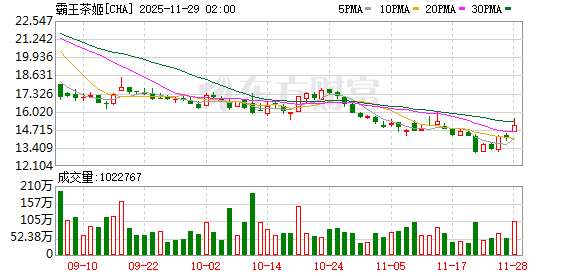
股价大涨超6%!霸王茶姬Q3营收同比下降9.4%,海外GMV同比涨超75%
美股IPO· 2025-11-29 01:27
霸王茶姬Q3营收32.08亿元,同比下降9.4%。Non-GAAP净利润5.028亿元,同比下降22.2%。公司门店总数达7338家,同比增长25.9%,会员数突破 2.22亿,大中华区单店GMV下滑28.3%,而海外GMV同比激增75.3%。 核心运营数据: | Kev Operating Data | | | | | | | --- | --- | --- | --- | --- | --- | | | Sep 30, 2024 | Dec 31, 2024 | Mar 31, 2025 | Jun 30, 2025 | Sep 30, 2025 | | Total teahouses | 5,828 | 6,440 | 6.681 | 7,038 | 7,338 | | Franchised teahouses | 5.676 | 6.271 | 6.490 | 6.799 | 6.971 | | Greater China market | 5,566 | 6.145 | 6,362 | 6.666 | 6.836 | | Overseas markets | 110 | 126 | 128 | 13 ...
深夜全线爆发,白银创历史新高
Zheng Quan Shi Bao· 2025-11-28 23:03
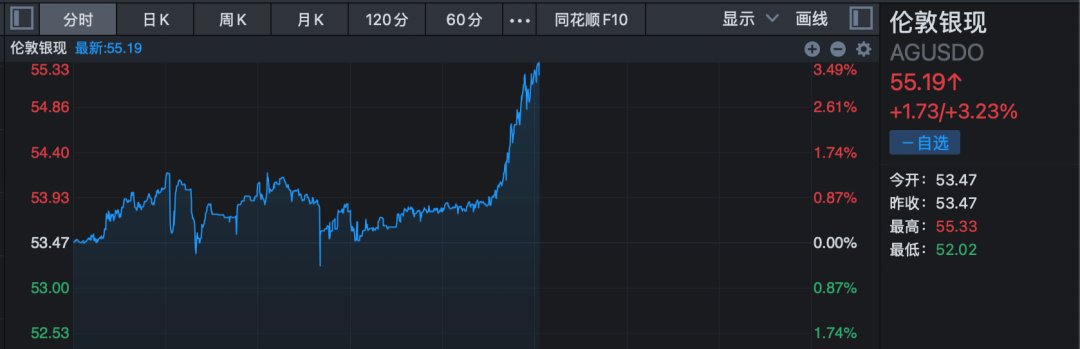
Market Overview - US stock indices opened higher, with the Dow Jones Industrial Average at 47,604.20, up 0.37%, the Nasdaq at 23,273.50, up 0.25%, and the S&P 500 at 6,829.45, also up 0.25% [4] - Technology stocks surged, particularly storage chip companies, with Micron Technology rising over 2% and Western Digital increasing nearly 1% due to a global supply-demand imbalance in the DRAM market driven by surging AI computing needs [4] - The Nasdaq China Golden Dragon Index rose nearly 1%, with popular Chinese concept stocks generally increasing [4] Precious Metals - Spot gold rose to over $4,200 per ounce, gaining more than 1% in a single day [1] - Spot silver increased by 3.23%, reaching a new historical high of $55.19 per ounce [1][2] Base Metals - Base metals experienced a significant rally, with London tin rising nearly 3% and New York copper increasing by 2% [2] - Other metals such as aluminum and zinc also saw price increases [2][3] Company Performance - Bawang Tea reported a total GMV of 7.93 billion yuan and net income of 3.208 billion yuan for Q3 2025, with a registered user base of 222 million, reflecting a 36.7% year-on-year growth [5][6] - Pony.ai announced a revenue of 181 million yuan for Q3 2025, a 72% increase year-on-year, with its Robotaxi business revenue growing by 89.5% [6] - NIO delivered 87,100 vehicles in Q3 2025, a 40.8% increase year-on-year, with revenue reaching 21.79 billion yuan, up 16.7% [7] - Hesai Technology launched new high-performance chips and advanced lidar technology during a recent event [7]
霸王茶姬发布第三季度财报 海外市场GMV增长超75%
Zheng Quan Shi Bao Wang· 2025-11-28 15:11
Core Insights - The company reported a total GMV of 7.93 billion yuan for Q3 2025, a decrease from 8.3 billion yuan in the same period of 2024 [1] - Net revenue for Q3 2025 was 3.208 billion yuan, down from 3.54 billion yuan year-on-year [1] - Adjusted net profit for Q3 2025 was 503 million yuan, compared to 646 million yuan in the previous year [1] Financial Performance - The company had a total cash and cash equivalents of 9.142 billion yuan as of September 30, 2025, with no interest-bearing debt, indicating healthy cash flow [1] - A special cash dividend of approximately 177 million USD will be distributed, equating to 0.92 USD per share for eligible shareholders [1] Business Segments - Franchise tea houses generated net revenue of 2.812 billion yuan in Q3 2025, down from 3.299 billion yuan in the same period of 2024, primarily due to a decrease in cup sales [1] - Franchise tea shops accounted for 87.6% of the company's total net revenue in Q3 2025 [1] International Expansion - The overseas business saw a GMV exceeding 300 million yuan, with a year-on-year increase of 75.3% and a quarter-on-quarter growth of 27.7% [2] - The company entered the Philippines and Vietnam markets in Q3 2025, with overseas store count reaching 262 [2] - The company opened three new stores in the Philippines on August 29, 2025, marking its official entry into the market [2] Market Strategy - The company refrained from participating in aggressive price competition during the intensified delivery battle initiated by e-commerce platforms, while membership numbers grew to 222 million, a 36.7% increase year-on-year [2] - The company launched a "super tea warehouse" in Hong Kong and opened several themed stores in mainland China during Q3 2025 [2] - Product innovation included the nationwide launch of "Dian Olive" vitality light fruit tea and regional limited-time offerings [2]
霸王茶姬三季度财报电话会:连续11个季度盈利,连续三季度闭店率仅0.3%
Xin Lang Cai Jing· 2025-11-28 15:02
Core Insights - The company reported a total GMV of 7.93 billion RMB for Q3 2025, with overseas GMV exceeding 300 million RMB, marking a year-on-year increase of over 75% for two consecutive quarters [2] - Adjusted net profit for Q3 reached 503 million RMB, indicating strong financial performance [2] - As of September 30, the company held cash and cash equivalents totaling 9.14 billion RMB, with no interest-bearing debt [2] Financial Highlights - The board of directors announced a special cash dividend totaling approximately 177 million USD, reflecting the company's commitment to enhancing shareholder value [2] - The registered membership reached 222 million, representing a year-on-year growth of 36.7% [2] - The store closure rate has remained stable at 0.3% for three consecutive quarters [2]

霸王茶姬三季度财报电话会:海外市场成重要增长引擎,马来门店突破200家
Xin Lang Cai Jing· 2025-11-28 15:02
Core Insights - The core viewpoint of the article highlights the significant growth of the company, BaWang ChaJi, particularly in its overseas markets, as evidenced by its financial performance and expansion efforts in Q3 2025 [1] Financial Performance - As of September 30, 2025, BaWang ChaJi reported a total GMV of 7.93 billion yuan, with overseas GMV exceeding 300 million yuan, marking a year-on-year increase of over 75% for two consecutive quarters [1] - The company's net revenue for Q3 reached 3.208 billion yuan, with an adjusted net profit of 503 million yuan [1] Store Expansion - The total number of global stores reached 7,338, with 54 new stores opened overseas during Q3, including entries into the Philippines and Vietnam [1] - As of September 30, 2025, the total number of overseas stores reached 262, with Malaysia accounting for 196 of these [1] Product Localization Success - BaWang ChaJi's localized products have seen success, such as the limited edition "Qingyu Xiangti" series of fresh milk tea in Malaysia, which accounted for 50% of the cup volume on the first day of the event [1] - In Singapore, the same product achieved an average daily cup volume of over 500 cups in its first week [1] - The "Huatianshan Oolong" tea reached a cup volume share of over 30% within 15 days of its launch in Indonesia and 16% in Thailand [1]
霸王茶姬三季度财报电话会:将推出全新产品矩阵和菜单
Xin Lang Cai Jing· 2025-11-28 15:02
责任编辑:何俊熹 11月28日,霸王茶姬公开了2025年第三季度财报。财报显示,截至今年9月30日的第三季度,霸王茶姬 全球门店数达到7338家。三季度总GMV达79.30亿元,其中海外GMV超3亿元,连续两个季度同比上涨 超75%。公司净收入32.08亿元,经调整后净利润为5.03亿元。截至9月30日,霸王茶姬小程序注册会员 用户数达到2.22亿。 财报之后的分析师电话会上,关于高质量产品体系的打造,霸王茶姬创始人、董事长兼全球CEO张俊杰 表示:"具体动作包括执行严格的品质标准,对基础核心原料进行全面升级,加强从源头到门店的全链 路食品安全建设等。最关键的是,霸王茶姬将推进4.0菜单落地,并配合新菜单推出像特调纯茶这样的 新品类,丰富产品矩阵。" ...
美股三大指数集体高开 美光科技涨超3%
Zheng Quan Shi Bao· 2025-11-28 14:54
Core Viewpoint - The U.S. stock market opened higher with all three major indices showing positive movement, indicating a bullish sentiment among investors [1] Group 1: Market Performance - The Dow Jones Industrial Average increased by 0.12% [1] - The Nasdaq Composite rose by 0.35% [1] - The S&P 500 index gained 0.15% [1] Group 2: Company Highlights - Micron Technology saw its stock price rise by over 3% [1] - Bawang Tea Ji experienced a nearly 4% increase in its stock price [1]
