高端装备

Search documents
青春华章丨制造业“数智化”,“脑力”岗位需求旺
Nan Jing Ri Bao· 2025-10-19 23:56
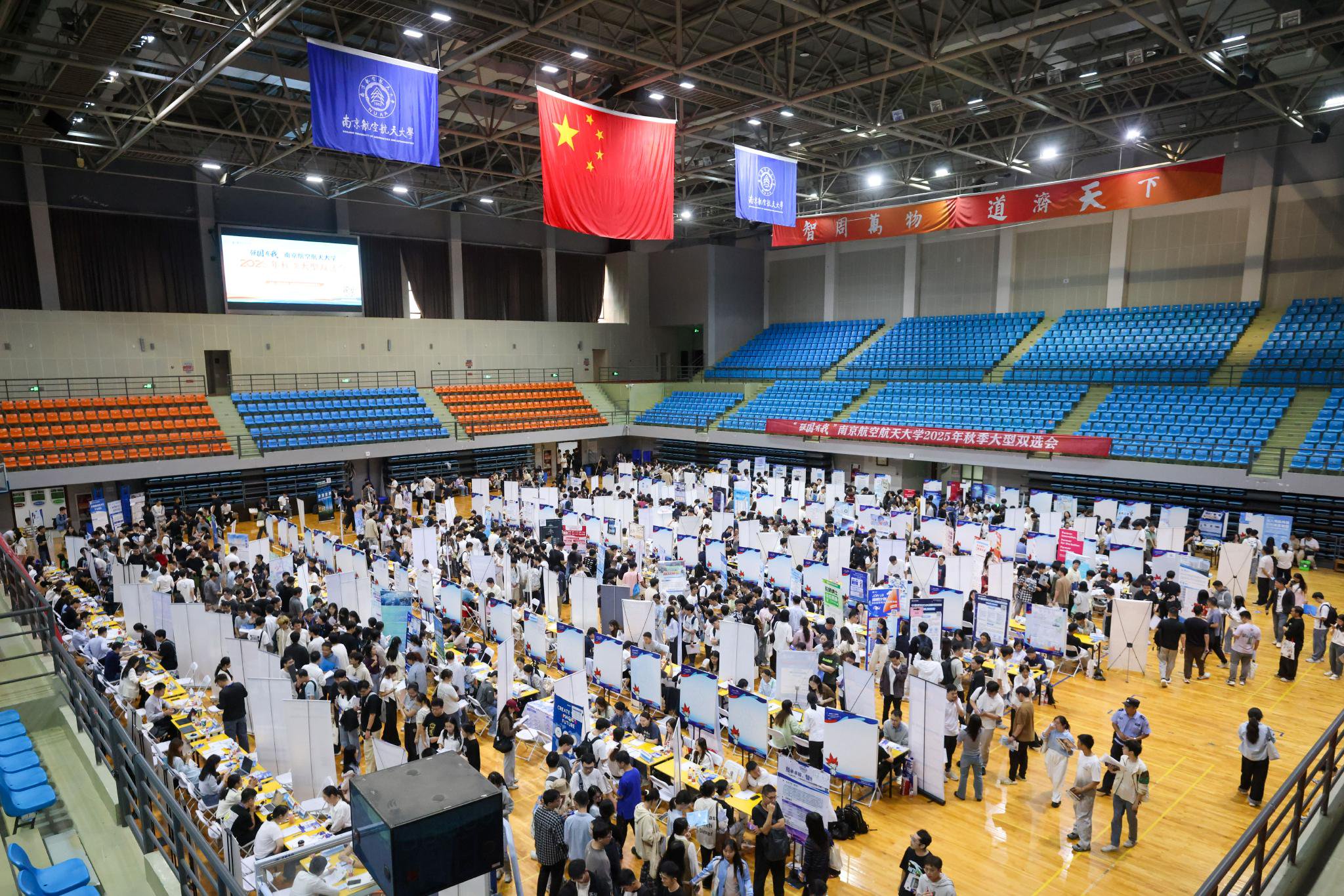
Group 1 - The "Strong Country with Me" job fair at Nanjing University of Aeronautics and Astronautics featured 237 manufacturing companies, highlighting the sector's dominance in recruitment [1][3] - The manufacturing industry is undergoing a "digital intelligence" upgrade, shifting job demands from physical labor to intellectual roles, with a focus on positions such as smart manufacturing engineers and integrated circuit engineers [3][5] - Companies like Chip Love Technology and GoerTek are expanding their workforce, indicating a growing demand for technical talent in research and development roles [5][7] Group 2 - Employers are increasingly prioritizing "practical experience" and "professional matching" when selecting candidates, with students who have hands-on experience being more favored [7][8] - There is a noticeable increase in graduates' willingness to work in the manufacturing sector, driven by the potential for long-term career growth and stability despite initial challenges [8][9] - The Nanjing University of Aeronautics and Astronautics has implemented a comprehensive employment training system to enhance students' job readiness, focusing on technological innovation as a core competency for future employment [9]


沪市芯片、生物医药、高端装备和新能源企业“十四五”数量翻倍
2 1 Shi Ji Jing Ji Bao Dao· 2025-10-19 10:19
Group 1 - The proportion of technology innovation companies in the Shanghai Stock Exchange has increased from 32% to 41% over the past five years, with their market value share rising from 27% to 32% [1] - Nearly 70% of newly listed companies in the past five years are technology innovation enterprises, with significant growth in integrated circuits, biomedicine, high-end equipment, and new energy sectors [1][3] - The Shanghai Stock Exchange has implemented various reforms, including the "Science and Technology Innovation Board" policies, resulting in 376 new listings, with a notable number of unprofitable and special equity structure companies [3] Group 2 - The stock issuance financing amount in the Shanghai market has increased by 16% during the "14th Five-Year Plan" period compared to the previous five years, while the bond market issuance scale has grown by 42% [4] - The Shanghai Stock Exchange has played a significant role in mergers and acquisitions, with a notable increase in asset restructuring cases, including major transactions involving China Shipbuilding and Guotai Junan [4] - The Shanghai Stock Exchange has focused on enhancing the awareness of corporate responsibility among listed companies, promoting increased dividend payouts, and fostering cross-border capital market cooperation [4] Group 3 - The Shanghai Stock Exchange has emphasized a system-oriented approach to opening up, enhancing cross-border investment mechanisms, and improving services for international investors [5] - The inclusion of Science and Technology Innovation Board stocks in the Hong Kong Stock Connect has increased the international appeal of innovative sectors [5] - The Shanghai Stock Exchange has become a core platform for international capital allocation in Chinese assets, reflecting the resilience and openness of the Chinese economy [5]

上交所发布“十四五”改革发展情况回顾
Xin Hua Cai Jing· 2025-10-18 02:26
Core Viewpoint - The Shanghai Stock Exchange (SSE) is committed to high-quality development during the "14th Five-Year Plan" period, aiming to build a world-class exchange while actively integrating into the national economic and social development landscape [1] Group 1: Market Development and Achievements - SSE has become the third-largest stock market globally, the largest exchange bond market, and the second-largest ETF market in Asia [1] - The proportion of technology innovation companies in the Shanghai market increased from 32% to 41% over five years, with their market value share rising from 27% to 32% [2] - The number of integrated circuit companies in the market has nearly doubled compared to the "13th Five-Year Plan," with 140 companies forming a complete semiconductor chip industry chain [2] Group 2: Financial Performance and Innovation - R&D investment by companies in the Shanghai market increased from 0.64 trillion yuan to 1.07 trillion yuan, a growth of 66%, accounting for nearly 40% of the national total [2] - The number of newly listed companies on the Sci-Tech Innovation Board reached 376, including 37 unprofitable companies, with over 40% of them achieving profitability post-listing [3] Group 3: Financing and Investment - The total financing amount from stock IPOs in the Shanghai market grew by 16% during the "14th Five-Year Plan" period, while the bond market issuance reached 31 trillion yuan, a 42% increase [4] - The REITs market saw 51 new listings, raising 140.5 billion yuan, accounting for nearly 70% of the market [4] - The issuance of technology innovation bonds reached 1.51 trillion yuan, benefiting over 400 tech companies [4] Group 4: Regulatory and Investor Protection - The SSE has implemented a new generation of company supervision systems to combat fraud and financial misconduct, resulting in nearly 800 disciplinary actions [9] - The average annual dividend yield in the Shanghai market approached 2.5% during the "14th Five-Year Plan" period, promoting a culture of shareholder returns [9] Group 5: International Cooperation and Market Openness - The SSE has actively integrated into the global market, with the cumulative trading volume of the Shanghai-Hong Kong Stock Connect reaching 99 trillion yuan, a 275% increase [8] - The SSE has established capital market cooperation with the Middle East and hosted international investor conferences to attract foreign investment [8] Group 6: Future Directions - The SSE aims to continue supporting China's modernization and financial strength, focusing on new requirements and tasks in the upcoming period [12]
上交所发布“十四五”改革发展情况回顾:五年来沪市科技创新公司数量占比从32%升至41%
Zheng Quan Ri Bao· 2025-10-17 15:39
Core Viewpoint - The Shanghai Stock Exchange (SSE) has made significant progress during the 14th Five-Year Plan period, focusing on high-quality development and becoming a world-class exchange, while supporting China's modernization and financial strength [1]. Group 1: Market Development - SSE has become the third-largest stock market globally, the largest exchange bond market, and the second-largest ETF market in Asia [1]. - The number of technology innovation companies in the Shanghai market increased from 32% to 41%, and their market capitalization rose from 27% to 32% over five years [2]. - R&D investment in Shanghai-listed companies grew from 0.64 trillion yuan to 1.07 trillion yuan, a 66% increase, accounting for nearly 40% of national R&D investment [3]. Group 2: Financing and Investment - The total financing from stock initial public offerings (IPOs) in the Shanghai market increased by 16% compared to the previous five years [4]. - The bond market's total issuance reached 31 trillion yuan, a 42% increase, with over 10 trillion yuan in industrial bonds and asset-backed securities (ABS) [4]. - The scale of ETF products surged from 0.9 trillion yuan to 4 trillion yuan, a nearly 3.5-fold increase, becoming a crucial channel for long-term capital [5]. Group 3: Reform and Governance - The SSE has enhanced the awareness of corporate responsibility, with a 51.2% increase in total dividend payouts to 7.32 trillion yuan over five years [6]. - The proportion of professional institutions holding A-shares increased by 47%, with long-term funds growing by 55% [6]. - The SSE has implemented a robust regulatory framework, resulting in nearly 800 disciplinary actions against violations, including significant penalties for financial fraud [8]. Group 4: Internationalization and Openness - The SSE has actively integrated into the national strategy for opening up, with a 275% increase in cumulative transactions through the Stock Connect program [7]. - The issuance of Global Depositary Receipts (GDRs) by 10 companies raised a total of 3.35 billion USD [7]. - The SSE's cross-border index product scale exceeded 320 billion yuan, enhancing its international influence [7]. Group 5: Investor Protection and Education - The SSE has promoted a "big investor protection" concept, enhancing market ecology through strict regulatory measures and investor education [8]. - The average dividend yield in the SSE approached 2.5% during the 14th Five-Year Plan period, encouraging companies to implement multiple dividend distributions [8]. - The SSE has established a three-tier investor education and protection mechanism to better match investors with suitable products [8].
上交所“十四五”成绩单出炉
Zheng Quan Shi Bao· 2025-10-17 12:13
Core Insights - The Shanghai Stock Exchange (SSE) has reported significant progress during the "14th Five-Year Plan" period, focusing on high-quality development and becoming a world-class exchange [1][2][3] Group 1: Market Resilience and Growth - The SSE has enhanced market resilience, with the Shanghai Composite Index annualized volatility decreasing by 2.8 percentage points to 15.9% compared to the "13th Five-Year Plan" [1] - The average annual dividend yield for the Shanghai market is close to 2.5%, indicating improved market expectations and investor confidence [1] Group 2: Support for Technology and Innovation - Nearly 70% of new listings during the "14th Five-Year Plan" period are technology innovation enterprises, with the proportion of technology companies in the market increasing from 32% to 41% [2] - R&D investment by companies listed on the SSE rose from 0.64 trillion yuan to 1.07 trillion yuan, a 66% increase, accounting for nearly 40% of the national total [2] Group 3: Direct Financing and Market Functionality - The total amount raised through IPOs on the SSE increased by 16% compared to the "13th Five-Year Plan" [4] - The bond market's issuance scale reached 31 trillion yuan, a 42% increase, with over 10 trillion yuan in industrial bonds and ABS products [4] Group 4: Long-term Investment Ecosystem - The scale of ETF products grew from 0.9 trillion yuan to 4 trillion yuan, a nearly 3.5-fold increase, supporting long-term capital inflow [5] - The introduction of new indices and the expansion of the ETF options market have further enhanced the investment ecosystem [5] Group 5: Regulatory Enhancements and Market Discipline - The SSE has implemented nearly 800 disciplinary actions, with over 30% being severe penalties, to combat fraud and maintain market integrity [8] - The number of companies delisted during the "14th Five-Year Plan" period totaled 93, with 70 being forced delistings [8] Group 6: International Cooperation and Market Expansion - The SSE has facilitated cross-border investment through initiatives like including stock ETFs in the Shanghai-Hong Kong Stock Connect, with cumulative transactions reaching 99 trillion yuan, a 275% increase [7] - The SSE has engaged in international cooperation, hosting investment conferences and collaborating with foreign exchanges and institutions [7]
上交所:“十四五”时期沪市公司研发投入从0.64万亿元升至1.07万亿元
Zheng Quan Ri Bao Wang· 2025-10-17 12:04
Core Insights - The Shanghai Stock Exchange (SSE) reported significant growth in technology innovation companies over the past five years, with their proportion increasing from 32% to 41% and market capitalization rising from 27% to 32% [1] Group 1: Company Growth - The number of integrated circuit companies in the SSE has nearly doubled compared to the previous five-year period, totaling 140 companies and forming a complete semiconductor chip industry chain [1] - The biopharmaceutical sector has also seen growth, with 224 companies listed, making the SSE the third-largest listing venue for biopharmaceutical companies globally [1] - The high-end manufacturing sector includes 260 companies, while the new energy sector has 61 companies, positioning them as leaders in emerging fields [1] Group 2: Innovation and R&D Investment - R&D investment by SSE companies increased from 0.64 trillion yuan to 1.07 trillion yuan, marking a 66% growth and accounting for nearly 40% of the national corporate R&D investment [1] - Approximately 300 companies have received national science and technology awards during this period [1] - SSE companies have accumulated 120,000 patents, with a median R&D intensity of 12.6%, consistently leading all A-share sectors [1]
上交所“十四五”改革发展情况回顾:含“科”量不断提升 制度包容性显著增强
智通财经网· 2025-10-17 11:12
Core Insights - The Shanghai Stock Exchange (SSE) has become the third-largest stock market globally, the largest exchange bond market, and the second-largest ETF market in Asia during the "14th Five-Year Plan" period [2][3] - The SSE has established a robust institutional framework to support high-tech enterprises, with a significant increase in the proportion of technology innovation companies listed [3][4] Group 1: Market Position and Growth - SSE's stock market initial public offering (IPO) financing increased by 16% compared to the previous five-year period [4] - The bond market's total issuance reached 31 trillion yuan, a 42% increase from the previous five years [4] - The number of technology innovation companies in the Shanghai market rose from 32% to 41% in terms of quantity and from 27% to 32% in market capitalization over five years [3][4] Group 2: Industry Development - The number of integrated circuit companies reached 140, forming a complete semiconductor chip industry chain [3] - The SSE has become the third-largest listing venue for biopharmaceutical companies globally, with 224 biopharmaceutical firms listed [3] - The number of high-end manufacturing and new energy companies has nearly doubled compared to the previous five-year period, with 260 and 61 companies respectively [3] Group 3: Innovation and R&D - R&D investment by companies in the Shanghai market increased from 640 billion yuan to 1.07 trillion yuan, a 66% growth, accounting for nearly 40% of the national total [3] - Companies listed on the Science and Technology Innovation Board (STAR Market) have accumulated 120,000 patents, with a median R&D intensity of 12.6% [3] Group 4: Market Functionality and Investor Engagement - The SSE has actively promoted the REITs market, with 51 initial public offerings and 1,405 billion yuan raised, capturing nearly 70% of the market [4] - The SSE has implemented a multi-faceted delisting mechanism, resulting in 93 companies being delisted, including 70 through mandatory delisting [7] - The average dividend yield in the SSE approached 2.5% during the "14th Five-Year Plan" period, with a strong emphasis on investor education and protection [7] Group 5: Future Directions - The SSE aims to continue supporting China's modernization and financial strength, focusing on new requirements and tasks [8]
浦东“十五五”:建设有国际影响力的绿色低碳科技策源地
Di Yi Cai Jing· 2025-10-17 09:31
Core Insights - The Pudong New Area aims to become a leading hub for green low-carbon industries, focusing on technological innovation and institutional breakthroughs to support the "dual carbon" strategy [1][2] Group 1: Green Low-Carbon Industry Development - As of now, Pudong has established 122 green manufacturing demonstration units, including 91 green factories, 17 green supply chain management enterprises, and 7 green parks [1] - The area has created 9 zero-carbon demonstration units, which include 5 zero-carbon factories and 2 zero-carbon parks [1] Group 2: Technological Advancements and Competitive Edge - Pudong has developed a competitive supply system in hydrogen energy and green materials, showcasing a technology-driven and collaborative development model in high-end equipment and new energy vehicles [2] - The area has also built a low-carbon development support system through carbon trading, carbon finance, and smart grid initiatives [2] Group 3: Smart Energy Management Platform - A comprehensive energy management platform was launched, integrating advanced information and communication technologies with AI algorithms to enhance energy efficiency and support the dual carbon goals [3] - The platform aims to create a regional energy big data foundation, operate a virtual power plant, and promote a green low-carbon business environment [3]
天津东丽:培育新质生产力打造百亿级产业链
Zhong Guo Jing Ji Wang· 2025-10-17 07:56
Core Insights - Tianjin Dongli District focuses on innovation-driven development, cultivating new quality productivity, and continuously releasing new development momentum [1] - The district has added 226 national high-tech enterprises and 133 specialized and innovative enterprises over the past five years, with a technology contract transaction volume of 43 billion yuan [1] - During the 14th Five-Year Plan period, the manufacturing value-added in Dongli District accounts for over 30% of GDP [1] Group 1: Industry Development - Dongli District has cultivated three billion-level industrial chains in new energy intelligent connected vehicles, light industry, and high-end equipment, with the new materials industry cluster's output nearing 50 billion yuan [1] - Strategic emerging industries account for 30.8% of the district's regulated industrial output [1] - The aerospace industry chain's output increased by 60% year-on-year in 2022, supported by leading enterprises like Aisida [1] Group 2: Traditional Industry Transformation - A total of 33 projects, including those from China and American Schering-Plough and Jinqiao Welding Materials, have secured 1.24 billion yuan in national bond funding, driving nearly 10 billion yuan in investments for smart upgrades and energy-saving initiatives [2] - Dongli District has launched 85 "smart transformation" projects in the past three years, enhancing traditional industries while fostering new emerging industries [2] - Twelve enterprises, including Tiangang and Steel Pipe Company, have been recognized as national green factories, while Pinggao Intelligent Electric and Zhixin Electric have been awarded as national excellent intelligent factories [2] Group 3: Collaboration and Investment - Dongli District has leveraged the opportunities from the Beijing-Tianjin-Hebei coordinated development, successfully attracting 122 high-quality projects with a total investment of over 40 billion yuan [2] - Collaborations with high-level institutions such as Tsinghua University and the Chinese Academy of Sciences have been established to enhance resource integration [2]
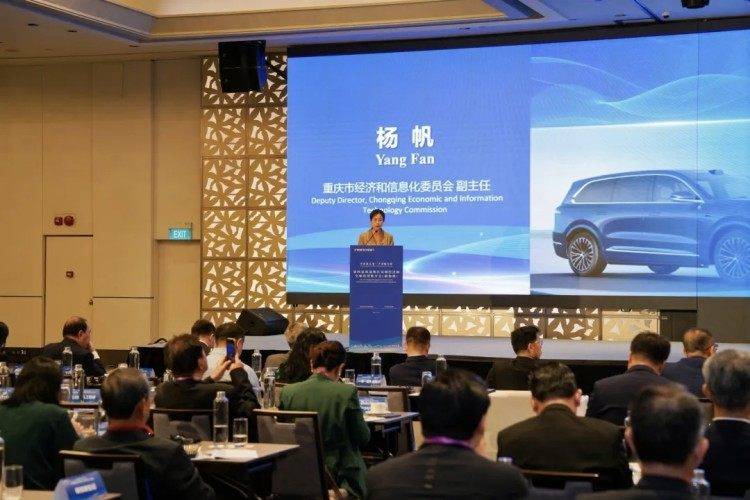
第四届成渝地区双城经济圈全球投资推介会在新加坡举行
Sou Hu Cai Jing· 2025-10-16 15:19
Core Insights - The fourth Global Investment Promotion Conference for the Chengdu-Chongqing Economic Circle was successfully held in Singapore, focusing on the theme "Chuan-Yu Connects ASEAN: Global Industry Chain" [1] Group 1: Investment Opportunities - The event attracted over 200 participants, including government agencies, business associations, key enterprises, and research institutions from Singapore [1] - Key sectors highlighted for collaboration included automotive manufacturing, high-end equipment, artificial intelligence, electronic information, biomedicine, and new materials [3] - A "Double Cities, Double Hundreds" investment project opportunity list was released, offering over 1 trillion yuan in total investment, providing precise cooperation directions for global investors [3] Group 2: Project Signings - Five key projects were successfully signed during the event, with a total cooperation amount of 1.15 billion yuan, covering areas such as artificial intelligence, new materials, food and agricultural product processing, and health data analysis [3] Group 3: Strategic Importance - The conference is seen as a significant step for the Chengdu-Chongqing region to implement national strategies, deepen opening-up, and connect with the ASEAN market, integrating into the global industrial supply chain [4] - The Chengdu-Chongqing region aims to continue deepening strategic collaboration, policy coordination, platform connection, and shared benefits, enhancing its role as a dynamic growth hub with international influence [4]