
自动驾驶

Search documents
小马智行-W涨近3% 与北汽新能源开启合作2.0阶段 正向研发L4级自动驾驶车型
Zhi Tong Cai Jing· 2026-01-16 03:39
Core Viewpoint - Pony.ai-W (02026) has seen a nearly 3% increase in stock price, currently trading at 128.1 HKD, with a transaction volume of 16.4085 million HKD. The company has announced a comprehensive strategic cooperation with BAIC New Energy, marking the beginning of Cooperation 2.0 phase, focusing on the mass production and commercialization of L4 level Robotaxi [1] Group 1: Strategic Cooperation - Pony.ai and BAIC New Energy have officially reached a "five-in-one" strategic cooperation agreement, expanding the breadth and depth of their collaboration [1] - The partnership aims to leverage successful experiences in L4 level Robotaxi mass production and operations to enhance the commercialization and globalization of autonomous driving [1] Group 2: Product Development - The collaboration will transition from a "single model" to a "full spectrum" approach in product co-creation, utilizing the mass production experience of the Arcfox Alpha T5 Robotaxi [1] - The companies plan to develop L4 level autonomous driving vehicles, creating a richer product matrix for Robotaxi [1] - Verified product experiences and technical solutions will be extended to high-end intelligent driving models in the passenger car market, adhering to "pre-installation mass production" standards [1]
负债近10亿的Robotruck公司,急需IPO输血续命
雷峰网· 2026-01-16 03:36
Core Viewpoint - The article discusses the challenges faced by autonomous driving companies, particularly in the Robotruck sector, highlighting the financial struggles of companies like 主线科技 (Mainline Technology) and the implications of their IPO attempts amidst a competitive landscape [2][11]. Group 1: Industry Overview - A significant number of technology companies are planning to go public in Hong Kong by 2025, with a particular focus on the autonomous driving L4 sector, which is becoming increasingly crowded [2]. - The market response to recent IPOs, such as 希迪智驾 (Hidi Zhijia), has been negative, indicating a pessimistic outlook on the Robotruck industry's transition from technical validation to commercial profitability [2]. Group 2: Company Background - 主线科技 was founded in 2017, focusing on L4-level logistics trucks, and has a strong technical foundation with its founder Zhang Tianlei having a background in autonomous driving from Tsinghua University [4][7]. - The company initially received significant funding from various investors, including 科大讯飞 (iFlytek) and established strategic partnerships, such as with Tianjin Port Group [7][8]. Group 3: Financial Challenges - 主线科技 has accumulated losses of approximately 864 million yuan over three and a half years, with a cash balance of only 30.69 million yuan as of mid-2025, representing a 74.46% decrease from the previous year [12][11]. - The company's net liabilities have surged to 1.078 billion yuan, resulting in an asset-liability ratio of 580.2%, indicating severe financial distress [12][11]. Group 4: Revenue and Growth - 主线科技's revenue has shown growth, with a 19.3% increase from 112 million yuan in 2022 to 134 million yuan in 2023, and a staggering 1745.7% increase in the first half of 2025 compared to the same period in 2024 [12][11]. - The gross margin has improved from 3.7% in 2022 to 30.3% in the first half of 2025, reflecting a positive trend in profitability despite ongoing losses [13][12]. Group 5: Strategic Decisions - The company has reduced its R&D expenditures significantly, which reflects a strategic decision to outsource some development work, allowing internal teams to focus on core technologies [14][15]. - This reduction in R&D spending poses risks to the company's long-term competitiveness in a sector that relies heavily on continuous innovation and technological advancement [15][14]. Group 6: Market Position and Client Dependency - 主线科技 claims to be the leading provider of autonomous driving solutions for commercial vehicles in closed road scenarios, holding a market share of 31.8% in a market valued at 1.3 billion yuan [17][12]. - The company is heavily reliant on a small number of clients, with over 70% of its revenue coming from its top five customers, which raises concerns about its bargaining power and revenue stability [16][12]. Group 7: Leadership and Compensation - Despite the financial difficulties, the founder Zhang Tianlei received a total compensation exceeding 10 million yuan in 2022, raising questions about executive pay in the context of the company's financial health [19][12]. - The compensation structure has seen a decline in subsequent years, primarily due to a decrease in equity-settled share payments [19][12]. Group 8: Future Outlook - 主线科技 is in urgent need of an IPO to secure funding and address its financial challenges, as it faces a critical juncture with significant liabilities and limited cash reserves [21][12]. - The transition from closed to open road scenarios presents both opportunities for growth and challenges related to technology and regulatory compliance, with competitors already establishing a foothold in the open road logistics market [18][12].


港股异动 | 小马智行-W(02026)涨近3% 与北汽新能源开启合作2.0阶段 正向研发L4级自动驾驶车型
智通财经网· 2026-01-16 03:32
Core Viewpoint - Pony.ai-W (02026) has entered a comprehensive strategic cooperation with BAIC New Energy, marking the beginning of Cooperation 2.0, focusing on the mass production and commercialization of L4-level Robotaxi [1] Group 1: Strategic Cooperation - The partnership aims to expand the breadth and depth of collaboration based on successful experiences in L4-level Robotaxi mass production and operation [1] - The cooperation will extend the validated successful model in the L4-level Robotaxi field to multiple dimensions including products, technology, and market [1] Group 2: Product Development - The collaboration will transition from a "single model" to a "full spectrum" in product co-creation, leveraging the mass production experience of the Arcfox Alpha T5 Robotaxi [1] - The goal is to develop L4-level autonomous driving vehicles and create a richer product matrix for Robotaxi [1] - The partnership will standardize the validated product experiences and technical solutions to be "pre-installed and mass-producible," extending to high-end intelligent driving models in the passenger car market [1]
中游智驾厂商,正在快速抢占端到端人才......
自动驾驶之心· 2026-01-16 02:58
Core Viewpoint - The article discusses the technological anxiety in the intelligent driving sector, particularly among midstream manufacturers, highlighting a slowdown in cutting-edge technology development and a trend towards standardized mass production solutions [1][2]. Group 1: Industry Trends - The mass production of cutting-edge technologies is expected to begin in 2026, with current advancements in intelligent driving technology stagnating [2]. - The overall market for passenger vehicles priced above 200,000 is around 7 million units, but leading new forces have not achieved even one-third of this volume [2]. - The maturity of end-to-end technology is seen as a prerequisite for larger-scale mass production, especially with the advancement of L3 regulations this year [2]. Group 2: Educational Initiatives - A course titled "Practical Class for End-to-End Mass Production" has been launched, focusing on the necessary technical capabilities for mass production in intelligent driving [2]. - The course emphasizes practical applications and is limited to a small number of participants, with only 8 spots remaining [2]. Group 3: Course Content Overview - The course covers various aspects of end-to-end algorithms, including: - Overview of end-to-end tasks, merging perception tasks, and designing learning-based control algorithms [7]. - Two-stage end-to-end algorithm frameworks, including modeling and information transfer between perception and planning [8]. - One-stage end-to-end algorithms that allow for lossless information transfer, enhancing performance [9]. - The application of navigation information in autonomous driving, including map formats and encoding methods [10]. - Introduction to reinforcement learning algorithms to complement imitation learning in driving behavior [11]. - Optimization of trajectory outputs through practical projects involving imitation and reinforcement learning [12]. - Post-processing logic for trajectory smoothing to ensure stability and reliability in mass production [13]. - Sharing of mass production experiences from multiple perspectives, including data, models, and rules [14]. Group 4: Target Audience - The course is aimed at advanced learners with a foundational understanding of autonomous driving algorithms, reinforcement learning, and programming skills [15]. - Participants are expected to have access to a GPU with a recommended capability of 4090 or higher and familiarity with various algorithm frameworks [18].

文远知行-W涨超5% 公司全球Robotaxi车队正式迈入“千辆时代”
Zhi Tong Cai Jing· 2026-01-16 02:46
Core Viewpoint - The company, WeRide (文远知行-W), has seen its stock price increase by over 5%, currently trading at 24.7 HKD, with a trading volume of 11.85 million HKD. The company is set to officially enter the "thousand-vehicle era" for its global Robotaxi fleet by January 12, 2026, marking a significant milestone in its operations [1]. Group 1 - WeRide's Robotaxi service has successfully launched in over 10 major cities globally, including Guangzhou, Beijing, and Abu Dhabi, where it has achieved commercial operations with fully autonomous vehicles [1]. - The Abu Dhabi fleet is approaching a break-even point on a per-vehicle basis, indicating a positive trend towards profitability [1]. - Dongwu Securities has highlighted that the Robotaxi sector is accelerating towards a commercialization inflection point, with a clear path to profitability for the company [1]. Group 2 - As a leader in Robotaxi technology, WeRide is expected to benefit significantly from the gradual relaxation of regulations, continuous advancements in autonomous driving technology, and cost reductions across the supply chain [1]. - The company is poised for rapid scaling and potential turnaround to profitability once its unit economics turn positive [1].
港股异动 | 文远知行-W(00800)涨超5% 公司全球Robotaxi车队正式迈入“千辆时代”
智通财经网· 2026-01-16 02:39
Core Viewpoint - The company, WeRide (文远知行-W), is experiencing significant growth as it approaches the milestone of operating a fleet of 1,000 Robotaxis globally by January 12, 2026, with successful commercial operations in major cities like Guangzhou, Beijing, and Abu Dhabi [1] Group 1: Company Performance - WeRide's stock has increased by over 5%, currently trading at 24.7 HKD with a transaction volume of 11.85 million HKD [1] - The Robotaxi fleet has successfully entered over 10 major cities worldwide, indicating strong market penetration [1] Group 2: Business Operations - The company has achieved pure unmanned Robotaxi commercial operations in Guangzhou, Beijing, and Abu Dhabi, with the Abu Dhabi fleet nearing single-vehicle breakeven [1] - Dongwu Securities highlights that the Robotaxi sector is accelerating towards a commercialization turning point, with a clear path to profitability [1] Group 3: Industry Outlook - As a leader in Robotaxi technology, WeRide is expected to benefit from gradually relaxed regulations, continuous advancements in autonomous driving technology, and cost reductions across the supply chain [1] - The company is poised for rapid scaling and potential profitability once its unit economic model turns positive [1]
白犀牛:与香港理工大学签署合作备忘录,共拓无人车校园应用新场景
Zhong Guo Qi Che Bao Wang· 2026-01-16 01:42
Core Insights - The collaboration between the leading L4 autonomous driving company, White Rhino, and Hong Kong Polytechnic University aims to explore innovative applications of unmanned vehicles in campus settings, leveraging each party's strengths in technology, operational scenarios, and academic research [1][5] Group 1: Collaboration Focus - The partnership will concentrate on two main scenarios: campus unmanned delivery and security inspections, developing tailored operational solutions that meet the unique demands of dynamic campus environments [3] - This collaboration aligns with the actual needs of smart campus construction and provides a precise platform for the practical implementation of autonomous driving technology [3] Group 2: White Rhino's Position - White Rhino has established a strong position in the global autonomous driving sector, with over 2,000 vehicles deployed in more than 170 cities, and has achieved a business growth rate exceeding 20 times compared to the previous year [4] - The company has successfully completed preparations for mass production of its Robovan and is initiating large-scale deliveries to major clients, maintaining a leading growth rate in active vehicle deployment [4] - In the campus scenario, White Rhino has a solid practical foundation, having formed strategic partnerships to enhance campus delivery networks and address delivery congestion during peak hours [4] Group 3: Hong Kong Polytechnic University's Contribution - Hong Kong Polytechnic University provides robust academic support, with advanced research in autonomous navigation, intelligent transportation systems, and interdisciplinary studies in electric vehicles and smart mobility [5] - The collaboration will enable White Rhino to enhance the perception, decision-making, and planning capabilities of unmanned vehicles in complex human traffic environments, while the university benefits from practical applications of its research [5] Group 4: Industry Trends - The autonomous vehicle industry is transitioning from a technology validation phase to large-scale commercial deployment, driven by increased policy support and technological maturity [6] - The collaboration between White Rhino and Hong Kong Polytechnic University serves as a model for innovative applications of unmanned vehicles in campus settings and promotes deep integration of industry, academia, and research [6]

1.16犀牛财经早报:国内首只千亿级黄金ETF诞生
Xi Niu Cai Jing· 2026-01-16 01:40
Group 1 - The first domestic gold ETF in China has surpassed 100 billion yuan in scale, driven by rising gold prices and continuous investor buying, indicating significant asset allocation value in the current low-interest-rate environment [1] - Domestic power grid investment is expected to exceed 1 trillion yuan per year during the 14th Five-Year Plan, with a projected 40% increase in fixed asset investment by the State Grid Company compared to the previous plan [1] Group 2 - The space photovoltaic concept has gained significant attention in 2026, with multiple companies like JinkoSolar and Trina Solar actively disclosing their development plans, indicating a potential trillion-yuan market [2] - The low-altitude economy is viewed as a long-term endeavor, requiring patience and collaboration across the industry to achieve its full potential [2] Group 3 - China's commercial aerospace industry is growing at over 20% annually, with projections of reaching 7 to 10 trillion yuan by 2030, as various regions compete to establish their presence in this sector [3] - Nickel prices have surged nearly 30% in a month due to supply contraction expectations, with significant implications for the nickel market and its downstream industries [3] Group 4 - The automatic driving industry in China is advancing, with the first L3-level conditional autonomous driving models receiving approval for road testing in designated areas [5] - In 2026, traditional car manufacturers are targeting stable growth rates of 10% to 30%, while new entrants aim for aggressive growth rates of 34% to 67% [5] Group 5 - The electric vehicle sector is witnessing a reshuffle, with companies like Jidu Auto entering restructuring processes, reflecting the competitive landscape of the industry [6] - Star River Power has successfully launched 89 satellites into orbit, marking a significant achievement in the private aerospace sector [6] Group 6 - WuXi Biologics' major shareholder has agreed to sell 150 million shares at a price of 38.52 HKD per share, which will reduce their stake from approximately 12.12% to 8.49% [10] - Kuaishou has issued a total of 6 billion USD in senior notes, with proceeds intended for general corporate purposes [11] Group 7 - Cloud Intelligence plans to place 780,000 new H-shares at a price of 252 HKD per share, indicating ongoing capital-raising efforts [12] - E-Tech's IPO is set to face scrutiny from regulators, highlighting the challenges faced by companies in the automotive electronics sector [13] Group 8 - Luoyang Molybdenum expects a net profit increase of 48% to 54% for 2025, driven by rising product prices and effective cost management [14] - Lio's stock has been suspended for trading due to significant price fluctuations, reflecting the need for regulatory oversight in volatile markets [14] Group 9 - U.S. stock indices rebounded, with significant gains in technology and financial sectors, driven by strong earnings reports from major companies [16] - Commodity prices, including metals and oil, experienced declines after reaching record highs, indicating market volatility [16]
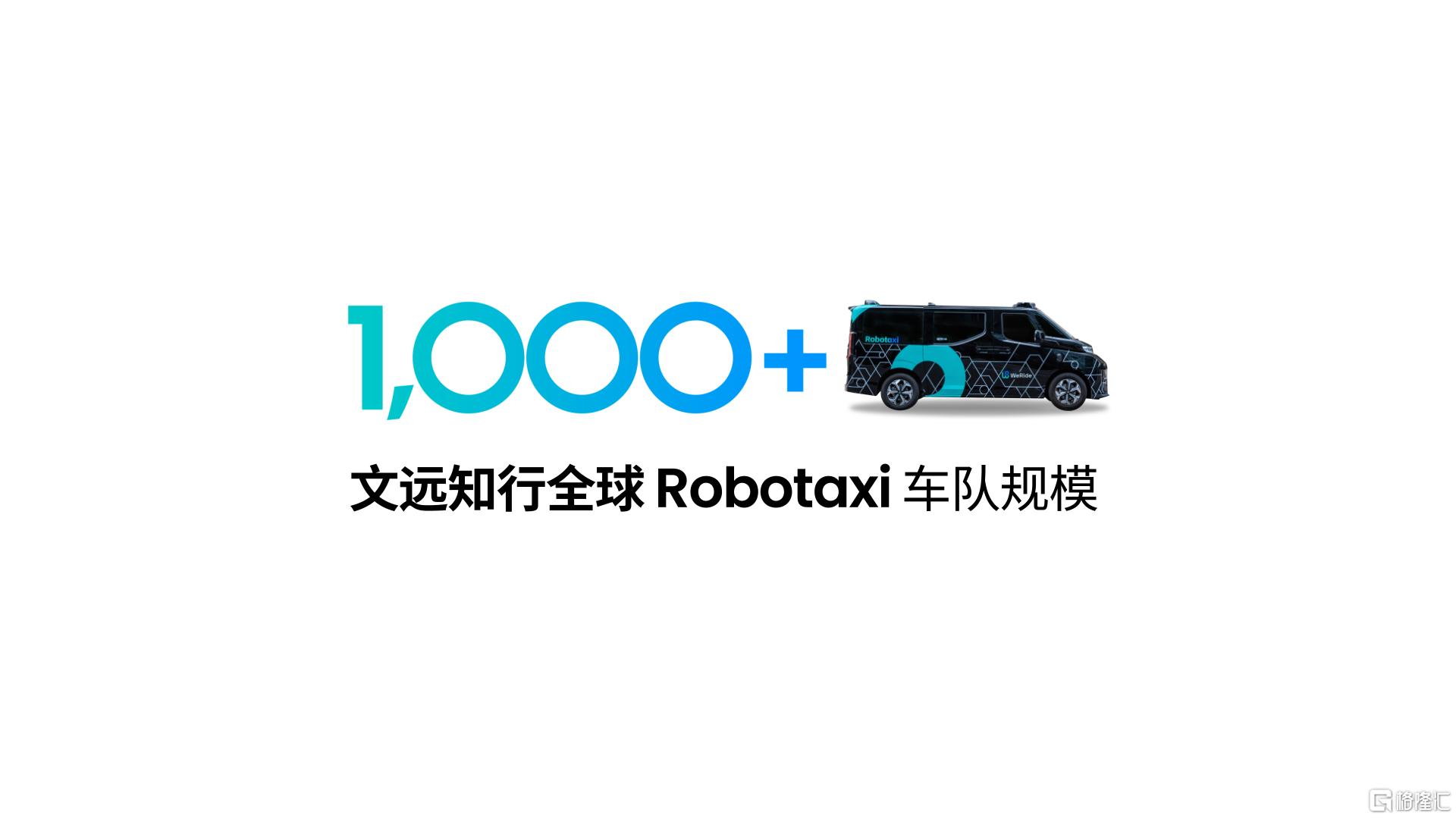
1023辆!文远知行全球Robotaxi车队迈入"千辆时代"
Ge Long Hui· 2026-01-16 01:39
Core Insights - The company has officially entered the "thousand vehicle era" with a global Robotaxi fleet of 1,023 vehicles as of January 12, 2026, marking a significant milestone in the commercialization of autonomous driving [2] - The Robotaxi service has successfully launched in over 10 major cities worldwide, including Guangzhou, Beijing, and Abu Dhabi, where it has achieved pure unmanned commercial operations [2] - The Abu Dhabi fleet is on track to reach single-vehicle break-even [2] Future Goals - The company aims to continue advancing autonomous driving technology, with a target of deploying tens of thousands of Robotaxis globally by 2030, making safe, convenient, and efficient Robotaxi services a travel option in more cities [4]
自动驾驶出行图景 加速“驶来”
Zhong Guo Zheng Quan Bao· 2026-01-15 21:12
Core Insights - The launch of the first L3-level conditional autonomous driving vehicles in China marks a significant milestone in the industry, indicating the transition to a new era of operational autonomous vehicles [1][4][8] Group 1: Industry Developments - The Ministry of Industry and Information Technology has granted approval for the first L3-level autonomous vehicles, allowing them to operate in designated areas of Beijing and Chongqing [1] - The L3-level vehicles are expected to achieve a penetration rate breakthrough by 2026, paving the way for higher-level autonomous driving technologies (L4) to enter large-scale commercial deployment [1][7] - The trial operation of L3 vehicles signifies a shift from "assisted driving" to "system-led" driving experiences in specific scenarios [2] Group 2: Technical and Operational Insights - The trial of L3 vehicles has already accumulated over 70,000 kilometers of autonomous driving mileage in complex urban environments, showcasing their capability in handling various driving scenarios [2][3] - The vehicles are currently being tested with enterprise users who possess professional skills, providing valuable feedback for system optimization [3] - The introduction of L3 vehicles establishes a legal framework for liability and safety standards, enhancing industry confidence and encouraging hardware deployment and data collection for future advancements [3][4] Group 3: Future Projections - By 2026, L2 technology is projected to become standard in mainstream vehicles, with a penetration rate exceeding 70%, while L3 technology is expected to accelerate in development and testing across major cities [6][7] - The Robotaxi sector is expanding, with a significant increase in fleet size anticipated, indicating a shift in user acceptance from novelty to regular use [7] - The ongoing advancements in AI and autonomous driving technologies present a strategic opportunity for the industry, with expectations for a more integrated and innovative future in transportation [8]
