电子信息

Search documents
大湾区内地九市GDP达11.54万亿元!广东促进粤港澳大湾区内地九市内涵式高质量发展
Nan Fang Nong Cun Bao· 2025-12-05 03:34
大湾区内地九市 GDP达11.54万 亿元!广东促进 粤港澳大湾区内 地九市内涵式高 质量发展_南方 +_南方plus 12月4日,广东 省第十四届人大 常委会第二十二 次会议审议通过 《广东省人民代 表大会常务委员 会关于促进粤港 澳大湾区内地九 市内涵式高质量 发展的决定》 (以下简称《决 定》)。当日下 午,省人大常委 会召开新闻发布 会,就《决定》 的背景意义、主 要内容及实施路 径进行权威解 读。省人大环境 资源委主任委员 任小铁、省发展 改革委副主任朱 伟等出席发布 会。 据介绍,《决 定》由七个部分 二十二条构成。 第一部分,创新 协同机制,着力 优化现代化城市 体系;第二部 分,激活发展空 间,着力推动率 先实现集约高效 发展;第三部 分,壮大发展动 能,着力建设全 球科技创新高地 和新兴产业未来 产业重要策源 地;第四部分, 彰显湾区特色, 着力锻造具有全 球竞争力的蓝色 引擎;第五部 分,坚持人民至 上,着力营造世 界级宜居宜业宜 游的优质生活 圈;第六部分, 聚集高端要素, 着力建成高水平 对外开放国际枢 纽;第七部分, 加强统筹实施, 着力凝聚推进大 湾区建设的合 力。 四大创新亮点 ...


中经评论:打造智能工厂金字塔
Jing Ji Ri Bao· 2025-12-04 23:57
Core Insights - The Ministry of Industry and Information Technology and five other departments have announced the first batch of 15 leading smart factories, covering key industries such as equipment manufacturing, raw materials, electronics, and consumer goods, providing a clear path for the intelligent transformation of manufacturing enterprises [1] - Leading smart factories represent the pinnacle of smart manufacturing in China, serving as benchmarks for future manufacturing models and global competitiveness [1][2] - The cultivation of smart factories follows a gradient approach, categorized into four levels: basic, advanced, excellent, and leading, allowing enterprises at different stages to set achievable goals [1][2] Group 1 - Leading smart factories have an intelligent penetration rate exceeding 80% and are accelerating integration into high-value upstream and downstream supply chain segments [1] - The gradient cultivation strategy aims to prevent ecological imbalance by fostering a broad base of basic smart factories, enabling small and medium-sized enterprises to keep pace with technological advancements [2] - Advanced and excellent smart factories act as a core force, disseminating experiences from leading factories to specialized fields, creating a ripple effect [2] Group 2 - To enhance global competitiveness, leading smart factories must leverage artificial intelligence, with a requirement for at least 60% of their applications to involve AI technology [2] - Small and medium-sized enterprises face challenges in transformation due to high costs, risks, and a lack of technology and talent, necessitating low-cost transformation solutions and shared service platforms [3] - The evolution of smart manufacturing in China has progressed from isolated breakthroughs to systemic collaboration, indicating a significant historical leap towards becoming a manufacturing powerhouse [3]
【中国制造新观察】打造智能工厂金字塔
Zhong Guo Jing Ji Wang· 2025-12-04 23:01
Core Insights - The Ministry of Industry and Information Technology and five other departments have announced the first batch of 15 leading smart factories, covering key industries such as equipment manufacturing, raw materials, electronic information, and consumer goods, providing a clear path for the intelligent transformation of manufacturing enterprises [2] - Leading smart factories represent the pinnacle of smart manufacturing in China, with a high entry threshold requiring companies to be industry leaders with globally competitive core products and smart manufacturing capabilities [2] - The penetration rate of intelligence in the selected leading smart factories exceeds 80%, accelerating penetration into high-value chain segments [2] Summary by Categories Smart Factory Classification - Smart factories in China are categorized into four levels: basic, advanced, excellent, and leading, with each level having distinct goals to facilitate a structured growth path [2][3] - Basic smart factories exceed the average level of their industry within their province, while leading smart factories must achieve global leadership [2] Role of Leading Smart Factories - Leading smart factories serve as industry benchmarks, tasked with exploring cutting-edge technology applications and overcoming key bottlenecks [3] - The focus is not solely on selecting top performers but also on fostering a broad base of basic smart factories to support the overall ecosystem [3] Importance of Artificial Intelligence - To enhance global competitiveness, excellent smart factories must apply artificial intelligence in at least 20% of their scenarios, while leading smart factories must achieve a minimum of 60% [3] - Artificial intelligence is seen as a crucial tool for overcoming traditional manufacturing challenges and optimizing the entire production chain [3] Challenges for Small and Medium Enterprises (SMEs) - SMEs face significant barriers to transformation, including high costs, risks, and a lack of technology and talent, necessitating low-cost, lightweight transformation solutions [4] - Establishing shared service platforms led by the government and major enterprises can help SMEs transition from bystanders to active participants in the smart factory ecosystem [4] Future of Smart Manufacturing - The evolution of smart manufacturing in China is marked by a shift from isolated breakthroughs to systemic collaboration, aiming for comprehensive upgrades across the manufacturing sector [5]

打造智能工厂金字塔
Jing Ji Ri Bao· 2025-12-04 22:16
Group 1 - The Ministry of Industry and Information Technology and five other departments have announced the first batch of 15 leading smart factories, covering key industries such as equipment manufacturing, raw materials, electronic information, and consumer goods, providing a clear path for the intelligent transformation of manufacturing enterprises [2] - Leading smart factories represent the pinnacle of smart manufacturing in China, serving as benchmarks for future manufacturing models and requiring companies to be industry leaders with globally competitive core products and smart manufacturing capabilities [2] - The smart factory cultivation approach is structured in a gradient manner, categorizing factories into four levels: basic, advanced, excellent, and leading, allowing enterprises at different stages to have clear and achievable goals [2] Group 2 - The cultivation of smart factories is not just about selecting top performers; it aims to prevent ecological imbalance by widely nurturing basic smart factories, enabling small and medium-sized enterprises to keep pace with technological advancements through digital transformation [3] - Advanced and excellent smart factories act as a backbone, disseminating experiences from leading factories and creating a ripple effect in specific sectors, ultimately forming a robust and dynamic smart factory pyramid [3] - To enhance global competitiveness, leading smart factories must effectively utilize artificial intelligence, with a requirement that at least 60% of their applications involve AI technology [3] Group 3 - To strengthen the foundation of smart factories, it is essential to address the transformation challenges faced by small and medium-sized enterprises, which often struggle due to high costs, risks, and a lack of technology and talent [4] - Proposals for lightweight and low-cost transformation solutions are necessary to lower the barriers for small and medium-sized enterprises, alongside the establishment of shared service platforms to facilitate access to technology and resources [4] - The evolution of smart manufacturing in China has progressed from isolated breakthroughs to widespread implementation, indicating a significant historical leap towards becoming a manufacturing powerhouse [5]

解码安徽
Shang Hai Zheng Quan Bao· 2025-12-04 19:24
◎记者 林超 夏鑫铭 王远 江淮大地,冬日暖阳;色彩斑斓,风景如画。 在面向"十五五"的历史新起点上,安徽底气十足,意气风发。 底气藏在汇聚了山水人文的"徽"字中——黄山、九华山、大别山,山山峻秀;北淮河、南长江、中巢 湖,浪潮奔涌;崇文重教、贾而好儒,学界商界群星璀璨;黄梅戏、桐城派、宣纸歙砚,文蕴延绵。 底气写在社会经济发展的亮眼成绩单上——全球近10%的显示面板,全国约8%的工业机器人、15%的家 电、20%的光伏组件、50%的光伏玻璃,都在这里生产。"十四五"时期,安徽GDP连续跨越4万亿元、5 万亿元两大关口。 从传统农业大省到新兴工业大省,从"左右为难"到"左右逢源",从"总量追兵"到"科创先锋",数年之 间,安徽展现出一幅波澜壮阔的发展图景。 何以安徽? 答案,在推进"三地一区"建设的坚实步履中,在科技创新与产业创新深度融合的有力实践中,在亲商惠 商、协同发展的生动图景中,在徽派文化和徽商精神的传承发展中。 积厚成势 "三地一区"释放发展新动能 进入新发展阶段,襟江带淮的黄金水道,连南接北、承东启西的地理方位,让安徽迎来了新的历史机 遇:安徽是全国唯一被长三角一体化发展、长江经济带发展、中部地区 ...
产投28计划”首场路演评审结果揭晓,8家企业喜获“直通卡
Mei Ri Jing Ji Xin Wen· 2025-12-04 14:30
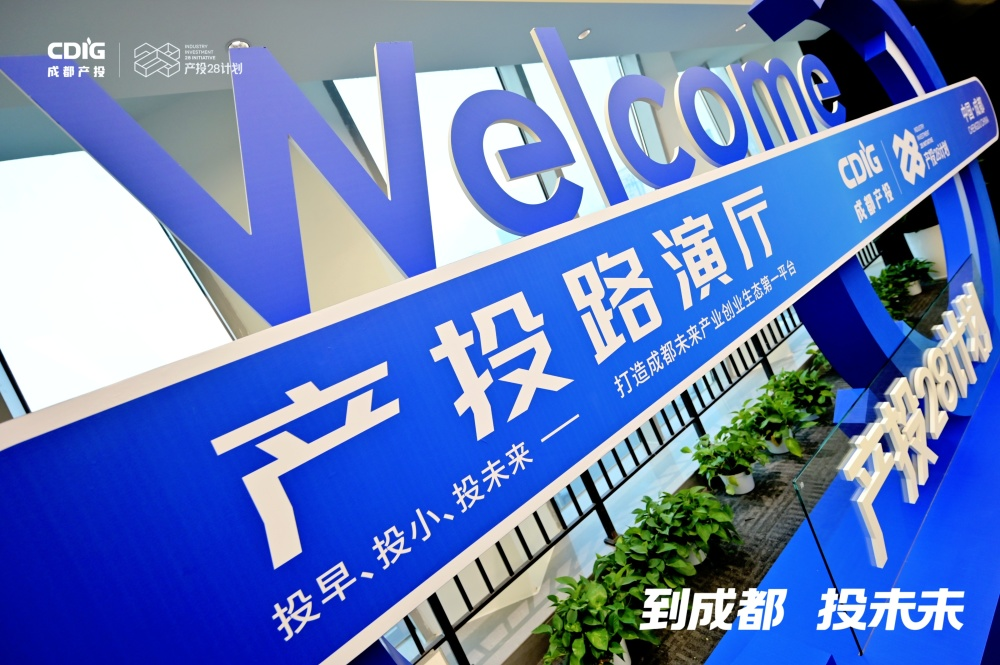
《每日经济新闻》记者从成都产投集团获悉,"产投28计划"首场路演活动评审结果于今日(12月4日) 正式揭晓。8家企业获评A类项目,拿到"直通卡",获得成都科创投发出的"投资意向函";23家项目获评 B类项目,将获得一对一跟进的机会。 11月28日,成都产投集团打造的"产投28计划"首场路演活动在成都举行。这是该计划自10月底正式发布 后举办的首场路演活动,吸引了40家来自北京、上海、杭州、重庆和成都本地的科创企业参与。在全天 的平行路演中,路演企业按照电子信息、新能源新材料、健康产业、装备制造四大核心赛道分组登场, 与由国内头部创投机构、券商和成都科创投联合组成的专家评审团展开了一场高密度的精准对接。 根据此前发布的路演规则,专家评审团依据投资范围符合性、赛道投资价值、技术竞争力、市场竞争力 和财务竞争力五个维度对项目进行量化打分。根据得分情况,项目被分为三类:A类项目将直接启动投 资流程并获取"投资意向函";B类项目将获得一对一跟进,待信息完善后再行评估;C类项目则列入储 备库。 以下是"产投28计划"首场路演结果(排序不分先后): 据悉,"产投28计划"是成都产投集团秉持"投早、投小、投未来"理念,所打造 ...
“产投28计划”首场路演评审结果揭晓,8家企业喜获“直通卡”
Mei Ri Jing Ji Xin Wen· 2025-12-04 12:52
Core Insights - The "Chengdu Industrial Investment 28 Plan" held its first roadshow event on December 4, revealing that 8 companies were rated as Class A projects, receiving "investment intention letters" from Chengdu Sci-Tech Investment [1][3] - A total of 23 projects were classified as Class B, which will receive one-on-one follow-up opportunities [1][3] Group 1: Event Overview - The first roadshow took place on November 28, attracting 40 technology innovation companies from cities including Beijing, Shanghai, Hangzhou, Chongqing, and Chengdu [1] - The participating companies were grouped into four core sectors: electronic information, new energy and new materials, health industry, and equipment manufacturing [1] Group 2: Evaluation Criteria - The expert evaluation panel assessed projects based on five dimensions: investment scope compliance, sector investment value, technological competitiveness, market competitiveness, and financial competitiveness [3] - Projects were categorized into three classes: Class A projects initiate investment processes and receive "investment intention letters," Class B projects receive one-on-one follow-up, and Class C projects are placed in a reserve pool [3] Group 3: Future Plans and Goals - The "Chengdu Industrial Investment 28 Plan" aims to cultivate globally competitive future industry benchmarks and establish the first vertical investment service platform for future industries in China [3] - The plan has already received over 100 business plans from various technology innovation projects, indicating a strong interest in attracting quality projects to Chengdu [3]
从“落叶归根”到“落地生根” 侨资侨智侨力成为推动福州高质量发展的独特优势和重要支撑
Xin Hua Wang· 2025-12-04 02:09
Core Viewpoint - The third China Overseas Intelligence Development Conference highlights the significant role of overseas Chinese in Fuzhou's development, showcasing their contributions to local industries and the economy through investment and entrepreneurship [1][5][10]. Group 1: Historical Context - Fuzhou has a long history of maritime engagement, dating back to Zheng He's voyages in the early 15th century, which established a tradition of overseas exploration and trade [2][3]. - The migration history of Fuzhou people is marked by hardship, including forced relocations during the Qing Dynasty and exploitation during the Opium Wars, leading many to seek opportunities abroad [3][4]. Group 2: Economic Contributions - The return of overseas Chinese has transformed Fuzhou's industrial landscape, with significant investments leading to the establishment of industrial parks and development zones, such as the Rongqiao Development Zone [5][6]. - By 2024, the Rongqiao Development Zone is projected to achieve an industrial output value of 100.83 billion yuan, focusing on electronic information, automotive parts, and optical devices [6]. Group 3: Current Trends - The trend of overseas Chinese returning to Fuzhou has evolved from merely contributing to local economies to actively engaging in high-tech industries and innovative projects, reflecting a shift towards "rooting down" rather than just "returning" [8][9]. - The establishment of the "Fujian Overseas and Returned Personnel Development Mutual Aid Association" has facilitated networking and support for returnees, enhancing their integration into the local economy [9]. Group 4: Future Outlook - Fuzhou aims to leverage the strengths of overseas Chinese to drive high-quality development, with initiatives to attract talent and investment from abroad, including the introduction of policies to support high-level overseas talent [10].
中国银行:以金融之力服务实体经济,助力现代化产业体系建设
Ren Min Ri Bao· 2025-12-03 21:52
Core Viewpoint - The 20th Central Committee of the Communist Party of China emphasizes the construction of a modern industrial system and the strengthening of the real economy, with China Bank aligning its services to support these national development goals [1] Group 1: Support for Traditional Industries - China Bank is increasing resource investment and optimizing financial services to promote the transformation and upgrading of traditional industries towards high-end, intelligent, and green development [2] - As of Q3 2025, the loan balance for advanced manufacturing in traditional industries is nearly 600 billion, while high-tech manufacturing loans amount to nearly 700 billion [2] - The bank has signed over 350 billion in equipment renewal projects, with loan disbursements exceeding 130 billion, supporting traditional industries' transformation [2] - China Bank is actively supporting the petrochemical industry's upgrade projects and has successfully provided fixed asset loans for equipment renewal to a major industrial enterprise in Jiangxi [2][3] Group 2: Support for Emerging Industries - China Bank is focusing on the development of strategic emerging industries, with loans for these sectors exceeding 3 trillion, reflecting a continuous increase in their proportion of total loans [4] - The bank supports the aerospace sector through a "loan-equity linkage" model, aiding Blue Arrow Aerospace in achieving key technological breakthroughs [4] - In the semiconductor sector, China Bank has tailored financial service plans for Jiangxi Zhao Chi Semiconductor Co., providing comprehensive support for their R&D and project construction [5] Group 3: Infrastructure Development - China Bank is deeply involved in major cross-regional infrastructure projects, particularly in the Guangdong-Hong Kong-Macao Greater Bay Area and the Yangtze River Delta [6] - The bank's loan balance for infrastructure exceeds 4.5 trillion, with over 1.8 trillion allocated to major transportation infrastructure [6] - China Bank has provided significant financial support for key projects like the Hong Kong-Zhuhai-Macao Bridge and the Shenzhen-Zhongshan Channel [6] Group 4: Cross-Border Financial Services - China Bank is leveraging its cross-border financial capabilities to support Chinese enterprises in undertaking significant overseas infrastructure projects, including financing for a light rail project in Mexico [7] - The bank is committed to integrating its development with the construction of a modern industrial system, aiming to provide high-quality financial services and innovative products [7]

首批15家领航级智能工厂出炉!长三角成智造标杆集聚高地
Guo Ji Jin Rong Bao· 2025-12-03 13:04
Core Insights - The Ministry of Industry and Information Technology, along with five other ministries, has announced the first batch of 15 leading smart factories for 2025, showcasing advancements in key industries such as equipment manufacturing, raw materials, electronic information, and consumer goods [1] - The Yangtze River Delta region, particularly Shanghai, Jiangsu, and Zhejiang, has excelled in this initiative, with Shanghai leading the nation in the number of selected factories [1][3] - The establishment of a tiered cultivation system for smart factories began in 2024, categorizing them into four levels: basic, advanced, excellent, and leading, with the leading level representing the pinnacle of smart manufacturing in China [1][4] Industry Developments - Leading smart factories are demonstrating significant innovation value, with Shanghai Aerospace Equipment Manufacturing Factory achieving a reduction in launch costs through an intelligent full-process chain model [2] - In the raw materials sector, Nanjing Steel has achieved a 98.5% on-time delivery rate for customized steel production using digital twin and AI technologies, while Baosteel has gained a competitive edge through data-driven manufacturing [2] - Hikvision in the electronic information sector has reduced production line changeover time by 50% through self-developed IoT, AI, and big data technologies, providing replicable solutions for the electronics manufacturing industry [2] Regional Performance - Shanghai has cultivated 2 national leading smart factories, 28 national excellent smart factories, and over 300 advanced smart factories, maintaining its position as the top city in China for smart manufacturing [3] - The city plans to focus on a three-pronged development strategy that includes tiered cultivation of smart factories, providing smart manufacturing system solutions, and building a standard framework for smart manufacturing [3] - Leading smart factories serve as demonstration models, promoting innovation and transformation across the supply chain, with modular solutions available for small and medium-sized enterprises to facilitate their own smart upgrades [3] Construction Achievements - As of now, China has established over 35,000 basic smart factories, more than 7,000 advanced smart factories, 230 excellent smart factories, and 15 leading smart factories [4] - Smart factory upgrades have led to an average reduction of 29% in product development cycles, a nearly 22% increase in production efficiency, and a 20% decrease in carbon emissions [4] - Leading smart factories are positioned as integrated platforms for technological innovation, standard output, and industry collaboration, aligning with the core demands of high-quality manufacturing development during the 14th Five-Year Plan [4]