
种植业

Search documents
奋进“十五五”开局起好步|以发展现代化大农业为主攻方向着力夯实粮食安全根基
Xin Lang Cai Jing· 2025-12-27 20:46
Core Viewpoint - The provincial economic work meeting emphasizes the importance of grasping current opportunities and making detailed plans for the upcoming year, aiming for a strong start to the "14th Five-Year Plan" [1] Group 1: Economic Development Strategies - The meeting outlines the main tasks for next year's economic work, focusing on solidifying food security, promoting technological, green, quality, and brand agriculture, and implementing a plan to increase grain production by ten million tons [2] - The province aims to enhance its role as a national grain security "ballast stone" by building a significant commodity grain production base and improving overall production capacity [2] Group 2: Agricultural Modernization - The province seeks to be a leader in agricultural modernization by promoting new technologies, equipment, and business models, and aims to achieve the "five modernizations" in agriculture [3] - Initiatives include developing smart agriculture, establishing a national AI application pilot base in agriculture, and creating a modern seed industry province [3] Group 3: Quality and Safety in Agriculture - The province plans to build a model for comprehensive green transformation in agriculture, ensuring food safety and expanding the market influence of high-quality agricultural products [3] - Efforts will be made to enhance the quality of agricultural products and expand the scale of customized agriculture [3] Group 4: Rural Development and Poverty Alleviation - The meeting emphasizes the need to prevent large-scale poverty and establish a robust monitoring and support system for at-risk populations [4] - Plans include improving rural living conditions, promoting high-quality agricultural processing, and enhancing rural governance [4] Group 5: Agricultural Innovation and Economic Growth - The province aims to stimulate agricultural and rural development by advancing land reform, enhancing collective economic strength, and establishing modern agricultural service centers [4]
勃利县加速农业农村现代化进程
Xin Lang Cai Jing· 2025-12-27 20:46
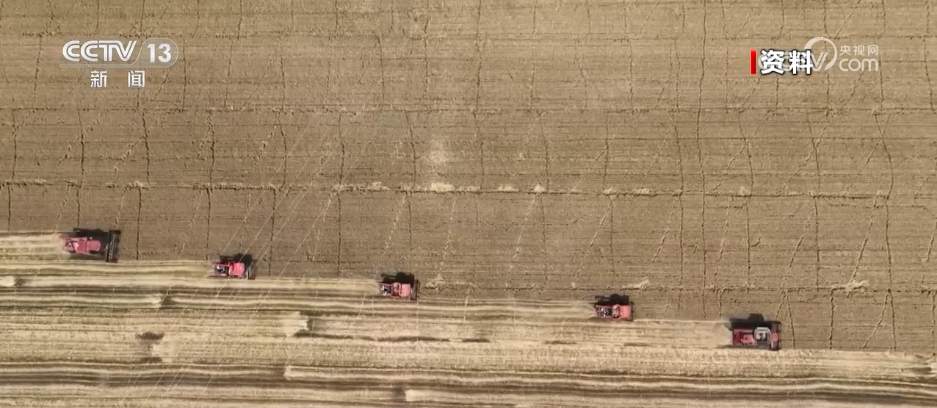
Core Insights - The article emphasizes the importance of modern agriculture in the development of Boli County, focusing on stable grain production and innovative farming techniques to enhance agricultural efficiency and farmer income [1][4]. Group 1: Agricultural Production - Boli County maintains a stable grain planting area of 1.68 million acres, with a total output exceeding 1 billion pounds [1]. - The county has established 10 "thousand-acre demonstration fields" and two "ten-thousand-acre high-yield plots," which have positively impacted surrounding areas, leading to increased production [1]. - The introduction of advanced agricultural machinery has significantly improved efficiency, with new harvesters capable of completing tasks in one day that previously took two days [2]. Group 2: Technological Advancements - The use of modern agricultural techniques, such as large-row planting and tailored fertilization plans, has resulted in increased yields, with corn production rising by 100 kilograms per acre and soybeans by 30 kilograms per acre [2]. - The county's grain production is projected to reach approximately 500,000 tons by 2025, with 157,600 tons coming from large-scale farming operations [3]. Group 3: Land Management and Farmer Income - Land transfer initiatives have allowed for larger contiguous farming areas, enabling standardized and intensive cultivation practices, which reduce operational costs [4]. - Farmers have reported increased income from land transfers, with one village seeing land rental income of 14,300 yuan per hectare and collective income of 50,205 yuan [4]. - The establishment of agricultural cooperatives has also led to significant financial benefits for farmers, with one cooperative distributing 668,000 yuan in land dividends [4]. Group 4: Policy Support - Boli County has implemented a three-year action plan to support land cooperation, incorporating various agricultural practices and technologies to enhance productivity [7]. - The county aims to align with the provincial "ten million tons grain increase plan," focusing on improving overall grain production capacity and ensuring food security [7].
【昔日贫困村现今的模样】南岗子村:碱地种出了好麦子,农民过上了好日子
Xin Lang Cai Jing· 2025-12-27 19:44
Core Viewpoint - The transformation of Nankangzi Village in Jilin Province from a poverty-stricken area to a successful agricultural community through the introduction of a specially developed wheat variety, "Xiao Bing Mai," which is suitable for saline-alkali soil conditions [1][2][3]. Group 1: Agricultural Innovation - The introduction of "Xiao Bing Mai 33," a wheat variety tailored for saline-alkali soil, was met with skepticism from local farmers due to its unconventional breeding method [2]. - Despite initial poor yields and processing challenges, the wheat's high protein content made it desirable for certain products, leading to increased acceptance among farmers [3]. Group 2: Economic Impact - The successful cultivation of "Xiao Bing Mai" led to a significant increase in demand, with villagers selling over one million pounds of flour within two months of the harvest [6]. - The establishment of a cooperative allowed for improved production and marketing strategies, including better packaging that enhanced the product's marketability [5][6]. Group 3: Community Development - The village's success story has fostered a sense of community and collaboration, with local leaders encouraging innovation and participation in agricultural practices [4][5]. - The transformation has positioned Nankangzi Village as a notable player in the agricultural sector, alongside other recognized products from the region [6].
【新思想引领新征程】提升农业综合生产能力 加快建设农业强国
Yang Shi Wang· 2025-12-27 12:02
Group 1 - The core focus is on ensuring stable and secure supply of food and important agricultural products as a top priority for building a strong agricultural nation by 2025 [1][2] - In 2025, China's grain production is expected to reach a historical high of 1.43 trillion jin, overcoming severe natural disasters [1] - The contribution rate of yield improvement to grain production is over 90%, driven by large-scale single yield enhancement actions in 702 counties [1][3] Group 2 - The government emphasizes self-sufficiency in food supply for over 1.4 billion people, with comprehensive measures to enhance agricultural production capacity [2] - Continuous implementation of subsidies for key crops and insurance coverage for major grain crops has stabilized farmers' enthusiasm for grain production [2] - Central government allocated over 6 billion yuan to support drought and flood prevention, enhancing agricultural resilience [2] Group 3 - By 2025, over 75 million mu of high-standard farmland will be newly built or upgraded, with irrigation areas exceeding 1.09 billion mu [3] - Central government allocated 2 billion yuan to support the modernization of seed production in key counties, achieving an 80% seed supply guarantee rate [3] - The performance and quality of agricultural machinery are continuously improving, with significant support for the purchase of new equipment [3] Group 4 - A diversified food supply system is being rapidly constructed, with facility agriculture area reaching 40 million mu and annual production of facility vegetables and forest foods exceeding 200 million tons [4] - The government is advancing a new round of grain production capacity enhancement actions to solidify agricultural development foundations [4] - The focus on improving agricultural production capacity and quality is emphasized in the 14th Five-Year Plan [4]
中国农业发展向“新”而行 科技助力提质增收
Yang Shi Xin Wen· 2025-12-27 06:21
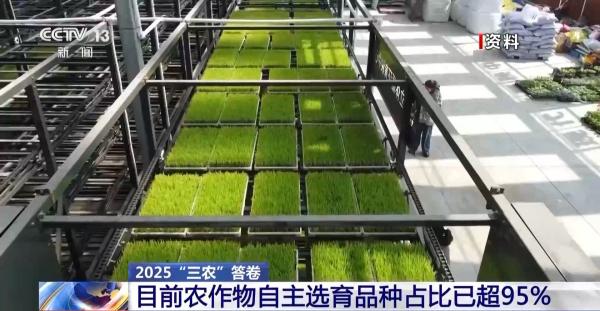
Core Viewpoint - In 2025, the integration of new productive forces in agriculture is transforming traditional farming practices through advanced technologies such as remote sensing satellites and big data analytics, leading to significant improvements in productivity and efficiency [1]. Group 1: Technological Advancements - The year saw the rapid development and application of major crop varieties, including high-yield rice, drought-resistant wheat, and high-oil soybeans, with over 95% of crop varieties being independently bred in China [4]. - Smart agricultural equipment is being accelerated to fill gaps, with advancements in high-end intelligent machinery and the introduction of new energy agricultural equipment [6]. - Innovations in smart agriculture are continuously improving, with 62 new intelligent equipment breakthroughs, including automated driving in fields and precision feeding devices for livestock [8]. Group 2: Talent Development - The workforce in smart agriculture is expanding, with nearly 40 million people trained in digital skills related to agriculture and rural e-commerce throughout the year [10]. Group 3: Case Study - Dragon Fruit Production - In Guangxi's Long'an County, the application of new productive forces has transformed traditional dragon fruit farming into a smart agricultural model, enhancing production efficiency and product quality [11]. - The use of artificial lighting technology has shortened the production cycle of dragon fruit by over 15 days, increasing yield by approximately 1,000 kg per acre and improving fruit quality [17]. - A comprehensive digital agricultural management system has been established, utilizing IoT sensors to collect real-time data on soil conditions, which is analyzed to provide actionable farming recommendations [21]. - The implementation of standardized processes across the entire supply chain for dragon fruit, including automated sorting and tracking systems, ensures quality control and transparency from farm to table [25][27].

2025“三农”答卷 | 卫星“看”庄稼、大数据“算”收成 农业发展向“新”而行
Yang Shi Wang· 2025-12-27 03:59
Core Viewpoint - The article discusses the transformative impact of new productive forces on agriculture in 2025, highlighting advancements in technology and practices that enhance productivity and efficiency in farming [1]. Group 1: Technological Advancements - Remote sensing satellites and big data are revolutionizing traditional agricultural practices, enabling smarter decision-making in crop management [1][4]. - The development and application of major crop varieties, such as high-yield rice and disease-resistant wheat, are accelerating, with over 95% of crop varieties being independently bred in China [6]. - The integration of high-end intelligent agricultural machinery is narrowing the gap in agricultural equipment, promoting green transformation in farming operations [8]. Group 2: Smart Agriculture Innovations - The implementation of automated driving and crop information collection platforms, along with precision feeding equipment and underwater inspection robots, marks significant advancements in smart agricultural tools [10]. - Training programs for farmers in digital skills have reached nearly 40 million participants, enhancing the workforce's capability in smart agriculture [10]. Group 3: Case Study - Dragon Fruit Production - In Nanning, Guangxi, the application of new productive forces has transformed traditional dragon fruit farming into a smart agricultural model, improving production efficiency and product quality [11]. - The use of LED lighting for night-time flowering and supplementary light has shortened the production cycle by over 15 days, increasing yield by approximately 2000 pounds per acre [15]. - The establishment of a digital agricultural management system allows for real-time data collection and analysis, enabling precise irrigation and fertilization, thus enhancing operational efficiency [19]. Group 4: Standardization and Traceability - The dragon fruit farm has achieved full-chain standardization, implementing automated sorting and grading processes, and providing traceability for consumers through a "digital ID" for each fruit [21]. - The shift from labor-intensive practices to data and technology reliance signifies a major evolution in agricultural productivity, with smart tools replacing traditional methods [23].
最美“新农人”风采丨赵艳菊:科技赋能田垄间,带富乡邻显担当
Xin Lang Cai Jing· 2025-12-27 03:18
Core Insights - Zhao Yanjun, a new farmer born in the 1980s, exemplifies modern agriculture through practical innovation and community engagement [1][2] - The farm, Qixiang Family Farm, was established in 2017 and has expanded its operations to include grain and legume planting, agricultural production management, and pest control [1] - The farm currently manages 300 acres of leased land and 450 acres of self-operated land, providing cultivation services for an additional 3,500 acres for local farmers [1] Technological Empowerment - Zhao Yanjun's core competitive advantage lies in technology, having developed a patented "livestock feed grass crushing device" in 2023 to enhance agricultural production efficiency [1] - She authored a research paper on "Pollution Prevention and Control Strategies for Livestock Manure Waste," addressing environmental challenges in agricultural development [1] Recognition and Achievements - In 2022, Zhao Yanjun was recognized as a "Major Grain Producer" during the Fifth China Farmers' Harvest Festival, and Qixiang Family Farm received the title of "Outstanding Planting Family Farm" [1]
南农晨读 | 红杉似火
Nan Fang Nong Cun Bao· 2025-12-27 01:04
Group 1 - The National Lychee Breeding Joint Task Force held its 2025 annual work summary meeting in Lingshui, Hainan Province, focusing on enhancing the development of the lychee industry through scientific research and collaboration [3][4][5][6] - The meeting was organized by South China Agricultural University and aimed to consolidate technological foundations for the high-quality development of the lychee industry in China [3][4][6] Group 2 - The first Bay Area Pet Industry Annual Convention will take place in Guangzhou from January 15 to 18, 2026, featuring four major collection activities for industry professionals and pet owners [9][10][11] - Participants will have the opportunity to showcase their research findings and creative ideas, with rewards and recognition available for outstanding contributions [10][11] Group 3 - The 2025 Zhaoqing City Dinghu District high-quality farmer training class has commenced, attracting 30 participants from various agricultural sectors, including family farm owners and cooperative leaders [24][25][26] - The training aims to equip participants with knowledge on the latest rural revitalization policies and effective agricultural practices [22][23] Group 4 - The 2025 Shantou Longhu District high-quality farmer training class has started, with 32 participants focusing on enhancing their skills in rural tourism and cultural project development [35][36][37] - The program is designed to strengthen the talent foundation for unique rural tourism and cultural initiatives in the Longhu District [36][37]

喀麦隆粮食安全形势正在恶化(政府报告)
Shang Wu Bu Wang Zhan· 2025-12-26 17:13
Core Insights - The food security situation in Cameroon is deteriorating, with 11% of the population facing severe food and nutrition insecurity, equating to 3.12 million people, including 240,000 in emergency conditions and 2.87 million in crisis status [1][2] - The number of people facing food insecurity has increased by 40,169 compared to the same period in 2024, with an additional 56,156 people now in crisis [1] - The Minister of Agriculture attributes the situation to significant climatic heterogeneity across regions, with favorable conditions in the southern regions but severe drought and high temperatures affecting the northern regions [1] Government Response - The government plans to mobilize resources to provide adequate responses for high-risk areas and those facing food insecurity [2] - A supplementary food reserve will be established for 10 provinces facing severe food insecurity, impacting approximately 3 million people [2] - Food assistance will be provided to about 249,000 individuals in emergency situations [2] Agricultural Strategy - The Ministry of Agriculture and Rural Development (MINADER) aims to promote agricultural ecological transformation to counteract the negative trends [1] - Innovative agricultural practices will be implemented to support adaptation to climate change, including the use of improved resilient seeds and the promotion of agricultural processing [1]
年终话“三农”丨宜居又宜业 乡村绘新卷——2025年美丽乡村建设一线观察
Xin Lang Cai Jing· 2025-12-26 16:59
Core Viewpoint - The article emphasizes the importance of building livable and workable beautiful rural areas, reflecting the aspirations of millions of farmers for a better life and environment [1] Group 1: Agricultural Development - The central government has prioritized the improvement of rural living environments and ecological governance in agriculture, leading to significant enhancements in rural ecological conditions and the promotion of beautiful countryside construction [1] - The implementation of smart farming technologies, such as soil sensors and AI monitoring systems, has increased land utilization rates from below 90% to 95% and reduced water and fertilizer usage by 15% to 25% [1] - The current fertilizer utilization rate stands at 42.6%, while the comprehensive utilization rate of livestock and poultry manure has reached 80.1% [1] Group 2: Environmental Improvement - The national rural sewage treatment rate has exceeded 51%, doubling since the end of the 13th Five-Year Plan, with over 98% of major rural black and odorous water bodies being treated [1] - The implementation of the "toilet revolution" has significantly improved sanitation and living conditions in rural areas, enhancing the overall quality of life for residents [1] Group 3: Economic Development - The article highlights the emergence of rural tourism and the development of cultural homestays as a means to boost local economies, with some villages seeing tourism revenue account for over 60% of per capita income [1] - The integration of agriculture with culture, tourism, and other industries is being actively promoted to create new economic opportunities in rural areas [1]