
资产管理

Search documents
道富资产管理规模5.7万亿美元,市场预期5.62万亿美元。
Jin Rong Jie· 2026-01-16 12:50
道富资产管理规模5.7万亿美元,市场预期5.62万亿美元。 本文源自:金融界AI电报 ...
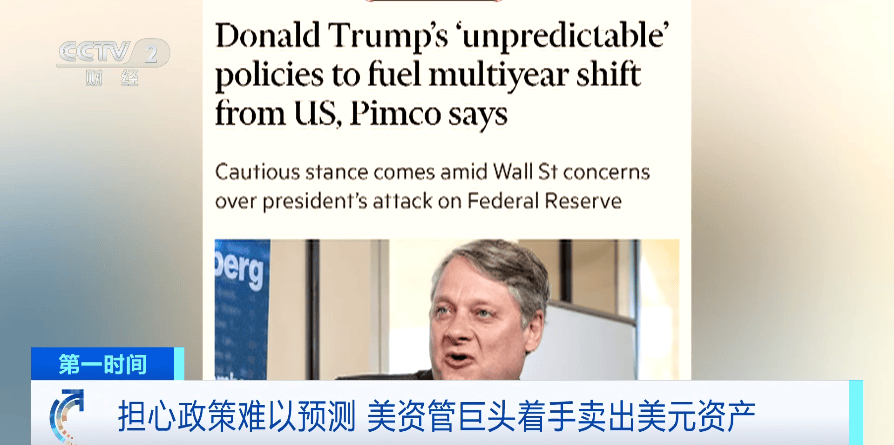
担心政策难以预测 美资管巨头着手卖出美元资产
Sou Hu Cai Jing· 2026-01-16 10:10
Group 1 - The Federal Reserve Chairman Jerome Powell is under criminal investigation by U.S. federal prosecutors, raising concerns on Wall Street and prompting investment firms to sell dollar assets to mitigate risks [1][9] - Investment management firm PIMCO, which manages $2.2 trillion in assets, is diversifying its investment portfolio by reducing dollar assets in response to unpredictable policies from President Trump, which have increased market volatility [3] - Jamie Dimon, CEO of JPMorgan Chase, echoed similar sentiments, stating that any actions undermining the independence of the Federal Reserve would not be advisable and could lead to higher inflation expectations [5] Group 2 - Powell's term is set to end in May 2026, and President Trump may nominate Powell's successor in the coming days or weeks. Some Wall Street executives view the subpoena issued to Powell as a warning to his potential successor, indicating that Trump may seek certain assurances from the next Federal Reserve Chairman [7] - Powell released a video statement claiming that the federal government's criminal investigation is an attempt to exert greater influence over the Federal Reserve and its monetary policy [9]

如何解读交易所调整融资保证金比例︱重阳问答
重阳投资· 2026-01-16 07:33
Core Viewpoint - The adjustment of the financing margin ratio from 80% to 100% aims to cool down market sentiment and prevent excessive speculation in the A-share market [2][3]. Summary by Sections - **Market Conditions**: Since the beginning of the year, the A-share market has experienced rapid growth, with trading volume increasing from around 2 trillion to nearly 4 trillion, marking a historical high. The balance of margin financing has also surged to approximately 2.7 trillion, indicating a significant rise in leverage [3][4]. - **Regulatory Response**: The increase in the financing margin ratio serves as a regulatory signal to indicate heightened market sentiment and the need to be cautious of excessive speculation. This is particularly important given the high proportion of retail investors in the A-share market, which can lead to significant losses if speculative behavior escalates [3][4]. - **Comparison with Past Events**: While the current market conditions may evoke memories of the 2015 market surge, the situation is different due to a more mature regulatory framework. The average maintenance margin ratio is around 288%, suggesting that leverage levels are still relatively healthy [4]. - **Market Outlook**: Despite the short-term increase in market heat, there is no systemic risk currently present. The long-term outlook for the A-share market remains positive, supported by a mature regulatory environment and the increasing global competitiveness of Chinese companies [4][5]. - **Conclusion on Financing Margin Adjustment**: The increase in the financing margin ratio is primarily a short-term measure to suppress market sentiment and does not alter the long-term positive outlook for the A-share market [5].

美股企稳后 亚洲股市涨跌互现 美股期货小幅走高
Xin Lang Cai Jing· 2026-01-16 06:40
Group 1: Market Overview - Wall Street ended a two-day decline, slightly rebounding close to historical highs, driven by rising stock prices of tech giants like Nvidia [1][12] - Asian stock markets showed mixed results, influenced by the performance of US markets and tech stocks [1][3] - US stock futures rose, while international oil prices experienced a decline [1][6] Group 2: Semiconductor Industry - TSMC reported strong earnings and announced significant investment plans, leading to a 2.7% increase in its stock price and a 2% rise in the Taiwan Weighted Index [1][12] - TSMC's CFO indicated that the company is facing "sustained strong demand," boosting confidence in the AI sector [1][12] - TSMC's US stock rose 4.4% following a signed agreement for a $250 billion investment from Taiwanese semiconductor and tech companies in the US [13] Group 3: Economic Indicators - A report indicated a decrease in initial jobless claims in the US, suggesting a potential slowdown in layoffs, which positively impacted market sentiment [10][19] - Manufacturing performance in the Mid-Atlantic and New York regions exceeded economists' expectations, further supporting market confidence [10][19] - The Russell 2000 index rose by 0.9%, reflecting the strong correlation of small-cap stocks with the US domestic economy [10][19] Group 4: Oil Market - International oil prices fell, with US benchmark crude futures at $58.96 per barrel, down 12 cents from the previous trading day [6][17] - Brent crude futures also declined by 16 cents, closing at $63.60 per barrel [7][18] - Market interpretations of Trump's comments suggested a potential easing of tensions over major oil fields, reducing the likelihood of supply disruptions [7][19]


日元大跌倒逼央行提前加息?消息人士:下周或施放重要信号
Feng Huang Wang· 2026-01-16 05:21
Core Viewpoint - The Bank of Japan (BOJ) may consider raising interest rates earlier than market expectations, potentially as soon as April, due to the ongoing depreciation of the yen and rising inflation pressures [1][2]. Group 1: Interest Rate Decisions - BOJ officials are facing the challenge of increasing borrowing costs after years of ultra-low rates, with the current rate at 0.75%, the highest in 30 years [2]. - Many BOJ decision-makers believe there is room for further rate hikes, with some not ruling out action in April, which is earlier than the previously expected timeline of the second half of the year [2][3]. - A survey indicated that over 75% of analysts expected the next rate hike to occur in September, but internal discussions at the BOJ suggest a potential shift in this timeline [2]. Group 2: Yen Depreciation Concerns - The significant depreciation of the yen since October has raised concerns among BOJ officials regarding the stability of inflation, as it increases the cost of imports, including fuel and food [3]. - The yen's decline has led to warnings from government officials and has heightened uncertainty about whether price pressures will ease as predicted by the BOJ [3]. - There is a growing concern within the BOJ that companies may use the yen's depreciation as a reason to raise product prices, further complicating the inflation outlook [3]. Group 3: Future Projections - The BOJ is expected to revise its economic growth and inflation forecasts during the upcoming monetary policy meeting on January 23, which may signal the pace of future rate hikes [4]. - The BOJ's previous forecast from October projected a 0.7% growth in the economy and a core inflation rate of 1.8% for the fiscal year 2026 [4]. - Analysts suggest that the ongoing yen depreciation may force the BOJ to act sooner than anticipated in addressing inflation risks, with a significant likelihood of an April rate hike and potential further increases in July and October [4].
金融圈都在搞知识付费
投资界· 2026-01-16 03:39
Core Viewpoint - The article discusses the rising trend of knowledge payment in the financial industry, highlighting how financial professionals are leveraging their expertise to create new revenue streams through subscription services and online courses, despite the traditional media business being considered poor-performing [3][4][16]. Group 1: Knowledge Payment Trends - Hong Hao's knowledge platform recently increased its annual fee to 1,499 yuan, generating a GMV of 12.586 million yuan within two months from 14,000 subscribers [3]. - Li Bei, a friend of Hong Hao, sold a course priced at 12,888 yuan in just two days, earning 257,000 yuan [3]. - The article notes that the media sector is generally underperforming, yet knowledge payment models are attracting significant interest from financial professionals [3][4]. Group 2: Leveraging Different Types of Leverage - Silicon Valley investor Naval emphasizes three types of leverage for wealth creation: labor leverage, capital leverage, and the most crucial, the ability to replicate products with zero marginal cost, such as code and media [5]. - Hong Hao and Li Bei effectively utilize all three types of leverage, with Li Bei's company, Banxia, surpassing 10 billion yuan in scale by 2022 [6]. - The article highlights that Hong Hao's recent fund performance has been inconsistent, but he claims a cumulative investment return of 718.77% over 20 years [6][9]. Group 3: Market Positioning and Audience Engagement - Hong Hao and Li Bei's focus on macroeconomic topics allows them to reach a broader audience, as many people are interested in general market trends rather than niche financial models [9][10]. - Their engaging presentation styles, which mix serious analysis with relatable content, help attract and retain followers [9][10]. - The article suggests that their ability to blend macroeconomic analysis with personal narratives enhances their appeal and marketability [9][10]. Group 4: Challenges and Strategies - Fund managers are often cautious about entering the knowledge payment space due to concerns about being perceived as neglecting their core investment responsibilities [11][12]. - Hong Hao and Li Bei's ventures into knowledge payment are not merely about transitioning to media but are strategic moves to enhance their market presence and client engagement [12][16]. - Li Bei's strategy includes offering free online courses to existing investors to retain them and prevent redemptions, especially as her firm faces increased competition [12][14][15]. Group 5: Future of Knowledge Payment in Finance - The article posits that the trend of knowledge payment in finance is driven by both the pressure of declining salaries in the industry and the dual needs of investors for reliable information and managers for long-term clients [16][17]. - As traditional channels become less effective, fund managers are increasingly turning to private domains and courses to connect with more targeted client bases [17]. - The ability to provide valuable insights and maintain trust is becoming essential in a noisy information environment, making knowledge payment a viable business model for financial professionals [16][17].

美股强势反弹:芯片股因台积电财报创新高,金融股业绩亮眼带动回暖,油价大跌拖累能源股
Sou Hu Cai Jing· 2026-01-16 00:14
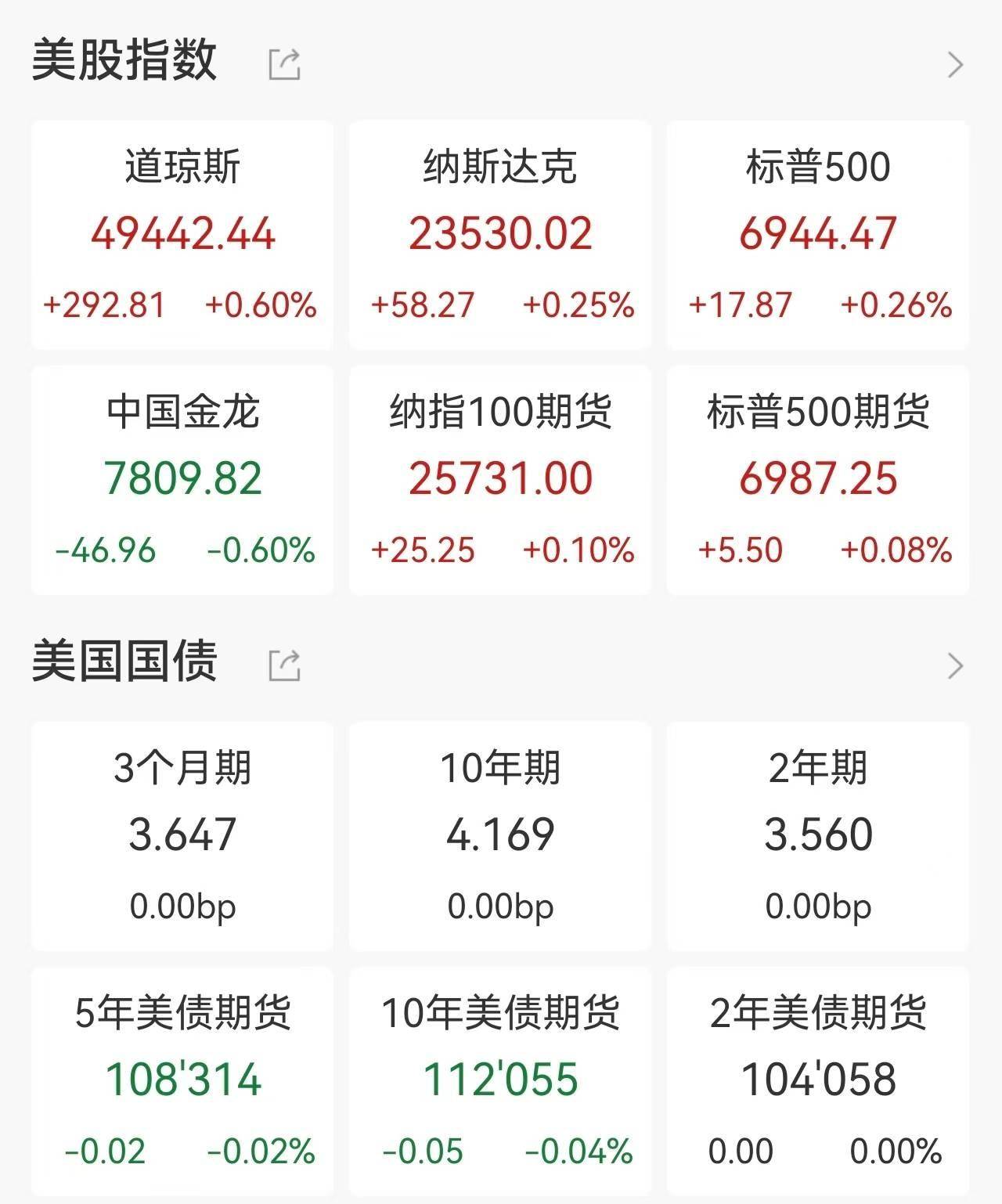
Market Performance - Major U.S. stock indices collectively rose on January 15 after two days of decline, driven primarily by the technology and financial sectors [1] - The Dow Jones Industrial Average increased by 292.81 points, or 0.60%, closing at 49,442.44 points; the Nasdaq Composite rose by 58.27 points, or 0.25%, to 23,530.02 points; and the S&P 500 gained 17.87 points, or 0.26%, ending at 6,944.47 points [1] Sector Highlights - The financial sector played a crucial role in supporting the market, with Morgan Stanley and Goldman Sachs reporting quarterly earnings that exceeded expectations, leading to stock price increases of 5.8% and 4.6%, respectively [4] - Goldman Sachs reported a 12% year-over-year increase in net profit to $4.6 billion, while Morgan Stanley's net profit grew by 18% to $4.4 billion, with investment banking revenue soaring by 47% [4] - BlackRock's assets under management reached a record high of $14 trillion, resulting in a stock price increase of 5.9% [4] Chinese Stocks - The Nasdaq Golden Dragon China Index fell by 0.60%, with most Chinese concept stocks declining [4] - New energy vehicle companies such as NIO, Xpeng Motors, and Li Auto saw slight increases, while Tencent Music and Trip.com experienced significant declines [4] Commodity Market - International oil prices experienced a significant drop, with New York light crude oil futures falling by 4.56% to $59.19 per barrel, and Brent crude oil futures decreasing by 4.15% [6] - The decline in oil prices was attributed to easing supply concerns rather than heightened geopolitical risk premiums due to U.S. actions against Iranian oil tankers [6] - Gold prices slightly decreased to around $4,615 per ounce, while silver experienced a sharp decline after reaching a historical high, with intraday volatility exceeding 7% [6] Economic Data - Initial jobless claims in the U.S. fell to 198,000, below market expectations, indicating resilience in the labor market [6] - This data did not strengthen expectations for a Federal Reserve rate cut, with futures indicating only about a 5% probability of a cut in January [6] - Several Federal Reserve officials emphasized the need to remain vigilant regarding inflation, with Kansas City Fed President Esther George describing inflation as "overheated" [6]
贝莱德资管规模破14万亿!全年吸金6980亿创历史,股价狂飙6%
Jin Rong Jie· 2026-01-16 00:11
受业绩利好推动,贝莱德股价上涨约6%,反映出市场对其业绩表现的认可。 市场有风险,投资需谨慎。本文为AI基于第三方数据生成,仅供参考,不构成个人投资建议。 本文源自:市场资讯 贝莱德公布2025年全年及第四季度业绩,其资产管理规模升至创纪录的14万亿美元,带动股价出现明显 上涨。 报告显示,贝莱德第四季度合计吸纳客户资金3420亿美元,其中长期投资基金获净增资2680亿美元,超 出市场预期。仅ETF业务就吸引1810亿美元资金流入,使得该业务总规模突破5.5万亿美元。去年最后 三个月的强劲资金流入,叠加货币市场及现金管理基金的贡献,推动贝莱德全年总吸金规模达到6980亿 美元,创下历史新高。此次业绩中首次纳入花旗集团外包合作项目,花旗将约800亿美元富裕客户投资 资产交由贝莱德管理。 贝莱德正加速推进私募市场领域扩张,整合近期完成的一系列收购交易。该公司斥资约280亿美元收购 全球基础设施合伙公司、HPS投资合伙公司以及Preqin有限公司,为其历史上规模最大的并购动作之 一。目前贝莱德正从传统公开市场投资主导者,转型为全球私募信贷和基础设施市场的顶级机构之一。 贝莱德首席执行官拉里·芬克在声明中表示:"全球 ...

【环球财经】伦敦股市15日上涨
Xin Lang Cai Jing· 2026-01-15 22:30
Core Viewpoint - The London stock market showed a positive trend with the FTSE 100 index closing at 10,238.94 points, an increase of 54.59 points or 0.54% from the previous trading day [1] Group 1: Stock Performance - The top five gainers in the London stock market included 3i Group with a rise of 10.08%, Schroders with an increase of 9.82%, Smiths Group up by 4.15%, Persimmon up by 4.07%, and London Metric Property rising by 3.68% [1] - The top five losers were Burberry down by 3.16%, AstraZeneca decreasing by 2.23%, GlaxoSmithKline down by 1.73%, Compass Group falling by 1.72%, and BT Group declining by 1.50% [1] Group 2: European Market Indices - The CAC 40 index in Paris closed at 8,313.12 points, down by 17.85 points or 0.21% from the previous trading day [1] - The DAX index in Frankfurt closed at 25,352.39 points, up by 66.15 points or 0.26% from the previous trading day [1]

中国工商银行股份有限公司深圳市分行与中国信达资产管理股份有限公司深圳市分公司债权转让通知暨债务催收联合公告
Jing Ji Ri Bao· 2026-01-15 21:51
Core Viewpoint - The Industrial and Commercial Bank of China (ICBC) Shenzhen Branch has signed an asset transfer agreement with China Cinda Asset Management Co., Ltd. Shenzhen Branch, transferring its creditor's rights and related rights under guarantee contracts to Cinda, effective December 23, 2025 [1]. Group 1: Agreement Details - The asset transfer agreement is identified as "Shenzhen 2025 SZ001" and involves the transfer of principal debts and guarantee rights from ICBC to Cinda [1]. - Borrowers and guarantors are required to fulfill their repayment obligations to Cinda as per the original loan and guarantee contracts [1]. - The announcement includes a list of borrowers and guarantors, detailing their respective principal and interest amounts as of the transfer benchmark date of May 20, 2025 [1][4]. Group 2: Financial Obligations - Borrowers and guarantors must pay interest, penalties, and other dues as stipulated in the loan and guarantee contracts until actual repayment [1]. - Legal fees incurred during litigation, which have been advanced by ICBC, are to be borne by the borrowers and guarantors as per the relevant legal documents [1]. Group 3: Contact Information - Contact details for both ICBC and Cinda are provided for any inquiries related to the announcement [2][3].
