非银金融

Search documents
渤海证券研究所晨会纪要(2025.12.19)-20251219
BOHAI SECURITIES· 2025-12-19 00:36
Macro and Strategy Research - The A-share market is experiencing a confirmed bottom, with expectations for a cross-year rally to unfold [2] - In the past five trading days (December 12-18), major indices showed mixed performance, with the Shanghai Composite Index rising by 0.08% and the ChiNext Index falling by 1.79% [2] - The average daily trading volume decreased to 1.81 trillion yuan, down by 491.08 billion yuan compared to the previous five trading days [2] - Economic data for November shows a 2.6% year-on-year decline in fixed asset investment, indicating weakening investment demand [2] - The central economic work conference emphasized expanding domestic demand as a top priority for the coming year, with a focus on service consumption in areas like culture, tourism, and elderly care [3] Strategy Insights - The A-share market is expected to gradually recover from low levels as the cross-year and spring market approaches [4] - Investment opportunities are identified in the TMT sector and robotics due to ongoing capital expansion in AI and domestic substitution of computing power [4] - The power equipment and non-ferrous metals industries are highlighted as having investment potential due to high global demand for energy storage and the ongoing industrialization of solid-state batteries [4] - The banking sector is also noted for potential allocation opportunities, supported by a low-interest-rate environment and a return to performance benchmarks by public funds [4] Industry Research - Xiaomi has launched an open-source MoE model and a web-based AI chat service, indicating a deepening layout in AI applications [5][7] - The domestic first space computing joint laboratory is set to be established, showcasing advancements in AI technology [5] - The computer industry saw a decline, with the Shanghai and Shenzhen 300 index dropping by 0.26% and the computer sector down by 2.01% from December 11 to December 17 [5] - The report suggests that the acceleration of large model product iterations by leading domestic and international firms will drive technological innovation and application [6]
责扬天下中上协:中国上市公司ESG价值核算报告(2025年)
Sou Hu Cai Jing· 2025-12-18 23:48
Core Insights - The report titled "ESG Value Accounting Report of Chinese Listed Companies (2025)" provides a comprehensive overview of the development trends in ESG value accounting both domestically and internationally, highlighting significant advancements in data disclosure and value accounting outcomes for listed companies [1][2]. International Progress - The International Capital Coalition and IFVI have merged to create a unified global value accounting factor database, while ISSB plans to revise relevant standards to enhance disclosure consistency and interoperability [1][19]. - The ESG value accounting is evolving towards monetization and financial integration, with a focus on developing a comprehensive decision-making framework that incorporates natural, social, human, and manufactured capital [19][20]. Domestic Progress - China has initiated the "Corporate Sustainable Value Accounting Guidelines" national standard plan, aiming to establish a standardized disclosure system that aligns with international trends while incorporating local characteristics [1][28]. - The ESG report publication rate for A-share and Hong Kong-listed mainland companies reached 54.66% in 2024, with significant improvements in the disclosure of key environmental and social indicators [1][35]. ESG Data Disclosure - In 2024, the number of companies achieving positive net impacts from ESG practices continued to rise, with nearly 60% of companies identifying ESG opportunities, particularly in environmental aspects [2][30]. - The quality of carbon emission data has improved, with over 50% growth in the number of companies rated A for data quality compared to 2022 [1][2]. ESG Value Accounting Applications - ESG value accounting is increasingly being integrated into corporate operations, supporting dual materiality analysis and optimizing resource allocation, thus transitioning ESG management from compliance to value creation [2][12]. - The report emphasizes that ESG reports will become the "new language" for sustainable disclosure, driving upgrades in corporate management paradigms and supporting sustainable investment and governance [2][15]. Industry-Specific Insights - The report includes case studies from various sectors such as agriculture, beverages, and food processing, revealing distinct ESG value characteristics across different industries [2][29]. - The banking and non-banking financial sectors have shown particularly high ESG report publication rates, exceeding 60% [1][44].


资金风向标 | 两融余额较上一日减少19.89亿元 电子行业获融资净买入额居首
Shang Hai Zheng Quan Bao· 2025-12-18 14:40
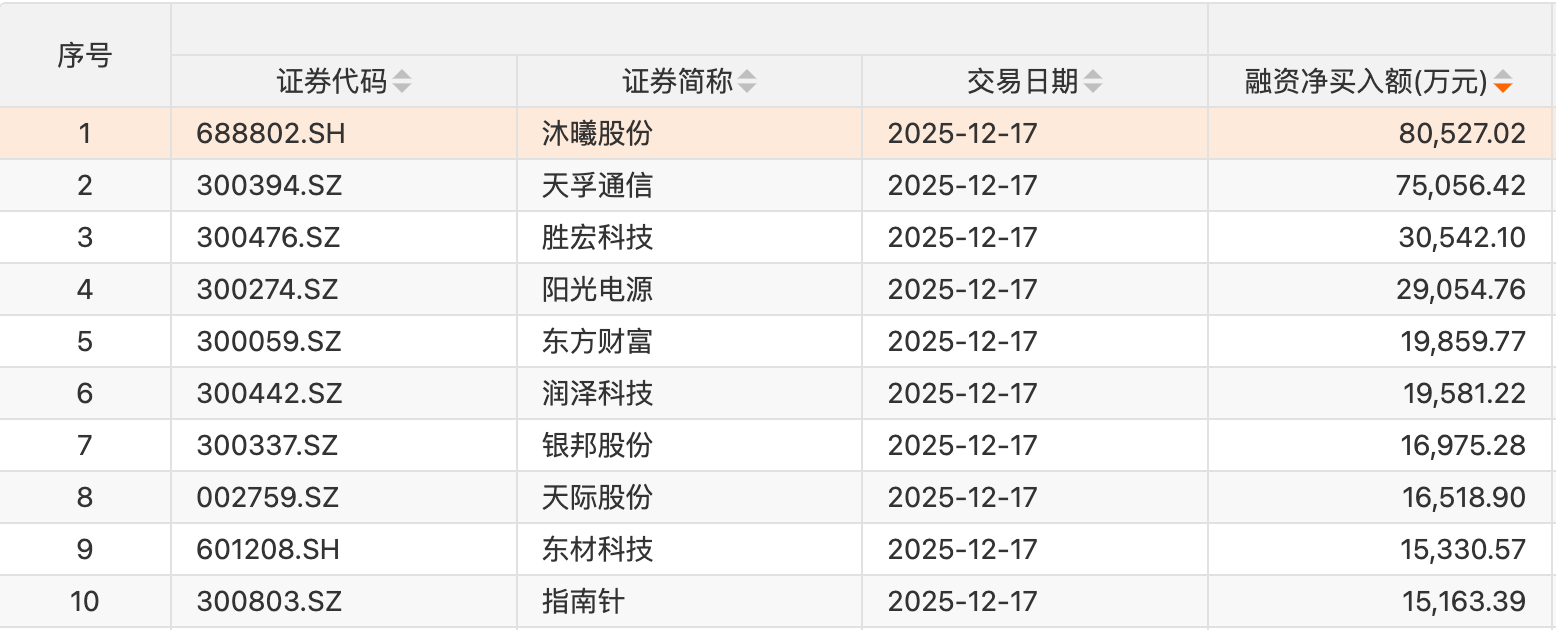
来源:上海证券报·中国证券网 上证报中国证券网讯(刘禹希 记者 徐蔚)截至12月17日,A股两融余额为25028.46亿元,较上一交易日减少19.89亿元,占A股流通市值比例为2.61%。当日 两融交易额为1852.92亿元,较上一交易日增加63.63亿元,占A股成交额的10.09%。 资金流向方面,申万31个一级行业中有9个行业获融资净买入,其中,电子行业获融资净买入额居首,当日净买入10.64亿元;获融资净买入居前的行业还有 通信、非银金融、建筑材料、钢铁等。 个股方面,21只个股获融资净买入额超1亿元。沐曦股份获融资净买入额居首,净买入8.05亿元;融资净买入金额居前的还有天孚通信、胜宏科技、阳光电 源、东方财富、润泽科技、银邦股份、天际股份、东材科技、指南针等。 | 序号 | | | | | --- | --- | --- | --- | | | 证券代码 ◆ | 证券简称 ◆ | 交易日期 ◀ | | 1 | 688802.SH | 沐曦股份 | 2025-12-17 | | 2 | 300394.SZ | 天孚通信 | 2025-12-17 | | ന | 300476.SZ | 胜宏科技 | 2 ...
央行要给非银机构“兜底”?三个问题说清楚
经济观察报· 2025-12-18 13:44
Core Viewpoint - The article discusses the new proposal of providing liquidity to non-bank financial institutions under specific scenarios, raising questions about the rationale behind targeting non-banks, the meaning of "specific scenarios," and what risks this mechanism aims to mitigate [1][3][4]. Group 1: Context and Rationale - The focus on non-bank financial institutions (NBFIs) arises from the changing financial landscape where risks and leverage have increasingly concentrated in market-based finance and NBFIs, which are significant players in stock and bond markets [5][6]. - NBFIs manage trillions of yuan in assets and are crucial in trading across various markets, making them susceptible to liquidity risks due to their reliance on short-term financing [6][7]. Group 2: Mechanism and Implementation - The mechanism aims to address liquidity issues for NBFIs, ensuring that financing chains remain intact and market functions continue during stress scenarios, rather than directly influencing asset prices [8][12]. - The proposal reflects a shift towards a "last liquidity support framework," similar to international practices where central banks provide liquidity to key market participants during extreme conditions to prevent market dysfunction [12][13]. Group 3: Specific Scenarios and Risks - "Specific scenarios" refer to market conditions characterized by price jumps, sudden financing contractions, and dominant passive selling, which can lead to a breakdown in market liquidity [10][11]. - The primary goal of this mechanism is to prevent liquidity issues from escalating into systemic failures, while also managing moral hazard concerns [15][16][17]. Group 4: Broader Implications - The arrangement is linked to broader economic goals, such as stabilizing internal demand and maintaining financial system stability, which are essential for economic recovery and growth [18][19]. - The value of the mechanism lies in instilling confidence that there are tools and frameworks in place to manage extreme scenarios, thereby enhancing the resilience of the financial system [18][19].
【18日资金路线图】两市主力资金净流出超290亿元 银行等行业实现净流入
Zheng Quan Shi Bao· 2025-12-18 11:27
12月18日,A股市场整体震荡分化。 | | | 资金净流入居前的行业 | | | --- | --- | --- | --- | | 行业 | 涨跌幅 | 净流入资金 (亿元) | 资金流入较多个股 | | 银行 | 1. 81% | 75. 68 | 招商银行 | | 国防军工 | 1. 63% | 41. 68 | 航天发展 | | 矢药生物 | 1.02% | 22. 16 | 海王生物 | | 传媒 | 0. 56% | 11. 74 | 三七互娱 | | 交通运输 | 0. 13% | 8. 70 | 上海机场 | | | | 资金净流出居前的行业 | | | 行业 | 涨跌幅 | 净流入资金 | 资金流出较多个股 | | | | (亿元) | | | 电子 | -0. 56% | -188. 14 | 工业富联 | | 电力设备 | -1. 19% | -139.24 | 宁德时代 | | 汽车 | 0. 23% | -50. 19 | 比亚迪 | | 通信 | 0. 35% | -45.90 | 中际旭创 | | 非银金融 | -0. 64% | -45. 40 | 中信证券 | 4.主力资金 ...
【18日资金路线图】两市主力资金净流出超290亿元 银行等行业实现净流入
证券时报· 2025-12-18 11:25
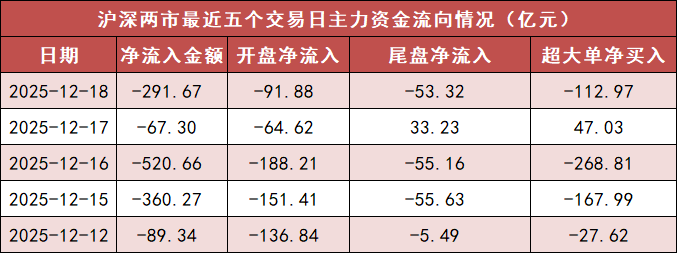
12月18日,A股市场整体震荡分化。 截至收盘,上证指数收报3876.37点,上涨0.16%;深证成指收报13053.97点,下跌1.29%;创业板指收报3107.06点,下跌2.17%。两市合计成交 16554.83亿元,较上一交易日减少1556.63亿元。 1. 两市主力资金净流出超290亿元 今日沪深两市主力资金开盘净流出91.88亿元,尾盘净流出53.32亿元,两市全天主力资金净流出291.67亿元。 | | | 沪深两市最近五个交易日主力资金流向情况(亿元) | | | | --- | --- | --- | --- | --- | | 日期 | | 净流入金额 开盘净流入 | 尾盘净流入 | 超大单净买入 | | 2025-12-18 | -291. 67 | -91. 88 | -53. 32 | -112. 97 | | 2025-12-17 | -67. 30 | -64. 62 | 33. 23 | 47.03 | | 2025-12-16 | -520. 66 | -188. 21 | -55.16 | -268. 81 | | 2025-12-15 | -360. 27 | -151. ...

22.90亿元资金今日流入国防军工股
Zheng Quan Shi Bao Wang· 2025-12-18 08:49
Market Overview - The Shanghai Composite Index rose by 0.16% on December 18, with 12 sectors experiencing gains, led by the banking and coal industries, which increased by 1.97% and 1.89% respectively. The defense and military industry also saw a rise of 0.90%. Conversely, the power equipment and communication sectors faced declines of 2.22% and 1.58% respectively [1] Capital Flow Analysis - The main capital flow showed a net outflow of 32.578 billion yuan across the two markets, with 8 sectors experiencing net inflows. The defense and military sector led with a net inflow of 2.29 billion yuan, followed by the banking sector with a net inflow of 927 million yuan. In contrast, 23 sectors saw net outflows, with the electronics sector leading at 11.042 billion yuan, followed by the power equipment sector at 7.347 billion yuan [1] Defense and Military Sector Performance - The defense and military sector experienced a 0.90% increase, with a total net inflow of 2.29 billion yuan. Out of 138 stocks in this sector, 102 stocks rose, including 5 that hit the daily limit, while 36 stocks fell, with 1 hitting the lower limit. Notably, 78 stocks had net inflows, with 10 stocks exceeding 100 million yuan in net inflow, led by China Satellite with 792 million yuan [2] Top Gainers in Defense and Military Sector - The top gainers in the defense and military sector included: - China Satellite (6.61% increase, 12.49% turnover, 791.76 million yuan inflow) - AVIC Heavy Machinery (6.68% increase, 9.21% turnover, 423.20 million yuan inflow) - West Measurement Testing (12.35% increase, 29.68% turnover, 228.01 million yuan inflow) [2] Top Losers in Defense and Military Sector - The top losers in the defense and military sector included: - Aerospace Electronics (1.65% increase, 18.39% turnover, -378.97 million yuan outflow) - Jingjia Micro (3.86% decrease, 4.46% turnover, -235.30 million yuan outflow) - Guangqi Technology (1.31% decrease, 1.29% turnover, -150.62 million yuan outflow) [3]



69只股上午收盘涨停(附股)
Zheng Quan Shi Bao Wang· 2025-12-18 04:24
| 代码 | 简称 | 收盘价(元) | 换手率(%) | 涨停板封单(万股) | 封单资金(万元) | 行业 | | --- | --- | --- | --- | --- | --- | --- | | 600118 | 中国卫星 | 58.10 | 7.95 | 4047.95 | 235185.87 | 国防军工 | | 601198 | 东兴证券 | 14.44 | 0.32 | 9667.67 | 139601.13 | 非银金融 | | 001331 | 胜通能源 | 23.76 | 0.35 | 3312.21 | 78698.14 | 公用事业 | | 002969 | 嘉美包装 | 5.52 | 0.13 | 13070.89 | 72151.31 | 轻工制造 | | 002565 | 顺灏股份 | 16.69 | 14.11 | 4227.02 | 70549.05 | 轻工制造 | | 002044 | 美年健康 | 6.02 | 13.07 | 10402.11 | 62620.68 | 医药生物 | | 300342 | 天银机电 | 30.20 | 24.83 | 1685.7 ...



渤海证券研究所晨会纪要(2025.12.18)-20251218
BOHAI SECURITIES· 2025-12-18 00:30
晨会纪要(2025/12/18) 编辑人 崔健 022-28451618 SAC NO:S1150511010016 cuijian@bhzq.com 渤海证券研究所晨会纪要(2025.12.18) 金融工程研究 主要指数全部震荡调整,两融余额小幅下降——融资融券周报 行业研究 2025 年工业机器人产量有望突破 70 万台——机械设备行业周报 证 券 研 究 报 告 晨 会 纪 要 请务必阅读正文之后的声明 渤海证券股份有限公司具备证券投资咨询业务资格 1 of 5 晨会纪要(2025/12/18) 金融工程研究 主要指数全部震荡调整,两融余额小幅下降——融资融券周报 王雪莹(证券分析师,SAC NO:S1150525020001) 1、市场概况 上周(12 月 10 日-12 月 16 日)A 股市场主要指数全部震荡调整,其中创业板指跌幅最大,下跌了 4.29%; 上证 50 跌幅最小,下跌了 1.44%。此外,上证综指下跌 2.17%,深证成指下跌 2.73%,科创 50 下跌 3.99%, 沪深 300 下跌 2.19%,中证 500 下跌 1.69%。 12 月 16 日,沪深两市两融余额为 24, ...
三问“非银后备支持机制”
Jing Ji Guan Cha Wang· 2025-12-17 12:48
Core Viewpoint - The People's Bank of China (PBOC) emphasizes the need for a moderately loose monetary policy to stabilize economic growth and financial markets while addressing financial risks in non-bank financial institutions [2][14][23] Group 1: Monetary Policy and Economic Stability - The PBOC plans to continue implementing a moderately loose monetary policy, focusing on expanding domestic demand and optimizing supply [2][14] - In 2026, a key focus will be on preventing and resolving financial risks in critical areas to maintain financial stability [14][23] - The PBOC aims to balance economic growth, structural adjustments, and financial risk prevention to promote high-quality economic development [14][23] Group 2: Non-Bank Financial Institutions - The PBOC's new proposal to provide liquidity support to non-bank financial institutions in specific scenarios has garnered attention [15][16] - Non-bank financial institutions, such as securities firms and asset management companies, hold significant market shares and are more susceptible to market fluctuations [16][17] - The liquidity issues faced by non-bank financial institutions are critical, as they can lead to market dysfunction during periods of stress [17][21] Group 3: Mechanism for Liquidity Support - The PBOC's liquidity support mechanism is designed to address potential market failures rather than directly influencing asset prices [18][21] - This mechanism aims to ensure that the financing chain for non-bank financial institutions remains intact during periods of market stress [18][23] - The concept of "specific scenarios" refers to market conditions characterized by price jumps, sudden financing contractions, and passive selling [20][23] Group 4: Implications for Market Functionality - The liquidity support framework is intended to prevent systemic disruptions in the market, ensuring that liquidity issues do not escalate into broader financial crises [21][23] - The PBOC's approach reflects a shift towards enhancing the resilience of the financial system rather than merely stimulating it [24][25] - Establishing a clear framework for addressing extreme market conditions is crucial for maintaining market confidence and stability [24][25]