咖啡

Search documents
深度|星巴克“易主”博裕:2万门店野心下,咖啡巨头能否真正“下沉”?
Di Yi Cai Jing· 2025-11-06 04:08
Core Insights - The competitive landscape of China's coffee market has dramatically changed, with Luckin Coffee surpassing Starbucks in both store count and revenue, becoming the new market leader [2][4] - Starbucks has entered a strategic partnership with Boyu Capital, marking the first time in 26 years that it has relinquished control of its core business in China [1][7] - The partnership aims to enhance Starbucks' operational efficiency and accelerate its expansion in the Chinese market, particularly in lower-tier cities [10][11] Market Dynamics - Luckin Coffee's revenue for the first half of 2025 reached 21.2 billion yuan, with a net profit of nearly 1.8 billion yuan, while Starbucks reported revenue of 18.2 billion yuan and a net profit of approximately 1.2 billion yuan for the same period [4] - The rapid rise of local brands like Luckin and Kudi Coffee, which has opened over 14,000 stores since its establishment in 2022, has intensified competition for Starbucks [2][4] - Price wars initiated by local brands have altered consumer expectations, with prices for coffee now commonly ranging from 10 to 15 yuan per cup [4] Financial Performance - Starbucks China reported a revenue increase of 6% year-on-year in the fourth quarter of fiscal year 2025, amounting to $831.6 million [5] - However, the company faced challenges with a decline in average transaction value by 8% and a 14% drop in same-store sales in the fourth quarter of 2024 [4] Strategic Partnership with Boyu Capital - Boyu Capital acquired a 60% stake in Starbucks China for $4 billion, valuing the business at over $13 billion [7][8] - Boyu Capital's extensive local market experience and investment portfolio, including successful ventures in retail, are expected to enhance Starbucks' operational capabilities [9][10] - The partnership aims to accelerate store openings and improve localization strategies, with a target of expanding the number of Starbucks locations in China to 20,000 [10][11] Future Outlook - The newly formed joint venture will manage approximately 8,000 existing Starbucks stores and focus on expanding into lower-tier markets [10] - Starbucks aims to balance its high-end brand image with aggressive expansion, which poses challenges in maintaining service quality while scaling operations [11][12] - The coffee market in China is entering a new phase, with the relinquishment of control being just the beginning of a more complex competitive landscape [12]


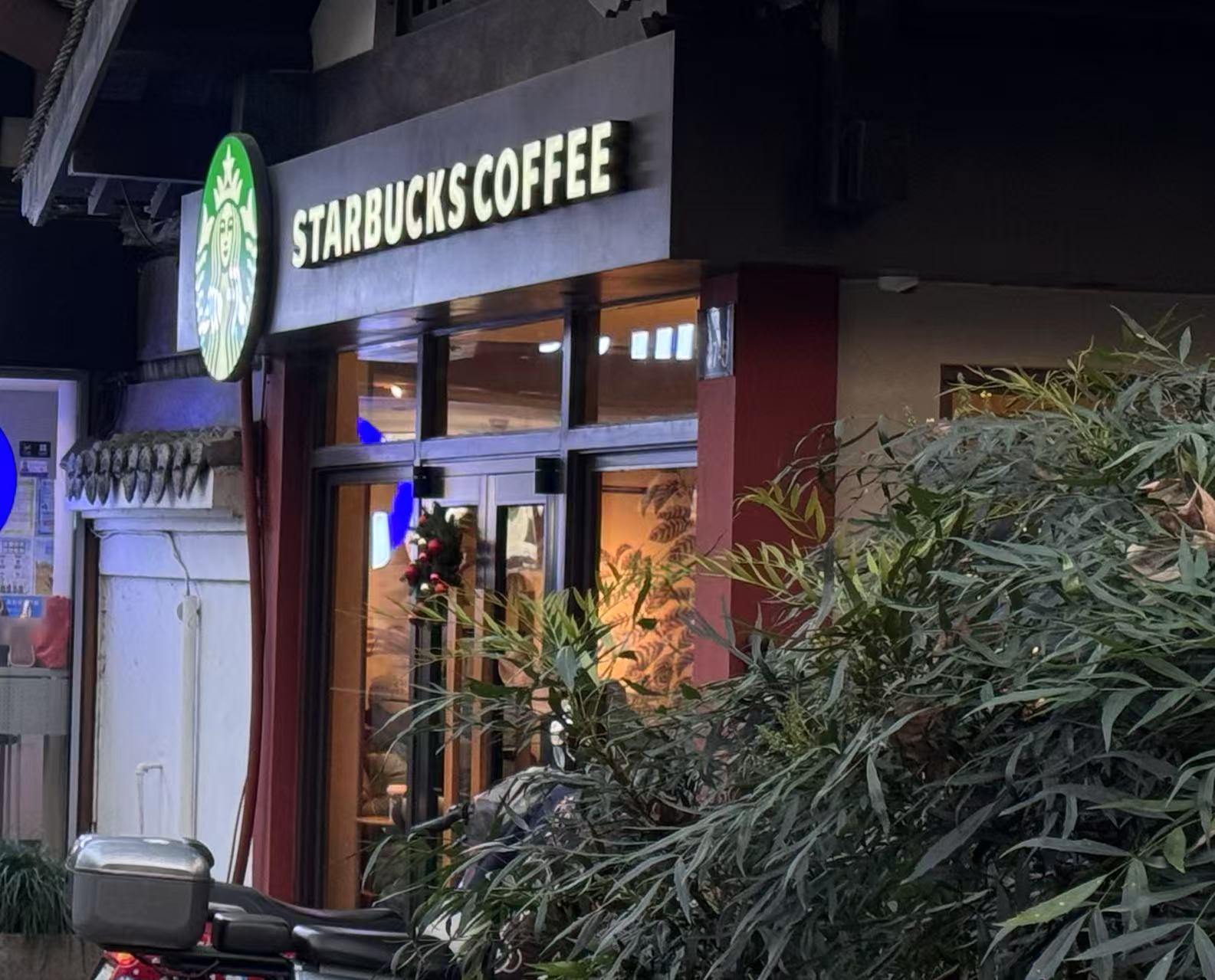
星巴克找了个中国合伙人
Zhong Guo Xin Wen Wang· 2025-11-06 03:28
Core Insights - Starbucks is forming a joint venture with Chinese asset management company Boyu Capital, with Boyu holding up to 60% equity and Starbucks retaining 40% [1][2] - The deal values Starbucks' China business at approximately $4 billion, excluding cash and debt, with Boyu acquiring corresponding equity [2] - Starbucks' estimated valuation for its China operations exceeds $13 billion, suggesting Boyu's acquisition may be advantageous [3] Company Strategy - The joint venture aims to expand Starbucks' store count in China from around 8,000 to 20,000, focusing on penetrating smaller cities and emerging regions [4][12] - Boyu's experience in local market operations is expected to accelerate Starbucks' growth in these areas, indicating a strategic shift to leverage local expertise for expansion [6][12] Market Context - Starbucks, once a pioneer in the Chinese coffee market, now faces intense competition from local brands like Luckin Coffee and Kudi Coffee, which have significantly more stores [7][10] - The rise of local brands is attributed to their efficient supply chains and competitive pricing, challenging Starbucks' traditional pricing strategy [9][11] Operational Challenges - Starbucks' recent performance raises concerns about its ability to generate operating income from the joint venture, as it must adapt to a rapidly changing market landscape [4][12] - The company is undergoing a "second localization" effort, which involves ceding control while attempting to maintain brand integrity and market relevance [12][15] Future Outlook - The partnership with Boyu signifies a shift in Starbucks' identity from a market leader to a challenger in the evolving Chinese coffee landscape [15] - The future competition will hinge on supply chain efficiency, digitalization, regional insights, and organizational agility rather than just pricing or brand recognition [15]

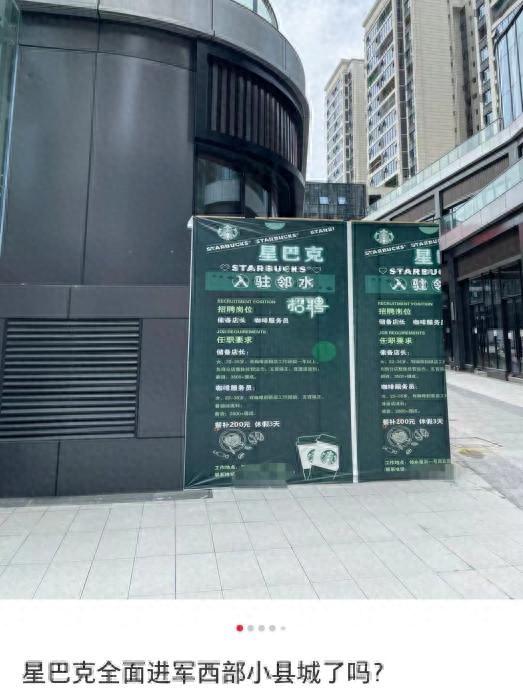
巴西咖啡的进博之旅——“与中国市场一起定义好咖啡”
Ren Min Ri Bao· 2025-11-06 03:02
巴西咖啡的进博之旅—— "与中国市场一起定义好咖啡"(进博会故事) 《人民日报》(2025年11月06日 第 03 版) 在第八届进博会农食产品展区巴西出口投资促进局展位上,知名咖啡品牌奥尼卡被摆放在醒目的位置。 工作人员递上刚冲泡好的咖啡:"我们的咖啡豆来自巴西曼蒂凯拉山脉,酸中带着一点花果香。" 巴西是全球第一大咖啡生产国和出口国。近年来,巴西等多国咖啡产品通过进博会平台,加速走进中国 市场,满足中国消费者日益多样化的选择。一杯巴西咖啡的进博之旅,是全球共享中国市场机遇的一个 生动注脚。 "流泪的山脉"孕育精品咖啡 清晨,薄雾笼罩着巴西米纳斯吉拉斯州曼蒂凯拉山脉,漫山遍野的咖啡树构成一片翠绿的海洋。记者驱 车沿着崎岖的山路前行,来到隐藏在这片绿海之中的奥尼卡咖啡园。 "这儿的空气里都有咖啡的味道。"园主阿尔瓦罗·佩雷拉·科里笑着对记者说:"我们的咖啡豆从这里漂洋 过海,通过进博会等平台展示、推广,走向中国各地的咖啡馆和消费者。"在咖啡园,60多岁的科里指 着远处的山峦告诉记者,"曼蒂凯拉"在当地土著语中意为"流泪的山脉",这里海拔较高、干湿分明,可 满足咖啡生长周期对水分的不同需求。"得天独厚的自然环境使 ...
中国真的需要20000家星巴克吗?
3 6 Ke· 2025-11-06 02:43
Core Insights - Starbucks has finalized a deal with Boyu Capital to establish a joint venture for its retail operations in China, valuing the venture at approximately $4 billion, with Boyu holding 60% and Starbucks 40% [1] - The total value of Starbucks' retail business in China is expected to exceed $13 billion over the next decade, comprising three components: the value from the joint venture, retained equity, and ongoing licensing fees [1] - The emphasis on Starbucks as a "premium brand" raises questions about the feasibility of its goal to open 20,000 stores in China, especially in a competitive market with numerous affordable alternatives [1][4] Company Strategy - Starbucks aims to leverage Boyu's local market expertise to accelerate its expansion, particularly in smaller cities and emerging regions, while maintaining its brand culture [4][6] - The CEO has called for a return to Starbucks' core values, focusing on creating a warm coffeehouse environment that fosters community [17][18] - The joint venture is seen as a way to enhance market penetration and provide innovative, localized experiences for Chinese consumers [6][12] Market Dynamics - The Chinese coffee market has become increasingly competitive, with brands like Luckin Coffee and Manner offering lower-cost options that appeal to consumers [1][16] - Starbucks' market share in China has declined from 42% in 2017 to an estimated 14% by 2024, indicating a significant shift in consumer preferences [9] - The current strategy may require Starbucks to adapt its pricing and store formats to compete effectively, potentially including smaller store formats and localized product offerings [9][11][12] Expansion Challenges - The ambitious target of 20,000 stores implies a need for significant investment in infrastructure, labor, and rental costs, raising concerns about the sustainability of such a rapid expansion [7][8] - The challenge of maintaining a "premium" brand image while expanding into lower-tier markets may lead to conflicting operational strategies [4][7] - The necessity for Starbucks to differentiate its product offerings in a crowded market is critical, as current offerings lack significant differentiation compared to competitors [7][12] Consumer Engagement - Starbucks is exploring ways to enhance customer experience, potentially by offering more affordable and localized menu items to attract a broader customer base [12][20] - The company may consider a franchise model to accelerate growth, similar to successful strategies employed by other brands in the market [12][21] - Engaging with consumers in a meaningful way, such as through community-focused initiatives, could help Starbucks regain its competitive edge [19][20]
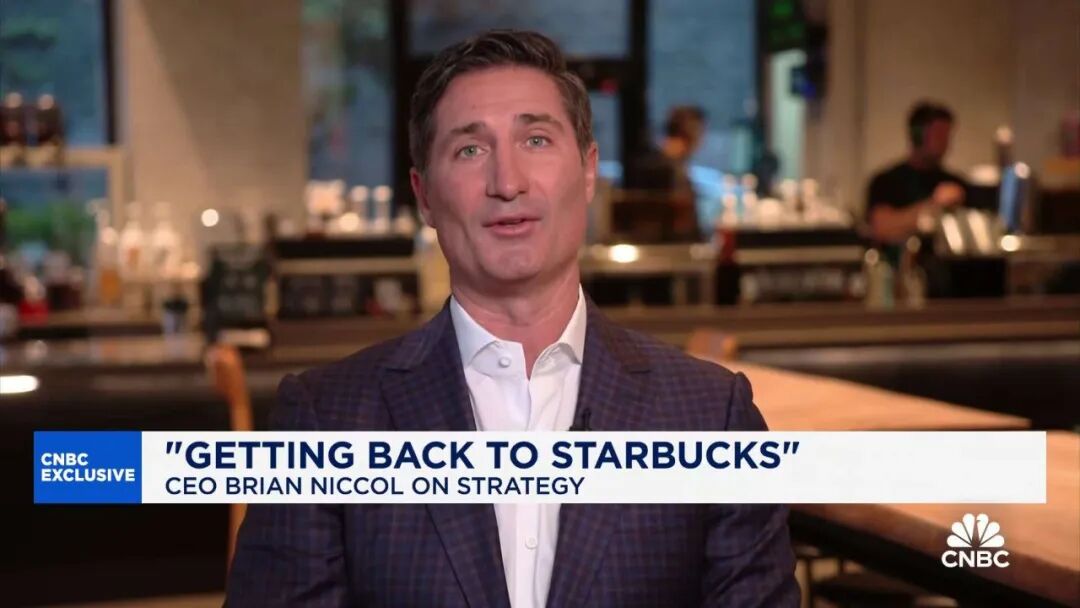
星巴克中国估值要跑到130亿美元,还得看博裕能帮多大忙
Xin Lang Cai Jing· 2025-11-06 02:39
Core Insights - Starbucks has finalized a deal to form a joint venture with Boyu Capital, where Boyu will hold up to 60% of the equity, while Starbucks retains 40% and continues to own the brand and intellectual property [1][2] Group 1: Valuation and Financial Aspects - The joint venture is valued at $4 billion, with Starbucks estimating its total retail business in China to exceed $13 billion, composed of three parts: proceeds from the equity transfer, retained equity value, and future licensing fees [3][7] - Starbucks needs to generate $6.6 billion in licensing fees over the next ten years to meet the $13 billion valuation expectation, which typically ranges from 3% to 8% of GMV [7][8] - Starbucks China has 8,011 stores and has entered 1,091 county-level markets, with active membership in the Starbucks Rewards program reaching 25.5 million [9] Group 2: Market Strategy and Adaptation - The partnership with Boyu Capital aims to enhance Starbucks' local market adaptability and accelerate expansion into smaller cities and emerging markets [5][19] - Starbucks has recently adjusted its pricing strategy, implementing significant price reductions on popular products, which has positively impacted sales [10][11] - The company plans to expand its store count to 20,000, necessitating a shift towards lower-tier markets while maintaining quality and brand standards [20][21] Group 3: Boyu Capital's Role - Boyu Capital is recognized for its strong local market experience and has previously invested in notable companies, making it a suitable partner for Starbucks' expansion [15][16] - The collaboration is expected to leverage both parties' resources to enhance customer experience, accelerate product innovation, and deepen local market integration [18][19] - Boyu's higher bid may have contributed to its selection as the partner for this venture, indicating confidence in the potential for growth in the Chinese market [16]
咖啡和空间,谁才是130亿美元星巴克中国的原点
3 6 Ke· 2025-11-06 00:32
Core Insights - Starbucks China has finalized a strategic partnership with Boyu Capital to establish a joint venture, with a valuation of $4 billion, aiming to expand its store count to 20,000 in the future [1][3] - The average store valuation in China is approximately $500,000, significantly lower than the global average of $2.24 million, indicating underutilization of store space value [1][3] - The competitive landscape in China's coffee market has shifted, with local brands like Luckin and Manner outperforming Starbucks in product innovation and cost efficiency [5][6] Group 1: Strategic Partnership and Expansion Plans - The joint venture will see Boyu holding up to 60% equity while Starbucks retains 40%, focusing on retail operations in China [1] - Both parties emphasize the goal of expanding Starbucks' store count in China to 20,000, particularly in smaller cities and emerging regions [3][20] - Starbucks anticipates that its retail business in China will exceed $13 billion in total value [3] Group 2: Market Dynamics and Competitive Landscape - The coffee market in China has evolved into a highly competitive space, with consumers increasingly prioritizing affordability over the premium experience Starbucks traditionally offered [4][5] - Local competitors are leveraging cost control and rapid product innovation, making it challenging for Starbucks to maintain its market position [5][6] - Starbucks' average transaction value has been declining for 12 consecutive quarters, indicating a shift in consumer behavior towards lower-priced options [3][12] Group 3: Brand and Space Strategy - Starbucks' core strength lies in its ability to create a "third space" for consumers, which is more than just a coffee shop but a community gathering place [2][14] - The brand's identity has shifted from being a premium coffee provider to a space-focused business, necessitating a reevaluation of its product offerings and pricing strategies [14][15] - The company is exploring new themes for its stores, such as interest-based community spaces, to enhance customer engagement and redefine its value proposition [21][23]
“与中国市场一起定义好咖啡”(进博会故事)
Ren Min Ri Bao· 2025-11-05 22:11
"流泪的山脉"孕育精品咖啡 清晨,薄雾笼罩着巴西米纳斯吉拉斯州曼蒂凯拉山脉,漫山遍野的咖啡树构成一片翠绿的海洋。记者驱 车沿着崎岖的山路前行,来到隐藏在这片绿海之中的奥尼卡咖啡园。 "这儿的空气里都有咖啡的味道。"园主阿尔瓦罗·佩雷拉·科里笑着对记者说:"我们的咖啡豆从这里漂洋 过海,通过进博会等平台展示、推广,走向中国各地的咖啡馆和消费者。"在咖啡园,60多岁的科里指 着远处的山峦告诉记者,"曼蒂凯拉"在当地土著语中意为"流泪的山脉",这里海拔较高、干湿分明,可 满足咖啡生长周期对水分的不同需求。"得天独厚的自然环境使曼蒂凯拉成为巴西最适宜咖啡种植的地 区之一,其出产的咖啡豆品质高,畅销世界。" 在第八届进博会农食产品展区巴西出口投资促进局展位上,知名咖啡品牌奥尼卡被摆放在醒目的位置。 工作人员递上刚冲泡好的咖啡:"我们的咖啡豆来自巴西曼蒂凯拉山脉,酸中带着一点花果香。" 巴西是全球第一大咖啡生产国和出口国。近年来,巴西等多国咖啡产品通过进博会平台,加速走进中国 市场,满足中国消费者日益多样化的选择。一杯巴西咖啡的进博之旅,是全球共享中国市场机遇的一个 生动注脚。 从手工采摘、分拣,到水洗、日晒、烘焙、包装 ...
品牌门店成为旅行的“情绪目的地” ?泡泡玛特、MUJI的在地化新叙事
3 6 Ke· 2025-11-05 11:44
Core Insights - The article discusses how brand stores are becoming "emotional destinations" for travelers, with a significant increase in cross-regional travel during the recent holiday period, estimated at 2.433 billion trips [1] Group 1: Brand Store Trends - More tourists are not just visiting attractions but are actively seeking unique brand stores in local areas, enhancing their cultural consumption experience [1][7] - The concept of "localized storytelling" is categorized into three types: local guide stores, collector's item stores, and exhibition stores [7] Group 2: Local Guide Stores - Local guide stores integrate into new commercial districts, creating a sense of local identity. They cater to tourists' desires for both exploration and familiarity [8] - An example is the tea brand "Cha Bai Dao," which collaborates with local culture in Chengdu, incorporating traditional elements into its store design [8][12] Group 3: Collector's Item Stores - Collector's item stores use natural or cultural landscapes as their backdrop, positioning the brand as the "best viewing platform" [17] - M Stand, a coffee chain, exemplifies this by creating a store in Urumqi that features local cultural elements, attracting travelers [18][22] Group 4: Exhibition Stores - Exhibition stores, like those of MUJI and Starbucks, focus on creating immersive experiences that blend local culture with brand identity [28] - Starbucks has opened several non-heritage concept stores that showcase local craftsmanship and art, enhancing the cultural experience for customers [29][34] Group 5: Consumer Experience - The article emphasizes that providing a multi-sensory consumer experience is crucial for offline retail, with localized store designs being a key strategy [44] - The goal is to create unique environments that resonate with consumers, transforming casual visitors into brand advocates [44]

星巴克中国易主,压力给到了瑞幸
36氪· 2025-11-05 09:20
Core Viewpoint - Starbucks has entered a strategic partnership with Boyu Capital to establish a joint venture for its retail operations in China, retaining 40% ownership while Boyu will hold up to 60% [5][6]. Financial Performance - Starbucks reported a 5% year-over-year increase in global revenue for fiscal year 2025, with a notable 1% growth in same-store sales in Q4, marking the first positive growth in seven quarters [7][8]. - In fiscal year 2025, Starbucks' total revenue reached $37.18 billion, up 2.8% from the previous year, with company-operated stores contributing $30.74 billion, a 3.3% increase [9][10]. - In China, total revenue for fiscal year 2025 was $3.105 billion, reflecting a 5% year-over-year growth, with Q4 revenue at $831.6 million, a 6% increase [13][14]. Market Dynamics - The international segment showed strong performance, with a 3% increase in same-store sales, driven by markets like Japan, the UK, and Mexico [8]. - The Chinese market is seen as a key driver for overall growth, with Starbucks focusing on product innovation, delivery service growth, pricing optimization, and store expansion [15][16]. Competitive Landscape - Starbucks is facing intense competition in the Chinese market, particularly from new tea brands and other coffee chains, leading to significant price reductions in its product offerings [16][19]. - The company has engaged in a price war, with significant price cuts on various products, which may impact its premium brand positioning [20][22]. Operational Challenges - Despite the revenue growth, Starbucks' operating profit margin fell to 2.9% in Q4 2025 from 14.4% in the same period last year, indicating rising operational costs [24]. - High coffee bean prices are expected to remain a challenge for at least the next two quarters, affecting profitability [25][26]. Strategic Initiatives - The joint venture with Boyu Capital aims to expand the number of Starbucks stores in China to 20,000, focusing on lower-tier cities where competition is increasing [28]. - Starbucks has entered 1,091 county-level markets in China, with a total of 8,011 stores, but has seen a decline in comparable store sales due to a 5% drop in average ticket price [28][30].
毛利超过星巴克,咖啡界的隐形冠军,年入88亿欧元
东京烘焙职业人· 2025-11-05 08:35
Core Insights - Peet's Coffee has established itself as a leader in the premium coffee market in China, focusing on high customer spending and brand loyalty without engaging in price wars [2][4][10] - The company reported a 23.8% increase in EBIT in the domestic market for the fiscal year 2024, with global revenue reaching €8.837 billion, approximately ¥730 billion [3][4] Business Model and Strategy - Peet's Coffee differentiates itself by not participating in the low-price competition prevalent in the coffee market, instead focusing on maintaining a high average transaction value exceeding ¥40 [2][4] - The brand has built a strong cultural identity around coffee, offering events like "Coffee Bean Sourcing Tours" and "Roasting Master Classes" to enhance customer engagement and brand loyalty [7][9] - The company has successfully localized its offerings, integrating traditional Chinese flavors into its product line, which has attracted a younger demographic [10][11] Market Position and Competition - Peet's Coffee has a unique market position as the "invisible champion" of the high-end coffee sector, leveraging its strong brand and customer loyalty to maintain a competitive edge [4][6] - Despite its success, Peet's faces increasing competition from brands like Luckin and Manner, which are also moving into the premium coffee space [14] Customer Engagement and Digital Strategy - The company has implemented a membership program to enhance customer retention, although its membership penetration rate is only 12%, significantly lower than Luckin's 35% [11][15] - Peet's Coffee has created a closed-loop system where customers can purchase coffee beans and brew at home, reinforcing brand loyalty and customer engagement [12][13]