无人机

Search documents
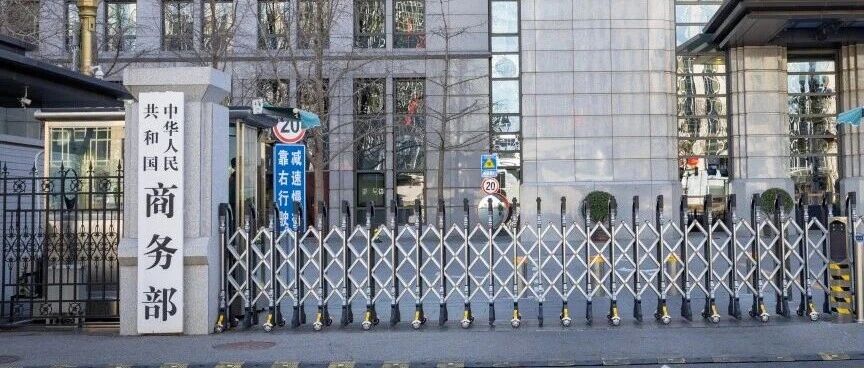
美针对无人机领域增列“不可信供应商清单” 中国商务部回应
Zhong Guo Xin Wen Wang· 2025-12-23 17:14
Core Viewpoint - The Chinese Ministry of Commerce urges the U.S. to stop its erroneous practices and immediately revoke the inclusion of foreign-produced drone systems and their key components in the "untrusted suppliers list" [1] Group 1: U.S. Actions - The U.S. Federal Communications Commission (FCC) has announced the inclusion of all foreign-produced drone systems and their key components in the "untrusted suppliers list" [1] - The U.S. justifies this action under the guise of "national security," which China firmly opposes [1] Group 2: China's Response - China criticizes the U.S. for disregarding normal business transactions and trade relations between Chinese and American companies [1] - The Chinese government highlights the strong voices from the industry against the U.S. actions, labeling them as market distortion and unilateral bullying [1] - China warns that if the U.S. continues its current course, it will take necessary measures to firmly protect the legitimate rights and interests of Chinese enterprises [1]
商务部回应美无人机领域清单:若美方一意孤行 中方将采取必要措施
证券时报· 2025-12-23 15:35
Group 1 - The article discusses China's strong opposition to the U.S. Federal Communications Commission (FCC) adding all foreign-produced drone systems and their key components to the "Covered List" citing national security concerns [1] - China criticizes the U.S. for distorting the market and engaging in unilateral bullying by using national security as a pretext to suppress foreign companies, including Chinese firms [1] - The Chinese government urges the U.S. to stop its erroneous actions and withdraw the measures, warning that it will take necessary actions to protect the legitimate rights of Chinese enterprises if the U.S. persists [1] Group 2 - The Chinese Foreign Ministry spokesperson previously stated that the U.S. is unfairly targeting Chinese companies by broadening the concept of national security and creating discriminatory lists [1]


美股异动 | 获得375万美元采购订单 Unusual Machines(UMAC.US)续涨超8%
智通财经网· 2025-12-23 15:35
Core Viewpoint - Unusual Machines (UMAC.US) has seen a significant stock price increase of over 8% on Tuesday, accumulating a total rise of 45% over three trading days, currently priced at $12.82 per share [1] Company Developments - Unusual Machines announced a procurement order valued at $3.75 million from Performance Drone Works (PDW) to support PDW's AM-FPV program expansion and investment in the U.S. small drone system supply chain [1] - The PDW order follows recent investments by the company in the domestic manufacturing sector, which includes domestic motor production and dedicated space for supporting headset assembly and future production activities [1]
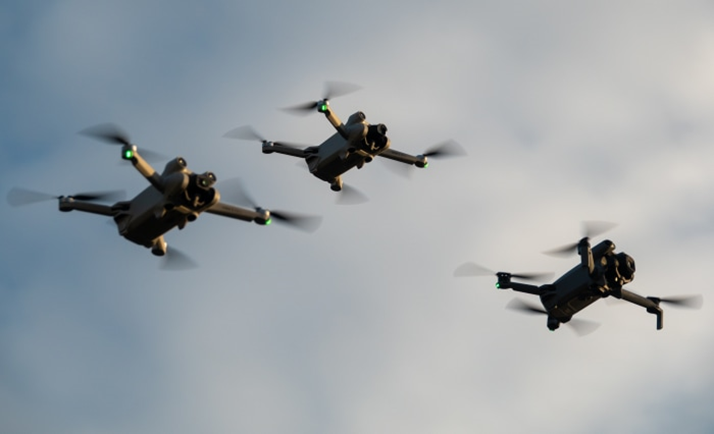
美国对大疆等所有外国制造新型无人机禁令引发美国消费者愤怒,“疯狂囤货”
Huan Qiu Wang· 2025-12-23 15:32
Core Viewpoint - The U.S. Federal Communications Commission (FCC) has placed all foreign-manufactured drones, including those from DJI, on a "regulated list," prohibiting the approval of new drone models for export or sale in the U.S., leading to widespread consumer backlash and panic buying among drone operators [3][6]. Group 1: Impact on Consumers and Operators - Approximately 70% to 90% of the U.S. consumer drone market is dominated by DJI, which has led to significant anger among nearly 500,000 certified drone operators in the U.S. [3] - Many drone operators are stockpiling DJI drones and parts, expressing concerns that they have no viable alternatives and that their livelihoods may be severely impacted [3][5]. - A survey conducted by a drone operator association revealed that about 43% of respondents believe the ban will have an "extremely negative" impact on their companies, with 85% indicating their businesses may only survive for two years or less [5]. Group 2: Statements from DJI and Chinese Authorities - DJI expressed regret over the FCC's decision, stating it limits consumer choice and undermines fair market competition, asserting that the safety and reliability of its products have been validated by global markets and independent third parties [6]. - The Chinese Foreign Ministry criticized the U.S. for its discriminatory practices against Chinese companies, urging the U.S. to correct its actions and provide a fair operating environment for Chinese enterprises [6].
【公告全知道】芯片+6G+商业航天+英伟达+PCB+光刻胶!公司产品可应用于低轨卫星通信基板、航空发动机等领域
财联社· 2025-12-23 15:11
Group 1 - The article highlights significant announcements in the stock market, including "suspensions and resumption of trading, share buybacks, investment wins, acquisitions, earnings reports, unlocks, and high transfers" to help investors identify potential investment hotspots and mitigate risks [1] - A company is involved in the fields of chip technology, 6G, commercial aerospace, and has products applicable to low-orbit satellite communication substrates and aircraft engines [1] - Another company has signed an agreement with a Chinese rocket company to implement an expansion plan for the Hainan commercial aerospace launch site [1] - A company plans to establish a production capacity of 1.2 million units for humanoid robots and solid-state batteries by 2026 [1]

影石:无人机上市2周内遭2500条黑帖攻击,已取证立案
Xin Lang Cai Jing· 2025-12-23 14:59
Core Viewpoint - The company is actively addressing malicious rumors and false information targeting its brand, particularly in relation to its newly launched product, the "影翎 Antigravity A1" drone, and is taking legal action against those responsible for spreading such misinformation [1] Group 1: Legal Actions and Responses - The company's legal department has revealed evidence of organized efforts to defame its brand through paid promotions that include negative product reviews, with fees reaching up to 2000 yuan per post [1] - Over 1000 individuals have reportedly signed up to participate in these malicious activities, prompting the company to offer a reward of up to 100,000 yuan for information leading to the identification of these perpetrators [1] - The company has documented over 2500 instances of malicious and false attacks against its product within two weeks of its launch and has filed a formal complaint with law enforcement, which has resulted in an official investigation [1] Group 2: Company Position and Future Actions - The company welcomes objective oversight but emphasizes its commitment to pursuing legal accountability for profit-driven defamation and unfair competition practices [1] - The company has already secured evidence related to the false information and is cooperating with authorities to ensure that those responsible are held accountable [1]

美国针对无人机领域增列“不可信供应商清单”,商务部:坚决反对
Xin Lang Cai Jing· 2025-12-23 14:58
Core Viewpoint - The Chinese government strongly opposes the U.S. decision to include all foreign-produced drone systems and their key components in the "Covered List" citing national security concerns, viewing it as a distortion of the market and unilateral bullying [1] Group 1: U.S. Actions - The U.S. Federal Communications Commission (FCC) has announced the inclusion of all foreign-produced drone systems and their critical components in the "untrusted suppliers list" [1] - The U.S. is accused of disregarding normal business transactions and trade relations between Chinese and American companies [1] Group 2: Chinese Response - The Chinese government urges the U.S. to stop its erroneous actions and immediately revoke the related measures [1] - If the U.S. continues its current course, China will take necessary measures to firmly protect the legitimate rights and interests of Chinese enterprises [1]

事关无人机,商务部最新发声
Shang Hai Zheng Quan Bao· 2025-12-23 14:45
Core Viewpoint - The Chinese government strongly opposes the U.S. Federal Communications Commission's (FCC) decision to include all foreign-produced drone systems and their key components in the "Covered List" of untrusted suppliers, citing concerns over national security as a pretext for market distortion and unilateral bullying [1][1][1] Group 1 - The U.S. has generalized the concept of national security to undermine normal business transactions and trade between Chinese and American companies, ignoring strong calls from the industry [1][1] - The Chinese government urges the U.S. to cease its erroneous actions and immediately revoke the related measures [1][1] - If the U.S. continues its current course, China will take necessary measures to firmly protect the legitimate rights and interests of Chinese enterprises [1][1]
12月23日重要资讯一览
Zheng Quan Shi Bao Wang· 2025-12-23 14:39
Group 1 - The Ministry of Commerce of China strongly opposes the U.S. Federal Communications Commission's (FCC) decision to include all foreign-produced drone systems and their key components in the "Covered List" citing national security concerns, describing it as market distortion and unilateral bullying [1] - The Ministry of Housing and Urban-Rural Development emphasizes stabilizing the real estate market by implementing city-specific policies to control supply, reduce inventory, and optimize housing supply, while promoting the use of existing land for affordable housing [2] - The People's Bank of China reports that the onshore RMB/USD exchange rate closed at 7.0287, marking a significant increase of 95 basis points from the previous trading day, and the offshore RMB also saw a rise, indicating a strengthening of the yuan [2] Group 2 - The China Securities Association convened a meeting to discuss the role of chief economists in analyzing macroeconomic and capital market issues, aiming to contribute to the stability and development of the capital market [3] - The State Administration for Market Regulation announced new regulations to enhance food safety in live-streaming e-commerce, imposing strict supervision on various stakeholders to mitigate food safety risks [6] - The Ministry of Transport plans to construct over 10,000 charging stations across national highways by 2026, with a focus on high-power charging stations to meet increasing demand during peak travel periods [4] Group 3 - The China Nonferrous Metals Industry Association reported a gradual increase in lithium carbonate futures prices, with optimistic market expectations for future lithium prices, driven by demand from the new energy vehicle sector [5] - The Shandong provincial government introduced measures to accelerate the high-quality development of the drama industry, supporting both state-owned and private enterprises in enhancing their competitiveness and innovation [5] - Companies such as Zhenyu Technology plan to raise up to 1.88 billion yuan for expanding production of precision components for lithium batteries, while Dongfang Yuhong's U.S. subsidiary is involved in a telecom fraud case amounting to approximately 1.7183 million USD [8]
中方敦促美方停止错误做法
第一财经· 2025-12-23 14:26
Core Viewpoint - The Chinese government strongly opposes the U.S. decision to include all foreign-produced drone systems and their key components in the "Covered List" of untrusted suppliers, arguing that this action distorts the market and represents unilateral bullying by the U.S. government [1]. Group 1 - The U.S. Federal Communications Commission (FCC) has announced the inclusion of all foreign-produced drone systems and key components in the "untrusted suppliers list" citing national security concerns [1]. - The Chinese government criticizes the U.S. for disregarding normal business transactions and trade relations between Chinese and American companies, as well as the strong voices from the industry [1]. - China urges the U.S. to stop its erroneous actions and immediately revoke the related measures, warning that it will take necessary actions to protect the legitimate rights and interests of Chinese companies if the U.S. persists [1].