中式快餐

Search documents
中式快餐“饺子王”袁记食品冲刺港股,计划将中国饺子卖向全球
Guan Cha Zhe Wang· 2026-01-14 00:56
Core Viewpoint - Yuanji Food Group has submitted its listing application to the Hong Kong Stock Exchange, marking a significant step in its capital expansion process [1] Group 1: Company Overview - Yuanji Food is a well-known Chinese fast-food enterprise specializing in fresh dumplings, wontons, and noodle products, with brands "Yuanji Cloud Dumplings" and "Yuanji Taste Enjoy" [2] - The company operates 4,266 stores globally, generating over 2.5 billion in annual revenue, with a steady growth in revenue projected at 2.026 billion in 2023 and 2.561 billion in 2024 [2][3] - The total gross merchandise value (GMV) from all stores increased by 31% from 4.772 billion in 2023 to 6.248 billion in 2024 [3] Group 2: Business Model and Expansion - Yuanji Food's expansion relies on a robust supply chain and a stable franchise system, with 24 warehouses supporting over 4,000 stores [4] - The company has a strong customer base with over 35 million members and an average quarterly repurchase rate of approximately 32.3% [4] - The company plans to deepen its domestic market presence while expanding into Southeast Asia, having opened its first overseas store in Singapore in late 2024 [5] Group 3: Market Position and Challenges - Yuanji Food is the largest Chinese fast-food company by store count and leads the market in dumpling and wonton retail and dining GMV [3] - The Chinese fast-food industry is highly competitive, with market size projected to grow from 529.6 billion in 2020 to 809.7 billion in 2024, and further to 1,285.3 billion by 2030 [6] - Future growth will depend on the company's ability to maintain brand recognition and effectively manage its franchise network [6]


把“手工现包”做成25亿生意,袁记云饺母公司拟赴港上市
Guan Cha Zhe Wang· 2026-01-14 00:44
Core Viewpoint - Yuanji Food Group has submitted its listing application to the Hong Kong Stock Exchange, marking a significant step in its capital expansion process [1] Group 1: Company Overview - Yuanji Food is a well-known Chinese fast-food enterprise, primarily engaged in the research, production, distribution, and sales of fresh dumplings, wontons, and noodle products [2] - The company operates two main brands: "Yuanji Cloud Dumplings" for dining services and "Yuanji Weixiang" for retail and B2B channels [2] - As of September 30, 2025, Yuanji Food has a total of 4,266 stores globally, covering 32 provinces, autonomous regions, and municipalities in China, as well as Southeast Asian countries [2][3] Group 2: Financial Performance - The company's revenue for 2023 and 2024 was reported at 2.026 billion and 2.561 billion respectively, with a revenue of 1.982 billion in the first nine months of 2025, reflecting an 11% increase compared to the same period in 2024 [2] - The total gross merchandise value (GMV) generated by all stores increased by 31% from 4.772 billion in 2023 to 6.248 billion in 2024 [3] - Adjusted net profit for the first nine months of 2025 was 192 million, representing a 31% year-on-year growth [2] Group 3: Expansion Strategy - The company relies on a robust supply chain and a stable franchise system for its scale expansion, with 24 warehouses established nationwide to support over 4,000 stores [4] - As of September 30, 2025, more than 86% of stores are within 200 kilometers of a warehouse, and the inventory turnover time is 12.1 days, outperforming the market average [4] - Yuanji Food plans to deepen its domestic market presence while expanding into Southeast Asia, having opened its first overseas store in Singapore in late 2024 and aiming for selective entry into East Asia, Europe, and North America [5] Group 4: Industry Context - The Chinese fast-food industry is highly competitive, with the market size projected to grow from 529.6 billion in 2020 to 809.7 billion in 2024, and further to 1,285.3 billion by 2030, reflecting a compound annual growth rate of 8.0% [6] - The company acknowledges the challenges posed by increasing competition and emphasizes the need to enhance brand recognition and value [6] - Future growth will depend on the successful operation and expansion of its store network, primarily composed of franchise-operated locations [6]

出自广东佛山 袁记云饺冲刺上市:全国门店超4200家 “手工现包现煮”年收25亿元
Mei Ri Jing Ji Xin Wen· 2026-01-13 16:40
Core Viewpoint - Yuanji Yunjiao, a fast-growing Chinese dumpling chain, has submitted its IPO application to the Hong Kong Stock Exchange, aiming to expand its global footprint after achieving rapid growth in just under nine years [1][2]. Group 1: Company Growth and Expansion - Founded in April 2017, Yuanji Yunjiao started with a registered capital of 100,000 yuan and quickly established itself in the Chinese fast-food market by focusing on "freshly made" dumplings [2]. - By 2018, the company had over 100 stores and established a factory in Suzhou, laying the groundwork for future expansion [2]. - The brand saw explosive growth in 2021, surpassing 1,000 stores and transitioning from a regional to a national chain [2]. - As of September 30, 2025, the total number of stores reached 4,266, with a significant presence in over 200 cities and international locations including Singapore and Thailand [3][6]. Group 2: Business Model and Brand Strategy - Yuanji Yunjiao operates under a dual-brand strategy with "Yuanji Yunjiao" focusing on dining and "Yuanji Weixiang" targeting retail, creating an integrated dining and retail business model [4]. - The company primarily uses a franchise model for expansion, with over 95% of its stores being franchises as of September 30, 2025 [4][6]. - The brand offers three standardized store types: dine-in, cooked takeaway, and raw takeaway, catering to various consumer needs [4]. Group 3: Financial Performance - The company reported revenues of 2.026 billion yuan in 2023, projected to grow to 2.561 billion yuan in 2024, reflecting a year-on-year increase of 26.4% [6]. - For the first three quarters of 2025, revenues reached 1.982 billion yuan, marking an 11.0% year-on-year growth [6]. Group 4: Market Position and Competitive Advantage - As of September 30, 2025, Yuanji Yunjiao is recognized as the largest Chinese fast-food enterprise globally, based on store count [5]. - The brand's focus on community locations and its "handmade, freshly cooked" product positioning have been key factors in its rapid growth [7]. Group 5: Future Plans and Funding Utilization - The IPO proceeds will be allocated to digitalization, overseas market expansion, supply chain upgrades, brand development, and general corporate purposes [11]. - The company aims to prioritize Southeast Asia for its international expansion, leveraging the region's cultural affinity for Chinese cuisine [12]. - Establishing a global supply chain infrastructure is crucial for supporting its overseas operations and ensuring the timely delivery of quality ingredients [12].
出自广东佛山,袁记云饺冲刺上市:全国门店超4200家,“手工现包现煮”年收25亿元
Mei Ri Jing Ji Xin Wen· 2026-01-13 16:12
Core Viewpoint - Yuanji Yunjiao, a fast-growing Chinese dumpling chain, has submitted its IPO application to the Hong Kong Stock Exchange, aiming to expand its global footprint after achieving rapid growth in just under nine years [1][2]. Group 1: Company Growth and Expansion - Founded in April 2017 in Foshan, Yuanji Yunjiao quickly established itself in the Chinese fast-food market, focusing on handmade dumplings with a high cost-performance ratio [2]. - By 2018, the company had over 100 stores and established a factory in Suzhou, laying the groundwork for future expansion [2]. - The brand saw explosive growth in 2021, surpassing 1,000 stores and transitioning from a regional to a national chain [2]. - As of September 30, 2025, the total number of stores reached 4,266, with a significant presence in both domestic and international markets [6]. Group 2: Business Model and Brand Strategy - Yuanji Yunjiao operates under a dual-brand strategy, combining "Yuanji Yunjiao" for dining and "Yuanji Weixiang" for retail, creating an integrated dining and retail business model [4]. - The company primarily uses a franchise model for expansion, with over 95% of its stores being franchises as of September 30, 2025 [4][6]. - The brand offers three standardized store types to cover various consumer scenarios, including dine-in, takeout, and delivery [4]. Group 3: Financial Performance - The company reported revenues of 2.026 billion yuan in 2023, with a projected increase to 2.561 billion yuan in 2024, reflecting a year-on-year growth of 26.4% [6]. - For the first three quarters of 2025, revenues reached 1.982 billion yuan, showing an 11.0% year-on-year increase [6]. Group 4: Market Position and Competitive Landscape - As of September 30, 2025, Yuanji Yunjiao is the largest Chinese fast-food chain by store count, and the leading dumpling and wonton brand in China based on GMV [5]. - The company has expanded to over 200 cities and entered international markets such as Singapore and Thailand [3]. Group 5: Future Plans and Funding Utilization - The IPO proceeds will be allocated to digitalization, overseas expansion, supply chain upgrades, brand development, and general corporate purposes [10]. - The company aims to focus on Southeast Asia for its international expansion, leveraging the region's cultural affinity for Chinese cuisine [11].

年营收超25亿,中国最大饺子云吞企业赴港IPO
中国基金报· 2026-01-13 12:01
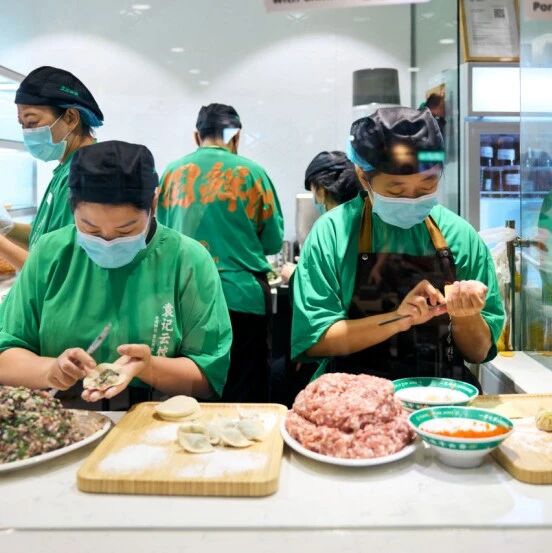
Core Viewpoint - Yuanji Food Group has submitted its listing application to the Hong Kong Stock Exchange, with over 4,000 stores and a strong market presence in both China and Southeast Asia [2][5]. Group 1: Company Overview - Yuanji Food operates two main brands: "Yuanji Cloud Dumplings" for dining and "Yuanji Weixiang" for retail, with a focus on fresh handmade dumplings and wontons [5]. - As of September 30, 2025, Yuanji Food has 4,266 stores across 32 provinces in China and Southeast Asian countries like Singapore and Thailand, making it the largest Chinese fast-food company by store count [5][9]. Group 2: Business Model and Competitive Advantage - The company emphasizes "handmade fresh packaging" as its core selling point, creating a competitive barrier through an open kitchen concept that enhances consumer trust in freshness [7][9]. - Nearly 50% of surveyed consumers cite "handmade fresh packaging" as their primary reason for choosing Yuanji Food, alongside affordability and taste [9]. Group 3: Financial Performance - Yuanji Food's revenue reached 2.026 billion yuan in 2023 and is projected to grow to 2.561 billion yuan in 2024, with 1.982 billion yuan reported for the first nine months of 2025, reflecting an 11% year-on-year growth [10]. - The adjusted net profit for the first nine months of 2025 was 192 million yuan, a 31% increase compared to the same period in 2024 [10]. Group 4: Store Expansion and Franchise Model - Over 99% of Yuanji Food's stores are franchises, with a significant number of franchisees opening new locations, indicating a healthy and sustainable business model [11][15]. - As of September 30, 2025, the company has 4,247 franchise stores, with an average of 2.06 stores per franchisee, which is above the industry average [11][15]. Group 5: Management and Strategic Direction - The management team is young and experienced, with the founder and co-founder both in their 30s, and the addition of a former KFC China executive to the board enhances operational expertise [17]. - The company has completed three rounds of financing, with notable investors including Black Ant Capital and Xiamen Jianfa, indicating strong investor confidence [17]. Group 6: Market Challenges - Despite its large store count, Yuanji Food faces structural challenges, particularly in lower-tier cities where only 26.6% of its stores are located, compared to 51% in first-tier cities [19]. - The reliance on a franchise model increases management complexity and potential risks related to food safety and brand trust [19].
袁记云饺母公司港股交表 2025年前9个月营收利润双增
Zheng Quan Shi Bao Wang· 2026-01-13 11:44
Core Viewpoint - Yuanji Food, the parent company of Yuanji Dumplings, has submitted an application for listing on the Hong Kong Stock Exchange, aiming to raise funds for digital transformation, overseas supply chain development, and brand building [1] Group 1: Business Model and Expansion - Yuanji Dumplings has a dual-brand strategy with "Yuanji Dumplings" focusing on dine-in, takeout, and delivery, while "Yuanji Weixiang" targets retail and B2B channels with pre-packaged products [2] - The company has introduced three standardized store models: "raw food takeout," "raw and cooked takeout," and "dine-in," enhancing market adaptability and penetration [2] - As of September 30, 2025, the company operates 4,266 stores globally, covering 32 provinces and regions in China, with significant growth in lower-tier cities [2][3] - The company has seen a remarkable increase in store numbers in the Northeast and Northwest regions, with growth rates of 262% and 51% respectively [2] Group 2: Financial Performance - In the first nine months of 2025, Yuanji Food's external sales (GMV) reached 2.136 billion yuan, a 46.6% increase from 1.457 billion yuan in the same period of 2024, with the proportion of external sales in total GMV rising from 32.4% to 44.6% [3] - The company has established a fully integrated supply chain system, ensuring stable and high-quality raw material supply through efficient cold chain logistics [4] - As of September 30, 2025, the company has 4,247 franchise stores and 2,065 franchisees, indicating a robust franchise operation system [5] - The company's revenue and profit have shown steady growth, with revenues of 2.026 billion yuan in 2023 and 2.561 billion yuan in 2024, and a net profit of 192 million yuan in the first nine months of 2025, up 31% year-on-year [6] Group 3: Market Outlook - The Chinese fast-food market is expected to grow at a compound annual growth rate of 8.0%, reaching a market size of 1.2853 trillion yuan by 2030, with the dumpling and wonton segment projected to reach 285.7 billion yuan [7] - Yuanji Food plans to deepen its presence in the domestic market while expanding into low-density markets, leveraging its established market presence and competitive pricing [7] - The company has initiated global expansion, opening five stores in Singapore and preparing to enter Southeast Asia, East Asia, Europe, and North America, with the international Chinese cuisine market projected to reach 445.2 billion USD by 2027 [8]
“饺子第一股”袁记,IPO之路暗藏风险?
Sou Hu Cai Jing· 2026-01-13 11:25
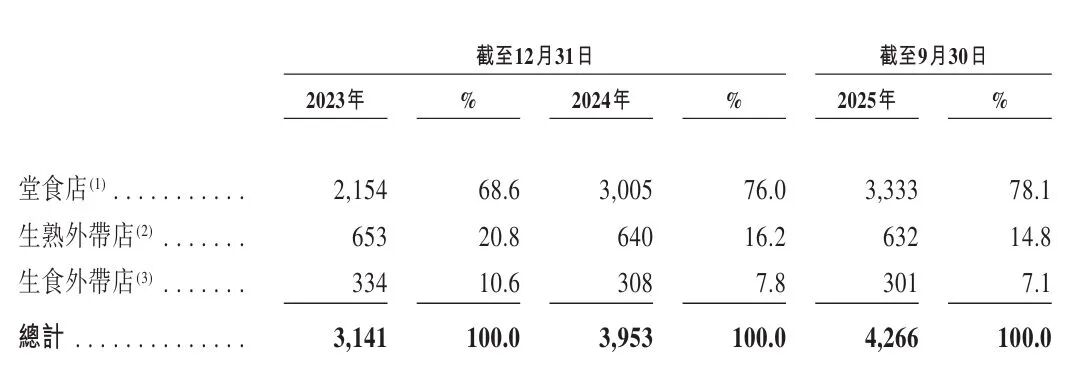
Core Viewpoint - Yuanji Food is preparing for an IPO on the Hong Kong Stock Exchange, aiming to capitalize on its rapid growth and expansion in the Chinese and Southeast Asian markets, while facing challenges related to management risks, competition, and profitability fluctuations [2][12]. Group 1: Company Growth and Expansion - Yuanji Food has grown from a regional brand in Guangdong to a leading player in the Chinese dumpling and wonton market, with 4,266 stores as of September 30, 2025, up from 3,141 at the end of 2023, marking a significant increase [3][4]. - The company has successfully penetrated approximately 200 cities in Greater China and expanded into overseas markets such as Singapore and Thailand, with a total of 11 overseas stores opened within a year [3][4]. - The number of stores in third-tier cities and below reached 1,121 by September 2025, reflecting a 20.80% increase from the beginning of the year, while first-tier cities saw a modest growth of 1.18% [3][4]. Group 2: Business Model and Operations - Yuanji Food operates primarily through a franchise model, with 95% of its 4,266 stores being franchises, allowing for rapid market penetration while maintaining lower capital expenditure [5]. - The company focuses on backend capabilities, including standardized production through its five factories and a comprehensive cold chain logistics network, ensuring over 86% of stores are within 200 kilometers of a warehouse [5]. - The retail segment, although only contributing 2.64% of total revenue, has seen a 46.48% year-on-year growth in the first three quarters of 2025, indicating a new growth avenue [5]. Group 3: Capital and Financing - Prior to its IPO, Yuanji Food completed three rounds of financing, attracting notable investors and achieving a valuation increase of 16.5 times [6][8]. - The company’s valuation rose from 200 million RMB post-A round to 3.5 billion RMB post-B+ round, reflecting strong investor confidence in its growth potential [8][9]. - The current price-to-earnings ratio is approximately 15.49 times, compared to 19.14 times for Yum China, indicating a competitive valuation in the market [8]. Group 4: Fundraising and Strategic Focus - The IPO proceeds will be allocated towards digitalization, overseas supply chain development, brand building, product research, and operational funding, with a strong emphasis on overseas market expansion and digital upgrades [11]. - The company aims to create a cohesive business presence in Southeast Asia and plans to enter East Asia, Europe, and North America, adapting its offerings to local tastes and pricing strategies [11]. Group 5: Challenges and Risks - The heavy reliance on the franchise model poses management risks, as 95% of stores depend on franchisees for brand image and operational quality [12]. - Profitability stability is a concern, with adjusted net profit showing minimal growth from 1.79 billion RMB in 2023 to 1.80 billion RMB in 2024, and a notable decline in average order GMV from 26.1 RMB in 2023 to 22.8 RMB in 2025 [12]. - The company faces challenges in balancing its presence in first-tier cities with underdeveloped markets and the complexities of localizing its offerings in diverse regions [12][13].
拟赴港上市,袁记食品披露:2024年营收超25亿
Nan Fang Du Shi Bao· 2026-01-13 09:04
Core Viewpoint - Yuanji Food Group Co., Ltd. has submitted an application for listing on the Hong Kong Stock Exchange, with the aim to go public on January 12, 2025, and has appointed Huatai International and GF Securities as joint sponsors [1] Group 1: Company Overview - Yuanji Food operates primarily under the brand "Yuanji Cloud Dumpling," focusing on a "handmade, freshly wrapped and cooked" operational philosophy, offering both cooked and raw dumplings, wontons, and related products [3] - The company was founded in 2012 by Yuan Lianghong in Guangzhou, initially opening a chain of dumpling and wonton stores, and has since evolved into Yuanji Food Group Co., Ltd. after restructuring in June 2025 [3][6] Group 2: Financial Performance - For the first nine months of 2025, Yuanji Food reported revenue of 1.915 billion yuan, accounting for 96.6% of total revenue, with a year-on-year increase of 11% to 1.982 billion yuan [3][6] - The company's revenue has shown an upward trend, increasing from 2.026 billion yuan in 2023 to 2.561 billion yuan in 2024 [6] - The gross merchandise volume (GMV) from stores reached 4.789 billion yuan, reflecting a year-on-year growth of 6.4% [6] Group 3: Store Expansion - As of September 30, 2025, Yuanji Food has established 4,213 stores in mainland China, with a significant concentration in first-tier cities (2,150 stores), followed by second-tier cities (942 stores), and 1,121 stores in third-tier and lower cities [6] - The company has also expanded internationally, opening its first overseas store in Singapore by the end of 2024, with a total of 5 stores in Singapore as of September 30, 2025 [6] - Yuanji Food is recognized as the largest Chinese fast-food enterprise globally by store count [6]
90后带队创出千店巨头,年入25亿冲刺港股IPO
21世纪经济报道· 2026-01-13 08:20
记者丨 刘婧汐 编辑丨高梦阳 全国门店超4000家的"中国第一现制水饺品牌"要冲刺港股上市了。 2026年1月12日,袁记食品集团股份有限公司(以下简称"袁记食品")在香港联交所递交上市申请,拟在香港主板上市,其联席保荐人为华泰 国际和广发证券。 招股书显示,截至目前, 袁记食品共经历过三轮融资 ,分别于2023年6月、2025年9月、12月完成,陆续引入了黑蚁资本、启承资本、厦门建 发、益海嘉里等新外部投资者。 根据灼识咨询相关报告,截至2025年9月30日,按门店数量计,袁记食品是中国及全球最大的中式快餐公司。截至2025年9月30日止九个月期 间,以饺子及云吞产品在零售及餐饮业的GMV计,袁记食品也是中国最大的饺子云吞企业。 依托其高密度门店网络,袁记食品可实时为社区提供堂食、外带及外卖服务,外卖已成为公司核心增长引擎之一。袁记食品外卖GMV由截至 2024年9月30日止九个月的14.57亿元,增长46.6%至截至2025年9月30日止九个月的21.36亿元,分别占其GMV的32.4%及44.6%。 全球门店4 2 6 6家,门店数量最多的中式快餐 创始人袁亮宏与联合创始人田伟同为90后,过去十余年,他 ...

“袁记云饺”母公司袁记食品赴港IPO,募资将用于数字化、海外拓展与品牌建设等
Jin Rong Jie· 2026-01-13 07:41
Core Viewpoint - Yuanji Food Group Co., Ltd. has submitted an application for listing on the Hong Kong Stock Exchange, aiming to expand its operations and capitalize on its market position as a leading Chinese fast-food enterprise [1][3]. Group 1: Company Overview - Yuanji Food operates under the brand "Yuanji Cloud Dumpling," focusing on handmade dumplings and wontons, offering both cooked and raw food products [3]. - The company also utilizes its retail brand "Yuanji Weixiang" to expand its business, selling pre-packaged dumplings and wontons through various channels [3]. - As of September 30, 2025, Yuanji Food is the largest Chinese fast-food company by store count, and the largest dumpling and wonton enterprise in China based on GMV in retail and dining sectors [3]. Group 2: Financial Performance - In 2023 and 2024, Yuanji Food achieved revenues of 2.026 billion and 2.561 billion yuan, with gross profits of 525 million and 588 million yuan, and adjusted net profits of 179 million and 180 million yuan respectively [3]. - For the first nine months of 2025, the company reported revenues of 1.982 billion yuan, a year-on-year increase of 10.97%, with gross profits of 490 million yuan, up 11.56%, and adjusted net profits of 192 million yuan, reflecting a growth of 31.25% [3]. Group 3: Store Expansion - From January 1, 2023, to September 30, 2025, the total number of Yuanji Food stores increased from 1,990 to 4,266, covering 32 provinces, autonomous regions, special administrative regions, and municipalities across over 200 cities [3]. Group 4: International Expansion - Yuanji Food opened its first overseas store in Singapore at the end of 2024 and continued to expand internationally in 2025, operating five stores in Singapore by September 30, 2025 [4]. Group 5: Funding and IPO Plans - The company has completed three rounds of financing, raising 30 million yuan in A round in 2023, 150 million yuan in B round in September 2025, and 280 million yuan in B+ round in December 2025, with major investors including Black Ant Capital and others [6]. - The net proceeds from the IPO will primarily be used for digital and intelligent construction, enhancing overseas supply chain development, brand building, product research and development, and supply chain upgrades [6].