
公路

Search documents
机构看好中药行业年底需求回暖及后续基本面和估值改善机会
Mei Ri Jing Ji Xin Wen· 2025-11-20 00:28
Group 1: Aviation and Transportation - The aviation sector is expected to continue its recovery due to improved ticket prices in October, low supply growth, and a low base effect [1] - The oil transportation sector is anticipated to maintain high prosperity driven by multiple factors including OPEC+ production increases, cross-regional price arbitrage, and geopolitical events [1] - The highway sector shows potential for upward movement as insurance funds begin year-end allocations, and highway stocks offer attractive dividend yields [1] Group 2: Alcohol Industry - The white liquor industry is experiencing a "volume increase and price drop" phenomenon, with traditional platforms seeing prices fall below key thresholds due to inventory pressures [2] - Emerging retail channels are growing, indicating a shift in consumer behavior towards immediate consumption [2] - The industry is advised to transition from price wars to value reconstruction, focusing on high-quality products and refined channel operations [2] Group 3: Traditional Chinese Medicine and Pharmaceuticals - The traditional Chinese medicine sector is expected to see demand recovery by year-end, with inventory pressures easing [3] - The blood products industry is focusing on the "14th Five-Year" plan for plasma stations and industry consolidation, with increased demand for specific products [3] - The vaccine sector is monitoring sales improvements and innovation pipeline developments, with policies and international expansion likely to drive growth [3]


华泰证券:持续推荐顺周期航空,交易油运,配置公路
Mei Ri Jing Ji Xin Wen· 2025-11-20 00:03
Core Viewpoint - The report from Huatai Securities indicates a recovery in industrial production and export sentiment, alongside a moderate rebound in consumer data, leading to a positive outlook for several sectors. Group 1: Aviation Sector - The airline industry is expected to continue its improving trend in ticket prices for October, driven by low supply growth, industry anti-involution, and a low base effect, suggesting a sustained recovery in industry revenue levels [1]. Group 2: Oil Shipping Sector - The oil shipping sector is anticipated to maintain high levels of prosperity due to multiple favorable factors, including OPEC+/Americas production increases, cross-regional oil price arbitrage, low oil prices driving inventory replenishment, and geopolitical disturbances [1]. Group 3: Highway Sector - The highway sector is projected to have upward potential as insurance funds begin year-end allocations, creating market volatility, while the attractive dividend yields of AH highway stocks contribute to this positive outlook [1]. Group 4: Stock Recommendations - The report continues to recommend specific stocks that possess their own Alpha, indicating a focus on individual stock performance within the broader market context [1].

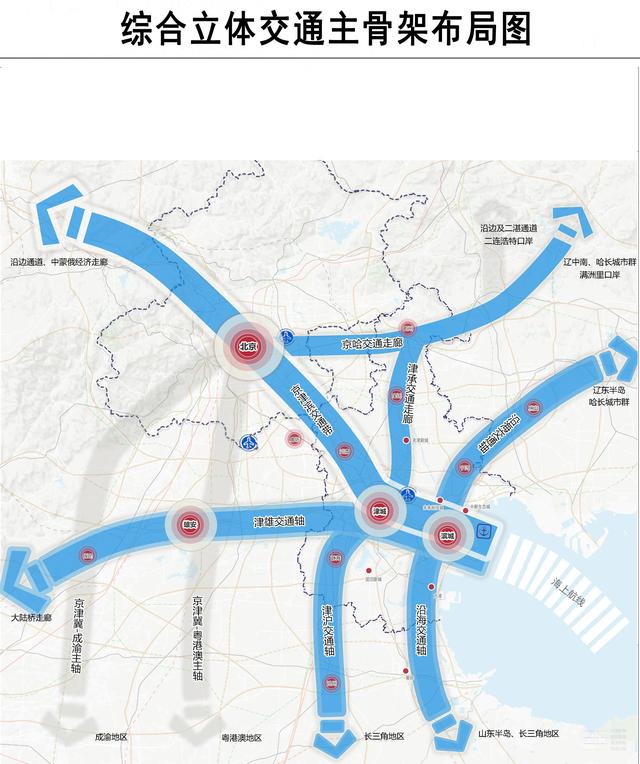
天津基本建成综合立体交通网“一带三轴两廊”主骨架
Bei Jing Ri Bao Ke Hu Duan· 2025-11-08 10:13
Core Points - During the "14th Five-Year Plan" period, Tianjin has implemented 56 major transportation infrastructure projects, establishing a comprehensive three-dimensional transportation network known as "One Belt, Three Axes, Two Corridors" [1][4][10] Group 1: Transportation Infrastructure Development - The "One Belt" refers to a horizontal transportation corridor connecting Beijing and Tianjin, including the planned Jingbin Railway and Tanghuang Expressway [5] - The "Three Axes" consist of three vertical transportation axes: the Tianjin-Shanghai axis, the coastal axis, and the Tianjin-Xiong'an axis, enhancing connectivity with surrounding regions [5][7] - The "Two Corridors" include the Jingha and Tianjin-Chengde corridors, facilitating further integration of transportation networks [5] Group 2: Railway and High-Speed Rail Projects - Ten major railway construction projects have been implemented, with significant progress in intercity railways, achieving a 32% increase in high-speed rail mileage compared to 2020, totaling 410 kilometers [7] - The establishment of a 0.5-hour commuting circle between Beijing, Tianjin, and Xiong'an has been realized, enhancing regional connectivity [7] Group 3: Port and Maritime Development - Tianjin Port has implemented 24 major projects during the "14th Five-Year Plan," including the construction of the world's first "smart zero-carbon" terminal and the addition of 18 new container shipping routes, bringing the total to 148 [10] - The port's capacity has been significantly enhanced, with 24 additional berths for vessels over 10,000 tons compared to 2020, totaling 147 [10] Group 4: Road Infrastructure Projects - A total of 22 major road construction projects have been initiated, including the full connectivity of the Tianjin-Shijiazhuang and Binhai New Area-Tangshan expressways [13] - The expansion of the Jingjin-Tang expressway is underway, which will improve the capacity of the transportation corridor between Beijing and Tianjin Port [13]

华创交运红利资产 2025年三季报综述:公路业绩韧性凸显,大宗业绩拐点已现,交运红利配置正当时
Huachuang Securities· 2025-11-03 15:32
Investment Rating - The report maintains a "Recommended" rating for the transportation industry, emphasizing the timely allocation of transportation dividend assets [1]. Core Insights - The resilience of highway performance is highlighted, with a notable inflection point in bulk commodity performance. The report indicates that the transportation sector is currently experiencing a favorable investment environment [1]. Summary by Sections Highway: Stable Growth in Toll Revenue and Resilient Performance - In the first three quarters of 2025, the overall toll revenue of listed highway companies remained stable, with a year-on-year increase of 2.4% [4][7]. - The net profit growth rate for the highway sector in Q3 2025 was 7.1%, with notable performers including Ganyue Expressway (+64.7%) and Zhongyuan Expressway (+43.8%) [10][11]. - Current dividend yields for highway companies as of October 31, 2025, show Sichuan Chengyu at 5.1%, followed by Guangdong Expressway A and Shandong Expressway at 4.5% each [17][18]. Port: Slight Recovery in Bulk Cargo and Mixed Overall Performance - In Q3 2025, the total cargo throughput of national ports increased by 5.8% year-on-year, with container throughput rising by 5.2% [19][21]. - The port industry achieved a net profit of 97.9 billion yuan in Q3 2025, a decrease of 7.4% year-on-year, with Liaoport Co. leading in performance growth at +37.5% for the first three quarters [25][27]. - Current dividend yields for major ports include Tangshan Port at 5.0% and Qingdao Port at 3.7% [17][18]. Railway: Improvement in Q3 Performance - The railway sector showed a sequential improvement in Q3 2025, with key companies like Beijing-Shanghai High-Speed Railway reporting a net profit of 39.86 billion yuan, up 8.96% year-on-year [11][12]. - Current dividend yields for railway companies include Daqin Railway at 4.7% and Beijing-Shanghai High-Speed Railway at 2.3% [17][18]. Bulk Supply Chain: Continuous Recovery in Operating Environment - Xiamen Xiangyu reported a significant net profit increase of 443.17% in Q3 2025, indicating a strong upward trend [4][28]. - Xiamen Guomao turned profitable in Q3 2025, reflecting a stabilization in operations despite a year-on-year decline of 18.94% in the first three quarters [4][28]. Investment Recommendations - The report suggests a continued positive outlook for A/H shares in transportation dividend assets, emphasizing the importance of industrial logic and valuation elasticity [4]. - Key recommendations include Sichuan Chengyu and Wuhu Expressway for highways, and Tangshan Port and Qingdao Port for ports, highlighting their strong dividend yields and growth potential [4].


四川成渝(601107):2025年三季报点评:前三季度业绩同比增长15.78%,财务费用持续优化,重视存在预期差的低估红利资产
Huachuang Securities· 2025-10-31 11:22
Investment Rating - The report maintains a "Strong Buy" rating for Sichuan Chengyu (601107) [1] Core Views - The company achieved a year-on-year revenue growth of 15.78% in the first three quarters of 2025, with continuous optimization of financial expenses, highlighting the undervalued assets with expected discrepancies [1] - The report emphasizes the significant reduction in financial expenses, which decreased by 31.9% to 428 million yuan, enhancing profits [6] - The company has secured long-term operational rights for its core profitable assets through major infrastructure projects, which are expected to improve revenue [6] Financial Summary - **Revenue Forecasts**: - Total revenue for 2024A is projected at 10,362 million yuan, with a decline to 9,946 million yuan in 2025E, followed by a slight recovery in subsequent years [2] - Year-on-year growth rates are expected to be -11.1% in 2024A, -4.0% in 2025E, 3.0% in 2026E, and 4.6% in 2027E [2] - **Net Profit Forecasts**: - The net profit attributable to the parent company is forecasted to be 1,459 million yuan in 2024A, increasing to 1,630 million yuan in 2025E, and further to 1,728 million yuan in 2026E [2] - Year-on-year growth rates for net profit are projected at 22.9% for 2024A, 11.7% for 2025E, 6.0% for 2026E, and 8.1% for 2027E [2] - **Earnings Per Share (EPS)**: - EPS is expected to be 0.48 yuan in 2024A, increasing to 0.53 yuan in 2025E, 0.56 yuan in 2026E, and 0.61 yuan in 2027E [2] - **Valuation Ratios**: - The price-to-earnings (P/E) ratio is projected to decrease from 12 in 2024A to 9 in 2027E, while the price-to-book (P/B) ratio remains stable at around 0.9 to 0.8 [2] Investment Recommendations - The report maintains profit forecasts of 1.63 billion yuan for 2025, 1.73 billion yuan for 2026, and 1.87 billion yuan for 2027, with corresponding EPS of 0.53, 0.57, and 0.61 yuan [6] - The target price is set at 7.70 yuan for A-shares and 6.74 HKD for H-shares, indicating a potential upside of 35% from the current price [6] - The company is positioned as a growth-oriented dividend asset, with a commitment to a 60% dividend payout ratio for 2024 [6]
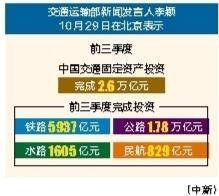
前三季度交通固定资产投资2.6万亿元
Sou Hu Cai Jing· 2025-10-29 23:14
Core Points - The Ministry of Transport reported that China's fixed asset investment in transportation reached 2.6 trillion yuan in the first three quarters of the year [1] - Investment in railways and shipping amounted to 1.78 trillion yuan, while waterway investment was 160.5 billion yuan, and highway investment was 824 billion yuan [1] Investment Breakdown - Total fixed asset investment in transportation: 2.6 trillion yuan [1] - Railway and shipping investment: 1.78 trillion yuan [1] - Waterway investment: 160.5 billion yuan [1] - Highway investment: 824 billion yuan [1]
Ferrovial SE(FER) - 2025 Q3 - Earnings Call Transcript
2025-10-29 15:02
Financial Data and Key Metrics Changes - In the first nine months of 2025, the company reported a negative net debt of €706 million, indicating a strong cash position [3][16] - Revenue grew by 6.2%, adjusted EBITDA increased by 4.8%, and adjusted EBIT rose by 6.0% in like-for-like terms [15] - Shareholder distributions reached €426 million in the first nine months, with a second scrip dividend announced [4][17] Business Line Data and Key Metrics Changes - Highways division saw a revenue growth of 16.4% in like-for-like terms, with adjusted EBITDA up nearly 15.1% [4][5] - The 407 ETR reported a traffic growth of 9.4% in the quarter, with revenue growth of 18.6% and EBITDA surging by 20.1% [6][7] - Airports division showed steady performance with adjusted EBITDA growth supported by commercial upgrades, despite a 1.5% decline in traffic [13] Market Data and Key Metrics Changes - The I-66 managed lane experienced exceptional traffic growth of 13.2% in the third quarter, with revenue per transaction growing by 12.1% [10][11] - The I-77 also saw traffic growth of 1.5% in the third quarter, with revenue per transaction increasing by 25.7% [12] - The Dallas-Fort Worth managed lanes recorded solid revenue per transaction growth, benefiting from a favorable traffic mix [9] Company Strategy and Development Direction - The company is focused on operational readiness for New Terminal One at JFK, with construction 78% complete and an official opening date set for June 2026 [13] - The construction order book stands at $17.2 billion, reflecting a healthy pipeline for future growth [15] - The company plans to submit bids for several projects in North America, including the I-24 and I-25 in 2026 [19] Management's Comments on Operating Environment and Future Outlook - Management expressed optimism about the strong performance of North American assets, driven by increased customer segmentation and favorable market dynamics [18] - The company is monitoring the potential impact of the U.S. government shutdown but has not seen significant effects on revenue so far [28] - Management highlighted the importance of IT and bidding costs as investments for future growth [69] Other Important Information - The company announced a dividend of $1.05 billion CAD for Q4, a 50% increase from the previous year [7] - The company is committed to returning €2.2 billion to shareholders by the end of 2026 through buybacks and dividends [59] Q&A Session Summary Question: What are the potential financial consequences of a delay in the launch of New Terminal One? - Management stated that delays would result in liquidated damages for the contractor and a delay in revenue perception [22][23] Question: Will there be any impact from the U.S. government shutdown in Q4? - Management indicated no significant impact observed so far, with bidding processes continuing as scheduled [27][28] Question: Can you provide insights on Schedule 22 and its provision reversal? - Management noted that increased mobility and effective promotions contributed to the reversal, but refrained from making future projections [32][33] Question: What is the competitive backdrop in the contracting market? - Management reported a rational market with increased activity and no significant tightening in competition [45][46] Question: What is the strategy regarding data centers? - The recent acquisition is seen as a way to enhance construction capabilities, with no major shift in strategy for data centers [65]
Ferrovial SE(FER) - 2025 Q3 - Earnings Call Transcript
2025-10-29 15:02
Financial Data and Key Metrics Changes - In the first nine months of 2025, the company reported strong momentum across its business divisions, with net debt standing at negative EUR 706 million, indicating net cash [4][17] - Revenue grew by 6.2%, adjusted EBITDA increased by 4.8%, and adjusted EBIT rose by 6.0% in like-for-like terms [16] Business Line Data and Key Metrics Changes - Highways revenue grew by 16.4% in like-for-like terms in the first nine months, with adjusted EBITDA up nearly 15.1% [5][6] - The Airports division saw steady progress at New Terminal One at JFK, with construction 78% complete and on budget [14] - Construction maintained a solid adjusted EBIT margin of 3.7% in the first nine months, with an order book of $17.2 billion, up 9.1% compared to December 2024 [15][16] Market Data and Key Metrics Changes - North American assets contributed 97% of Highways' adjusted EBITDA and 88% of revenue, with dividends from these assets totaling EUR 312 million in the first nine months [6] - Traffic in the 407 ETR grew by 9.4% in the quarter, reflecting increased mobility due to return-to-office mandates [7] Company Strategy and Development Direction - The company is focused on enhancing value through demand segmentation and maximizing EBITDA growth, particularly in North American highways [7][19] - Future bids are planned for the I-24 in Tennessee and I-25 in Georgia in the first half of 2026, with an RFQ for the I-77 South in North Carolina expected to be submitted in December [5][20] Management's Comments on Operating Environment and Future Outlook - Management expressed optimism about the strong performance of North American assets and the attractive pipeline of opportunities in highways [19][20] - The geopolitical situation has affected international traffic, but domestic traffic remains robust, supporting growth in adjusted EBITDA [14] Other Important Information - The company announced a second scrip dividend and expects to distribute EUR 2.2 billion in cash to shareholders from 2024 to 2026 [5][18] - The 407 ETR board approved a dividend of CAD 1.05 billion for Q4, up 50% from the previous year [8] Q&A Session Summary Question: What are the potential financial consequences of a delay in the launch of New Terminal One? - Management indicated that delays would result in liquidated damages for the contractor and a delay in revenue perception [24] Question: Will there be any impact from the U.S. government shutdown in Q4? - Management noted no significant impact observed on the I-66 and that bidding processes are mainly at the state level, unaffected by federal shutdowns [29] Question: Can you elaborate on the Schedule 22 provision reversal in Q3? - The reversal was driven by increased mobility and effective promotions, leading to better-than-expected traffic [35] Question: What is the strategy regarding the managed lanes and potential dividends? - Management indicated that there could be opportunities for leveraging managed lanes in the coming years, particularly for the I-66 [58] Question: What is the outlook for the 407 ETR pricing and discounts? - Management emphasized focusing on revenue and EBITDA growth rather than discounts, with expectations for pricing announcements similar to last year [42][59] Question: What is the competitive landscape in contracting? - Management noted that the contracting environment remains rational with no significant tightening in competition, indicating healthy activity levels [48]
Ferrovial SE(FER) - 2025 Q3 - Earnings Call Transcript
2025-10-29 15:00
Financial Data and Key Metrics Changes - In the first nine months of 2025, the company reported a negative net debt of €706 million, indicating a strong cash position [3][16] - Revenue grew by 6.2%, adjusted EBITDA increased by 4.8%, and adjusted EBIT rose by 6.0% in like-for-like terms [15] - Shareholder distributions reached €426 million in the first nine months, with a second scrip dividend announced [4][17] Business Line Data and Key Metrics Changes - Highways revenue grew by 16.4% in like-for-like terms in the first nine months, with adjusted EBITDA up nearly 15.1% [4][5] - The 407 ETR saw traffic growth of 9.4% in the quarter and 6.2% in the first nine months, contributing to an 18.6% revenue growth in Q3 [5][6] - Airports division reported steady performance, with adjusted EBITDA growth supported by commercial upgrades despite a 1.5% decline in traffic [12] Market Data and Key Metrics Changes - The I-66 managed lane experienced exceptional traffic growth of 13.2% in Q3 and 8.5% in the first nine months [10][11] - The Dallas-Fort Worth managed lanes showed varied performance, with NTE traffic declining by 3.7% in Q3 while revenue per transaction increased by 14.2% [7][8] - The overall market dynamics in North America are favorable, driving growth in the company's assets [18] Company Strategy and Development Direction - The company is focused on operational readiness for New Terminal One at JFK, with a target opening date of June 2026 [12] - There is an emphasis on demand segmentation to enhance value for users and maximize EBITDA growth [6][7] - The company plans to submit bids for several projects in North Carolina and Tennessee in the first half of 2026, indicating a proactive approach to growth opportunities [4][19] Management's Comments on Operating Environment and Future Outlook - Management expressed optimism about the strong performance of North American assets, driven by increased customer segmentation and favorable market dynamics [18] - The company is monitoring the potential impact of the U.S. government shutdown but has not seen significant effects on revenue so far [25] - Future growth is expected to be supported by a healthy construction order book and an attractive pipeline of opportunities [14][19] Other Important Information - The company has a solid cash flow position, with significant cash inflows from dividends and asset sales [3][16] - The adjusted EBIT margin for the construction division was 3.7% for the first nine months, aligning with long-term targets [13][14] - The company is committed to returning €2.2 billion to shareholders through dividends and buybacks by the end of 2026 [17][51] Q&A Session Summary Question: What are the potential financial consequences of a delay in New Terminal One? - Delays would result in liquidated damages for the contractor and a delay in revenue perception for the company [22][23] Question: Will the U.S. government shutdown impact Q4? - No significant impact has been observed on the I-66, and bidding processes remain unaffected [25] Question: What drove the Schedule 22 provision reversal in Q3? - Increased mobility and effective promotions contributed to the reversal, with traffic trends performing better than expected [28][29] Question: What is the outlook for pricing increases on the 407 ETR? - Pricing strategies will be announced in November, with expectations for revenue and EBITDA growth [32][33] Question: How is the competitive landscape in contracting? - The market remains rational with increased activity, and there is no significant tightening in competition [38][39] Question: What is the strategy regarding data centers? - The recent acquisition adds capabilities to the construction division, but the company remains opportunistic in the data center space [56]
交通运输部:前三季度完成营业性货运量432.5亿吨 港口货物吞吐量135.7亿吨
智通财经网· 2025-10-29 08:00
Core Viewpoint - The transportation industry in China has shown stable and progressive economic performance in the first three quarters of the year, with significant growth in freight volume, port throughput, and fixed asset investment, indicating a robust support for economic development [1][2][3]. Group 1: Freight Volume and Port Throughput - In the first three quarters, the total operating freight volume reached 432.5 billion tons, a year-on-year increase of 3.89%, with a 3.9% growth in the third quarter, accelerating by 0.9 percentage points compared to the second quarter [1][2]. - The port cargo throughput was 135.7 billion tons, up 4.6% year-on-year, with a 5.8% increase in the third quarter, also accelerating by 1.1 percentage points from the second quarter [3][4]. - Container throughput reached 26 million TEUs, growing by 6.3% year-on-year, with domestic and foreign trade throughput increasing by 3.2% and 8.4%, respectively [3]. Group 2: Personnel Flow - The cross-regional personnel flow reached 5.06 billion person-times in the first three quarters, a year-on-year increase of 3.1%, with rail and civil aviation passenger volumes growing by 6% and 5.2%, respectively [3][4]. - During the recent National Day and Mid-Autumn Festival holiday, cross-regional personnel flow peaked at 2.433 billion person-times, averaging 304 million person-times per day, marking a historical high for the same period [3]. Group 3: Fixed Asset Investment - Fixed asset investment in transportation reached 2.6 trillion yuan in the first three quarters, with railways, highways, waterways, and civil aviation investments amounting to 593.7 billion yuan, 1.78 trillion yuan, 160.5 billion yuan, and 82.9 billion yuan, respectively [4]. - Specific highway investments included 929.6 billion yuan for expressways, 434.3 billion yuan for ordinary national and provincial roads, and 275.3 billion yuan for rural roads [4]. Group 4: Future Initiatives - The Ministry of Transport is focusing on the integration of artificial intelligence in transportation, with plans to enhance technological capabilities and promote innovative applications across various transportation sectors [7][8]. - The "One Port One Policy" initiative aims to deepen the integration of container rail-water transport, targeting a 15% annual growth in container rail-water transport volume by 2027 [10][11]. Group 5: Green Transportation Initiatives - The Ministry is advancing zero-carbon transportation projects, having launched 48 pilot projects across various transportation modes, emphasizing the importance of green transformation in the sector [13][14]. - Future plans include enhancing the standard system for zero-carbon transportation and promoting innovative energy solutions in transportation facilities [14]. Group 6: Legal Framework and Regulations - The revised Maritime Code is expected to significantly impact the shipping industry by providing clearer legal guidelines and enhancing the legal framework for maritime activities, thus supporting high-quality development in shipping and trade [30][31].