
智能硬件

Search documents
太豪横!影石公司年会送出5套房,员工:获奖房者均90后、无高管;DeepSeek更新后被指变冷淡!网友:快调回来;荣耀前CEO赵明加入千里科技
雷峰网· 2026-02-13 00:27
Key Points - Insta360 held its annual meeting where it awarded five sets of properties and several cars to employees, all of whom were born in the 1990s, emphasizing the importance of material incentives alongside recognition [5][6] - The company reported that 2025 was its highest revenue year, with a significant increase in R&D investment, surpassing the total of the previous three years [6] - DeepSeek's recent update has faced backlash from users who feel the model has become less engaging, despite a significant increase in context window capacity [11][12] - AWS has completed layoffs in its Greater China region, affecting approximately 150 employees, primarily in second-tier departments [14][15] - Zhao Ming, former CEO of Honor, has joined Qianli Technology, focusing on AI business models [16] - BMW announced a global recall of multiple models due to a defect in the starter motor that poses a fire risk [56] - Xiaomi's YU7 became the best-selling car in China for January 2026, with a total of 37,869 units sold, significantly outpacing competitors [35][36] - Chery employees expressed dissatisfaction with the company's strict leave policies during the Spring Festival, which limited vacation days [23] - Great Wall Motors announced that its average year-end bonus for 2025 would exceed 50,000 yuan per employee, with a total bonus pool potentially exceeding 42.45 billion yuan [25][26] - Huawei's new vehicle, the Zun Jie S800, will appear on the CCTV Spring Festival Gala, highlighting its market presence [45]







2026年第5周:跨境出海周度市场观察
艾瑞咨询· 2026-02-13 00:02
跨境出海丨市场观察 本周看点: -越南,最适合快消品新消费品牌的出海地方! -跨境电商支付机构有哪些 ? 2026优秀平台盘点,助力企业扬帆出海; -全球营销进入SuperAgent时代:中国品牌出海的智能新基建。 行业环境 1.越南,最适合快消品新消费品牌的出海地方! 关键词:越南市场,消费逻辑,传统渠道,现代渠道,电商渗透 概要: 越南是中国品牌出海的热门新兴市场,快消零售以传统渠道为主(占80%),但现代超 市和电商增长迅速。电商(如TikTok Shop)爆发,但传统渠道仍是核心。消费者偏好低价小规 格产品,品牌依赖内容电商营销。分销体系复杂,需管控账期;现代渠道由头部连锁主导。建 议中国品牌分阶段布局:先通过电商测试爆款,再切入连锁超市,强化内容营销与地推,兼顾 线上线下。本地化能力和耐心是关键挑战。 2.跨境电商支付机构有哪些?2026优秀平台盘点, 助力企业 扬帆出海 关键词: 跨境支付,数字经济,合规,金融科技,风控能力 概要: 本文介绍了十家跨境支付机构,包括Ksher(东南亚市场)、Airwallex(多币种管 理)、Stripe(开发者友好)、Wise(低费汇款)、PayPal(全球支付 ...

富达投资入股华米科技,AI眼镜量产在即
Jing Ji Guan Cha Wang· 2026-02-12 21:06
经济观察网2026年2月6日,富达投资买入华米科技约1001.21万股普通股,占公司流通股的8.7%。同 时,华米科技的AI智能眼镜已进入量产阶段,计划在2026年CES展亮相,产品聚焦运动时尚人群,集成 自研健康监测算法。 股票近期走势 市场分析显示,投资者关注AI智能眼镜的市场接受度、智能手表业务增长持续性及公司长期盈利能 力。尽管三季度财报积极,但股价波动反映市场对新兴硬件赛道持审慎态度。 近7天华米科技股价呈现显著波动。从2026年2月6日至2月12日,股价从17.69美元上涨至26.13美元,区 间涨跌幅达60.60%。其中,2月9日单日上涨26.79%,2月12日上涨8.92%,最新收盘价为26.13美元。 以上内容基于公开资料整理,不构成投资建议。 财报分析 华米科技2025年第三季度业绩表现强劲,营收达7579万美元,同比增长78.5%,Non-GAAP经营利润扭 亏为盈,实现36万美元。公司对2025年第四季度营收指引为8200-8600万美元,同比增长38%-45%。 机构观点 ...
风波不断!倍轻松如今“难轻松”
Shen Zhen Shang Bao· 2026-02-12 18:28
深圳商报记者 苑伟斌 倍轻松实际控制人马学军再遭立案调查。2月6日公告显示,马学军不足一个半月两度遭证监会立案,这 意味着马学军或涉多项罪名。 近期,深陷多重困境的倍轻松披露了2025年度业绩预告,公司预计实现归母净利润亏损约8400万元至 1.05亿元。从历史业绩来看,2022年倍轻松在上市次年就首度出现亏损,此后的4年中有3年公司净利润 都为负值。 实控人减持、监管立案、专利诉讼等,这家曾经的"健康智能硬件第一股"风波不断,究竟因何经营至 此?未来修复之路又在何方? 销售费用占比接近六成 财报显示,2025年前三季度,倍轻松实现营业收入约5.52亿元,同比减少34.07%,同期归母净利润亏损 6562.8万元,大幅缩水600.98%。根据公司披露的预计数据,倍轻松在2025年第四季度归母净利润亏损 大约1827.2万元至3937.2万元,而2024年第四季度公司归母净利润亏损约284.66万元,亏损幅度明显扩 大。 令人费解的是,倍轻松毛利率长期维持在60%左右的高位,2025年前三季度毛利率高达62.1%,却始终 难以实现稳定盈利。这一背后是重营销、轻研发发展模式的长期积弊。数据显示,2022年-202 ...

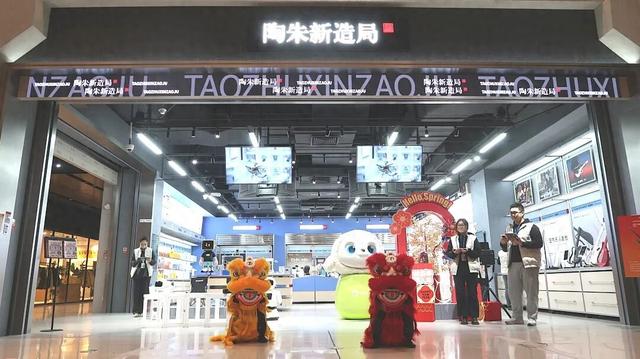
瞄准机器人赛道,年策6000场活动,陶朱新造局打造科技产品体验桥梁
Bei Jing Ri Bao Ke Hu Duan· 2026-02-12 07:27
Core Insights - The article highlights the innovative practices in the Shijingshan District, particularly focusing on the integration of AI and robotics in consumer interactions and retail experiences [2][4]. Group 1: Company Strategy - The company, Tao Zhu Xin Zao Ju, employs a dual-driven business model of "investment + operation," with a current focus on the robotics sector [2]. - The company plans to accelerate its regional expansion by adding multiple store formats, including shopping mall stores and exclusive experience centers, to cater to diverse consumer needs [4]. Group 2: Consumer Engagement - The company emphasizes the importance of offline activities and community operations as vital links to consumers, planning to conduct 6,000 offline events this year to reach approximately 60,000 participants [6]. - Through regular community operations, the company aims to enhance user engagement by offering diverse themed activities weekly, making the community a core platform for user interaction and brand engagement [6]. Group 3: Market Analysis - The company utilizes digital tools such as hot zone analysis to accurately understand consumer behavior and product sales, providing data support for operational decisions [4]. - The focus on experiential new retail serves as a bridge between manufacturers and the market, allowing consumers to closely interact with and experience technology products [4].

华勤技术股价涨5.08%,招商基金旗下1只基金重仓,持有91.03万股浮盈赚取392.36万元
Xin Lang Cai Jing· 2026-02-12 05:42
Group 1 - Huqin Technology's stock increased by 5.08%, reaching 89.07 CNY per share, with a trading volume of 710 million CNY and a turnover rate of 1.44%, resulting in a total market capitalization of 90.471 billion CNY [1] - Huqin Technology, established on August 29, 2005, specializes in the research, design, production, and operation services of smart hardware products. Its revenue composition includes high-performance computing (60.32%), smart terminals (31.93%), AIOT and others (3.95%), and automotive and industrial products (1.24%) [1] Group 2 - According to data, a fund under China Merchants Fund has heavily invested in Huqin Technology. The China Merchants Quantitative Selected Stock Fund A (001917) increased its holdings by 122,000 shares in the fourth quarter, totaling 910,300 shares, which represents 1.39% of the fund's net value, ranking as the eighth largest holding [2] - The China Merchants Quantitative Selected Stock Fund A (001917) was established on March 15, 2016, with a latest scale of 3.692 billion CNY. Year-to-date returns are 6.75%, ranking 2075 out of 5569 in its category; the one-year return is 42.07%, ranking 1390 out of 4295; and since inception, the return is 305.41% [2] Group 3 - The fund manager of the China Merchants Quantitative Selected Stock Fund A (001917) is Wang Ping, who has a cumulative tenure of 15 years and 240 days. The total asset size of the fund is 21.446 billion CNY, with the best fund return during his tenure being 303.45% and the worst being -70.61% [3]

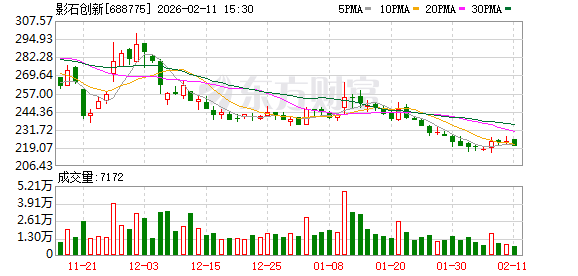
影石创新:具体业绩情况请关注公司将于2026年4月29日披露的年报公告
Zheng Quan Ri Bao· 2026-02-11 11:11
Core Viewpoint - The company emphasizes the importance of balancing short-term interests with long-term development in its profit distribution strategy, considering various factors such as industry characteristics and operational model [2]. Group 1 - The company will take into account industry characteristics, development stage, operational model, profitability, and significant capital expenditure plans when deciding on profit distribution [2]. - The board of directors is committed to making prudent decisions that align with shareholder interests [2]. - The company plans to disclose its annual report on April 29, 2026, which will provide specific performance details [2].

银轮股份:具身智能板块明确“1+4+N”产品布局,部分品类已配套供货,部分处于开发阶段
2 1 Shi Ji Jing Ji Bao Dao· 2026-02-11 10:01
Core Viewpoint - The company has defined a "1+4+N" product layout for its embodied intelligence sector, indicating a strategic approach to product development and customer collaboration [1] Group 1: Product Layout - The "1" in the layout represents the understanding and cognition of the entire machine system [1] - The "4" includes four key modules: rotary joint module, actuator module, dexterous hand module, and thermal management module [1] - The "N" signifies supporting components such as motor modules, micro motors, body structural parts, and heat exchangers [1] Group 2: Customer Collaboration - The company has established partnerships with several leading clients, indicating a strong market presence [1] - Some product categories are already in supply, while others are still in the development phase [1]

鹿客科技,拟赴港IPO
Zhong Guo Zheng Quan Bao· 2026-02-10 08:39
Core Viewpoint - LuKe Technology has submitted its listing application to the Hong Kong Stock Exchange, revealing a significant decline in its proprietary brand revenue Group 1: Company Overview - LuKe Technology is a pioneer in AI home security management, offering integrated solutions centered around smart locks and AI technology [2] - The company ranks third in domestic smart lock shipments with a market share of 5.8%, projecting to ship 1.2 million units in 2024 [2] Group 2: Financial Performance - The company reported revenues of 1.015 billion yuan, 1.086 billion yuan, and 774 million yuan for the first three quarters of 2023, 2024, and 2025, respectively, with net profits of 14.026 million yuan, 53.113 million yuan, and 31.981 million yuan [2] - Proprietary brand consumer product revenue for the first three quarters of 2025 is 159 million yuan, accounting for 20.5%, down from 193 million yuan and 27.8% in 2024 [2] Group 3: Research and Development - R&D expenditures for 2023, 2024, and the first three quarters of 2025 were 74 million yuan, 78 million yuan, and 47 million yuan, representing 7.3%, 7.2%, and 6.1% of total revenue, respectively [3] - The company plans to use the raised funds primarily for long-term technology R&D and strategic support to enhance its AI-enabled home security technology ecosystem [3] Group 4: Customer Concentration - The company has a high customer concentration, with sales to the top five customers accounting for 53.6%, 56.8%, and 65.2% of total revenue in 2023, 2024, and 2025, respectively [4] - Sales to the largest customer represented 48.6%, 51.7%, and 60.6% of total revenue during the same periods [4]
南向资金年内净买入超1200亿港元 恒生科技ETF广发(513380)持续“吸金”
Mei Ri Jing Ji Xin Wen· 2026-02-10 06:03
Group 1 - Southbound funds have significantly increased their investment in the Hong Kong stock market, with a cumulative net inflow exceeding 120 billion HKD since the beginning of 2026, reaching a total of 125 billion HKD as of February 8 [1] - In the last three trading days (February 4-6), the net buying amount exceeded 10 billion HKD each day, with February 6 recording a single-day net buying amount of 24.98 billion HKD, marking a recent high [1] - The Hang Seng Tech ETF has also attracted substantial capital, with continuous net inflows for seven consecutive trading days, and the fund's latest scale exceeding 12.8 billion HKD, ranking high in terms of scale and liquidity among peers [1] Group 2 - According to a report by China Merchants Securities, the Hang Seng Tech Index is currently trading at a significant discount compared to the A-share tech index, nearing historical lows, indicating that the Hong Kong tech sector is "significantly undervalued" [2] - The recent sharp decline in the Hang Seng Tech Index is attributed to a liquidity shock, but the fundamental outlook and bullish logic for Hong Kong tech stocks remain unchanged [2] - The current valuation of Hong Kong tech stocks relative to A-share tech stocks is at a historical high discount, suggesting substantial allocation value at this position [2]