
AI全产业链

Search documents
险资如何看当下市场
2026-03-24 01:27
Summary of Key Points from Conference Call Records Industry Overview - The records focus on the insurance industry, particularly the investment strategies and asset allocation of insurance companies in response to market conditions and regulatory changes. Core Insights and Arguments 1. **Investment Strategy Shift**: Under new accounting standards, insurance companies are shifting their equity allocation towards a "barbell" strategy, focusing on dividend blue chips to smooth profit volatility while also timing growth stocks. The proportion of stocks in the OCI (Other Comprehensive Income) account of listed insurance companies is expected to rise from less than 25% at the end of 2023 to about 40% by the end of 2025 [1][8]. 2. **Interest Rate Impact**: The decline in interest rates has intensified the risk of asset-liability duration mismatch. Insurance companies are increasing their allocation to 30-year local government bonds (yielding over 2.4%-2.5%) to extend duration and hedge against pressures on net assets and solvency [1][5]. 3. **Market Forecast and Strategy**: The annualized return target for 2026 is approximately 10%, with a strategic bottom range for the market index set between 3,700 and 3,800 points. If the 10-year government bond yield reaches 1.9%-2.0%, insurance funds will increase their allocation to long-duration assets [1][10]. 4. **ETF Utilization**: During market downturns, insurance companies prefer broad-based ETFs (such as A50 and CSI 300) as a core tool to absorb drawdowns. As the market recovers, they tend to reduce ETF holdings and shift towards individual stocks to capture alpha returns [1][9]. 5. **Investment Lines for 2026**: Seven key investment themes have been identified for 2026, including: - Dividend strategy (dividend yield > 4%) - Cyclical recovery (betting on PPI turning positive) - Resource and energy security - Anti-involution (sectors like photovoltaics and chemicals) - Emerging industries from the 14th Five-Year Plan - AI across the entire industry chain - High-quality overseas manufacturing [1][13]. Additional Important Content 1. **Seasonal Premium Income**: The first quarter typically accounts for 30%-50% of annual premium income, leading insurance companies to leverage financing to achieve early allocation and lock in cross-year returns [2][10]. 2. **Impact of Market Adjustments**: Recent stock market pullbacks have pressured the net profits and solvency of insurance companies. While some smaller firms may reduce equity positions to alleviate capital adequacy pressures, a systemic reduction across the industry is unlikely. Instead, a structural adjustment towards dividend and defensive styles is expected [3][10]. 3. **New Financial Instruments**: Starting in 2026, non-listed insurance companies will implement new financial instrument standards, necessitating careful planning of equity asset classification between TPL (Total Profit and Loss) and OCI [4][5]. 4. **Bond and Equity Strategy**: In a low-interest and high-volatility environment, insurance companies are advised to prioritize high-yield bonds and adjust their asset duration to better match liabilities. The strategy emphasizes taking advantage of every 10 to 20 basis point rebound in bond yields for reallocation [6][10]. 5. **Geopolitical Considerations**: There is a divergence of opinions among investment committees regarding the impact of geopolitical conflicts on the A-share market. However, the consensus is that the recent market volatility may have already priced in much of the pessimism, suggesting limited downside potential [12][10]. 6. **Focus on High Dividend Assets**: To mitigate performance pressure from high base effects in 2026, insurance companies are increasing their allocation to high-dividend assets, particularly those classified under OCI, to smooth profit fluctuations [7][8]. 7. **Long-term Investment Philosophy**: The investment decision-making process will adhere to the principles of "good direction, good stocks, good prices," ensuring strategic allocations when all three criteria align [15].
"三元结构"破解单一市场依赖,揭秘汇添富恒生科技ETF联接发起式(QDII)C(013128)在组合中的风险分散密码
Sou Hu Cai Jing· 2026-02-27 03:50
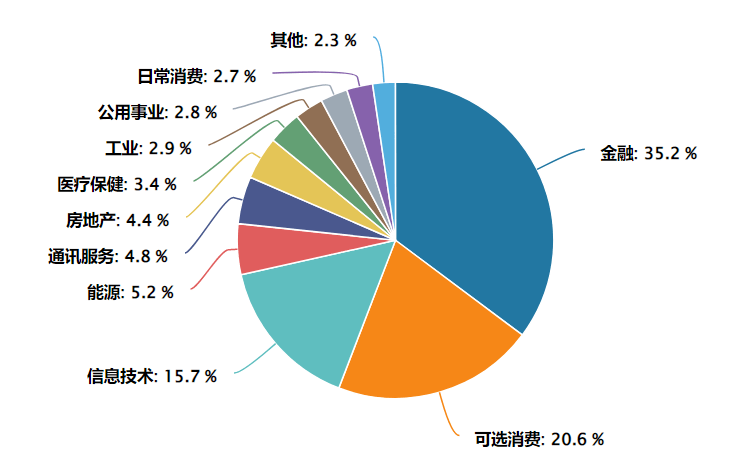
Core Insights - Diversification is the cornerstone of modern asset allocation theory, aiming to optimize risk-adjusted returns by constructing a diversified asset portfolio that reduces unsystematic risk while retaining expected returns [1] - The Hang Seng Index exhibits a significant "triple structure" characteristic, with approximately 35% comprising local blue-chip stocks, 50% from mainland enterprises listed in Hong Kong, and the remainder from international large companies, providing a unique regional distribution that benefits from Hong Kong's status as an international financial center [1] Group 1: Market Dynamics - The long-term correlation between the Hang Seng Index and other indices like the CSI 300 and S&P 500 is low, allowing Hong Kong stocks to exhibit differentiated performance during market fluctuations driven by mainland liquidity cycles or U.S. Federal Reserve policies [4] - In 2025, the Hang Seng Index achieved a year-to-date increase of 28.89%, serving as an effective beta hedge during global market turbulence [4] Group 2: Currency and Profit Structure - The Hang Seng Index is traded in Hong Kong dollars, but over half of its underlying assets are from mainland enterprises, with revenue structures encompassing multiple currencies, making it a natural currency hedge [4] - The index benefits from currency fluctuations, as appreciation of the Renminbi enhances the index's performance when mainland earnings are converted to Hong Kong dollars, while a strong U.S. dollar maintains stability through the linked exchange rate system [4] Group 3: Sectoral Differences - The technology sector in A-shares focuses on hard manufacturing such as semiconductors and new energy, while the Hong Kong tech sector is dominated by internet giants, with over 60% of the Hang Seng Tech Index comprising information technology [5][6] - The structural differences in underlying assets lead to significant divergence in performance between A-shares and Hong Kong stocks, providing effective industry risk hedging opportunities [6] Group 4: Capital Flows - The Hong Kong stock market benefits from a dual-driven capital structure of "southbound funds + international allocation funds," contrasting with the A-share market dominated by domestic retail and institutional investors [6] - Continuous inflows of southbound funds can provide independent support for Hong Kong stocks during liquidity crises in A-shares, while reverse allocations from mainland funds can stabilize the market during geopolitical tensions [8] Group 5: Investment Products - The Huatai-PineBridge Hang Seng Tech ETF Connect (QDII) C (013128) is designed for investors looking to capture the valuation recovery window of the Hang Seng Tech Index, featuring a cost-effective fee structure [8][9] - The fund tracks the Hang Seng Tech Index, which balances soft and hard technology sectors, with major internet platforms like Tencent and Alibaba accounting for over 50% of the index [8] - Other investment products include the Huatai-PineBridge Hang Seng Tech ETF Connect (C) focusing on AI and the Huatai-PineBridge Hong Kong Stock Connect Technology Select Mixed Fund (C) employing active management strategies to identify high-potential assets [10]

中国银河证券:预计2月上旬至春节市场资金仍将在科技和有色等板块加速轮动
Di Yi Cai Jing· 2026-02-11 00:45
Group 1 - The core viewpoint is that from early February to the Spring Festival, market funds are expected to accelerate rotation in sectors such as technology and non-ferrous metals, with strong-performing stocks becoming the focus [1] - The asset allocation focus will shift from a total "beta" approach to a structural "alpha" market trend [1] - The current Hong Kong stock market is forming a complete AI industry chain listing system, and with a mild appreciation of the RMB, the valuation of Chinese assets is expected to increase [1] Group 2 - The Hong Kong stock market is likely to experience a fluctuating upward trend influenced by the sentiment spillover from the A-share market [1] - Due to the Spring Festival occurring in mid-February and the later date of the 2026 Spring Festival, significant changes in market style are unlikely [1]

南向资金年内净买入超1200亿港元 恒生科技ETF广发(513380)持续“吸金”
Mei Ri Jing Ji Xin Wen· 2026-02-10 06:03
Group 1 - Southbound funds have significantly increased their investment in the Hong Kong stock market, with a cumulative net inflow exceeding 120 billion HKD since the beginning of 2026, reaching a total of 125 billion HKD as of February 8 [1] - In the last three trading days (February 4-6), the net buying amount exceeded 10 billion HKD each day, with February 6 recording a single-day net buying amount of 24.98 billion HKD, marking a recent high [1] - The Hang Seng Tech ETF has also attracted substantial capital, with continuous net inflows for seven consecutive trading days, and the fund's latest scale exceeding 12.8 billion HKD, ranking high in terms of scale and liquidity among peers [1] Group 2 - According to a report by China Merchants Securities, the Hang Seng Tech Index is currently trading at a significant discount compared to the A-share tech index, nearing historical lows, indicating that the Hong Kong tech sector is "significantly undervalued" [2] - The recent sharp decline in the Hang Seng Tech Index is attributed to a liquidity shock, but the fundamental outlook and bullish logic for Hong Kong tech stocks remain unchanged [2] - The current valuation of Hong Kong tech stocks relative to A-share tech stocks is at a historical high discount, suggesting substantial allocation value at this position [2]
【策略】以稳驭势,持股过节——2026年2月A股及港股月度金股组合(张宇生/王国兴)
光大证券研究· 2026-01-29 23:07
Market Overview - In January, A-shares and Hong Kong stocks experienced a general upward trend, with major A-share indices rising, particularly the Sci-Tech 50, which increased by 15.8% [4] - The Hong Kong market also showed a positive trend, with the Hang Seng Index rising by 5.8% and the Hang Seng Technology Index by 4.3% as of January 27, 2026 [4] A-share Insights - The recommendation for investors is to maintain a stable position and hold stocks through the holiday, anticipating a new market trend post-Spring Festival [5] - The upcoming spring market is expected to be promising, with potential positive news in both policy and fundamentals over the next few months [5] - Focus areas include growth sectors such as humanoid robots, AI industry chain, gaming, and film, alongside cyclical sectors benefiting from strong commodity prices and policy support [5] Hong Kong Stock Insights - The overall trend in the Hong Kong market remains positive due to earnings recovery, improved liquidity, low valuations, and policy support [6] - The market is transitioning from being driven by funds to being driven by performance, with a structural rebound expected in the first quarter [6] Investment Strategy - The strategy suggests capturing structural opportunities amidst market volatility, focusing on the AI industry chain and defensive assets like non-ferrous metals, chemicals, and insurance for stable returns [7]

港股速报 | 美联储暂停降息 恒指低开近200点 黄金股继续疯涨
Mei Ri Jing Ji Xin Wen· 2026-01-29 02:15
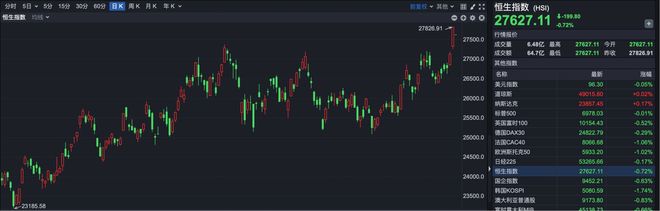
Market Overview - The Hong Kong stock market opened lower on January 29, with the Hang Seng Index starting at 27,627.11 points, down 199.80 points, a decline of 0.72% following the Federal Reserve's announcement to pause interest rate cuts [1] - The Hang Seng Technology Index opened at 5,853.59 points, down 46.57 points, a decrease of 0.79% [2] Sector Performance - Gold stocks continued to surge, with notable increases: Chifeng Jilong Gold (HK06693) up over 8%, Shandong Gold (HK01787) up over 5%, and Zijin Mining (HK02899) up over 4% [4] - COMEX gold futures prices reached a new historical high, surpassing $5,626 per ounce, with a year-to-date increase of over 27% [5] - The technology sector saw declines, with JD.com down over 2%, and Alibaba, Baidu, Tencent, and Meituan each down over 1% [5] Future Outlook - According to Everbright Securities, the Hong Kong market is expected to trend positively due to earnings recovery, improved liquidity, low valuations, and policy support, indicating a shift from "fund-driven" to "earnings-driven" market dynamics [7] - Citic Securities suggests that the short-term performance of the Hong Kong market will be influenced by domestic policies and the fundamentals of listed companies, with a focus on the spring market and the "14th Five-Year Plan" policy expectations [7] - The report highlights that large-cap stocks typically outperform before the Lunar New Year, while small-cap stocks tend to perform better afterward, with the information technology, energy, telecommunications, and materials sectors expected to see the largest average gains during the spring [7]
25Q4基金持仓及文本透视:布局顺周期,基金经理如何展望2026?
East Money Securities· 2026-01-27 13:09
Group 1 - The report indicates a slight decrease in the total share of active equity funds, with a total of 26,662.1 billion, reflecting a reduction of 727.8 billion from the previous quarter, although the rate of decline has narrowed [7][8] - The performance of active equity funds in Q4 showed a slight retreat, with the active stock index down by 3.04% and underperforming the CSI 300 by nearly 3 percentage points [12][13] - The allocation to cyclical sectors has increased, with significant additions in materials, chemicals, and oil sectors, while technology and consumer sectors have seen a reduction in allocation [24][20] Group 2 - Fund managers are optimistic about the market outlook for Q1 2026, expecting a continuation of a "slow bull" market supported by economic recovery, liquidity easing, and policy support [28][24] - The report highlights a focus on sectors such as AI, semiconductors, and renewable energy, indicating a shift towards balanced growth and value stocks complementing growth stocks [28][24] - The top holdings in active equity funds include Zhongji Xuchuang, with significant increases in positions in China Ping An, Meituan, and Dongshan Precision [28][24]



浦银安盛市场点评:三大股指小幅上涨 多元配置把握市场轮动机会
Jin Rong Jie· 2026-01-21 09:41
Core Viewpoint - The A-share market experienced a collective rise, with the Shanghai Composite Index increasing by 0.08%, the Shenzhen Component Index by 0.7%, and the ChiNext Index by 0.54%, while the STAR Market Composite Index rose by 2.32% [1] Market Performance - The total trading volume in the Shanghai and Shenzhen markets reached 2.62 trillion yuan [1] - The Hong Kong market also saw gains, with the Hang Seng Index up by 0.37% and the Hang Seng Tech Index up by 1.11% [1] Sector Highlights - Key sectors that performed well included gold, non-ferrous metals, natural gas, semiconductors, and CPO [1] Investment Strategy - According to Ping An Asset Management, focusing on long-term investment and asset allocation can help investors capture main trends and core assets in both A-shares and Hong Kong stocks [1] - The emphasis is on structural opportunities in technology growth, the transition between old and new economic drivers, and moderate inflation recovery [1] Manager Insights - Zhang Chuan, head of the FOF business at Ping An Asset Management, noted that the A-share market has shifted from liquidity-driven to profit-driven, with a focus on technology growth, particularly in the AI industry chain, and benefiting from cyclical and consumer sectors [1] - The valuation of Hong Kong stocks is expected to recover due to the influx of southbound funds and foreign capital, with a focus on technology, innovative pharmaceuticals, new consumption, and resource products [1] Strategic Asset Allocation - Gold is supported by "de-dollarization" and geopolitical dynamics, maintaining its strategic allocation value [1] - Utilizing diversified asset allocation through FOF and other flexible tools can help balance returns and risks, capturing structural opportunities in the first year of the 14th Five-Year Plan [1]
秦淮数据中国区业务被收购 公司CEO称将向以AIDC为核心的AI全产业链拓展
Zheng Quan Shi Bao Wang· 2025-09-11 09:28
Core Viewpoint - The acquisition of Qinhuai Data's entire business in China by Dongyangguang Group for 28 billion yuan marks the largest merger and acquisition in China's data center industry to date [1] Group 1: Acquisition Details - The acquisition was led by Dongyangguang Group, involving insurance investment institutions and local government funds, and was officially announced on September 10 [1] - The transaction is valued at 28 billion yuan, highlighting the scale and significance of the deal within the industry [1] Group 2: Strategic Implications - Qinhuai Data's CEO emphasized the collaboration as a deep resonance between industry and computing power in areas such as green development, technological innovation, and strategic layout [1] - The partnership aims to drive the construction of a new model of "computing power and electricity synergy," defining new paradigms for sustainable development in the industry [1] Group 3: Future Business Development - The integration of resources from both companies is expected to enhance energy efficiency in computing infrastructure, leveraging Qinhuai Data's cooling technology and Dongyangguang's expertise in liquid cooling materials and precision manufacturing [1] - Future plans include deepening the layout around the "East Data West Computing" strategy, focusing on innovations in electric computing, modularization, and AI operations [1]
