
有色金属矿业

Search documents
白银一周飙涨超12%,金铜铝锡镍等全线上涨!?有色矿业ETF招商(159690)?聚焦上游资源品
Sou Hu Cai Jing· 2026-01-13 02:11
Core Viewpoint - The metal commodities have experienced a significant price increase, with notable rises in gold, silver, and various base metals, indicating a robust demand and supply dynamics in the market [1][6]. Group 1: Price Performance - COMEX gold and silver prices increased by 4.07% and 12.36% respectively, while LME copper, aluminum, zinc, lead, nickel, and tin saw increases of 4.24%, 4.00%, 0.85%, 2.14%, 5.25%, and 12.75% respectively [1][6]. - The performance of the non-ferrous mining ETF, which tracks the China Securities Non-Ferrous Metals Mining Index, has shown a one-year increase of 120%, with key metals like gold, copper, and aluminum making up nearly 60% of its weight [1][8]. Group 2: Supply and Demand Dynamics - According to Ping An Securities, silver is expected to maintain a continuous shortage globally due to its rigid supply characteristics, with demand expected to accelerate due to advancements in AI and overseas re-industrialization [1][7]. - Galaxy Securities suggests that escalating global geopolitical conflicts may lead major powers to strengthen control over key strategic metal resources, potentially reshaping global metal supply chains and increasing demand for critical strategic metals like copper, tungsten, molybdenum, cobalt, and rare earth materials [1][7]. Group 3: Historical Performance and Volatility - The non-ferrous mining index has shown a cumulative increase of 172.62% over the past decade, with an annualized growth rate of 10.87% and a Sharpe ratio of 0.49, indicating higher elasticity compared to similar indices [3][5].






铜铝强势、白银补涨,2026年金属行情如何演绎?
Sou Hu Cai Jing· 2026-01-12 15:20
Core Viewpoint - The current surge in metal prices, particularly copper and aluminum, is driven by a severe imbalance between weak supply and resilient demand, with significant implications for the commodity market in 2026 [3][4]. Supply and Demand Analysis - The core contradiction in the recent rise of copper and aluminum prices lies in the "extreme fragility of supply" versus the "sustained resilience of demand" [3]. - Copper mining capital expenditure is projected to be only $92.3 billion in 2024, which is just 48% of the peak levels seen in 2013 when adjusted for inflation, indicating a tight supply situation for the next 5-10 years [3]. - Domestic aluminum production capacity has been capped at 45 million tons since 2017, with virtually no new capacity expected by 2026, leading to a situation where supply elasticity has nearly vanished [3]. - Emerging sectors such as photovoltaics, electric vehicles, and data centers account for over 80% of the new consumption growth in non-ferrous metals, demonstrating a profound shift in demand structure [3][4]. Inventory and Market Structure - Since the second half of 2025, global visible copper inventories have been declining, with spot prices shifting from contango to backwardation, indicating immediate supply-demand tightness [4]. - The persistence of spot price backwardation is a key indicator for investors to monitor, as a shift back to contango could signal a demand suppression due to high prices [4]. Silver Market Dynamics - Silver's price performance is influenced by its dual role as both an industrial and financial asset, with significant potential for price increases driven by photovoltaic applications and speculative investment [5][6]. - The anticipated growth in photovoltaic installations is tempered by a decrease in silver consumption per unit due to technological advancements, which could limit demand growth [5]. - The current gold-silver ratio suggests that silver is undervalued relative to gold, which historically leads to a price correction in silver when gold prices rise [5]. Volatility and Market Outlook for 2026 - The market is expected to experience increased volatility in 2026, with metal price fluctuations potentially exceeding 3,000 yuan, necessitating the use of options for risk management [7]. - Structural opportunities will be highly differentiated, with metals like copper, lithium, aluminum, and silver likely to strengthen, while others like zinc, lead, and nickel may remain stagnant without policy or demand support [8]. - The cobalt market is particularly noteworthy, with potential supply reductions of up to 50% due to export quota regulations in the Democratic Republic of Congo, highlighting the need for close monitoring of policy impacts [8]. Macro Narrative Influence - Macro factors, including the Federal Reserve's interest rate policies and potential tariffs on key metals, are expected to play a significant role in shaping metal prices in 2026 [9]. - The current interest rate cuts by the Federal Reserve are viewed as preventive rather than recessionary, which could positively impact metal demand [9]. - Investors are advised to balance industrial insights with macroeconomic trends, adjusting their strategies based on the interplay between these factors [9].
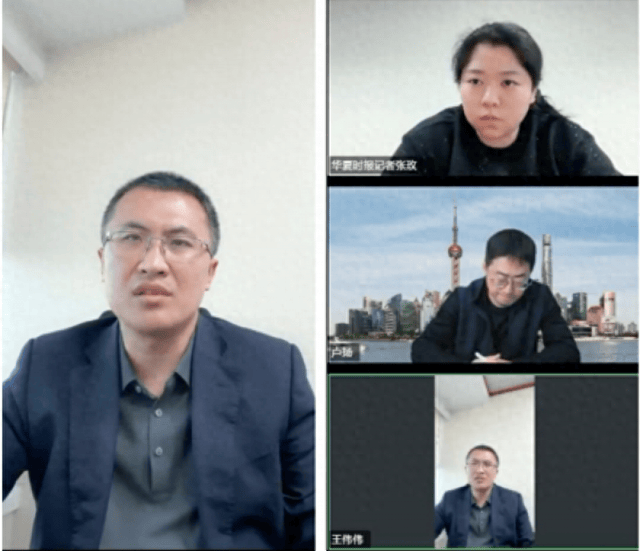
铜争夺加剧,矿业“巨无霸”或诞生?
Huan Qiu Shi Bao· 2026-01-11 22:46
Group 1 - The global mining giants Rio Tinto and Glencore have resumed merger talks, which could lead to the largest mining company in history with a market value exceeding $200 billion [1] - The merger discussions are currently in the preliminary negotiation stage, and it is uncertain whether a deal will be reached [1] - The mining industry is experiencing a wave of mergers and acquisitions as producers seek to expand their operations to secure more copper resources [1] Group 2 - S&P predicts a structural leap in global copper demand, with a potential 50% increase by 2040, while global copper production is expected to peak by 2030 [2] - If copper supply does not achieve meaningful expansion, a supply gap of 10 million tons is anticipated by 2040 [2] - Copper prices have surged from $8,000 per ton in April to over $13,000, reaching a historical high due to supply uncertainties and potential tariffs [2] Group 3 - The competition for copper resources is critical for the advancement of artificial intelligence and the construction of data centers [3] - A shortage of copper supply poses systemic risks to global industries, technological progress, and economic growth [3]

A股再增万亿龙头,市值冲至全球矿业第二
2 1 Shi Ji Jing Ji Bao Dao· 2026-01-06 14:38
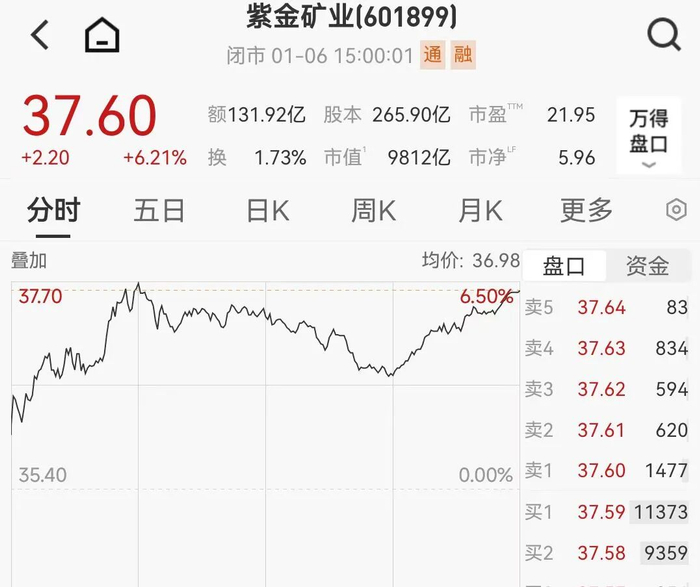
记者丨董鹏 编辑丨朱益民 10024亿元,A股再增万亿市值龙头。 1月6日早盘,紫金矿业涨幅达到6.5%,总市值首破1万亿元。A股市值排名升至13位的同时,也超越了 力拓(1月5日美股收盘市值9499.2亿元左右),成为全球市值第二大的矿业公司。截至收盘紫金矿业仍 涨超6%。 而以上二级市场的突出表现,又受到来自行业、企业等多方面的利好驱动。 首先,紫金矿业的铜、金两大主营矿种连续三年上涨,尤其是伦敦金以64.56%的涨幅成为2025年表现 最好的大宗商品之一,带动全球黄金行业上市公司股价大涨。 Wind数据显示,截至2025年末,市值超过1000亿元的有色行业上市公司涨幅中位数在88%左右,同期 全球前十大的黄金企业涨幅中位数则达到172.82%,领跑有色行业大盘。 其次,是紫金矿业一直强调的"成长性"。2023年以来,公司矿产金迅速放量,由67.7吨增加至2025年的 90吨,产量增速明显高于铜产品,并在2025年成为公司利润第一大来源。 量、价双重驱动下,体量可观的紫金矿业近两年盈利增速依旧保持在50%以上,2025年预计盈利更是突 破500亿元。 接下来,如若紫金矿业能够站稳万亿市值,与市值高达1.1 ...

A股再增万亿龙头,市值冲至全球矿业第二
21世纪经济报道· 2026-01-06 14:24
记者丨 董鹏 编辑丨朱益民 10024亿元,A股再增万亿市值龙头。 1月6日早盘,紫金矿业涨幅达到6.5%,总市值首破1万亿元。A股市值排名升至13位的同时, 也超越了力拓(1月5日美股收盘市值9499.2亿元左右),成为全球市值第二大的矿业公司。截 至收盘紫金矿业仍涨超6%。 万亿矿业巨头,去年 股价 涨幅1 3 3% 在此之前,紫金矿业2025年股价已经取得了133%的上涨,这是公司自2008年上市以来涨幅最 大的一年。 而以上二级市场的突出表现,又受到来自行业、企业等多方面的利好驱动。 首先,紫金矿业的铜、金两大主营矿种连续三年上涨 ,尤其是伦敦金以64.56%的涨幅成为 2025年表现最好的大宗商品之一,带动全球黄金行业上市公司股价大涨。 Wind数据显示,截至2025年末,市值超过1000亿元的有色行业上市公司涨幅中位数在88%左 右,同期全球前十大的黄金企业涨幅中位数则达到172.82%,领跑有色行业大盘。 其次,是紫金矿业一直强调的"成长性"。 2023年以来,公司矿产金迅速放量,由67.7吨增加 至2025年的90吨,产量增速明显高于铜产品,并在2025年成为公司利润第一大来源。 量、价双重驱 ...

矿业ETF(561330)涨超2.1%,机构称电解铝弹性与红利属性受关注
Sou Hu Cai Jing· 2026-01-06 02:20
风险提示:提及个股仅用于行业事件分析,不构成任何个股推荐或投资建议。指数等短期涨跌仅供参 考,不代表其未来表现,亦不构成对基金业绩的承诺或保证。观点可能随市场环境变化而调整,不构成 投资建议或承诺。提及基金风险收益特征各不相同,敬请投资者仔细阅读基金法律文件,充分了解产品 要素、风险等级及收益分配原则,选择与自身风险承受能力匹配的产品,谨慎投资。 每日经济新闻 国泰海通指出,工业金属中铜价受宏观与供给扰动或偏强震荡,智利Mantoverde铜矿罢工及厄瓜多尔政 局影响供给,叠加美国流动性宽松预期形成支撑。铝价在宏观政策提振下创新高,但基本面呈现供需博 弈,国内电解铝产能持续爬产推动供应增长,而下游消费走弱导致加工企业开工率降至59.9%,库存累 积或使价格维持高位震荡。锡供给偏紧延续,缅甸复产缓慢及印尼出口审批扰动对价格形成支撑。能源 金属方面,碳酸锂需求边际走弱但库存去化放缓,钴镍受原料紧张及政策调整影响供给预期。稀土板块 中轻稀土价格持续上升,中重稀土分化,春节前补货需求或支撑短期价格。整体行业需关注地缘局势对 供给端的潜在冲击及美联储政策变化。 矿业ETF(561330)跟踪的是有色矿业指数(93189 ...
花旗:市场对紫金矿业陈景河卸任担忧属错置 予“买入”评级
Zhi Tong Cai Jing· 2026-01-05 08:43
智通财经APP获悉,花旗发布研报称,于2025年12月31日参加了紫金矿业(02899)在福建省上杭县举行的 股东特别大会。创始人兼董事长陈景河已正式退休。自其决定退休的公告发布后,尽管他仍将担任公司 高级顾问及名誉董事长,但部分投资者似乎感到担忧并选择获利了结。花旗认为这些担忧是错置的,予 紫金"买入"评级及目标价39港元。 该行相信关键原因在于,陈景河认为现在是将管理权移交给管理团队的合适时机,因为这是将紫金矿业 这家国有企业从"创始人驱动"转型为"机制驱动"的必要一步。紫金的主要股东上杭县国资委曾请求他留 任,但被他婉拒。在该行看来,这正是紫金管理团队如此强健的部分原因。花旗维持将紫金列为行业首 选股之一,连同中国铝业(02600)、中国宏桥(01378)及宁德时代(03750)。 ...
供应紧张忧虑带动伦铜攀升3%,沪铜2026年开局强劲
Wen Hua Cai Jing· 2026-01-05 06:34
Group 1: Copper Market - Shanghai copper futures opened strongly in 2026, with the main contract rising by 1.89% to 100,570 yuan per ton, returning above the 100,000 yuan mark [1] - London Metal Exchange (LME) three-month copper increased by 2.63% to $12,797 per ton, reaching a peak of $12,960, close to last year's record high [1] - A strike at Capstone Copper's Mantoverde mine in northern Chile has intensified supply concerns, supporting copper prices amid previous mine disruptions and regional turmoil caused by U.S. tariffs [1] Group 2: Other Metals Performance - Most base metals strengthened on the first trading day of 2026, with aluminum prices also rising significantly [2] - Shanghai aluminum increased by 3.45% to 23,525 yuan per ton, reaching a four-year high of 23,780 yuan during trading [2] - LME three-month aluminum rose by 1.24% to $3,053 per ton, peaking at $3,069, marking a three-and-a-half-year high [2] - Shanghai zinc main contract rose by 2.36% to 23,845 yuan per ton, while LME three-month zinc increased by 1.46% to $3,172.5 [3] - Shanghai lead main contract increased by 0.81% to 17,420 yuan per ton, and LME three-month lead rose by 0.57% to $2,018 [4] - Shanghai nickel main contract rose by 0.38% to 133,850 yuan per ton, while LME three-month nickel fell by 0.12% to $16,800 [5]
把握金、铜涨价机遇,关注矿业ETF(561330)
Sou Hu Cai Jing· 2026-01-05 01:32
Group 1 - The core viewpoint highlights that the ongoing Federal Reserve interest rate cut cycle, increasing uncertainty in overseas macro policies, and the global trend of de-dollarization are supportive of gold prices [1] - Geopolitical tensions in regions such as the Middle East and Ukraine, along with rising U.S.-Venezuela tensions, are contributing to heightened market risk aversion, providing additional support for gold prices [1] - The market anticipates that if the new Federal Reserve chairman adopts a dovish stance, the pace of interest rate cuts may accelerate, further benefiting gold performance [1] Group 2 - The supply-demand dynamics for metals are tightening, with expectations of resilient performance during the interest rate cut cycle, particularly for copper, aluminum, and lithium due to strong demand and supply constraints [1] - The ongoing Federal Reserve interest rate cut cycle, combined with increasing uncertainty in overseas macro policies and the global trend of de-dollarization, is expected to provide sustained support for gold prices [1] - The mining ETF (561330) has a copper content of 28% and gold content of 15%, and it is suggested to pay attention to the opportunities arising from the price increases of gold and copper [1]
有色金属日报-20251230
Guo Tou Qi Huo· 2025-12-30 11:19
Report Industry Investment Ratings - Copper: ★★★ [1] - Aluminum: ★★★ [1] - Zinc: ★★★ [1] - Nickel and Stainless Steel: ★★★ [1] - Lithium Carbonate: ★★★ [1] - Industrial Silicon: ★★★ [1] - Polysilicon: ★★★ [1] Core Views - The overall trend of non - ferrous metals shows different characteristics in various sub - sectors, with some showing strong trends and others facing uncertainties. Each metal's market is affected by factors such as supply, demand, cost, and policy [1][2][5] Summary by Metal Copper - On Tuesday, Shanghai copper reduced its positions and recovered half of its decline during the session. The domestic spot copper was reported at 97,620 yuan, and the discounts in Shanghai and Guangdong converged to 240 yuan and 185 yuan respectively. The refined - scrap spread was about 3,500 yuan. The previous options strategy should be continued, and attention should be paid to smelter production schedules and social inventory changes [1] Aluminum - Today, Shanghai aluminum fluctuated. The spot discounts in East China, Central China, and South China widened to - 200 yuan, - 410 yuan, and - 285 yuan respectively. The trend of non - ferrous and precious metals is highly consistent recently, and the fundamental driving force in the aluminum market is insufficient. The upward - trending and volatile pattern of Shanghai aluminum remains unchanged, and long positions should be held based on the 40 - day moving average. The spot price of Baotai ADC12 remained at 21,900 yuan. The supply of scrap aluminum is still tight, and tax adjustments may increase costs in some areas. The seasonal performance of the price difference between cast aluminum alloy and Shanghai aluminum is weaker than in previous years, and the price difference is maintained at around 1,000 yuan. The alumina balance is in significant surplus, and costs may decline as bauxite prices fall. There is still profit in cash - cost accounting. In the short term, the decline of the alumina spot price is slowing down as it approaches the level that triggers production cuts, but it will take large - scale production cuts for prices to stabilize in the medium term. The maintenance of primary aluminum delivery - brand smelters continues, and the SMM aluminum social inventory is less than 20,000 tons, supporting the upward movement of the market. However, battery companies are conducting year - end inventory checks and have suspended spot purchases for 3 - 7 days, so Shanghai aluminum faces obvious pressure at around 17,500 yuan/ton. The domestic aluminum price is stronger than the overseas price, and the spot import window is open. Affected by the influx of low - priced overseas aluminum ingots, Shanghai aluminum is expected to continue to fluctuate at the bottom around the cost level, with a price range of 16,800 - 17,500 yuan/ton [2][3] Zinc - The TC is at a low level, smelter maintenance continues, and the import window is closed, so the pressure on the zinc supply side is weakening, and the overall upward trend remains unchanged. The consumption outlook for January is moderately optimistic, and there are high expectations for a good start in the 15th Five - Year Plan. There are hopes for the return of national subsidies, and downstream demand for pre - Spring Festival stockpiling still exists, so consumption may not decline in the off - season. However, the real estate sector is still a drag, restricting the upward space of Shanghai zinc. Shanghai zinc is expected to fluctuate in the range of 22,800 - 23,800 yuan/ton [2] Nickel and Stainless Steel - The nickel price has risen again, and market trading is active. The Indonesian Nickel Ore Association has reduced the nickel ore quota and will revise the mineral benchmark price formula in early 2026. Near the end of the year, downstream purchasing willingness has weakened, and the continuous high spot premium has reduced the willingness of traders to hoard goods, so spot trading is rather sluggish. In the stainless - steel market, the recovery of the nickel - iron price has pushed up costs, but overall profits have recovered, and the previous stainless - steel production cuts have had limited impact. Social inventories have decreased, and downstream purchasing willingness is reflected in increased inquiries. The high - grade nickel - iron is quoted at 912 yuan per nickel point, and the upstream price rebound is being transmitted. In the short term, the market is still dominated by policy sentiment. The nickel inventory has decreased by 1,000 tons to 58,000 tons, the nickel - iron inventory has decreased by 1,000 tons to 29,300 tons, and the stainless - steel inventory has decreased by 30,000 tons to 892,000 tons. Due to policy disturbances in the nickel market, it is advisable to wait and see in the short term [5] Tin - The weighted position of Shanghai tin continues to decrease, and the spot tin price has been lowered by 20,000 yuan to 311,500 yuan. Wait for this week's social inventory data and track changes in holding enterprises. There are no new geopolitical news recently. Pay attention to the possible mining conference around the New Year. With high volatility, it is recommended to hold the 350,000 yuan sell - call option again and observe the adjustment range [5] Lithium Carbonate - The lithium price opened low and closed high, with active market trading but large differences. Some holders' previous goods have been pre - ordered, and there are frequent inquiries. However, the mid - and downstream's acceptance of high prices is limited, and they have sufficient pre - Spring Festival stockpiles, so they are cautious about high prices. Overall market trading is rather light. The total market inventory has decreased by 700 tons to 110,000 tons, the smelter inventory has decreased by 200 tons to 18,000 tons, the downstream inventory has decreased by 1,600 tons to 40,000 tons, and the trader inventory has increased by 1,200 tons to 52,000 tons. The inventory in the mid - stream is relatively high, providing some support to the spot market. The latest Australian ore price is 1,565 US dollars, and the ore - end price remains strong. Technically, the lithium price has entered a trend - halting stage, and risk prevention should be noted [6] Polysilicon - The polysilicon futures continued to decline slightly. The spot price increased slightly, and the average price of N - type re - feeding material was reported at 52,500 yuan/ton. The final output of downstream silicon wafers in December was unexpectedly revised down, so the production schedule for January may be slightly increased. However, the production start - up rate in the battery cell segment is expected to continue to decline in January. The polysilicon factory inventory is at a high level, and inventory is maintained. With weak real - world demand and strengthened pre - holiday trading supervision, the polysilicon futures market is mainly in a correction, but the policy expectation of "anti - internal support" still provides emotional support. The overall trend is expected to remain in high - level volatility, and it is recommended to hold a light position during the holiday [6] Industrial Silicon - The industrial silicon futures closed slightly higher. The overall operating rate in the northwest main production area last week had limited fluctuations. Although there were news of production cuts during the day, the certainty of implementation remains uncertain. The demand side continues to be under pressure. The organic silicon sector is supported by joint emission - reduction factors, and it is expected that the decline in the industrial silicon procurement demand in January will narrow. The demand from the polysilicon end may weaken marginally again. The upward momentum of the futures market in the future depends on the implementation rhythm of production - cut expectations. Coupled with the continued marginal weakening of the demand side, the upward momentum will gradually decline, and the trend is likely to shift from a relatively strong oscillation to a consolidation pattern [7]