
油轮运输

Search documents
如何看待后续油轮市场?
2025-09-04 14:36
Summary of Conference Call Notes Industry Overview - The conference call primarily discusses the **tanker shipping industry**, focusing on the current market dynamics and future expectations related to oil and gas transportation. Key Points and Arguments Market Conditions - Freight rates on the Middle East to China route have significantly increased to **WS70 and above**, indicating optimistic market expectations for future rates [1][3] - There is a general sentiment among shipowners to hold back on leasing due to anticipated further increases in freight rates [3][4] - The **U.S. Gulf Coast** continues to see high levels of LNG and crude oil exports, which is consuming some of the Middle Eastern shipping capacity, exacerbating overall capacity tightness [1][3] - The **shadow fleet** is performing well, with routes such as from Venezuela to China experiencing a shortage of available ships [1][3] OPEC and Production Plans - OPEC is expected to discuss a potential increase in production, with a possibility of releasing **1.6 million barrels per day** to regain market share and suppress U.S. shale oil exports [1][5] - The market anticipates that OPEC's strategy to maintain production at lower oil prices could push prices below **$60**, which would significantly impact U.S. shale oil profitability [6][5] Geopolitical Factors - The U.S. and EU have intensified sanctions against Russian oil, while India is expected to increase its imports of Russian crude by **10%-20%**, leading to increased long-haul shipping demand [1][3][6] - Despite sanctions, India is unlikely to significantly reduce Russian oil imports due to favorable pricing, which is crucial for the profitability of Indian refineries [6][7] Shipping Capacity and Fleet Dynamics - The aging fleet poses a risk, as older vessels (over 20 years) are unlikely to compete in a normalized market post-sanctions, leading to a reduction in shipping capacity and potentially higher freight rates [9][10] - Chinese shipyards are refusing to accept older sanctioned vessels for repairs, further limiting their return to the market [9] Future Market Expectations - The overall tanker market is expected to remain tight, with freight rates projected to maintain a range of **$40,000 to $50,000** per day by the end of the year [13][18] - If the shadow fleet continues to grow, the market could see a strong support level for freight rates [13] - The upcoming OPEC meeting and India's oil import policies are critical factors to monitor in the coming months [14] Stock Market Implications - Current valuations of tanker stocks are at a low point, but any marginal improvements in market conditions could lead to increased attention and investment in these stocks [19] Additional Important Insights - The **second-hand ship market** is currently a seller's market, with limited availability of older vessels, particularly VLCCs [16] - The actual price of sanctioned oil is typically about **$5 lower** than Brent crude prices, with freight rates for sanctioned oil varying significantly based on route and vessel type [17] - The impact of geopolitical tensions and sanctions on shipping operations remains a critical area of focus, with ongoing regulatory scrutiny affecting operational costs [8][7]
美银证券:升中远海能(01138)目标价至7.9港元 料将受惠于行业顺风
智通财经网· 2025-09-01 07:32
Core Viewpoint - Bank of America Securities reports that China Merchants Energy Shipping Company (01138) has shown operational performance in the first half of the year that is generally in line with expectations, with net profit exceeding forecasts primarily due to one-time gains [1] Financial Performance - The company has adjusted its earnings forecasts for 2025 to 2027, reflecting favorable conditions in the oil tanker market due to OPEC+ production increases and tightening US sanctions [1] - The net profit for the first half of the year was positively impacted by one-time earnings, indicating a strong performance despite market fluctuations [1] Investment Outlook - The firm maintains a "Buy" rating, suggesting that the company will be a major beneficiary of the recovery in the tanker market [1] - Current valuations are believed to not fully reflect the return on equity (ROE) prospects for shareholders in 2025 to 2026 [1] Target Price Adjustments - The target price for H-shares has been raised from HKD 7.5 to HKD 7.9 [1] - The target price for A-shares has been increased from RMB 13 to RMB 13.6 [1]
Frontline(FRO) - 2025 Q2 - Earnings Call Transcript
2025-08-29 14:02
Financial Data and Key Metrics Changes - Frontline reported a profit of $0.35 per share and an adjusted profit of NOK 80.4 million or $0.36 per share in Q2 2025, with an increase of $40 million compared to the previous quarter due to higher TCE earnings [5][6] - TCE earnings increased from SEK 241 million in the previous quarter to SEK 283 million in Q2 2025, driven by higher TCE rates [5][6] - The company has strong liquidity with $844 million in cash and cash equivalents as of June 30, 2025, and no meaningful debt maturities until 2030 [6] Business Line Data and Key Metrics Changes - The TCE numbers for the fleet in 2025 are as follows: $43,100 per day for VLCCs, $38,900 per day for Suezmax, and $29,300 per day for LR2Aframax, showing an increase from Q1 2025 but below expectations [3][4] - The average cash breakeven rates for the next twelve months are estimated at approximately $28,700 per day for VLCCs, $22,900 for Suezmax, and $22,900 for LR2, with a fleet average of about $25,900 per day [7][8] Market Data and Key Metrics Changes - The compliant tanker fleet is experiencing improved utilization as compliant oil exports grow, with significant increases in exports expected from the U.S. and Latin America [11][12] - Global oil supply growth is projected to increase by 3 million barrels per day year on year, with exports expected to rise by approximately 2 million barrels per day [13][14] - The tanker market is expected to see a 6% increase in freight demand, with limited fleet growth anticipated [22][23] Company Strategy and Development Direction - The company is focusing on the compliant fleet and is optimistic about the market dynamics, including longer trade lanes and stable fleet development [23][25] - Frontline aims to capitalize on the increasing utilization of compliant tankers and the expected growth in oil demand, particularly from Asia [25] Management's Comments on Operating Environment and Future Outlook - Management noted that the shipping and tanker industry is currently affected by global conflicts and trade policies, but there are signs of positive change in trade dynamics [2][12] - The company anticipates a potential contango scenario in the oil market this winter, which could lead to increased utilization and inventory building [29][30] - There is optimism regarding the ability to push through the current ceiling on VLCC rates, with a potential new floor being established [35] Other Important Information - The fleet consists of 41 VLCCs, 21 Suezmax tankers, and 18 LR2 tankers, all of which are eco vessels, with 55% fitted with scrubbers [7] - The company has recorded operational expenses of $8,700 per day for VLCCs, $8,900 for Suezmax, and $7,600 for LR2 tankers in Q2 2025 [8] Q&A Session Summary Question: Follow-up on U.S. and VLCC exports to Asia - Management discussed the potential impact of increased U.S. exports to Asia and the dynamics of OPEC's incremental volume entering the market as winter approaches [28][30] Question: Recent gains in VLCC spot rates - Management attributed the recent gains in VLCC spot rates to a shift in oil supply dynamics, with compliant sources replacing Russian and Iranian oil, leading to increased demand for compliant tankers [32][34]

Frontline(FRO) - 2025 Q2 - Earnings Call Transcript
2025-08-29 14:00
Financial Data and Key Metrics Changes - Frontline reported a profit of $0.35 per share and an adjusted profit of NOK 80.4 million or $0.36 per share in Q2 2025, with adjusted profit increasing by $40 million compared to the previous quarter due to higher TCE earnings [5][6] - TCE earnings rose from SEK 241 million in the previous quarter to SEK 283 million in Q2 2025, driven by increased TCE rates [5][6] - The company has strong liquidity with $844 million in cash and cash equivalents, and no meaningful debt maturities until 2030 [6] Business Line Data and Key Metrics Changes - The TCE numbers for the fleet in 2025 are as follows: $43,100 per day for VLCCs, $38,900 for Suezmax, and $29,300 for LR2Aframax, showing an increase from Q1 but falling short of expectations [3][4] - 82% of VLCC days are booked at $38,700 per day, 76% of Suezmax days at $37,200, and 73% of LR2Aframax days at $36,600 [3] Market Data and Key Metrics Changes - The compliant tanker fleet is experiencing improved utilization as compliant oil exports grow, with significant increases in global crude production and exports expected [11][12] - The EIA projects a year-on-year growth of 3 million barrels per day in global oil supply by Q4, translating to an increase of approximately 2 million barrels per day in exports [13][14] - The market is seeing a shift in oil flows, with U.S. exports to Asia increasing, which could impact long-haul VLCC trade dynamics [28][29] Company Strategy and Development Direction - The company is focusing on the compliant fleet's utilization and the impact of trade policies on crude sourcing, indicating a potential "compliant bull market" [24][25] - There is a limited order book for new vessels, with expectations that the tanker market will remain tight due to an aging fleet and limited newbuilding activity [22][23] Management's Comments on Operating Environment and Future Outlook - Management noted that the tanker market is currently in a challenging environment due to global conflicts and trade policies, but there are signs of improvement in oil demand and compliant fleet utilization [2][11] - The company anticipates a stable demand growth for compliant oil, supported by improving refinery margins and a seasonal strong summer market [24][25] Other Important Information - The average cash breakeven rates for the next twelve months are estimated at approximately $28,700 per day for VLCCs and $22,900 for Suezmax and LR2 tankers [7][8] - The fleet consists of 41 VLCCs, 21 Suezmax tankers, and 18 LR2 tankers, all of which are eco vessels [6][7] Q&A Session Summary Question: Follow-up on U.S. and VLCC exports to Asia - Management acknowledged the potential for increased U.S. exports to Asia and discussed the impact of OPEC's incremental volume on long-haul VLCC trade dynamics as winter approaches [28][29][30] Question: Recent gains in VLCC spot rates - Management attributed the recent gains in VLCC spot rates to a shift in oil supply dynamics, with compliant sources replacing Russian and Iranian oil, and expressed optimism about breaking through the $50,000 per day ceiling [32][33][34]
Hafnia Limited(HAFN) - 2025 Q2 - Earnings Call Transcript
2025-08-27 13:32
Financial Data and Key Metrics Changes - The company reported a net result of $75.3 million for Q2, which is an improvement compared to Q1, indicating a resilient market performance [3][4] - The dividend payout ratio remains at 80% of net profit, consistent with the company's dividend policy [4][17] - The net asset value (NAV) is approximately NOK 67 million, with a narrowing gap to the current trading price of NOK 61 [12][13] Business Line Data and Key Metrics Changes - The company operates around 130 product tankers and manages about 80 additional vessels for other owners, totaling over 200 vessels in operation [6][7] - The company is primarily exposed to the spot market, with approximately 85% to 90% of its operations in this segment, which has been beneficial in the recent market environment [7] Market Data and Key Metrics Changes - The order book for product tankers is reported to be around 19% to 20% of the existing fleet, but the effective order book is closer to 13% to 14% when accounting for LR2 ships that primarily serve the crude market [29][30] - The market is currently undersupplied, with expectations for fleet growth of at least 5% per year to maintain balance [31][32] Company Strategy and Development Direction - The company aims to maintain an average fleet age below 10 years, currently at 9.4 years, to ensure competitiveness and compliance with environmental regulations [10][11] - The company is focusing on consolidation within the industry rather than acquiring individual assets, preferring to return capital to shareholders when attractive opportunities are not present [21][22] Management's Comments on Operating Environment and Future Outlook - The management expressed optimism about the current market conditions, noting that Q3 has started strong, with various factors contributing to a stable outlook [40][41] - The geopolitical situation, including the ongoing Ukraine war and issues in the Red Sea, is viewed as having a neutral impact on the product tanker market [25][26] Other Important Information - The company has established a joint venture with Cargill, named Seascale Energy, to optimize fuel procurement amidst changing energy dynamics [8] - The company has a revolving credit facility of approximately $700 million, which is seen as a standard business practice to enhance financial flexibility [19][20] Q&A Session Summary Question: What is the company's outlook for Q3 and 2026? - The company noted that Q3 has started strong, with various positive factors influencing the market, and does not foresee significant vulnerabilities [40][41] Question: Is the company optimizing the age of its fleet by selling older vessels? - Yes, the company has been actively selling older ships and plans to continue this strategy [44] Question: What is the motivation for acquiring new builds? - The company is currently not looking to order new builds due to high costs and long delivery times, preferring to focus on fleet modernization through secondhand tonnage [46][48] Question: What impact would it have if it becomes safe to sail through the Suez Canal and the Red Sea? - The company believes it would have a neutral impact on the product tanker market, as volume lost during the diversion would not significantly change [49][50]

兴业证券:把握油轮板块供给出清时机 兼顾需求复苏态势
Zhi Tong Cai Jing· 2025-08-26 06:24
Core Viewpoint - The tanker sector is experiencing a strong clearing of capacity options, with high ship prices likely to suppress capacity additions in the long term, leading to a tightening supply trend. Current geopolitical instability, including sanctions and conflicts, may drive freight rates higher in the short to medium term [1]. Group 1: Freight Rate Analysis - From January to April, VLCC-TCE freight rates increased from approximately $30,000/day to around $40,000/day due to intensified U.S. sanctions on Russian and Iranian oil. Although rates fell at the end of June, they rebounded above $40,000/day in mid-August following renewed sanctions on Iran [1]. Group 2: Supply and Demand Framework - Supply establishes the cycle direction, while demand influences market conditions. Historical trends show that major market movements are often driven by supply shortages, with demand contributing to the upward momentum [2]. Group 3: Demand Side Analysis - In the first half of 2025, the average operating rate of major refineries in China was 76.25%, down 0.96 percentage points year-on-year. The operating rate of Shandong local refineries was 46.49%, down 9.13 percentage points year-on-year, leading to a decline in crude oil demand. However, there are long-term upward options for demand due to OPEC+ members' agreement to gradually release 2.2 million barrels/day, which may further drive down oil prices and stimulate transportation demand [3]. Group 4: Supply Side Analysis - As of July 2025, there were 2,337 registered crude oil tankers with a total capacity of 465 million deadweight tons. The proportion of tankers over 15 years old reached 41.82%, and those over 20 years old accounted for 19.63%. High ship prices, averaging $126 million for VLCCs, discourage new orders, and stringent environmental regulations may accelerate the clearing of older vessels, potentially leading to a situation where new capacity does not offset the clearing of older capacity [4]. Group 5: Event-Driven Factors - The U.S. has intensified sanctions on vessels involved in transporting Russian and Iranian oil, with 471 tankers sanctioned, representing 17.55% of the total fleet capacity. Historical data indicates that increased sanctions often lead to significant freight rate increases, ranging from 38% to 142%. Additionally, geopolitical conflicts in the Middle East have historically resulted in freight rate spikes, as seen during past conflicts. Current tensions between the U.S. and Russia, as well as between the U.S. and Iran, warrant close monitoring of potential short-term impacts on tanker rates [5].

中信证券:关注低估值油轮龙头,多因素提振货盘需求
Xin Lang Cai Jing· 2025-08-25 01:01
Core Viewpoint - The report from CITIC Securities indicates a significant increase in VLCC TCE rates, reflecting supply constraints and the impact of OPEC+ production increases, with expectations for further demand boost as the peak season approaches [1] Group 1: VLCC TCE Rate Changes - As of August 24, 2025, VLCC TCE rates increased by 31.7% to $45,800 per day, with VLCC TD3C (Middle East to China) TCE rising by 15.7% [1] - VLCC freight rates have shown continuous high growth for three consecutive weeks since early August, with year-on-year growth turning positive [1] Group 2: Supply and Demand Dynamics - The improvement in freight rates during the off-season reflects tightening supply and the effects of OPEC+ production increases, with a planned increase of 547,000 barrels per day in September, completing the original plan a year early [1] - The increase in VLCC cargo volumes is expected to resonate with peak season demand [1] Group 3: Supply Constraints - The supply side is facing challenges due to increased sanctioned capacity and efficiency losses from aging vessels, which may accelerate the clearing of older ships if black and gray market trading windows narrow further [1] - Overall, the short-term effects of OPEC+ production increases are expected to continue influencing cargo demand, while mid-term attention should be on changes in Iranian crude oil exports and their impact on compliant demand [1]

国内成品油运输市场持续承压,招商南油上半年净利腰斩,拟至多4亿元回购
Sou Hu Cai Jing· 2025-08-24 13:15
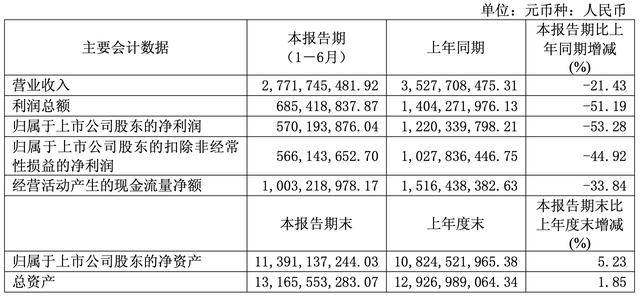
Company Performance - In the first half of 2025, the company reported operating revenue of 2.77 billion yuan, a year-on-year decrease of 21.43% [1][2] - The net profit attributable to shareholders was 570 million yuan, down 53.28% compared to the same period last year [1][2] - Basic earnings per share were 0.1187 yuan [1] - The total profit for the period was 685 million yuan, reflecting a decline of 51.19% year-on-year [2] - The net cash flow from operating activities was 1.00 billion yuan, a decrease of 33.84% compared to the previous year [2] - As of June 30, 2025, the company's total assets were 131.66 billion yuan, and the net assets attributable to shareholders were 113.91 billion yuan, showing increases of 1.85% and 5.23% respectively compared to the end of the previous year [3] Share Buyback Plan - The company announced a plan to repurchase shares using its own funds, with a total amount not less than 250 million yuan and not exceeding 400 million yuan [3] - The repurchase price will not exceed 4.32 yuan per share, and all repurchased shares will be canceled to reduce registered capital [3] - If the maximum repurchase amount of 400 million yuan is fully utilized, it would represent approximately 3.04% of total assets, 3.51% of net assets, and 8.25% of cash [3] Industry Context - The domestic refined oil transportation market is under pressure due to a slowdown in economic growth and accelerated substitution by new energy sources, leading to weak transportation demand and decreased cargo stability [4] - International oil price fluctuations and declining refinery profits have resulted in lower operating rates for domestic refineries, with an average operating load of 78.32%, down 0.93 percentage points year-on-year [4] - The average operating rate of independent refineries in Shandong has dropped to a near-term low of 53.87%, a decrease of 6.28 percentage points year-on-year [4] - There is a shift in demand structure towards smaller vessels, as refining and storage companies in provinces like Fujian and Jiangsu are reducing tank capacity, limiting unloading capabilities [4]


TORM plc(TRMD) - 2025 Q2 - Earnings Call Transcript
2025-08-14 14:00
Financial Data and Key Metrics Changes - TORM reported a TCE of USD 208 million for Q2 2025, consistent with previous quarters, resulting in a net profit of USD 59 million and an EBITDA of USD 127 million [4][18][27] - The average TCE rates were USD 26,700 per day, with LR2s above USD 35,000, LR1s slightly above USD 27,000, and MRs around USD 23,000, indicating stable freight rates [18][19] - The company declared a dividend of USD 0.40 per share, representing a payout ratio of 67% [22] Business Line Data and Key Metrics Changes - The product tanker market has shown resilience, with benchmark earnings for MR and LR2 vessels reflecting a healthy uptick due to increased trade flows and limited growth in the CPP trading fleet [6][8] - Tonne miles have increased significantly, driven by a surge in East to West middle distillate trades, reaching a sixteen-month high [7][8] Market Data and Key Metrics Changes - Trade volumes have surged, particularly in the middle distillate sector, with inventories in North West Europe falling, necessitating increased imports [7][8] - Refinery closures in North West Europe and the U.S. West Coast are expected to reduce local product supply, increasing demand for imports [9][10][11] Company Strategy and Development Direction - TORM is focusing on fleet optimization by divesting older vessels to maintain a modern and efficient fleet [4] - The company has raised its full-year guidance for TCE earnings to USD 800 million to USD 950 million, reflecting a stronger earnings outlook [27] Management's Comments on Operating Environment and Future Outlook - Management noted that despite geopolitical uncertainties, market sentiment remains positive, with strong momentum entering Q3 [5] - The company expects continued support for trade flows and vessel utilization, driven by geopolitical factors and refinery closures [8][16] Other Important Information - TORM has secured commitments for up to USD 857 million in refinancing, enhancing liquidity and financial flexibility [24][25] - The average age of the fleet is the highest in two decades, with a significant portion of older vessels under sanctions, impacting fleet utilization [14][16] Q&A Session Summary Question: What has caused the consistency in TCE over the last nine months? - Management acknowledged the remarkable stability and indicated that it does not restrict operational flexibility, with potential for upside as market dynamics evolve [30][31] Question: Will the payout ratio increase in the future? - Management expects the payout ratio to be higher in 2026 due to a decrease in cash flow breakeven [33][34] Question: What is driving the upside in MR rates? - The increase in CPP on the water and reduced cannibalization from crude tankers have contributed to the uptick in MR rates [41][42] Question: Are asset values stabilizing? - Management believes asset prices are stabilizing and could rise if freight rates improve [48][50] Question: When will the positive effects of refinery closures be seen? - The closures in Europe are expected to impact the market positively by the end of 2025, while U.S. West Coast closures will take effect in about a year [58][60] Question: What is the impact of the Russian price cap change? - Management indicated uncertainty regarding the impact but noted that many sanctioned vessels may not easily return to mainstream trades [62][64]

Euronav NV(CMBT) - 2019 Q2 - Earnings Call Presentation
2025-07-10 09:19
Q2 2019 Highlights - VLCC average spot rate in the TI Pool was $23,218 per day, compared to $16,751 in Q2 2018[8] - VLCC average time charter rate was $27,165 per day, compared to $34,976 in Q2 2018[8] - Suezmax average spot rate was $17,217 per day, compared to $12,883 in Q2 2018[8] - Suezmax average time charter rate was $30,375 per day, compared to $20,882 in Q2 2018[8] - The company bought back shares totaling $29 million (13 cents per share) during the first half of the year[12] - A dividend of $0.06 per share for the first half of 2019 will be paid in October 2019[12] - For Q3, 65% of VLCC capacity has been fixed at approximately $20,600 per day[12] - For Q3, 58% of Suezmax capacity has been fixed at approximately $15,800 per day[12] Financial Performance - Revenue for the first semester of 2019 was $401.936 million, compared to $202.748 million in the first semester of 2018[13] - The company experienced a net loss of $38.556 million in Q2 2019, compared to a net loss of $51.602 million in Q2 2018[13] - Cash increased to $203.6 million in June 2019, compared to $173.0 million in December 2018[14] - Total liquidity increased to $858 million, including an undrawn secured revolving facility of $634 million and an undrawn unsecured credit line of $20 million[14, 16] Market Outlook and Themes - The company anticipates constructive large crude tanker market fundamentals into the winter[12] - VLCC ordering is near 5-year lows, indicating restricted contracting in large tankers[20, 21] - IMO 2020 disruption is expected to impact the market in the second half of 2019, with retrofitting potentially reducing fleet days by 3-5%[23]