绿色低碳

Search documents
四川交出生态环境整改答卷
Si Chuan Ri Bao· 2025-10-31 08:07
Group 1 - Sichuan has rectified a total of 44,755 prominent ecological and environmental issues over the past ten years, reflecting a systematic approach to ecological protection [1] - The province has undergone three rounds of central ecological environmental protection inspections since 2017, achieving full coverage of 21 cities and states [2] - Significant improvements have been made in addressing key environmental issues, such as solid waste encroachment along the Dadu River and illegal dumping in San Shui Town [2] Group 2 - A comprehensive mechanism for solid waste management has been established, including a joint prevention and control system among five cities, and a construction waste resource utilization facility with an annual capacity of 450,000 tons [3] - The province has focused on eliminating outdated production capacities in industries like brick and glass, reducing the number of restricted enterprises by over 30% compared to 2023 [4] - The industrial structure is being optimized, with a reported 7.3% year-on-year growth in industrial added value, and over 30% contribution from green and low-carbon industries [4] Group 3 - In the transportation sector, there has been a notable increase in freight volumes, with rail and water transport growing by 3.2% and 21.7% respectively [5] - The province aims to promote green and efficient logistics through initiatives like zero-carbon industrial parks and optimized layouts for hydrogen and battery swap stations [5] - The ongoing rectification of prominent issues and continuous optimization of industrial structure are contributing to a new governance model that aligns ecological protection with high-quality economic development [5]
“未来20”调研解码中小市值成长力:制造业升级与创新韧性成突围关键
Di Yi Cai Jing· 2025-10-31 04:41
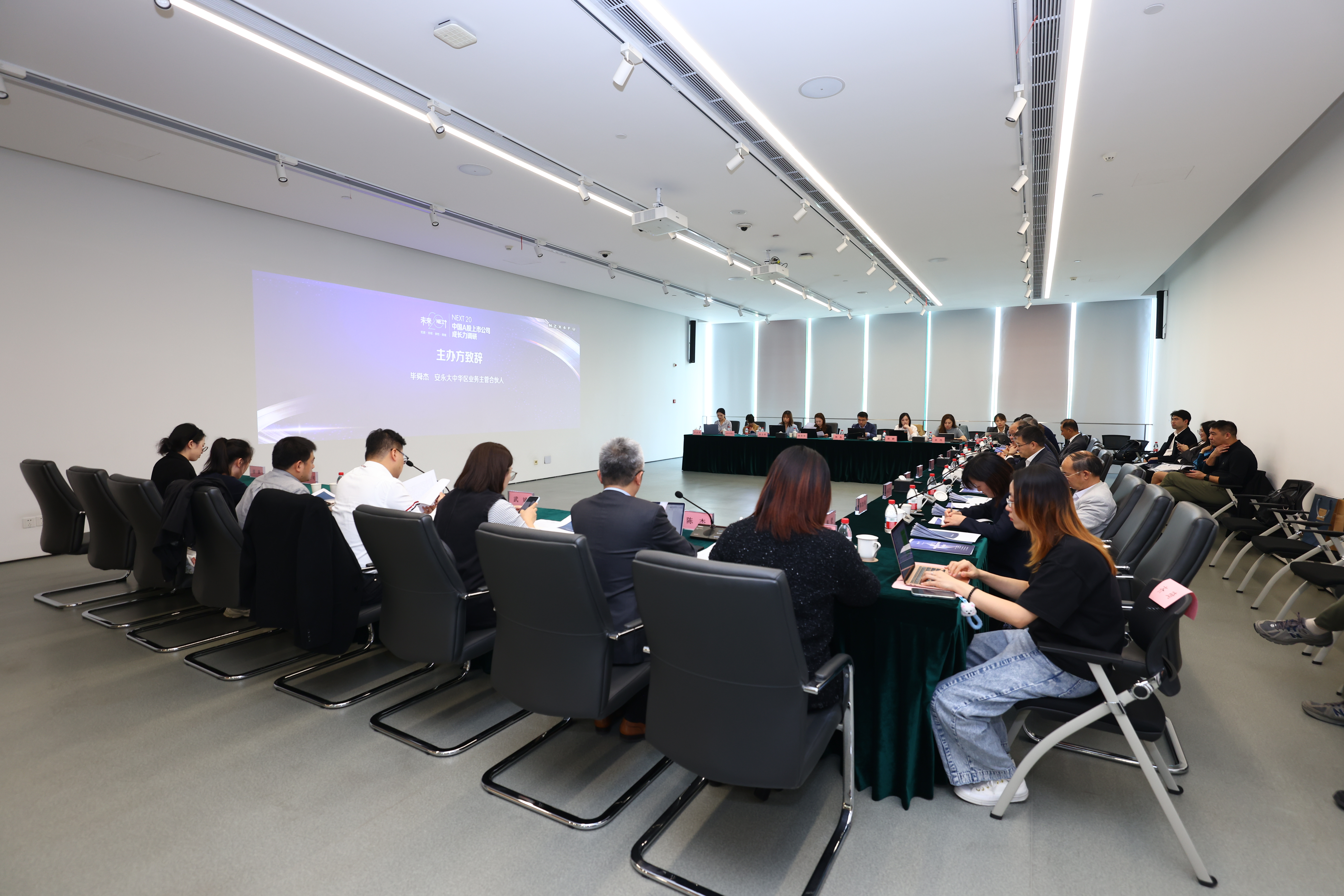
Core Insights - China's small and medium-sized enterprises (SMEs) are demonstrating strong resilience through innovation and adaptability, forming new models and trends that warrant market attention [1][42] - The "Future 20" growth research project, initiated by First Financial, Ernst & Young (China), and Xiya Asset Management, is the first systematic evaluation of small and medium-sized listed companies in the A-share market [1][5] Group 1: Research and Evaluation Process - The second year of the "Future 20" research concluded with a final evaluation meeting on October 28, where 18 companies were selected based on initial scores and field research [5][20] - The final list will be officially announced at the "Future 20·China A-share Listed Companies Growth Conference" in December after compliance checks [5][20] - The research aims to provide a macro perspective on China's economic and industrial development through the growth trajectories of selected companies [5][20] Group 2: Industry Trends and Insights - The manufacturing sector's share is increasing, and the extension of industrial chains is becoming a new trend among SMEs, which are crucial for economic resilience and innovation [9][20] - Companies are actively engaging in digital transformation and developing a "1+5+X" industrial innovation system, focusing on smart, low-carbon, and health-related industries [12][20] - The research indicates a significant rise in the number of SMEs, with 57 million registered by 2024, despite a backdrop of intense market competition and consolidation [16][19] Group 3: Company Performance and Challenges - Among the 3,878 small-cap listed companies, 1,385 reported losses, highlighting a stark performance divide within this segment [19][20] - Many SMEs are transitioning from general products to scenario-based strategies, enhancing customer loyalty in niche markets [22][34] - The research emphasizes the importance of understanding the unique characteristics and industry connections of SMEs to inform investment decisions [24][27] Group 4: Future Directions and Recommendations - The evaluation process is being refined to enhance risk assessment and focus on core operational challenges faced by companies [27][51] - The research highlights the need for SMEs to balance R&D investments with short-term performance, ensuring sustainable growth [51][52] - Future evaluations should incorporate a broader range of indicators to identify potential high-growth companies that may currently be overlooked [52][41]

创业板开市十六载:改革引领新程 创新驱动成长
Zheng Quan Ri Bao· 2025-10-29 17:08
Core Insights - The ChiNext board has evolved from a "test field" for institutional innovation to a "demonstration field" nurturing new productive forces, with a total market value exceeding 17 trillion yuan as of October 29, 2025 [1] - The China Securities Regulatory Commission plans to deepen reforms on the ChiNext board, introducing more tailored listing standards for emerging industries and innovative enterprises [1][2] Micro Foundations - The establishment of the ChiNext board addressed the financing bottlenecks faced by innovative and growth-oriented companies during China's economic transition [2] - Over the past 16 years, the ChiNext board has continuously adapted its systems to support high R&D and fast-growing enterprises, facilitating their access to capital markets [2][3] - The introduction of the third set of listing standards has enabled companies like Shenzhen Dapu Microelectronics to raise significant funds for R&D and production projects [3] Growth Dynamics - As of 2024, over 600 companies listed on the ChiNext board have reported revenue growth exceeding 100%, with more than 100 companies achieving revenue growth over tenfold [4] - The ChiNext board has demonstrated strong resilience in growth, with a significant number of companies achieving substantial profit increases [5] Mid-level Synergy - The ChiNext board has fostered a collaborative ecosystem that supports the development of new industries, focusing on advanced manufacturing, digital economy, and green low-carbon sectors [6] - Nearly 48.09% of the companies on the ChiNext board are from these key sectors, accounting for over 55.35% of the total market value [6] Macro Empowerment - The ChiNext board has played a crucial role in optimizing the funding supply structure and reducing the cost of capital for innovative enterprises, facilitating a healthy cycle between technology, industry, and finance [10][11] - The board has successfully attracted long-term capital by enhancing the investor structure and transaction mechanisms, leading to increased market activity and investor participation [11][12]


2025金融街论坛|黄奇帆:生产性服务业是民营企业发展新赛道
Bei Jing Shang Bao· 2025-10-29 15:41
Core Insights - China's manufacturing industry has achieved "five leading and five parallel" sectors, with automotive, shipbuilding, power equipment, high-speed rail equipment, and new energy equipment leading globally, while new materials, biomedicine, high-end equipment, aerospace, and artificial intelligence are on par with developed countries [1] Group 1: Manufacturing Sector - The global share of China's manufacturing industry has reached 32% [1] - The leading sectors are automotive, shipbuilding, power equipment, high-speed rail equipment, and new energy equipment [1] - The parallel sectors include new materials, biomedicine, high-end equipment, aerospace, and artificial intelligence [1] Group 2: Service Industry - The productive service industry encompasses ten categories: R&D, logistics, inspection and testing, finance, green low-carbon, digitalization, trade, intellectual property, professional consulting, and human resources [1] - This sector is identified as a growth driver for GDP, unicorn cultivation, service trade enhancement, and total factor productivity [1] - There is a call for private enterprises to expand into the productive service industry to alleviate manufacturing competition, create job opportunities for graduates, and revitalize office resources [1]

博时基金市场异动陪伴10月29日:沪指站上4000点,创业板指涨超2.9%
Xin Lang Ji Jin· 2025-10-29 07:37
Market Performance - The A-share market experienced a significant rally, with the Shanghai Composite Index surpassing 4000 points and the ChiNext Index rising over 2.9% on October 29 [1][2]. Core Insights - The release of the "14th Five-Year Plan" draft, emphasizing "extraordinary measures" and "self-reliance in technology," has notably boosted market sentiment, highlighting the importance of technological innovation in national strategy [2]. - Signs of easing tensions in US-China relations, along with an upcoming summit between the two nations, are expected to reduce external uncertainties and improve risk appetite [2]. - Regulatory bodies, including the central bank and the China Securities Regulatory Commission, have reiterated their commitment to supportive monetary policies and reforms, which has helped stabilize market confidence [2]. Investment Opportunities - The "14th Five-Year Plan" provides a clear investment direction for the A-share market, with a focus on technology sectors such as integrated circuits, high-end machinery, and advanced instruments [2]. - There is an anticipated increase in policy support for key areas like basic software and advanced materials, which may exceed expectations [2]. - Companies in the upstream materials, core components, and basic software sectors are likely to benefit from policy and financial support, leading to a potential systematic uplift in technology sector valuations [2]. Future Outlook - The recovery of risk appetite in the A-share market is supported by both external factors, such as improved US-China relations, and internal factors, including the implementation of the "14th Five-Year Plan" and the performance of Q3 earnings [3]. - The balance between risk prevention and reform in financial regulatory policies will be crucial, along with the pace of long-term capital entering the market [3]. - Overall, in a context of positive policy expectations and a relatively loose liquidity environment, structural opportunities in the market are prominent, particularly in high-end manufacturing, digital economy, and green technology sectors [3].
市工商联上市公司专委会成立
Jie Fang Ri Bao· 2025-10-28 01:41
Core Insights - The Shanghai Federation of Industry and Commerce has established a special committee composed of core executives from 63 private listed companies, focusing on six key areas: strategic guidance, industrial collaboration, policy empowerment, financial support, governance standardization, and legal protection [1] Group 1 - There are currently 451 A-share listed companies in Shanghai, with 254 of them being privately controlled, accounting for 56% of the total [1] - The first batch of 63 members of the special committee includes companies from cutting-edge sectors such as integrated circuits, biomedicine, artificial intelligence, and green low-carbon technologies, with a total market capitalization exceeding half of the total market value of all private listed companies in the city [1]
党的二十届四中全会精神在我市各区干部群众中引发热烈反响
Nan Jing Ri Bao· 2025-10-27 02:13
Group 1: Economic Development and Modernization - The 20th Central Committee's Fourth Plenary Session approved the proposal for the 15th Five-Year Plan, emphasizing the need for top-level design and strategic planning for the next five years, aiming to advance Chinese-style modernization [1] - The session highlighted the construction of a modern industrial system and the strengthening of the real economy, with specific focus on industrial growth, project acceleration, and innovation integration in the Jiangbei New Materials Science and Technology Park [2] - The Binjiang Development Zone plans to focus on high-quality industrial development, particularly in new-generation information communication, green intelligent vehicles, and high-end equipment manufacturing [3] Group 2: Agricultural Modernization - The session underscored the importance of accelerating agricultural and rural modernization, aiming for comprehensive rural revitalization, which is crucial for the city's agricultural strategy [4] - The Pukou District has been recognized for its achievements in rural revitalization, with plans to enhance grain production capacity and develop specialized agriculture [5] Group 3: Social Welfare and Employment - The session called for increased efforts in improving people's livelihoods and promoting common prosperity, guiding local health authorities to innovate service delivery and enhance community health services [6] - Employment was identified as a fundamental aspect of people's livelihoods, with local employment services focusing on creating community-based job opportunities and supporting vulnerable groups [7]
从梯度转移到生态共建 全国统一大市场撬动产业“双向价值跃迁”
Zheng Quan Shi Bao· 2025-10-26 22:40
Core Viewpoint - The article discusses the ongoing trend of industrial transfer in China, highlighting the shift from a simple model of "Eastern R&D output and Western manufacturing" to a more integrated approach that combines regional characteristics with specialized industries [1][2][3]. Group 1: Industrial Transfer Activities - The Ministry of Industry and Information Technology (MIIT) has organized six industrial transfer matching activities this year, promoting orderly transfer of manufacturing industries to central and western regions [2][3]. - The recent event in Hainan resulted in the signing of 110 projects, including collaborations with state-owned enterprises and listed companies, showcasing a trend of "leading enterprises and collaborative chains" [3]. Group 2: Regional Advantages and Industry Characteristics - The article emphasizes the dual approach of aligning specialized industries with regional endowments, leading to a multi-faceted industrial transfer trend [3][4]. - Regions like Sichuan leverage natural resources such as vanadium, titanium, lithium, and rare earths to support the development of new energy and green industries [4]. Group 3: Economic and Structural Impacts - Industrial transfer is seen as a pathway to optimize national industrial structure, with regions like Jiangxi transitioning from agriculture to becoming a hub for electronic information industries [5]. - The MIIT stresses the importance of eliminating invisible barriers to factor flow, which will facilitate the construction of a unified national market [5].
江宁高新区新增6家南京市工程研究中心
Xin Hua Ri Bao· 2025-10-26 21:42
Core Viewpoint - Nanjing's Development and Reform Commission has announced the list of engineering research centers recognized for 2025, highlighting the success of six companies in Jiangning District, which represents 28.57% of the district's total, indicating a strong focus on innovation and strategic emerging industries [1] Group 1: Engineering Research Centers - Six companies, including Jiangsu Nari Power Electric Co., Ltd. and Jiangsu Fangtian Electric Power Technology Co., Ltd., have been approved as engineering research centers, leading in the number of approvals within Jiangning District [1] - The newly approved centers are primarily focused on four strategic emerging industries: green low-carbon technology, smart grids, high-end equipment manufacturing, and low-altitude economy [1] Group 2: Innovation and Development Strategy - The approval of these engineering research centers is seen as a significant achievement in the construction of innovation platforms within Jiangning High-tech Zone, contributing to the development of the "three stations and three centers" initiative [1] - Jiangning High-tech Zone plans to leverage the recognition of these centers to implement a new type of institutional platform development strategy, enhancing the technology innovation system at national, provincial, and municipal levels [1] - The focus will be on accelerating the transformation and industrialization of scientific and technological achievements [1]
国泰海通|策略:四中全会解读与“转型牛”纵深
国泰海通证券研究· 2025-10-24 14:10
Core Viewpoint - The article emphasizes that the "14th Five-Year Plan" period is crucial for achieving socialist modernization in China, with a focus on technology and consumption driving economic growth, and the potential for the Chinese stock market to experience a "transformation bull" trend leading to new highs in A/H stock indices [1][2]. Group 1: Importance of Domestic Demand - The importance of domestic demand is highlighted, with a shift towards building a strong domestic market, indicating a significant increase in the focus on consumption during the "14th Five-Year Plan" [2]. - The relationship between consumption and investment is discussed, with expectations that more policy resources will be directed towards consumption and livelihood sectors, such as elderly care, education, and healthcare [2]. Group 2: Modern Industrial System - The report stresses the need to maintain a reasonable proportion of manufacturing and to build a modern industrial system centered on advanced manufacturing [2]. - There is an emphasis on enhancing independent innovation capabilities and accelerating breakthroughs in key technologies, particularly in the context of de-globalization [2]. Group 3: Unified National Market - The establishment of a unified national market is crucial for breaking local protectionism and market segmentation, which can lead to resource misallocation and efficiency losses [3]. - The report mentions the importance of expanding institutional openness and maintaining a multilateral trade system to address global economic challenges [3]. Group 4: Investment Opportunities - The article identifies potential investment opportunities in sectors aligned with the goals of the "14th Five-Year Plan," including advanced manufacturing, renewable energy, machinery, and consumer goods [3]. - Specific sectors to watch include internet, semiconductors, military, media, and retail, as they are expected to benefit from the economic transformation [3].