
网络直播

Search documents
求打赏,经纪公司要求主播与粉丝“假恋爱”?法院判了
Xin Jing Bao· 2025-12-02 07:40
Core Viewpoint - The case highlights unethical practices in the live streaming industry, where talent agencies may pressure streamers to engage in deceptive behaviors to increase revenue through fan donations [1][2]. Group 1: Contractual Obligations - The contract between the streamer and the agency required the streamer to perform 25 days of effective live streaming each month, with a minimum of 6 hours per day, and produce 21 qualifying short videos, in exchange for a guaranteed monthly income of 9,000 yuan and gift sharing [1]. - The agency imposed high penalties for early termination of the contract, which created a significant financial burden on the streamer [1]. Group 2: Agency Misconduct - The agency requested the streamer to feign a romantic relationship with fans to solicit gifts, and even accessed the streamer's personal account to impersonate her in conversations with fans [2]. - The agency deemed the streamer's live broadcasts as "invalid" despite her compliance with the contract, which severely impacted her income [2]. Group 3: Legal Proceedings - The streamer ceased her activities due to the agency's unethical demands and subsequently faced a lawsuit from the agency for contract termination, seeking 300,000 yuan in damages and 10,000 yuan in legal fees [2]. - The court ruled in favor of the streamer, stating that the agency's actions constituted a fundamental breach of contract and violated public morals, thus rejecting all claims made by the agency [2].
彻底端掉低俗团播的“流量饭碗”
Bei Jing Qing Nian Bao· 2025-12-01 07:16
Core Viewpoint - The crackdown on vulgar group broadcasts that entice viewers for tips has gained significant attention on social media, with public support for the initiative to clean up the online environment [1][2]. Group 1: Issues with Vulgar Group Broadcasts - Vulgar group broadcasts have become a competitive arena that promotes low-quality content, often using sexual innuendos and inappropriate interactions to attract viewers, which ultimately harms the online ecosystem [2][3]. - The content of these broadcasts often includes soft pornography and degrading performances, which are orchestrated by MCN (Multi-Channel Network) agencies that profit from this lowbrow entertainment [1][2]. Group 2: Regulatory Actions - The Central Cyberspace Administration of China has launched a special campaign to address the issue of vulgar group broadcasts, resulting in the banning of several accounts that violated regulations [1][2]. - The campaign aims to enforce existing laws such as the "Regulations on the Ecological Governance of Online Information Content" and the "Internet Live Streaming Service Management Regulations" to combat the spread of low-quality content [2]. Group 3: Positive Alternatives - There are numerous examples of high-quality group broadcasts that have gained popularity, showcasing professional skills and cultural content, which contrast sharply with the vulgar broadcasts [3]. - Initiatives by cultural institutions and professional groups have led to successful broadcasts that are well-received by audiences, highlighting the potential for positive content in the live streaming space [3]. Group 4: Call to Action - The industry must work collectively to eliminate vulgar broadcasts by improving content regulations and ensuring that platforms do not turn a blind eye to inappropriate content [3][4]. - Viewers are encouraged to refrain from engaging with low-quality content and to report such broadcasts, contributing to a healthier online environment [4].
永久封禁!从严处置→
证券时报· 2025-11-26 11:45
Core Viewpoint - The article discusses the recent actions taken by the Central Cyberspace Administration of China to address the issue of vulgar content in live streaming, particularly focusing on the regulation of group broadcasting accounts that induce tipping through inappropriate behavior [1][3]. Group Summaries Regulation Actions - The Central Cyberspace Administration is intensifying efforts to manage group broadcasting content and has taken strict measures against accounts that violate laws and ethical standards [1]. - Specific group broadcasting accounts have been permanently banned or had their live streaming privileges revoked due to their inappropriate content [3]. Examples of Violations - Certain accounts, such as "HN-三世烟火" and "Top-长安城," engaged in suggestive actions like revealing clothing and provocative movements to create a vulgar atmosphere, leading to user tipping [3]. - Other accounts, including "心动女孩" and "好多表妹哟," used uncomfortable punishment methods during live streams to encourage lowbrow interactions through tipping [3]. - Accounts like "Vibe-002" and "亿江南-后宫" employed gift ranking games that showcased monetary contributions to induce users to tip for higher rankings [3].


团播幕后:一半是数据,一半是人心
3 6 Ke· 2025-11-25 12:13
Core Insights - The article explores the evolution of group broadcasting (团播) from simple dance live streams to elaborate live performances, highlighting its emergence as a new form of mass entertainment [1][5][14] - The event "无忧之夜2025" showcased the integration of live performances with interactive elements, indicating a shift towards a more immersive audience experience [1][3][15] Group 1: Development of Group Broadcasting - Group broadcasting has transformed from basic dance performances to grand live shows, with significant audience engagement and participation [1][5] - The recent event featured multiple boy bands performing live, indicating a growing trend of combining online and offline entertainment [1][3] - The evolution of group broadcasting reflects broader changes in the entertainment landscape, with a focus on creating a vibrant and interactive atmosphere for fans [14][15] Group 2: Operational Insights - The operational model of group broadcasting is likened to stock market investment, emphasizing the unpredictability and strategic planning involved [8][10] - Data analysis plays a crucial role in understanding audience preferences, allowing for tailored content that resonates with different demographic groups [7][10] - The team structure includes a lead coordinator who oversees content planning and artist management, highlighting the importance of strategic decision-making in live broadcasts [10][11] Group 3: Financial Aspects - Significant investments are made in staging and production for live events, with costs reaching millions, indicating the financial commitment to enhancing the audience experience [15][16] - The company anticipates that group broadcasting will become a major profit contributor in the future, reflecting confidence in the business model's sustainability [16] Group 4: Cultural Impact - Group broadcasting has roots in earlier forms of group dance live streams, evolving into a mainstream cultural phenomenon that appeals to younger audiences [14][19] - The format allows for a unique blend of entertainment and social interaction, fostering a sense of community among fans and performers [19]

个税高增长背后
Sou Hu Cai Jing· 2025-11-24 07:40
Core Insights - The personal income tax revenue in China reached 1.3363 trillion yuan from January to October 2025, showing a year-on-year growth of 11.5%, with a significant increase in October at 27.3% [2][3] Tax Revenue Performance - Domestic value-added tax grew by 4% year-on-year, while domestic consumption tax reached 1.439 trillion yuan, increasing by 2.4%. Corporate income tax amounted to 3.9182 trillion yuan, with a growth of 1.9% [2] Factors Driving Growth - The high growth in personal income tax is attributed to improved tax administration efficiency and diversification of tax sources, reflecting significant progress in tax governance capabilities [3] - Enhanced tax collection measures, particularly for overseas income, have contributed to the increase, with a notable rise in compliance among high-net-worth individuals [4][6] Overseas Income Management - The tax administration system has been refined, leading to better monitoring of previously unregulated tax sources, with tax authorities actively reaching out to taxpayers regarding overseas income reporting [4][5] - The implementation of the "Golden Tax Phase IV" has improved the accuracy of identifying cross-border income and hidden income [4] Capital Market Influence - The active capital market has led to a surge in capital income, which, along with resilient income among high-income groups and a low base effect, has supported the growth of personal income tax [7] - The capital market's performance is expected to contribute approximately 330 billion yuan to personal income tax in 2025, reflecting a year-on-year increase of about 40 billion yuan [7] Economic Recovery and Base Effect - Economic recovery since the third quarter of 2025 and a low base from the previous year have amplified the growth rate of personal income tax [8] - The transition from a "coarse" to a "fine" tax governance model is expected to ensure stable growth in personal income tax revenue in the future [8]

流量名气不是偷逃税护身符
Jing Ji Ri Bao· 2025-11-23 23:15
Core Insights - The tax authorities have exposed six cases of tax evasion involving internet celebrities and online stores, highlighting the need for compliance in the rapidly growing internet economy [1] - In 2024, the tax department conducted inspections on 169 online streamers, uncovering a total of 899 million yuan in unreported income [1] - The message from tax authorities is clear: online platforms are not lawless spaces, and fame does not exempt individuals from legal responsibilities [1][3] Group 1: Tax Evasion Cases - Some online streamers exhibit weak tax awareness and a sense of complacency, leading to income concealment [2] - Techniques used for tax evasion include receiving rewards through personal accounts, registering multiple shell companies to split income, and colluding with MCN agencies to fabricate business activities [2] - The tax evasion methods may seem varied, but they are unlikely to escape the scrutiny of precise regulations [2] Group 2: Role of MCN Agencies - MCN agencies play a significant role in tax evasion, often obscuring their responsibilities to reduce operational costs and attract streamers [2] - Previous cases indicate that some MCN agencies have misled streamers into illegal tax practices by promoting "tax avoidance" strategies [2] - Regulatory actions against these agencies aim to restore order in the economic tax landscape and foster a fair tax environment for the industry's sustainable development [2] Group 3: Importance of Tax Compliance - Taxation is a crucial source of national revenue and a tool for social distribution, making a fair tax environment essential for high-quality economic development [3] - As tax regulation becomes more precise and efficient, the space for tax evasion diminishes, and the costs of illegal activities increase [3] - For online streamers and related institutions, adhering to legal compliance and externalizing social responsibility is vital for gaining long-term public trust and support [3]
“镇合意·工暖‘新’”服务品牌织密保障网 新业态劳动者有了“暖心巢”
Zhen Jiang Ri Bao· 2025-11-22 23:25
Core Points - The article highlights the launch of the "Zhenheyi·Gongnuan'xin'" service brand by the Zhenjiang Municipal Federation of Trade Unions to enhance the influence, cohesion, and service capacity of labor unions for new employment forms [1][7] - The service system includes a comprehensive organizational network and five service packages aimed at improving the sense of gain, happiness, and belonging among new employment form workers [1][7] Group 1: Organizational Network - The establishment of a city-level union for internet, road transport, and delivery workers in Zhenjiang is a pioneering move in the province, with full coverage of county-level unions planned by 2024 [2] - The "scan to join" initiative and the launch of a comprehensive service center for new employment form workers have made it easier for workers to join unions and access services [2] - The municipal union has equipped new industry unions with social workers and provided subsidies to stimulate grassroots activity [2] Group 2: Service Infrastructure - The construction of a "15-minute service circle" with 25 24-hour smart service stations has been implemented to provide convenient rest and refreshment options for outdoor workers [3] - The new comprehensive service center integrates various resources to offer one-stop services, becoming a "spiritual home" for new employment form workers [3] - Initiatives like "one yuan noodles" and the establishment of "union canteens" aim to enhance the welfare of workers [3] Group 3: Rights Protection - The introduction of the "Courier Workers Care Day" and the "Courier Workers Care Subsidy Measures" has provided financial support and emotional care for workers facing difficulties [4][5] - Legal aid stations have been established to protect the legal rights of new employment form workers, with significant financial assistance provided [5] - A democratic consultation mechanism has been created to address workers' grievances and improve management practices [5] Group 4: Growth Empowerment - Various activities and competitions have been organized to enhance the skills and personal development of new employment form workers, fostering a sense of community and growth [6] - The union has implemented programs for educational advancement and mental health support, contributing to the overall development of workers [6] - The focus on both material support and personal growth reflects a commitment to improving the quality of life for workers in new employment forms [6]
别让“团播”变了味
Ren Min Ri Bao· 2025-11-20 11:20
Core Viewpoint - The article emphasizes the need for regulatory constraints, proactive platform actions, self-improvement by group broadcasting entities, and collective societal supervision to address issues in the group broadcasting industry. Group 1: Regulatory Actions - The Central Cyberspace Administration of China has launched a two-month campaign titled "Clear and Bright: Rectifying the Chaos of Online Live Streaming Rewards" to combat issues in group broadcasting, focusing on four main problems: vulgar inducement for rewards, deceptive personas, encouraging minors to reward, and stimulating irrational user rewards [1][2]. Group 2: Industry Overview - Group broadcasting has emerged as a popular cultural consumption form, with an estimated daily average of 8,000 live rooms and projected annual revenue exceeding 15 billion yuan. Some leading companies report single-night reward amounts surpassing 10 million yuan during monthly competitions [1][2]. - The performance style of group broadcasting is characterized by simplicity, strong repetition, and high visual impact, often featuring recognizable electronic dance music and straightforward lyrics, which enhances audience engagement [1]. Group 3: Interaction and Challenges - Unlike traditional cultural consumption, group broadcasting allows audience interaction through gifting, where higher rewards lead to more significant screen effects and increased host excitement, fostering a sense of presence and satisfaction among users [2]. - However, this interactive model can lead to ethical concerns, as some broadcasts may employ lowbrow techniques to attract viewers, potentially damaging the industry's reputation and pushing quality content to the margins [2]. Group 4: Future Development - For healthy development, the group broadcasting industry requires collaboration among regulatory bodies, platforms, and content creators, as well as societal support. The industry can leverage its interactive nature to enhance cultural supply and consumption, potentially integrating with traditional arts, intangible cultural heritage, and public welfare initiatives [3].
2025年中国传媒行业细分市场分析 技术赋能与垂类深耕成市场发展双引擎【组图】
Qian Zhan Wang· 2025-11-20 04:33
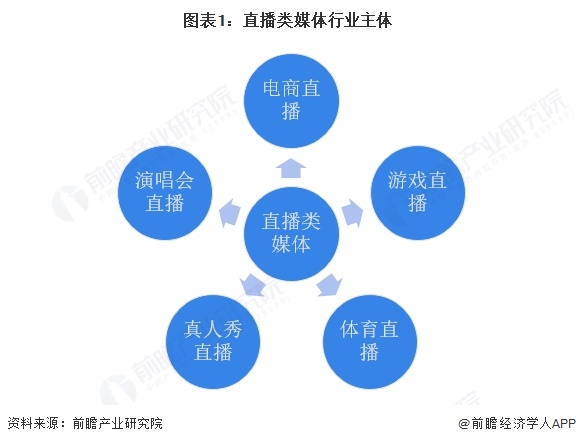
Core Insights - The Chinese live streaming industry has experienced explosive growth since 2016, with significant increases in both platforms and audience numbers, establishing itself as a key component of the internet culture market [1] - As of December 2024, the number of live streaming users in China reached 833 million, representing a year-on-year increase of 17.37 million users, or 2.13%, accounting for 75.2% of the total internet user base [3] - E-commerce live streaming leads the market, with 597 million users as of June 2024, making up 54.7% of internet users, and contributing significantly to consumer growth [4] - The live streaming market in China is projected to reach 212.64 billion yuan in 2024, reflecting a 1.5% increase from 2023, showcasing resilience in a complex environment [5] - The growth of the live streaming industry is driven by technological innovation and deepening market segmentation, with platforms like Douyin and Kuaishou exploring generative AI to enhance content creation and user experience [8] Industry Segmentation - The live streaming media industry in China can be categorized into five main types: e-commerce live streaming, sports live streaming, game live streaming, reality show live streaming, and concert live streaming [1] - E-commerce live streaming is the core driver of consumption growth, while sports live streaming benefits from stable growth due to the popularity of event IPs [4] - Game live streaming continues to penetrate the market, supported by the maturation of the esports industry, while reality shows and concert live streaming expand their audience through a hybrid online and offline model [4]
别让“团播”变了味(锐见)
Ren Min Ri Bao· 2025-11-17 22:15
Core Viewpoint - The article emphasizes the need for regulatory constraints, proactive platform actions, self-improvement by group broadcasting entities, and collective societal supervision to address issues in the group broadcasting industry, particularly concerning the rampant problems associated with live streaming rewards [1][3]. Group 1: Regulatory Actions and Industry Challenges - The Central Cyberspace Administration of China has launched a two-month campaign to rectify the "chaos in online live streaming rewards," focusing on areas prone to issues such as vulgar group broadcasts, deceptive personas, and the manipulation of minors into making irrational rewards [1]. - Group broadcasting has gained significant traction, with an estimated daily average of 8,000 live rooms and projected annual revenue exceeding 15 billion yuan. Some leading companies have reported single-night reward amounts surpassing 10 million yuan during monthly competitions [1][2]. Group 2: Characteristics and Risks of Group Broadcasting - Unlike traditional cultural consumption, group broadcasting allows audience interaction through game settings and community operations, where viewers can reward performances and influence the content presented [2]. - The interactive nature of group broadcasting can lead to ethical dilemmas, as some broadcasts may employ lowbrow techniques to attract viewers, potentially damaging the industry's reputation and pushing quality content to the margins [2]. Group 3: Future Development and Opportunities - For healthy development, the group broadcasting industry requires collaboration among regulatory bodies, platforms, and content creators, alongside societal support. The industry can leverage its interactive features to enhance cultural supply and consumption [3]. - There are opportunities to innovate within group broadcasting by integrating it with traditional arts, promoting intangible cultural heritage, and engaging in public welfare initiatives, thereby transforming audience enthusiasm into tangible social benefits [3].