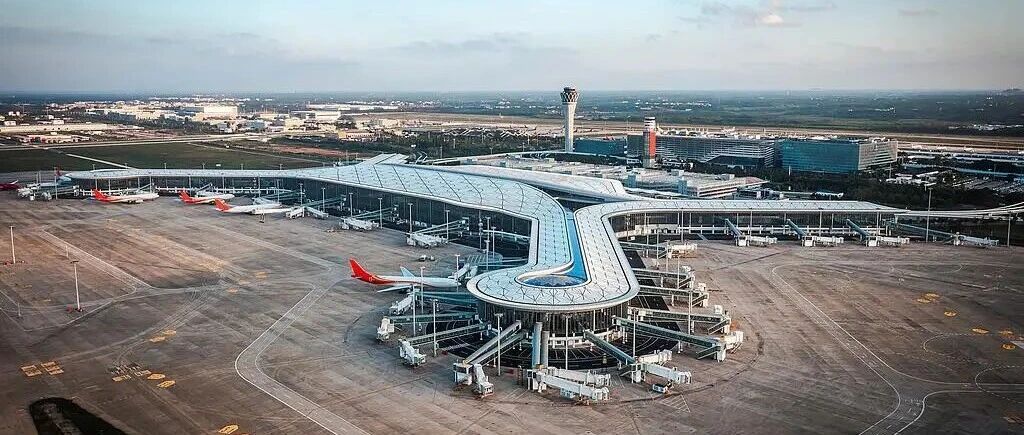
航空维修

Search documents
县域活力足,经济韧性强
Xin Lang Cai Jing· 2025-12-22 23:27
Core Insights - The GDP of county-level regions in Fujian is projected to grow from 5.21 trillion yuan to 5.78 trillion yuan from 2022 to 2024, with an annual compound growth rate of 5.6% [1] - The number of billion-yuan counties in Fujian increased from 14 to 18, with Jinjiang and Gulou District surpassing 300 billion yuan in GDP, ranking in the top 1% among 2,846 county-level regions nationwide [1] Group 1: Development Index and Key Counties - The first Fujian County Key Industry Chain Development Index was released, identifying Jinjiang, Jimei, Nan'an, Xiang'an, Fuzhou, and others as top ten counties based on various metrics [2] - The top ten counties are primarily located in the Fuzhou and Xiamen-Zhangzhou-Quanzhou metropolitan areas, excelling in industrial scale, innovation resource aggregation, and collaborative development [2][3] Group 2: Industrial Growth and Innovation - Fujian's industrial strong counties have achieved simultaneous growth in scale and quality, with Jinjiang focusing on innovation and brand empowerment to transition from OEM to brand ownership [3] - The province's industrial output value increased by 7% from January to November 2025, outpacing the national average by 1 percentage point, with industrial investment growing by 7.9% [4] Group 3: Innovation and Digital Transformation - Innovation is identified as the primary driver of economic growth, with significant investments in R&D and the establishment of provincial-level technology centers [5] - Digital transformation initiatives have led to substantial efficiency improvements, with companies like Luojiang Iron Tuo Machinery achieving a 20% increase in production efficiency through digitalization [5] Group 4: Financial Support and Collaboration - Fujian is implementing targeted financial services for key industry chains, with significant financing events leading to over 177 billion yuan in intended financing [8] - Collaborative efforts among experts and local enterprises have resulted in the establishment of research projects and platforms, enhancing the innovation ecosystem [7]
封关蝶变
Ren Min Ri Bao Hai Wai Ban· 2025-12-22 22:46
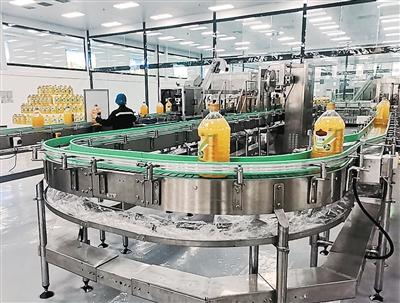
Core Viewpoint - The establishment of a fully closed-off Hainan Free Trade Port on December 18, 2025, marks a significant milestone in China's opening-up process, enhancing the region's economic landscape and regulatory framework [4][5]. Group 1: Regulatory Changes and Operations - The operational framework of the closed-off port will feature a "one line open, one line manage, and island-wide freedom" regulatory system, allowing for free movement of goods while maintaining strict controls on imports from the mainland [6]. - Eight open ports and ten "second line" ports will facilitate a highly open space for various elements to flow freely, enhancing trade efficiency [6]. - Advanced inspection technologies and streamlined processes at key ports are expected to manage increased traffic effectively, with initial estimates of 2,000 vehicles per day at the main cargo ports [6]. Group 2: Economic Opportunities and Industry Growth - The range of "zero tariff" goods will expand from 1,900 to approximately 6,600 tax items, covering about 74% of all goods, significantly increasing the region's attractiveness for trade [8]. - The aviation maintenance sector is poised for growth, with a projected passenger throughput of over 50 million by 2025, benefiting from zero tariffs on imported materials and a capped corporate tax rate of 15% [7]. - The Hainan Free Trade Port is expected to provide a 10% to 15% cost advantage for aircraft maintenance compared to other regions, attracting international airlines to establish operations [7][8]. Group 3: Agricultural and Manufacturing Developments - The closed-off port is anticipated to open new opportunities for the processing and manufacturing sectors, particularly in the agricultural industry, with companies like Hainan Oscar International Grain and Oil Co. benefiting from tax exemptions and increased production capabilities [9][10]. - The company reported a total output value exceeding 4.8 billion yuan in 2023, with expectations to reach 5.9 billion yuan in 2024, largely due to favorable policies from the Free Trade Port [10]. - The processing of imported agricultural products is expected to thrive, with the company exploring international markets and benefiting from the region's strategic location [11]. Group 4: Safety and Quality Control Measures - The establishment of a special customs regulatory area is crucial for ensuring effective oversight and maintaining public health and safety standards [12]. - Advanced facilities and technologies are being implemented to enhance quarantine and inspection capabilities, ensuring the safety of imported goods [13][14]. - The customs authority has reported significant increases in the volume and value of inspected goods, indicating a robust framework for managing the influx of products post-closure [13].

金融便利、外资落户、产业扩围,海南自贸港打造制度型开放样板
2 1 Shi Ji Jing Ji Bao Dao· 2025-12-22 11:01
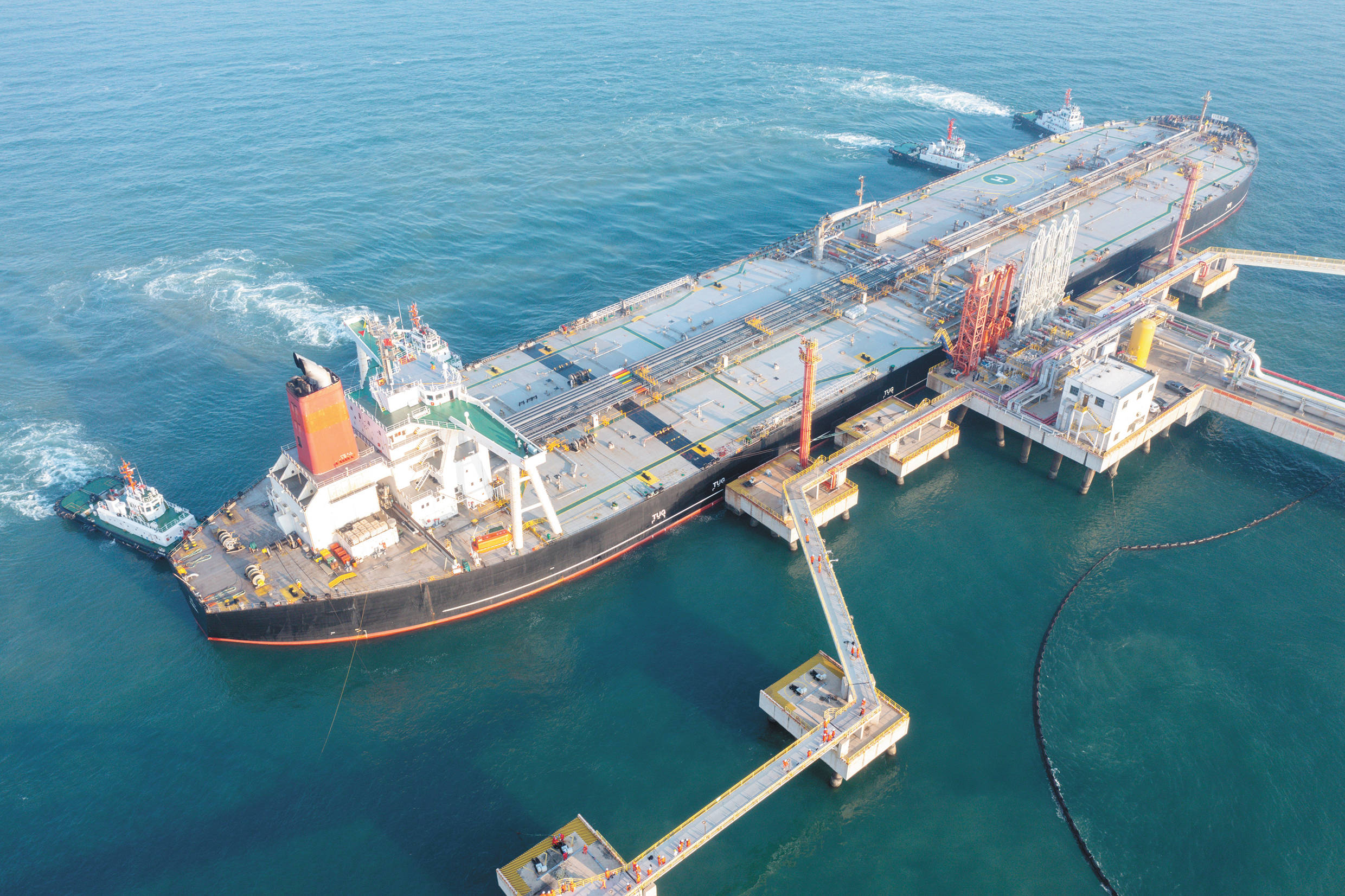
Group 1: Core Insights - Hainan Free Trade Port officially commenced its closure operation on December 18, establishing a customs supervision special area with a policy framework characterized by "one line open, one line controlled, and free movement within the island" [1] - The operation marks a systemic transformation aimed at institutional restructuring, industrial upgrading, and improving people's livelihoods, while also exploring high-level forms of openness [1] - The "14th Five-Year Plan" emphasizes the high-standard construction of Hainan Free Trade Port, focusing on trade and investment liberalization and facilitation [1] Group 2: Financial Infrastructure and Cross-Border Capital - A multi-functional free trade account system is being established to facilitate cross-border capital flow, with banks viewing the closure as a historical opportunity for business in cross-border settlement and trade financing [2] - The EF account, launched in May 2024, has gained attention, with 729 accounts opened by 11 banks in Hainan, facilitating transactions worth RMB 295 billion by November 2025 [2] - The EF account enhances the efficiency of fund transfers between domestic and foreign accounts, significantly improving the convenience of cross-border trade and investment [3][4] Group 3: Business Environment and Investment Attraction - Hainan's continuous optimization of the business environment has attracted numerous enterprises, with 26 signed investment projects totaling approximately RMB 37 billion since July [5] - Siemens Energy commenced construction of a gas turbine assembly base in Hainan, marking a shift from a "technology provision model" to an "industry co-construction model" [5] - Major companies like LONGi Green Energy and Geely Holding have established international trade investment headquarters in Hainan, enhancing overseas business development [6] Group 4: Zero Tariff Policy and Trade Facilitation - The zero-tariff policy has been upgraded, expanding the coverage from 1,900 to 6,637 tax items, increasing the coverage rate from 21% to 74%, benefiting various enterprises across the island [9][11] - On the first day of closure, Hainan's customs supervised zero-tariff imports valued at RMB 360 million, primarily consisting of crude oil and aviation materials [11] - The processing value-added tax exemption policy has significantly reduced costs for companies, enhancing their market competitiveness [11][12] Group 5: Future Development and Strategic Focus - The focus for Hainan's future development includes promoting trade and investment liberalization, enhancing cross-border capital flow, and improving the business environment [12][13] - The establishment of a stable, transparent, and predictable institutional system is crucial for attracting global high-end resources [13] - Hainan aims to become a strategic hub for economic cooperation between China and ASEAN, with ongoing efforts to deepen financial openness and attract foreign investment [5][12]
海南会成为下一个新加坡吗?不,海南将成为整个东南亚的贸易中心
Sou Hu Cai Jing· 2025-12-22 03:08
Core Viewpoint - The official launch of the Hainan Free Trade Port on December 18 marks a significant milestone in China's reform and opening-up, symbolizing a new starting point for higher-level openness [1][3]. Group 1: Policy Changes - Hainan will implement a "one line open, two lines controlled, and free within the island" policy, significantly reducing trade barriers with the world, with approximately 74% of goods enjoying zero tariffs, expanding from over 1,900 to over 6,600 tax items [3][5]. - Goods processed in Hainan with over 30% added value can enter the mainland market tax-free, altering the business calculations for companies [5][10]. - The tax rate for corporate and personal income tax in Hainan is uniformly set at 15%, making it more competitive compared to Singapore [10]. Group 2: Trade Dynamics - Hainan's closure is reshaping regional trade flows, transitioning from a "single hub transit" model to a more efficient "multi-center complementary" model [10][12]. - The proportion of goods imported from Southeast Asia to China via Singapore is projected to drop from 82% in 2015 to 45% by 2025, as goods can now be directly shipped to Hainan [12][14]. - Hainan is fostering a new trade path of "Southeast Asian raw materials—Hainan processing—mainland distribution," enhancing trade efficiency [12][14]. Group 3: Economic Opportunities - The Hainan Free Trade Port is attracting global companies to establish high-value production segments, with zero-tariff imports valued at 27.06 billion yuan and tax reductions of 5.09 billion yuan by September 2025 [14][19]. - Hainan's geographical advantage allows for a 4-hour flight radius covering 21 countries and regions, and an 8-hour radius encompassing 67% of the global population, providing unique conditions for industries like aviation logistics and high-end manufacturing [21][23]. - The adjustment of the duty-free policy allows residents to purchase a wider range of imported products, with duty-free sales exceeding 1.5 billion yuan since the new policy implementation [21][23].
海南封关:不止是贸易自由港,更是真实世界资产(RWA)的数字化密钥
Sou Hu Cai Jing· 2025-12-20 12:43
Core Insights - Hainan Free Trade Port's zero-tariff policy, technological innovation, and unique circulation control model are positioning the island as a global hub connecting the real world with digital assets [1][10] - The official launch of the full island closure operation on December 18, 2025, marks a significant step in China's high-level opening-up strategy and the beginning of a new chapter in Hainan's free trade port development [2] Digital Asset Transformation - The closure brings more than just tax-free shopping; it signifies a profound transformation in asset forms, with a new ecosystem centered on the digitization of real-world assets (RWA) quietly emerging [3][10] - RWA refers to the process of digitally mapping valuable tangible or intangible assets through blockchain technology, creating digital certificates that can be issued, traded, and managed on the blockchain [5] Policy Framework and RWA Development - Hainan's post-closure policy framework of "one line open, two lines controlled, and free movement within the island" aligns perfectly with the core needs of RWA development [5] - The zero-tariff policy has expanded significantly, covering 74% of tax items, up from 21%, reducing the holding costs of high-value physical assets and providing more valuable targets for RWA [5] Industry Opportunities - The unique policy environment in Hainan offers fertile ground for asset digitization across multiple industries, addressing traditional challenges such as financing difficulties and slow circulation [7] - The cross-border trade and logistics sector stands to benefit significantly, as the free trade policies facilitate the conversion of assets like warehouse receipts and accounts receivable into blockchain tokens, easing financing for SMEs [7] Future Applications and Market Growth - RWA is expected to create innovative application scenarios, such as digital rights for patented technologies and fractional ownership of rare imported artworks, enabling ordinary investors to participate [9] - The global RWA market is experiencing explosive growth, with on-chain RWA stock reaching approximately $30.23 billion by September 2025, indicating a rapid upward trend [9] Conclusion - Hainan's closure opens the door to the globalization of asset digitization, representing a critical step in China's exploration of deep integration between the digital economy and the real economy, while providing a development path for the global RWA wave that combines Chinese characteristics with a global perspective [10]

人民眼·海南自贸港丨全岛封关第一天
Ren Min Ri Bao· 2025-12-19 05:12
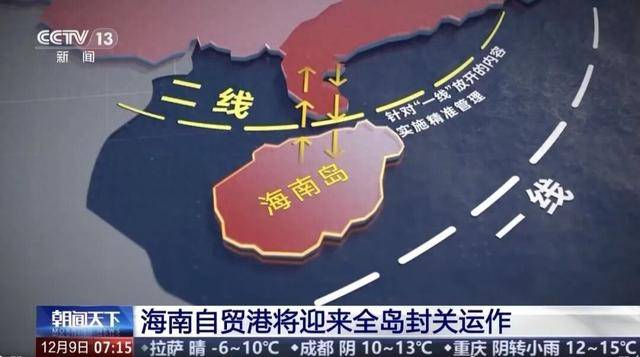
Core Viewpoint - Hainan Free Trade Port has officially launched its full island closure, marking a significant milestone in China's new era of opening up to the outside world, with a focus on high-level international trade facilitation and regulatory innovation [1][3]. Group 1: "One Line" Opening - The "One Line" policy allows for the relaxation of various restrictions and simplification of procedures, aligning with international high-standard trade rules [4][6]. - The number of visa-free countries for entry into Hainan has more than doubled since 2018, with significant increases in individual visa-free entry policies [6][8]. - As of November 30, 2023, the number of inbound foreign visitors to Hainan reached 1.294 million, a year-on-year increase of 44.5%, with a notable rise in business-related entries [8]. Group 2: "Zero Tariff" Policy - The first batch of "zero tariff" petrochemical raw materials arrived at Yangpu Port, valued at nearly 400 million yuan, saving enterprises nearly 10 million yuan in import costs compared to pre-closure [9]. - The range of "zero tariff" goods has expanded from over 1,900 tax items before closure to 6,600 tax items, increasing the proportion from 21% to 74% of all goods [9]. Group 3: "Two Lines" Management - The "Two Lines" management system aims to balance trade facilitation and regulatory oversight, with significant testing and preparation conducted prior to the closure [12][14]. - On the first day of closure, a truck carrying processed goods passed through customs in just 2 minutes, demonstrating the efficiency of the new management system [13][14]. Group 4: Domestic Freedom - Hainan's Free Trade Port is fostering a vibrant business environment, with companies like CRRC International Vehicle Industry (Hainan) Co., Ltd. leading in bonded maintenance services for automotive engines [21][22]. - The implementation of "immediate purchase and pick-up" policies has significantly enhanced consumer experience, allowing local residents to benefit from duty-free shopping [25][29]. - The logistics efficiency for duty-free goods has improved by over 60% due to innovative customs procedures, facilitating faster movement of goods [30].

财经观察:政策利好,海南新型产业瞄向全球市场
Sou Hu Cai Jing· 2025-12-18 23:03
Core Viewpoint - The official launch of the Hainan Free Trade Port's full island closure on the 18th is expected to inject new vitality into enterprises through various favorable policies, such as "processing value-added over 30% exempt from tariffs" and "zero tariffs" for new industries like aircraft and yacht maintenance [1][3]. Group 1: Policy Implications - The full island closure marks the beginning of a new phase in Hainan's Free Trade Port construction, creating a "convenient gateway" to the global market and forming new economic growth points [3]. - The "first line" policy allows for "zero tariffs" on imported goods and relaxed trade management measures, enhancing the efficiency of foreign trade and supporting high-quality industrial development [3][4]. - The "second line" policy regulates the flow of goods to the mainland through designated ports, ensuring effective supervision and risk control [4][5]. Group 2: Economic Growth and Industry Development - The Yangpu Economic Development Zone is prioritized for policy implementation, serving as a testing ground for new measures before broader application [5]. - Companies like Auscar International Grain and Oil Co., which have benefited from the "processing value-added 30% exempt from tariffs" policy, illustrate the potential for significant economic growth and reinvestment in R&D [5][6]. - The aviation maintenance industry in Hainan is experiencing rapid growth, with a projected increase in aircraft maintenance volume due to geographical and policy advantages, including "zero tariffs" on maintenance materials [7][8]. Group 3: Sector-Specific Insights - The yacht industry is also poised for growth, with "zero tariffs" on certain components reducing maintenance costs and attracting vessels from Southeast Asia for repairs [9]. - The optimization of customs regulations for yachts, including a single-window declaration process, significantly enhances the customer experience and operational efficiency [9]. - The overall development of Hainan's Free Trade Port is expected to transform the yacht industry from a tourism experience to a comprehensive ecosystem encompassing manufacturing, maintenance, training, and events [9].
全岛封关第一天(人民眼·海南自贸港)
Ren Min Ri Bao· 2025-12-18 22:17
Core Viewpoint - Hainan Free Trade Port has officially launched its full island customs closure, marking a significant milestone in China's high-level opening-up strategy, with a focus on facilitating trade and investment while maintaining regulatory oversight [7][40]. Group 1: Customs Closure Implementation - The customs closure defines Hainan Island as a special customs supervision area, allowing for a unique regulatory framework that promotes high-level openness while ensuring control [8][9]. - The first day of customs closure saw significant operational readiness across various points, including airports and ports, demonstrating the effectiveness of prior preparations [9]. Group 2: "One Line" and "Two Lines" Concept - The "One Line" approach allows for the relaxation of restrictions and simplification of procedures, aligning with international trade standards, facilitating the entry of international flights and tourists [10][12]. - The "Two Lines" concept involves strict management of goods and personnel flow between the free trade port and the mainland, ensuring a balance between trade facilitation and regulatory oversight [20][21]. Group 3: Trade and Investment Opportunities - The number of countries eligible for visa-free entry to Hainan has more than doubled since 2018, with 86 countries now able to enter without a visa, significantly boosting tourism and business travel [12][14][16]. - The introduction of "zero tariff" policies for certain goods has reduced import costs for businesses, with the range of zero-tariff items expanding from over 1,900 to 6,600, covering 74% of all goods [17][18]. Group 4: Infrastructure and Operational Efficiency - The new customs facilities at Hainan's ports are designed to handle a high volume of traffic, with the capacity to process over 170 million vehicles and 44 million tons of goods annually [23]. - Innovations in customs procedures have led to a significant reduction in processing times, with average clearance times for travelers decreasing by 30 seconds and overall efficiency improving by over 30% [15][21]. Group 5: Consumer Impact and Market Growth - The implementation of new duty-free shopping policies has increased consumer spending, with duty-free shopping amounts reaching 23.8 billion yuan, a 27.1% increase year-on-year [38]. - The expansion of duty-free product categories and the introduction of "immediate purchase and pick-up" policies have enhanced consumer experience and engagement, particularly among local residents [36][38].

新海航海航技术:做实自贸港飞机维修产业,封关之下“链”就全球竞争力
Zhong Guo Min Hang Wang· 2025-12-18 06:15
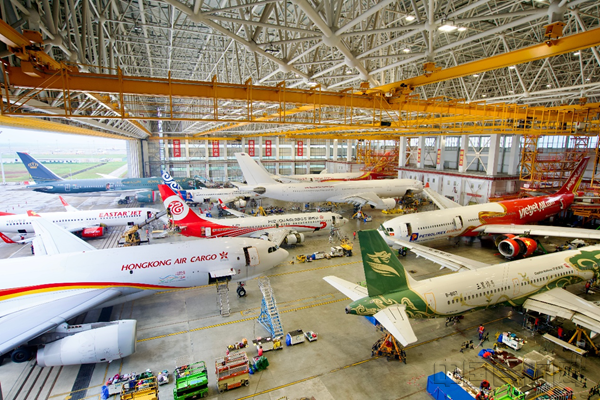
Core Viewpoint - The launch of the "Hainan Free Trade Port" themed aircraft marks a significant milestone for Hainan's aviation maintenance industry, coinciding with the full operation of the free trade port, enhancing its attractiveness as a regional international aviation maintenance hub [1][3]. Group 1: Company Developments - HNA Technology has completed several notable international maintenance projects, including modifications and painting services for aircraft from Jordan Royal Airlines and Korean Air [1][3]. - The company has established a comprehensive maintenance service system at the Hainan Free Trade Port, covering aircraft component maintenance, painting, and inspections, significantly reducing turnaround times for clients [5][6]. - HNA Technology has received multiple maintenance licenses from various international aviation authorities, enhancing its global service capabilities [6]. Group 2: Market Position and Clientele - HNA Technology has serviced over 2,400 aircraft and 300 complete paint jobs by November 2025, attracting nearly 50 domestic and international airlines, with many foreign companies becoming repeat customers [7][9]. - The company has gained a strong reputation among international airlines, with clients like VietJet Air and Qatar Airways praising its efficient and high-quality services [9][11]. - A significant contract with Qatar Airways for nearly 100 million RMB in painting services over three years highlights the company's growing market presence [11]. Group 3: Strategic Initiatives - HNA Technology is leveraging the advantages of the Hainan Free Trade Port to enhance its market competitiveness and service capabilities, including the introduction of a consignment warehouse for aviation parts [13][14]. - The company has received approval for exporting aviation parts, which will streamline operations and enhance its competitive edge in the aircraft maintenance sector [13]. - Future plans include expanding service offerings to cover a wider range of aircraft types and enhancing capabilities in composite material repairs and APU maintenance [15].
海南封关倒计时,全球航司为何排队来这里修飞机?
新华网财经· 2025-12-17 00:56
Core Viewpoint - The Hainan Free Trade Port is set to officially launch its island-wide customs closure on December 18, which is expected to significantly boost the aircraft maintenance industry, attracting global airlines and increasing international flight routes [2][11]. Group 1: Aircraft Maintenance Industry Growth - The aircraft maintenance industry in Hainan has seen unprecedented growth, with the value of aircraft maintenance under customs supervision at Haikou Meilan Airport increasing by nearly 70% year-on-year in the first 11 months of this year [2]. - The one-stop aircraft maintenance base in Haikou has serviced over 2,400 aircraft this year, indicating a strong demand for maintenance services [5]. - The base has already filled its business capacity for the next three years, with an expected annual maintenance volume of around 700 aircraft post-customs closure [7]. Group 2: Advantages of Hainan Free Trade Port - Hainan's geographical advantage allows a 4-hour flight radius to cover 21 countries and regions, reaching 47% of the global population, while an 8-hour radius extends to 59 countries and 67% of the population [9]. - The policy advantages of the free trade port enable foreign airlines to save 10% to 15% on maintenance costs through tax exemptions and the ability to store maintenance materials in advance, reducing waiting times for parts by 2 to 3 months [9]. Group 3: Customs and Tax Policies - The customs closure will expand the range of "zero tariff" goods from 1,900 to approximately 6,600 tax items, covering about 74% of all goods, which is an increase of nearly 53 percentage points compared to before the closure [11]. - The management of imported "zero tariff" goods will shift to a negative list model, replacing the previous positive list approach [11]. Group 4: Air Rights Expansion - Hainan is the only province in China that has proactively opened up fifth and seventh freedom rights, with 14 fifth freedom routes already established [14]. - Following the customs closure, the seventh freedom rights will be fully opened, allowing foreign airlines to operate routes from Hainan to third countries independently [14]. - New international cargo routes have been added since September, enhancing the air economic corridor between Hainan and Europe and the Middle East [16].