蛋鸡养殖

Search documents
期货赋能 贵州鸡蛋产业发展走上“高速路”
Qi Huo Ri Bao Wang· 2025-10-22 01:47
Core Insights - The establishment of Guizhou Fenghexiang Agricultural Development Co., Ltd. as a designated warehouse for egg futures marks a significant advancement for the egg production industry in Guizhou, facilitating direct access to the national futures market [1][2] Group 1: Industry Transformation - Guizhou has become a leader in the large-scale transformation of egg production, with a scale rate of 91.6%, surpassing the national average by 7 percentage points [2] - Fenghexiang is the only national leading enterprise in egg production in Guizhou, with a capacity of 1 million hens and an annual output of over 20,000 tons of eggs [2][4] - The establishment of the delivery warehouse will accelerate the standardization and grading of eggs in Guizhou, enhancing quality consistency and enabling local producers to meet national market standards [5][6] Group 2: Risk Management and Price Stability - The approval of the delivery warehouse allows Fenghexiang to integrate its standardized egg products into the futures delivery system, utilizing futures for price discovery and risk management [3][7] - The local delivery warehouse reduces transportation costs and improves response times for hedging operations, significantly mitigating profit losses due to price fluctuations [4][8] - The warehouse will serve as a regional price risk buffer, allowing for strategic inventory management during price downturns and shortages [4][8] Group 3: Financial Integration and Market Access - The integration of futures and spot markets will create a multi-layered risk management system for the egg industry in Guizhou, enhancing resilience against market volatility [8] - The use of financial tools such as basis trading and warehouse financing will help enterprises lock in profits and connect with larger markets, facilitating a full-chain upgrade from production to sales [7][8] - The financial empowerment through futures trading is expected to drive agricultural modernization and support rural revitalization in Guizhou, establishing it as a poultry industry hub [8]
价格锚点+风险管理+资源整合 期货赋能贵州鸡蛋产业发展走上“高速路”
Qi Huo Ri Bao Wang· 2025-10-21 16:12
Core Viewpoint - The establishment of Guizhou Fenghexiang Agricultural Development Co., Ltd. as a designated warehouse for egg futures marks a significant advancement for the egg production industry in Guizhou, facilitating direct access to the national futures market and enhancing the overall industry structure [1][2]. Group 1: Company Overview - Guizhou Fenghexiang is a comprehensive modern agricultural enterprise engaged in egg production, feed processing, and organic fertilizer production, with a scale of 1 million laying hens and an annual egg production of over 20,000 tons [2][4]. - The company has achieved a production value of 240 million yuan, benefiting from its advantageous geographical and natural resources since its establishment in 2019 [2][4]. Group 2: Industry Impact - Guizhou province leads the nation in the scale of egg production, with a 91.6% scale rate, which is 7 percentage points higher than the national average [2]. - The establishment of the delivery warehouse is expected to enhance the standardization and grading of eggs in Guizhou, promoting a shift from rough handling to refined grading [5][6]. Group 3: Risk Management and Futures Integration - The approval of the delivery warehouse allows Fenghexiang to integrate its standardized egg products into the futures delivery system, enabling better price risk management and operational stability [3][7]. - The company plans to implement a "price guarantee and delivery" model to assist small and medium-sized producers in stabilizing their income during price downturns [3][6]. Group 4: Future Strategies - Fenghexiang aims to deepen its "futures and spot combination" strategy, utilizing the delivery warehouse to capture regional basis patterns and lock in future sales profits [6][7]. - The company will also explore the use of futures and options to create price insurance, enhancing its competitive edge in a low-margin environment [6][7]. Group 5: Broader Market Implications - The integration of the futures market provides Guizhou's egg industry with a "price anchor, risk management, and resource integration," enhancing the brand value of local products [7][8]. - The establishment of a multi-layered risk management system will help the Guizhou egg market withstand market fluctuations and connect to larger national markets [8].
银河期货鸡蛋日报-20251020
Yin He Qi Huo· 2025-10-20 11:20
1. Report Industry Investment Rating No information is provided in the report regarding the industry investment rating. 2. Core View of the Report The supply of laying hens remains at a high level, with the national inventory of laying hens in September reaching 1.368 billion, higher than expected. The demand is generally weak. In the short - term, without significant improvement, egg prices are expected to be weak. Near - month contracts are likely to oscillate weakly, and one can consider short - selling near - month contracts at high prices [9]. 3. Summary According to Related Catalogs 3.1 Fundamental Information - **Egg Price**: The average price of eggs in the main producing areas is 2.8 yuan/jin, down 0.07 yuan/jin from the previous trading day, and the average price in the main selling areas is 3.09 yuan/jin, down 0.03 yuan/jin. Most of the mainstream egg prices across the country have declined [6]. - **Laying Hen Inventory**: In September, the national inventory of laying hens was 1.368 billion, an increase of 30 million from the previous month and a 6% year - on - year increase. The monthly output of laying hen chicks in sample enterprises in September was 39.2 million. It is estimated that the inventory of laying hens from October 2025 to January 2026 will be approximately 1.36 billion, 1.36 billion, 1.356 billion, and 1.347 billion respectively [7]. - **Hen Culling**: In the week of October 16, the number of culled hens in the main producing areas was 20.32 million, a 2.8% increase from the previous week. The average culling age was 499 days, the same as the previous week [7]. - **Egg Sales**: As of October 17, the egg sales volume in representative selling areas was 7,374 tons, a 2.7% increase from the previous week [8]. - **Profit**: As of October 17, the weekly average profit per jin of eggs was - 0.3 yuan/jin, a decrease of 0.29 yuan/jin from the previous week. On October 12, the expected profit of laying hen farming was - 0.51 yuan/hen, a decrease of 2.79 yuan/jin from the previous week [8]. - **Inventory**: As of October 17, the average weekly inventory in the production link was 1.05 days, a decrease of 0.45 days from the previous week, and the average weekly inventory in the circulation link was 1.1 days, a decrease of 0.23 days from the previous week [8]. - **Culled Hen Price**: The average price of culled hens in the main producing areas is 4.19 yuan/jin, down 0.06 yuan/jin from the previous trading day [8]. 3.2 Trading Logic The supply of laying hens is high, and the demand is generally weak. Without significant improvement in the short - term, egg prices are expected to be weak, and near - month contracts are likely to oscillate weakly [9]. 3.3 Trading Strategies - **Single - sided**: Consider closing out previous short positions to take profits [10]. - **Arbitrage**: It is recommended to wait and see [10]. - **Options**: It is recommended to wait and see [10].
晓鸣股份(300967) - 300967晓鸣股份投资者关系管理信息20251017
2025-10-17 13:07
Group 1: Company Overview and Strategy - The company aims to optimize the scale, flexibility, and product structure of the egg-laying chicken industry, focusing on sustainable and healthy development [3] - Key business areas include core business of chick production, and star businesses such as young chickens, premix feed, non-cage eggs, and new food products [3] - The company has successfully imported over 60,000 grandparent egg-laying chickens from the U.S. between March and May 2024, marking a significant update to its breeding stock [4] Group 2: Market Trends and Performance - The young chicken industry is experiencing steady growth, with an estimated output of approximately 560 million young chickens in 2024 [5] - The company sold 151.8 million commercial chicks in the first half of 2025, a 63.46% increase year-on-year, with an expected annual capacity of 300 million chicks [8] - The market share for chick products is approximately 25% as of the first half of 2025 [8] Group 3: Financial Insights - Sales revenue fluctuated in September 2025 due to overall supply-demand dynamics in the egg-laying chicken industry, with cautious expectations from breeding units [6] - The egg price experienced seasonal fluctuations, with a notable increase during the Mid-Autumn Festival and National Day, followed by a slight decline due to market adjustments [6] Group 4: Management and Governance - The company is transitioning from a founder-led management model to a professional manager model to enhance governance and operational efficiency [7] - The governance structure aims to separate ownership from management, ensuring clear responsibilities and checks and balances [7] Group 5: ESG and Sustainability Initiatives - The company implements a green development strategy, focusing on resource conservation and environmental protection, while adhering to national and local environmental regulations [7] - Animal welfare is prioritized through a "high-floor flat raising" model, enhancing both animal welfare and production performance [8]
市场快讯:假期蛋价超预期下跌,期货盘面大幅跳空低开
Ge Lin Qi Huo· 2025-10-09 06:50
Report Summary 1) Report Industry Investment Rating - Not provided in the given content 2) Core Viewpoints - In the short - to - medium term, the pattern of strong supply and weak demand persists, pressuring egg prices to decline, with prices in some regions dropping to feed costs. Attention should be paid to the intensity and scale of hen culling driven by low prices [3]. - In the long term, the continuous increase in egg - laying hen farming scale may lengthen the price bottom cycle. Wait patiently for the over - culling in the farming sector to drive the capacity - reduction process [3]. 3) Summary by Related Catalogs Market News - During the holiday, egg prices fell unexpectedly, and the futures market opened with a significant gap down [1]. Spot Performance - During the holiday, the strong supply and weak demand in the egg market pressured egg prices to drop significantly. On October 8, the price of Hebei Guantao pink eggs was 2.49 yuan per jin, a decrease of 0.35 yuan per jin compared to September 30 [3]. Futures Performance - Today, the near - month contract of egg futures opened with a significant gap down. The 2511 contract opened at 2890 yuan per 500 kg, a decline of 4.24%. As of the time of writing, the market was at 2902 yuan per 500 kg, while the far - month contracts were relatively stable [3]. Analysis Logic - Short - to - medium term: The pattern of strong supply and weak demand continues, and egg prices are under pressure to decline, with some areas reaching feed costs. Focus on the intensity and scale of hen culling driven by low prices [3]. - Long term: The continuous increase in egg - laying hen farming scale may lengthen the price bottom cycle. Wait for the over - culling in the farming sector to drive capacity reduction [3]. Trading Strategy - Before the holiday, it was continuously suggested to maintain a short - selling strategy until large - scale concentrated hen culling occurs, and it was recommended to hold previous short positions. - Currently, the Hebei spot price has fallen below 2.5 yuan per jin. It was suggested in today's morning report that the market might open with a gap down, and previous short positions can continue to be held. It is recommended to consider gradually taking profits on dips [3].
10月老母鸡价格或略呈现先抑后扬 但均价仍将下滑
Xin Hua Cai Jing· 2025-09-24 06:21
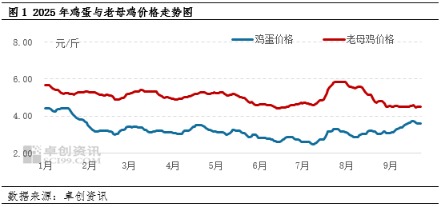
Core Viewpoint - The chicken market in September experienced a divergence between the prices of old hens and eggs due to strong supply and weak demand, with expectations of a slight decline in average prices for old hens in October before a minor rebound [1][6]. Supply Side Analysis - The number of old hens awaiting elimination remained high in October, leading to price pressure, especially in early October due to concentrated slaughtering plans around the Mid-Autumn and National Day holidays [1][6]. - The average monthly slaughter volume of old hens increased by over 11% in September, contributing to significant market pressure [3]. - The total stock of laying hens reached 1.365 billion by the end of August, exceeding normal levels, which, combined with the gradual elimination of older hens, increased supply [3]. Demand Side Analysis - Demand for old hen products was weak, influenced by the economic environment, with many slaughterhouses operating at around 70% capacity and holding frozen inventory, leading to low purchasing intentions [4]. - The presence of alternative protein sources, such as pork and fish, further reduced consumer demand for old hens [4][7]. - A temporary boost in demand is expected in early October due to holiday effects, but overall demand is anticipated to decline post-holidays, limiting price recovery [7]. Price Outlook - The price of old hens is expected to experience a "decline followed by a slight increase" pattern in October, with average prices projected to be between 4.30 and 4.40 yuan per jin, reflecting a slight decrease from September [6][7].

9月蛋鸡养殖扭亏为盈 养殖盈利局面是否昙花一现?
Xin Hua Cai Jing· 2025-09-17 07:01
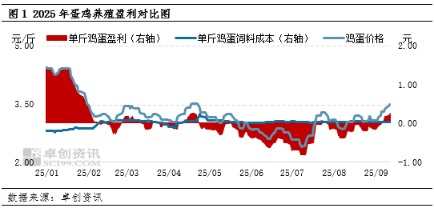
Core Viewpoint - The domestic egg-laying chicken farming industry has transitioned from a loss to profitability in September due to rising egg prices and a slight decrease in costs, but the sustainability of this profitability is uncertain as seasonal demand may weaken towards the end of September and into October [1][3][9] Summary by Sections Profitability Trends - From May to August, the egg-laying chicken farming sector experienced losses, with only a brief period of profitability in late July 2025. However, by early September, profitability was achieved, with an average profit of 0.26 yuan per kilogram of eggs, reversing a loss of 0.13 yuan per kilogram [3][9] - The average profit in September has increased by 0.25 yuan compared to August, marking a significant turnaround from the previous four months of losses [3] Supply and Demand Dynamics - Demand for eggs has increased due to the start of the school year and the upcoming holidays, leading to a notable rise in egg prices, which increased by nearly 13% compared to the average in August [4][9] - Despite high egg supply levels, the demand boost has allowed for profitability in egg-laying operations [3][4] Cost Factors - The cost of feed, a major factor affecting profitability, has slightly decreased, with the average feed cost dropping by 0.01 yuan per kilogram compared to August [6][9] - While corn prices have seen a slight increase, soybean meal prices remain low, contributing to the overall reduction in feed costs [6] Future Outlook - The outlook for the egg-laying industry suggests that while demand may initially support prices, a decline in demand post-holidays could lead to price drops and potential profitability challenges [8][9] - It is anticipated that the average profit margin may compress to between 0.10 and 0.20 yuan per kilogram if demand weakens significantly, with the possibility of returning to losses if conditions do not improve [9]
短期现货拉动鸡蛋期价反弹 何时超淘将成为后市主导因素
Xin Hua Cai Jing· 2025-09-17 06:36
Core Viewpoint - The egg futures market has shown signs of recovery after hitting a low in August, driven by seasonal demand and expectations of culling hens, but the market remains in a prolonged state of competition with high supply pressure and uncertain capacity reduction [1][4]. Group 1: Market Dynamics - As of September 17, the main egg futures contract closed at 3122 yuan per 500 kg, reflecting a slight decrease of 0.32% [1]. - The demand for stocking ahead of the double festival and expectations regarding hen culling have contributed to the recent rebound in prices [1][4]. - The current high inventory of laying hens, which stood at 1.365 billion in August, represents a 5.9% year-on-year increase, indicating persistent supply pressure [2]. Group 2: Production and Cost Factors - The average laying hen cycle has extended to 2-2.5 years, with the current profit cycle lasting 45 months, which is longer than usual [2]. - The feed conversion ratio has improved, with leading farms achieving a ratio below 1.9, while most smallholders maintain a ratio between 2.1 and 2.15 [3]. - Cost control measures, such as the use of alternative feed ingredients, have contributed to maintaining profit margins in egg production [3]. Group 3: Culling and Supply Outlook - The market is experiencing intensified competition, with uncertainty surrounding the timing and extent of hen culling, which is crucial for balancing supply and demand [4][5]. - Current data indicates that the average age of culled hens is around 495 days, suggesting that the market has not yet reached a point of excessive culling [5]. - Projections indicate that the peak supply growth may occur in September, with a potential shift to negative year-on-year growth by December [5]. Group 4: Profitability and Market Sentiment - As of early September, the profitability of egg production has shifted from a loss of 0.13 yuan per kg to a profit of 0.26 yuan, marking a significant turnaround [7]. - The current market sentiment reflects a rebound in prices due to an overload of bearish expectations, rather than a fundamental reversal in the market [7]. - The high inventory levels and existing profitability are likely to hinder rapid capacity reduction in the near term [7].
9-10月蛋鸡盈利可持续性分析:曙光初现or昙花一现?
Xin Lang Cai Jing· 2025-09-17 02:52
Core Viewpoint - The egg production industry has transitioned from a loss to profitability in September due to rising egg prices and a slight decrease in costs, but this profitability may not be sustainable as seasonal demand weakens towards the end of September and into October [1][8]. Group 1: Profitability and Market Dynamics - Egg production turned profitable in September after four months of losses, with the average profit rising to 0.30-0.40 yuan per kilogram by mid-September [1][8]. - The average price of eggs increased significantly, with a cumulative rise of nearly 13% by September 11, driven by heightened demand from schools and food processing companies [3][8]. - The cost of feed ingredients showed a slight decrease, with the average feed cost dropping by 0.01 yuan per kilogram compared to August, contributing to the improved profitability of egg production [5][8]. Group 2: Supply and Demand Factors - The supply of laying hens reached a three-year high at the end of August, but is expected to stabilize or slightly decrease in September, which may exert downward pressure on egg prices [3][7]. - Demand for eggs is expected to rise initially due to school meal programs and pre-holiday stockpiling, but is likely to decline after the holidays, potentially leading to a decrease in egg prices [7][8]. - The market is currently experiencing a balance of high supply and increasing demand, but the seasonal nature of demand suggests that profitability may be temporary [7][8]. Group 3: Future Outlook - The profitability of egg production is characterized as seasonal, with expectations of reduced profit margins to 0.10-0.20 yuan per kilogram as demand weakens and costs stabilize [8]. - The potential for a return to losses in egg production exists if demand significantly decreases post-holiday, indicating that the current profitability may not be sustainable in the long term [8].

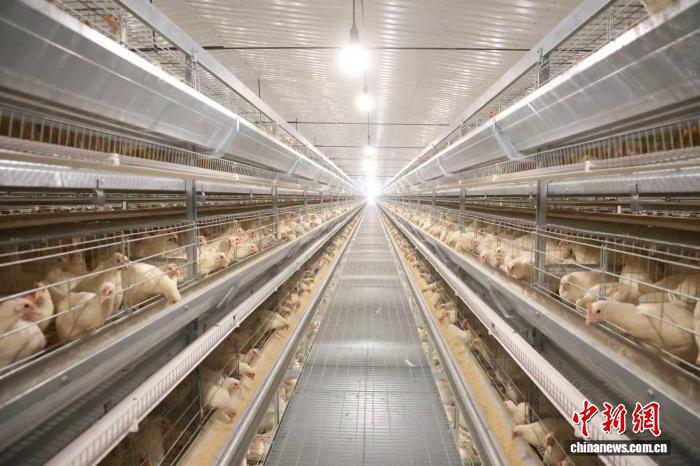
湖南永州冷水滩蛋鸡住进“智能别墅”
Zhong Guo Xin Wen Wang· 2025-09-16 09:15
Core Viewpoint - The intelligent chicken farming project in Yongzhou, Hunan, is accelerating the upgrade of the egg production industry through automation and standardization, leading to increased income for farmers and enhanced agricultural efficiency [1][3]. Group 1: Project Overview - The project involves the construction of "smart villas" for egg-laying hens, featuring automated environmental control, precise feeding systems, and intelligent egg collection [1][2]. - The first phase of the project has a total investment of 60 million yuan, with plans for seven smart egg-laying houses, expected to produce 220 million eggs annually, generating over 120 million yuan in annual revenue and providing over 100 jobs [2][3]. - The first house with 100,000 hens has been put into production, and the second house is currently being equipped, with a total of 600,000 hens planned for full production by the end of the year [2][3]. Group 2: Industry Impact - The chicken farming industry has become a leading sector in modern agriculture in the Cold Water Beach area, supported by policies that strengthen the industry foundation and enhance production efficiency through technological upgrades [3][5]. - Currently, there are over 120 large-scale chicken farms in the Cold Water Beach area, with a total chicken stock exceeding 7 million, producing 7 million eggs daily and generating an annual value of 2.5 billion yuan [5].