
农产品贸易

Search documents
甘肃一季度进出口总值同比增长近五成—— 共建“一带一路”红利渐显
Jing Ji Ri Bao· 2025-05-06 21:55
Core Insights - The successful arrival of a train carrying 1,609 tons of peas from Kazakhstan to Lanzhou demonstrates the effectiveness of the "railway fast customs clearance" model, reducing logistics costs by 30% and completing the journey of over 3,000 kilometers in just four days [1] - Gansu Province has seen significant growth in foreign trade, with a total import and export value of 19.47 billion yuan in the first quarter of this year, marking a year-on-year increase of 49.4%, with imports and exports growing by 50.7% and 45% respectively, ranking second in the nation [1] - Gansu's agricultural products are gaining international traction, exemplified by the rapid export of fresh cherries to the UAE within 24 hours, facilitated by an efficient customs clearance system [1] Industry Developments - Gansu's agricultural sector is leveraging its rich resources to promote local products internationally, with the Lanzhou Customs implementing various supportive measures, including enhancing AEO enterprise cultivation and establishing a "service studio" for agricultural exports [2] - The province's agricultural exports now reach over 90 countries and regions, indicating a successful penetration into international markets [2]
美国30万吨大豆,换上包装出口中国,中方做法太解气
Sou Hu Cai Jing· 2025-05-06 02:01
Core Viewpoint - The article highlights a significant case of trade fraud involving 300,000 tons of "Argentinian soybeans" that were actually sourced from the United States, revealing the complexities and challenges in international trade due to tariffs and technological advancements in customs enforcement [1][3]. Group 1: Trade Fraud Detection - Advanced technology, including near-infrared spectroscopy and blockchain tracing, played a crucial role in uncovering the fraudulent nature of the soybeans, with a protein content of 34.9% indicating U.S. origin, as South American soybeans never exceed 34% [3]. - The cost of "laundering" the origin of the soybeans has surged by 300%, with exporters facing an $8 per ton audit insurance fee and a 30% risk premium on the value of the goods [3]. Group 2: Impact on U.S. Agriculture - The agricultural sector in the U.S. is experiencing severe distress, with 23% of family farms in Iowa seeking bankruptcy protection and a daily decay rate of 0.3% for 24.7 million tons of soybeans stored [5]. - The trade war initiated by the Trump administration has led to a significant decline in support for the current government in key agricultural states, dropping below 40% [5]. Group 3: Consequences for Argentina - Argentina's agricultural sector is facing a crisis, with a 15% reduction in export share due to the rejection of the "problematic soybeans" by Chinese buyers, leading to significant financial losses for farmers [7]. - Farmers in Argentina are forced to sell soybeans at a loss of $120 per ton, and protests have erupted as truck drivers block major highways [7]. Group 4: New Trade Dynamics - China is reshaping trade rules through the implementation of the Cross-Border Data Sovereignty Act, which allows for real-time tracking of global logistics data, effectively replacing traditional credit systems with smart contracts [8][10]. - The deployment of quantum tracking systems is revolutionizing supply chain transparency, allowing for detailed tracing of goods over three years, which poses a challenge to traditional exporters [10]. Group 5: Historical Context and Future Outlook - The situation reflects a historical pattern of trade crises that have led to the rewriting of trade rules, with blockchain technology emerging as a new barrier to trade fraud [11]. - The article emphasizes the need for a collaborative global approach to trade, rather than a zero-sum game, highlighting the plight of farmers in the U.S. and Argentina who are caught in the crossfire of international trade disputes [11].

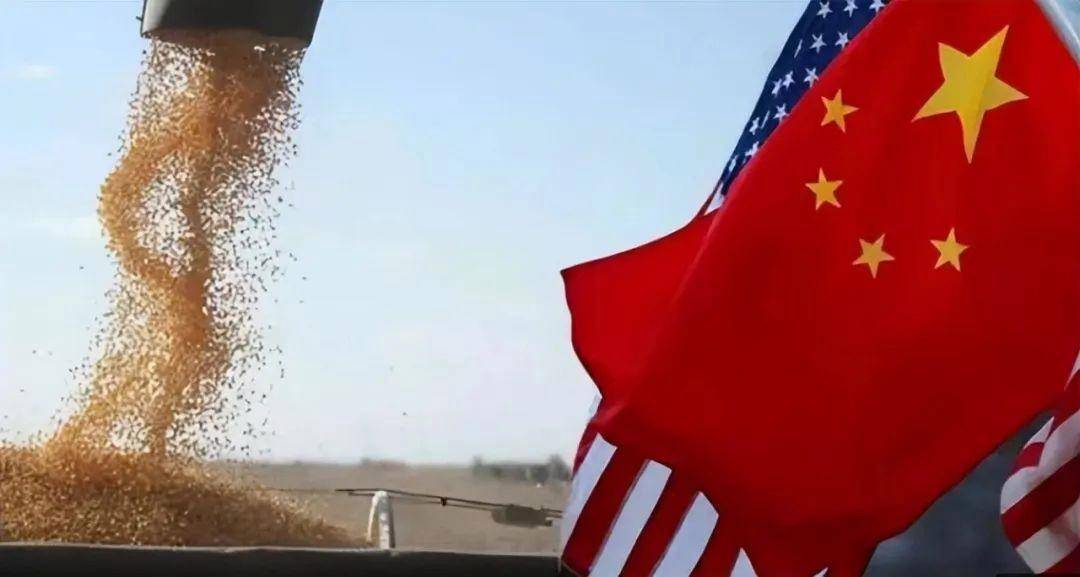
中国大豆市场扛住了美国关税“压力测试”
第一财经· 2025-05-05 13:33
2025.05. 05 本文字数:2779,阅读时长大约4.5分钟 作者 | 第一财经 马晨晨 "我们观察到,目前国内的大豆贸易商与压榨企业正在加速转向巴西采购。仅4月的一周就预订40船 (约240万吨)巴西大豆,集中在5到7月交付。还有一部分企业因为进口成本上升压榨利润缩窄,转 向国产大豆压榨。最近黑龙江等地国产大豆与进口价差已经缩窄至627元/吨,这在一定程度上刺激了 替代需求。"陈义娟分析称。 近日美国农业部公布的数据显示,我国大豆采购量从4月10日当周的7.28万吨骤降至4月17日当周的 仅1800吨,降幅超97%。反观中国大豆市场则表现出较高的韧性。4月上旬,国内豆粕价格出现一轮 明显上涨行情,出厂均价累计涨幅达三成,此后在下旬从高点回落。农业农村部的最新监测数据显 示,4月的第四周,全国豆粕平均价格3.70元/公斤,同比下跌1.1%。预计今年中国大豆进口量为 9460万吨,较3月预测一致,整体市场价格仍在合理区间运行。 为何对外依存度较高的大豆市场能扛住这波"压力测试"?政策工具箱里又有哪些颇有成效的法宝? 中华粮网易达研究院院长张智先告诉第一财经记者,替代、减量和增产是中国大豆市场维持健康发展 ...
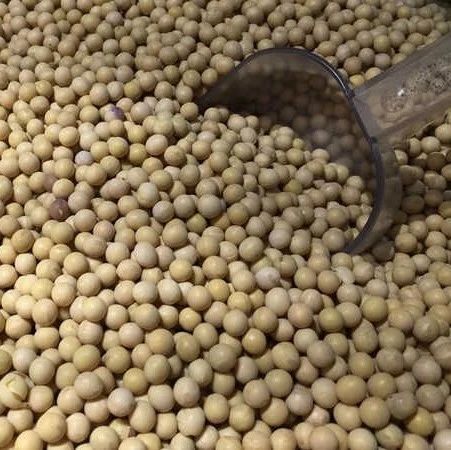
想蒙混过关?30万吨美国大豆披上阿根廷马甲,中国海关技高一筹!
Sou Hu Cai Jing· 2025-05-04 12:57
Core Viewpoint - The article discusses the impact of the US-China trade war on soybean imports, highlighting China's shift from US soybeans to Brazilian sources due to tariffs and trade barriers, resulting in significant losses for American farmers [1][5][40]. Group 1: Trade Dynamics - Following the initiation of the trade war, China reduced imports of US agricultural products, including soybeans, leading to a loss of the Chinese market for the US [1]. - China has turned to Brazil for soybean imports, purchasing at least 240 million tons, making Brazil the largest supplier [5]. - The cost of US soybeans has increased by 600 RMB per ton due to tariffs, eroding their price advantage compared to Brazilian soybeans [7][42]. Group 2: Import Challenges - A shipment of 300,000 tons of soybeans from Argentina was returned by China, indicating strict enforcement of import regulations [3]. - Chinese customs have implemented advanced technology, including a blockchain traceability platform, to monitor the origin of soybeans, ensuring compliance with import standards [22][48]. - Instances of US soybeans being misrepresented as Argentine soybeans have been detected, leading to increased scrutiny and penalties for involved companies [15][28][42]. Group 3: Economic Impact - As of April 25, 2025, the price of imported soybean meal has exceeded 4,200 RMB per ton, reflecting the economic strain on US soybean farmers, with reported income declines of 23% [11][51]. - The US soybean market share in China has plummeted to 15%, while Brazil holds a dominant 70.8% share, indicating a significant shift in trade relationships [40]. - The ongoing trade conflict has led to calls from US farmers for an end to the trade war, highlighting the adverse effects on their livelihoods [12][44].

30万吨美国大豆披上阿根廷马甲,企图混过关,中国海关技高一筹!
Sou Hu Cai Jing· 2025-05-04 11:58
自特朗普发动贸易战以来,美国大豆正在逐渐失去中国市场。早在特朗普第一任期内,中美的贸易战就已经开始了。2017年中国进口美国的大豆有3285万 吨,到了2018年就降至到了1664万吨。 2025年4月,特朗普又对中国加征了关税,这场关税战中美都加征到了125%;如此高的关税下,中美的很多贸易都陷入了暂停。美国出口中国的大豆自然也 被暂停,不过美国那边不死心,居然想靠披上阿根廷和巴西的马甲,企图卖到中国。 不过中国的海关部门,可没有那么好糊弄;2025年4月份,有30万吨标注是阿根廷的大豆,中国海关在查验的时候,发现里边的包装居然是美国产的。于是 中国海关,立即将这批大豆退回了阿根廷。那么下次这批大豆的包装换了,我们还能认出来吗?中国海关还有什么应对的方法? 在本轮贸易战发动前,2024年中国大豆进口量有1.05亿万吨,2024年中国进口美国大豆2213万吨。中国作为大豆消费大国,每年进口的这些大豆主要是用来 榨油和当饲料用。 大豆里蕴含的蛋白质非常高,养殖业最广泛的饲用蛋白来源就是大豆,且目前并没有什么好的替代品;所以中国每年需要进口大量的大豆,来满足国内养殖 业的需求。 中国对美国大豆需求的减少 美国大豆 ...
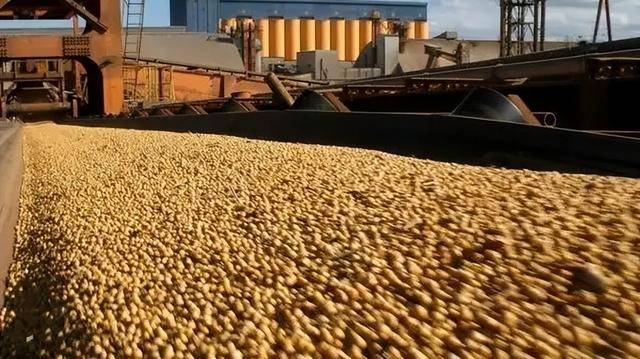
见识到中方的强硬手段后,美方罕见承认犯下大错,中美局势生变?
Sou Hu Cai Jing· 2025-05-04 04:09
Group 1 - The core viewpoint of the articles highlights the significant impact of the trade war initiated by the Trump administration on U.S. agricultural exports, particularly to China, with a notable reduction in soybean and pork imports [1][3][6] - The U.S. Department of Agriculture reported a drastic decrease in Chinese purchases of U.S. pork, with a cancellation of 12,000 tons of orders in one week, marking the largest single-week cancellation since 2020, leading to a 72% drop in total pork exports to China [1] - Additionally, Chinese imports of U.S. soybeans plummeted from 72,800 tons to 1,800 tons, representing a decline of over 97% [1] Group 2 - The articles indicate a shift in the U.S. government's perception of the trade war, with officials acknowledging miscalculations regarding China's response and strength [3][6] - Former U.S. officials have criticized the Trump administration for underestimating China's capabilities and have called for clearer communication channels amid escalating trade tensions [6][8] - The current U.S. administration is described as lacking a unified policy framework towards China, with internal divisions between hardliners and those advocating for constructive cooperation [6][8]

中美大豆暗战升级:阿根廷“套牌”产业链遭区块链溯源一网打尽
Sou Hu Cai Jing· 2025-05-03 21:57
Core Viewpoint - The article highlights a significant trade fraud involving counterfeit Argentine soybeans, revealing the evolving dynamics of global supply chains and the impact of advanced regulatory technologies in international trade [1][3][11]. Group 1: Trade Fraud and Regulatory Response - A cargo ship carrying 300,000 tons of counterfeit Argentine soybeans was intercepted in Qingdao, exposing a scheme where U.S. companies collaborated with Argentine intermediaries to bypass tariffs [1][3]. - In 2024, this "bean laundering" trade led to a 217% increase in Argentine soybean exports to China, while U.S. soybean sales to Argentina surged by 340% during the same period [3][6]. - China's customs implemented a blockchain-based cross-border traceability platform, requiring detailed information from importers, including GPS coordinates and real-time vessel tracking [3][10]. Group 2: Technological Advancements in Trade Regulation - China has developed a DNA database covering crops from 85 countries, enabling precise verification of soybean origins through genetic markers [10][16]. - An AI-based risk prediction model has increased the accuracy of inspections by four times, resulting in a 182% year-on-year increase in the value of seized smuggled agricultural products in 2024 [10][16]. - The combination of blockchain and genetic testing is reshaping the rules of global trade, emphasizing that technological capabilities are becoming critical in trade negotiations [10][16]. Group 3: Economic Implications for Argentina and the U.S. - Argentina faces a dilemma between short-term financial gains and long-term credibility, with a 41% depreciation of the peso and inflation exceeding 210% [8][12]. - The U.S. Department of Agriculture reported that to manage its soybean inventory, the government needs to purchase 4,700 tons daily for biofuel, indicating increasing fiscal pressure [12][16]. - Argentina's reputation is at risk, as repeated violations could lead to import restrictions from China, with the country already on the "watch list" for compliance issues [8][16]. Group 4: Global Trade Dynamics - The incident reflects a broader struggle for international trade influence, with the U.S. attempting to protect its agricultural sector through tariffs, inadvertently prompting China to establish stricter regulatory frameworks [11][14]. - The article suggests that the evolving trade landscape is characterized by a shift from traditional power dynamics to a new order defined by technology and compliance [14][16]. - Countries that fail to adhere to new trade rules may find themselves marginalized, as seen with Argentina's precarious position in the U.S.-China trade rivalry [16].
饲料养殖产业日报-20250430
Chang Jiang Qi Huo· 2025-04-30 02:15
Report Summary 1. Report Industry Investment Rating No industry investment rating is provided in the report. 2. Core Viewpoints - The overall supply - demand situation in the feed and breeding industry is complex, with different products facing various challenges and opportunities. In the short - term, most products show a trend of volatile fluctuations, while in the long - term, the supply and price trends of different products are affected by factors such as production capacity, consumption, and policy [1][2][4]. 3. Summary by Product Pig - **Spot Price**: On April 30, the spot price in Liaoning was 14.3 - 14.9 yuan/kg, in Henan 14.6 - 15.2 yuan/kg, in Sichuan 14.2 - 14.5 yuan/kg, and in Guangdong 15.2 - 16 yuan/kg, all stable compared to the previous day [1]. - **Supply and Demand**: In the short - term, the reduction of supply by large - scale enterprises at the end of the month and the resistance of small farmers support the price, but the increase in supply from secondary fattening and the weak demand limit the price increase. In the long - term, the supply from April to September 2024 will increase, and the supply pressure in the fourth quarter is still large [1]. - **Strategy**: The overall pig price is under pressure, but the decline is limited. Short - term short positions can be gradually stopped for profit, and short positions can be opened on rebounds. Sell out - of - the - money call options on contracts 07 and 09 and take profit partially [1]. Egg - **Spot Price**: On April 30, the price in Shandong Dezhou was 3.1 yuan/jin, and in Beijing 3.39 yuan/jin, both stable compared to the previous day [2]. - **Supply and Demand**: In the short - term, the high price restricts the price increase, but the holiday demand and low inventory support the price. After the holiday, the price may be under pressure. In the long - term, the supply will continue to increase, but the impact of old chicken culling needs to be noted [2]. - **Strategy**: For contract 06, hold a light position during the May Day holiday. Contracts 08 and 09 are considered bearish in the long - term, and pay attention to feed and culling factors [2]. Oil - **Futures Price**: On April 29, the US soybean oil主力 contract 07 fell 2.26% to 49.32 cents/pound, and the Malaysian palm oil主力 contract 07 fell 0.53% to 3940 ringgit/ton [4]. - **Supply and Demand**: For palm oil, the export increased in April, but the production also increased, and the inventory is expected to rise. In China, the supply and demand are both weak in April, but the supply will increase in May. For soybean oil, the South American supply is large in the second quarter, and the domestic supply will increase in the future. For rapeseed oil, the supply in Canada is tight, and the domestic inventory will gradually decrease [4][5][6]. - **Strategy**: Temporarily wait and see for contracts 09 of soybean, palm, and rapeseed oil, and pay attention to the pressure levels [7]. Soybean Meal - **Futures Price**: On April 29, the US soybean 07 contract closed at 1052.5 cents/bushel, and the domestic M2509 contract closed at 2964 yuan/ton [7]. - **Supply and Demand**: In the short - term, the supply will increase with the arrival of soybeans and the increase in oil mill operation rate, and the price will decline. In the long - term, the cost increase and weather factors will drive the price up [7]. - **Strategy**: Short - term: short on rebounds for contract 09. Long - term: long on dips, and pay attention to the support level. Do long - short spreads for the 9 - 1 spread [7]. Corn - **Spot Price**: On April 29, the purchase price at Jinzhou Port was 2250 yuan/ton, up 20 yuan/ton, and the purchase price at Shandong Weifang Xingmao was 2406 yuan/ton, up 20 yuan/ton [7]. - **Supply and Demand**: In the short - term, the supply - demand game intensifies, but the market is optimistic about the future. In the long - term, the production reduction and decrease in imports drive the price up, but the substitutes limit the upside [7]. - **Strategy**: Be bullish in general, wait for dips to go long, and pay attention to the support and pressure levels [7]. 4. Today's Futures Market Overview - The prices of most futures products showed fluctuations. For example, the CBOT soybean active contract fell 8.75 cents/bushel, the soybean meal主力 contract fell 21 yuan/ton, and the CBOT corn active contract fell 12 cents/bushel [8].
ST沪科(600608) - ST沪科2024年年度经营数据公告
2025-04-28 14:14
证券代码:600608 证券简称:ST 沪科 公告编号:临 2025-022 上海宽频科技股份有限公司 2024 年年度经营数据公告 本公司董事会及全体董事保证本公告内容不存在任何虚假记载、误导性陈述 或者重大遗漏,并对其内容的真实性、准确性和完整性承担个别及连带责任。 备注:根据《企业会计准则第 14 号—收入》《监管规则适用指引—会计类第 1 号》的相关规定,报告 期内公司部分"分产品-钛白粉"、"分产品-农产品"业务以净额法确认收入。 二、产销量情况分析表 主要产品 单位 采购量 销售量 库存量 采购量比上 年增减(%) 销售量比 上年增减 库存量比 上年增减 | | | | | | | (%) | (%) | | --- | --- | --- | --- | --- | --- | --- | --- | | 化工产品 | 吨 | 9,632.20 | 10,451.90 | 1,812.49 | -46.68 | -46.72 | -31.14 | | 农产品 | 吨 | 57,660.00 | 55,810.00 | 15,890.00 | 40.79 | 107.36 | 13.18 | 根据 ...

约40艘巴西大豆船本月停靠宁波舟山港
news flash· 2025-04-27 23:33
智通财经4月28日电,最近,美国农业部数据显示,中国从美进口农产品数量锐减。与此同时,多艘巴 西大豆船已靠岸宁波舟山港老塘山作业区。今年4月靠岸巴西大豆船艘次同比增加约48%,减载量增加 约32%。 (玉渊谭天) 约40艘巴西大豆船本月停靠宁波舟山港 ...