可再生能源

Search documents
碳达峰目标实现关键期,绿电何以穿越山海 | 解读“十五五”
Di Yi Cai Jing· 2025-10-29 03:33
Core Viewpoint - The article emphasizes that the "15th Five-Year Plan" period is a critical window for China to achieve its carbon peak by 2030, focusing on a comprehensive green transformation of economic and social development [1]. Energy Transition - The "15th Five-Year Plan" highlights "green development" as a key aspect of Chinese modernization, aiming to achieve carbon peak and carbon neutrality through coordinated efforts in reducing carbon emissions, pollution, and promoting green growth [1][3]. - The plan calls for the construction of a new energy system, increasing the share of renewable energy, and ensuring a reliable and orderly transition from fossil fuels [1][2]. Renewable Energy Development - The plan stresses the importance of a multi-energy approach, including wind, solar, hydro, and nuclear energy, to promote high-quality development of clean energy [2]. - It aims for the majority of new electricity demand by the end of the "15th Five-Year Plan" to be met by new clean energy generation [3]. Carbon Emission Control - The transition from energy consumption control to carbon emission control is highlighted, with a focus on implementing a carbon emission total and intensity control system [4]. - The plan includes specific targets for energy conservation and carbon reduction, aiming to peak coal and oil consumption [4]. Green Industry Growth - The green low-carbon industry is projected to grow significantly, with estimates suggesting a doubling of its scale to approximately 22 trillion yuan in the next five years [6]. - The plan aims to establish around 100 national-level zero-carbon parks, providing substantial growth opportunities for the green low-carbon industry [6]. Circular Economy and Resource Management - The plan emphasizes the importance of resource management and promoting a circular economy, including improving waste classification and resource utilization [6]. - It aims to enhance the green consumption incentive mechanism and promote low-carbon lifestyles [6].
绿色中国2025银川对话会在宁夏银川举行
Zhong Guo Jing Ji Wang· 2025-10-28 06:54
Core Insights - The "Green China 2025 Yinchuan Dialogue" focuses on zero-carbon rural construction, emphasizing the integration of building energy efficiency and renewable energy [1][2] - The event aims to gather various stakeholders to explore replicable and scalable pathways for green transformation in rural areas [1] Group 1: Event Overview - The dialogue was held in Yinchuan, Ningxia, under the theme "Livable Villages, Zero Carbon Future" [1] - It aims to promote the construction of livable and workable beautiful villages by leveraging Ningxia's experiences in zero-carbon rural development [1] Group 2: Key Presentations - Professor Jiang Yi from Tsinghua University highlighted that establishing solar energy-based systems in rural areas is the optimal energy solution for the future [2] - He estimated that China's rural rooftops have the potential to install approximately 2 billion kilowatts of photovoltaic capacity, with a surplus of about 1.5 trillion kilowatt-hours of electricity available for the grid [2] Group 3: Renewable Energy Potential - The utilization of biomass resources such as straw, forestry branches, and livestock manure could meet 40% of the future fuel demand in China [2] - The development of photovoltaic and biomass energy is expected to drive rural industrial revitalization and economic growth, contributing to reducing urban-rural disparities [2] Group 4: Expert Discussions - Experts engaged in discussions on policy guidance, project construction, energy transition, and experience sharing related to building livable rural futures [2] - Participants visited the "Zero Carbon New Village" projects in Funing Village and Xingsheng Village to observe the practical applications of new technologies [2] Group 5: Community Impact - The introduction of new energy systems has improved the economic efficiency and convenience of heating for residents, enhancing their overall quality of life [2]
高端访谈︱国际可再生能源署总干事:“全球能源转型‘最后一公里’的冲刺已然开启”
Sou Hu Cai Jing· 2025-10-28 04:25
Core Insights - The global energy transition is entering a critical phase, referred to as the "last mile" sprint, emphasizing the urgency of accelerating renewable energy deployment [6] Group 1: China's Role in Renewable Energy - China is recognized as a leading force in global energy transition, with the largest investment scale in renewable energy and a complete industrial chain that supplies key equipment at affordable costs [4] - By August 2025, China's total installed capacity for wind and solar energy is expected to exceed 1.69 billion kilowatts, accounting for nearly half of the global clean energy installed capacity [5] - The country has significantly contributed to reducing the costs of wind and solar energy, with decreases of over 60% and 80% respectively [4] Group 2: Global Renewable Energy Deployment - The global deployment of renewable energy is accelerating, with a record addition of 582 gigawatts (GW) expected in 2024 [5] - To meet the Paris Agreement goals, the annual growth rate of global renewable energy installations must increase to 16.6% from 2025 to 2030, aiming for a total of 11.2 terawatts (TW) by 2030 [5] Group 3: Structural Challenges and Recommendations - Three structural barriers need to be addressed to enhance resilience in the renewable energy transition: improving grid infrastructure, reforming legal and market environments, and strengthening human resource capabilities [6] - The global renewable energy sector is projected to add 750 GW in 2025, nearing the targets set by the Paris Agreement [6] Group 4: Upcoming Initiatives and Reports - IRENA is preparing to present action-oriented policy recommendations at COP30, based on the recently released report on tracking progress towards tripling renewable energy capacity by 2030 [7] - A report on biofuels and energy will also be released during the conference, aligning with Brazil's natural resource advantages and focusing on sustainable bioenergy development [8]


高端访谈︱斯洛文尼亚环境气候与能源部部长:“中国合作伙伴可将斯洛文尼亚作为进入欧盟市场的重要门户”
国家能源局· 2025-10-28 02:12
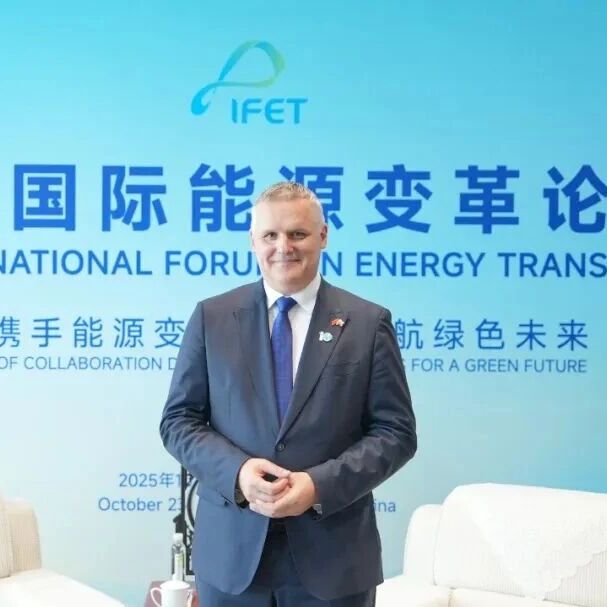
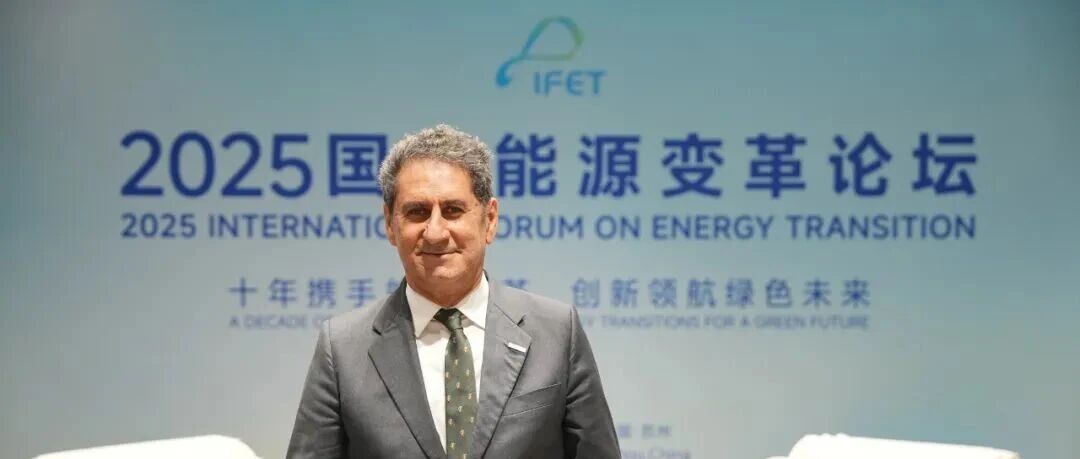
"中国在推动可再生能源发展中展现的卓越领导力,为全球能源绿色转型树立了典范。"10月24日,2025国际能源变革论坛期间,斯洛文尼亚环境 气候与能源部部长博扬·库梅尔(Bojan Kumer)在接受中能传媒记者专访时如是说。 采访中,这位部长不仅阐述了该国实现2045年气候中性的路线图,更向中方传递了明确的合作邀约,他表示:"期待与中方持续加强清洁能源合 作,持续推动中斯关系行稳致远。" 在欧盟能源转型加速推进的背景下,斯洛文尼亚凭借其连接亚得里亚海与中欧的独特区位优势、领先的智能电网技术以及完善的欧盟市场准入体 系,正致力于成为中国新能源企业进军欧洲的"战略支点",为双边绿色合作搭建便捷桥梁。 "中国合作伙伴可将斯洛文尼亚作为进入欧盟市场的重要门户" ——专访斯洛文尼亚环境气候与能源部部长博扬·库梅尔 博扬·库梅尔: 我们过去对电网的大量投入至今仍在发挥作用。虽然斯洛文尼亚能源系统规模较小,但通过融入欧洲统一电力市场,已成为连接亚 得里亚海与中欧的能源走廊,既保障了供应安全,也创造了市场服务机遇。 我们的输电系统服务范围远超本国需求,流经电网的跨境电力远超自身消费,这使我们在欧洲拥有重要的地缘战略地位。 2 ...
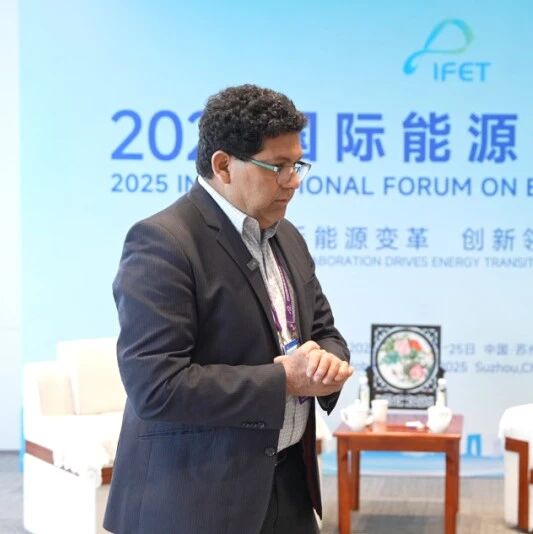
高端访谈︱非洲气候基金会创始人、执行主任:中非携手共促能源转型
国家能源局· 2025-10-28 02:12
Core Viewpoint - The article emphasizes the importance of integrating climate issues with development needs in Africa, highlighting China's role in renewable energy and electric vehicle technology as crucial for global energy transition [3][4]. Group 1: Role of African Climate Foundation - The African Climate Foundation focuses on merging climate issues with development needs, addressing challenges like debt and economic development in Africa [4]. - The foundation aims to enhance Africa's voice in international governance, extending beyond climate to include broader topics like World Trade Organization reforms [4]. Group 2: Progress in Global Energy Transition - Over the past decade, global energy transition has been significantly driven by technology, with China achieving breakthroughs in renewable energy, solar, wind, and electric vehicles [5]. - China's technological innovations have reduced clean energy costs, providing substantial support for global energy transition, with renewable energy capacity exceeding expectations [5]. Group 3: Current Advantages of China-Africa Climate Cooperation - China-Africa cooperation is supported by multilateral frameworks such as the China-Africa Cooperation Forum, the Belt and Road Initiative, and BRICS, which provide institutional guarantees for deepening collaboration [6]. - In the current international context, while traditional partners like the EU and the US focus on internal matters, China and Africa can leverage their complementary advantages to expand market cooperation and jointly promote energy transition [6].
高端访谈︱阿塞拜疆能源部可再生能源署署长:“阿塞拜疆将联手中企启动千兆瓦绿电计划”
国家能源局· 2025-10-28 02:12
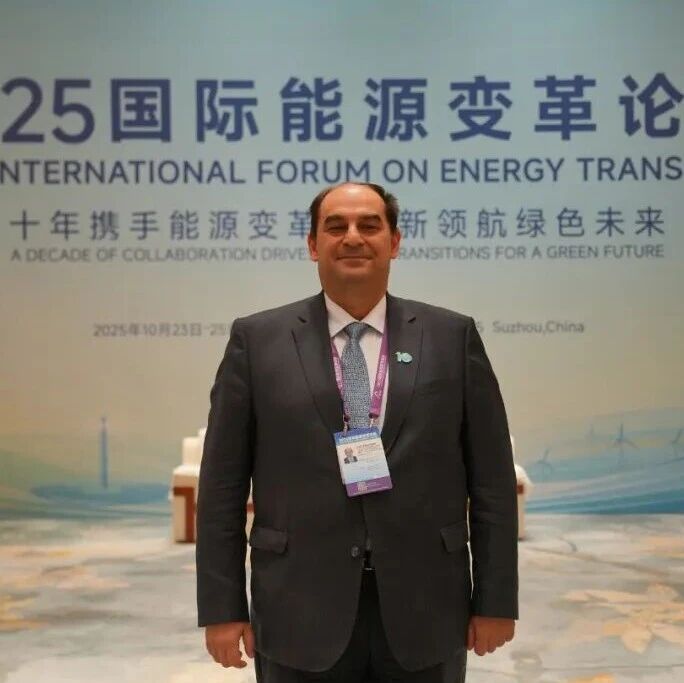
"阿塞拜疆将联手中企启动千兆瓦绿电计划" ——专访阿塞拜疆能源部可再生能源署署长贾维德·阿卜杜拉耶夫 国际合作是破局关键,而中国是我们最重要的合作伙伴之一。目前,阿塞拜疆已与中国能建建立战略伙伴关系,覆盖光伏、海上风电、抽水蓄能 等多领域。并且,与中国大唐、中国电建等企业推进大型可再生能源项目。未来,我们计划与中国企业共同启动总容量至少1000兆瓦的项目, 这既契合阿塞拜疆"绿色能源"战略,也体现两国对低碳未来的共同追求。 ▲ 专访阿塞拜疆能源部可再生能源署署长贾维德·阿卜杜拉耶夫 1 0月24日,2025国际能源变革论坛期间,阿塞拜疆能源部可再生能源署署长贾维德·阿卜杜拉耶夫(Javid Abdullayev)接受中能传媒独家专 访,详解该国作为传统油气出口国的能源转型路径——既直面基础设施改造、体系重建等挑战,又以中阿合作为关键抓手,计划推动中国企业参 与总容量超1000兆瓦的可再生能源项目,并探索向欧洲出口绿电,释放打造欧亚绿色能源枢纽的信号。 在能源转型与能源安全协同推进的进程中,阿塞拜疆如何平衡二者关系?有哪些可分享的实践或政策经验? 贾维德·阿卜杜拉耶夫: 阿塞拜疆正依据总统伊利哈姆・阿利耶夫的战 ...
高端访谈︱国际可再生能源署总干事:“全球能源转型‘最后一公里’的冲刺已然开启”
国家能源局· 2025-10-28 02:12
Core Insights - The global energy transition is entering a critical phase, referred to as the "last mile" sprint, emphasizing the urgency of accelerating renewable energy deployment [2][8]. Group 1: China's Role in Global Energy Transition - China is recognized as a leading force in the global energy transition, with the largest investment scale in renewable energy and a complete industrial chain that supplies affordable solar panels and wind turbine blades [5][6]. - By August 2025, China's total installed capacity for wind and solar energy is expected to exceed 1.69 billion kilowatts, accounting for nearly half of the global clean energy installed capacity [7]. Group 2: Global Renewable Energy Deployment - The global deployment of renewable energy is accelerating, with a record addition of 582 gigawatts (GW) expected in 2024 [7]. - To meet the Paris Agreement's target of increasing global renewable energy capacity to 11.2 terawatts (TW) by 2030, the annual growth rate from 2025 to 2030 needs to rise to 16.6% [7]. Group 3: Structural Challenges and Recommendations - Three structural barriers must be overcome to enhance the resilience of the global renewable energy transition: improving grid infrastructure, reforming legal and market environments, and strengthening human resource development [8]. - The global renewable energy sector is projected to add 750 GW of new capacity in 2025, approaching the pathway targets set by the Paris Agreement [8]. Group 4: Upcoming COP30 Insights - IRENA is prepared to present action-oriented policy recommendations at COP30, based on the recently released report on tracking progress towards tripling renewable energy capacity by 2030 [9]. - A focus on sustainable bioenergy development will be a key topic at COP30, aligning with Brazil's natural resource advantages, with discussions on achieving a fourfold increase in global sustainable bioenergy by 2035 [9].
专访|中国创新生态稳步发展——访世界知识产权组织首席经济学家卡斯滕·芬克
Xin Hua She· 2025-10-27 12:51
Core Insights - China's innovation activities have shown remarkable progress in recent years, supported by government planning and sustained attention to the innovation system [1][2] - The Global Innovation Index 2025 report indicates that China ranks first in several intellectual property-related metrics, including the number of innovation clusters [1] - China has 24 of the world's top 100 innovation clusters, with the Shenzhen-Hong Kong-Guangzhou cluster ranking first globally for the first time [1] Innovation Ecosystem - The development of China's innovation ecosystem is reflected in its progress in intellectual property protection, which is essential for a vibrant innovation system [2] - The increase in patent applications by Chinese companies across various innovation fields indicates a robust innovation environment [2] - The World Intellectual Property Organization (WIPO) aims to measure global innovation performance comprehensively, focusing on factors such as education, R&D spending, financing, and innovation support mechanisms [2] Economic Growth and Innovation - China's ranking in the Global Innovation Index has been steadily rising, reflecting the intrinsic growth of its innovation economy, which is outpacing most other economies [2] - The prioritization of innovation in China's economic development planning, along with resource allocation to scientific and educational systems, is a key factor in its outstanding performance [2]
突发利空,印尼股市暴跌
Zheng Quan Shi Bao· 2025-10-27 12:06
周一(10月27日),印尼股市盘中创下6个多月来的最大跌幅。来自指数编制公司明晟(MSCI)的一份文件引发了对印尼股票权重可能调整的担忧。 周一开盘后,印尼综合指数持续下跌,最大跌幅3.8%;MSCI印尼指数下跌2.52%。 使用KSEI数据的考虑源于其将股东详细分类为公司和个人类别。"尽管如此,KSEI的数据不会直接用于计算股票的自由流通量。"明晟公司补充道。 此外,明晟公司正在探索一种更全面的方法来评估印度尼西亚股票,其中可能包括将以股代息的股票(scrip-based shares)排除在自由流通量计算之外。 作为替代方案,MSCI还考虑将股票股东(scrip shareholders)和公司股东(corporate shareholders)排除在自由流通量计算之外。 分析认为,如果指数最终按照新规则进行调整,预计调整幅度在5%—13%。这意味着跟踪MSCI印度尼西亚指数的基金经理可能需要调整其投资组合持有 量的大约5%—13%。 明晟公司管网显示,跟踪MSCI印尼指数的ETF基金有5只,但没有公布具体规模。 | Ticker | Provider | Name | Product type | In ...

深度关注丨为全球气候治理注入强劲动力
Zhong Yang Ji Wei Guo Jia Jian Wei Wang Zhan· 2025-10-27 09:28
Core Viewpoint - China has announced its new 2035 Nationally Determined Contribution (NDC) targets, marking a significant step in its commitment to climate action and sustainable development, reflecting its ambition to address climate change while balancing economic growth and energy security [5][6][10]. Group 1: Nationally Determined Contribution (NDC) Goals - The new NDC includes a quantitative target to reduce greenhouse gas emissions by 7%-10% from peak levels by 2035, marking the first time a total reduction target has been set [6][7]. - Key quantitative indicators include non-fossil energy consumption accounting for over 30% of total energy consumption, wind and solar power capacity reaching 360 million kilowatts, and forest stock exceeding 24 billion cubic meters [6][7]. - The qualitative indicators emphasize the mainstreaming of new energy vehicles, the coverage of major high-emission industries in the national carbon market, and the establishment of a climate-resilient society [6][7]. Group 2: Climate Adaptation and Resilience - The NDC highlights the establishment of a climate-resilient society, focusing on enhancing the capacity of agriculture and urban infrastructure to cope with extreme weather events [8]. - By 2035, China aims to achieve advanced climate change monitoring and warning capabilities, a mature climate risk management system, and improved societal adaptation to climate change [8]. Group 3: Progress in Green Transition - China has made significant strides in reducing carbon emissions per unit of GDP, with a rapidly growing renewable energy sector that supplies over 80% of global solar components and 70% of wind power equipment [9]. - The country has also implemented substantial upgrades to coal-fired power plants and eliminated nearly 50 million high-emission vehicles, contributing to a stable carbon market that now covers over 60% of national emissions [9]. Group 4: Global Climate Leadership - China's commitment to the new NDC is seen as a strong signal of its role as a key player in global climate governance, providing support to developing countries through technology and funding [10][11]. - The NDC aims to inject confidence into the international community, reinforcing China's position as an active contributor to global climate action [11]. Group 5: Economic and Social Benefits - The implementation of the NDC is expected to generate significant green investment and job opportunities, with projections indicating that the green low-carbon industry could exceed 30 trillion yuan, creating millions of high-quality jobs [22]. - The transition to a green economy is anticipated to reshape industrial structures and stimulate innovation, contributing to sustainable development both domestically and globally [22].