家电制造

Search documents
再获MSCI ESG行业最高评级!海尔智家为何总能位列行业ESG榜首
Jin Tou Wang· 2025-10-17 02:25
Core Insights - Haier Smart Home has been awarded an AA rating by MSCI, marking it as the highest-rated company in the domestic industry for ESG practices [1] - The recognition from multiple authoritative ESG rating agencies, including Refinitiv and Huazheng Index, indicates Haier's strong performance in ESG across various dimensions [1] Group 1: Strategic Integration of ESG - Haier Smart Home integrates ESG as a core strategy, establishing a three-tier governance structure from the board to the execution level [2] - An ESG committee at the board level sets strategic goals and supervises execution, while cross-departmental collaboration ensures the strategy is implemented effectively [2] - ESG metrics are included in performance evaluations, linking them directly to employee incentives, thus embedding ESG into the core business development [2] Group 2: Systematic Green Practices - The company has developed a comprehensive green management model covering the entire product lifecycle from R&D to recycling [3] - Innovative low-carbon products have been launched, such as energy-efficient refrigerators and washing machines that exceed European energy standards by 30% and 70% respectively [3] - Haier operates a low-carbon manufacturing cluster with multiple waste-free and green factories, achieving significant carbon reduction through recycling initiatives [3][4] Group 3: Global Perspective and Inclusive Development - Haier Smart Home fosters a diverse cultural environment with members from over 50 countries, enhancing its global innovation capabilities [5] - The company has received multiple innovation awards, reflecting its commitment to valuing human capital and fostering creativity among its global teams [5] - Haier's social responsibility initiatives include significant contributions to education and community development, reinforcing its role as a responsible corporate citizen [5] Group 4: Pathway to Excellence in ESG - Haier's ESG practices have not only garnered recognition but also established a sustainable growth path centered on long-term value creation [6] - The integration of sustainable development into corporate strategy and operations redefines the standards for long-term-oriented companies [6] - The company's approach emphasizes the creation of economic, environmental, social, and governance value, providing key insights for the industry [6]

不叫“工人”叫“创客”?一起探访全球首座“人才灯塔工厂”
Yang Shi Wang· 2025-10-17 02:12
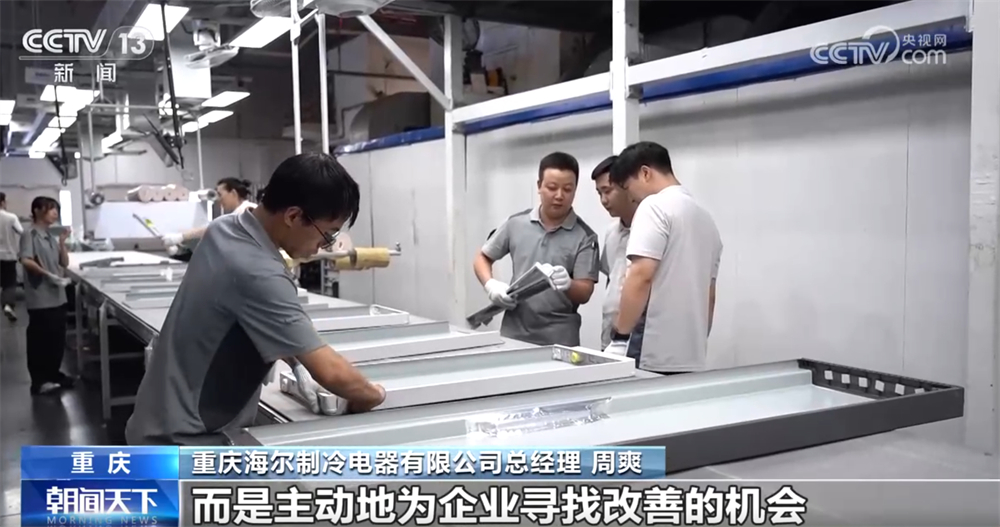
Core Insights - The "Lighthouse Factory" is recognized as the most advanced factory globally, with the Haier Chongqing Refrigerator Internet Factory being awarded the title of the world's first and only "Talent Lighthouse Factory" [1] Group 1: Definition and Concept - The term "Talent Lighthouse Factory" refers to a factory where employees are called "makers" instead of "workers," emphasizing their proactive role in seeking improvement opportunities for the company [1] - The "maker" concept encourages employees to actively address market issues and production challenges, fostering a culture of innovation and engagement [1][7] Group 2: Employee Empowerment and Innovation - The factory employs an incentive mechanism to stimulate employees' creativity in problem-solving, leading to significant improvements in production processes [3] - A career development "AI steward" is provided to employees, offering systematic assessments and tailored job opportunities, which clarifies their career paths and accelerates their growth [5] Group 3: Management Philosophy - The recognition as a "Talent Lighthouse Factory" validates the company's "User-Employee Dual Win" model, which prioritizes user needs and employee demands [7] - The "User-Employee Dual Win" management model aims to create a more robust ecosystem that empowers both employees and the company, facilitating mutual growth and value creation [8]

乐视状告熊猫家电:1495万判决赔偿款难兑现
Guan Cha Zhe Wang· 2025-10-16 10:56
Core Viewpoint - LeEco, once a prominent player in the electronics industry, has resurfaced in the public eye due to a debt collection dispute with a state-owned enterprise subsidiary, Nanjing Zhongdian Panda Home Appliances Co., Ltd. (Panda Home Appliances), which has been accused of asset transfer to evade debts and filing for bankruptcy [1][3]. Group 1: Background of the Dispute - The dispute between LeEco and Panda Home Appliances has been ongoing for five years, primarily revolving around quality issues and compensation related to television manufacturing [3]. - In 2019, LeEco partnered with Panda Home Appliances for LCD TV production, using a payment model that included prepayments and full payment upon delivery, which led to financial disputes [3][5]. - Panda Home Appliances is a subsidiary of the state-owned China Electronics Corporation, responsible for TV manufacturing [3]. Group 2: Quality Issues and Legal Proceedings - Between early 2019 and March 2022, LeEco commissioned Panda Home Appliances to produce 400,000 TVs, totaling nearly 450 million yuan in procurement [5]. - The TVs produced had significant quality issues, with failure rates exceeding contractual thresholds, leading to customer complaints and substantial warranty costs for LeEco [5][6]. - A court ruled that Panda Home Appliances owed LeEco a total of 14.95 million yuan in compensation, but the payment has not been fulfilled due to Panda's financial difficulties [8][11]. Group 3: Corporate Maneuvering and Bankruptcy - Following the court ruling, Panda Home Appliances changed its name to Nanjing Jingye Home Appliances Co., Ltd. shortly after the judgment, raising suspicions of asset concealment [11][12]. - In August 2025, Panda Home Appliances' sibling company filed for bankruptcy, which LeEco views as a strategy to evade the compensation ruling [12][17]. - The rapid progression of the bankruptcy application and the low threshold for filing raise concerns about the legitimacy of the process, especially given the substantial registered capital of Panda Home Appliances [17].

董明珠回应被说霸道:适度的“霸道”是对规则的尊重
Sou Hu Cai Jing· 2025-10-16 08:16
Core Viewpoint - The speech by Dong Mingzhu emphasizes the importance of strict management principles in corporate governance, suggesting that a certain level of "dominance" is necessary to respect rules and ensure effective operations [1][3]. Group 1: Management Philosophy - Dong Mingzhu asserts that in personnel management, considerations of face are irrelevant, and strict requirements are essential [3]. - She acknowledges that while she may be perceived as "domineering," those who interact with her often find her to be quite likable, indicating a distinction between work and casual interactions [3]. - The corporate culture at Gree Electric Appliances is characterized by a principle of "saying what one means and meaning what one says," which she defends against accusations of fostering a "domineering culture" [5]. Group 2: Employee Interaction - During a live broadcast, Dong Mingzhu demonstrated her management style by urging her subordinates to resolve issues promptly, highlighting her expectation for immediate action [5]. - She responded to criticisms regarding her authoritative approach by stating that a louder voice from a manager does not negate their authority, and her employees do not perceive her as domineering [5]. - Dong Mingzhu emphasizes the necessity of addressing irresponsible behavior promptly, reinforcing her commitment to accountability within the organization [5].


泰国“鲁班”培养记
Ren Min Wang· 2025-10-16 07:31
Core Insights - The "Belt and Road Initiative" proposed by President Xi Jinping in 2013 has significantly influenced educational and vocational training collaborations between China and Thailand [2] - The Thailand Luban Workshop, established in 2016, has trained over 2,000 technical skills personnel and supported more than 460 Thai students to study in China, showcasing the initiative's impact on human capital development [2][3] Group 1: Educational Impact - The Luban Workshop adopts a model of "academic education + vocational training," with six programs approved by the Thai Ministry of Education's Vocational Education Commission [2] - Graduates from the Luban Workshop possess advanced technical skills and proficiency in Chinese, making them highly competitive in the job market, often securing higher salaries than local vocational graduates [3] Group 2: Industry Relevance - The Luban Workshop provides a Chinese solution for training technical skills in Thailand, particularly in emerging fields like new energy vehicles, where Thailand has lagged behind [3] - The second phase of the Luban Workshop includes a new energy vehicle technology program, with support from Tianjin Bohai Vocational Technical College in terms of equipment and training for Thai teachers [3]
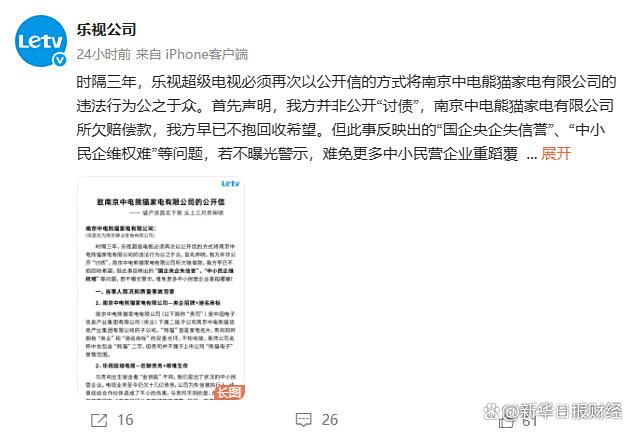
乐视发公开信炮轰中电熊猫 指责其破产清算无下限
Qi Lu Wan Bao· 2025-10-16 06:55
Core Viewpoint - LeEco has publicly accused Nanjing Zhongdian Panda Home Appliances Co., Ltd. of serious quality issues and debt evasion in a letter dated October 13, marking a significant escalation in their ongoing dispute since 2019 [4][5]. Group 1: Quality Issues - LeEco highlighted that the defect rate for two 43-inch models produced by Nanjing Zhongdian Panda reached approximately 80%, significantly exceeding the industry standard of less than 2% and violating the contractual quality standard of 1.8% [5][6]. - The collaboration between LeEco and Nanjing Zhongdian Panda began in 2019, resulting in the production and delivery of 390,000 televisions with a total cooperation amount of 430 million RMB [4][5]. Group 2: Debt Evasion Tactics - LeEco accused Nanjing Zhongdian Panda of employing various tactics to evade debt, including delaying processes, transferring assets, and dismissing employees, which hindered any negotiation channels [5][6]. - Following a court ruling that required Nanjing Zhongdian Panda to compensate LeEco 14.95 million RMB, the company allegedly changed its name to Nanjing Jingye Home Appliances to avoid liability [5][6]. Group 3: Broader Implications - LeEco's public letter serves as a warning about the loss of credibility among state-owned enterprises and the difficulties faced by small and medium-sized private enterprises in protecting their rights [4][6]. - The letter raises three critical questions regarding Nanjing Zhongdian Panda's bankruptcy proceedings, including whether registered capital was fully contributed, the management of state-owned asset value, and the fairness of related party transaction pricing [6].
海尔3大智慧用水方案亮相广交会
Sou Hu Wang· 2025-10-16 05:26
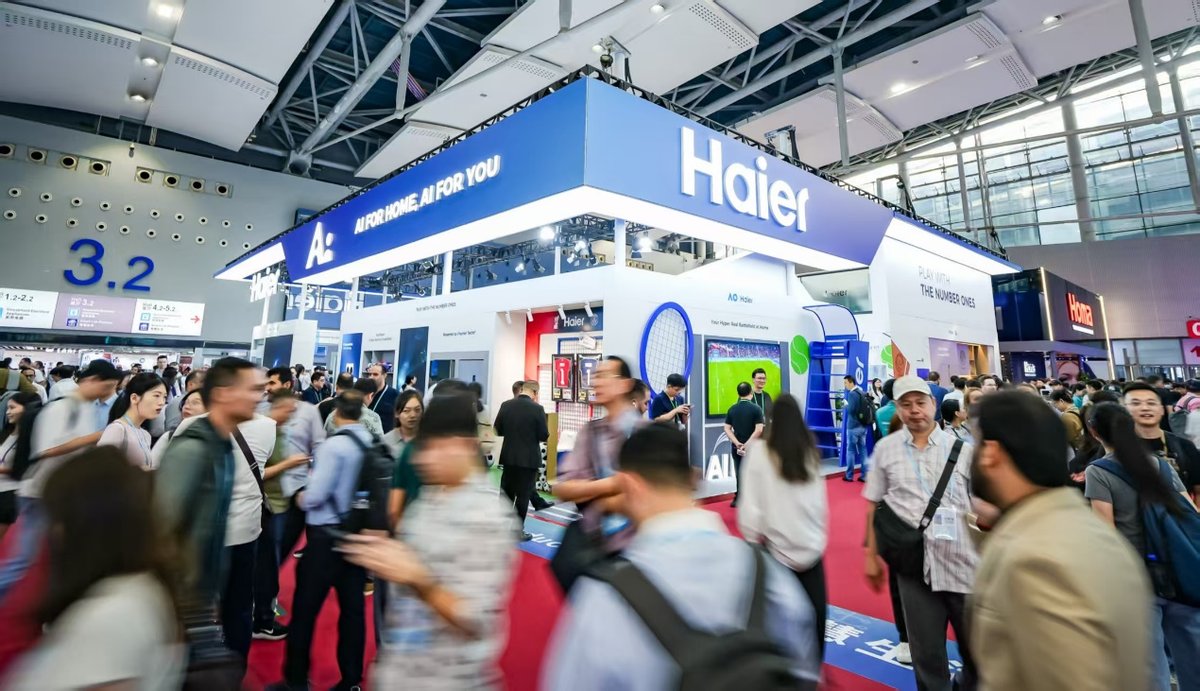
Core Viewpoint - Haier showcases its comprehensive smart water solutions at the 138th China Import and Export Fair, aiming to redefine the home water experience for global users [1] Group 1: Hot Water Solutions - Haier addresses concerns of families with children regarding bathing water quality and maintenance costs by offering a full range of innovative hot water solutions [3] - The electric water heater features high-quality seamless tanks and enamel heating tubes, combined with a BPS sterilization system for safe and healthy water use [3] - The instant heating 4D constant temperature system ensures stable water temperature throughout bathing, enhancing comfort and safety [3] Group 2: Water Purification Solutions - Haier's upgraded water purification products meet diverse instant drinking needs and address health concerns related to household drinking water [6] - New products feature a UV sterilization module and an intelligent purification system for direct drinking without tanks [6] - The hot drink machine offers rapid heating and precise temperature control, improving water retrieval efficiency while ensuring drinking health [6] Group 3: Heating Solutions - Haier provides a diverse range of heating options, including heat pumps, electric heating, and boilers, tailored to different regional needs [7] - The heat pump heating system uses environmentally friendly refrigerants and maintains stable operation in low-temperature environments [7] - Electric heating products focus on multiple safety protection systems, while boiler products are designed for efficient combustion and customized solutions [7] Group 4: Overall Strategy - At the fair, Haier emphasizes a user-centered approach to develop comprehensive water solutions, aiming to enhance the smart water experience across all household scenarios [9] - The company seeks to set new industry standards for home water experiences and convey innovative possibilities for future home water lifestyles to the global market [9]

雪祺电气10月15日获融资买入372.95万元,融资余额7495.73万元
Xin Lang Cai Jing· 2025-10-16 01:34
Core Viewpoint - Xueqi Electric experienced a slight increase in stock price and notable trading activity, indicating potential investor interest despite a decline in revenue and net profit year-on-year [1][2]. Group 1: Financial Performance - For the first half of 2025, Xueqi Electric reported operating revenue of 897 million yuan, a year-on-year decrease of 3.92% [2]. - The net profit attributable to shareholders for the same period was 34.99 million yuan, reflecting a year-on-year decline of 10.26% [2]. Group 2: Stock and Financing Activity - On October 15, Xueqi Electric's stock rose by 1.05%, with a trading volume of 22.35 million yuan [1]. - The financing buy-in amount for Xueqi Electric on the same day was 3.73 million yuan, while the financing repayment was 4.88 million yuan, resulting in a net financing outflow of 1.15 million yuan [1]. - As of October 15, the total margin trading balance for Xueqi Electric was 74.96 million yuan, accounting for 4.86% of its market capitalization, which is above the 90th percentile of the past year [1]. Group 3: Shareholder and Dividend Information - As of June 30, 2025, the number of shareholders for Xueqi Electric was 13,400, a decrease of 7.53% from the previous period [2]. - The company has distributed a total of 84.05 million yuan in dividends since its A-share listing [3]. - Among the top ten circulating shareholders, Dazheng Zhongzheng 360 Internet + Index A is a new entrant, holding 1.09 million shares [3].
“不少同行都把公司搬来了”
Chang Jiang Ri Bao· 2025-10-16 01:00
Core Insights - The 2025 China-Nordic Economic and Trade Cooperation Forum highlighted a trend where many companies are relocating to Wuhan, attracted by its favorable business environment [1][2] - Over 200 global Fortune 500 companies and numerous domestic leaders participated in the forum to discuss collaboration opportunities [1] - Key reasons for choosing Wuhan include its convenient logistics, abundant talent pool, and significant market potential [1] Group 1 - Gree Electric Appliances' chairman emphasized the company's commitment to being a defender of Chinese manufacturing and a promoter of its brand in the Nordic region through technological upgrades [1] - The forum has facilitated the signing of over 200 cooperation projects in its past six sessions, including significant investments like the Fushi high-end drinking water production base and the Lindström Central China base [1] - Collaborations in smart driving between Dongfeng Motor and Nordic companies, as well as joint research initiatives between Wuhan Optics Valley and Swedish biopharmaceutical firms, are driving the transformation of Hubei's industrial structure towards high-end, intelligent, and green development [1] Group 2 - The current forum features over ten specialized matchmaking activities focused on new energy vehicles and green energy, providing a broader platform for companies settling in Wuhan [2] - The China-Nordic Economic and Trade Cooperation Forum serves as a window for Wuhan to attract more companies, establishing it as a strategic location for expansion [2]
直击138届广交会:科技军团海外订单不断,上市公司领衔中国智造
证券时报· 2025-10-15 23:44
Core Insights - The 138th China Import and Export Fair (Canton Fair) opened in Guangzhou on October 15, showcasing a significant presence of technology companies and a strong interest from overseas buyers [1][2]. Group 1: Event Overview - The Canton Fair saw a bustling atmosphere with numerous foreign buyers attending, indicating a robust interest in Chinese technology products despite external trade challenges [2]. - The exhibition area reached a record 1.55 million square meters, with a total of 74,600 booths and over 32,000 participating companies, marking historical highs [4]. Group 2: Company Highlights - Companies like Shanghai Heptagon Robot Technology Co., Ltd. showcased innovative products such as a robotic coffee machine capable of making 300 cups of coffee on a single load, leading to significant overseas orders [4]. - Visionox Technology presented a range of robotic products, including commercial cleaning robots that operate autonomously, enhancing operational efficiency and meeting diverse customer needs [7]. - Yujian Technology displayed various robots, including massage robots and intelligent robots, reporting a 165.5% year-on-year increase in related business revenue in the first half of the year [8]. Group 3: Market Trends - High-tech and specialized companies at the fair exceeded 10,000, accounting for 34% of the total export exhibitors, reflecting a growing emphasis on innovation [5]. - Despite challenges, China's foreign trade demonstrated resilience, with a total import and export value of 33.61 trillion yuan in the first three quarters of the year, a 4% increase year-on-year [10].