
可再生能源

Search documents
深度关注丨为全球气候治理注入强劲动力
Zhong Yang Ji Wei Guo Jia Jian Wei Wang Zhan· 2025-10-27 09:28
Core Viewpoint - China has announced its new 2035 Nationally Determined Contribution (NDC) targets, marking a significant step in its commitment to climate action and sustainable development, reflecting its ambition to address climate change while balancing economic growth and energy security [5][6][10]. Group 1: Nationally Determined Contribution (NDC) Goals - The new NDC includes a quantitative target to reduce greenhouse gas emissions by 7%-10% from peak levels by 2035, marking the first time a total reduction target has been set [6][7]. - Key quantitative indicators include non-fossil energy consumption accounting for over 30% of total energy consumption, wind and solar power capacity reaching 360 million kilowatts, and forest stock exceeding 24 billion cubic meters [6][7]. - The qualitative indicators emphasize the mainstreaming of new energy vehicles, the coverage of major high-emission industries in the national carbon market, and the establishment of a climate-resilient society [6][7]. Group 2: Climate Adaptation and Resilience - The NDC highlights the establishment of a climate-resilient society, focusing on enhancing the capacity of agriculture and urban infrastructure to cope with extreme weather events [8]. - By 2035, China aims to achieve advanced climate change monitoring and warning capabilities, a mature climate risk management system, and improved societal adaptation to climate change [8]. Group 3: Progress in Green Transition - China has made significant strides in reducing carbon emissions per unit of GDP, with a rapidly growing renewable energy sector that supplies over 80% of global solar components and 70% of wind power equipment [9]. - The country has also implemented substantial upgrades to coal-fired power plants and eliminated nearly 50 million high-emission vehicles, contributing to a stable carbon market that now covers over 60% of national emissions [9]. Group 4: Global Climate Leadership - China's commitment to the new NDC is seen as a strong signal of its role as a key player in global climate governance, providing support to developing countries through technology and funding [10][11]. - The NDC aims to inject confidence into the international community, reinforcing China's position as an active contributor to global climate action [11]. Group 5: Economic and Social Benefits - The implementation of the NDC is expected to generate significant green investment and job opportunities, with projections indicating that the green low-carbon industry could exceed 30 trillion yuan, creating millions of high-quality jobs [22]. - The transition to a green economy is anticipated to reshape industrial structures and stimulate innovation, contributing to sustainable development both domestically and globally [22].

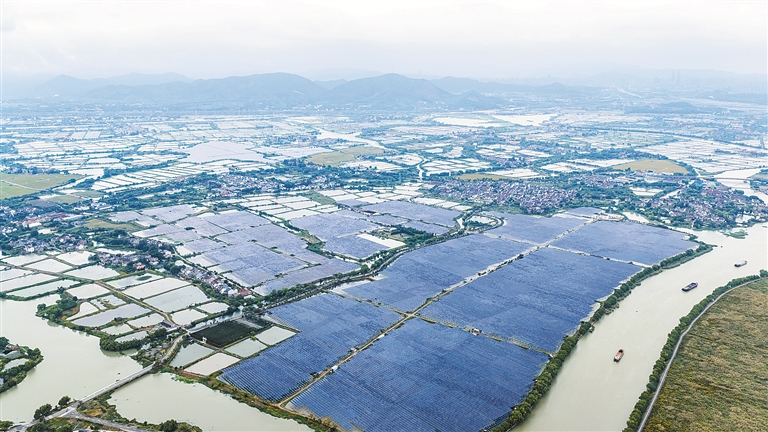
理解“两山”理念的三个维度
中国能源报· 2025-10-27 02:17
Core Viewpoint - The "Two Mountains" concept, proposed 20 years ago, has significantly influenced China's path towards high-level ecological protection and high-quality development, reshaping the country's development trajectory and ecological landscape while providing a global framework for harmonious coexistence between humans and nature [1][11]. Group 1: Historical Context and Development - The "Two Mountains" concept has evolved from local practices in Yucun, Zhejiang, to a national and global model, emphasizing ecological protection as a foundation for sustainable development [3][11]. - The concept has led to a fundamental shift in energy development from reliance on fossil fuels to a focus on clean energy, with the share of clean energy installations in China rising from 23% in 2005 to over 60% by 2025 [6][11]. Group 2: Practical Applications and Innovations - The implementation of the "Two Mountains" concept has resulted in various successful local initiatives, such as transforming Yucun from a "stone economy" to a tourism-based economy reliant on clean energy [3][4]. - Technological advancements in renewable energy have been significant, with solar cell efficiency reaching 34.8% and offshore wind turbine capacity reaching 26 megawatts, showcasing China's leadership in the global renewable energy market [7][11]. Group 3: Economic and Environmental Synergy - The "Two Mountains" concept illustrates that high-level ecological protection is not a constraint on economic development but rather a crucial support for high-quality growth, as evidenced by Zhejiang's economic performance with only 1.1% of the country's land and 3.4% of its energy consumption while generating 6.7% of the national GDP [6][10]. - The concept promotes a virtuous cycle where ecological protection enhances economic value, leading to improved livelihoods and contributing to common prosperity [10][11]. Group 4: Global Impact and Future Outlook - China's commitment to the "Two Mountains" concept has positioned it as a key player in global green development, contributing to one-fourth of the world's new green areas and actively participating in international renewable energy projects [11][12]. - Looking ahead, the "Two Mountains" concept is expected to drive global energy transformation, facilitating a shift from industrial civilization to ecological civilization, benefiting people worldwide [12].

能源早新闻丨新增装机占全球六成!
中国能源报· 2025-10-26 22:33
Industry Overview - As of September 2023, China's total installed power generation capacity reached 3.72 billion kilowatts, marking a year-on-year increase of 17.5% [2] - Solar power generation capacity reached 1.13 billion kilowatts, with a year-on-year growth of 45.7%, while wind power capacity reached 580 million kilowatts, growing by 21.3% [2] - The average utilization hours of power generation equipment decreased by 251 hours compared to the same period last year, totaling 2,368 hours [2] Renewable Energy Development - Over the past decade, China's newly installed wind and solar power capacity has accounted for 60% of the global total, with renewable energy generation capacity now making up approximately 60% of the country's total power generation [3] - In the first nine months of 2023, the electricity consumption in five southern provinces of China increased by 4.89%, reaching 1,344.6 billion kilowatt-hours [3] Infrastructure and Projects - The Longjiang Reservoir Group has achieved a total water storage capacity of 1,081 million cubic meters, a historical high, as of October 24, 2023 [4] - The "Qian Electric to Guangdong" key transmission line has completed ice-resistance upgrades, enhancing the reliability of power transmission under extreme weather conditions [5] - Xinjiang has surpassed 20.5 billion kilowatt-hours of green electricity consumption in 2023, a 58% increase from the previous year [6] Corporate Developments - A Chinese company has successfully completed the dam closure for the Balaghat Hydropower Station in Pakistan, marking the start of the main construction phase [8] - A renewable energy project in the UAE, featuring a solar power capacity of 5.2 gigawatts and a storage capacity of 19 gigawatt-hours, has commenced construction [8] - The Sichuan Investment Luzhou natural gas power generation project has successfully completed trial operations for its second unit, indicating full operational capacity [9]
怎么看“每3度电就有1度绿电”
Zheng Quan Ri Bao· 2025-10-26 16:20
Core Viewpoint - The increase in the proportion of green electricity in China's energy consumption reflects a profound transformation in the energy structure, driven by technological innovation, policy enhancement, and consumer demand for green energy [1][3]. Group 1: Technological Innovation - During the "14th Five-Year Plan" period, China's renewable energy, particularly wind and solar power, has seen significant advancements in installed capacity and cost control, with total installed capacity rising from 530 million kilowatts in 2020 to 1.68 billion kilowatts by July 2023, achieving an annual growth rate of 28% [1][2]. - Renewable energy generation capacity has increased from 40% to approximately 60% of the total installed capacity, establishing China as the largest and fastest-growing renewable energy system globally [1]. Group 2: Institutional Framework - The continuous improvement of the institutional framework has stimulated the development of renewable energy, with the establishment of a comprehensive green certificate system and market-oriented pricing reforms for new energy [2]. - In the first eight months of this year, a total of 1.878 billion green certificates were issued, with 1.277 billion being tradable, enhancing the entire chain from production to consumption of green electricity [2]. Group 3: Consumer Demand - The rapid growth of electric vehicles (EVs) has significantly increased the demand for green electricity, with the number of EVs in China reaching 36.89 million by June 2025, accounting for 10.27% of the total vehicle population [3]. - The share of electricity in total energy consumption has increased by approximately 4 percentage points during the "14th Five-Year Plan" period, indicating a shift towards greener energy consumption [3]. Group 4: Future Outlook - With breakthroughs in new energy storage technology, improvements in green electricity market mechanisms, and the deepening of green consumption concepts, the process of increasing the proportion of green electricity in China is expected to accelerate, promoting a transition to a green, low-carbon, and sustainable development model [4].
我国风光发电新增装机占全球六成
Qi Huo Ri Bao Wang· 2025-10-26 16:08
Core Insights - China has established the world's largest and fastest-growing renewable energy system, with significant advancements in wind and solar power generation [1] Group 1: Renewable Energy Capacity - In the past decade, the annual newly installed capacity for wind power has exceeded 100 million kilowatts, while solar power has surpassed 200 million kilowatts [1] - Wind and solar power installations currently account for nearly half of the global total installed capacity, with new installations representing 60% of the global market [1] - The share of renewable energy generation capacity has increased to approximately 60% [1]
全球可再生能源发展分论坛:水风光储协同 绿证激活市场
Zhong Guo Dian Li Bao· 2025-10-26 12:31
Core Viewpoint - The integration of hydropower, wind, and solar energy, along with the development of green certificates, is crucial for achieving a complete energy transition from supply to consumption, emphasizing the importance of both generation and utilization in the renewable energy sector [2][10]. Group 1: Renewable Energy Development - The global renewable energy sector is entering a new phase, with an expected addition of 582 GW of new capacity in 2024, primarily from solar, wind, and hydropower, with China being a key contributor to this growth [4]. - Hydropower is recognized for its unique value as a stable energy source, playing a significant role in supporting the capacity and flexibility of the power system, thus facilitating the high-quality development of wind and solar energy [4]. Group 2: Integrated Development - The integrated development of hydropower, wind, and solar energy is emerging as an important innovation direction in the energy sector, showcasing advantages through resource complementarity, efficiency enhancement, and cost optimization [4]. - The integration process highlights the necessity of energy storage, which can smooth out fluctuations in wind and solar energy while effectively coordinating hydropower peak regulation [5]. Group 3: Green Certificate System - The green certificate system in China is a key market mechanism for energy transition, serving as an important engine for promoting the transformation of energy consumption and achieving carbon neutrality goals [7]. - In the first eight months of 2025, 464 million green certificates were traded nationwide, reflecting a year-on-year increase of 120% [7]. - Green certificates are becoming a "hard currency" for measuring green consumption, with applications expanding to support events like the Hangzhou Asian Games and being included in corporate ESG reports [8]. Group 4: Pathway to Energy Transition - The collaborative development of hydropower, wind, and solar energy is effectively driving China's energy system towards a green and low-carbon transition, enhancing the large-scale grid connection capability of renewable energy [10]. - The green certificate trading system provides a market-based channel for realizing the environmental value of renewable energy, creating a favorable consumption environment for green electricity and attracting more capital into the renewable energy sector [10].

中企在阿联酋参建全天候供电可再生能源项目
Xin Hua She· 2025-10-25 14:26
Core Viewpoint - The foundation ceremony for a significant all-weather power supply solar storage project, involving China Electric Power Construction (China Electric), was held in Abu Dhabi, UAE, indicating a strong commitment to renewable energy and digital transformation in the region [1] Project Overview - The project is a collaboration between Abu Dhabi Future Energy Company and UAE Water and Electricity Company [1] - It features a solar power station with an installed capacity of 5.2 gigawatts and a battery system with a total storage capacity of 19 gigawatt-hours, making it one of the largest projects of its kind globally [1] - The project is expected to be operational by 2027 [1] Industry Impact - The project aims to address the intermittency challenges of renewable energy, providing stable and sustainable clean power for the era of artificial intelligence and emerging technologies [1] - It is anticipated to drive energy transformation in the local digital industry [1] Company Commitment - China Electric has expressed its intention to continue developing global clean energy cooperation projects [1]

挪威船级社DNV:全球能源转型展望2025—全球和区域预测至2060
Sou Hu Cai Jing· 2025-10-25 10:03
Core Insights - The global energy transition is progressing but is not on track to meet the Paris Agreement goals, with net-zero emissions by 2050 deemed unrealistic, leading to an expected temperature rise of 2.2°C by the end of the century [1][3][8] - Renewable energy is becoming the primary driver of the energy structure, with solar and wind expected to dominate global electricity generation by 2060 [1][10] - Fossil fuel consumption is projected to decline significantly, with coal demand experiencing the most substantial drop [2][10] Energy Structure - By 2060, the energy mix is expected to shift to a 50:50 ratio between fossil and non-fossil energy sources, with fossil fuels decreasing from 79% to 36% [2][10] - Renewable energy, particularly solar and wind, will account for 47% and 32% of global electricity, respectively, by 2060, with electricity demand increasing by 140% from current levels [1][2] - Nuclear energy is anticipated to grow by 150% in installed capacity by 2060, contributing 9% to electricity supply [1][2] Regional Transition Paths - China is leading in renewable energy installations and clean technology exports, while Europe is focusing on balancing climate action with industrial competitiveness [2][10] - North America is experiencing a delay in emissions reduction due to policy shifts, with a projected five-year setback in the transition [2][10] - Developing regions, such as the Indian subcontinent and Southeast Asia, are seeing rapid growth in energy demand and renewable installations, although fossil fuels will still play a role in energy security for some time [2][10] Decarbonization Challenges - Hard-to-decarbonize sectors like heavy industry, aviation, and shipping are progressing slowly, relying on hydrogen and carbon capture technologies, which are currently expensive and policy-dependent [2][10] - The deployment of these technologies is not expected to scale significantly until after 2040, with hydrogen projected to account for 6% of energy demand by 2060 and CCS capturing 16% of global CO2 emissions [2][10] Electricity System Constraints - The electricity system is facing challenges due to lagging grid infrastructure, which could hinder the growth of renewable energy sources [2][10] - In Europe, resolving grid bottlenecks could enhance solar and wind capacity significantly by 2035 [2][10] - The demand for electricity from AI data centers is expected to grow rapidly, potentially accounting for 3% of global electricity by 2040, although efficiency improvements may moderate this growth over time [2][10]

诺奖得主:美国经济处于反常状态 关键领域发展受阻
Zhong Guo Xin Wen Wang· 2025-10-25 00:36
Group 1 - The core viewpoint is that the U.S. economy is in an abnormal state, characterized by significant uncertainty due to erratic policies, which have severely hindered development in key areas such as research and education [1] - The current economic situation shows severe divergence, with the AI sector thriving while other sectors stagnate, indicating a "K-shaped" recovery where low- and middle-income consumers are facing difficulties [1][2] - There is a growing concern among economists about a potential recession, drawing parallels to the tech bubble of the 1990s, as signs of distress emerge in the private credit market [2] Group 2 - The Trump administration's policies have created substantial uncertainty, discouraging business investments, particularly through cuts in support for scientific research and education [2] - The aggressive stance of the U.S. government on renewable energy is seen as a factor contributing to the country's lag in this sector, with significant tax incentives for clean energy projects being removed [2] - Major renewable energy projects have been canceled, which could have provided power to millions of households, indicating a detrimental impact on the clean energy development landscape [2]
古巴光伏园区建设加速推进
Shang Wu Bu Wang Zhan· 2025-10-24 16:48
Core Insights - Cuba's renewable energy projects, particularly in solar power, are advancing rapidly since the grid connection of two solar parks in March 2023 [1] - The country has established 32 solar parks and 3 donation parks, contributing a total installed capacity of 715 megawatts, exceeding annual targets [1] - The solar facilities have generated 429.3 gigawatt-hours of electricity, replacing 111,000 tons of fossil fuels, which accounts for 9% of the national daily electricity supply [1] - Currently, 19 new solar parks are under construction, expected to add 415 megawatts of capacity by the end of the year [1] - Four energy storage systems are being built to address electricity fluctuations [1] - A 120-megawatt solar photovoltaic project, aided by the Chinese government, is being implemented in two phases, with the first phase nearing completion [1] - The first phase includes 7 parks, 3 of which are already connected to the grid, while the remaining 4 are scheduled to be operational in October [1] - The second phase, which includes 15 parks with energy storage systems, is expected to be completed by the first quarter of 2026 [1]